|
Al-Shabaab's Brutal Campaign in Afgooye
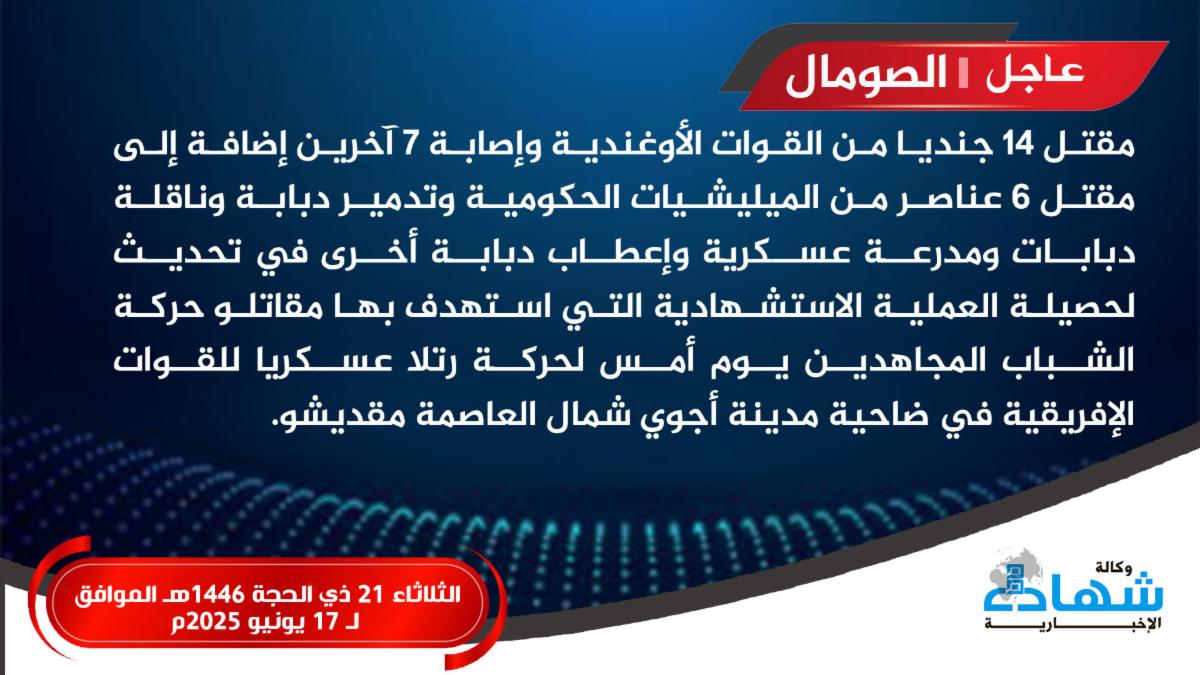
Over the past 12 days, Al-Shabaab has launched an unrelenting and increasingly deadly campaign in and around Afgooye, Lower Shabelle, highlighting both the group's evolving tactical sophistication and the strategic importance of the town. The most recent attack occurred on 16 June 2025, where the group conducted a suicide bombing targeting an African Union convoy, killing 20 security personnel and damaging or destroying multiple heavily armoured vehicles, including tanks. This strike is not an isolated act of violence but the culmination of a high-tempo offensive marked by a series of brutal attacks designed to degrade both Somali and international security forces' capacity and morale.
Afgooye has been targeted repeatedly, indicating a deliberate escalation in operations. Since 10 June 2025, Al-Shabaab has assassinated a Somali intelligence officer, conducted multiple armed assaults, and executed coordinated double-tap IED attacks against Ugandan and Somali troops. The concentration and intensity of these attacks, several of which occurred on a single day, suggest a calculated effort to overwhelm security forces, exhaust their resources, and assert dominance over a strategically critical corridor southwest of Mogadishu.
The town of Afgooye sits along a vital route between the capital and the rest of southern Somalia. Its control is essential for any force attempting to move logistics, reinforcements, or conduct counter-insurgency operations in and out of Mogadishu. Al-Shabaab’s ability to operate openly here and to launch complex assaults involving suicide bombers, IEDs, and infantry signals a serious challenge to federal and AMISOM forces. By destabilising Afgooye, Al-Shabaab not only disrupts regional security but also seeks to choke the movement of state forces, fortify their operational freedom, and pressure Mogadishu directly.
Furthermore, the use of suicide bombings underscores Al-Shabaab's commitment to high-risk, high-reward tactics. Though costly in terms of personnel, these attacks provide disproportionate returns by sowing chaos, degrading armoured assets, and demonstrating resilience. In this light, the campaign in Afgooye serves as both a military operation and a psychological offensive aimed at asserting territorial relevance and undermining confidence in the Somali state's capacity.
| | | (PDF) Al-Malahem Media (Al-Qaeda in the Arabian Peninsula AQAP) Releases “Inspire Guidelines: From the Attack on the Jewish Museum in Washington” | | |
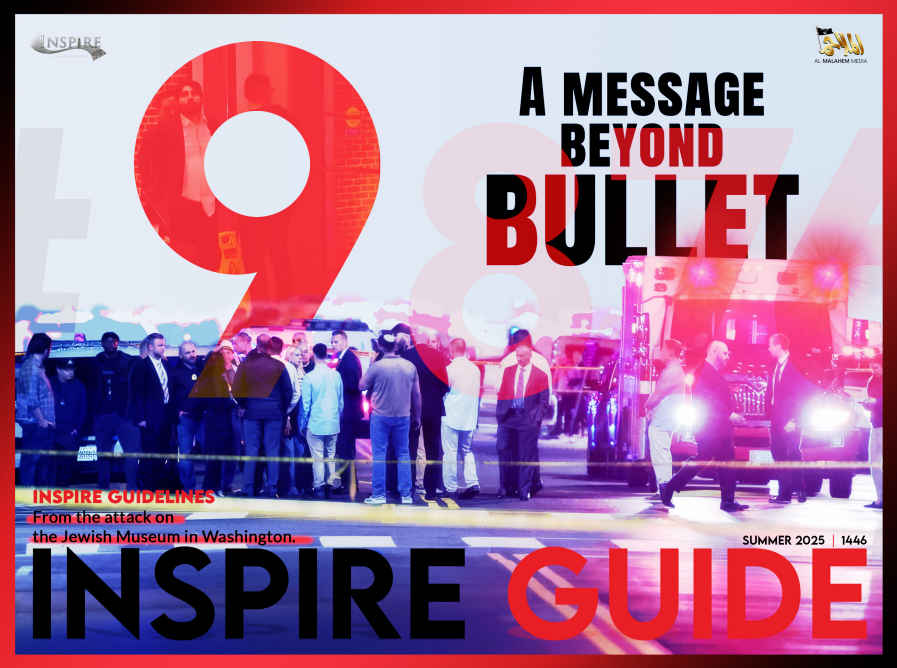
On 13 June 2025, Al-Qaeda in the Arabian Peninsula’s (AQAP) media arm, Al-Malahem Media House, released a PDF titled “Inspire Guidelines: From the Attack on the Jewish Museum in Washington.” The document recounts the 21 May 2025 shooting carried out by Elias Rodriguez, who targeted and killed an Israeli couple as they were leaving an event at the Capital Jewish Museum in Washington, D.C., located at the intersection of F Street and 3rd Street.
This attack is notable not for its connection to jihadist ideology, but because it was perpetrated by a far-left extremist ideologically aligned with the Palestinian cause. Elias Rodriguez was not a Muslim, and his motivations were secular, rooted in solidarity with Gaza rather than religious extremism. Despite this, AQAP is attempting to co-opt the incident for its radicalisation purposes.
The PDF is structured as a presentation, beginning with unambiguous praise for Rodriguez’s actions. AQAP portrays his attack as a righteous response to "Zionist crimes," using his identity as a non-Muslim to shame and provoke Muslim audiences: if a non-believer could act, why haven’t you? This rhetorical device sets the tone for the rest of the publication, which moves from political grievance to religious obligation.
Initially, the publication maintains a focus on the Washington attack and the Israeli-Palestinian conflict, including emotionally charged images from Gaza designed to incite outrage and empathy. Gradually, it shifts toward religious framing, including Quranic references and calls to jihad. The final pages include explicit visual instructions for building pressure cooker bombs, with devices labelled for targets in the USA, UK, and France. One prominently displayed message on a bomb reads: “To the enemy of Islam and Muslims, to America.”
The message becomes increasingly explicit: Rodriguez did what Muslims were supposed to do—he attacked Zionist targets. Now, Muslims must act, not only in solidarity but in fulfilment of their religious obligation. The ultimate objective of the publication is to shame, provoke, and incite potential lone-wolf attackers who may already be on the path toward radicalisation.
More than mere propaganda, Inspire Guidelines is a how-to tactical tool for recruitment and incitement. It reflects AQAP’s ongoing strategy of using current events, regardless of ideological origin, to galvanise support for violent jihad, targeting Western nations and individuals perceived as enemies of Islam.
| | TRAC Incident Report: Egianus Kogoya’s OPM’s Faction Suspected to Farm Marijuana Plantation to Purchase Arms, Kurima District, Yahukimo Regency, Papua Highlands, Indonesia | | |
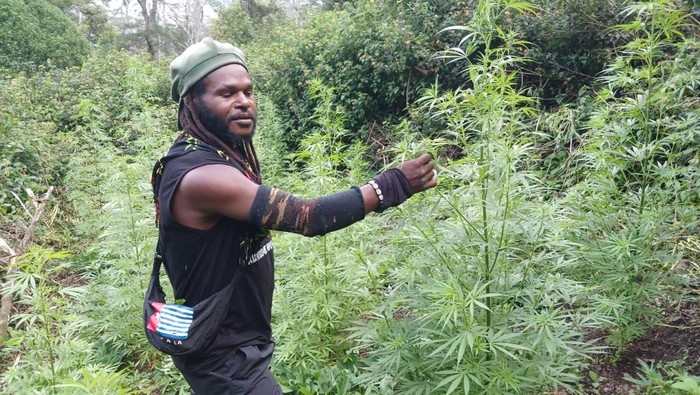
On 12 June 2025, reports surfaced regarding the discovery of a photograph depicting Egianus Kogoya, the leader of a faction of the Free Papua Movement (Organisasi Papua Merdeka, OPM), standing in what appears to be the middle of a marijuana plantation. The location is suspected to be within the Kurima District of Yahukimo Regency, in the Papua Highlands.
The image, along with an accompanying video, originated from a mobile phone recovered by Indonesian security forces. The device is believed to have belonged to Kogoya himself and was retrieved following the death of an OPM fighter during armed clashes with Indonesian military forces on 10 June 2025 in Jayawijaya Regency. During the operation, the slain militant was also found to have a package of dried marijuana. Authorities later confirmed that this individual was a repeat offender in a prior narcotics-related case.
These findings reinforce earlier TRAC assessments that the OPM, particularly the Egianus Kogoya faction, is actively engaged in drug trafficking to fund its insurgency. This includes the purchase of arms, ammunition, and other logistical supplies needed to sustain its operations against Indonesian forces.
Furthermore, the Indonesian military has now publicly confirmed suspicions that Kogoya’s group is using marijuana sales as a key source of income. This represents a convergence between ideological militancy and organised criminal behaviour, further complicating the security landscape in Papua. At the time of writing, investigations are still underway to pinpoint the exact location of the plantation and assess the scale of the cultivation. If confirmed, the existence of such an operation would provide critical insight into the financial architecture sustaining one of the most active rebel factions in the Papua conflict.
| | TRAC Incident Report: Two Bodies Found Hanging from a Bridge over the Pan-American Highway at the Junction to Tornillo, in Ciudad Juárez, Chihuahua, Mexico | | |
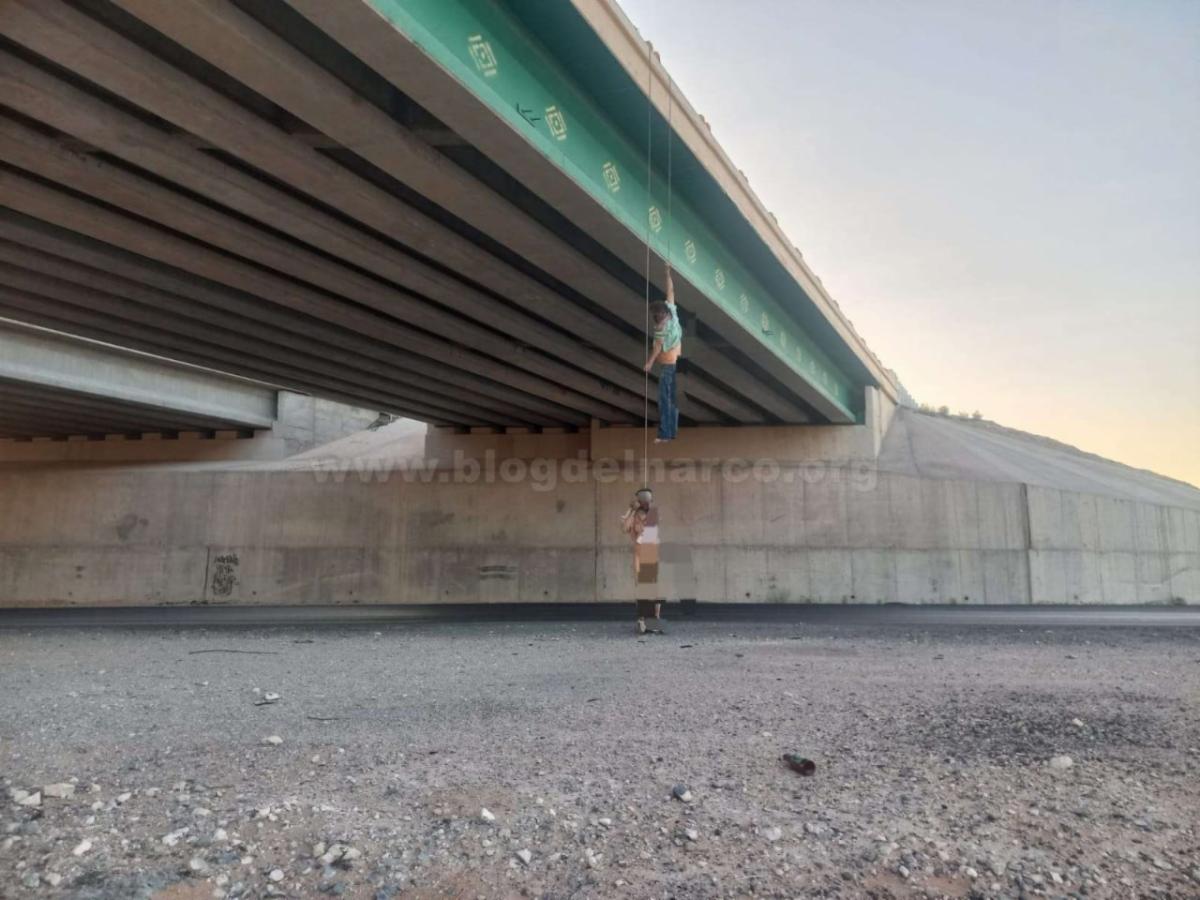
On 13 June 2025, two bodies were found hanging from a bridge over the Pan-American Highway at the junction to Tornillo, in Ciudad Juárez, Chihuahua, Mexico. The victims bore signs of torture and had their eyes taped shut. They were accused of being “glass” (methamphetamine) dealers and “huachicoleros” (fuel thieves). This kind of public execution is not only a punishment, but a calculated way to send a message to both rivals and the wider public.
While no cartel has yet officially claimed responsibility, the method of execution and the high-profile location point to the likely involvement of an organised criminal group operating in Chihuahua, most plausibly factions aligned with either the Sinaloa Cartel or the Juárez Cartel, both of which have long-standing turf wars in Ciudad Juárez. The use of the term “huachicoleros” suggests the victims were engaged in unauthorised fuel theft, an activity that increasingly overlaps with drug trafficking routes and logistics. By accusing the victims of also dealing meth (“glass”), the perpetrators are sending a warning to competitors and unapproved actors interfering in both fuel and synthetic drug markets.
This form of narco-signalling is designed to assert territorial control and enforce internal discipline or dominance over lucrative black market economies. Hanging bodies from public infrastructure is a classic cartel tactic for generating fear, asserting impunity, and projecting power over the state and rival groups.
The location, Ciudad Juárez, is a strategic transit point for both drugs and contraband headed into the United States; control over its highways and logistical nodes is highly contested. This kind of public execution is not only a punishment, but a calculated way to send a message to both rivals and the wider public.
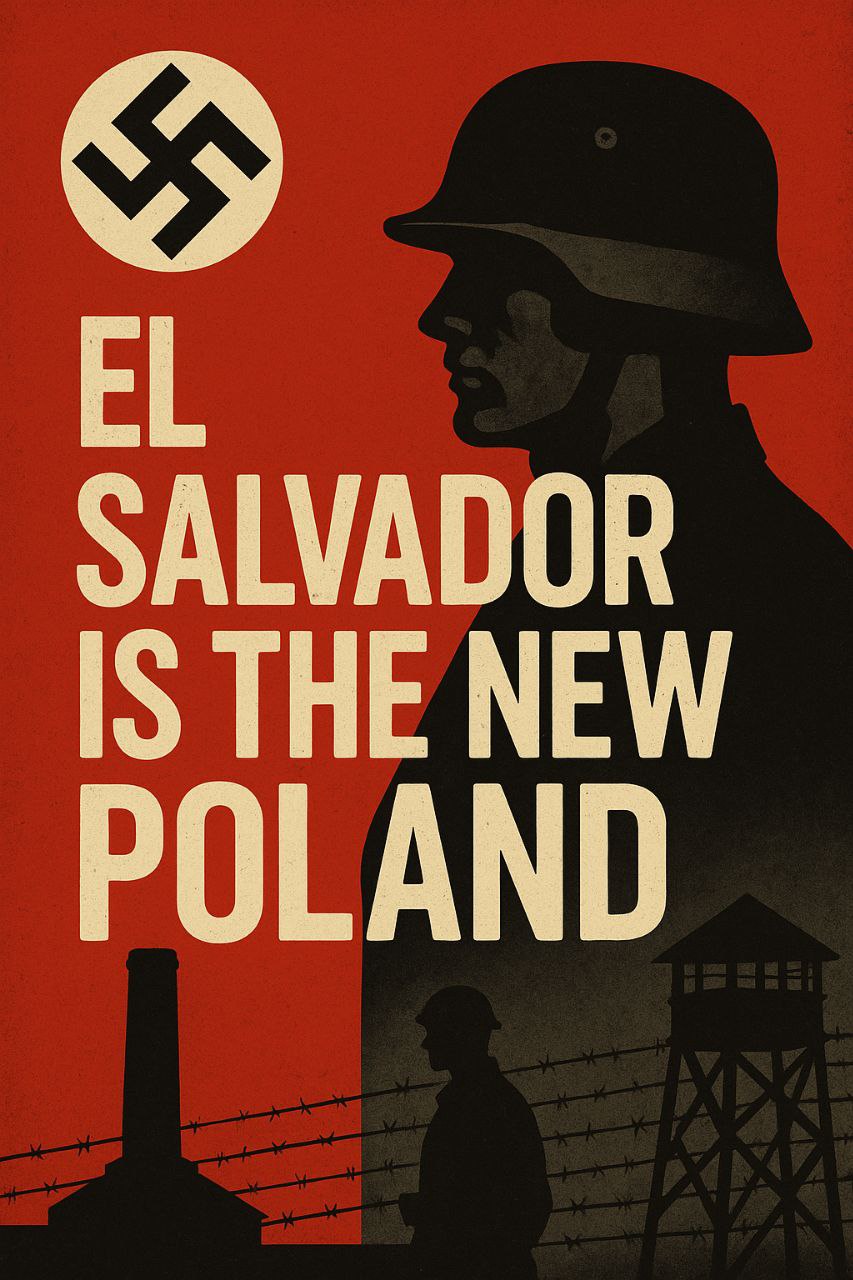
| | (Right Wing Extremism / Poster) Neo-Nazi Accelerationist Telegram Channel Shares Poster: ‘El-Salvador is the New Poland’ | |
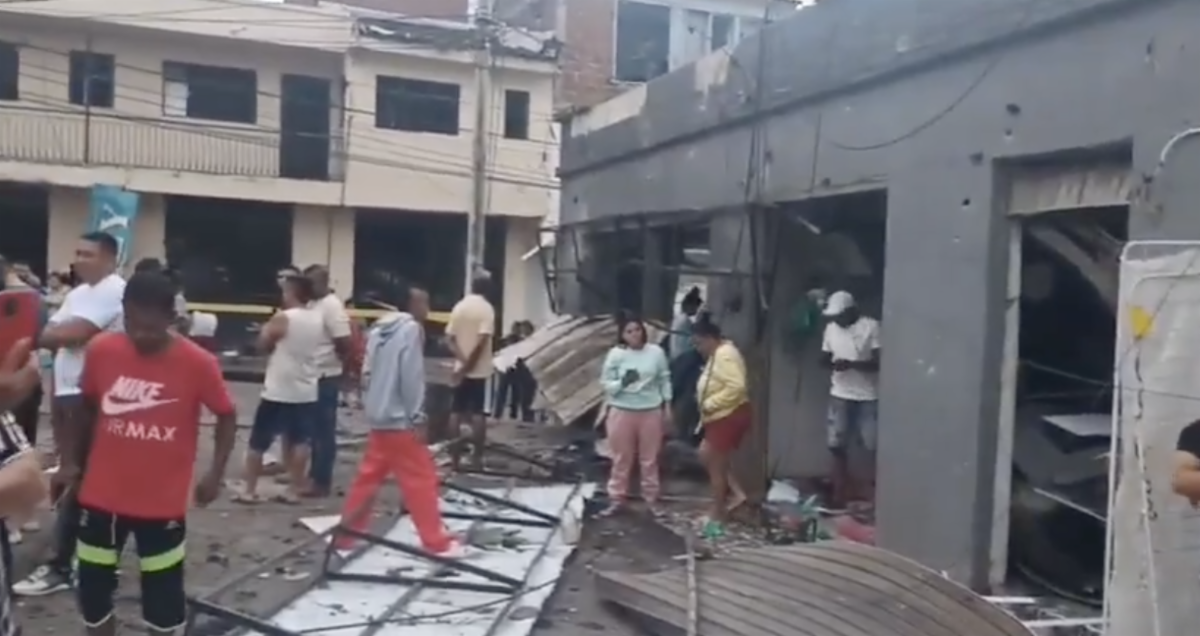
TRAC Incident Report: Suspected Revolutionary Armed Forces of Colombia (FARC)-EMC (Estado Mayor Central) Conducts Approx. 24 Bombings (IEDs & VBIEDs) Across Cali, Corinto, Jamundí, & Guachinte, Central Cauca, Colombia
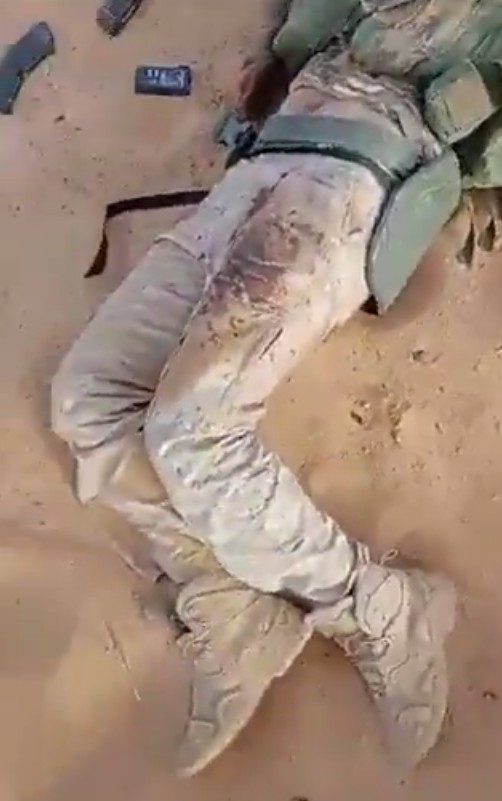
| | TRAC Incident Report: Alleged Africa Corps Soldiers Killed in Heavy Clashes with Liberation of Azawad (FLA) Militants Between Aguelhok & Kidal, Kidal Region, Northern Mali | | | | |