|
Active Clubs: How Fitness and Brotherhood Create a Pathway into the Far Right in Youths
For young people searching for identity, confidence, friendship and belonging, Active Clubs offer a powerful proposition: strength, discipline, brotherhood, and a new family. Far-right fitness groups known as Active Clubs (AC) use the familiar imagery of sport, self-improvement and masculine solidarity to attract potential followers. What appears online as an ordinary community built around training and combat sports conceals a wider political message. TRAC has observed this trend developing over several years: a growing far-right community attracting young people through a carefully organised, aspirational and seemingly ideal image on social media.
Fitness Opens the Door
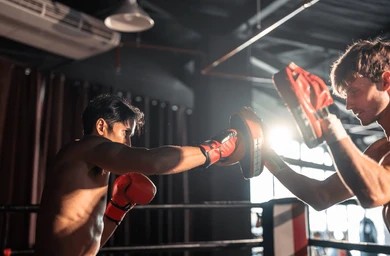
Active Clubs combine fitness culture, combat sports, masculinity and far-right ideology in a format that initially appears relatively ordinary. Images of boxing, martial arts, gym training and outdoor activities promote an ideal of the disciplined, strong and loyal man focused on self-improvement and brotherhood. Fitness therefore provides an effective entry point. Training and combat sports already speak the language of confidence, resilience, protection and teamwork. Active Clubs connect these values to a close male community, presenting membership as healthy, social and aspirational. The promise is not simply to become fitter but to join a loyal collective of men who share the same values and lifestyle.
Recent events documented by TRAC demonstrate how physical training also connects individual Active Clubs. The FRONTIER ’26 boxing tournament brought together American white-nationalist and Active Club groups, while Dietsland Fight Night III brought together clubs from nine European countries.
Community Before Ideology
The attraction does not necessarily begin with ideology. It begins with belonging. Active Clubs appeal to young people who feel isolated, frustrated or uncertain about their future, as well as those already interested in fitness, combat sports, gaming or politics. These factors do not cause extremism, but they provide points of connection that recruiters exploit. A young person may initially encounter fitness-related propaganda, follow an account or attend a training session. Friendship, recognition, adventure and community come before explicit political commitment. Repeated exposure to memes, humour, symbols and conspiracy narratives then makes increasingly racist or violent ideas appear less shocking. Training, events, clothing and shared symbols further strengthen identification with the group.
This is where the countercultural appeal of Active Clubs becomes important. They offer an alternative community centred on strength, discipline, loyalty and masculine solidarity, while portraying mainstream institutions and social norms as having failed. Personal dissatisfaction is consequently transformed into a shared grievance against perceived external enemies. Notably, not everyone follows this pathway.
From Online Interest to Real-World Commitment
Active Club recruitment is ultimately hybrid: public content attracts attention, while physical interaction turns online interest into real social relationships. Social media and platforms such as Telegram allow training videos, group photographs and propaganda to circulate far beyond individual clubs. Fitness content generates initial interest before more explicitly racist, white-supremacist or militant material appears within tighter social circles.
Offline training then deepens those connections. Workouts, sparring sessions, group photographs, gestures and logos function as shared rituals, producing pride, recognition and solidarity. Training becomes more than physical exercise: it demonstrates commitment, builds trust and strengthens attachment to the group. For some members, deeper identification eventually translates into action, sharing propaganda, recruiting others, attending demonstrations or participating in militant training. But the progression is neither uniform nor inevitable.
The effectiveness of the Active Club model ultimately lies in how these elements reinforce one another: Content attracts. Community retains. Ideology provides meaning. Collective training strengthens commitment.
|