E-News
Equity, Evidence & Engagement
|
|
The Immigrant Well-Being Project: Innovating from Community-Based Participatory Research Processes
By: Julia Meredith Hess
|
|
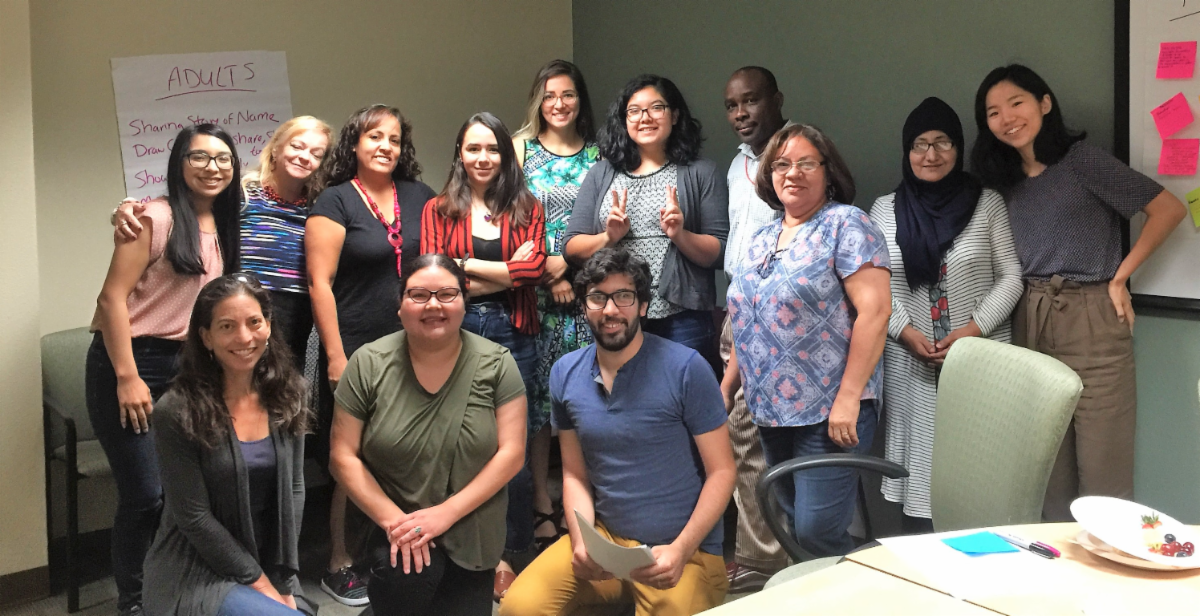
The goal of the Immigrant Well-being Project (IWP) is to innovate and learn from community-based participatory research processes (CBPR). The IWP, an adaptation of the Refugee Well-being Project model for Spanish-speaking immigrants is rooted in collaborations with four community-based organizations (CBOs): Centro Sávila, Encuentro, New Mexico Dream Team and New Mexico Immigrant Law Center. Our goal was to leverage the assets of the CBO’s in order to impact - mental health, adult education, youth mobilization and legal services. The IWP also examines how CBPR processes address power dynamics, power sharing, and includes community members at every stage of the research process.
A recent team authored paper which will be featured in Cultural Diversity and Ethnic Minority Psychology, “Innovative Participatory Bilingual Data Analysis with Latinx Immigrants: Language, Power, and Transformation,” highlights the role of language and praxis as methodological practices used in research. The paper also maps-out how our team worked together in participatory data analysis and dissemination with Latinx Immigrants.
The focus on language was important. Collecting and analyzing the data in Spanish was a constant reminder of the importance of grounding research in the lived experience of participants and our community research collaborators. This meant that during the analytic processes which involved determining themes, writing analytical memos, and coming up with analytical frameworks, this work was done in Spanish and English. This is a cultural and language context that mirrors the everyday lives of immigrants on our team and allowed everyone to contribute. The article also discusses the importance of participatory efforts in research dissemination. For instance, to share the work more widely, we produced a podcast in English and led a Spanish-language webinar (sponsored by NVivo/qualitative data analysis software) and our entire team was featured in the monthly E-Learning Webinar in May 2021 (sponsored by the TREE Center).
Looking ahead, the IWP will continue to leverage online technologies (i.e. Zoom) due to the COVID-19 pandemic and will continue to deepen our work in order to create substantive change in the world.
|
|
The IWP is a core research project of the TREE Center (funded by the National Institute of Minority Health & Health Disparities) and aligns with the overarching CBPR approaches to multi-level intervention research. |
|
NIMHD is Hiring Social and Behavioral Sciences Administrators
NIMHD envisions an America in which all populations will have an equal opportunity to live long, healthy, and productive lives. We seek multiple candidates with a commitment to scientific excellence and the energy, enthusiasm, and innovative thinking to improve minority health and reduce health disparities.
NIMHD is committed to creating a diverse and inclusive work environment and we strongly welcome candidates from underrepresented groups to apply.
|
|
NIMHD Co-Funded Report Provides Information to Help School Leaders and Policy Makers Safely Resume In-Person Learning
The ABC Science Collaborative recently issued a new report showing that North Carolina schools were highly successful in preventing the transmission of COVID-19 within school buildings.
The report’s analysis of data from March through June 2021 offers science-based learnings for the nation’s schools to limit COVID-19 spread. The report also provides key takeaways to help school leaders and policymakers plan a path forward for safely resuming in-person instruction during the 2021-2022 school year.
Data was collected from all North Carolina elementary, middle, and high schools operating under a model called Plan A, which provided full, in-person instruction, masking, and minimal physical distancing from March to June 2021. The data represent 100 local school districts and 14 charter schools comprising more than 1,280,000 students and 160,000 staff.
Approximately 1 in 3,000 students who were in school buildings became infected with COVID-19 during school, or 308 school-acquired cases recorded for students and 55 for staff.
The ABC Science Collaborative received funding support from the National Institutes of Health, National Center for Advancing Translational Sciences, National Institute of Child Health and Human Development, and National Institute on Minority Health and Health Disparities. Additional funding support was also provided by the Food and Drug Administration and the North Carolina Department of Public Instruction.
|
|
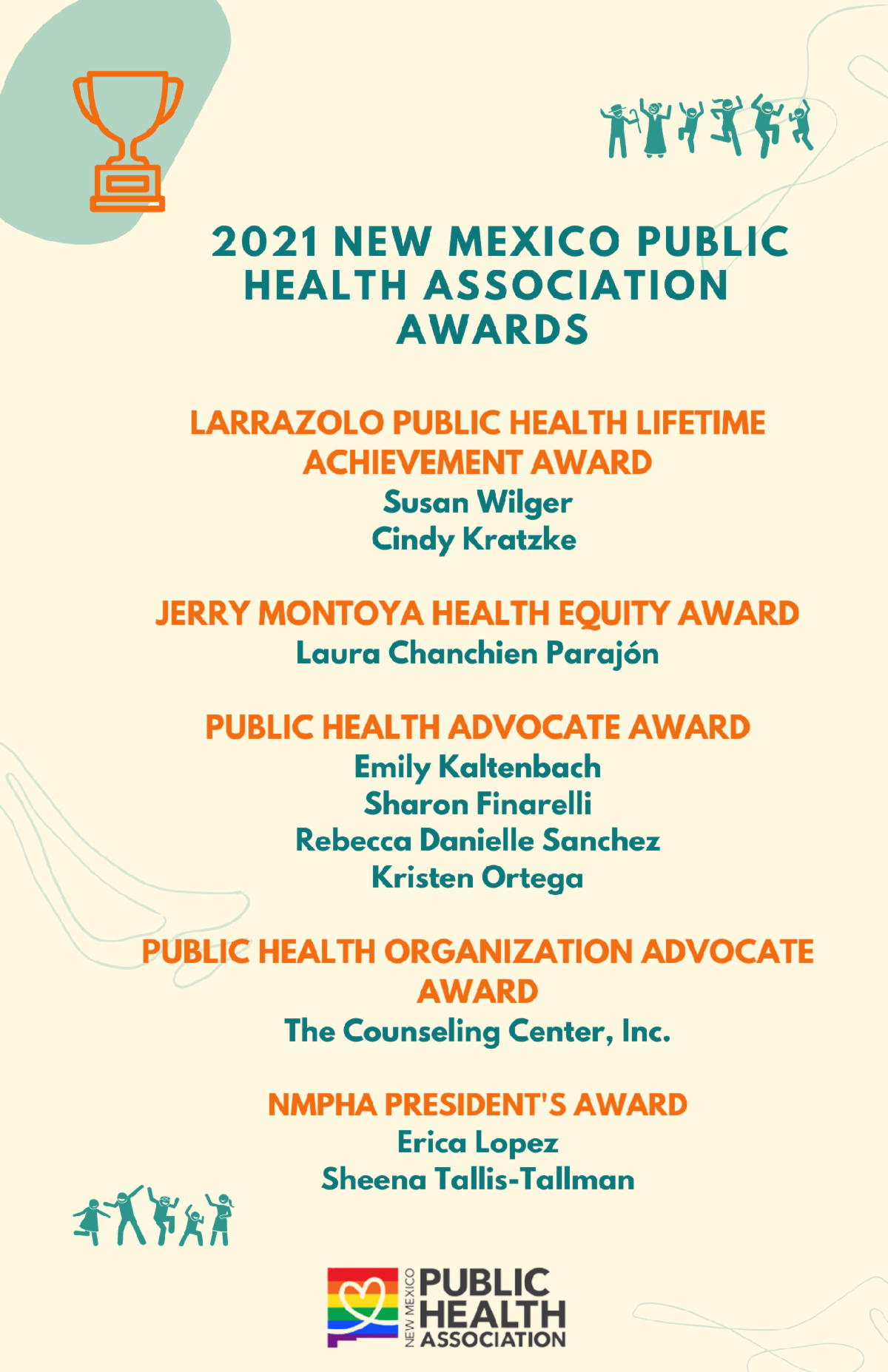
Congratulations to everyone that received an award! |
|
CCHE Affiliates & Health Equity Investigators
Join us for session two of the Virtual 2021 Health Equity Leadership Institute coming up on Friday, July 16th!
Register now to hear from HELI 2011 Alumna Tisha M. Felder, PhD, Assistant Professor, University of South Carolina and HELI 2016 Alumnus Charles R. Rogers, PhD, Assistant Professor, University of Utah School of Medicine on Thriving as an Early Stage Investigator: The Untold Do’s and Don’ts. They will share invaluable insight from their experiences, including:
- Lessons learned from securing and leading their highly competitive training grant awards from the National Cancer Institute
- How to effectively be health-equity and community-engaged junior professors at research intensive universities, and
- Effectively building and expanding collaborations with community leaders to eliminate health disparities
|
|
NMDOH COVID-19 Vaccine Registration |
|
For more information and to register for your initial COVID-19 Vaccine and Booster, click here.
|
|
Lisa Cacari Stone, PhD
Director/Principal Investigator, Transdisciplinary Research, Equity and Engagement Center for Advancing Behavioral Health (TREE Center) NIMHD Grant # U54 MD004811-10
1001 Medical Arts Ave NE, Albuquerque, NM 87102
Phone: 505-690-4404
|
Follow Us and Get the Latest News from the UNM TREE Center: |
|
|
|
|
|
|