|
Happy Holidays!
Thank you for peeking your head out from wrapping paper and tape to read this newsletter!
We have been busy here finalizing the contract for the 2026 TSSUS National Turner Syndrome Conference and have great news!
We'll be gathering July 24-25, 2026 to mid-East Coast in Raleigh/Cary, North Carolina! Our new conference coordinator Morgan Crumrine has some BIG PLANS we'll be announcing soon. In the meantime, read some key information about the 2026 Conference in this newsletter, including some money saving features we're able to offer.
We're happy to share some recent findings from the TSSUS Turner Syndrome Research Registry (TSRR) about cardiovascular health as it relates to karyotype. If you aren't a part of the TSRR yet, please consider adding your information to help advance TS research.
The TSSUS 2025 Annual Fundraising Campaign is well underway, and we'd like to ask those of you who are able to consider making a donation to support this work we love for people with TS.
Turner Syndrome Awareness Month is coming up in February, and we are excited! We'll share a link to pre-order your official TS Awareness Month shirt in the coming days so you'll have it in time for February!
We hope this time of year is magical for you and your family, and we wish you all the best for this season of joy!
| | |
Becky Brown
National Director of Development & Communications
| |
2026 TSSUS Conference, July 24-25, 2026
Raleigh/Cary, North Carolina
| | |
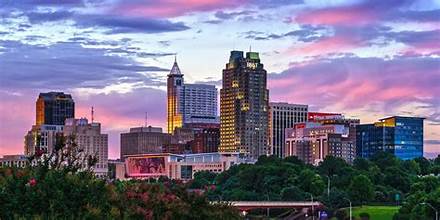
We are so excited to announce the dates and location of the 2026 TSSUS National Turner Syndrome Conference! We hope you can join us July 24-25, 2026 in the beautiful city of Raleigh/Cary, North Carolina!
Our event will take place at the Embassy Suites by Hilton Hotel, 201 Harrison Oaks Blvd, Cary, North Carolina 27513. Stay tuned as we add more details to the website and share them with you in our newsletter and socials, but in the meantime, some key things to know are:
-
The Conference dates are Friday, July 24th and Saturday, July 25th
-
After the conference, we'll have an optional outing on Sunday, July 26th, so plan accordingly if you'd like to participate.
-
TSSUS will have a block of discounted rooms at the hotel, so wait to make your reservations until the TSSUS link is published.
-
ALL meals will be provided during the conference! The Embassy Suites offers free breakfast each morning, and TSSUS will provide lunch and dinner on both Friday and Saturday!
- The hotel offers a "Managers Special" type of happy hour each evening with free drinks and bar snacks. It's a great time to socialize.
-
The hotel provides a free shuttle to and from the airport!
-
The TSSUS inexpensive parking at $5 per night.
-
TSSUS offers conference grants for the registration fee and possibly one night's hotel accommodation to TSSUS members. The application opens on January 2, 2026 and closes on April 15, 2026. Grant recipients will be notified by May 1, 2026.
-
Be a part of the invitation-only TSSUS Butterfly Society V.I.P. Reception Friday night by joining our monthly giving program HERE.
-
We will be offering an official conference t-shirt pre-order with registration. Be sure to order your shirt in advance because we will have limited sizes and quantities at the event.
| | The TSSUS Annual Fundraising Campaign | | |
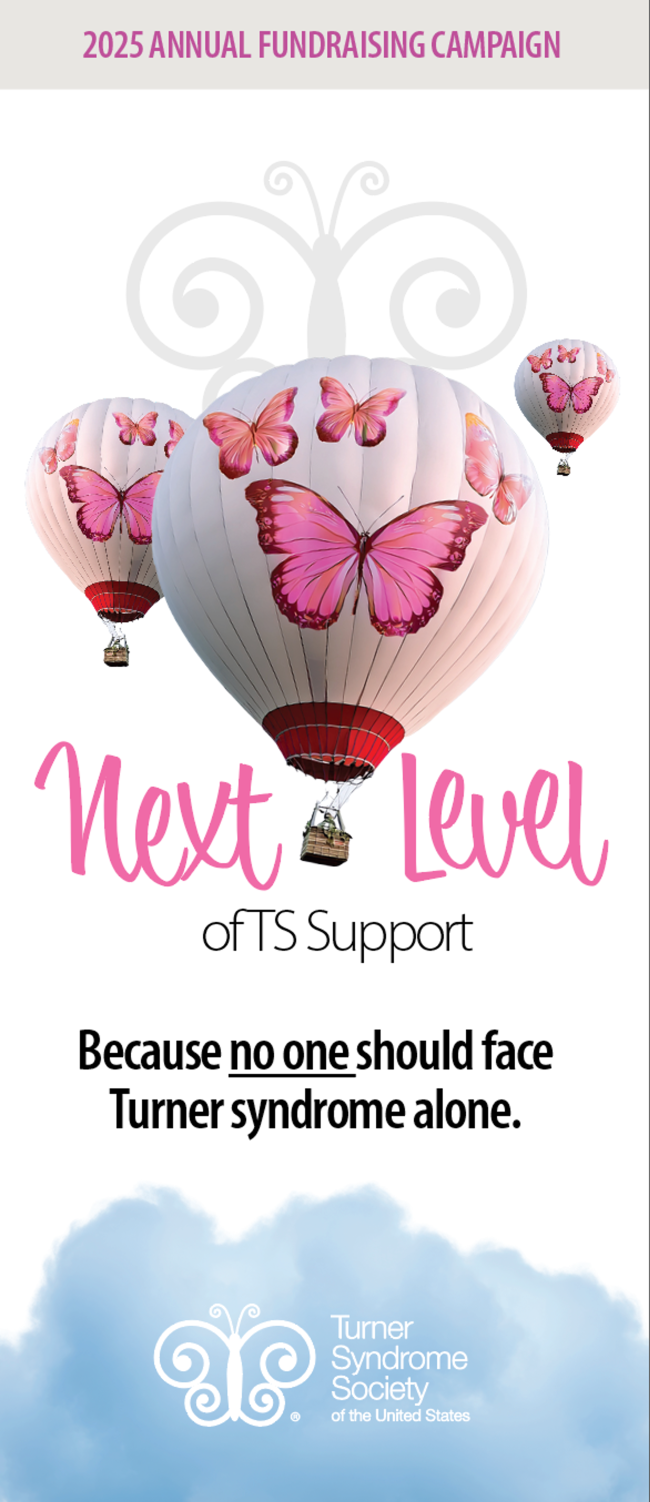
Women and girls with Turner syndrome deserve care, community, and connection at every stage of life. Medical support is essential — but a circle of understanding, encouragement, and friendship can make all the difference.
For 38 years, the Turner Syndrome Society of the United States (TSSUS) has been a steady source of both. Through trusted medical guidance, compassionate social programs, and innovative new initiatives, TSSUS helps thousands of individuals with TS feel supported, empowered, and never alone.
Your gift to the 2025 TSSUS Annual Fundraising Campaign directly strengthens this mission. When you give, you’re not just donating — you’re lifting up girls and women with Turner syndrome across the country and around the world.
We truly can’t do this without you. Please consider making a gift to TSSUS today. Donate here:
Your generosity has already carried us this far. But to reach the Next Level, we need you with us again today. To date, we've raised $46,000 toward our $90,000 goal. Can you help?
| | Exciting Research Updates form the TSRR | | |
The TSSUS Turner Syndrome Research Registry (TSRR) continues to contribute valuable information to the repertoire of knowledge we have about Turner syndrome (TS). In this most recent report, we share cardiovascular findings from registry surveys 1 - 3. Thank you to all of you who have taken the time to participate in the TSRR and complete the surveys.
| | |
CARDIOVASCULAR HEALTH FINDINGS FROM SURVEYS 1- 3
Our current analysis uses data from the TSSUS Turner Syndrome Research Registry (TSRR) cardiovascular questions asked in Surveys 1- 3. The REDCap export contained 1,623 survey records, representing 1,042 unique participants. Because some people completed more than one survey, we collapsed all responses to one record per participant.
To focus on individuals who actually provided cardiovascular information, we excluded 122 participants who did not answer any of the cardiovascular questions in Surveys 1 or 3. This left an analytic sample of 920 participants with at least one cardiovascular response.
-
The overall pie chart in this report is based on these 920 participants.
-
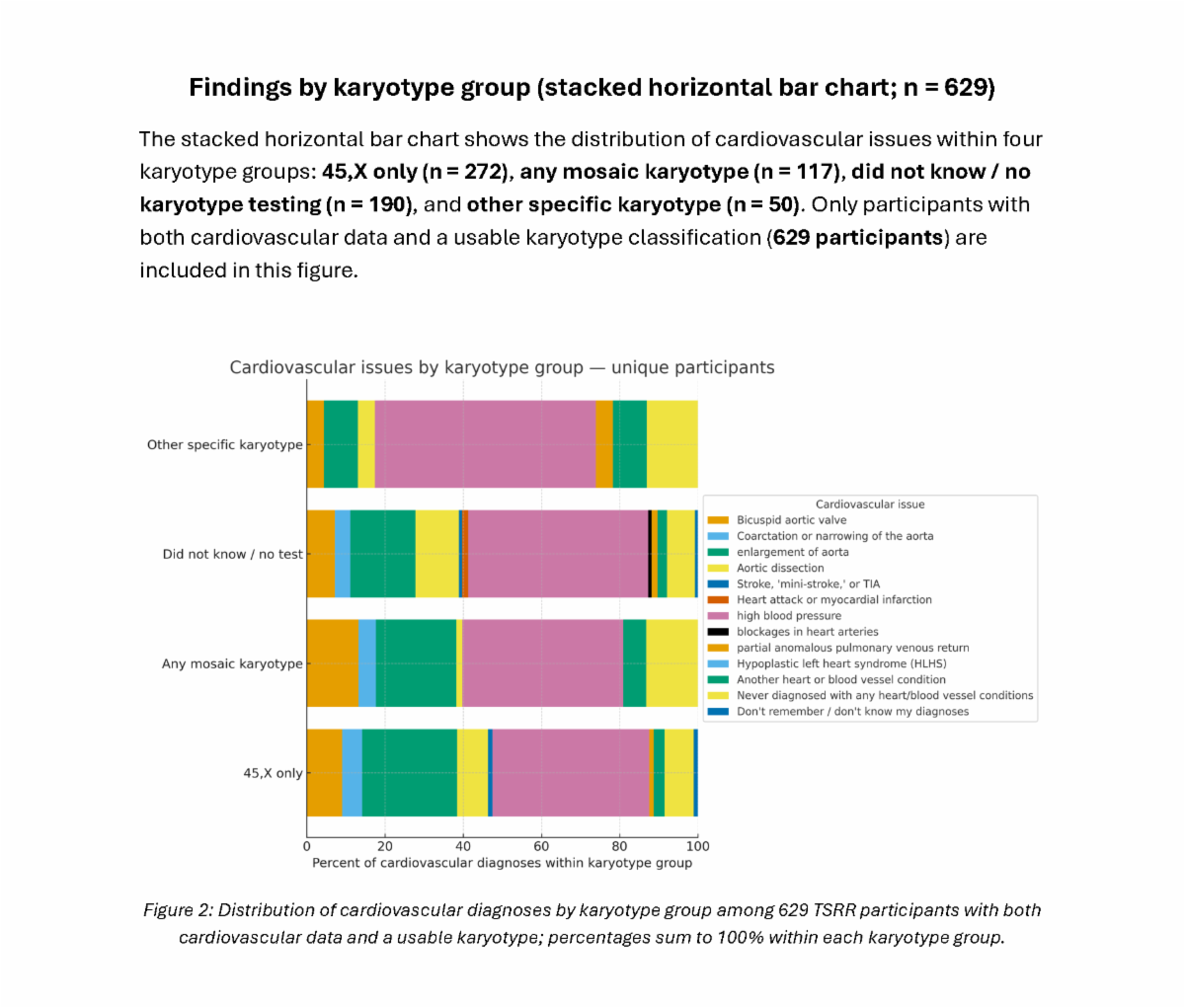
The stacked horizontal bar chart by karyotype is restricted to participants who also had a usable karyotype classification. After excluding those with missing or “skipped/NS” karyotype information, the stacked chart includes 629 participants: 45,X only (n = 272), any mosaic karyotype (n = 117), did not know / no test (n = 190), and other specific karyotypes (n = 50).
| | |
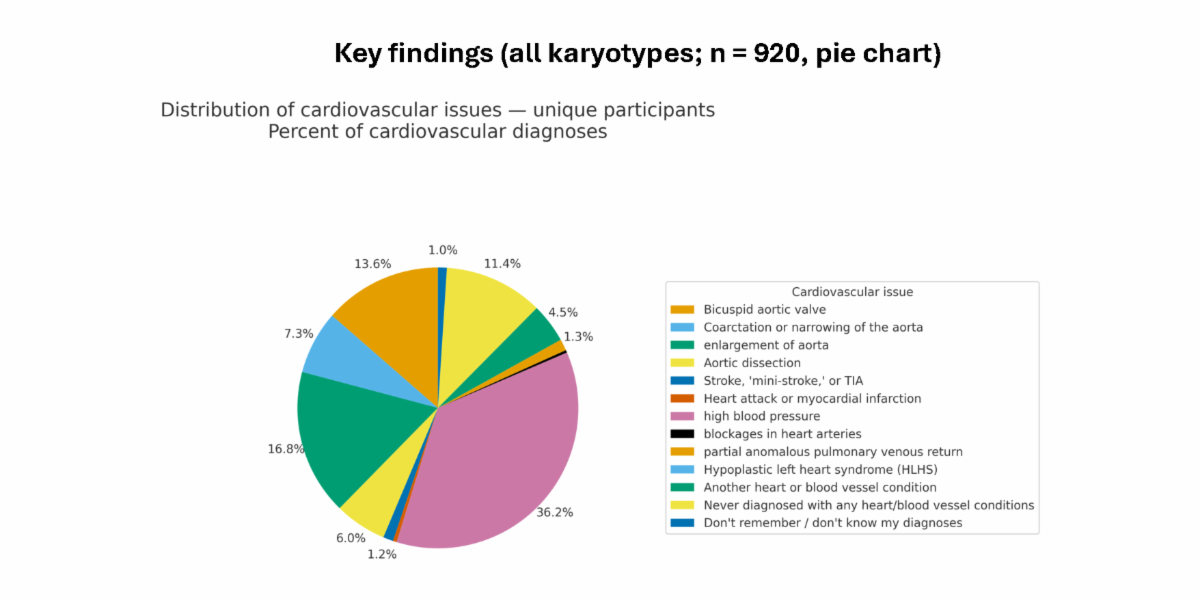
The overall pie chart shows how these 920 responses are distributed across specific cardiovascular issues:
- High blood pressure was the single most common issue, accounting for 36.2%.
- Enlargement of the aorta made up 16.8%, and the bicuspid aortic valve contributed 13.6%. Together, these aortic/valve problems represented nearly half of all recorded cardiovascular issues.
- “Never diagnosed with any heart/blood vessel conditions” accounted for 11.4%, indicating that a minority of participants with cardiovascular data reported no known diagnoses.
- Coarctation or narrowing of the aorta made up 7.3%, and “another heart or blood vessel condition” contributed 4.5%.
- More serious vascular events were less common but still present in the overall distribution:
- Aortic dissection: 6.0%
- Stroke, “mini-stroke,” or TIA: 1.2%
- Heart attack or myocardial infarction: 0.4%
- Additional issues made up smaller slices of the pie:
- Partial anomalous pulmonary venous return (PAPVR): 1.3%
- Blockages in heart arteries: 0.3%
- Hypoplastic left heart syndrome (HLHS): 0.0% in this dataset.
- “Don’t remember / don’t know my diagnoses” accounted for 1.0%.
These proportions come directly from the overall pie chart, which displays the percent of all recorded cardiovascular responses attributed to each issue.
| | |
Selected patterns from the stacked chart:
- High blood pressure was common in every group:
- 45,X only: 71 of 272 (26.1%)
- Any mosaic karyotype: 28 of 117 (23.9%)
- Did not know / no test: 58 of 190 (30.5%)
- Other specific karyotypes: 13 of 50 (26.0%)
- Enlargement of the aorta occurred across karyotypes:
- 45,X only: 43 of 272 (15.8%)
- Any mosaic karyotype: 14 of 117 (12.0%)
- Did not know / no test: 21 of 190 (11.1%)
- Other specific karyotypes: 2 of 50 (4.0%)
- Bicuspid aortic valve and coarctation of the aorta were present in all or most groups:
- Bicuspid aortic valve ranged from 1 of 50 (2.0%) in other specific karyotypes to 9 of 117 (7.7%) in the mosaic group.
- Coarctation of the aorta ranged from 0 of 50 (0%) in other specific karyotypes to 9 of 272 (3.3%) in the 45,X only group.
- Aortic dissection, while relatively rare, appeared in several groups:
- 45,X only: 14 of 272 (5.1%)
- Any mosaic karyotype: 1 of 117 (0.9%)
- Did not know / no test: 14 of 190 (7.4%)
- Other specific karyotypes: 1 of 50 (2.0%)
- Participants who selected “Never diagnosed with any heart/blood vessel conditions” made up a small portion of each karyotype group, ranging from 4.8% in the 45,X only group to 7.7% in the mosaic group.
Summary
In this analysis, we used data from Surveys 1- 3 of the Turner Syndrome Research Registry to describe cardiovascular health in a carefully defined group of participants. Starting from 1,623 survey records, we identified 1,042 unique individuals and then focused on the 920 participants who answered at least one cardiovascular question.
High blood pressure and structural aortic problems (bicuspid aortic valve, enlargement, and coarctation) accounted for a large share of the reported issues, while only a minority of participants indicated that they had never been diagnosed with any heart or blood vessel condition.
When we examined these findings by karyotype group among 629 participants with usable karyotype data, we observed cardiovascular concerns across all groups, including 45,X only, mosaic karyotypes, those without karyotype test information, and other specific karyotypes.
Overall, these results confirm that cardiovascular surveillance remains a critical component of Turner syndrome care for all TSRR participants, and they highlight ongoing opportunities for blood pressure control, cardiac imaging, education, and follow-up to reduce long-term cardiovascular risk.
| | |
University of Iowa - Diabetes Study
At the 2023 TSSUS National Turner Syndrome Conference, Dr. Pinnaro’s team at the University of Iowa launched an important study exploring the connection between diabetes and TS. Thanks to the incredible commitment of our community - many of you traveled to Iowa and participated - their recruitment goals were met!
The study is now closed, and the team has begun analyzing the data. This research could provide valuable insights into diabetes management for individuals with Turner syndrome, and we can’t wait to share their findings with you as soon as they’re available.
| | |
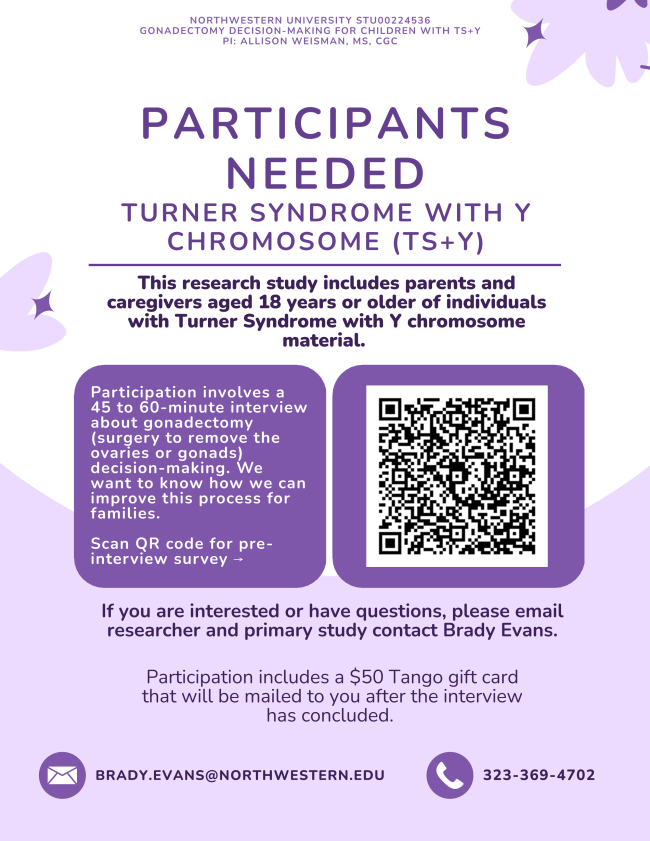
Are you the parent or caregiver of a child (any age) who has Turner syndrome with Y chromosome material (TS+Y)? If so, there is a current research project (by interview) in need of your participation.
This research study hopes to improve the process of gonadectomy decision-making for patients and families of children with Turner syndrome with Y chromosome material (TS+Y). Eligible participants are caregivers of children with TS+Y. Participation in this study includes completion of a brief eligibility survey, e-consent form, brief demographic survey, and a 30–60-minute interview with Student Investigator Brady Evans.
All study participants will receive a $50 Tango gift card via email. The interview will include questions about your experience learning about Y chromosome material (TS+Y), tumor risk, and surgery (gonadectomy), as well as how you felt during this process.
This study is voluntary and any identifiable participant information will be de-identified. We hope that by learning about caregiver perspectives and experiences, we can improve the complex process of gonadectomy decision-making for patients and families in the future.
Studies like these come to us through the TSSUS Turner Syndrome Research Registry (TSRR) and are then reported back to the registry so that knowledge and findings about Turner syndrome are cumulative - one study informing another. Knowledge and understanding of TS only increases when the TS community participates.
Please read the included flyer for information on how you can be a part of this important study.
If you have not yet entered your information into the TSRR, please do that HERE.
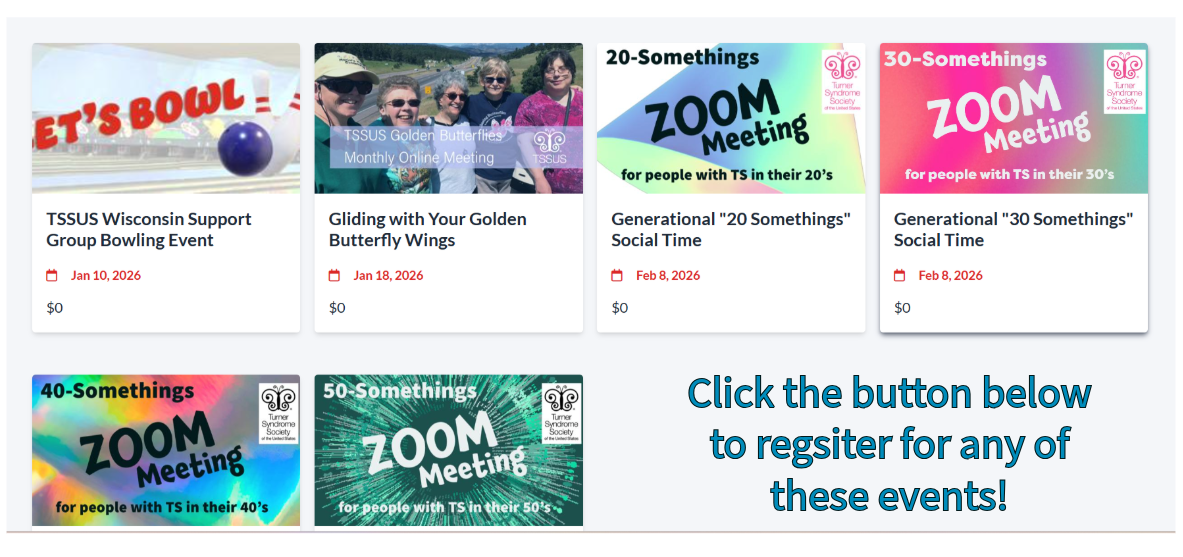
| | Let's Talk About the TSSUS Generational Social Time Meetings Online | | |
Generational Zoom Social Support Calls: A Space for Connection and Growth
Our recent Generational Zoom calls were well attended, and the conversations were truly inspiring! In one group, a new participant shared that her therapist encouraged her to join—and that opened the door to a meaningful discussion about the benefits of therapy, the challenges we face, and the accomplishments we celebrate in daily life.
If you haven’t joined an online call lately, now is the perfect time! These sessions are a wonderful way to connect, share, and boost your well-being.
Don’t miss out—your voice matters, and your presence makes a difference!
You can check the TSSUS Events Calendar for all upcoming events and register for the Zoom Socials HERE.
| | |
Did you know that TSSUS offers individual, family, and professional memberships? A TSSUS membership allows you to have access to all TSSUS scholarship opportunities, including those for adoption, conference, college, and life-enhancement opportunities. Members also receive a discount on conference registration.
Membership isn’t required—our resources are free for everyone. But members enjoy extra perks like scholarships and conference discounts.
You can become a member for as little as $45/year, or by becoming a supporter of the TSSUS Butterfly Society Monthly Giving Program at $15/more or greater.
Now is a great time of year to add or renew your membership, or to join our Butterfly Society with a monthly donation.
| | My TS Stories - Featuring YOU! | | |
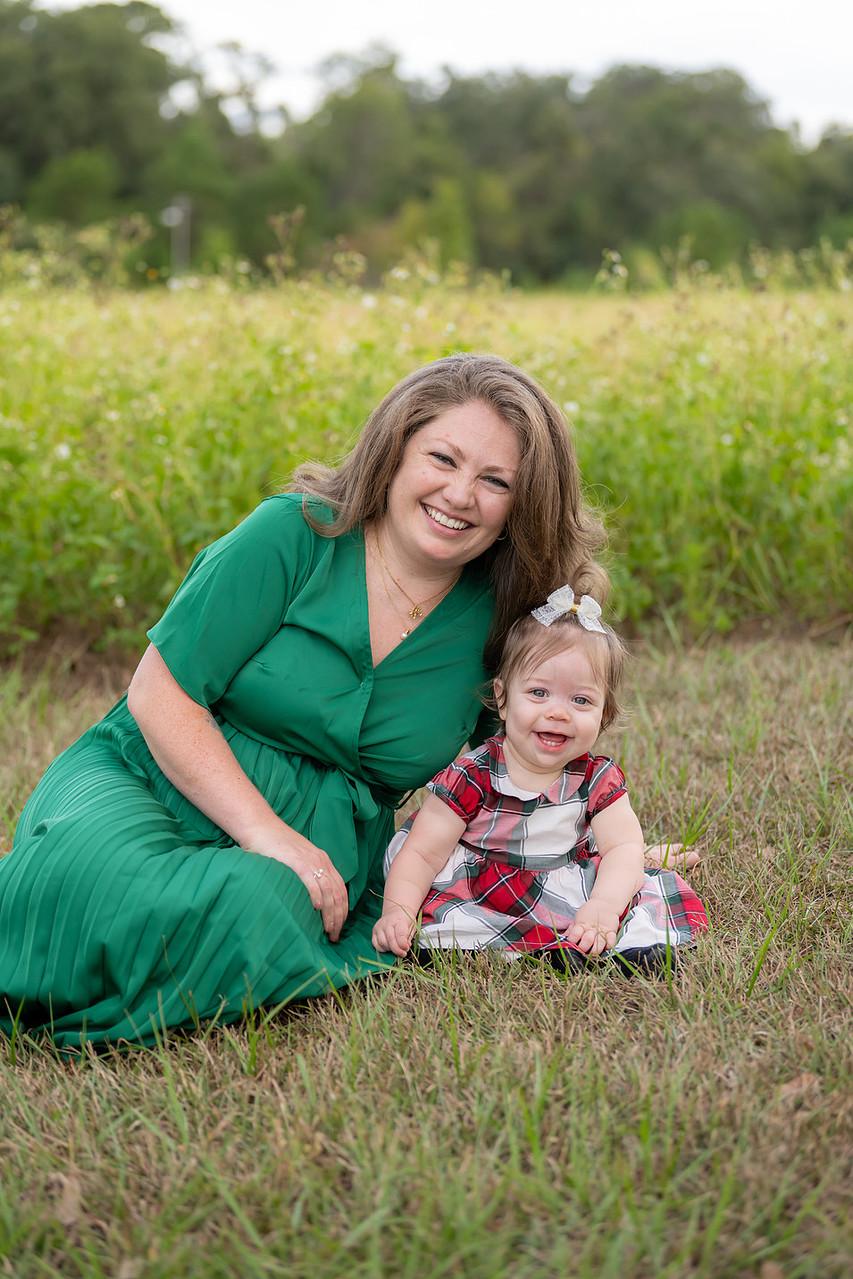
My Daughter was the Key to My Diagnosis - by Amanda Bosman
I was extremely sick when I was little. I was born in 1992, and no one could explain why I was so sick and I was diagnosed with failure to thrive. Fortunately, I recovered but no one was sure why.
Growing up, I was always much shorter than my two sisters and looked very young. I also had trouble in school as I was diagnosed with dyslexia, but I was able to graduate college and law school, pass two bar exams, and go on to become a practicing attorney.
Fast forward to 2024 and I got pregnant with my baby girl. The NIPT results came back when I was 16 or 17 weeks pregnant and indicated a finding of Turner syndrome - “lack of X chromosomal material.” I had heard of it before but as I did research, I was absolutely terrified. The thought of my baby’s heart not developing consumed me. All the doctors told me we just had to wait until the anatomy scan to see if her heart developed.
Later that night (after the NIPT results) my parents called me and said it had to be me. They researched Turner syndrome and said it was exactly what they went through when I was little. My sister-in-law knew a prenatal genetic counselor who agreed to see me. She got my bloodwork taken and after weeks of worrying for my baby, I was officially diagnosed with mosaic Turner syndrome. Fortunately, my daughter does not have it. We tested her after birth.
After being diagnosed, my thoughts then shifted to how my baby saved my life. Doctors started doing all the routine testing they could do while I was pregnant. Tests which should have been done my whole life.
If it wasn’t for prenatal testing, I would have never known. Learning more about TS and my general health as I age, I am extremely fortunate as I do not have any significant complications. I discovered I have a horseshoe kidney and a minor aortic issue; however, they just require routine monitoring.
I was also so blessed to be able to get pregnant as I know most women with TS generally cannot. I also thank my lucky stars that I opted for an “elective” c-section. I received judgements from many people but I knew in my heart labor wouldn’t be safe. My cardiologist later agreed that it would have been an extreme strain on my heart that he wouldn’t have recommended, which could have been unnecessarily dangerous.
Being diagnosed late in my life, I am happy to share my story and raise awareness so women with Turner syndrome can get properly diagnosed and treated throughout their life.
|
| Read more inspiring, challenging, and heartfelt TS Stories on the TSSUS Blog HERE. | | TSSUS Birthday Society Winner | |
The TSSUS Birthday Society December Winner!
Please join us in congratulating Annalee Swanson of Illinois for being randomly selected as our December TSSUS Birthday Society winner!
Annalee will receive a swag bag with little gifts from TSSUS.
If you are a person with TS (or the parent of a child with TS) and you'd like to be a part of the Birthday Society, please join
HERE.
| | | | For a limited time, all t-shirts in the TSSUS Butterfly Store are just $5 each (while supplies last)! This excludes the 2025 conference shirt. Now is the perfect time to get a back-up of your favorite style, or to pick up a few high-value holiday gifts for a very low price! Shop HERE. | | |
TSSUS offers a wide-ranging event calendar that includes events that are purely social, and others that offer valuable and important educational topics. Pinky swear that you'll check the Event Calendar on the TSSUS website often to find an event that interests you.
All of our events require pre-registration. You can register for all of these events on our website using the Event Calendar link below.
| | Check the Events Calendar for events scheduled for 2026! Make it a habit to check the calendar OFTEN so you don't miss out! | | Stay connected and in the loop on the latest news with TSSUS. Make some new friends. Join one of our official TSSUS Facebook groups! | | |
| |
Follow Us on Facebook
Read LOTS of TS Stories on our Facebook page and stay up-to-the-minute on what's happening!
| | | |
Thank you for taking the time to read and share the TSSUS Connect newsletter. If you have something you'd like us to consider for publication, please send it to us!
Turner Syndrome Awareness Month is coming up in February! Be sure to share your TS Stories so we can spotlight YOU. Please donate to the TSSUS Annual Campaign - every donation counts.
All the best!
Becky Brown, National Director of Development & Communications
Turner Syndrome Society of the United States
Toll Free: 800.365.9944
| | | | |