Advancing the Turfgrass Industry in New Jersey and the World
TURF TIP TIME #16 with the NJTA:
Managing False-Green Kyllinga
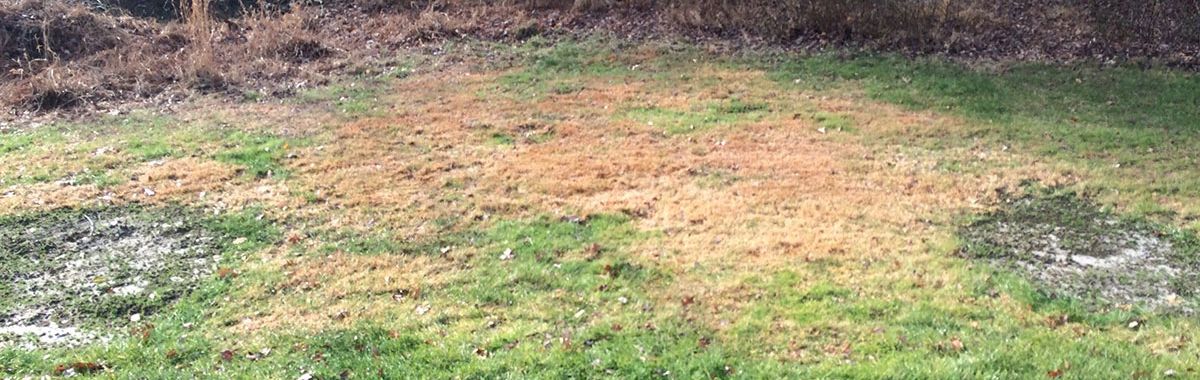
The first step of false-green kyllinga management is recognizing that you have a problem (as described in NJTA Turf Tip #15: Identifying Kyllinga Before It Rears Its Ugly Head ). Once you have determined that you have a false-green kyllinga infestation on your property, you can take steps to control the weed.

Sod Cut It Out
If it is a small enough infestation, “you can control this weed simply by physically digging or sod cutting it out,” said Dr. Matthew Elmore, a Weed Science Extension Specialist at Rutgers University.

It is important to make sure that you cut deep enough to remove the underground rhizomes. The advantage of physical removal is that seeding or sodding can be completed immediately after removal with no herbicide residual concerns. The disadvantage is that this strategy is expensive and can result in the area being unavailable during the renovation.

If you were to physically dig out nutsedge, you would inadvertently trigger its undergro und tubers to start growing and you would end up with more of the weed than you started with.  However, this type of inadvertent triggering is not a concern with false-green kyllinga.

“Kyllinga doesn’t have those underground storage tubers so you can actually use a sod cutter, even a shovel, if the infestation is small,” said Dr. Matthew Elmore. “You don’t have to go very deep. However, sod cutting is not going to be an option if you have acres of it." 
Herbicide Selection
For larger infestations of false-green kyllinga, herbicide selection is critical. The products are similar to those used for yellow nutsedge, but be sure to double check and apply at the rate indicated on the product label.

“It's not going to be one spray and then walk away. For most cases, it’s going to be multiple applications. You will need to plan for a multiple application strategy going into the season,” Dr. Elmore recommends.  

Also, it is important that you rotate herbicidal modes of action to prevent populations of herbicide-resistant weeds from developing.
Well-Timed Herbicide Applications
“Proper timing of herbicide applications is key,” said Dr. Elmore. “When you see those ugly seed heads in July, August, and September, you have already missed the best time to control it.”

Herbicide applications should be made shortly after kyllinga shoots have fully emerged in the spring. This timing is essential to reduce rhizome production and limit the total number of follow-up applications required for control. The first application is typically made in late May to mid-June. Make follow-up applications after re-growth is observed and sufficient shoot tissue is present for herbicide absorption. This is typically four to six weeks after the initial application.
Improve Water Drainage
“It can be expensive, but improving drainage can help,” said Dr. Elmore. Kyllinga may be indicative of chronically excessive soil wetness, which should always be addressed as part of an overall treatment program. Much like nutsedge, kyllinga is often found in areas with excessive soil wetness, which likely increases its competitive advantage over desirable turfgrass. Especially in cases of severe infestation, modifications to the irrigation regimen and/or drainage should be considered in conjunction with herbicide programs.

Overall, a comprehensive program that combines well-timed herbicide applications with other cultural practices, such as fall seeding and increasing mowing heights, will yield the best results in recovering desirable grass from a false-green kyllinga infestation. 


[Photos from Matthew Elmore]
NJTA's TURF TIP TIME Brought to You By:
Dr. Matthew Elmore
A Weed Science Extension Specialist at Rutgers University, Matt earned his B.S. in Turfgrass Science from Penn State University before earning an M.S. and Ph.D. from the University of Tennessee. Prior to joining the Scarlet Knights, Matt was a Turfgrass Extension Specialist for Texas A&M AgriLife in Dallas. His research at Rutgers is focused on novel strategies to control weeds with fewer pesticide inputs. 
25th Anniversary - NEW DATE - October 5th
Mail/Fax in a print PDF Registration Form. 

Field Days in July and Green Expo in December are still scheduled. Stay safe and healthy everyone!