Advancing the Turfgrass Industry in New Jersey and the World
TURF TIP TIME #17 with the NJTA:
Don't Be Afraid to Aerate Around Pre-Emergence Herbicides
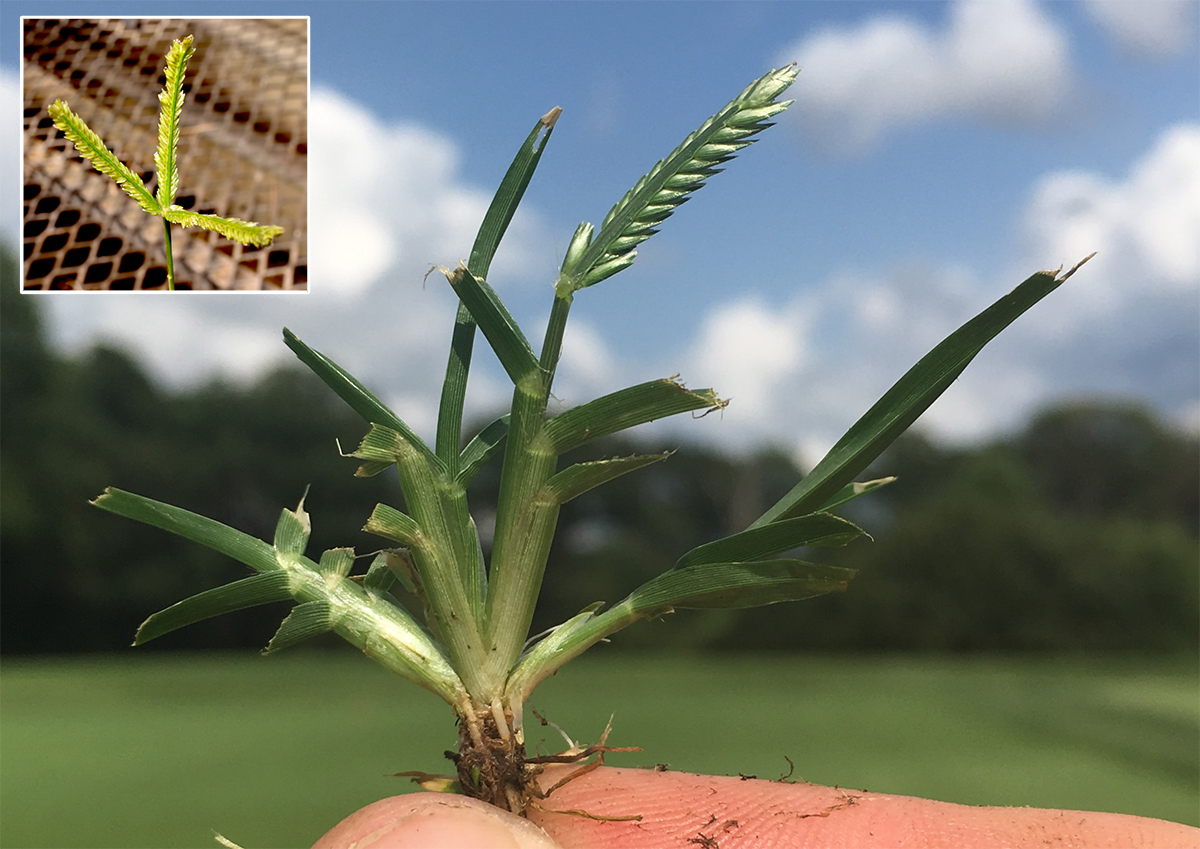
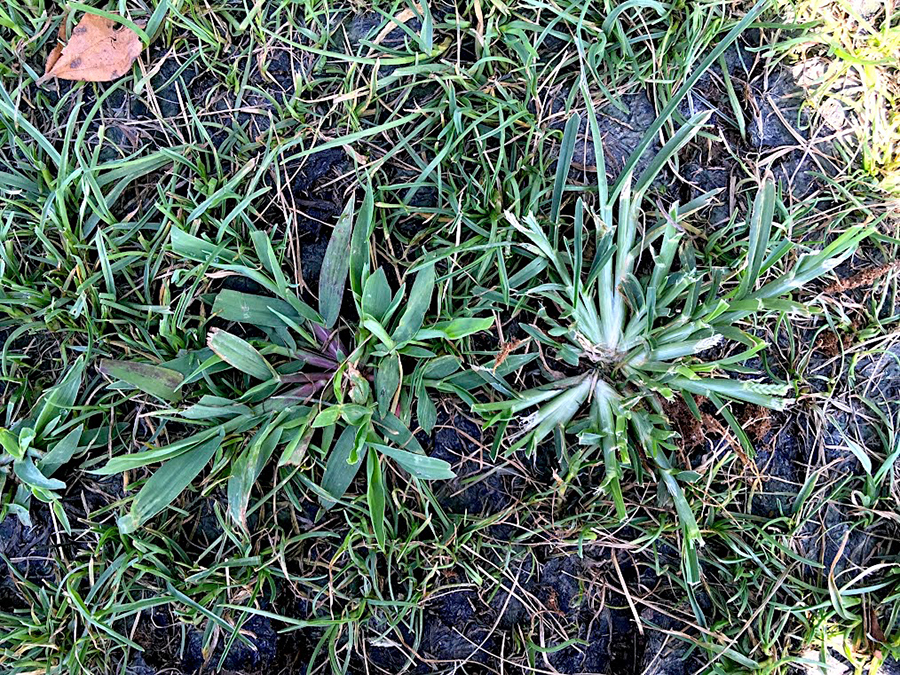
Goosegrass is an annual weed that produces thousands of seeds which remain viable in the soil for several years, making it a perennial problem! With its whitish, flattened stem, and prostrate growth habit, goosegrass is most commonly found in high-traffic areas with compacted soil and poor turfgrass cover.
First and foremost, cultural practices to promote a dense stand of desirable turfgrass is your best defense. For this, apply nitrogen fertilizer in early autumn and, if needed, in spring when cool-season grasses are more competitive than this warm-season weed.

If able, mow at the highest height recommended for your particular turfgrass species. This will shade the soil and create a more difficult environment for weed seedlings to survive. Another tip is to irrigate deep and infrequently because light and frequent watering throughout the growing season keeps the soil surface moist, encouraging weed seedlings to survive and grow.

In areas with a history of infestations that cannot be managed with cultural practices alone, herbicides are an effective and economical option when applied at the proper time and rate.
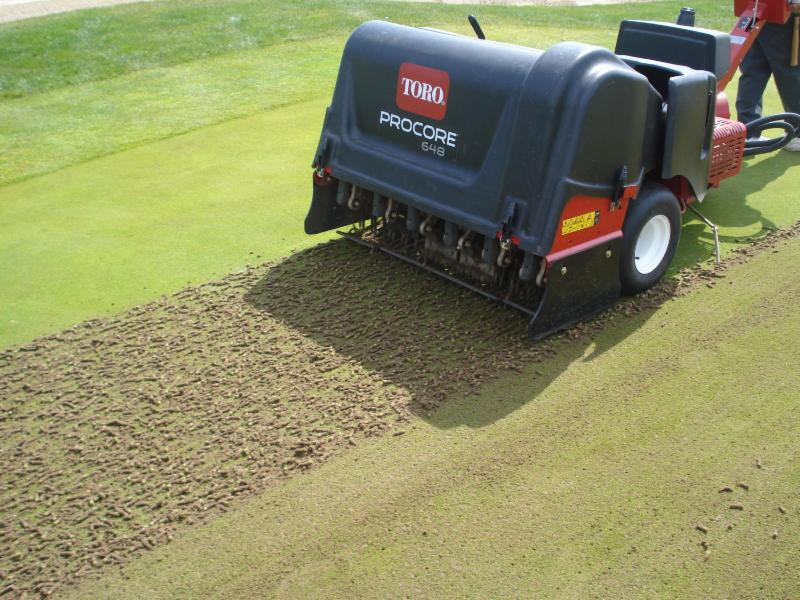
Because pre-emergence herbicides create a barrier in the soil, it is a common belief that aeration will disrupt this layer, defeating the purpose. This is not true!

“Don’t be afraid to aerate before or after applying pre-emergence herbicides,” said Dr. Matthew Elmore, a Weed Science Extension Specialist at Rutgers University.

Research indicates that aerifying after a pre-emergence application will NOT disrupt the herbicide "barrier" in the soil or reduce the efficiency of its weed control.

Goosegrass grows best in compacted soil. “That’s a really big component of it,” says Dr. Elmore. Aerification will not only make the living conditions less desirable for the weed, it will also promote the growth of a healthier turfgrass canopy to crowd it out of the neighborhood.
“May and June are really good months for growing turf and so trying to reduce compaction during the springtime is really important,” he said. “Again, don’t be afraid to aerify around pre-emergence herbicides either before or after application.

In short, if compacted soil is contributing to the growth of goosegrass and  limiting the growth of desirable turfgrass, do not hesitate to aerify even if you have applied a pre-emergence herbicide. Aerification is beneficial and should not significantly affect herbicide performance.

Click here to read this and previous NJTA Turf Tips!
NJTA's TURF TIP TIME Brought to You By:
Dr. Matthew Elmore
A Weed Science Extension Specialist at Rutgers University, Matt earned his B.S. in Turfgrass Science from Penn State University before earning an M.S. and Ph.D. from the University of Tennessee. Prior to joining the Scarlet Knights, Matt was a Turfgrass Extension Specialist for Texas A&M AgriLife in Dallas. His research at Rutgers is focused on novel strategies to control weeds with fewer pesticide inputs. 
Due to COVID19, we have re-scheduled our events. Online Registration and Sponsorship links below.

Monday, October 5, 2020 ( Re-scheduled from May 4)  

Rutgers Turfgrass Research FIELD DAY for Golf & Fine Turf, Lawn, Landscape & Sports Fields Wednesday, October 7, 2020 ( Re-scheduled from July 28 & 29)