In this issue:
Tech team weathers challenges during pandemic
Levy dollars translate into success for ELL program
FFA students show at Spring Fair after difficult year
Optional virtual model for fall explored
Kindergarten registration for fall 2021 still available
Counter narrative books added at elementary
Athletes wrap up Season 1 sports
News briefs
Spotlight on Cedar River
What's for lunch?
Coming up in Bear Country
|
|
Tech team weathers challenges during pandemic |
|
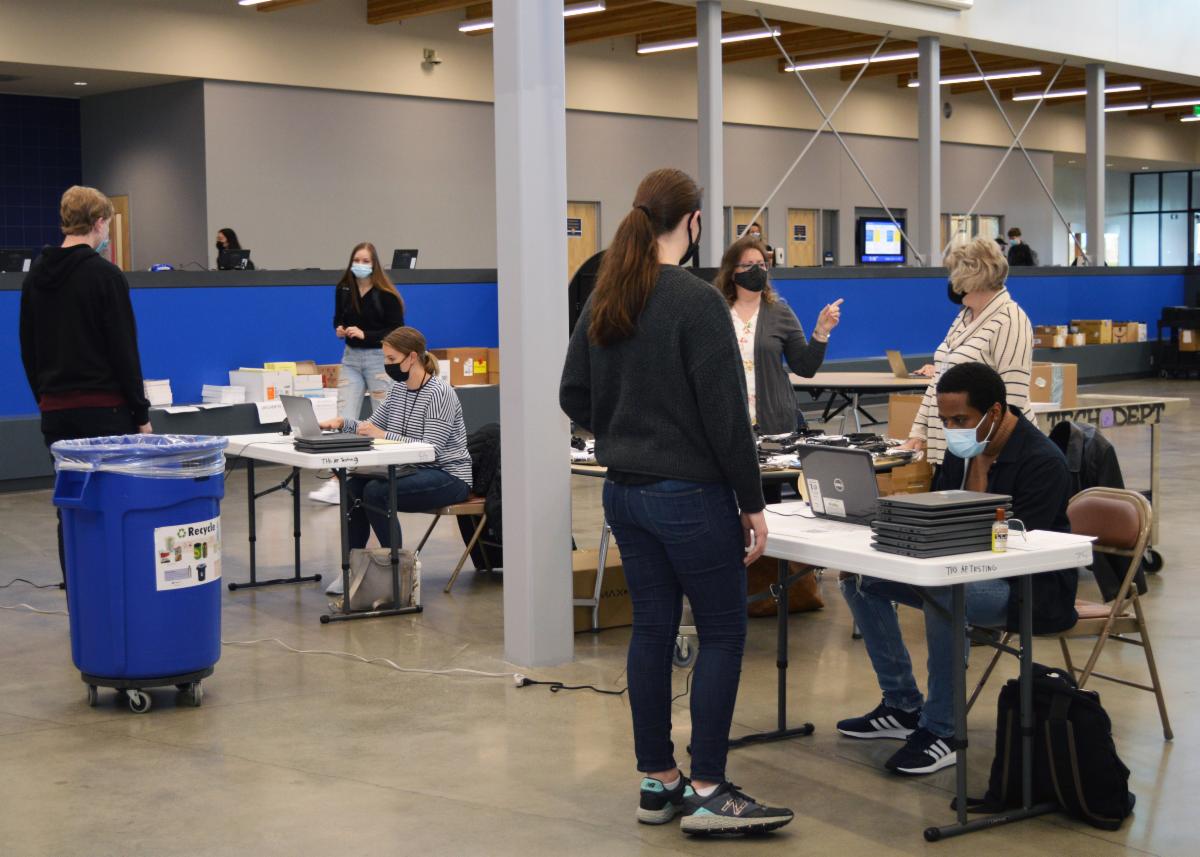
On April 12 and 13 when additional Tahoma High School students returned for hybrid learning, members of the Technology Department distributed Chromebooks and helped get students connected. |
|
Editor’s note: This is the second in an occasional series designed to share more about different district teams and their contributions to the day-to-day operations of Tahoma as well as since the pandemic began. For the first article about nurses, click here.
As with many professions throughout the community and the school district, in the past year, Tahoma’s Technology Department has had to adapt, adjust and absorb new tasks and overcome numerous challenges.
“Our Technology team has been nothing short of amazing this past year. If we think back to a little over a year ago before COVID-19, we had successfully just passed our Tech levy,” said Lori Cloud, Assistant Superintendent and Finance Director. “And one day, COVID happened and our technology needs quickly changed -- our team switched on a dime in order to serve our students.”
“In partnership with our Teaching and Learning Department, this team of people flipped the switch and began making remote learning a reality so that our teachers and staff could serve our students. It was done quickly, efficiently and successfully,” Cloud said.
At a glance, in addition to their “usual” duties, since last March, Technology staff have:
- Distributed 5,228 Chromebooks
- Distributed 469 wifi hotspots
- Processed and repaired more than 566 Chromebooks (some additional cases are not represented here).
- Resolved/processed 11,153 support tickets, which doesn’t include calls that don’t get turned into a support ticket. Sometimes staff members ask for help on behalf of a student/family, so it’s difficult to separate how many tickets represent staff and how many for students.
- Since Jan. 1, 2021, when they began to track curbside appointments, Tech staff have had 513 “curbside” appointments.
Technology Supervisor Doug Eash said that the curbside support, as well as offering direct support to students and parents, and helping users with new programs such as Zoom have added a lot of complexity to his team's work in the past year.
Parent Shayna Laidlaw, who has students at Lake Wilderness Elementary and Maple View Middle School, said that the past year has been rough for her family. When her son’s computer wasn’t working, she said she was dreading calling the Tech Department to report the issue.
“... I thought it would be a mess to call the tech team to let them know my fourth-grader broke his laptop,” Laidlaw said. When Desktop Support Technician Linda Parker began to talk with Laidlaw and offer assistance, she explained that while there might be a fee, that the department’s primary focus was on getting students connected with the proper tools, Laidlaw said. “In a world where everyone is worried about their bottom line, how much things cost, how much more they can charge for the inconvenience for whatever the issue is, TSD just wants to take care of the kids and worry about the cost later. I’m blown away.”
Senior Systems Engineer JD Young said that the need to support remote users has meant making sure users have access to the needed resources and technologies, and trying to implement those rapidly while continuing to support the existing infrastructure. “My challenge has been the additional time needed to gain additional knowledge, provide solutions and put the solution immediately into production,” Young said.
“Being a small department that supports many users and devices, it can be a unique challenge to provide support to everyone and everything,” he said. “Our frontline support staff has added the responsibility of curbside and remote support for staff and (students/families).” Supporting remote users in their home environments can be particularly challenging because there are so many variables and factors that affect individual users.
One solution Young provided came after staff and students in CTE classes needed remote access to Adobe and Auto Desk productions for video production, multimedia, robotics and AutoCAD. Young helped set up a remote working environment using Windows Virtual Desktop (WVD) in Azure. “It involved creating multiple private clouds in Azure on the West and East coast, connecting to our data centers and providing remote users access to resources within our environment,” he explained. “One benefit of WVD is that users access it through a web browser, for the most part making it device agnostic, and users do not need to have a device that supports those applications.”
That shift was vital for CTE students who were attending school remotely but needed access to those programs for their classes. The team’s work troubleshooting Adobe issues and virtual servers was outstanding, THS teacher Rick Haag said. “I cannot say enough about the level of service (the Technology) Department has provided,” Haag added.
Maple View Middle School teacher Kathryn Strojan said she loves the fact that she can ask Desktop Support Technician Jenny Dague any question, no matter how rudimentary it may be.
“Jenny never fails to answer my questions (even the dumb ones) and this week, she made me look like the hero even though it was all her when she helped one of my students get a needed Chromebook. Her sense of humor, problem-solving attitude and ability to fix any situation make her one of the people I most love seeing walk down the hall,” Strojan said, and dubbed Dague a “tech genius.”
Glacier Park Principal Shelly Gaston said that the Technology team has always been a critical part of building and district success in engaging and empowering students. However, the past year has been something else altogether. “I never imagined that we would be asking them to pull off such an incredible feat,” Gaston said. “The incredible speed at which we were able to transition into 100% remote learning last spring would not have been possible without them.”
When additional middle school students recently returned to the buildings for hybrid learning, there were some significant technology challenges in getting all students online and solving other issues, Summit Trail Principal Sean Cassidy said. “The Tech team, led by Kimberly Allison with Rhonda Watson and Brian Campbell, swooped into Summit Trail on the first days of hybrid learning and instantly made a huge contribution,” Cassidy said. “What could have been a struggle was turned into a success. We also greatly appreciated the work by Dean Pachl behind the scenes to improve our wi-fi issues with all these new devices. It was a great opportunity to see many different parts of our school district come together to support student learning!”
|
|
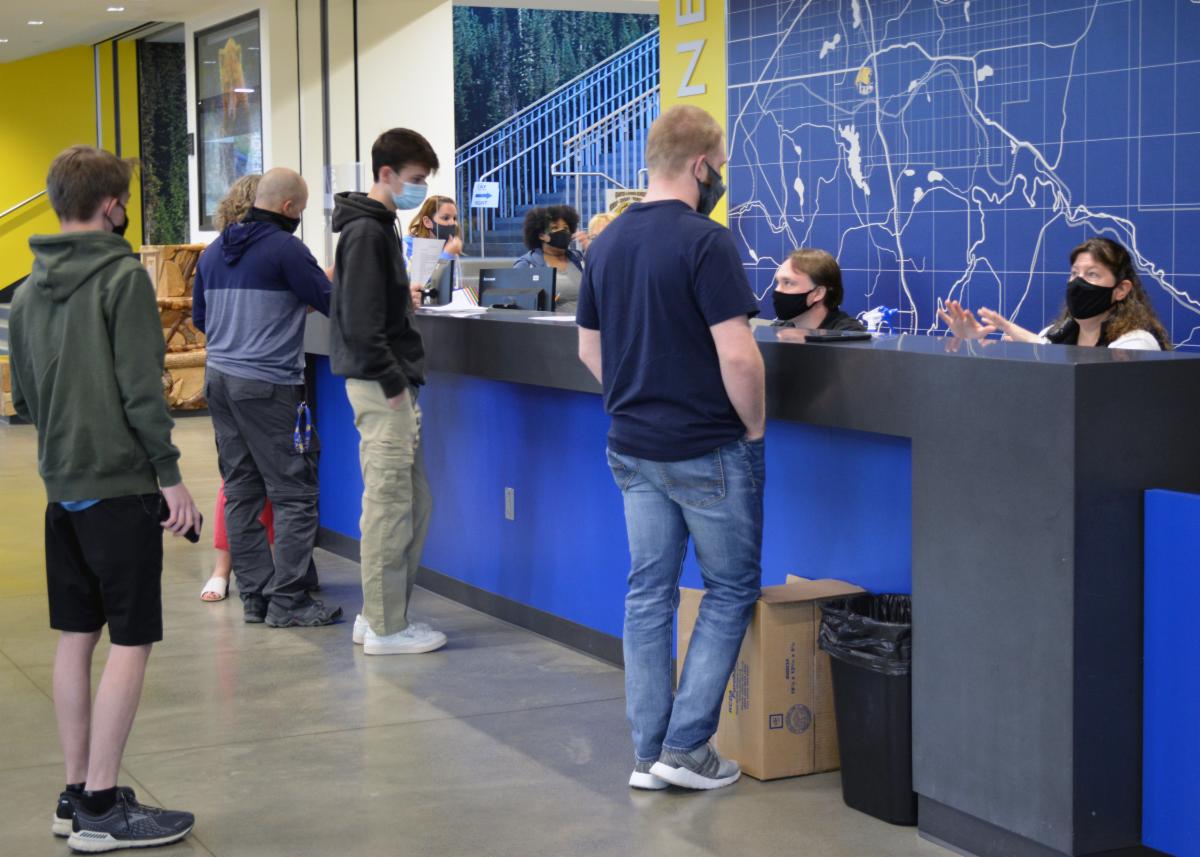
On April 12, students returning for hybrid learning get assistance at the help desk from Desktop Support Technicians Sara Garcia, right, and Brian Campbell. |
|
Levy dollars translate into success for ELL Program |
|
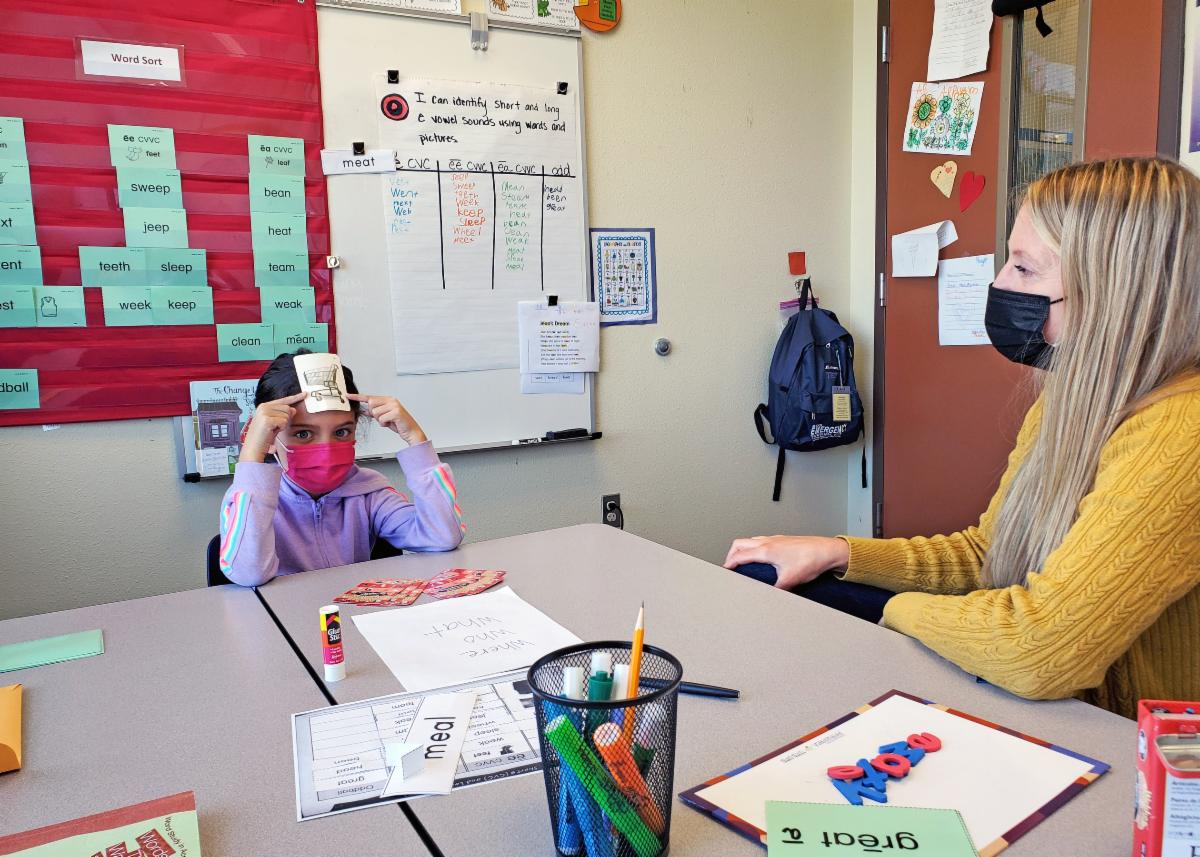
Emma G. plays the game Headbandz with TES ELL teacher Kristy Kuraspediani recently. Playing games helps make practicing speaking English fun.
|
|
Families are literally coming from around the world to Maple Valley and the Tahoma School District (TSD). They come for different reasons -- a new job, to be near family or seeking refuge. In addition to moving to a new country, with a different culture, different food, and different ways of doing things, some of the families are also learning English as a new language. The students are welcomed to the English Language Learner (ELL) program by Tahoma’s certificated ELL teachers and paraeducators. At Rock Creek and Tahoma Elementary, they are also welcomed by a sign in their own language.
Kristy Kuraspediani, a Tahoma Elementary School (TES) ELL teacher, said a common ELL scenario is that a student comes to school feeling angry, frustrated, isolated and struggling with the inability to communicate effectively. Step by step with patience, understanding and quality curriculum, these students learn listening, speaking, reading and writing in English. As language confidence grows, communication and smiles increase.
Tahoma’s ELL teachers encourage students that they are not taking away their language or their culture, but rather adding English to help with communicating. Kuraspediani said that when some students move here from another country their families want to ensure their homeland language and culture are not lost, so they enroll their student in a weekend class to continue learning in their native language.
Tahoma students speak 47 languages at home other than English, Katie Anthis, TSD’s K-12 ELL Coordinator, said. The ELL program has supported TSD students for years. The program is budgeted at $1.1 million for the 2020-2021 school year. Of that amount, $567,382 comes from the Educational Programs and Operations Levy that voters approved in February 2020. The remainder is covered by $504,441 in state dollars, and $35,504 in federal funds.
“All of our learners in Tahoma need to have equitable access to general education curriculum. Our ELL program is led by exceptional staff who are committed to assessing our students’ strengths, teaching specific skills that help to fill the gaps in English language development, and providing access to caring, supportive staff who believe in each and every student,” said Marianne Nafezi, Special Services Coordinator. “Our staff is committed to supporting the families of our English Language Learners, supporting with home communication, translation and interpretation where needed. We are continuously learning and growing as we strengthen our work with our valued families, students and Tahoma staff.”
Anthis shared that over the past four years the ELL program has grown from 170 students to 299 students enrolled this year. The program is increasingly being accessed by families in the district, and to meet that growth, three certificated ELL teachers were hired and additional paraeducators are helping to support the students. There is no way to project the growth number of enrollment in the ELL program year to year, because there are so many factors that impact this number. For example, one year an area church helped several families that came from the Ukraine. Another year, employers in the area did a significant amount of hiring of international employees.
Anthis explained that because Tahoma is relatively small compared to districts such as Kent and Renton, the ELL program uses the “pull out” model, which calls for students to leave their general education class either for 1-to-1 time or in small group time. Occasionally, the ELL team also uses the “push-in” model, and the ELL teacher goes into the general education classroom to support a small group of cohort students (same grade level) so the students stay with their peers and work the same class material. Because of the curriculum used, the students can be from different language backgrounds, all in the same small group and receive equal benefit from the support being provided, Anthis said. The flexibility that Tahoma’s ELL program allows helps provide support in the model that best suits the students’ needs, Kuraspediani said.
Another area of growth for Tahoma’s ELL program is curriculum. Four years ago, individual buildings were doing independent curriculum to support small groups of students. Anthis has overseen the purchase of a unified curriculum to engage students in the four pillars of English Language Learning - reading, writing, listening and speaking. Students need to establish grade level proficiency to test out of the program. Part of the curriculum for reading uses a computer access application. The other parts of the curriculum work on writing, listening and speaking.
When it comes to practicing speaking, nothing takes the place of real time, real world talk, Tahoma ELL staff members say. At TES, when second-grader Emma G. comes in for her time with Kuraspediani, they talk about outside time on a beautiful spring day. Emma talks about having fun playing hopscotch and not having enough time to complete the game. The rapport that Kuraspediani and Emma have built shows in Emma’s confidence speaking about her time playing. They move on to working through the curriculum to practice what she has been working on in class. With each exercise, her confidence in the phonics concepts grows. After working hard, they play a game of Headbandz. Playing games helps make practicing speaking English fun. Emma said ELL class “helps me with reading kinda hard words and with sounding out chunks of words. I like how we play games. I feel very good about being here.”
On one recent afternoon at TES, fifth-grader Jaire M. is prompt for his time with Aileen Aquino, ELL paraeducator. They take advantage of the beautiful weather and meet at the work tables in the courtyard. The two jump right to the work at hand, a high-interest article in Scholastic News about “Do We Still Need Movie Theaters?” As they read the article together, Jaire comes across a word he is not familiar with and, after reading the rest of the paragraph, he circles back and figures out the word. Aquino doesn’t give him the word to help him out. She said she recognized that Jaire was translating from English to his native language to figure out the word, then re-translating back to English and that this takes time.
“I have a lot of respect for ELL students,” says Aquino, acknowledging how hard they work.
Jaire said his ELL time “helps with remembering stuff, getting better at writing and better at getting information from text.”
Aquino said she encourages her students by letting them know they are developing their listening skills by being able to pick out the sound clusters in words. She said she uses “humor to set students at ease, because when they are at ease, they are ready to listen. When they are ready to listen, they are ready to learn.” She continued: “You want to be inclusive and appreciate each other for what they bring to the table.”
Eddie Martinez is a fourth-grade general education teacher with an ELL certificate at Rock Creek Elementary School (RCES) who is teaching the students in the remote learning model. During non-hybrid times, ELL students are placed in his class to be provided in class support. He has been teaching for 14 years. He has a love of communication and languages. While working in Kent before he came to TSD, Martinez was routinely accommodating curriculum for language learners, so he felt like it was a natural progression to earn his ELL certification.
Last year, Martinez had a student in his class who came to Maple Valley from another country without any English language exposure. While in Martinez’s class, the student picked up English so quickly that he progressed two years of reading levels in his fourth-grade year. The student also “soared in his math skills,” Martinez said. This success story has had a significant impact on him as a teacher, as he looks at the support the ELL curriculum provides students so they can have that kind of success and confidence building.
“When a student is able to adapt to life in Maple Valley it feels good to be part of their success,” he said. “It is good to respect their culture and help them hold what they have as well.”
Martinez points out it is easy to observe that Maple Valley is becoming more diverse from being out in the community and watching the growing diversity in the classroom. Having the ELL program in place is a benefit to the students enrolled to help them become proficient in English to help them realize success in the classroom and life beyond the classroom, Martinez said.
Districtwide, about 70 students per year test out of the ELL program because they are grade-level proficient in English reading, writing, speaking and listening. It is a federal mandate that students pass the proficiency test in order to exit the ELL program.
|
|
FFA: Reserve Grand Champions despite difficult year |
|
Photo courtesy of Constance Close
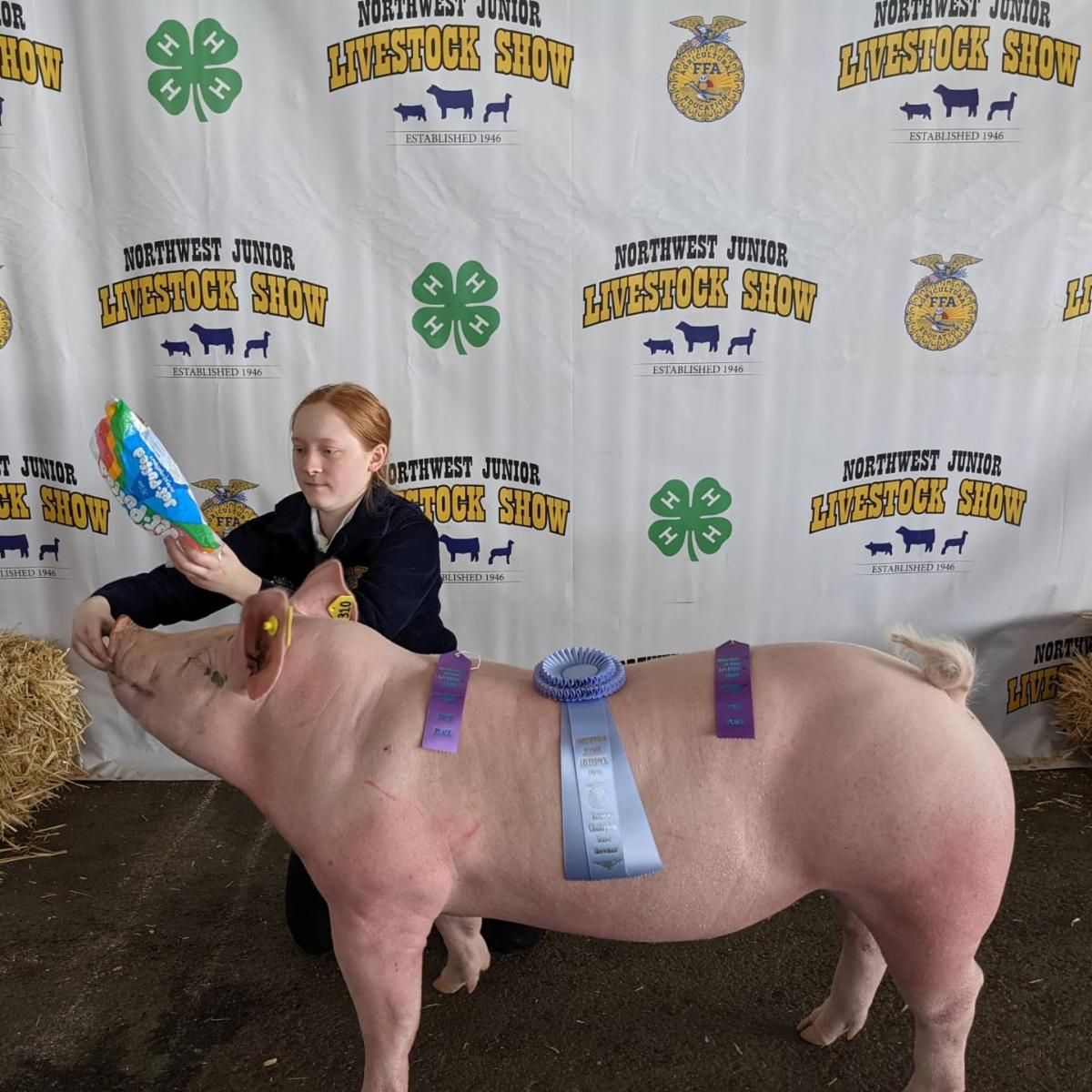
Tahoma High School senior and FFA President Constance Close feeds a marshmallow to her pig, Waddles, during last week's Spring Fair.
|
|
Tahoma High School senior and FFA President Constance Close says she has loved animals since she was a young child. Through the years, her family fostered more than 60 dogs in need of adoption and adopted two of those.
During her first year at THS, Close learned about FFA and decided to get involved to try it out. She started raising pigs in 10th grade and has continued each year since.
“The thing I enjoy the most about raising animals is working with them daily and caring for their needs. Each animal has a different personality and it's fun trying to learn what they like and what motivates them,” she said. “My favorite thing about FFA is talking to the public at fairs and shows, informing and teaching them about animals.”
Last week at the Spring Fair in Puyallup, Close’s pig, Waddles, took third place out of the six pigs in his weight class. Fellow THS senior and FFA Vice President Hailey Gregoire also showed her pig at the fair, and took third place in market class.
Club adviser and THS teacher Reni Jenks said that Tahoma FFA students raising livestock have persevered during the pandemic and have been committed to the care of their animals.
“Students had to arrange off-site locations to raise their animals, had to provide all of the daily care and needs of the animals, and ultimately had the experience of getting to show and auction their animals at a modified Puyallup fair. Additionally, while at the fair each Tahoma exhibitor earned Reserve Grand Champion in their classes, which means they (each) won second place!” Jenks said. “I am extremely proud to get to be the advisor of these students – they truly demonstrated what it means to be an FFA member and a Tahoma Bear! “
The FFA students' success at the Spring Fair came despite the difficulties caused by the coronavirus pandemic. In spring of 2020, the Tahoma FFA chapter was forced to close the school barn to the public, and develop an hourly schedule to determine when each student could visit to take care of their pigs. Following that, the school barn was closed for good, and the FFA students had to find other places for their animals. It was hard on the program and also personally, Close said.
“(It) meant having to sell them earlier than expected for some, which was really disappointing and sad. I had two goats at the barn I was going to show and ended up having to sell them, which was awful because one was a dairy goat I was going to breed and keep, but I had nowhere to put her,” she said. “I had been preparing for a year to get one, had her for a few months, and ended up selling her. It was so horrible and I was really upset about it for a while.”
In the past year, club members have worked to overcome challenges such as figuring out how to get new animals, and also find new places to house them. They held virtual meetings to talk through ideas and determine what was possible in the current environment.
“We've struggled to engage new FFA members. As president, I've tried to keep everyone in our FFA chapter aware of what's going on,” Close said.
Due to the pandemic, the school barn is still shut down.
Close said the Tahoma community can help support FFA by sharing information about the club, and by reaching out for information about how to purchase the animals the students raise. “In the past, every buyer that has purchased an FFA animal from our chapter has said the meat they bought was some of the best they've ever eaten (whether lamb, swine, or steers).”
After raising her first pig, Close said that she wanted to try raising sheep, too, in her sophomore year. She has continued with sheep, and last year showed her first goats and rabbits. Close then created her own rabbit business called CCS Rabbitry. “In three years in FFA, I have raised three pigs, six lambs, two goats, and over 20 rabbits. … (FFA) has completely changed me for the better, helping me to become more outspoken, more knowledgeable, and more willing to try new things.”
|
|
Optional virtual model for fall under exploration |
|
Planning for the 2021-2022 school year is underway, with the anticipation of providing students with a more traditional daily schedule than was possible this school year.
The biggest difference for next year is that state health guidelines have changed to reduce physical distancing for students from 6 feet to 3 feet in the classroom, which will permit more students per classroom and eliminate the need for hybrid schedules. Strict COVID-19 health protocols will continue, including mandatory mask wearing and hand washing for students and staff. Classrooms also will continue to have more fresh air circulation to reduce airborne virus risk.
Many details must be addressed before next fall, including how to safely provide lunch periods, recess and other large group activities.
Though schools will have more students each day than in this year’s hybrid schedule, there are still some students who are likely to remain in remote learning. A survey in early February that asked families whether they would prefer in-person or remote learning next year indicated that more than 1,000 families wanted to remain in remote learning. Teaching and Learning Executive Director Dawn Wakeley said that the district sent a follow-up survey this week that asks those families, in grades kindergarten-9, to make a tentative commitment to remote learning for next fall if they are still interested in that option. That information is needed before the school district can fully commit resources to a new remote learning program, she said.
Wakeley said the design for the new online learning program is still in early development, but it will feature Tahoma curriculum that is taught by district teachers. Program specifics, including staffing and curriculum, depend heavily on the number of students who sign up. There will be some similarities to the remote learning program that Tahoma used this school year, but new features also will be added.
In grades kindergarten-5, online learning will be balanced with hands-on experiences including math manipulatives, books, and other necessary materials. The student day will consist of a total of six hours, which includes live, synchronous learning, with additional asynchronous learning expected as a part of the school day. Core content will include reading, writing, math, science, social studies as well as some specialized classes, such as PE, music, art, Future Ready, or STEM.
Parents will need to provide support to students as a learning partner to ensure that their child is consistently participating and fully engaging in the learning.
In grades 6-8, students will have regular synchronous lessons via Zoom, 1:1 or small group instruction, and social interaction with peers.
In Grade 9, the student day will consist of a total of 6 hours, a majority of which will be live, synchronous learning, with additional asynchronous learning expected as a part of the school day. This virtual experience would consist of core classes only. Electives will be unavailable remotely. This means that the student experience would be blended. For example, Blue days might be online core classes such as English, social studies, science, and Foundations of Fitness; and Gold days might be in person for math and electives. Graduation requirements will not change for students participating in this mode of instruction.
Because of constraints related to the master schedule, as well as the district’s desire to be fiscally prudent and make the best use of available resources, the new virtual learning option would be offered only to Grade 9 students next year, Wakeley said. In general, ninth grade students typically have the most core classes in common with one another, making their schedule more easily adaptable to online learning than grades 10-12.
Families that select the new online learning program will be asked to make a full one-year commitment, due to the planning and staffing required.
|
|
Kindergarten registration still available for fall 2021 |
|
Children who will be 5 years old by the end of August are eligible to attend kindergarten in the 2021-2022 school year. Tahoma plans to offer in-person classes on regular schedules next fall. A remote learning option also is planned. COVID-19 safety measures will remain in place, though the 6-foot physical distancing rule has changed to 3 feet, according to the most recent guidelines from the Washington State Department of Health.
By registering in the next couple of weeks, families of incoming kindergartners have the opportunity to participate in orientation events at each elementary school. The events are designed to introduce the schools to incoming kindergarten students and families and also permit teachers and staff to get to know students.
The registration process begins online and consists of four steps. Parents or legal guardians are responsible for providing all required documents to complete the registration process. Once the student's online application is completed, families will receive confirmation from the district registrar that will include steps to finalize enrollment at the student's school.
Further details and registration information can be found on the Tahoma website under the Families and For Parents drop-down menus. Questions about registration can be directed to any Tahoma elementary school or to the district’s Teaching and Learning Department, 425-413-3400. |
|
Counter narrative books added at elementary level |
|
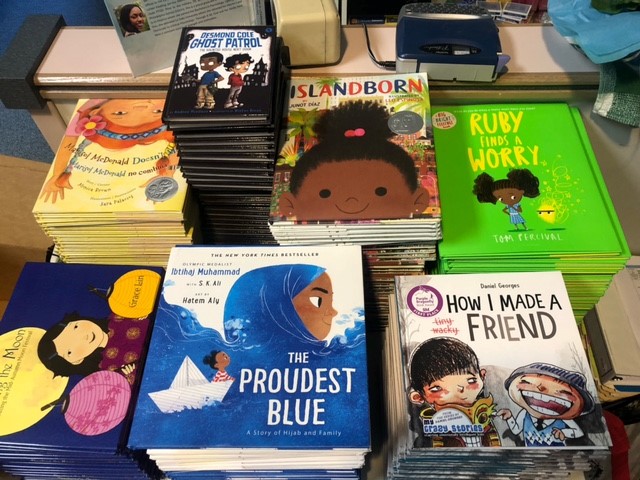
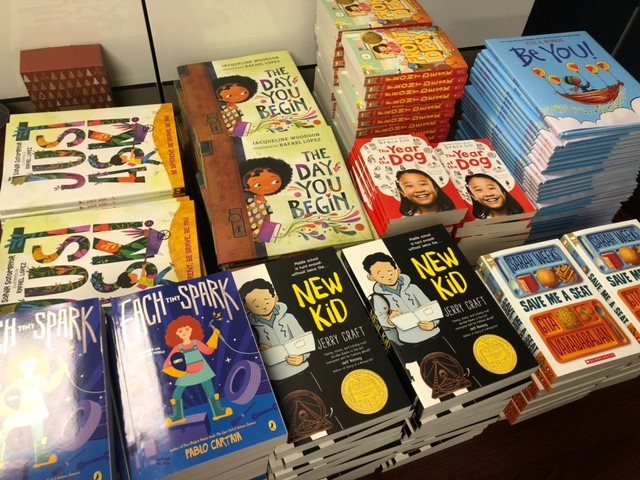
New books will soon be delivered to elementary classrooms, as part of the district’s emphasis on equity. The counter narratives are stories that depict children from diverse backgrounds. It’s an important addition to classrooms so that all Tahoma students can see people in literature that look like themselves.
“Counter narratives teach students empathy for all people, including those from diverse races and those with disabilities,” said Emilie Hard, Tahoma’s Equity Director. “They also give voice to people who may have been absent or marginalized in our society, and provide alternate points of view about people so that children can see examples that aren’t in the dominant narrative.”
An example would be a book that shows a female as a strong leader, or a boy who is sensitive.
Kindergarten through fifth-grade classrooms received five new counter narrative children’s books at the most common reading levels in that grade. Titles include books such as “The Day You Begin,” “Be You,” “Salam Alaikum, a Message of Peace,” “I am Lucy,” “Same, Same but Different,” and “New Kid.”
Elementary teachers can choose to read the books aloud, or provide them for students as options for independent reading, display them in classrooms or weave them into lessons.
The books were selected by a committee of teachers and staff members, and also reviewed by students, parents/guardians and staff on the Equity Curriculum and Instruction Committee. Adding counter narrative titles is part of the larger curriculum review, which is one of six goal areas in Tahoma's equity work.
|
|
A selection of the new counter narrative books, including "The Proudest Blue," "Islandborn," and "How I Made a Friend." |
|
Titles that will be available to teachers and students in elementary buildings also include "The Day You Begin," "Each Tiny Spark," "Just Ask!" |
|
Athletes wrap up Season 1 sports
|
|
Tahoma’s athletes have completed the first season of the shortened three seasons planned by the North Puget Sound League and the WIAA. With a week of overlap between season 1 and season 2, many of the multiple-sport students have already moved on to their next season. Season 2 includes baseball, fastpitch, boys soccer, girls tennis, track and boys swim and dive.
Here’s a look at each of the Season 1 sports teams fared this year:
Cross country
The Tahoma cross country boys and girls teams swept all of their meets this season 5-0, and won the title of NPSL 4A Champions.
“This has been a very challenging year,” coach Jeff Brady said. “Athletes have been training for a year straight, not knowing when the actual season would take place. It has been a very emotional/physical rollercoaster ride. As coaches, we are so proud of their ability to stay focused and work hard through it all.”
The team is graduating some key seniors, but the returning squad looks “very strong,” Brady said.
Junior Faith Martinez and senior Cameron Stuard earned NPSL 4A Athlete of the Year for the girls and the boys teams, respectively. Tahoma’s girls placed 1st- 8th against all teams in the league, and the boys placed all 8 in the top 16 runners in the league. The boys have 58 consecutive dual meets wins (10 years in a row) and the girls have 50 consecutive wins (9 years in a row), Brady said.
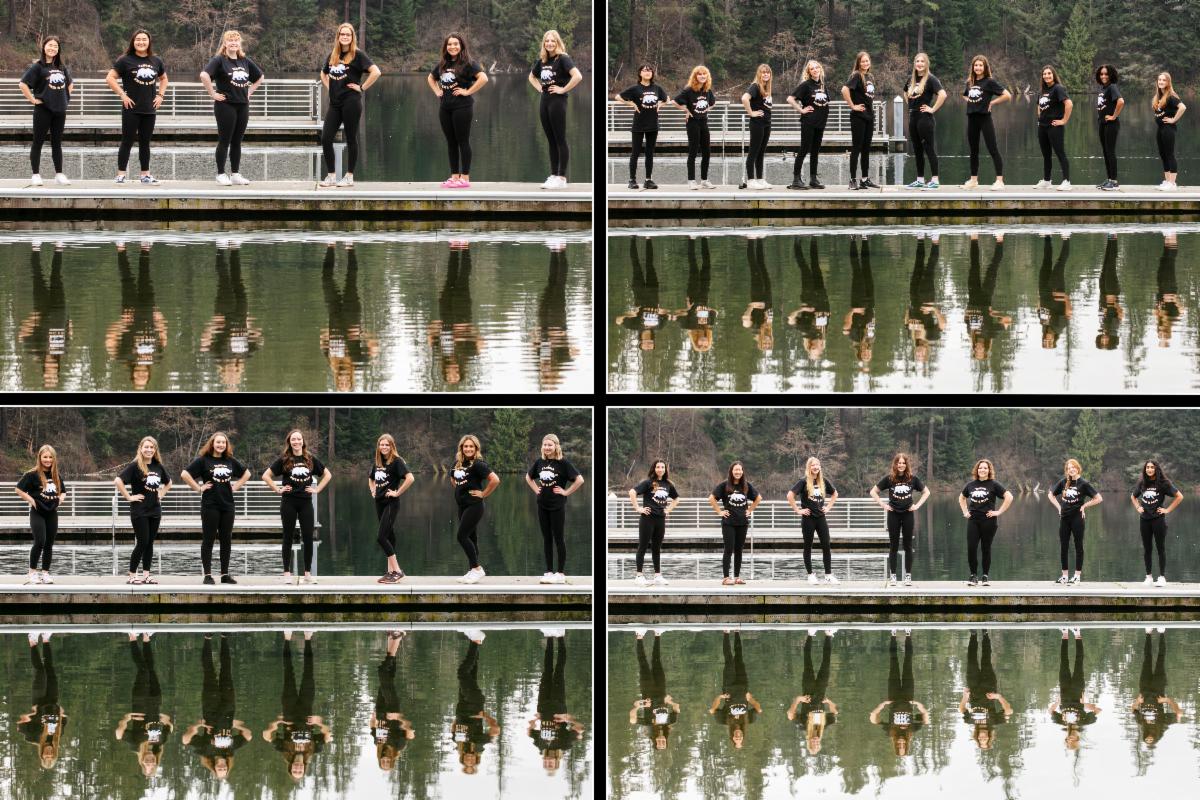
*Note: Athletes in cross country posters were photographed separately and Photoshopped together.
|
|
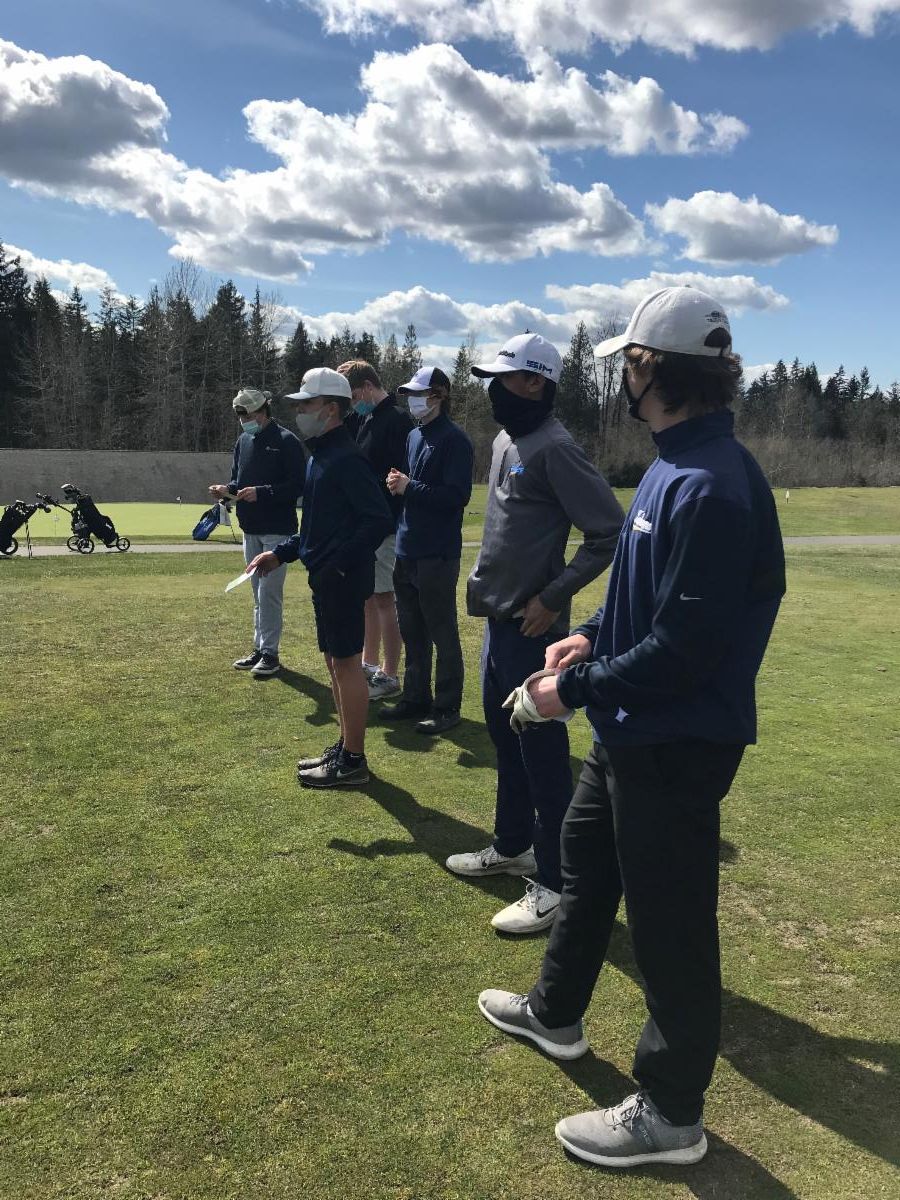
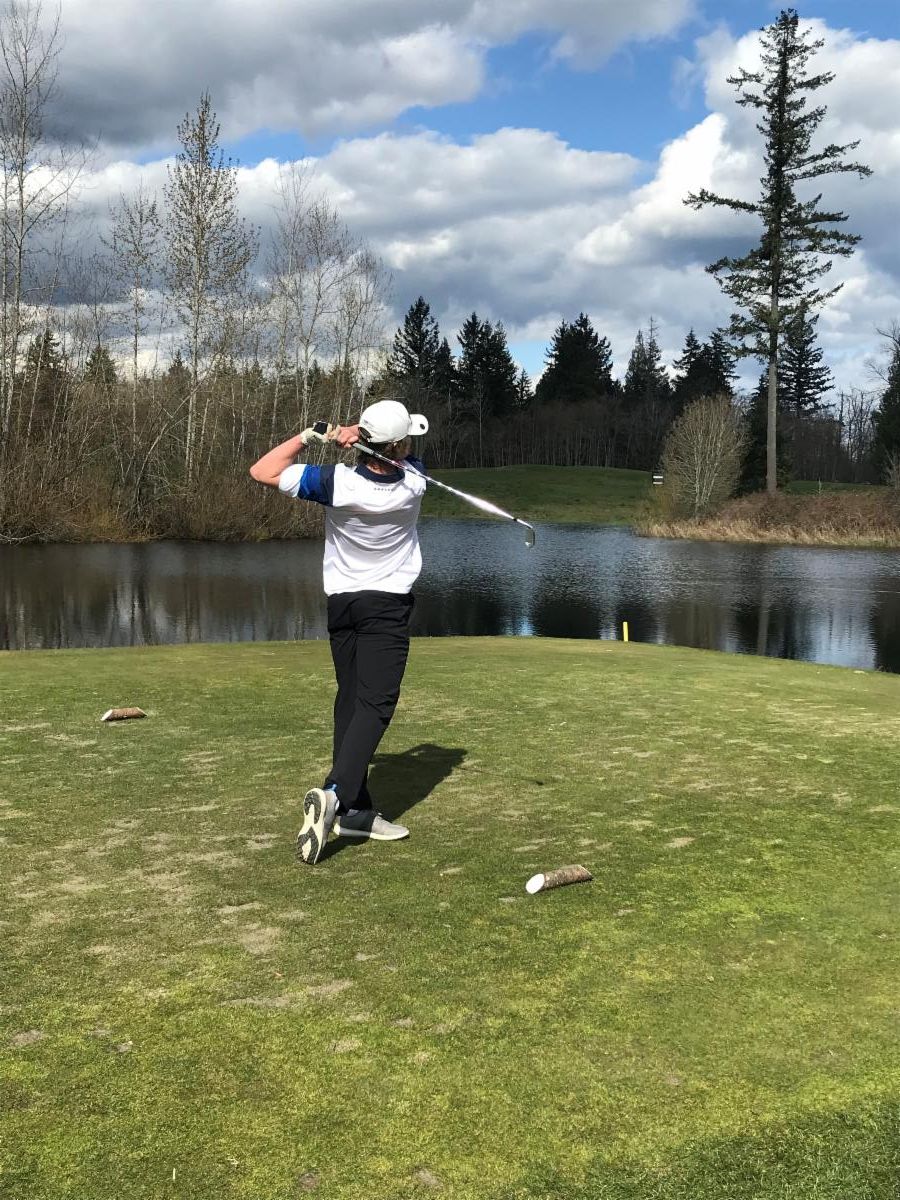
Boys golf
Tahoma boys golf finished their season with a perfect 7-0 record this year, and won the NPSL 4A League title.
“We had a really fun season where many of the players got some varsity experience,” coach Dave Reynoldson said. “We had a senior-heavy team this year, but we have some freshmen that are ready to come in next year ready to fill the void of this year’s senior class leaving.”
Four Tahoma players made 1st team All League: Morgan Taylor, Liam Reis, Luke Schufreider, Xander Morris; additionally, Zach Spence earned Honorable Mention.
|
|
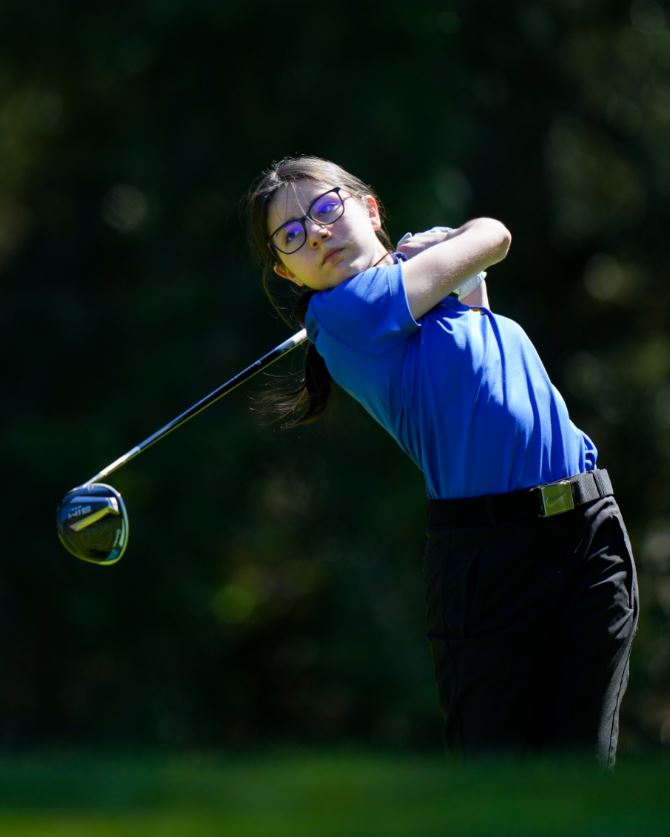
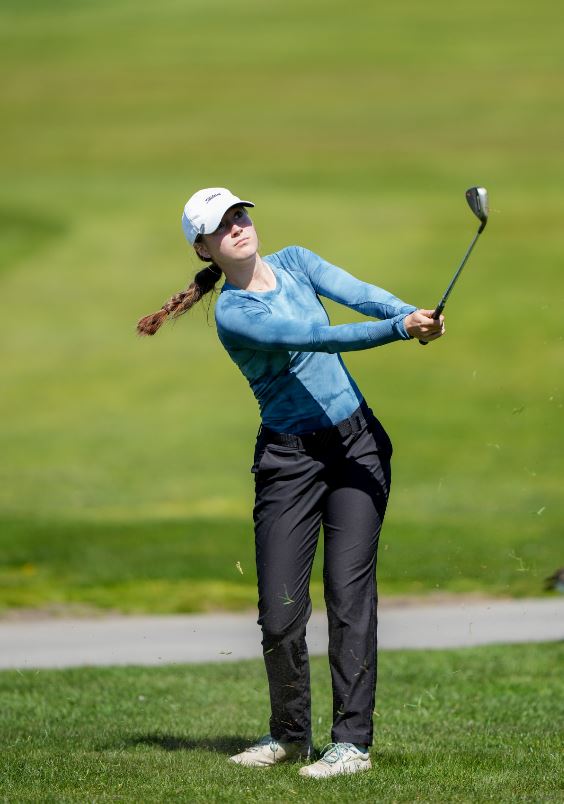
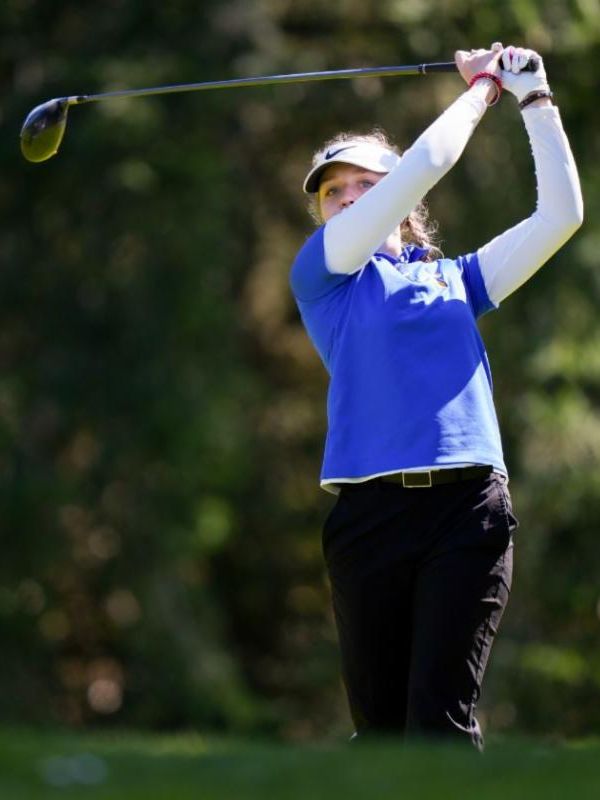
Girls golf
The Tahoma girls golf team earned a record of 4-3 this season.
Honors earned by the team include: Kendall Lyons, co-NPSL MVP; Emma Boyce, 2nd Team All League;
Reagan Randall, Honorable Mention All League.
Photos courtesy of @reactionphotog
|
|
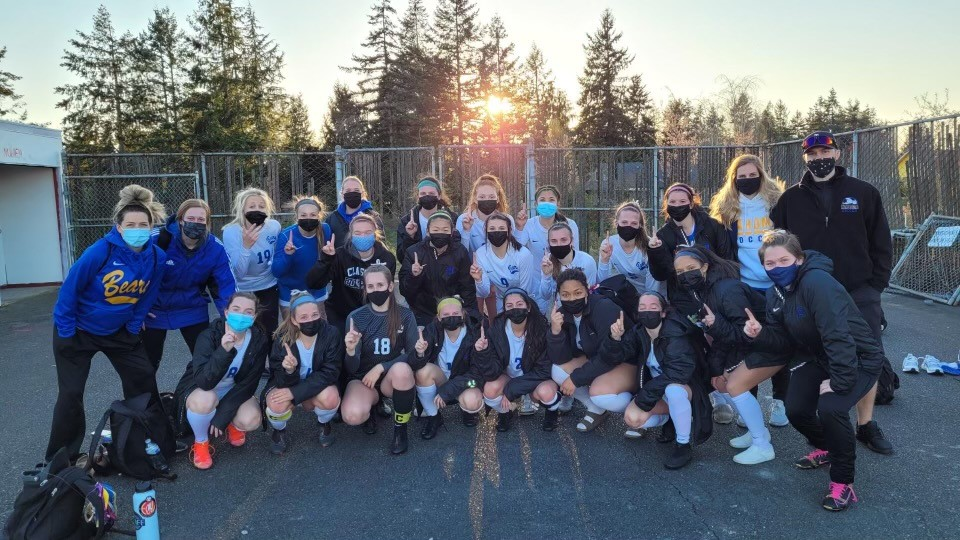
Girls Soccer
The Bears girls soccer team went 5-0-1 in league play, and 7-2-1 overall. For the third year in a row, the team also won the NPSL 4A Championship.
“This season our players stepped up and took advantage of every opportunity to play and be together,” Coach Alyssa Hurt said. “With all the rules, it would have been easy to complain and make excuses and they didn't. We had amazing senior leadership and the girls were able to get back out and play together and renew their love of the game after having to give it up for so long. They wanted to be there, they worked hard when they were there, had fun and made the most out of every moment.”
The team graduated eight seniors this season. “They had amazing leadership and led by example, both off season and in season. Returning players were able to watch what that dedication and work did during the seniors’ time here and I am excited to see them continue to build from that and continue to get better!”
Hurt said that there’s an incredible love that the team’s players have for the program and for each other. “It's enjoyable to watch, and a fun environment to be a part of,” she added.
|
|
Girls swim and dive
The THS girls swim and dive team won the NPSL League Championship. “These girls are amazing! … At the virtual league meet they blew away the other 4A teams.” coach Theresa Castaneda said.
For the Cascade Division, the scores were:
- Tahoma vs. Kentridge: 142-36
- Tahoma vs. Mount Rainier: 106-79
- Tahoma vs. Kent Meridian: 146-13
- Tahoma vs. Kentwood: 144-22
- Tahoma vs. Kennedy: 118-62
- Tahoma vs. Kentlake: 136-30
The schools were ranked with Tahoma at 438; Mount Rainier at 235; Kennedy Catholic at 215; Kentridge at 149; Decatur at 124; Kentwood at 83.
For First Team All-League swimming, Tahoma had seven out of nine spots. For Second Team All-League swimming, they had three of nine spots. For First Team diving Tahoma took two of three spots. First Team swimmers were Hannah Weissman, Hailey Sears, Emma Schlutt, Lillian Paley, Karis Conklin, Makenna Portmann and Sloane Wichelmann. Second Team swimmers were Rowan Gaul, Sophio Artemdize and Norah Jose. First Team divers were Ally Adams and Katie Welsh.
Castaneda said it was incredible how the competitors came together despite the conditions. “Even though we were only (a) whole team on meet days, they always felt like a cohesive group and meshed well together. This is the strongest swim/dive team Tahoma has ever had. They are a force,” she said.
“We are losing six amazing leaders in our seniors, but the underclassmen have learned so much from these seniors. The new group will step up and continue to lead. We are hoping to be in the top two at districts and top three at state. This team has so much depth that they are hard to beat,” Castaneda said.
“I am super proud of how these girls have come together during all of this adversity with so much grace. They never got to actually face an opponent as all of their meets were virtual, but even despite that we had so many PRs this past season. The strength of this team is remarkable.”
At their final virtual meet, the team broke four records: Portmann in the 200 IM at 2:11.34; Weissman in the 500 Free at 5:11.63; Portman in the 100 Breaststroke at 1:05.08; and the 200 Free Relay team at 1:39.14. In a virtual meet, Tahoma's swimmers are alone in one pool, while the other team is in their pool, and times are compared afterward.
|
|
Volleyball
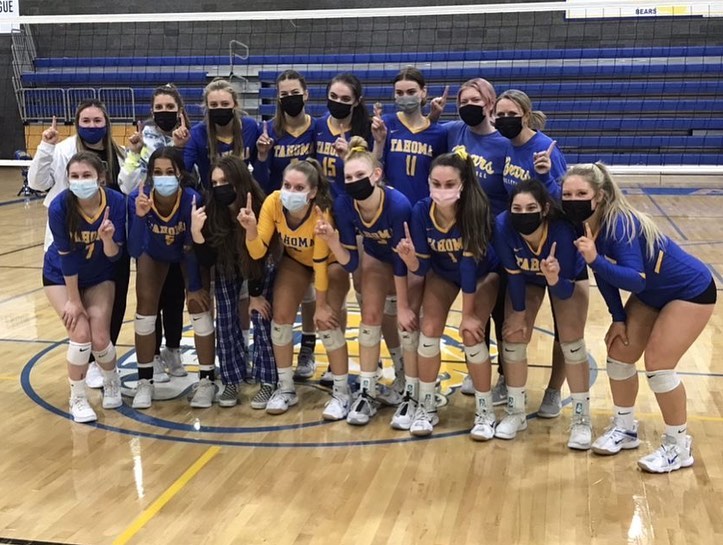
The Bears volleyball team finished the season 12-0, and won the title of North Puget Sound League Champions! There are no additional post-season opportunities this year.
“Being away from school volleyball for over a year made our girls come into the season with a new appreciation for the sport and for their team,” Coach Sara Russell said. “Many players balanced school ball and club ball at the same time, and despite being busy with both, regularly showed up with a positive attitude and a hard work ethic into the season. As coaches, we were very proud of all our girls accomplished this season after a very challenging year.”
“This year we graduated four amazing seniors, but have eight returning players next year. We are looking forward to what is hopefully more of a ‘normal’ fall season that includes post-season play and the opportunity to head back to the state tournament,” Russell said.
“The passion and dedication of the girls in our volleyball program is incredible. The energy and enthusiasm they bring to practice and games makes every day fun,” she added. “A special thank you goes out to our four graduating seniors who led us, both on and off the court, through this unique and challenging year.”
|
|
No state tests for students this spring
The Office of the Superintendent of Public Instruction announced this week that students will not take the Smarter Balanced Assessment or the Washington Comprehensive Assessment of Science this spring. Instead, the assessment window for the 2020-2021 school year will be in the fall.
State Superintendent Chris Reykdal said that his office submitted waiver applications to the U.S. Department of Education in March. Additionally his staff is exploring:
- A fall assessment window consistent with federal requirements;
- The need to substantially reduce the length of state assessments in the fall and beyond;
- A review of the innovative assessment waiver options that several states have secured over many years; and
- A review of all federal and state laws that will need to be changed to transform our assessment system to one that better informs students, families, and educators, and provides for meaningful state accountability metrics.
“The federally mandated testing system that has been driving too much local decision-making for the past 20 years is not achieving the intended result of closing opportunity and achievement gaps,” Reykdal said in a news release. “To be clear, we are closing gaps, but it is the everyday work of families, educators, school and district leaders, and community partners that’s having the biggest impact. Summative assessments are one way to measure our progress, but they should no longer drive our strategies.”
Change in reporting of COVID-19 cases
The district has had a number of cases of COVID-19 recently in staff and students who are either fully remote or were not on any of our campuses during their contagious period. We will not send letters to Tahoma staff or families when the person who tests positive has not been in our buildings or on our campuses while contagious. However, these cases are reflected on the Tahoma COVID-19 dashboard, which shows positive cases in the past two weeks.
Program offers food benefits to hundreds of students
Additional food benefits for nearly 1,300 Tahoma students who qualify for free or reduced meals will be available soon. The benefits are included in the state’s Pandemic EBT program. Eligible students began receiving food benefits earlier in the school year and the program is being renewed.
Pandemic EBT (P-EBT) is a food benefit created by Congress during the COVID pandemic in order to help replace meals that eligible students would have received if school schedules weren’t disrupted. Each child who is eligible to receive a free or reduced price school meal (including children who attend schools that serve free meals to all students) receives their own P-EBT card (similar to a debit card) in the mail. Students should keep the card even when funds are depleted because additional funds could be deposited to that account.
Benefits are based on a school-based formula determined by how many days the majority of students are not physically at school and receiving a meal as part of their school day. Because it is a formula based on individual school schedules and the value of missed school meals ($6.82/day), a family will receive a P-EBT card for each child, and their children’s benefit levels may be different, based on different school schedules.
The first round of P-EBT benefits covered the start of the school year through January, and calculated and dispersed every two months after that.
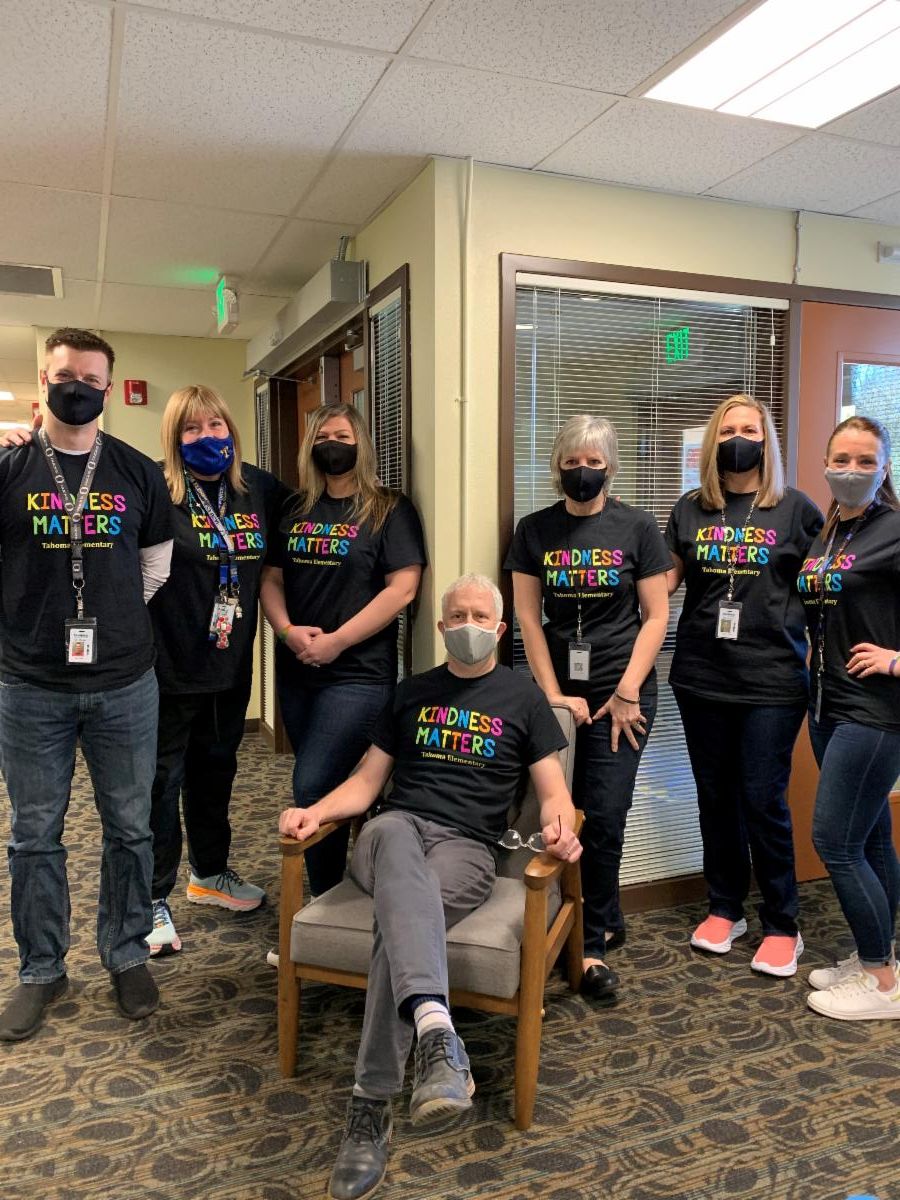
Kindness matters at Tahoma Elementary
|
|
Fishing Derby starts April 24
Maple Valley Chamber of Commerce is keeping the Maple Valley spirit alive by hosting the Hooked on Fishing event. The event will be different from past years. There will not be camping or a kids’ area. The event will last from April 24 to May 2, 2021 at Lake Wilderness Park.
Anglers will be able to fish the lake. There is a $10 fee to register for the tournament. Photos of fish caught can be posted to the online app.
"Non-Anglers" will be able to stand in front of the “Hooked on Fishing” banner at the Boat Launch for a photo. Post your best “fish face” to the Hooked on Fishing Facebook event page as an entry for drawing.
|
|
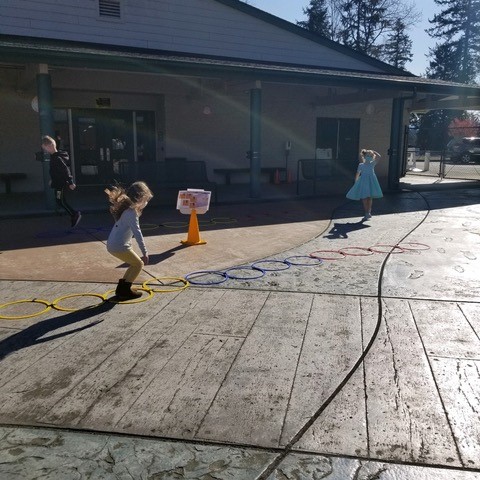
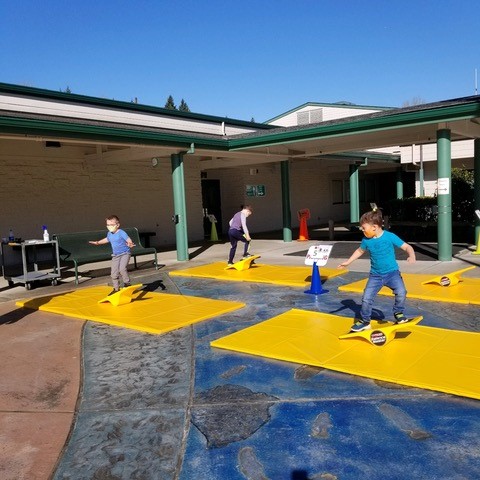
Teachers Vanessa and Tom Milligan help organize brief outdoor, socially distanced brain breaks for Cedar River students. The brain breaks have been shown to reduce stress and frustration and increase attention and productivity. |
|
Kindergarten students hop through agility rings during a brief outdoor brain break at Cedar River Elementary. |
|
Another brief brain break activity for CRES kindergarten students involved trying out the Balance Master. |
|
Coming up in Bear Country |
|
SATURDAY, April 24
Hooked on Fishing Opening Day Trout Derby, 7 a.m.
TUESDAY, April 27
- Tahoma School Board Meeting - virtual, 6:30 p.m.
- Boys Varsity Swim and Dive vs. Kent-Meridian HS, 3:30 p.m.
- Girls Varsity Tennis vs Kentwood HS, 3:45 p.m.
WEDNESDAY, April 28
Varsity Track meet vs Auburn Mountainview HS, 3:30 p.m.
THURSDAY, April 29
- Boys Varsity Swim and Dive vs Kentridge HS, 3:30 p.m.
- Girls Varsity Tennis at Kent-Meridian HS, 3:30 p.m.
SATURDAY, May 1
Maple Valley Farmer’s Market opens at the Legacy Site, across Maple Valley Highway from Rock Creek Elementary, 9 a.m.
*For a calendar of JV and C-team games as well as locations and other details on sports events, click here. Stay home and still watch Tahoma Sports: Live Stream all home and away games for free: https://tahomaathletics.com/
For additional district events, click here or visit your school's website. |
|
The Tahoma School District does not discriminate in any programs or activities on the basis of sex, race, creed, religion, color, national origin, age, veteran or military status, sexual orientation, gender expression or identity, disability, or the use of a trained dog guide or service animal and provides equal access to the Boy Scouts and other designated youth groups The following employees have been designated to handle questions and complaints of alleged discrimination: |
|
Title IX Officer
Director of Human Resources
25720 Maple Valley Highway
Maple Valley, WA 98038
425-413-3400
|
|
ADA Coordinator
Director of Human Resources
25720 Maple Valley Highway
Maple Valley, WA 98038
425-413-3400
|
|
Section 504 Coordinator
Director of Special Services
25720 Maple Valley Highway
Maple Valley, WA 98038
425-413-3400
|
|
The Tahoma Matters newsletter was founded in 2014
25720 Maple Valley-Black Diamond Rd. S.E., Maple Valley, WA 98038
|
|
|
|
|
|
|