Get screened for Colorectal Cancer
Hafa Adai,
March is Colorectal Cancer Awareness Month, and a good time to learn more about colorectal cancer (cancer of the colon and rectum) and how it can be prevented or best treated.
Colorectal cancer is the third most common cancer to affect Guamanians, and is the second leading cause of cancer-related deaths for both men and women combined in Guam.
That said, colorectal cancer is a disease that can be prevented through regular screenings, a healthy diet and regular exercise. Regular screening also allows for early detection, which is key to effective treatment. We have a lot to improve on though, as overall, only 53.9% of all persons aged 50 and above in Guam have met U.S. Preventive Services Task Force screening standards compared to 74.3% in the U.S.
How can I lower my risk?
To lower your risk of colorectal cancer, multiple medical societies including the the American Society of Colon and Rectal Surgeons, the American Cancer Society, and the U.S. Preventive Services Task Force recommends that you:
● Get regular colorectal cancer screenings after age 45. Between 80-90% of colorectal cancer patients are restored to normal health if their cancer is detected and treated in the earliest stages.
Other ways to lower your risk include:
● Eat a low-fat, high-fiber diet.
● If you use alcohol, drink only in moderation. If you use tobacco, quit. If you don't use tobacco, don't start. Alcohol and tobacco in combination are linked to colorectal cancer and other gastrointestinal cancers.
● Exercise for at least 20 minutes three to four days each week. Moderate exercise such as walking, gardening or climbing steps may help.
Can colorectal cancer be cured?
Since there are very few symptoms associated with colorectal cancer, regular screening is essential. Screening is beneficial for two main reasons: colorectal cancer is preventable if polyps that lead to the cancer are detected and removed, and it is curable if the cancer is detected in its early stages.
If detected, colorectal cancer requires surgery in nearly all cases for complete cure, sometimes in conjunction with radiation and chemotherapy. Between 80-90% of patients are restored to normal health if the cancer is detected and treated in the earliest stages. However, the cure rate drops to 50% or less when diagnosed in the later stages.
Who is at risk for colorectal cancer?
The risk of developing colorectal cancer increases with age. All men and women aged 45 and older are at risk for developing colorectal cancer, and should be screened. Some people are at a higher risk and should be screened at an age younger than 45, including those with a personal or family history of inflammatory bowel disease; colorectal cancer or polyps; or ovarian, endometrial or breast cancer.
Current screening methods include fecal occult blood testing (a simple chemical test that can detect hidden blood in the stool), a digital rectal exam, flexible sigmoidoscopy (a visual examination of the rectum and lower portion of the colon), a CT colonography (performed by a radiologist), and a colonoscopy (a visual examination of the entire colon, which is the gold standard). Colorectal cancer screening costs are covered by Medicare and many commercial health plans. You should find out from your surgeon or other healthcare provider which screening procedure is right for you and how often you should be screened.
Be healthy, be well!
Sincerely,
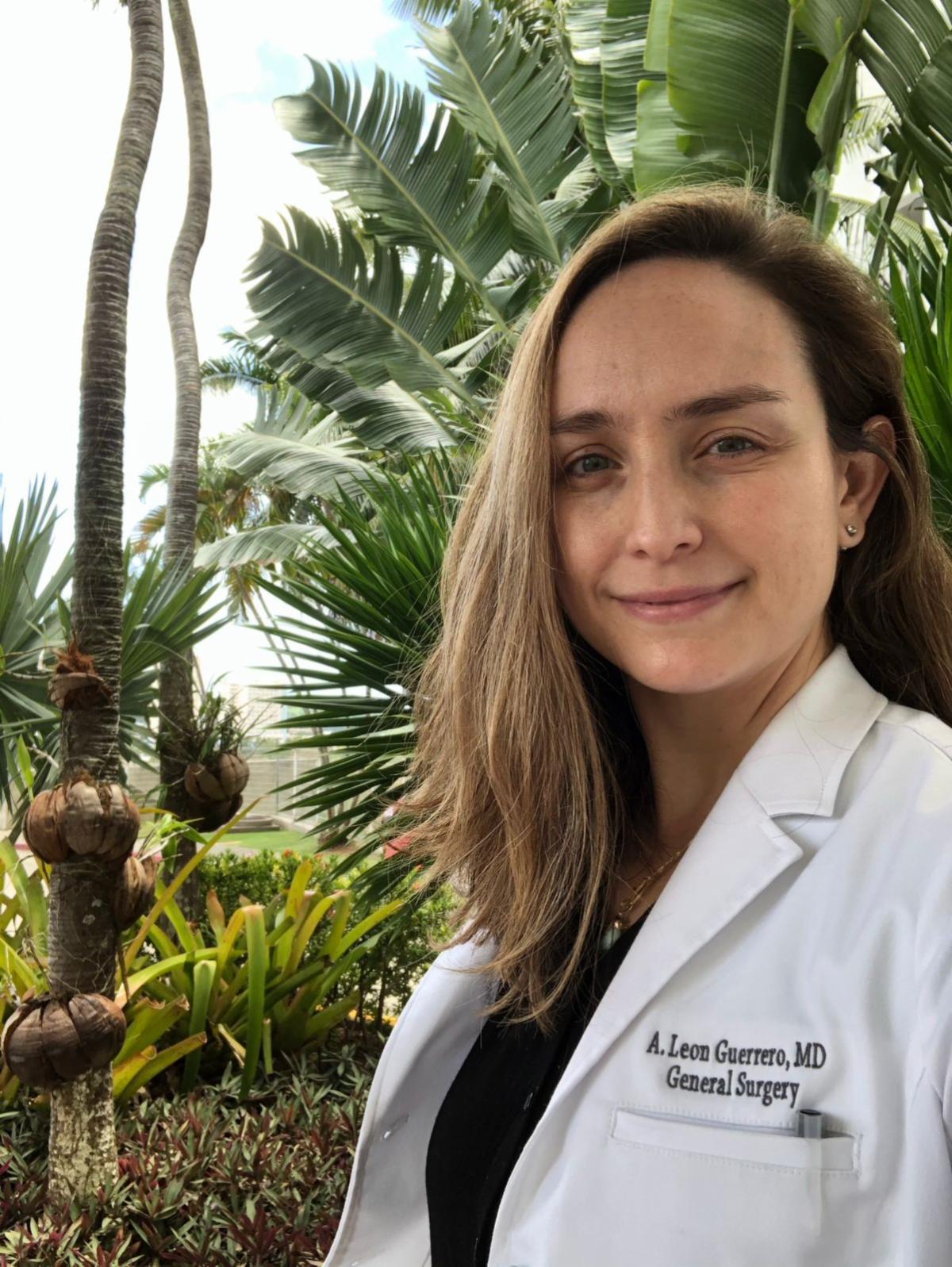
Alexandra Leon Guerrero, MD
General and Advanced Laparoscopic Surgery
Hafa Adai Specialist Group