|
Happy Holidays!
The Season is Upon us!
| |
|
Tanners 2024 Schedule
Nov 23,25
| |
|
We look forward to seeing everyone at the shows!
| |
|
Happy Veterans Day Thank you for your Service! | |
Just what is a Railroad Date Nail? | |
|
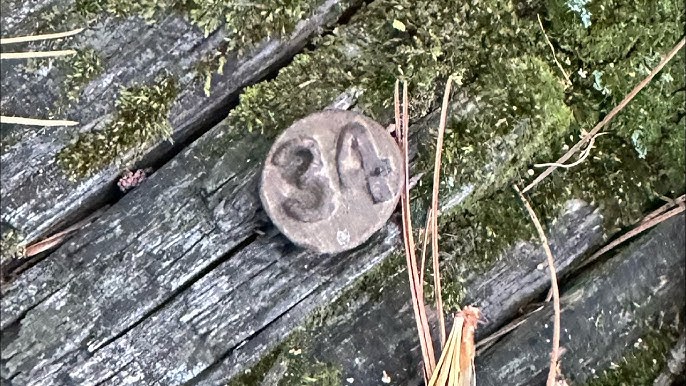
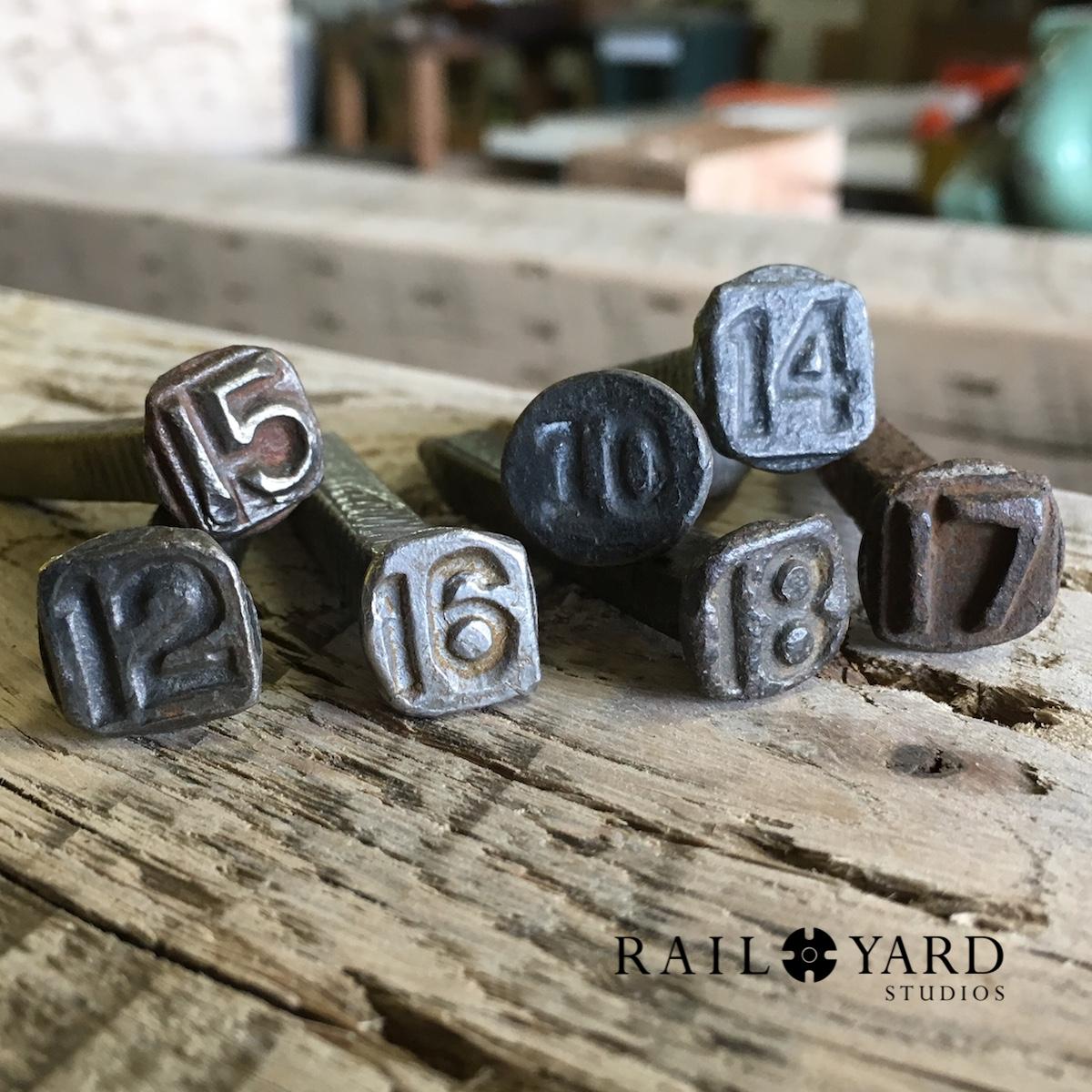
Railroad date nails are small nails with a date stamped on the head that were used to mark the year a railroad tie was laid or treated. They were used from the late 1800s until the 1960s and were also used in other wooden structures, such as bridge timbers, utility poles, and mine props.
Most date nails are steel, though many are copper, aluminum, malleable iron, or brass. Lengths run from a paltry 3/4" up to 3", with shank diameters running from 1/8" up to 5/16". The nail heads can be round, square, diamond, pentagon, as well as other rarer shapes. Over 2,000 different date nails were used by North American railroads which show the year. Add to that the nails which tell wood, treatment, and other information, and toss in all date nails used in poles and other timbers, and the total number of different nails from this continent easily exceeds 3,500.
| |
|
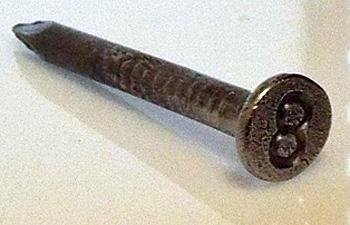
There is a standard notation to describe date nails. The 8 pictured above is:
2 1/2 x 1/4 rnd I stl (07) 8.
It is 2 1/2" long, 1/4" in diameter, rnd = round head (& shank), I = indented figures, stl = steel, (07) = code for American Steel & Wire, 8 = the date (1908).
How date nails were used
Date nails were manufactured by steel companies on high speed machines, even in the early years. If a railroad wanted to use date nails, they would order the kind of nails they wanted (for instance, a 2 1/2" x 3/16" steel nail, round with raised numerals "34"). Then the nails were driven into ties either at the treating plant, to indicate the year of treatment, or at the track, to indicate the year the tie was laid.
When a rotted or mechanically damaged tie was removed, the date on the nail was noted. Ties were never removed because of age, so date nails did not tell section foremen when to replace ties. In fact, some railroads found that dated ties lasted longer than usual because the men took special care of them.
In the first decade of the 20th century railroads which used date nails drove them into every treated tie. Some lines found the record obtained by this method to be a failure, so beginning 1909 some railroads concentrated their record in special test sections. For these companies keeping track of only a few thousand ties was far more economical and accurate than tracking several million ties. By the early 1920's, however, most of these railroads had returned to the practice of placing nails in every treated tie.
Companies were not loyal to a single steel company, either. The NYC bought its 1910-1913 nails from American Steel & Wire Co., its 1914-1915 nails from Jones & Laughlin, its 1916 nails from American Casting & Manufacturing, etc.
Some railroads never used date nails at all, like the Southern RR. Still others used them for a short time (Monon: 1908-1910) and others for a long time (Santa Fe: 1901-1969).
Often the shape of the nail head has some significance. For example, on the El Paso & Southwestern round nails were driven into zinc chloride treated ties while diamond nails were driven into creosoted ties.
|  |  |
Brief history of date nails
Western Europe suffered a timber shortage much earlier than North America, which is why railroads in France, England, and Germany were chemically treating ties long before companies here. Date nails were in use in France by 1870, possibly as early as 1859. Wherever treated ties come into use, date nails are not far behind. Railroads need a way to monitor their investment in treating, and date nails became the most common method of this record keeping.
When North American railroads began to experiment with treated ties in the second half of the 1800's, it was not known which chemicals, treatment methods, or woods were most economical. They needed some method of keeping track of the lives of ties, so like their European counterparts, they decided to mark them. Early methods included:
- Stamping the date in the end of the tie (Central RR of New Jersey 1875, Santa Fe 1885, Southern Pacific 1887, Rock Island 1895, etc.)
- Brass tags (Santa Fe test sections, 1881-1882)
- Notching ties (Allegheny Valley 1883, other lines beginning ca. 1900)
By the late 1800's American railroads settled on the use of date nails. The oldest known North American date nail is a 97 from the Mississippi River & Bonne Terre. It was in 1899 that major railroads began using nails to date ties with nails: that year the Chicago & Eastern Illinois, the Great Northern, the Chicago, Burlington & Quincy, and the Pittsburgh & Lake Erie began nail use. Others soon followed.
By the 1920's nail use was the norm. It peaked in the early 1930's with over a hundred different railroads using date nails in 1931. The depression, then the second world war adversely affected nail use, and from 1950 to 1970 the number of railroads using date nails steadily declined so that for the past thirty years virtually no railroad has used them. The newest date nail in a tie in North America is an aluminum 01 (2001) from a U.S. Navy track in New Jersey (thanks to George Oliva for tracking this down). The decline in the use of date nails can be attributed mainly to two things: the perfection of treatment techniques, and to the reliance of stamps in the ends of the ties for records.
Some nails have letters instead of numbers. A "B" from the Buffalo, Rochester & Pittsburgh, for example, was driven into a Beech tie. Another example: on the Santa Fe the nail "OZ" was used in oil-zinc chloride treated ties.
Beware of single digit nails: some are dates (i.e. a "4" is from 1904), but many are code nails. The Southern Pacific used code nails 0 through 9 to number bridge pilings. The Louisville & Nashville used single digit code nails to number switches. Other railroads used code nails to number ties in test sections.
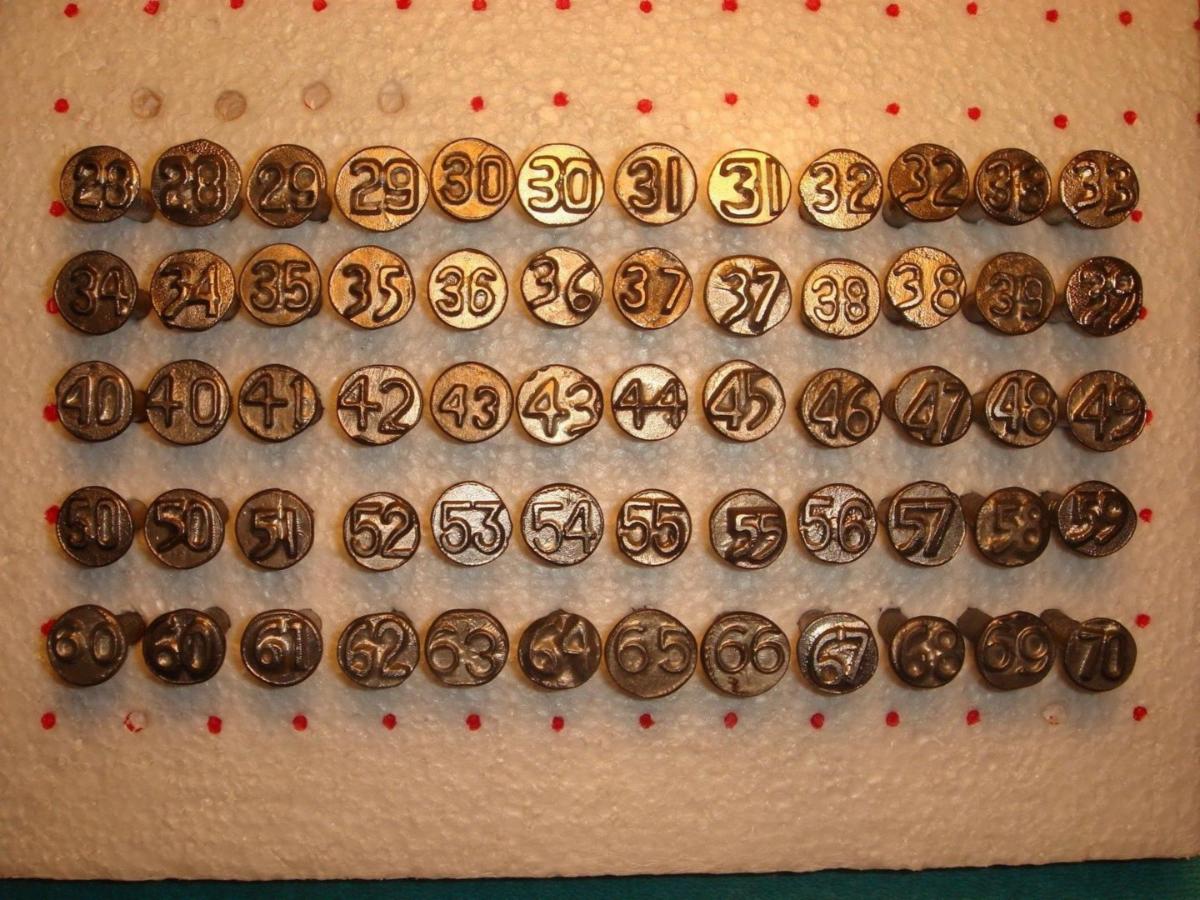
| 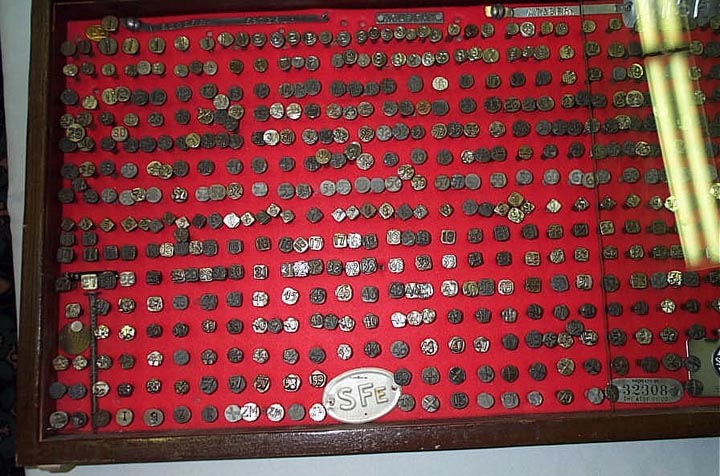 | Santa Fe RR Nail Collection |
Acquiring Date Nails
There are two ways to get date nails: (1) Pull them yourself from ties, or (2) Buy or trade for them. I will briefly describe each of these.
Pulling nails
These days there are two problems with walking down a railroad track and pulling nails: First, railroads are quite a bit more intolerant of people walking the tracks as they once were, and second, there just aren't many nails out there in active track anymore. The best way to get nails "from the source" depends on your location. In most parts of the country you should do the following:
-
Find out which railroads near you used date nails in abundance. The book (Date Nails and Railroad Tie Preservation - see links below) will help at this step. consult old maps which give the names of the railroads as they were a half century ago or so. New maps often label rail lines "Conrail", "Norfolk Southern", or other modern post-nail railroads.
- Pick, if possible, an abandoned branch, and walk the right-of-way. Look for ties cast off the embankments when the railroad was in operation. Keep an eye out for ties re-used as fenceposts, in driveways, old buildings, etc. Railroads which ran through wooded, hilly areas are best. If you only have main lines around, crisscross the railroad in your car and keep an eyeout for tie fenceposts. People who live in desert areas have good luck dragging magnets in the ballast and in burn pits. In some areas metal detectors help.
- This one is important: KEEP A WRITTEN RECORD OF WHAT YOU FIND! You might think "Oh, I'll remember where I got these nails." You won't. Beginners can make real contributions in this hobby by documenting what they find and where.
Buying or trading nails
- Keep an eye out at railroadiana & antique shows/malls, flea markets, yard sales, etc. Lots of good nails turn up this way.
- Contact other nail collectors. This is the best way to get lots of nails quickly. Most experienced collectors have thousands of extras lying around, and beginners are always willing to trade.
-
Buy nails through eBay or other auctions. I monitored eBay continually from 1999 to 2001, and here are some important tips for the beginner:
- I saw only a few rare nails on eBay. When sellers use the word "RARE" in their description they often know nothing about how rare their nails really are. Disregard the advertising fluff.
- Some lots are misidentified. Someone will write, for example, "15 B&M nails" when in fact some are from the New Haven, from poles, or elsewhere. This problem was far worse in 1999 than it is now. If in doubt, write to me and I will tell you if the lot is listed right. In nearly all cases the seller just does not know where the nails are from---the attribution is either a guess or the seller was told bad info.
- As of 1999 there were many common lots selling for several dollars per nail---way too much! Things settled down by mid 2000. Still, occasionally common nails sell for too much while better lots go unnoticed.
- One way to tell how much nails sell for is to search for "date* nail*" (without quotes) on eBay, then click "search completed auctions" to view lots which have sold.
- At nail shows you can buy nice condition nails---many of them rather scarce---for a nickel apiece. But you have to GET to a show to do this. Nails are commonly offered at roughly dollar each at railroadiana and antique shows. Nice, properly attributed common nails from your favorite line are worth about dollar each, but don't offer a lot more unless you know you are bidding on rare nails. And do find out what shipping & handling will cost before you bid.
From article by
Jeffrey A. Oaks Professor of Mathematics
University of Indianapolis
oaks@uindy.edu
https://uindy.edu/cas/mathematics/oaks/datenails/
Also thank you to Rolland Meyers for his input.
Much More Info can be found at:
https://www.rta.org/assets/docs/Other/date%20nail%20history%20cohs.pdf
https://uindy.edu/cas/mathematics/oaks/datenails/tiepreservation
https://nailhunter.com/
The books below are large files and will take a while to download
Date Nails Volume1.pdf by Jeffrey Oaks 12mb
Date NailsV olume2.pdf by Jeffrey Oaks 10mb
Date Nails Volume3.pdf by Jeffrey Oaks 13mb
Texas Date Nail Association
Al Nielson is the editor of the Quarterly Magazine
cityroute4@live.com 435-851-0809
or the Secty/Treasurer of the organization (No computer)
Jerry Waits
501 W. Bluebell Rd #10
Brenham, TX 77833
979 251 0774
| |
|
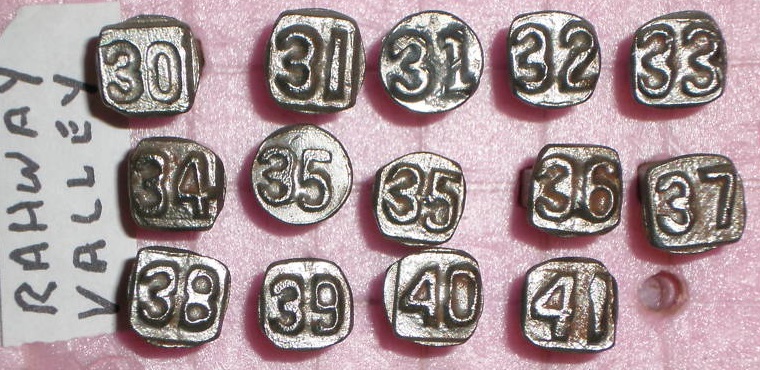
Rahway Valley RR
Northeastern U.S.
| |
|
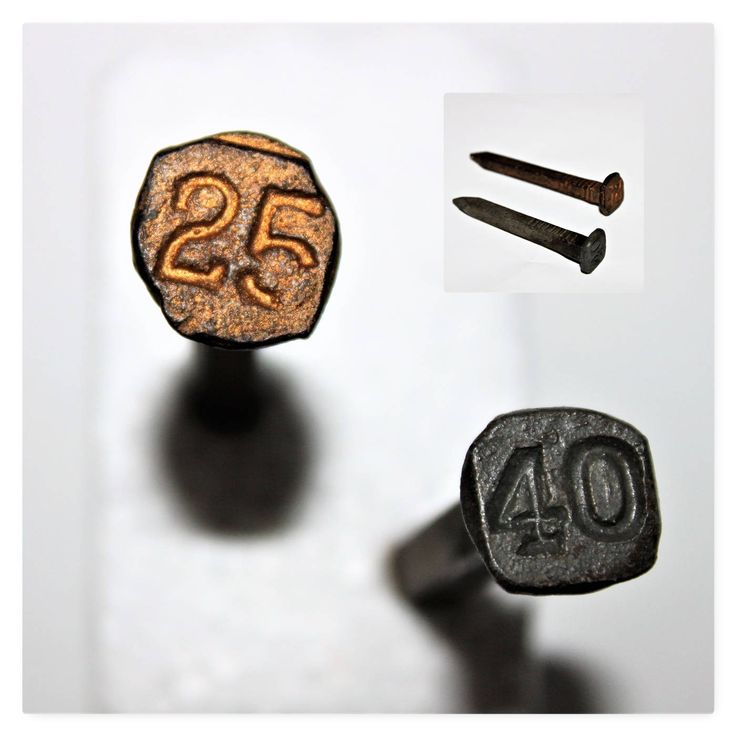
Square Shank Copper and Steel | |
|
Jokes :-)
What’s the best way to fix a broken pumpkin?
Use a pumpkin patch.
Why did the cranberry blush?
It saw the turkey dressing.
What’s a pilgrim’s favorite dance?
The turkey trot.
What did Dad say when he was asked to say grace?
"Grace."
What do you call rain on Turkey Day?
Fowl weather.
Why didn't the pilgrim want to make the bread?
It's a crummy job.
Why should you never tell secrets in a cornfield?
Because the corn has ears.
Did you hear about the scarecrow who won first prize?
It was outstanding in its field.
What's one thing that you'll have in common with a teddy bear on Thanksgiving?
You'll both be filled with stuffing.
What was the turkey suspected of?
Fowl play.
What's the best way to stuff a turkey?
Serve him lots of pizza and ice cream!
Which side of the turkey has the most feathers?
The outside!
What do you get if you divide the circumference of a pumpkin by its diameter?
Pumpkin pi.
What happened when the turkey got into a fight?
He got the stuffing knocked out of him!
When is turkey soup bad for your health?
When you are the turkey.
What do you call a running turkey?
Fast food.
What did the turkey say to the turkey hunter on Thanksgiving Day?
Quack, quack!
Erma Bombeck:
Thanksgiving dinners take 18 hours to prepare. They are consumed in 12 minutes. Half-times take 12 minutes. This is not coincidence.
| |
You can also get your antiques fix at one of our Fun Local Antique Stores and The Nevada Marketplace in Reno Town Mall. | | |
|
|
960 S. Virginia St.
775-322-5865
| |
Reno Town Mall
775-384-3153
| | |
|
Tanners Marketplace
Antiques, Crafts, Collectibles and Retro shows
Website
| |
| | | |