|
In this issue:
- Campus Coexistence With Canines
- New Evening Lecture Series
- Upcoming Programs
- New Programs for Young Children!
- Say...
- Tales From the Trail
- Greenways: Savings From Saving
| |
|
Campus Coexistence With Canines
Catching site of the wildlife is one unique aspect of our UM-Dearborn campus, amid one of the most urbanized areas in Michigan.
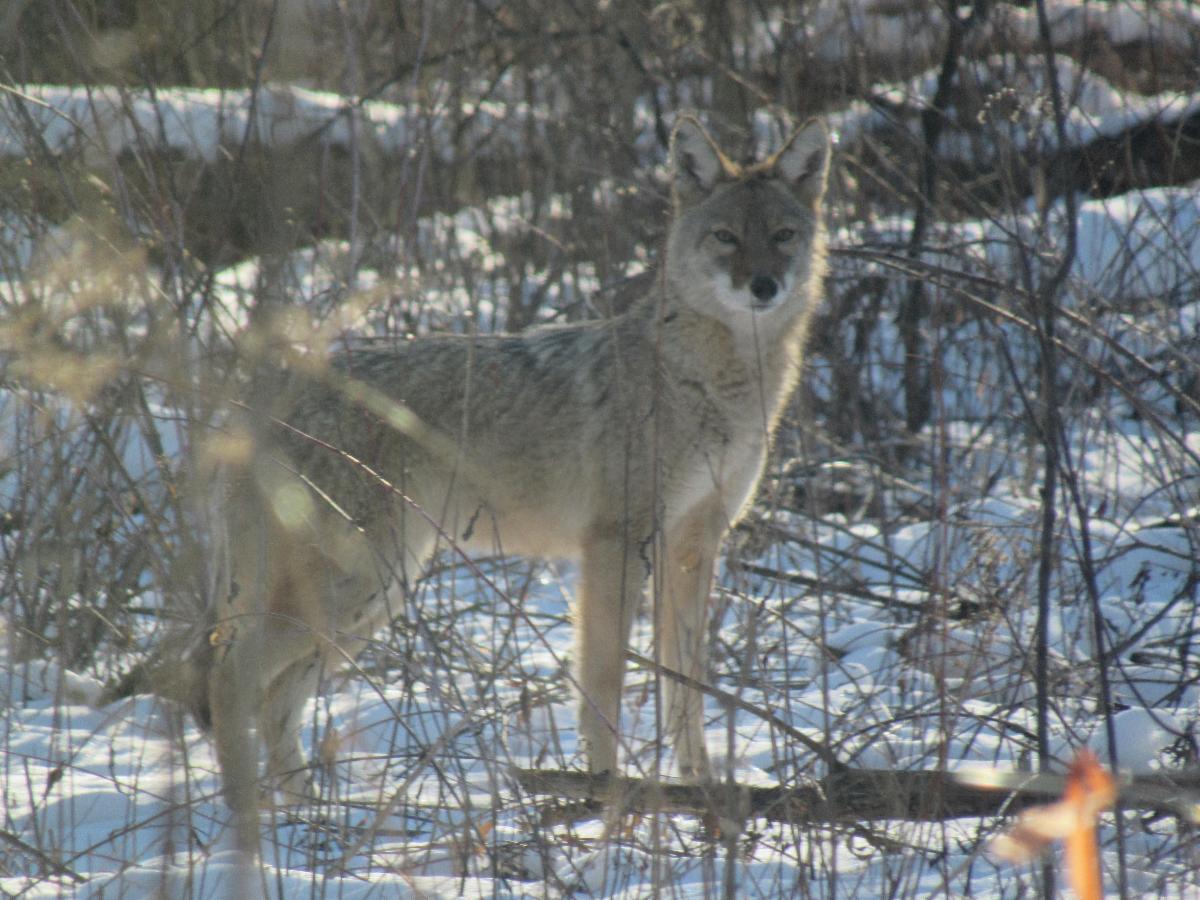
Home to not only small mammals, like squirrels, rabbits, raccoons, and possum, our campus and surrounding green spaces also hosts white-tailed deer, two species of foxes (gray and red), and another member of the dog family that has been seen and heard more regularly recently: the Eastern Coyote, Canis latrans. (Photo by Alexis Kott)
Coyotes have been living on and around our campus for years, under the radar like undercover agents, but in the last few weeks they have been slightly more active by day. Several factors may be involved in their behavior changes. Around mid-December, our campus activities slow down at the semester’s end moving into the holiday break. Fewer people and cars are on campus, so coyotes and other animals have more opportunities to roam without encountering humans—something they prefer. The winter semester is underway, and people have returned to their usual habits on campus. Perhaps the coyotes will as well.
| |
|
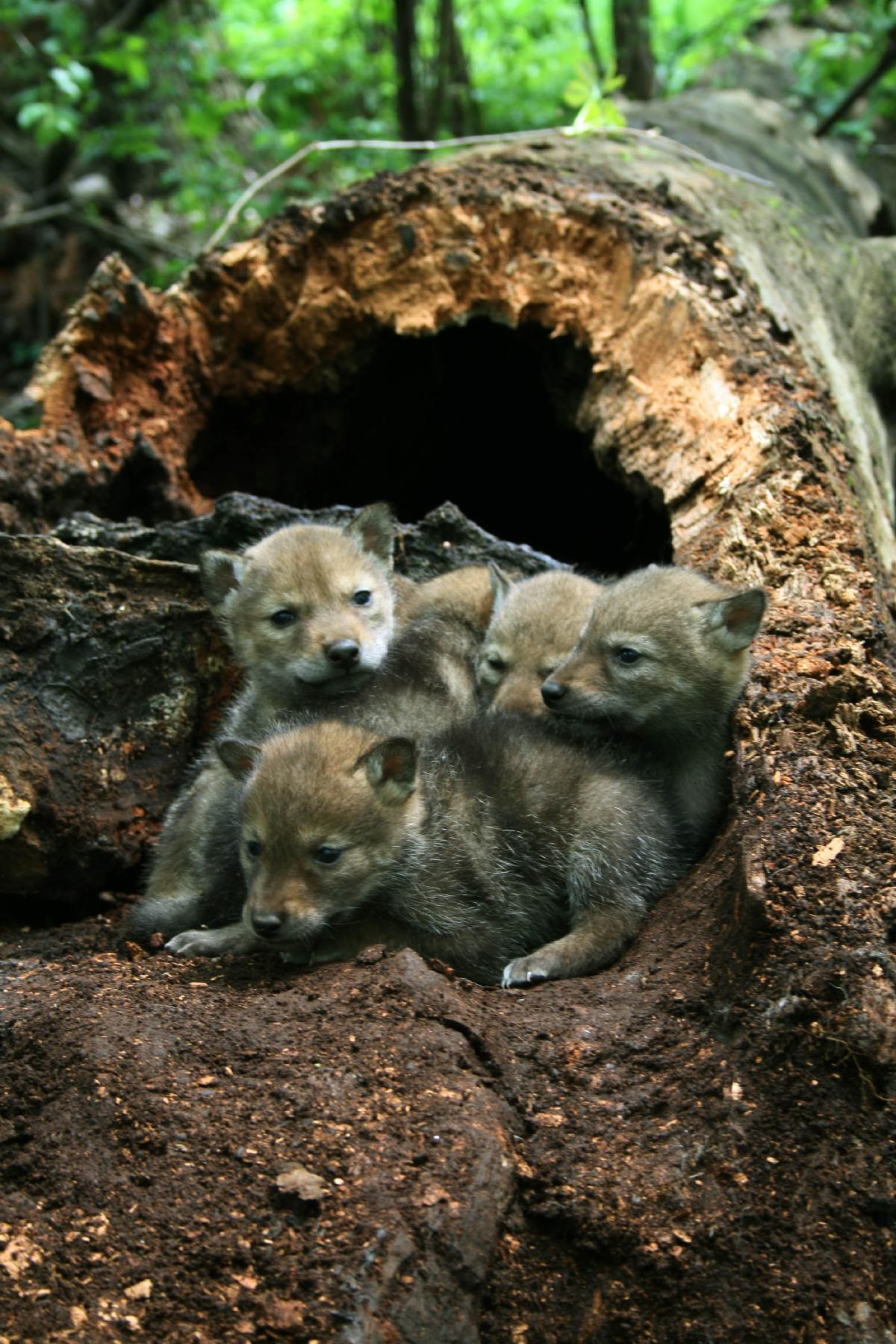
It is also coyote “courtship” time, and they are on the move looking for potential mates and den sites. It is likely that once a site is selected, they will stick tight to the den and will return to their secretive ways. (Photo courtesy Urban Coyote Project)
Two studies on urban coyotes reveal some of these secret ways. Dr. Bill Dodge conducted his 2015 Ph. D research on coyotes in metropolitan Detroit, including our Environmental Study Area and connected green spaces. His research states:
| |
|
“Coyotes (Canis latrans) have readily adapted to urban landscapes and have become a top carnivore in many major metropolitan areas in the last decade. A common result across most studies of coyotes in urban areas is that they typically avoid human activity by being nocturnal in human-dominated areas, yet they are often active during the day in more rural or wilderness areas.” | |
|
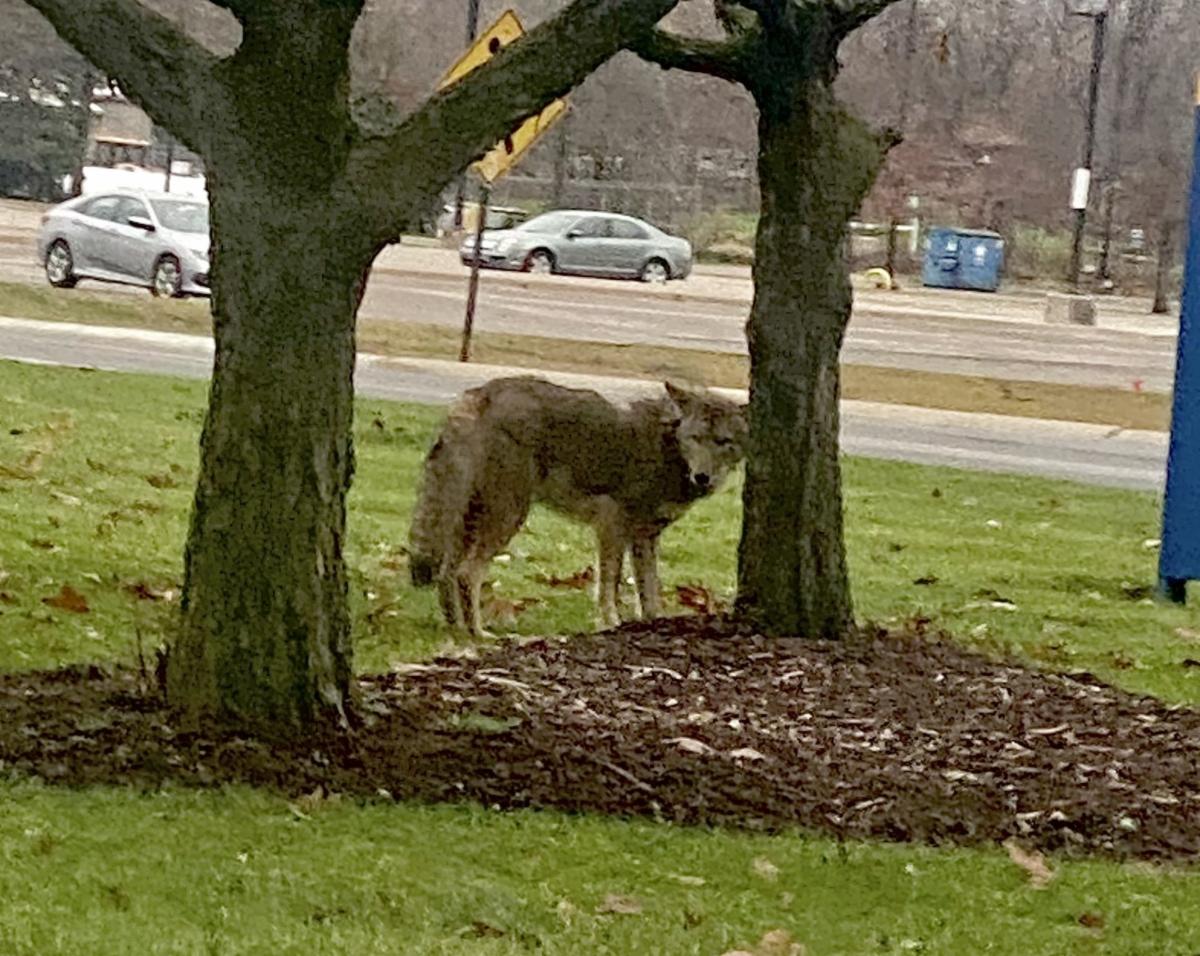
Dr. Stanley Gehrt of the Ohio State University has conducted decades of research on urban coyotes in the heavily populated heart of Chicago. He refers to coyotes as “ghost dogs” because they are seldom seen and rarely heard. He advises, “It is important to stress that our relationship with coyotes is directly affected by our behavior — coyotes react to us, and we can foster mutual respect or a lack of respect through cues we send to coyotes.”
(Photo by Dunia Almoamen)
| |
Gehrt says, “Some people like seeing them near their yards and attempt to entice them by baiting them, or they want to try to ‘tame’ them. Intentional feeding, such as this, should be prohibited. Coyotes are watching and learning from us; we influence their behavior, and it will be our actions that determine what the future holds for our new neighbors.” | |
|
Keeping wild things wild is a beneficial practice for both humans and wildlife, so if you see coyotes (or any other species), please do not alter their behavior by feeding them or inviting them to approach you. Let’s allow our wild neighbors to remain wild as we coexist together on campus.
Enjoy this video, recorded by Cole Williams, of a coyote letting out a yowl outside the EIC.
| |
New Evening Lecture Series! | |
|
The EIC staff introduces a new series of monthly programs to coax you out of your house in the winter months. Staff members, as well as local speakers, will offer talks on topics of their own interests related to environmental themes. The talks are presented in Room 119 inside the EIC. Casual walks in the Environmental Study Area will be offered after the talks.
Here are the speakers and their topics:
Climate Change and Biodiversity Loss are Interconnected
Speaker: Valerie Osowski, President, Student Sustainability Coalition
Date - Tuesday, February 20th
Time - 6:30 PM - 7:30 PM
Unprecedented increases in the rate of climate change over the last several decades have come with a number of consequences, including sea level rise, extreme weather, and species extinction. This lecture will focus on how climate change is currently affecting species and biodiversity in Michigan, as well as ways that we can help protect our environment.
Please register for this event.
Rouge River Revived
Speaker – Dr. John Hartig, Visiting Scholar at the University of Windsor
Date – Thursday, March 28
Time – 5:00-6:00 PM
Spring Ephemeral Wildflowers
Speaker - Dale Browne, EIC Staff Naturalist
Date – Thursday, April 25
Time – 5:00-6:00 PM
Mushroom Identification 101
Speaker – Mike Solomon, EIC Staff Naturalist
Date – Thursday, May 25
Time – 5:00-6:00 PM
| |
|
An Evening Winter Walk
Friday, February 23, 7:00-8:30 PM
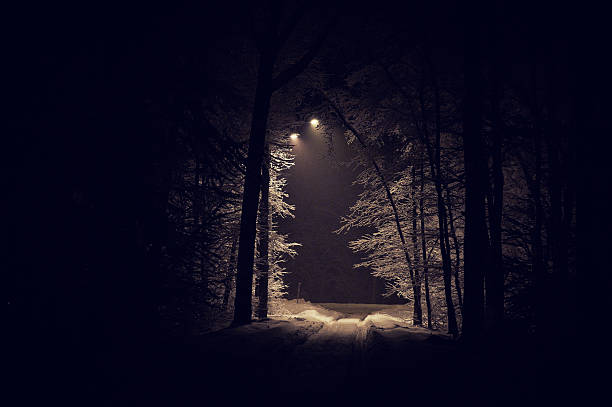
Come explore the winter woods after dark with the EIC staff naturalists. Dress for the weather with appropriate sturdy footwear for possible snowy conditions. Please register for this program.
Maple Sugaring Time!
Tree Tappers Needed
Saturday, February 17, 1:00-3:00
A great cure for cabin fever is to walk out to the sugar bush to get the maple sugaring season started. Tap into the fun and enjoy a forest walk with the EIC naturalists to hang sap buckets on the maple trees. We can't make syrup without the sap...
Please register for this program.
| |
|
Maple Syrup Boil Down!
Saturday, March 9, Two walks: 1-2:30, 1:30-3:00
How do we choose the correct tree for making maple syrup? What do we do with the sap in the buckets? How is maple syrup made? Find out the answers to these questions and more on a walk to the sugar bush, then gather around the stove in the "outdoor kitchen" for a taste of last year's "liquid sunshine." Please register for this program.
| |
|
Bi-weekly Programs
Nature Walks for Mental Health Winter 2024
Schedule: 3:00-3:45 PM on February 20th, March 5th & 19th, and the final walk & celebration on April 2nd.
Relax, unwind, and get outside; with brief guided meditations, and 45-minute nature walks. You will be entered into a raffle for each event you attend, where winners will be announced at the final walk and celebration. Please dress appropriately for walking outdoors. This event is free and open to the public. For more information, email ankott@umich.edu. Please RSVP
Art in Nature Winter 2024
Schedule: 2:30-3:30 PM on February 15th, March 21st, and April 18th.
Guided nature walks include art demonstrations, tips, and prompts. Art supplies available upon request, or bring your own. There will also be opportunities to submit your artwork to be displayed in an Art Showcase in April. Please dress appropriately for sitting outdoors. This event is free and open to the public. For more information, email ankott@umich.edu. Please RSVP
Photography Walks Winter 2024
Schedule: 2:30-3:30 PM on March 7th, and April 4th.
Take a hike with an EIC Naturalist and Nature Photographer! Bring your own cameras and accessories, we supply the scenery. There will also be opportunities to submit your photos to be displayed in a Photography Showcase in April. Please dress appropriately for walking outdoors. This event is free and open to the public. For more information, email ankott@umich.edu. Please RSVP
| |
New Programs for Young Children | |
|
Join us for an hour of fun!
Free & open to the public. Best for children 7 and under. Meet in the EIC Exhibit Area.
Music & Bubbles, Observe Wildlife, Nature Themed Books, Crafts or Activities
Wednesdays from 4:00-5:00 PM,
February 21st, March 13th, April 24th.
For adults bringing children of various ages, there is an option for older kids (7+) to enjoy a nature walk with an EIC naturalist while younger kids.
Children's Arts & Crafts Workshop
Welcome to children of all ages. Each workshop will have an environmental focus. All supplies will be provided.
4:00-5:00PM, Tuesday, March 26th, & Tuesday, April 16th.
Meet in Room 118 - see you there!
Contact Alexis Kott (ankott@umich.edu) for more information on these programs.
| |
Dorothy McLeer Recognized
EIC Program Manager Dorothy McLeer received the Thomas Say Award from the National Association for Interpretation. This award strives to honor naturalists who have demonstrated the highest accomplishments of our profession and have inspired greater understanding, awareness, and stewardship of our natural resources.
| |
|
Beaver Signs of the Times
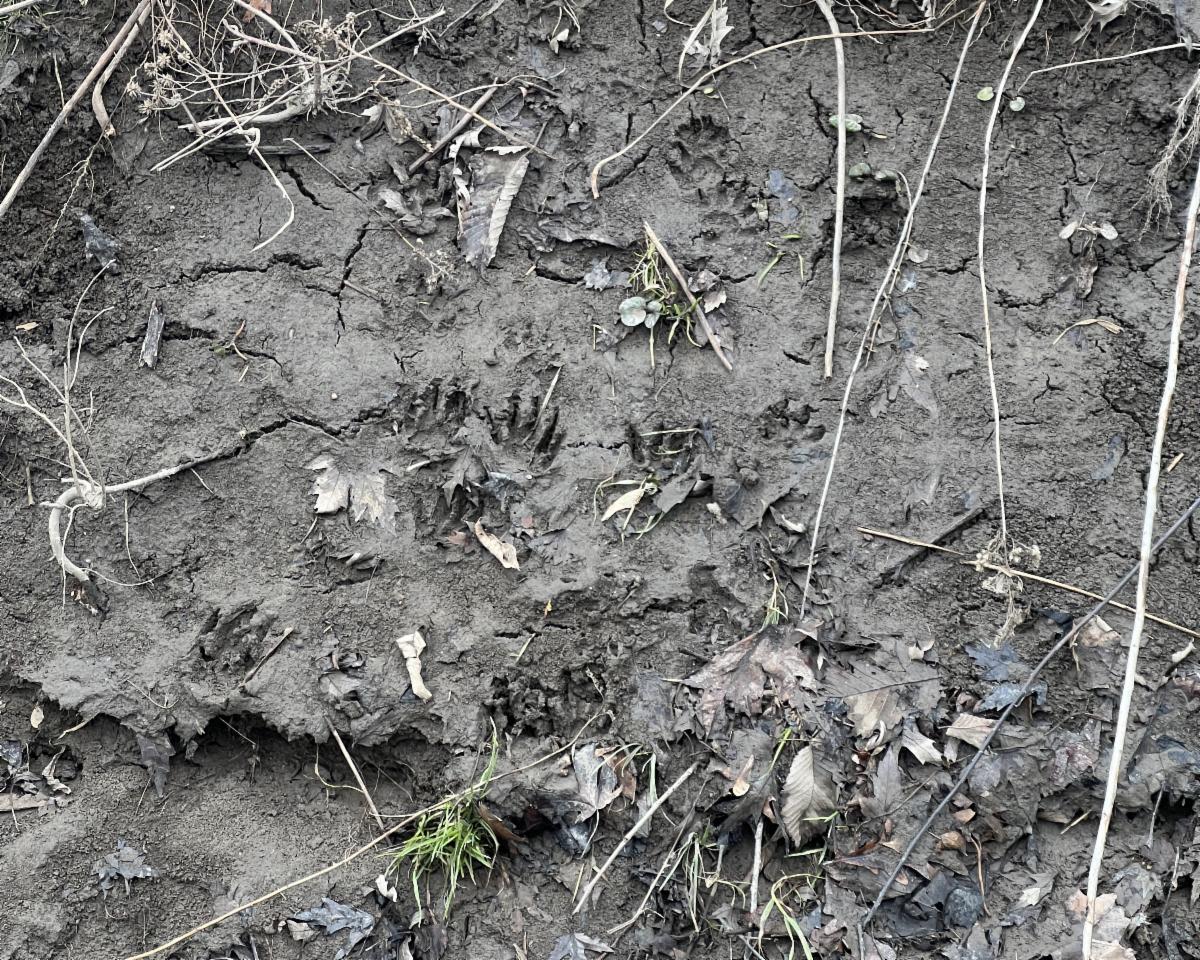
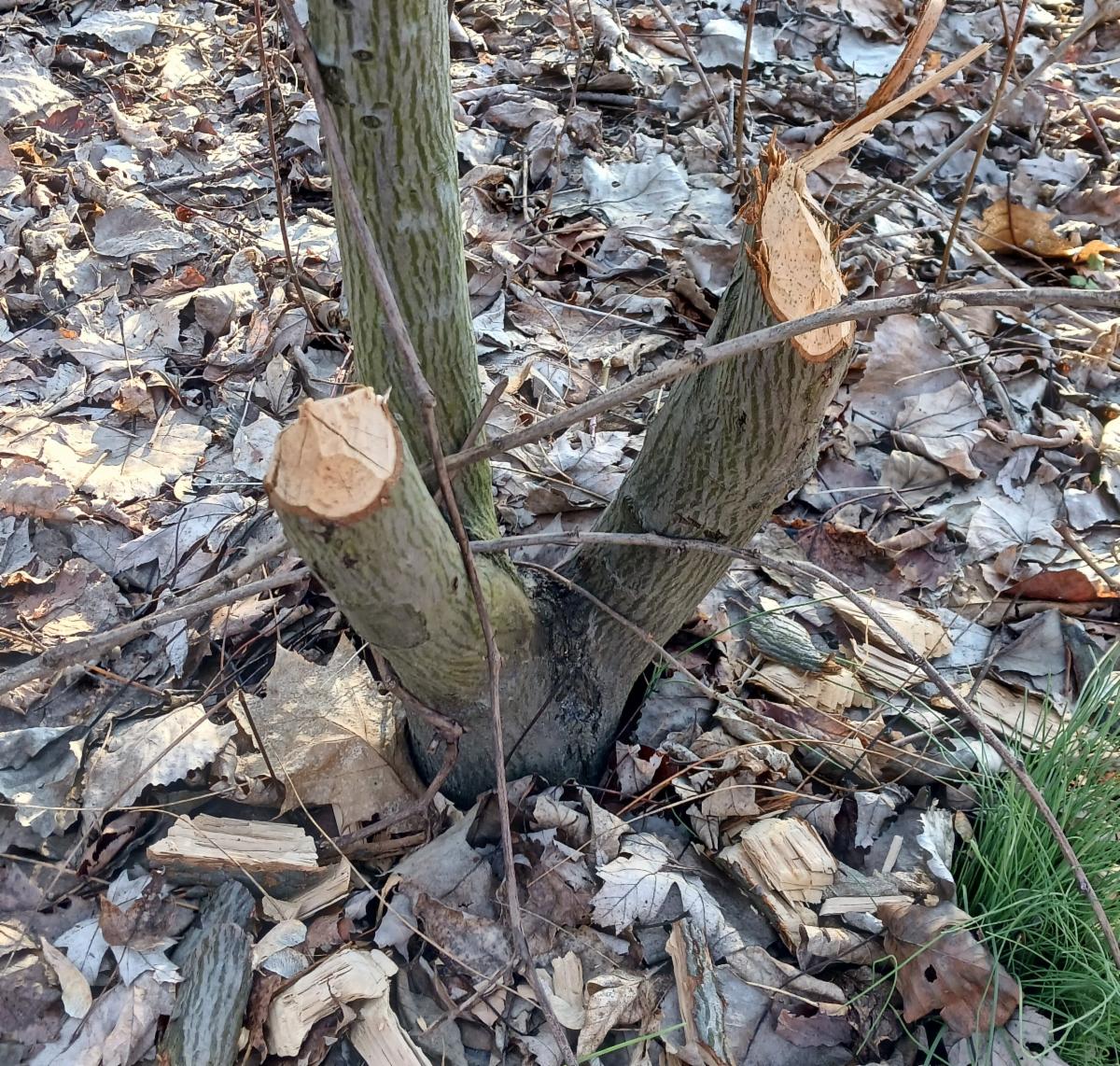
Having made their return to the Rouge River in Dearborn in 2012, Beaver (Castor canadensis) are now well established in the Environmental Study Area. Although evidence of their presence includes the occasional beaver sighting, most consists of hard to miss chew marks on trees along the riverbank. Recently, our naturalist staff were able observe and interpret a less commonly encountered indication of beaver presence—their tracks—with our educational program groups.
| |
|
A 20-foot stretch of bare mud at the water’s edge supplied a good template for observing details of the beaver footprints. At first glance, beaver prints strongly resemble those made by raccoons—however, the hind foot of the beaver is webbed.
| |
|
As can be seen in the accompanying photo (above) taken by EIC naturalist Michael Solomon, the spaces between the toes have small pads, giving the toe prints an inflated look. In ideal conditions, the outer edges of hind footprint will also reveal the small heal pads. | |
|
Other evidence of beaver presence is visible at various locations along the River. They are chewing saplings as well as much larger, mature trees on the riverbanks. The ongoing occurrence of beaver sign can perhaps be interpreted as a sign of better times ahead for Castor canadensis. Friends of the Rouge related in an article, "Our collective work to clean up the Rouge River since the 1970s is clearly paying off with the return of this sensitive mammal. "
Let’s keep an eye on their progress.
-Rick Simek
| |
Saving Energy Saves You Money!
During the colder months of the year, we spend much more time in the comfort of our homes, and, consequently, use much more energy. Thankfully, though, there are plenty of simple practices that save energy and money during the winter.
One easy practice is to make sure to light your home with energy-efficient lights (pictured above), such as LEDS. LED light bulbs require significantly less energy than other bulbs, are able to produce more light, and have a longer lifetime. To save even more on your energy bill, make sure to turn off the lights in unoccupied rooms and rely on natural lighting as much as possible.
| |
Another easy way to save energy is to make sure you unplug all devices when not in use. One way to make sure your electronics aren’t wasting energy is by using power strips, which will assure that all devices are off with just one switch. Also, try to charge your phone during the day rather than at night, because leaving the phone on the charger after the battery is full also wastes electricity. | |
|
|
To stay warmer while also spending less on heating, make sure that all of the windows in your home are properly sealed. Leaky windows can make your house colder, requiring more heat than usual to keep warm. In addition, open up the drapes during the day to allow in natural heat, and close the drapes at night to prevent cooling. Did you know that your heating and cooling systems are often the greatest energy expenses in your home? According to the U.S. Department of Energy, simply adjusting your thermostat can increase energy efficiency and save up to 10% on your electric bill!
Valerie Osowski, EIC Cooper Family Intern
Student Sustainability Coalition President
| |
Venturing outdoors and encountering nature is good for your health. Our trails are accessible, so please visit our Environmental Study Area. Stay engaged in learning activities and check out our Remote Learning Activities & Resources page for ideas to create a “Neighborhood Nature Journal” and “Family Nature Walk” activities!
We also hope to see you in person at our upcoming programs!
| | |
Please remember...
The EIC Environmental Study Area is open daily from sunrise to sunset. We would like to remind nature-goers that fishing on site is prohibited and to leave bikes and dogs at home because they cause disruption and stress to the EIC wildlife.
| |
| | | |