August 2023


I hope everyone has had a wonderful summer—how about that August rain?! I’ve enjoyed getting outside to do some fieldwork looking at the effects of different tree species on temperature, and I look forward to sharing results with you once we’ve finished data collection and crunched all the numbers. Stay tuned!


In this issue of the Taproot newsletter, I wanted to share the results of the needs assessment that so many of you have helped with—thank you for your contributions, and feel free to keep the ideas coming. I also want to make sure you’re aware of a relatively new and concerning tree pest, the Mediterranean oak borer. There’s a webinar this Thursday that should be very informative; see below for links. In addition, I'm including information about a funding opportunity for urban agriculture projects and a chance to participate in the UC Landscape Plant Irrigation Trials fall open house, as well as some recent relevant publications.


Please feel free to share this newsletter with anyone who might be interested, or direct them to sign up here.


Best regards,

Joanna Solins


Environmental Horticulture Advisor

UC Cooperative Extension

Sacramento, Solano, and Yolo Counties


jsolins@ucanr.edu

Needs Assessment and Website


So many important issues and wonderful ideas were brought to my attention while I conducted my needs assessment, and I appreciate the time and expertise of everyone I talked with. Of course, a needs assessment is never truly finished, but here is a summary of the major themes that have emerged from this process so far.


The summary is posted on my brand-spanking-new website, where you'll also find links to many relevant UC ANR resources and back issues of this newsletter (all one of them!). This site has been a long time coming due to a multitude of organizational website issues, but it appears to be up and stable now, at least for the moment. Apologies if you’ve experienced trouble accessing any UC ANR resources! These issues are hopefully going to be resolved soon.


I’ll be adding to my website as I develop my research and extension program, but if there are any resources you’d particularly like to see, please let me know.


Mediterranean Oak Borer (MOB)


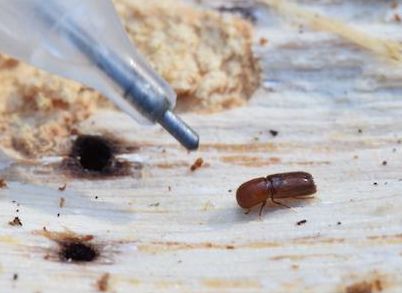
The Mediterranean oak borer (Xyleborus monographus) is an ambrosia beetle native to the Mediterranean region that is now infesting oak trees in several northern California counties. MOB infestations were confirmed in Napa County in late 2019, followed by spread to Lake and Sonoma Counties in early 2020. MOB appeared in Sacramento County in September 2020, most likely transported in firewood; it has so far only been found in the Citrus Heights area, but is very likely to spread.


In California, MOB most commonly attacks valley oak (Quercus lobata) and, to a lesser extent, blue oak (Quercus douglasii). The tiny beetles tend to infest trees that are already stressed. For much more information about this emerging pest and how to identify and manage it, please visit https://ucanr.edu/sites/mobpc.


On the evening of Thursday, August 31, UCCE Forest Advisor Michael Jones is hosting a Mediterranean Oak Borer Workshop, which you can attend virtually or in person (Santa Rosa). ISA CEUs are available.


Photo credit: Curtis Ewing, Cal Fire

CDFA Urban Agriculture Grant Program


A Request for Applications was recently released for the California Department of Food and Agriculture (CDFA) Urban Agriculture Grant Program, a one-time only, competitive grant that will award up to $11,670,000 to programs and projects that “enhance the viability of urban agriculture in urban areas across the state of CA.” Please see the program page for more information, as well as a link for an informational webinar on August 29 (it will be recorded). Applications are due October 23.

UC Landscape Plant Irrigation Trials Fall Open House – September 19


The UC Landscape Plant Irrigation Trials evaluate landscape plants to determine the best irrigation levels for optimal performance. On September 19, from 8:00-11:00 am, you can visit the trial field at UC Davis to participate in the evaluation and learn about the plants being studied. The evaluation takes approximately 60-90 minutes, and you can register here.

From the Journals


A few recently published studies that might be of interest:


Residential adoption of best landscape management practices: Effects of outreach to reduce non-point source pollution


This study was conducted by UC ANR and UC Davis colleagues, with the help of our Master Gardener volunteers. Unfortunately, they didn’t find significant behavioral changes after short-term outreach efforts to residents. It is likely that longer time frames are necessary, and education of landscape and nursery professionals may also be a more effective strategy.


Excessive use of water and fertilizer by homeowners: Why it happens, how it affects the environment, and how the nursery industry and Extension outreach can help


This paper highlights the importance of collaboration across sectors for improving home landscape sustainability. I’m looking forward to working with you to implement some of the recommendations!


School greenspace is associated with enhanced benefits of academic interventions on annual reading improvement for children of color in California


Greenspace at schools was found to boost the impacts of literacy tutoring sessions. 


Response of landscape groundcovers to deficit irrigation: An assessment based on normalized difference vegetation index and visual quality rating


This study from Riverside identified several landscape groundcovers that performed well when irrigated at only 24% of reference evapotranspiration.


Promoting self-determination, minimizing green gentrification, and maximizing community benefits in urban forestry expansion: A systematic review


This review highlights the importance of accessible participatory urban forest planning processes that prioritize the needs, goals, and knowledge of community members.


The ecological role of native-plant landscaping in residential yards to birds during the nonbreeding period


In Los Angeles, yards with native-plant landscaping—particularly native trees and shrubs—were found to provide important habitat for birds during the nonbreeding period.


Are greenspaces too green? Landscape preferences and water use in urban parks


In Perth, Australia, residents were accepting of non-irrigated areas in public parks.

Visit the UCCE Capitol Corridor website