|
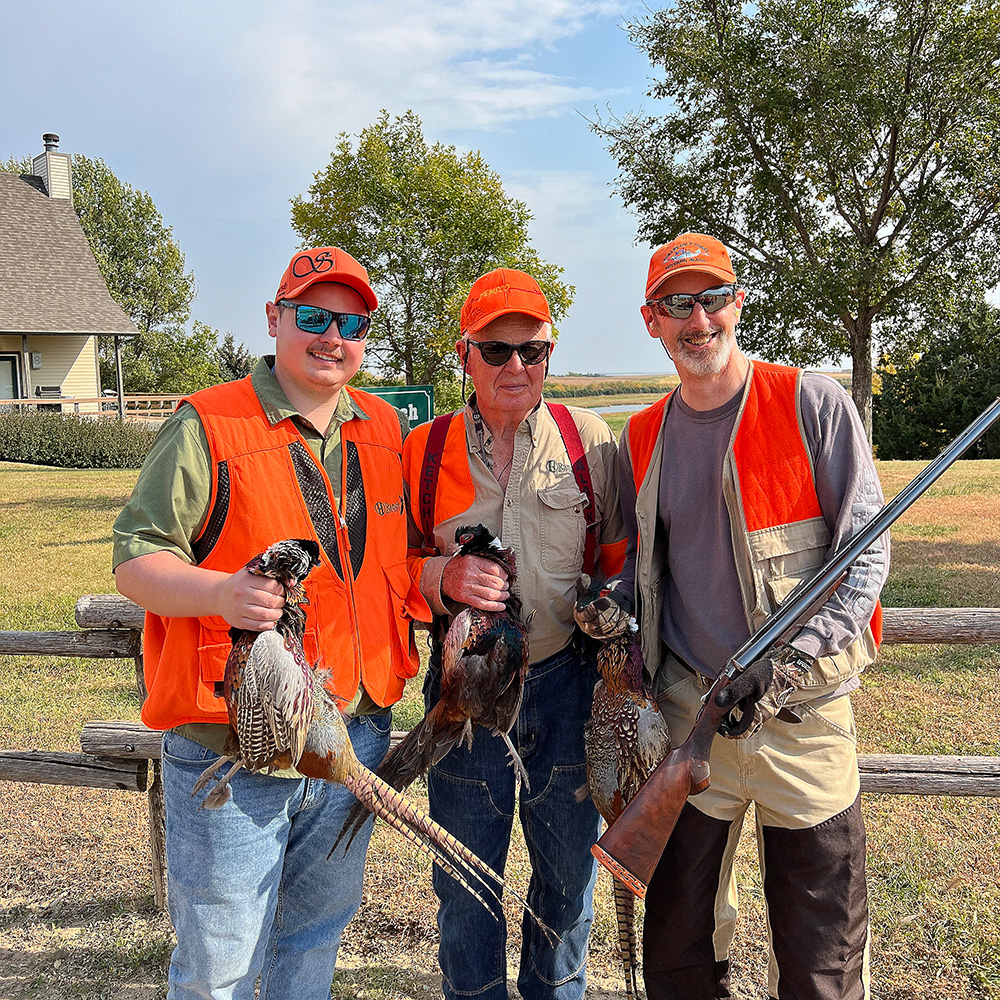
My day-to-day life is filled with modern firearm technology. I geek out making stuff to improve polymer pistols and dabble in 3-gun technology as well. Last week I got the chance to step back in time and hunt using my great-great-grandfather’s 1932 Ithaca side-by-side (shown in image). Flanked by three generations of my family (including cousin Daniel, and Uncle Dan at left), shooting the Ithaca positively drug me into looking back at changing tech.
Almost 100 years on, that Ithaca runs circles around many modern shotguns. It’s limited to pheasants now thanks to the steel shot requirements of waterfowl hunting, but that gun was “the top” in 1932 (as Cole Porter would say). My Winchester SX2 is a great do-everything shotgun, but it’s a tank compared to the Ithaca, with little of its class or craftsmanship. That’s obvious when you look at them, but you can’t sense the design ques until you pick them up.
I’ve had my eyes opened repeatedly by picking up period examples of older weapons. Rifle-muskets with their bayonets from the Civil War look long and awkward until you hold one in your hands and realize -- you’re holding a spear. English short pikes and halberds (with shafts of old-growth oak) have a certain weight and balance. Just holding them gives you a new window into their design, their lethality, and how they were likely used.
As you hunt with the Ithaca, double triggers let you select your choke to match a “short” or “long” shot in an instant (my SX2 can’t do that). You notice the auto-ejectors only launch the empties (preserving your unfired ammo), and how each hidden hammer has a “cocking indicator” to tell you which barrel has been fired. As each hammer drops, you hear the “ping” of the leaf springs like faint chimes – each note telling you that the system is healthy. If that note turns flat, something broke.
I suspect that somewhere in your life there’s a chunk of old weapons technology – like a police-issue revolver, an old shotgun, or a sap. Take it to a safe training space for a test-drive this "off season" and spend a little time with it. It likely has an unseen tale to tell.
|