|
Teaching About Famine
on St. Patrick’s Day
| |
Too often, textbooks present famines as natural phenomena. They are not. As Sudan, Congo, and Gaza move closer toward famine, it is not hard to see its causes. In addressing Gaza, the European Union foreign policy chief Josep Borrell said recently: | |
This is a humanitarian crisis, which is not a natural disaster. It’s not a flood. It’s not an earthquake. It’s man-made. And when we look for alternative ways of providing support, by sea or by air, we have to [remember] that we have to do it because the natural way of providing support, through roads, is being closed, artificially closed, and starvation is being used as a war arm. And when we condemn this happening in Ukraine, we have to use the same words for what’s happening in Gaza. | | |
|
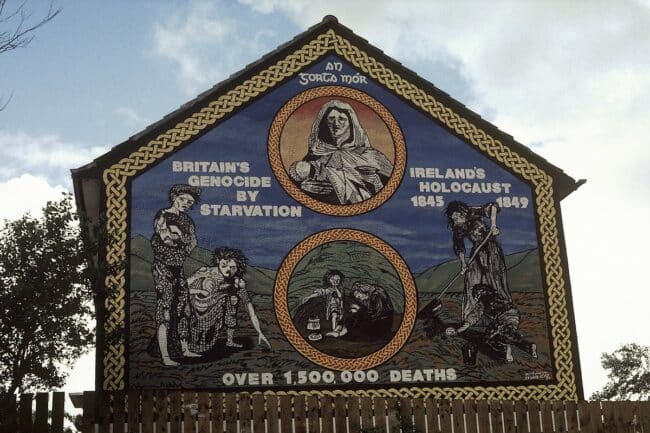
Of course, the most famous famine is the so-called “Potato Famine” in Ireland. For better or worse, St. Patrick’s Day is that brief period during the year when people pay attention to all things Irish. It is a good time to revisit Ireland’s Great Famine and the refugee exodus it unleashed — and to recognize what it holds in common with other famines, past and present.
Studying the so-called Potato Famine can help students see that this was no natural disaster; it was the product of structural violence. As Bill Bigelow writes in his “If We Knew Our History” column, “The Real Irish American Story Not Taught in Schools,”
| |
During the first winter of famine, 1846–47, as perhaps 400,000 Irish peasants starved, landlords exported 17 million pounds sterling worth of grain, cattle, pigs, flour, eggs, and poultry — food that could have prevented those deaths. | | |
The shape of the wound of famine was British colonialism and the capitalist system, which prized profit over the Irish poor. See our lesson, “Hunger on Trial,” which brings this insight to life in the classroom — and helps students consider the roots of today’s unnatural disasters. | |
Teach Climate Justice
Books for Your Teaching Story
| |
|
Our lesson on the Great Famine in Ireland and other lessons from the Teach Climate Justice Campaign help students see that environmental devastation is not simply a “natural” disaster.
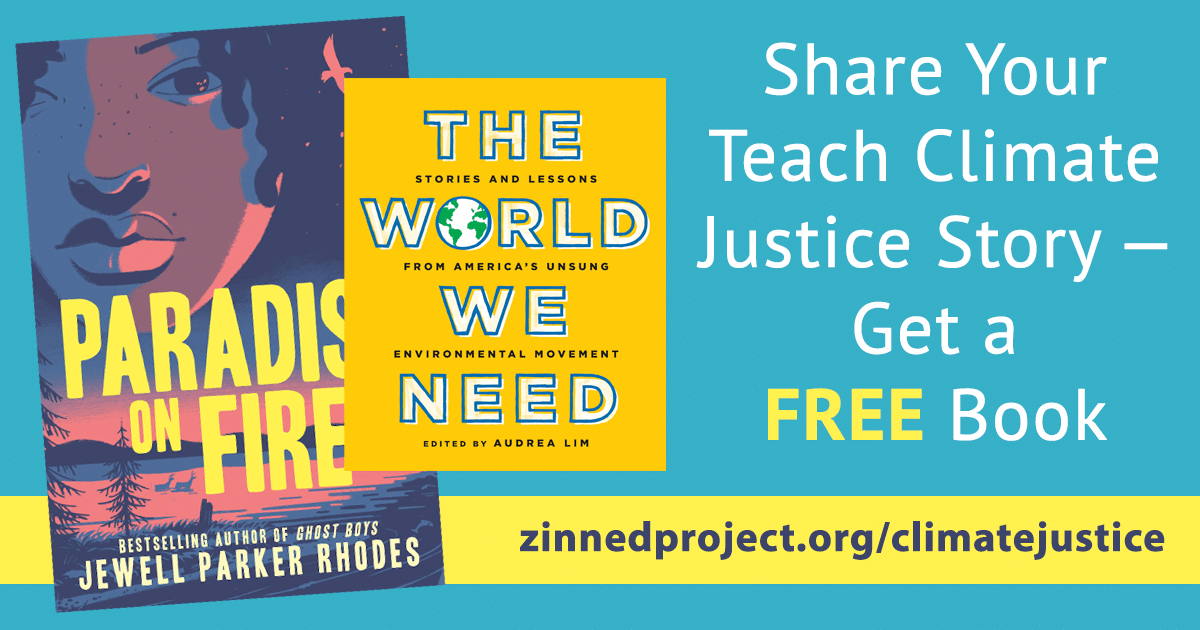
Share your teaching story with us, about how you used any of our climate justice materials, and we will send you a copy of Paradise on Fire by Jewell Parker Rhodes or The World We Need: Stories and Lessons from America’s Unsung Environmental Movement by Audrea Lim.
| |
A People’s Curriculum for the Earth | |
|
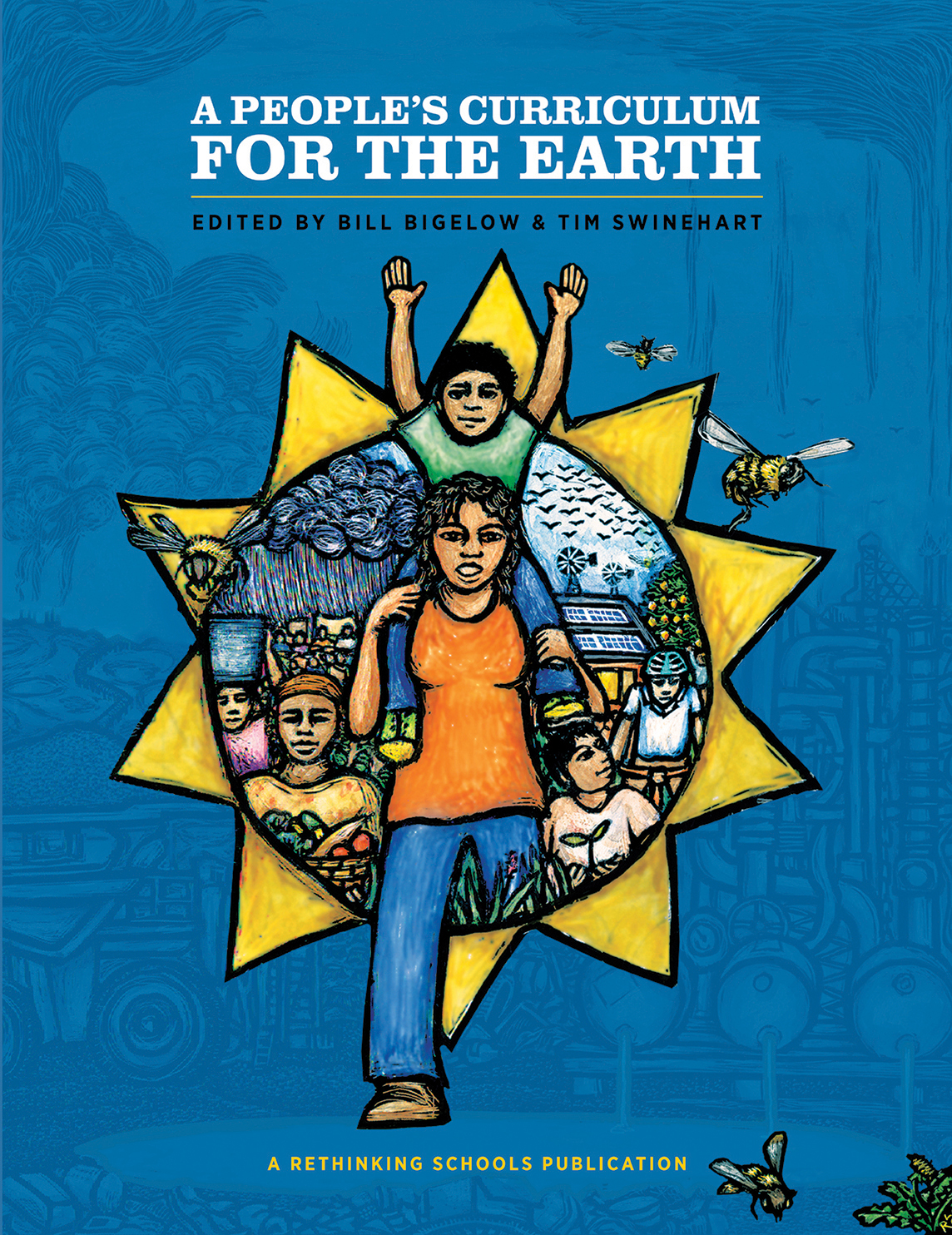
A People’s Curriculum for the Earth is a Rethinking Schools publication with articles, role plays, simulations, stories, poems, and graphics to help breathe life into teaching about environmental justice.
The book features some of the best articles from Rethinking Schools magazine alongside classroom-friendly readings on climate change, energy, water, food, and pollution — as well as on people working to make things better.
| |
|
At a time when it’s becoming increasingly obvious that life on Earth is at risk, here is a resource that helps students see what’s wrong and imagine solutions. | |
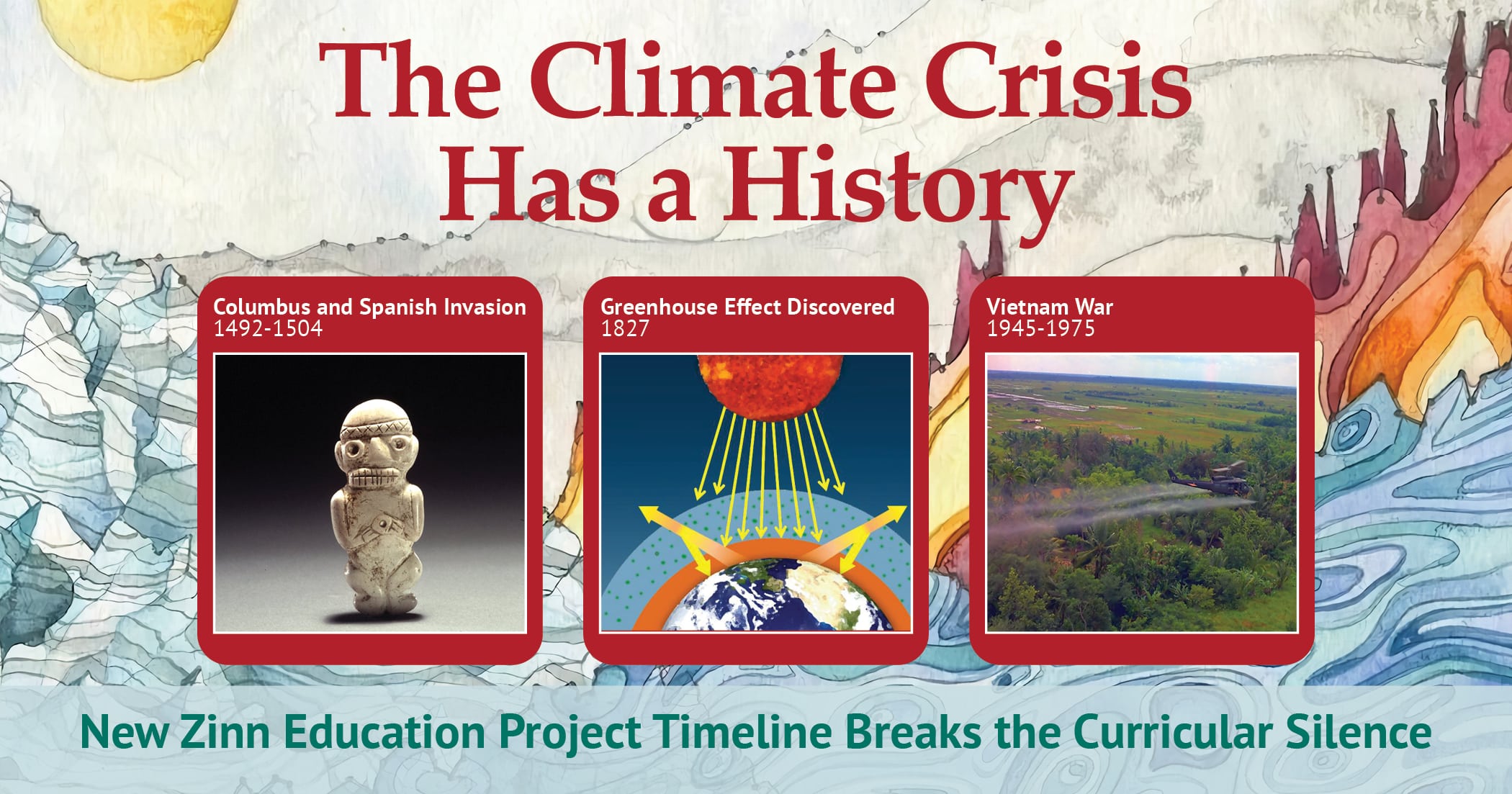
We offer a timeline of the climate crisis that traces its roots from European colonial expansion and racial capitalism to present-day fossil fuel industry and government projects that exploit and destroy the Earth in the name of maximum profit. It also emphasizes moments and movements of resistance and activism that inform climate justice work today. | |
Teaching Palestine-Israel
Food Sovereignty and Israel’s War on Gaza
| |
|
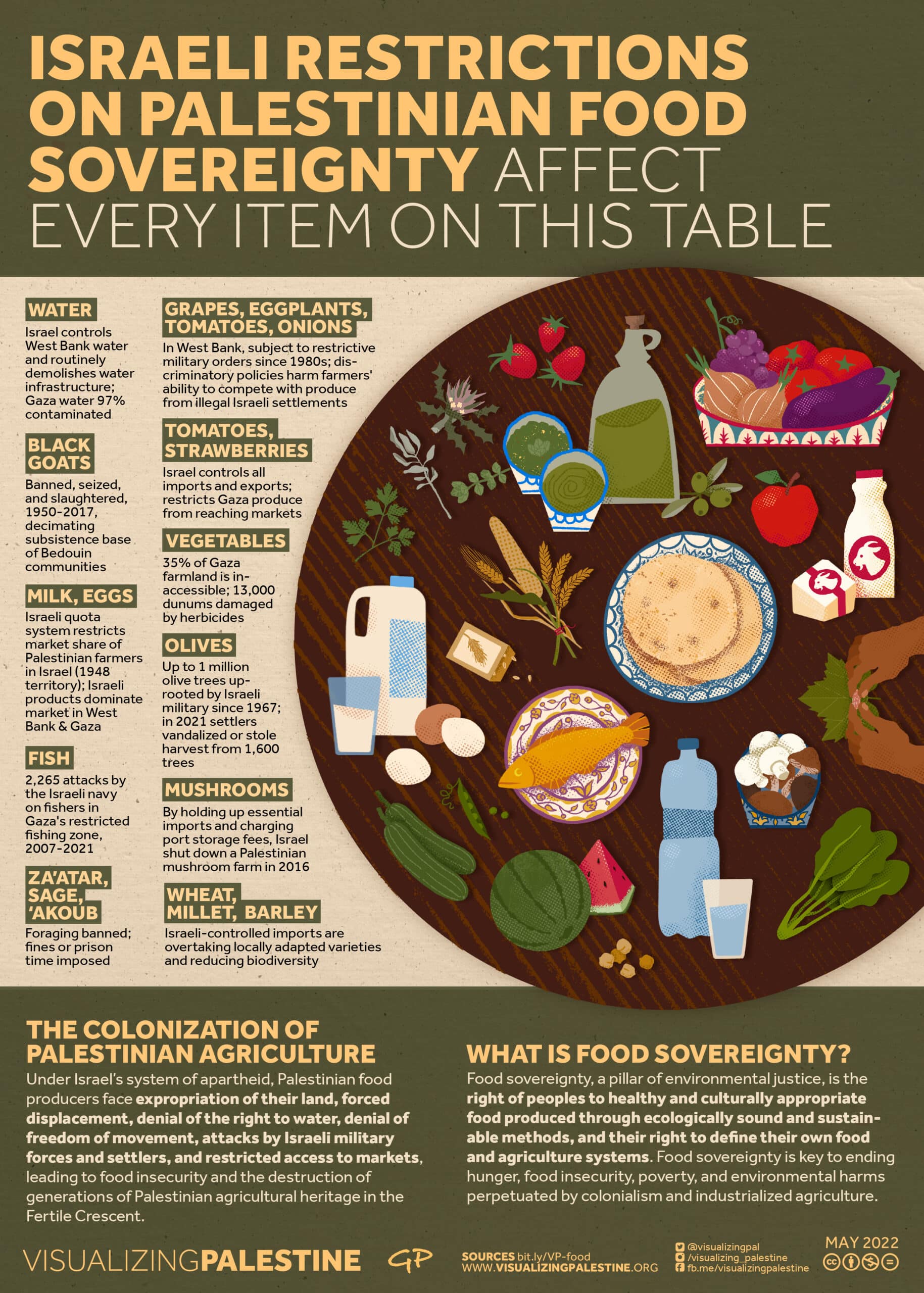
This infographic from Visualizing Palestine explores various ways that Israeli policies of settler colonialism and apartheid deny Palestinian food sovereignty.
During the Nakba in 1948, Palestinian refugees lost some 4.6 million dunams (about 18 million acres) of farmland, which the Israeli state quickly appropriated for Jewish-only agricultural settlements. The ongoing Nakba continues to take a heavy toll on farmers, fishers, and pastoralists across historic Palestine.
Find more classroom resources, including lessons, podcasts, films, and articles to teach about Palestine-Israel.
| |
|
|
Informational Session
Teaching for Black Lives Study Groups
| |
|
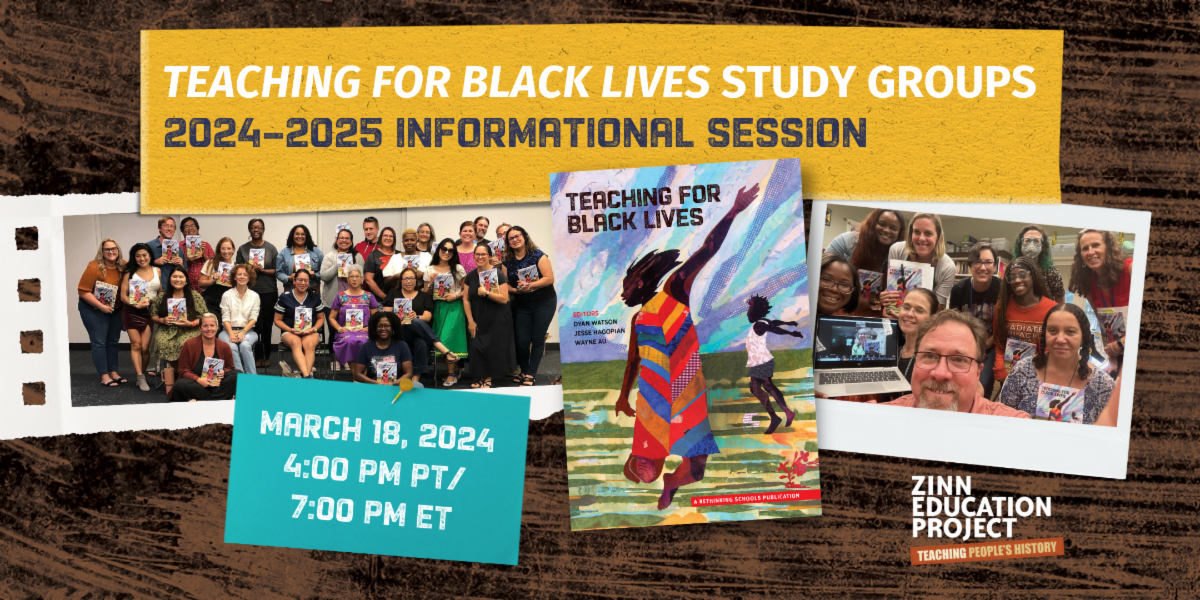
Interested in forming a Teaching for Black Lives study group in your school, district, or state? Study group members receive a free copy of the Rethinking Schools book, Teaching for Black Lives, a Rethinking Schools subscription, workshops, and more.
On Monday, March 18, learn how to host a group. Teaching for Black Lives co-editor Jesse Hagopian will introduce the benefits and logistics of study groups in this 45-minute informational session. Study group coordinators will briefly share their experiences and respond to questions.
| |
Teach Truth Day of Action
Saturday, June 8, 2024
| |
|
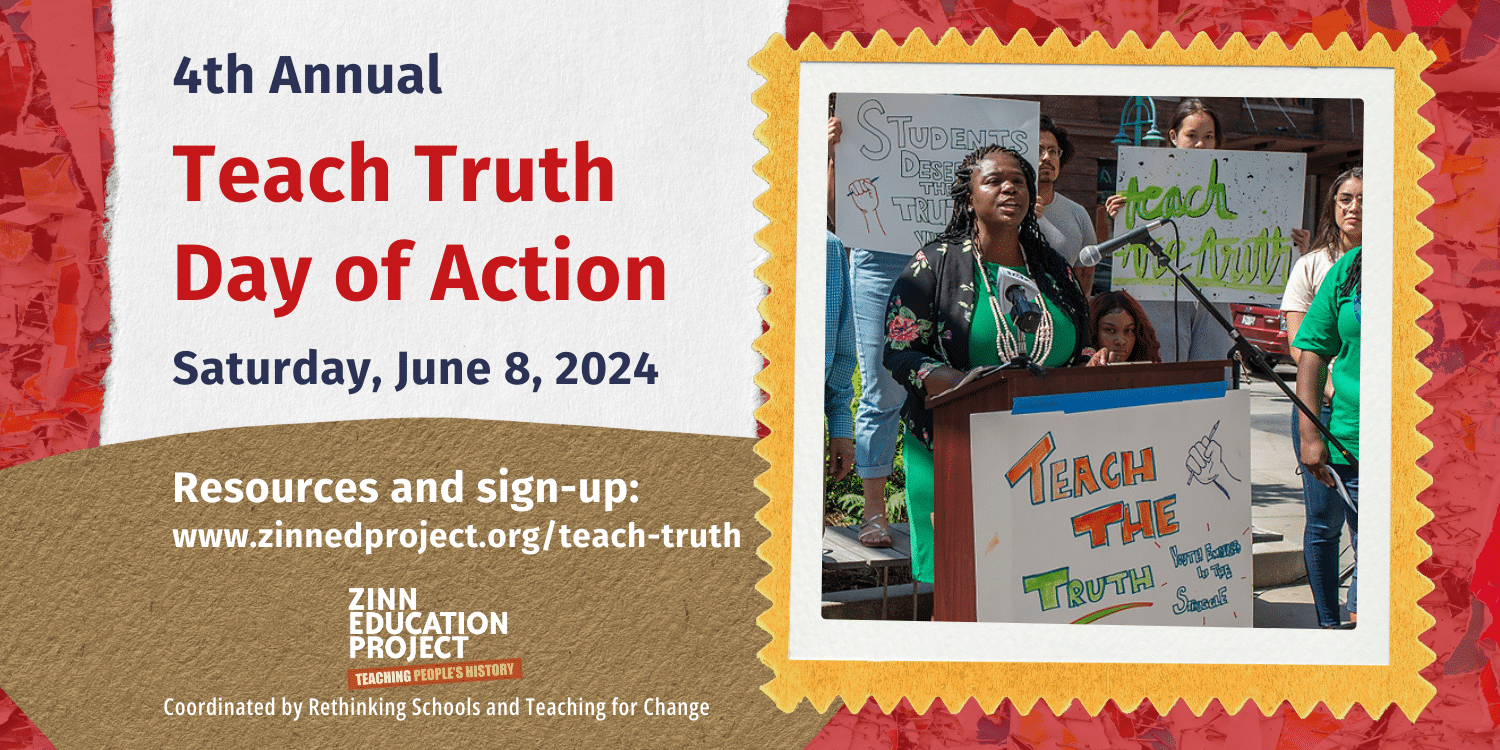
For the past three summers, teachers rallied to speak out against anti-history education bills. The teacher-led events received national media attention, providing a counter-narrative to the oversized coverage of the well-funded anti-CRT movement.
It is a day to draw attention to the devastating laws against teaching history, against LGBTQ+ students, and the book bans — and to encourage people to defend the freedom to learn.
This year, we will provide a box of materials for pop-up Teach Truth displays. Event hosts can set up a table at a library, bookstore, museum, farmers’ market, or other public space. Our goal is to reach a wide number of people in this election year. Gatherings at historic sites or history walking tours, as groups have done in the past, are also welcome.
Join us on June 8, 2024.
| |
Conferences and Classes
For Social Justice Educators
| |
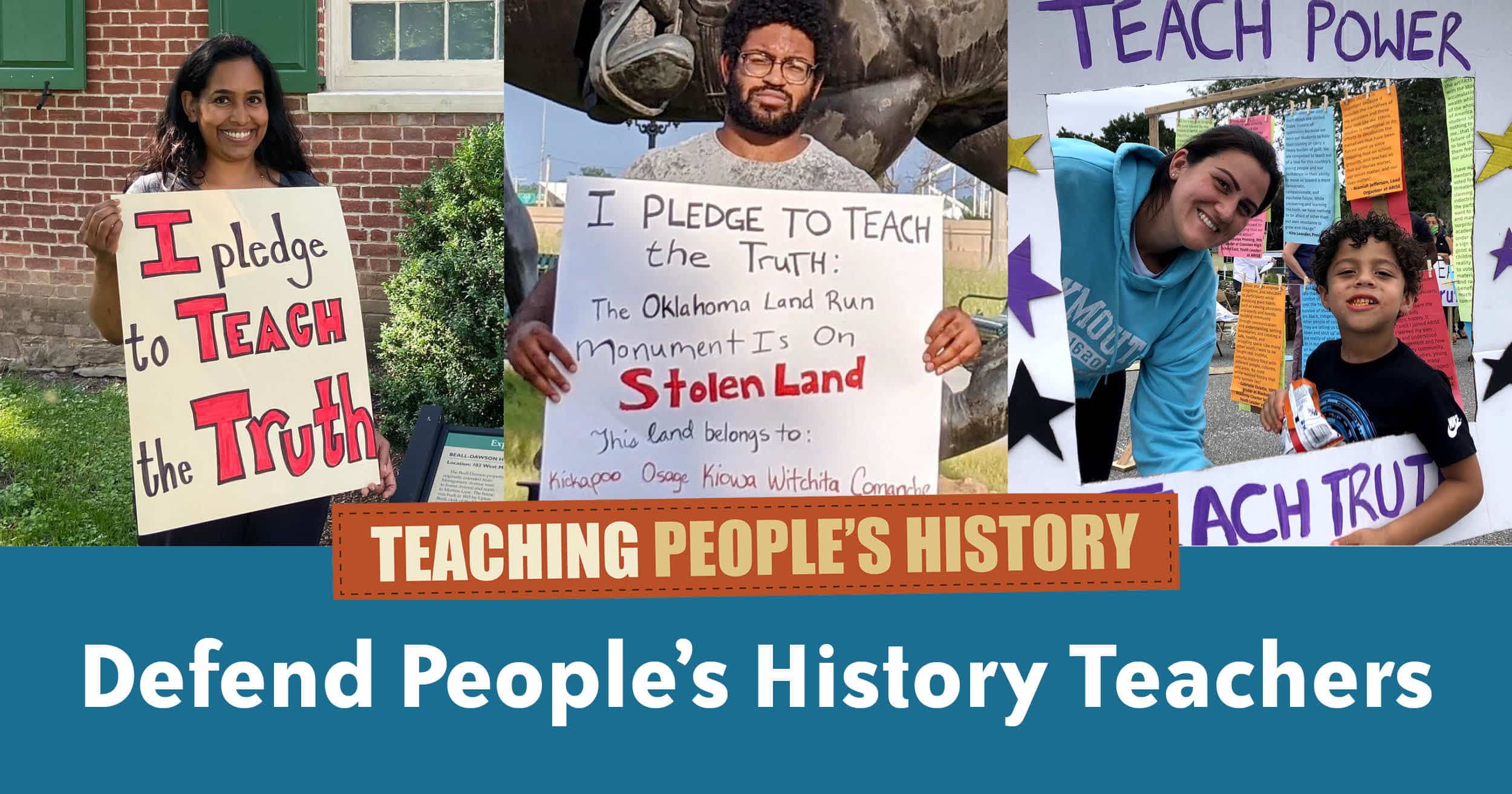
Teachers are under attack for teaching truthfully about U.S. history. Please donate so that we can continue to offer free people’s history lessons and resources, and defend teachers’ right to use them. | | | | |