|
Enhancing Email Security: The Role of DMARC, DKIM, and SPF
In today’s digital age, email has become a cornerstone for nearly all organizations. Making sure it’s safe and that messages successfully get delivered is more important than ever. That’s where some more robust authentication mechanisms like DMARC, DKIM, and SPF come in. These systems are becoming required more and more to the point that many people an organization may need to communicate with may begin to start blocking messages from organizations without these systems in place. So what are the systems?
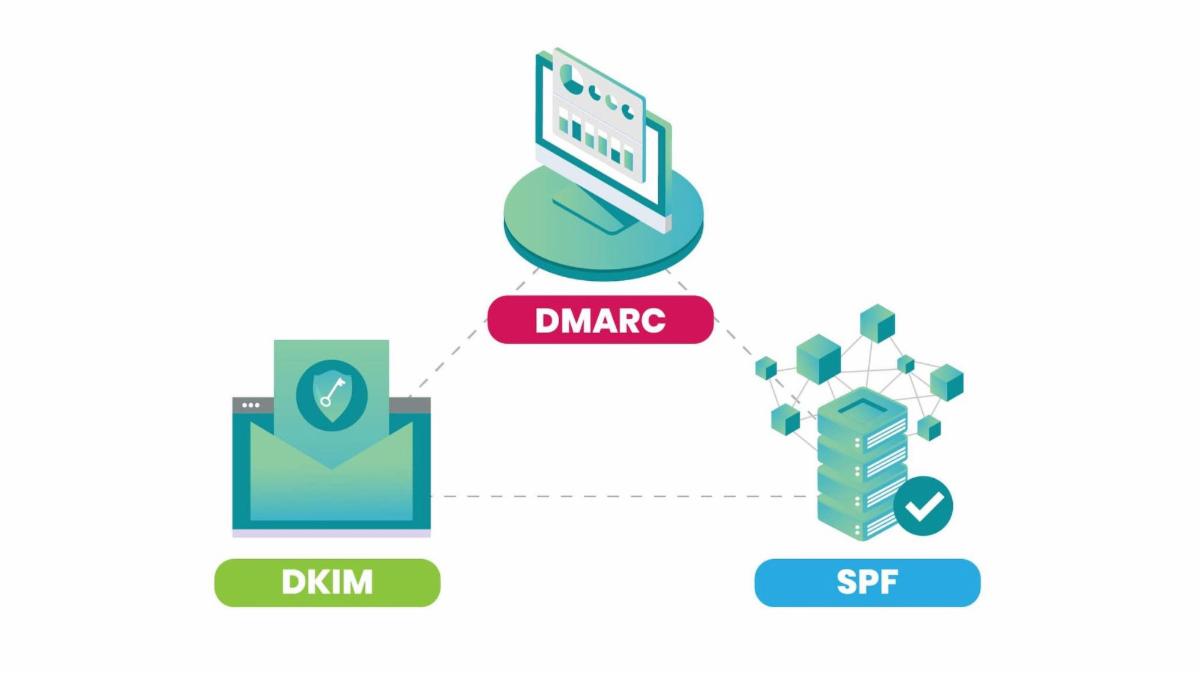
DMARC (Domain-based Message Authentication, Reporting, and Conformance)
DMARC is a policy framework that enhances email authentication and enables domain owners to protect their domains from being used for email spoofing (others attempting to pose as your account without access). It works by allowing domain owners to publish policies in their DNS records, specifying how incoming emails from their domain should be handled if they fail authentication checks.
DKIM (Domain Keys Identified Mail)
DKIM is an email authentication method that adds a digital signature to an email message. This signature is generated using a private key held by the sending domain and is included in the email's header. Recipient servers can then verify the signature using the public key published in the sending domain's DNS records, confirming the message's authenticity and integrity.
SPF (Sender Policy Framework)
SPF is an email validation protocol that detects email spoofing by verifying that the sending mail server is authorized to send emails on behalf of a specific domain. SPF works by checking the sender's IP address against a list of authorized sending servers published in the domain's DNS records. If the sender's IP address is not listed, the recipient server may reject the email or mark it as suspicious.
How They Work Together
Individually, DMARC, DKIM, and SPF offer significant benefits in combating email fraud. However, when used together, they form a comprehensive defense mechanism against a wide range of email-based threats. DMARC leverages the authentication results provided by DKIM and SPF to determine the appropriate action for incoming emails, such as accepting, quarantining, or rejecting them.
Given the escalating threat landscape and the critical role email plays in business communication, organizations across industries are increasingly mandating the implementation of DMARC, DKIM, and SPF. Regulatory bodies, industry associations, and major email service providers are actively advocating for and even requiring these authentication protocols to be deployed.
The use of these systems protects you from spam and phishing attacks while helping organizations stay in compliance with or ahead of regulations. It can also protect your name by preventing a bad actor from using your brand/name to get in the door and compromise one of your contacts, helping to keep you out of the mud.
If you have questions about any of these policies and/or would like help implementing them, please feel free to contact our offices. We do all sorts of work related to emails, so please feel free to let us know if you have other email questions regarding anything from setting up domain emails to adding email security features.
|