| | Georgia Technology Authority | | Innovation + integrity = progress with principle | | |
Across Georgia, technology is enabling smarter cybersecurity governance, advancing state government operations, and improving the lives of citizens statewide.
Georgia Technology Authority (GTA) remains steadfast in its commitment to embracing innovation with integrity, while equipping state agency leaders with the resources and knowledge to make informed technology decisions.
Every decision we make, every system we build, and every innovation we pursue must be founded on a single guiding principle: serving the citizens of Georgia with excellence, transparency, and trust.
That requires strict cyber discipline and a commitment to reinforcing the guardrails that protect data privacy and transparency. That also means incorporating safety and ethics into every line of code we write.
Building a bridge to better services
During a Public Sector Podcast, I shared my perspective on how innovation grounded in integrity is helping build a bridge to better services, stronger communities, and improved opportunities for Georgians. It's what I call progress with principle.
By migrating to cloud platforms, we created an agile foundation that enables us to deliver services faster, more securely, and more efficiently.
The GTA Annual State IT Report Fiscal Year 2025 highlights several recent successes in implementing this cloud-based strategy. For example, cloud-based systems like My Georgia Identity Authentication and the enterprise service portal deliver vital services to every citizen, whether they live in a bustling city or a rural community.
Every technology investment we make is tied to impact, like reducing waiting times, lowering costs, improving efficiency, and expanding access. Success isn’t measured by the volume of hardware we purchase; it’s measured by the problems we solve and the lives we improve.
Embracing AI as a practical tool
We are also embracing AI not as a trend, but as a practical tool to make state government smarter and more efficient. Every AI initiative is undertaken with vigilant ethical oversight.
In Horizons, Georgia’s Innovation Lab, which opened in July 2025, we are actively experimenting with AI and other innovative technologies in a controlled environment. The lab provides state agencies, local governments, school systems, and partners with a low-risk environment for experimenting with emerging tech, particularly AI.
Rule #1 is safety first, so we use only synthetic data. Rule #2 is that a human always will be ultimately held accountable. In this way, we innovate with guardrails, as I shared in a recent GovTech interview.
As AI reshapes the threat landscape, cyber discipline is now a baseline expectation for all initiatives. Our security posture must become increasingly proactive, omnipresent, and resilient.
Together, the agility of the cloud, the power of responsible AI, and cyber discipline are helping GTA and our agency partners deliver trusted, efficient, and future-forward digital services for the people of Georgia.
| | | | At Georgia Technology Authority, we are committed to developing technology that is not only forward-thinking, but also grounded in trust, accountability, and long-term impact. | | Meet the behind-the-scenes PMO team that keeps
Georgia's technology projects on track | |
By Scherie Jeffries
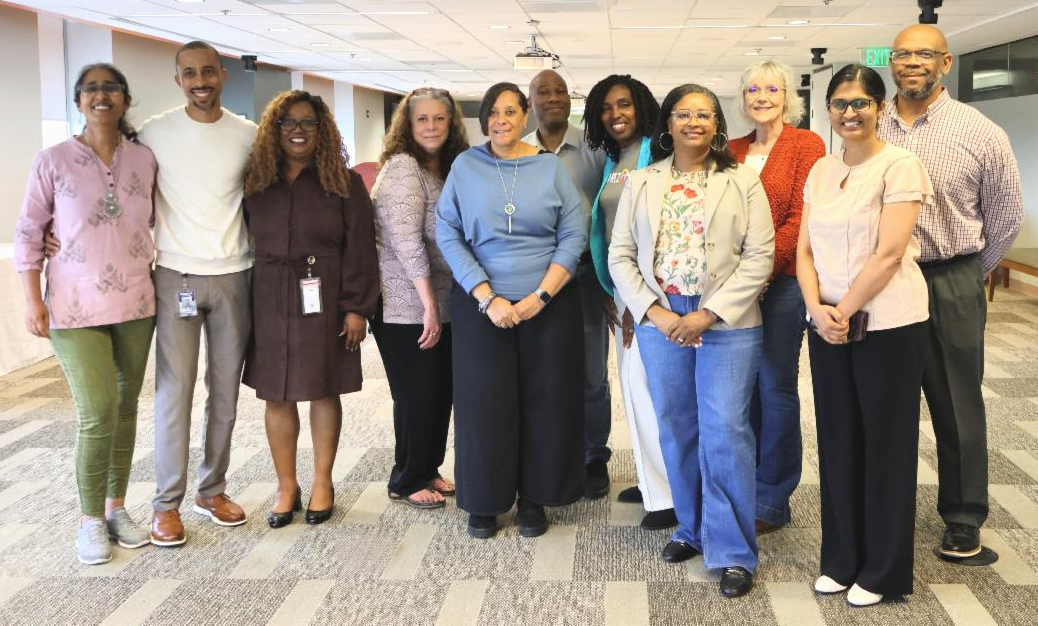
Every organization has teams that make the work possible without always getting the spotlight. At the Georgia Technology Authority (GTA), the Project Management Office (PMO) is one such team. Day after day, they work quietly and carefully to ensure the state's technology projects stay on course, within budget, while delivering as promised.
What does the PMO actually do?
The PMO comprises project managers, program managers, scrum masters, business analysts, and project advisors. Together, they guide technology projects across state agencies from start to finish.
But they are more than a checkpoint or a watchdog — they are partners.
A trusted guide
Think of the PMO as a trusted guide assigned to walk alongside an agency through a technology project.
The PMO brings structure, experience, and steady support. They help teams spot problems before they grow, make smarter decisions along the way, and cross the finish line successfully. Their work is grounded in proven project management methods, and their goal is always the same: help agencies deliver results that matter to Georgia residents.
3 wins worth celebrating
The PMO team's recent successes stand out as proof that their approach is working.
90% of projects are on track
Right now, 90% of the active projects the PMO team oversees are reporting positive health status.
That is not an accident. It is the result of consistent check-ins, timely guidance, and a team that stays engaged throughout a project's lifecycle.
When project teams know that someone is watching, listening, and ready to help them correct course, they tend to perform better. This number reflects that investment.
New approach to critical project reviews
The PMO team knows that not every project runs smoothly. That is why they introduced a smarter, more proactive way of reviewing projects that may be at risk.
Rather than waiting until a project is in trouble, the PMO team now steps in earlier. They analyze project data, sit down with project teams and leadership, identify concerns, and build a customized plan to get things back on track.
The level of attention and frequency of follow-up is adjusted based on how each project is performing. This hands-on approach is making a real difference.
Stronger agency participation
Every year, state agencies go through a Business Case Review process tied to technology funding. This year, the PMO team made it a priority to communicate more clearly and earlier with agencies about what to expect from this sometimes complicated process.
The result? More agencies are reaching out with questions, more agencies are asking for help, and more agencies are arriving better prepared. That increased participation is a strong sign that the changes are working.
3 best practices that drive success
Behind these wins are three straightforward practices that guide the PMO's operations.
Catching problems early
The PMO team uses ongoing reporting and monitoring not just to check boxes, but to spot trouble before it becomes a crisis.
They review data regularly, pay attention to warning signs, and step in with guidance before small issues have a chance to grow. This saves time, money, and stress, while keeping projects moving forward.
Offering real strategic support
The PMO does not just tell agencies what to do. They actively help partners think through decisions, build skills, and grow their own operational confidence.
The goal is not to create dependency. Instead, the focus is on strengthening each agency's ability to make good decisions independently over time. That investment pays off long after a project ends.
Getting involved sooner
The PMO has learned that the earlier they can engage on a critical project, the better the outcome.
By conducting project reviews earlier, they give teams more time to adjust, more runway to fix problems, and a better chance of finishing strong. Waiting until a project is in trouble is never the best strategy — and the PMO has built its process around that lesson.
Looking ahead
Technology is always changing. New tools, new systems, and new challenges will keep coming. The PMO's commitment to nurturing strong partnerships, early communication, and practical support gives Georgia's agencies a real advantage as they navigate each new wave of technology change.
The PMO's work helps reduce wasted resources, keeps projects visible and accountable, and ensures that the technology actually delivers value to the people it is meant to serve.
Scherie Jeffries is a senior officer in GTA's PMO.
| |
|
Georgia showcases cybersecurity leadership
at public sector summit
| | |
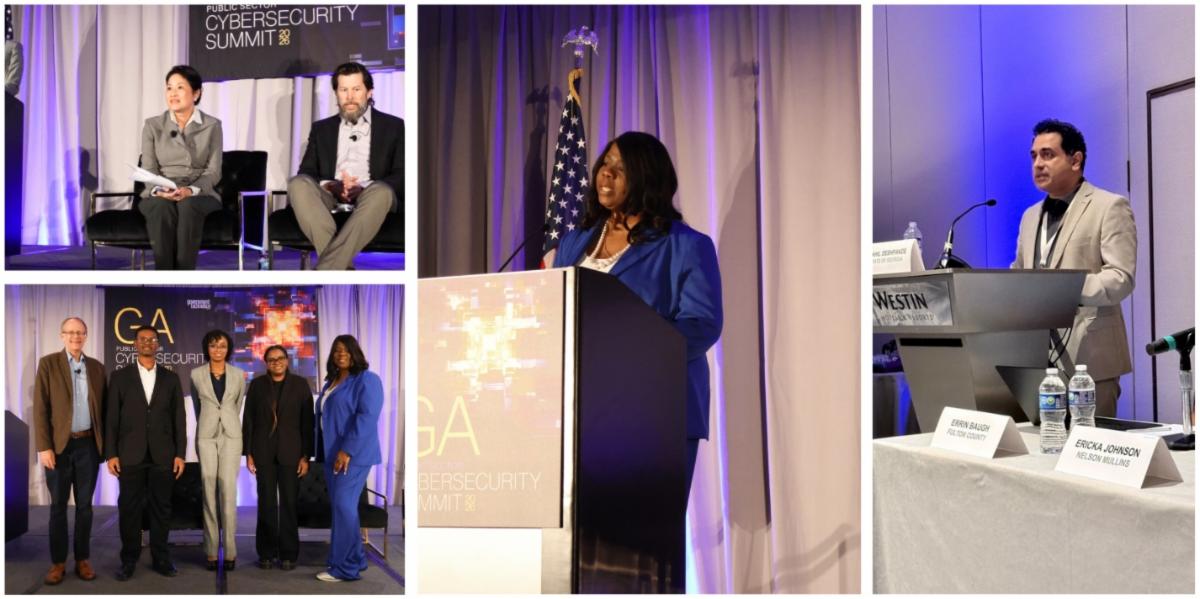
State CIO and GTA Executive Director Shawnzia Thomas recently kicked off the inaugural 2026 Georgia Public Sector Cybersecurity Summit in Atlanta on March 19 with inspiring remarks. Conference highlights included:
-
During the keynote presentation, Chief Information Security Officer (CISO) Steve Hodges showcased how the state is strengthening its defensive posture to protect essential operations in a constantly shifting cybersecurity landscape.
(No worries if you missed his speech. In this issue, Hodges offers a Cliff’s Notes version, "Strengthening Georgia's cyber resilience.")
-
Anh Le, GTA’s Chief of Business Operations and General Counsel, moderated a panel discussion on managing third-party security risks, protecting sensitive data, and maintaining operational integrity.
-
GTA Chief Digital and AI Officer Nikhil Deshpande moderated a panel on how public sector organizations can build an AI governance roadmap to address the risks of sensitive data being shared, analyzed, and managed in increasingly AI-enabled environments.
-
Alex Kirkland, GTA’s Deputy CISO, co-led a session that covered the nuts and bolts of clearly communicating cybersecurity risk to non-technical stakeholders.
| | Strengthening Georgia's cyber resilience | | |
By Steve Hodges, GTA CISO
For most Georgians, government is not an organizational chart. It’s a set of services they rely on, such as a benefits portal that works, a court date that stays on schedule, or a water system that keeps operating.
These essential services run on software, identities, and databases. When the digital layer fails, they aren’t just IT problems — they become operational crises.
The stakes are high. Trust is the ultimate currency of government. Residents may forgive that a cybersecurity incident happened — because the world is messy and imperfect. But they rarely forgive slow, confusing, or evasive handling of an incident.
In today’s ever-evolving threat landscape, cybersecurity is fundamentally about protecting public safety. A strong response protects operations, protects people, and protects credibility.
Better visibility and centralized workflows
The good news is that Georgia has made meaningful, measurable progress toward building a defensive foundation that many public-sector organizations lack.
The state has stronger visibility into endpoints and identities, earlier insight into exposures, and more centralized workflows for incident and risk management. That visibility matters because you can’t respond to what you can’t see. When you have access to reliable signals from endpoints, identity systems, and core infrastructure, you can move from guesswork to informed decision-making.
Repeatable, measurable, and defensible
Our alignment with recognized technology standards, such as the National Institute of Standards and Technology (NIST) Cybersecurity Framework and GovRamp, helps ensure we’re building something repeatable, measurable, and defensible.
These strengths don’t eliminate risk, but they help us respond earlier, with more precision, and with better coordination.
Technology can enable a quicker, more nimble response. Yet one of our best early warning systems is still human: Our people.
Some of the most valuable alerts in an organization come from employees noticing something is odd. For example, when a login somehow feels wrong, a file suddenly won't open, or a computer becomes unusually slow.
Continuous learning and improvement
For our IT staff, learning never stops. Every cybersecurity incident, every near-miss, and every tabletop exercise generates actionable insights that help us sharpen our controls, improve runbooks, and create clearer decision paths. The goal is to be fast, coordinated, and resilient – every time.
Cross-agency coordination means treating incidents as ecosystem events, sharing indicators, and learning from each other. Tracking meaningful metrics — time to detect, time to contain, time to restore, and the number of repeat issues — allows us to reduce or eliminate repeat issues and reinforce public trust.
Built-in readiness and response
Ultimately, this requires an organizational commitment to readiness as part of day-to-day operations with predefined roles, practiced coordination, and repeatable processes and actions that can be executed precisely under pressure without shutting everything down.
When implemented, continuous incident response becomes an effective pathway that moves from ad hoc responses to documented plans, through practiced coordination, and finally, to being embedded in everyday operations.
Ultimately, cyber resilience isn’t a destination. It’s a daily discipline of tightening identity protection practices, exercising response plans, clarifying authority, partnering with vendors, and fostering a culture where people report issues promptly. IT teams respond with all deliberate speed and effectiveness.
This article was adapted from a recent keynote presentation by Steve Hodges, GTA’s CISO, at the Georgia Public Sector Cybersecurity Summit 2026 in Atlanta.
| | From theory to practice: Hands-on workshops show state employees how to automate tasks with AI | | |
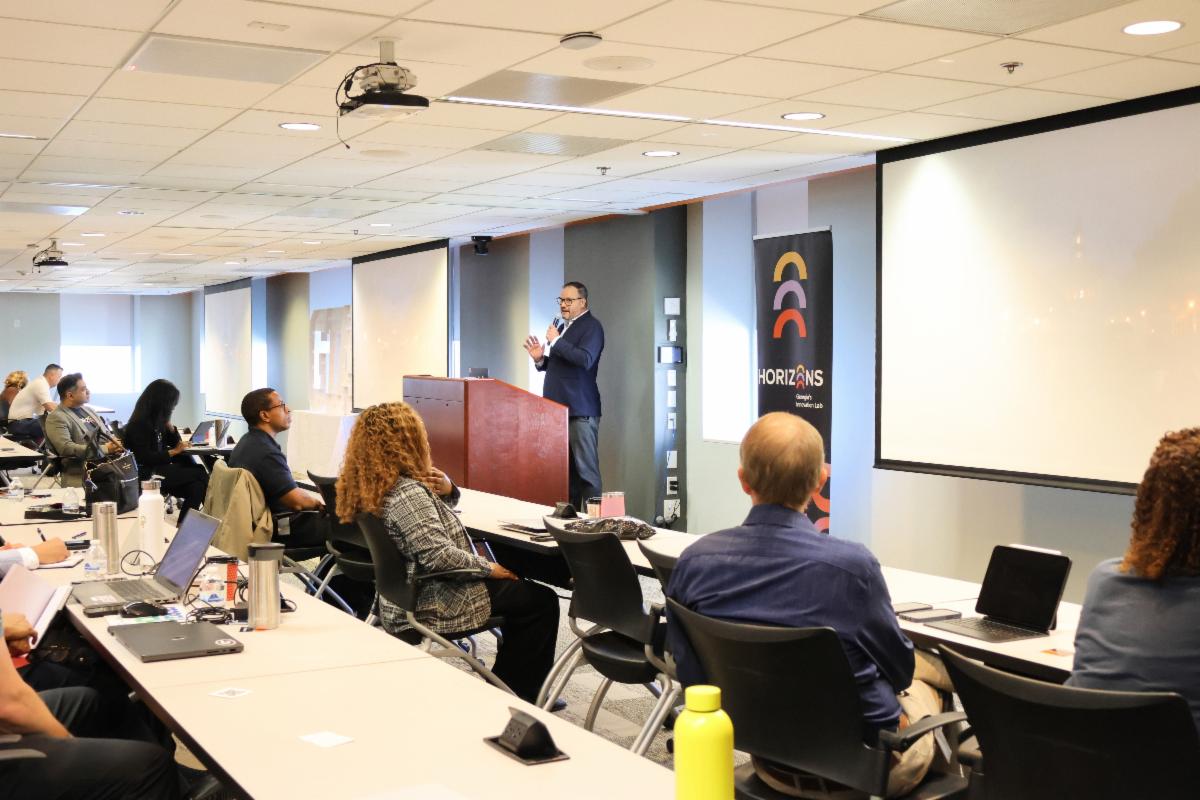
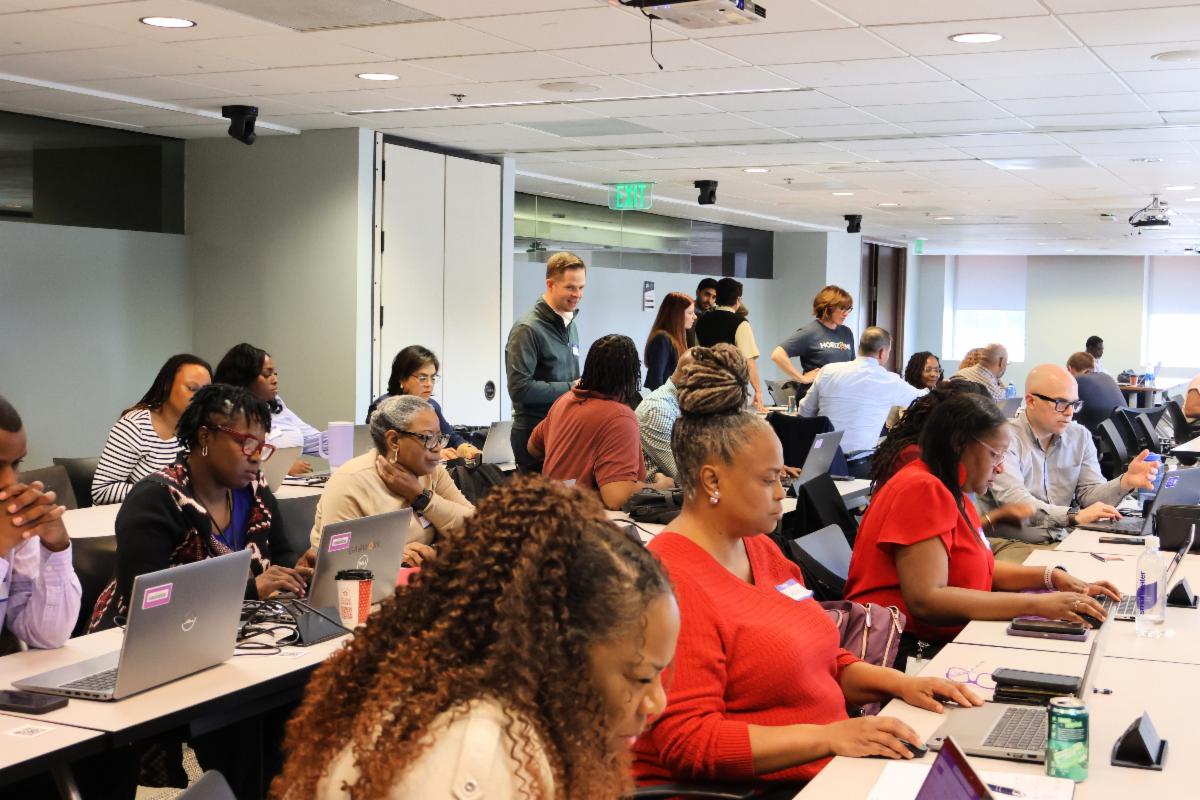
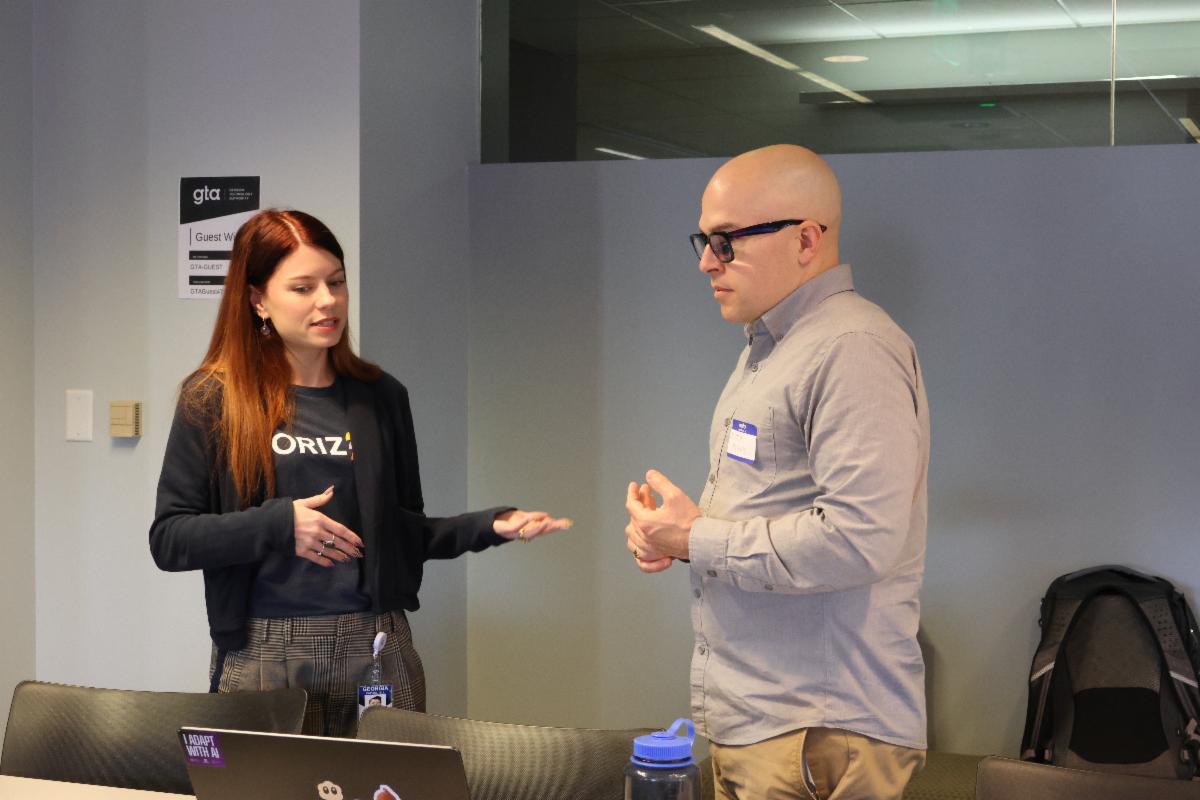
GTA Chief Digital and AI Officer Nikhil Deshpande opened AI Day on April 16 by emphasizing a commitment to helping state agency employees use AI safely, responsibly, and effectively. The goal is to make government operations more efficient while producing measurable results, he noted.
During two interactive, hands-on workshops, participants moved beyond theory to build their own practical, AI-powered assistants. The event showed state employees how AI can automate repetitive tasks, freeing up time for more meaningful work, team collaboration, and professional development.
| | |
Annual State IT Report Now Available
In FY2025, Georgia continued to make progress in IT capabilities. Improving these capabilities does not happen overnight. It takes time to establish reliable, resilient, secure systems. It takes discipline and constant renewal to keep them that way. It takes planning and precise execution to modernize aging infrastructure. Like the state’s broader mission to serve Georgians, the work of the technology community is ongoing and never complete.
The FY2025 Annual State IT Report includes:
- From the State CIO
- Georgia's IT Excellence
- IT Vision and Strategy
- IT Investment
- Georgia's Approach to AI
- Digital Services and Solutions
- Cybersecurity
- Chief Development Officer Organization
- Georgia's Approach to Broadband
- Technology Services
| | | |
GTA hosts Technically Speaking webinars
GTA recently hosted Technically Speaking Lunch ‘n Learns on best practices for improving system readiness and protecting digital credentials in the cloud.
During the March webinar, Rochak Karki and Rohit Panjala, guest speakers from Amazon Web Services (AWS), highlighted best practices for securely storing, updating, and using sensitive information such as database passwords, API keys, and third-party system credentials, while reducing the risks associated with hard-coded access details.
Led by Rav Bommakanti from AWS, the April lunch 'n learn focused on improving recovery and keeping critical public services running smoothly with the AWS Resilience Hub.
Contact Eric Hooper at eric.hooper@capgemini.com for more details on upcoming Technically Speaking webinars.
| | GETS Talks focus on AI automation tools, ServiceNow migration | | |
Recent GETS Talk sessions introduced the new ServiceNow Virtual Agent, an AI-powered chat and voice assistant designed to streamline IT support.
During the February webinar, attendees learned how to interact with the Virtual Agent to help train its large language model.
The March webinar provided a refresher on the Self-Service Password Reset (SSPR) tool, highlighting how users can register, reset forgotten passwords, and unlock accounts from any device.
The next GETS Talk, scheduled for May 26, will focus on the SharePoint-to-ServiceNow migration. Contact Carrie Chau at carrie.chau@capgemini.com for more details.
| | |
Georgia's IT strategic vision:
technology roadmap to 2030
GTA recently published the 2030 Enterprise IT Strategic Vision to provide a roadmap for adopting emerging technologies and delivering modern digital services.
The 2030 Enterprise IT Strategic Vision includes:
- CIO: The Foundation of the Intelligent State
- Executive Framework: Five Pillars
- Cybersecurity: The Shield of Trust
- AI: The Experience of Intuition
- Data as an Asset: The Power of Insight
- Technology Services: The Engine of Agility
- Broadband Access: The Reach of Connection
- Phased Strategic Priorities
- Strategic Enablers: Investment and Funding
- Conclusion: Driving Georgia Forward
- From the State CIO
| | The Georgia Higher Education IT Leadership Summit is a one-day gathering for CIOs, IT directors, and digital transformation champions at colleges and universities focused on the most pressing issues in academic technology, from cybersecurity and infrastructure to digital learning and AI. | | The one-day Georgia Digital Government Summit empowers public-sector leaders in state and local government to explore cutting-edge technologies, modernize operations, and solve pressing challenges. From cybersecurity and AI to data governance and digital service delivery, sessions are designed to spark insight, foster collaboration, and accelerate real-world results. | | The Georgia Emerging Technology Summit offers a comprehensive exploration of the current state and future trajectory of technologies that are revolutionizing public service delivery. Through a blend of innovation, regulations, hands-on technology demos, and compelling case studies, attendees gain invaluable insights into how emerging technologies can enhance the lives of community members. | | |
Editorial Staff:
Xiya Dillon, Communications Intern
Justin Holt, Marketing Specialist
Kiralfy Kennion, Communications Specialist
Sheryl Roehl, Communications Specialist
Deborah Rollins, Communications and Marketing Director
Content Contributors:
Scherie Jeffries, Senior Officer, PMO, GTA
Eric Hooper, Technical Communications Manager, Capgemini
We welcome content suggestions for future issues of GTA Technology Update. Please send story ideas and feedback to us at communications@gta.ga.gov.
| | | | |