| |
|
| |
Volume 17. Issue 2. February 2018 |
|
|
Know Your Relationship Rights
- You have the right to privacy, both online and off
- You have the right to feel safe and respected
- You have the right to decide who you want to date or not date
- You have the right to choose when/if you have sex and who you have sex with
- You have the right to say no at any time (to sex, to drugs/alcohol, to a relationship), even if you've said yes before
- You have the right to hang out with your friends and family and do things you enjoy, without your partner getting jealous or controlling
- You have the right to end a relationship that isn't right or healthy for you
- You have the right to live free from violence and abuse
Love is Respect
|
|
| |
| |
|
|
Greetings from Executive Director
Throughout February, Teen Dating Violence Awareness Month events and activities provide great opportunities to talk about healthy and unhealthy relationship behaviors. It is also a time in which we can come together to discuss new and innovative strategies to prevent dating violence from occurring in the first place. As we hear reports of growing numbers of teens engaging in coercive and abusive behaviors, prevention becomes more important than ever!
Also this month, NYSCADV coordinated our annual Budget Advocacy Day on February 6th. It was wonderful to see domestic violence advocates and allies across the state join us (in person and virtually) to call on NYS representatives to let them know about the specific needs of domestic violence organizations and the survivors they serve around the state. As the budget and legislative session progresses, we will be providing updates and information on ways you can advocate.
If you have not yet contacted your legislators, please do so right away. Your voice is critical as we work to make sure survivors of domestic violence receive the support and resources they need!
All the best,
Connie
|
|
|
NYSCADV 2018 Budget Advocacy Day Recap
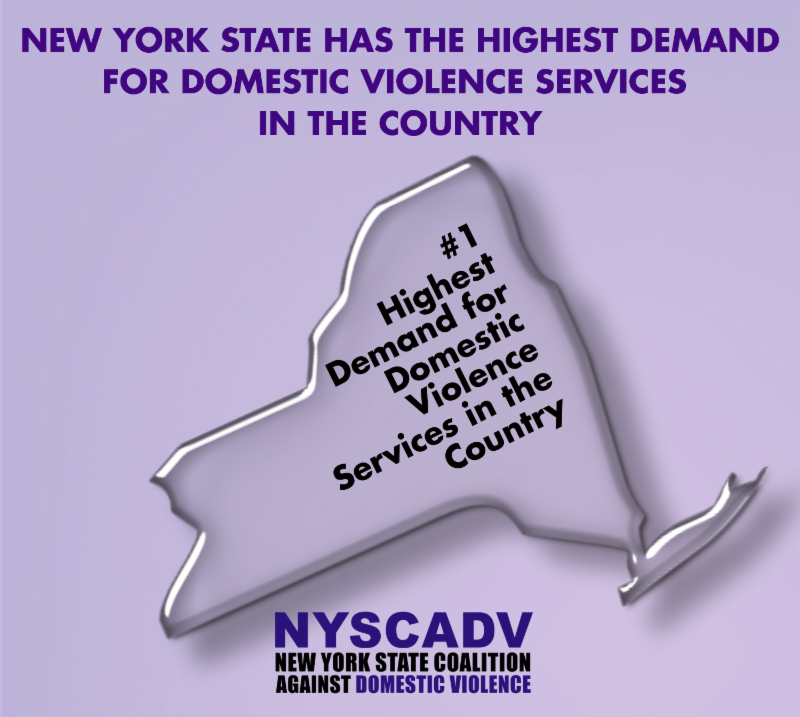
February 6th, 2018 was NYSCADV's Budget Advocacy Day! A day in which domestic violence advocates and allies across New York State called on their NYS representatives to support domestic violence organizations and the survivors that they serve. On this day, advocates joined NYSCADV by either meeting with their representatives in Albany, in their districts, or virtually through calling, faxing, and e-mailing. Many advocates also contacted Governor Cuomo as well. This year, for our
Budget Advocacy Day, we asked the Legislature and Governor Cuomo to support these budget priorities:
- Remove Firearms from Domestic Violence Offenders because the connections between domestic violence, mass shootings, and gun violence are clear and it is critical for the legislature to take a stand to remove firearms from domestic violence offenders.
- Fix existing problems in funding for local domestic violence programs across the state as a result of years of flat or reduced investments by requesting an additional $3 million from each house in addition to the 3 million already proposed in the FY2019 Executive Budget Proposal. We also asked the Legislature to provide at least a 3% increase in the domestic violence shelter per diem rate including an increase of approximately $1.9 million in TANF funds.
- Create a domestic violence primary prevention funding stream by establishing a $17.25 million fund in the public protection budget as research has shown the cost of a single homicide can be well over $17.25 million.
- Restore, stabilize and increase funding for critical civil legal services for domestic violence victims statewide in order to address the high demand for civil legal services by survivors of domestic violence.
- Provide funding for local domestic violence programs to collaborate with colleges and universities in implementing the Enough Is Enough mandates for campuses across the state in order to adequately address dating violence, domestic violence, and stalking.
Advocacy is an ongoing process and the voices of domestic violence programs, survivors, and allies are critical to getting heard.
Save the date
Legislative Day of Action
May 9, 2018
Albany, NY
|
N.Y. Wants Teens to Know: Dating Abuse Is Not Just Physical
Plenty of teenagers know about physical abuse in relationships - its signs, its symptoms, where to seek help.
But fewer are able to identify the markers of a verbally or psychologically abusive relationship, and that's something the state Office for the Prevention of Domestic Violence is hoping to change with a new campaign launching Thursday called "Teen Dating Abuse is #NotJustPhysical."
The social media campaign, which was unveiled at Columbia High School in East Greenbush, will feature local teens and aims to educate young people about the dangers of abusive relationships, which can run the gamut from physical and emotional abuse to verbal and psychological. It will be advertised across Snapchat and Instagram through the month of February.
|
February is Teen Dating Violence Awareness Month
Now in its eighth year, Teen Dating Violence Awareness Month (TDVAM) provides us with an important opportunity to raise awareness and education about an issue affecting teenagers in New York State and across the nation. It's a time where we can come together to talk about healthy and unhealthy relationship behaviors, recognizing warning signs, connecting adolescents to support and resources and identifying innovative strategies for preventing dating abuse from happening in the first place.
With 1 in 3 adolescents experiencing abuse in a relationship and with teens engaging in coercive and abusive behaviors at higher rates than ever before, we are confronted with a national epidemic.
As adults, it is our responsibility to provide leadership and guidance for adolescents in our communities and within our sphere of influence. Perhaps more importantly, adults need to take leadership and guidance from adolescents themselves to understand the challenges that today's teens face. As a community, we must provide safe, open and nurturing environments for teens that may need help but also for teens who are interested in taking leadership roles in addressing the issue. If we educate our youth in the early stages of their development about healthy and respectful relationships behaviors, it can have a positive influence in their relationships, and in their safety and overall wellness, throughout their lives.
We are pleased to announce that several NYSCADV member programs will hold community events, movie screening, workshops and campaigns for Teen Dating Violence Awareness Month;
Safe Homes of Orange County will host "Cooperation in Community" Art show and Teen Dating Violence 101 workshops,
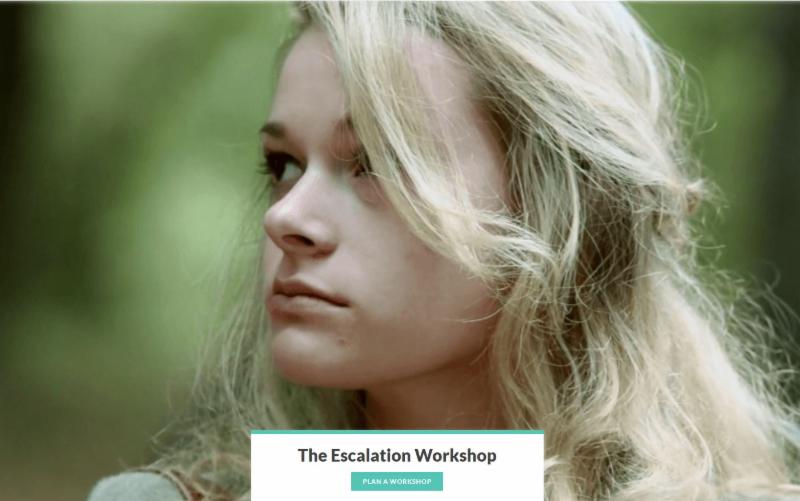
Unity House of Troy will screen Escalation movie from One Love Foundation for community members,
Long Island Against Domestic Violence will screen Audrie & Daisy movie,
Hope's Door will host "Breading the odds" and "Healthy Relationship Candygrams events for high school students,
Brighter Tomorrows will hold an art contest and design orange T-shirt event for "Wear Orange Day".
Advocacy Center of Tompkins County will honor TDVAM by asking students to make "Love Is" Murals, and
The Retreat will have a Stick to Love Campaign for high school students.*
* For more information about these events, click here for Events and Training section.
Follow the link to access NYSCADV special volume for Teen Dating Violence Awareness Month.
|
|
Report Shows Massive Increase In Anti-LGBTQ Violence Since Trump Took Office
According to the report, an 86 percent increase in hate violence homicides in the U.S. last year makes 2017 the deadliest year yet for the LGBTQ community. The National Coalition of Anti-Violence Programs, a coalition of 40 community-based anti-violence groups,
noted the escalation toward the end of the presidential election cycle, and it shows no signs of slowing, according to Beverly Tillery, executive director of the project.
President Donald "Trump won the election by saying it was time to take back America for people feeling pushed out by LGBTQ people, immigrants and people of color," Tillery told HuffPost.
"It was a tactical move to attack those communities," she added. "It worked, and there are more instances of violence because the climate in the country has changed. It has given an opening for people to feel like they can commit acts of hate-based violence without much repercussion."
The National Coalition of Anti-Violence Programs recorded 52 LGTBQ hate based homicides in 2017 - an average of one each week. That's a sharp increase from 28 single-incident anti-LGTBQ homicides in 2016. (The
Pulse Nightclub massacre, which killed 49 people in 2016, is not included when calculating single-incident homicides.)
|
March is Brain Injury Awareness Month
March is National Brain Injury Awareness Month. An estimated 10 million Americans are affected by stroke and Traumatic Brain Injury (TBI) making brain injury the second most prevalent injury and disability in the United States. Symptoms of TBI can be different with each person and often symptoms are not immediately present or noticeable and can be physical, behavioral or psycho-social depending on the TBI.
Falls and assaults are two of the leading causes of TBI's. Injuries to the face, head and neck are among the most common areas of injury for survivors of domestic/intimate partner violence and many are unaware they have suffered a TBI until weeks, months or years later.
Blue Jeans for Brain Injury Awareness Campaign
March 1 - March 31
Participate in "Blue Jeans for Brain Injury": Blue Jeans for Brain Injury is a public awareness and fundraising campaign that your company and employees can easily participate in. During the month of March, which known as Brain Injury Awareness Month, you can gather your coworkers and choose a day in March for your company to donate and wear blue jeans while sharing information and experience about brain injury.
Interested in participating? Please choose from the following options:
- Register your event now!
- Download our Blue Jeans Fact Sheet to learn more.
- Download our Coordinator Manual for how-to's and tips for planning your event- Blue Jeans Coordinator Manual 2018.
- View a recording of one of our introductory webinars for 2018 Brain Injury Awareness Month.
- Download Blue Jeans Sample Emails, poster, social media graphic, and donation form for your event.
Brain Injury Association of New York State
BIANYS Family Helpline
BIANYS operates the
Family Helpline
, a toll-free information and resource clearinghouse available Monday - Friday, from 8:00 AM to 4:00 PM EDT, with a voicemail system for after-hours messages. Whether you are seeking information on traumatic brain injury, looking for resources on rehabilitation, or just trying to find your way, the Family Helpline is there to help!
BIANYS knowledgeable staff maintains an extensive directory of services across the State. Call 1-800-444-6443 or
send them a message
. They have resources for individuals with brain injury, family members, professionals, schools, or any other interested parties.
NYS Office for the Prevention of Domestic Violence
The NYS Office for the Prevention of Domestic Violence has developed resources for Brain Injury and Domestic Violence Service Providers including screening tools, safety planning guides, victims in shelter, and information on
The Intersections of Brain Injury and Domestic Violence.
New York State Department of Health
The
New York State Department of Health
has resources available including background information on types of brain injuries, prevention, medical care, statistical information on the incidences of traumatic brain injury in New York State, including by county, and much more.
|
|
2018 National Crime Victims' Rights Week (NCVRW)
Every year in April,
OVC helps lead communities throughout the country in their annual observances of NCVRW, which will be observed in 2018 on April 8-14.
This year's theme-Expand the Circle: Reach All Victims-emphasizes the importance of inclusion in victim services. This year's theme addresses how the crime victims field can better ensure that every crime victim has access to services and support, and how professionals, organizations, and communities can work in tandem to reach all victims.
33rd Annual New York Crime Victims Candlelight Vigil
Sunday, April 8, 2017
2:00-4:00pm
West End Collegiate Church
New York City
|
|
March Is
WOMEN'S HISTORY MONTH
Women's History Month is celebrated annually and highlights the contributions of women to events in history and contemporary society. It is celebrated every March, and corresponds with
International Women's Day
on March 8.
The 2018 National Women's History theme presents the opportunity to honor women who have shaped America's history and its future through their tireless commitment to ending discrimination against women and girls. Through this theme we celebrate women fighting not only against sexism, but also against the many intersecting forms of discrimination faced by American women including discrimination based on race and ethnicity, class, disability, sexual orientation, veteran status, and many other categories.
From spearheading legislation against segregation to leading the reproductive justice movement, National Women History Project 2018 honorees are dismantling the structural, cultural, and legal forms of discrimination that for too long have plagued American women.
Nevertheless She Persisted: This phrase was born in February 2017 when Senator Elizabeth Warren, D-MA, was silenced during Jeff Sessions' confirmation hearing for Attorney General. At the time, Warren was reading an opposition letter penned by Coretta Scott King (a past NWHP honoree) in 1986. Referring to the incident, Senate Majority Leader Mitch McConnell, R-KY, later said "Senator Warren was giving a lengthy speech. She had appeared to violate the rule. She was warned. She was given an explanation. Nevertheless she persisted." Feminists immediately adopted the phrase in hashtags and memes to refer to any strong women who refuse to be silenced.
|
|
The Difference Between Surviving and Not Surviving: Public Benefits Programs and Domestic and Sexual Violence Victims' Economic Security
For domestic violence and sexual assault victims, the public benefits programs that support basic economic security are of critical importance. While we know that domestic violence and sexual assault occur across the socio-economic spectrum, there are unique challenges and barriers at the intersection of these forms of violence and economic disadvantage. Significant numbers of low-income women are abused or assaulted, and the violence perpetrated against them can make it nearly impossible to climb out of poverty. Abuse can also result in victims who were not previously considered low-income falling into poverty: violence often undermines victims' ability to work, have a place to live, and do what is necessary to pursue a more stable life for themselves and their children. Poverty and economic instability can also make it more difficult to cope with the physical, psychological, and financial impacts of domestic violence and sexual assault.
Access to economic security programs like Temporary Assistance for Needy Families (TANF) which provides direct financial assistance to families living in poverty, Supplemental Nutrition Assistance Program (SNAP - formerly known as food stamps), unemployment insurance (UI), and other programs are critical in providing increased economic stability for survivors. These essential benefits enable survivors to afford the basics like food, housing, and healthcare and help rebuild their lives after violence. Far too often, though, survivors face considerable challenges when trying to access these programs, including barriers stemming from both policies and their implementation. While advocates, attorneys, and other service providers play a valuable role in facilitating access to these programs, it is often not enough to overcome the significant barriers that victims encounter. Strengthening the safety net is necessary to help survivors and their families attain economic stability, safety, and well-being.
This report discusses the findings from a 2017 survey of over 1,100 domestic and sexual violence advocates, legal services/legal aid providers, social services program staff, and housing/homelessness and anti-poverty advocates. It details barriers survivors encounter when trying to access public benefits programs, cross-sector collaboration and systems-level advocacy, and possible legislative changes to these critical programs.
|
Bresha Meadows Returns Home After Collective Organizing Efforts
In this op-ed, organizers Colby Lenz and Mariame Kaba explain how #FreeBresha successfully advocated for Bresha Meadows, an Ohio teen who was jailed after killing her father.
Bresha was only 14 years old when
she was charged with killing her father, who her mother and family said had inflicted
years of abuse on them. Instead of receiving compassionate care, Bresha was criminalized for what many consider to have been
self-defense. Prosecutors charged her with aggravated murder and sought to try her as an adult. She faced a potential life sentence in prison in Ohio. After instead
pleading "true" to a charge of involuntary manslaughter, Bresha was sentenced to one year in a juvenile jail (with 10 months already served), six months of confinement in a mental health facility, and
two years of probation once released.
Bresha's attempts to escape domestic violence and seek help were blocked by
multiple systemsthat ultimately failed to support her, including the police and Child Protective Services. Bresha's story reveals the powerful pipeline between girls' experiences of domestic and sexual violence and their forced entry into carceral systems.
We are both part of
#FreeBresha, the small organizing collective that brought Bresha's case to national and international attention. In August 2016, we formed a volunteer, ad-hoc defense committee to demand her freedom. A
defense committee or campaign is a grassroots effort to secure the freedom of a person targeted for criminalization, through community organizing, political pressure, community education, legal and media advocacy, and other strategies. As part of an effort to #FreeBresha, we organized calls to action and then coordinated and publicized widespread decentralized actions into an organizing force to be reckoned with.
Supporters across the world demanded care and resources, not cages, for Bresha and all survivors of domestic and sexual violence.
|
|
The #MeToo Movement Looks Different For Women Of Color
The #MeToo movement and the ensuing combination of public penitence and denial from powerful men accused of harassment and assault has created an atmosphere of accountability and change. It's made women be heard.
Yet not all women feel included. Many women of color have been vocal about the fact that #MeToo hasn't represented their stories, even though the movement was founded by activist
Tarana Burke, who is black.
HuffPost spoke with a number of women about how harassment and assault perpetrated against people of color can often involve fetishization, objectification based on race or ethnicity, and a host of other issues white women might not face, even as the victims are less likely to be believed.
The lack of representation in the movement could be tied to larger structural obstacles related to speaking out as a person of color, said the women HuffPost interviewed. Yet women of color face harassment and assault at
higher rates than white women.
The women we spoke with mention being treated differently by men inside and outside of their own ethnicity or race, as well being influenced and affected by norms within their own cultures. They described fielding sexual innuendo and advances at work while dealing with cultural expectations to be compliant and quiet, or demure and sexy. Several women described feeling a lack of agency over their own bodies rooted in longstanding history. One told HuffPost that she stopped following a cultural tradition to avoid harassment.
|
#MeTooK12 Is Opening the Door for Students to Talk About Sexual Assault
Since the explosive reports of sexual misconduct against Harvey Weinstein, the #MeToo movement has shed light on the rampant sexual misconduct that permeates our culture. Countless women have stepped forward to accuse
powerful men of sexual harassment and assault, everywhere from Hollywood to Silicon Valley to Washington, D.C.
Through a new offshoot of the #MeToo movement, called #MeTooK12, girls who have faced sexual harassment or assault in school are coming forward with their stories. They echo the stories we've been hearing from grown women for weeks, except that this time, the assault is happening in classrooms, cafeterias, and school hallways. The people being accused are classmates, teachers, and school administrators.
|
More than 1 billion women lack legal protection against domestic sexual violence, finds World Bank study
More than one billion women lack legal protection against
domestic sexual violence, says new research from the World Bank.
The study, Global and Regional Trends in Women's Legal Protection Against Domestic Violence and Sexual Harassment, also found that close to 1.4 billion women lack legal protection against
domestic economic violence. Economic abuse entails controlling a woman's ability to access economic resources (money, education or employment) as a form of intimidation and coercion. In addition, women are often not legally protected against specific types of
sexual harassment outside the home, such as at work, school, and in public places.
Violence against women takes many forms, including physical, sexual, emotional, and economic. Violence leads to negative and, at times, dramatic mental and physical health consequences. It leads to increased absenteeism at work and limits mobility, thereby reducing productivity and earnings. It leads girls to drop out of school because going to school puts them at risk of abuse. It affects women's decision-making ability within the household, including being able to seek services when needed.
"Gender-based violence is a global epidemic that endangers the life of women and girls with a wide range of negative consequences not only for them, but also for their children and communities. Ending this scourge is integral to the development of women's human capital and unleashing their contribution to economic growth," said
Quentin Wodon, World Bank lead economist and co-author of the study.
|
Scotland Set to Pass 'Gold Standard' Domestic Abuse Law
A law setting a "gold standard" for domestic abuse legislation by incorporating both emotional and physical violence into the same offence is expected to be passed by the Scottish parliament.
The domestic abuse bill, which has cross-party backing, creates a specific offence of "abusive behaviour in relation to a partner or ex-partner". This will cover not only physical abuse but other forms of psychological abuse and coercive and controlling behaviour that cannot easily be prosecuted using the existing criminal law.
|
|
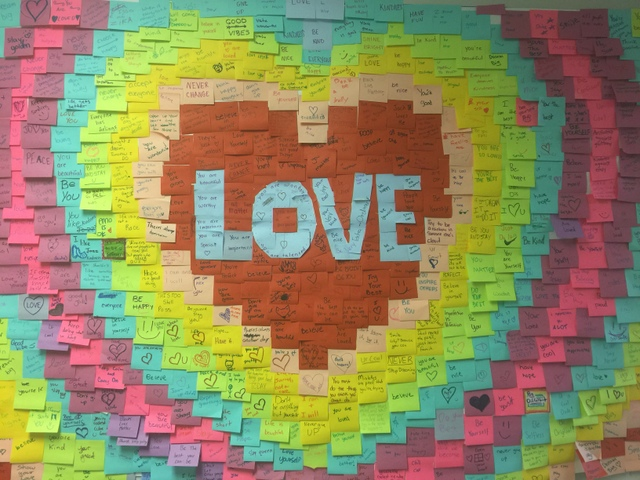
The Retreat Stick to Love Campaign
The Retreat Teen Leaders are planning to help promote an understanding of respect in relationships through the creative #ThatsLove campaign which is a variation on The One Love Foundation's national "Stick (it) to Love" campaign using post it notes to create celebratory murals. Last year Hampton Bays High School, Ross School, and Pierson Middle/High School in Sag Harbor participated! If your school or group would like to take part, contact The Retreat's Education Program at education@theretreatinc.org.
|
|
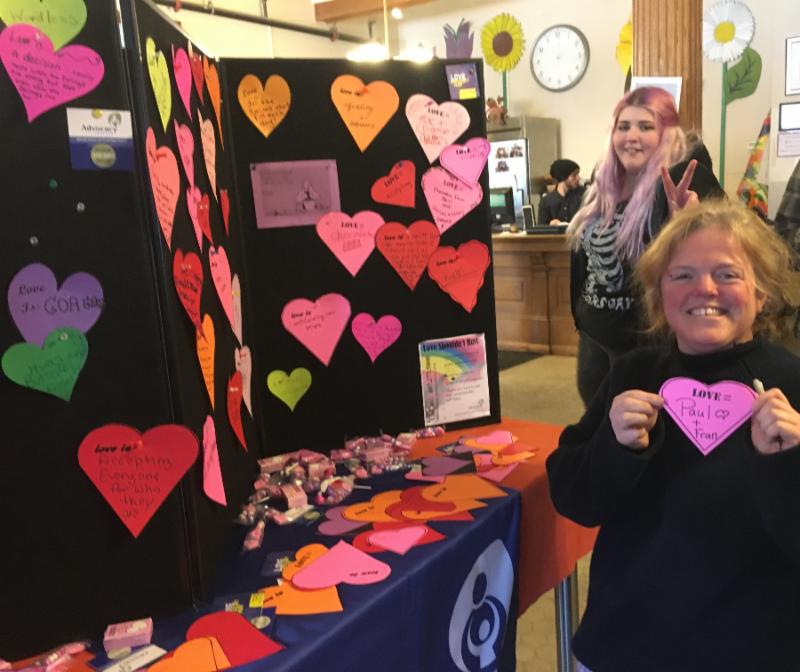
Advocacy Center in Tompkins County Honoring Teen Dating Violence Awareness Month
This will be the 6th year that students in Tompkins County schools will honor Teen Dating Violence Awareness Month by celebrating healthy expressions of love by making "Love Is" murals.
This fun event is hosted by student clubs who encourage students to share their thoughts about what love is as well as provide information on healthy vs unhealthy behaviors in relationships, dating abuse, sexual consent, and Advocacy Center services.
|
|
Athletes As Leaders Resource
Athletes As Leaders (originally Student Leaders & Athletic Youth)
is a program for high school athletes on girls' sports teams. The program aims to empower female-identified youth to take an active role in promoting healthy relationships and ending sexual violence. It is based on research and best practices in the field of sexual assault prevention. Athletes are encouraged to be leaders in changing peer norms and school climate to a culture of safety and respect. The program is designed to be used in conjunction with other programs with intentional efforts to engage men and boys.
|
Preventing and Responding to Teen Dating Violence
This special collection emphasizes collaborative and multi-level approaches to the prevention of and response to teen dating violence (TDV). It draws on the work of many organizations and organizes the resources on TDV prevention and responses by different populations. The first section of this special collection provides general information about teen dating violence. The next six sections include TDV information related to: 1) young people, 2) bystanders, 3) parents and caregivers, 4) men and boys, 5) teachers and school-based professionals, 6) health care professionals, 7) pregnancy prevention programs, and 8) domestic violence and sexual violence service providers. The final section presents documents on TDV-related laws and legislation. The special collection concludes with examples of national programs that address TDV and a list of national and statewide organizations and programs.
While most materials in this collection focus on TDV prevention and response to young people in high schools, we acknowledge that TDV prevention also includes outreach to younger teens in middle schools and older college students, as well as youth who are not represented in our system of education (runaways, homeless youth, etc.). This special collection will be updated regularly, and new documents will be added as they become available. We welcome your comments, suggestions, and information about documents for this special collection.
|
|
What is Consent? Toolkit
This toolkit was created through a partnership between youth and subject matter experts from the fields of education, public health, sexual violence prevention, domestic violence prevention, and youth development. It was supported by the Rape Prevention and Education grant and in kind support from state and local partners. Over the course of 2017, a team of nine youth and thirteen subject matter experts convened monthly via conference call to develop this toolkit.
While there are many resources on consent, it can be hard to find the best among them and plan how to use them. This toolkit is designed to address that need. It provides a menu of options for starting or deepening a conversation about consent, including videos, lesson plans, images, web pages, and more. All resources are FREE and vetted by the team of youth and experts.
Resources are listed by age group, with a summary of the resource and ideas for how to use it. Please note that the age groups are approximate, and many resources can be adapted to other age groups. We encourage you to review resources for adjacent age groups when determining what is appropriate for your audience and objectives. Every community - and every young person - is different.
This toolkit could be used to:
* Include new resources in sexual violence prevention education
* Supplement school health curricula
* Assist with planning a consent campaign
This toolkit can also be shared directly with community partners, youth-serving organizations, parents, medical providers, and others to begin a conversation and provide resources.
|
|
|
Both online dating and online gaming are fast-growing industries that are increasingly becoming a regular part of life. Online dating has rapidly gained in popularity as a common way to connect to potential dates or find a partner. And, contrary to popular perception, online gaming is not just a pastime for teenage boys. Many people have concerns about the safety of online dating, often due to widely publicized stories of assault and abuse, and unfortunately, online harassment is an all-too-common experience while playing games online, that can also cross into real life.
Everyone should be able to be online safely, free from harassment and abuse, and that includes dating and gaming. For survivors of domestic violence, sexual assault, and stalking, privacy and safety concerns may be even greater when trying to engage in online spaces. Fortunately, it is possible to increase privacy and safety when dating and gaming online.
Two new resources from Safety Net discuss both risks and strategies, for survivors who want to be active in online dating or gaming communities.
|
|
Apply for a One Year Subscription to Victim Link
I
n September 2017, EVAWI received an award from the Office of Justice Programs' Office for Victims of Crime (OVC) to give eligible law enforcement agencies and victim advocacy organizations the chance to apply for a no-cost subscription to
Victim Link
, a technology solution powered by Ten8Tech, a sub-recipient of the award.
Victim Link is a ground-breaking technology that transforms sexual assault reporting and links victims with community resources. It works in partnership with the victim-focused site,
Seek Then Speak. Together, they break down traditional barriers of shame and fear, so victims can gather information, explore options, and take action through gradual dialogue on a multilingual platform (web, phone, or mobile app).
Victims can even begin the process of reporting the crime to law enforcement and connecting with supportive services, if or when they choose.
No-Cost Subscription Opportunity
Because victims are better served with coordinated resources, applicants should be prepared to partner with their counterpart (law enforcement, victim advocacy). Priority will be given to organizations that apply jointly within the same jurisdiction or area. One of the primary objectives of this grant is to increase access in underserved communities, so we particularly encourage campus, tribal, and rural or isolated communities to apply.
Right now, this offer is only available for the following entities working in the United States, U.S. Territories, or Commonwealths:
- Law enforcement agencies with an established Originating Agency Identification (ORI) number. This includes city, country, state, tribal, military, and campus agencies.
- Victim advocacy organizations that provide direct services, such as a rape crisis center or dual service agency for sexual assault and domestic violence. This includes campus or military services.
- College or universities: Campus police or public safety departments (including Title IX coordinators) are eligible to apply if they have an ORI number, or if they partner with a city or county law enforcement agency that has one.
|
|
Office on Violence Against Women (OVW) opportunities to enhance your CCR and strengthen your advocacy
OVW 2018 solicitations for Rural grants and Improving Criminal Justice Responses grants are currently open, both of which fund communities to establish and/or enhance your coordinated community responses (CCR) to violence against women. Consider including implementation of the Blueprint for Safety - a fully articulated CCR, in your community's application.
The Blueprint for Safety articulates an effective plan any CCR can use to enhance its capacity to stop violence, reduce harm and save lives. Originally developed and implemented in St. Paul, Minnesota, the Blueprint intervention model is being implemented in several communities across the country.
|
The Mary Kay Foundation's Shelter Grant
Every October, Mary Kay Foundation observes National Domestic Violence Awareness Month by awarding grants to deserving women's domestic violence shelters across the United States. In 2017, The Foundation awarded $3 million in grants to more than 150 women's shelters.
The Mary Kay Foundation will once again select 150 domestic violence shelters to receive a $20,000 grant (unrestricted) for a total of $3 million.
Each year, Mary Kay Foundation awards a grant to at least one domestic violence shelter in every state that applies. Any remaining funds are distributed based on state population. Applications are reviewed and recommended by the Domestic Violence Shelter Grant Committee. After reviewing these recommendations, The Foundation selects final grant recipients.
|
OPDV Announces The Ursula
Forem
Domestic Violence Program Employment Fellowship
The Office for the Prevention of Domestic Violence (OPDV) is accepting proposals from NYS domestic violence programs that are licensed and/or approved by the Office of Children and Family Services (OCFS) to hire college graduates or current graduate students to work for the domestic violence program. The Fellow must be a new hire, that has not previously worked for the program, for the purpose of fulfilling the obligations of this grant. Fellowship candidates must possess a college degree no later than June 2018.
OPDV will fund two grants, up to a total of $75,000 with a maximum of $37,500 annually per award. The funds will be available to cover salary and fringe benefits for two years.
Deadline: February 16, 2018
|
|
Advocacy Learning Center is Now Accepting Applications
Embark on an interactive and transformative journey with advocacy groups across the country to explore our collective roots and strengthen our efforts to end violence against women and children.
Whether we work with those who have been sexually assaulted, battered, or stalked, or with women who are trafficked or prostituted, we share the same vision: An end to violence against women.
This innovative 18-month course gives advocates, advocacy program managers and coalition staff a rare chance to come together for self-reflection, inspiration and an opportunity to re-think their approach to individual, institutional and community advocacy.
|
|
Runaway & Homeless Youth and Relationship Violence Toolkit
This Toolkit was developed by and for advocates in the runaway and homeless youth (RHY) and domestic and sexual assault (DV/SA) fields to help programs better address relationship violence with runaway and homeless youth. The Toolkit organizes information, resources, tips and tools drawn from the wealth of information gathered when the two service systems were convened through local collaborative projects funded by the Family and Youth Services Bureau (FYSB) of the U.S. Department of Health and Human Services. The
FYSB Initiative, which brought together domestic violence programs and runaway and homeless youth agencies to address relationship violence among homeless, runaway, and street youth.
In this Toolkit, DV/SA providers will find information designed to increase their understanding of runaway and homeless youth and the network of programs and services working with them and, conversely, RHY providers will find resources on intimate partner violence and the programs and networks that provide protections and support to victims of violence. An increased understanding and dialogue between these systems at the service level can result in improved services overall.
|
|
16 Things You May Not Know About Housing for Survivors
|
Workplaces Respond to domestic & Sexual Violence: A National Resource Center
Workplaces Respond, spearheaded by FUTURES in partnership with the U.S. Department of Justice
Office on Violence Against Women, was established by the 2005 VAWA reauthorization to educate, train, and empower employers, survivors, co-workers, advocates, labor unions, and worker centers to prevent and appropriately respond to domestic and sexual violence, trafficking, and stalking impacting workers and the workplace.
As part of VAWA's broader mandate to develop programs, policies, and practices aimed at ending domestic violence, dating violence, sexual assault, and stalking, Workplaces Respond's re-designed website is the centerpiece of a wide array of outreach, trainings, and
technical assistance offered to workplace stakeholders throughout the country. Over the course of twelve years, FUTURES and its partners have continuously enhanced available resources (including
factsheets,
reports,
workplace tools, and
awareness-raising materials) with the goal of shifting the culture of workplaces toward support, safety, and resilience.
|
|
Prevent Connect: Sexual Violence Prevention and Disability
In parts 1 and 2 of this podcast, PreventConnect discusses the intersection of sexual violence and disability with Jessica Silver, Linda Sandman, and Jae Jin Pak of Illinois Imagines. The conversation explores the prevention components of the statewide project,
Illinois Imagines, which seeks to improve services to people with disabilities and create space for their lived experiences to drive solutions to sexual violence.
|
Lead With Love from the Move to End Domestic Violence
Each September Washington State Coalition Against Domestic Violence (WSCADV) members and allies come together to share stories, share power, and share strength. This September (25th-27th) was no different. Inspired by the
Movement Strategy Center'
s #LeadWithLove Pledge, this annual conference brought together over 500 people in Yakima, Washington where together participants challenged each other to LEAD WITH LOVE as we organize, resist, and reclaim our humanity.
A CALL TO MEN 2017 Conference: The Many Faces of Manhood from the Move to End Domestic Violence
Nearly 350 gathered in Bloomington, Minnesota at the end of September for
A
CALL
TO
MEN
's national conference The Many Faces of Manhood. The conference explored healthy, respectful
manhood
in athletics, education, incarceration, fatherhood, faith communities, and around issues
of
gender. In addition
to
traditional keynotes and panels, the conference featured
a
series
of
Transformation Talks, where speakers shared personal stories
of
adversity, healing and growth.
"Modeling authenticity and vulnerability is critical to creating an environment where we can bring our whole selves, where we can learn and evolve," said Tony Porter, CEO of A CALLTOMEN. "It is one of the principles of healthy, respectful manhood."
The Move to End Domestic Violence is pleased to be able to share many of the keynote speeches and panels via podcast.
Please Click here for Day 1.
Click here for Day 2.
|
|
Expert Interview Series from End Violence Ag
ainst Women International
Expert Interview Series has provided a variety of experts who have shared lessons learned and recommendations for best practices. We have learned how to build rapport with victims, and how the law enforcement response can impact a victim of sexual assault. We have also learned from a disabilities expert, a victim rights expert, and experts on drug and alcohol facilitated sexual assault.
Now you will learn from Forensic Nursing experts Diana Faugno and Debra Holbrook. Ms. Faugno is a Founding Director of EVAWI, as well as a sexual assault forensic examiner at Eisenhower Medical Center in Palm Springs, California. Ms. Holbrook is an Advisory Board member and the Director of Forensic Nursing at Mercy Medical Center in Baltimore, Maryland.
|
Webinars, Events & Trainings

(descriptions are taken directly from the host's event announcements)
|
|
Webinar "Adding to the Teen Dating Violence Prevention & Awareness Toolbox"
February 9, 2018 1:00 AM - 2:30 PM EST
OR
January 21, 2018 10:00 - 11:30 AM EST
In recognition of Teen Dating Violence Awareness Month, please join NYSCADV and the One Love Foundation for "Adding to the Teen Dating Violence Awareness & Prevention Toolbox." Participants will learn about various resources and approaches developed by One Love to engage students and communities in identifying and becoming an up standers in the movement to end dating violence including One Love's Escalation Workshop Project, Behind the Post, and how to facilitate an Escalation workshop along with discussion guides for various age groups.
Stalking laws
AGENDA
- Introductions, explain the agenda for the session, history, and overview of One Love's approach
- Overview of Content Offerings and Workshops
- Escalation Workshop Preview piece (5 Minutes) -
- Behind the Post (5 minutes)
- Couplets (2-3 minutes) Obsession, Intensity, Guilt
- Finding the right program for your community
- How to be an Escalation trained facilitator
- Our #ThatsNotLove Discussion Guides - options for various age groups and settings
- Activations - Stick it to Love and Love Better
- One Love and New York State - Overview of existing collaborators and examples of how to get involved
- Around the World for Yeardley
- Next steps - What DV Organizations can do to bring One Love to their community
- Conclusion and Q&A
*PLEASE NOTE: Content will be the same for both webinars. Please register for only one session.
Webinar "Domestic Violence and Traumatic Brain Injury, Understanding the Intersections"
Tuesday March 6, 2018 1:00 PM EST
Join NYSCADV and the Brain Injury Association of New York on March 6th for the webinar "Domestic Violence and Traumatic Brain Injuries, Understanding the Intersections." Domestic violence advocates are uniquely aware of the intersection between intimate partner violence and brain injury. Many survivors of physical abuse suffer repeated head injuries - one study of survivors in three domestic violence shelters found that 92% had been hit in the head by their partners, most more than once.
Recognizing the need to continually provide education on these issues, the Brain Injury Association of New York State and NYSCADV are partnering again to bring a webinar version of the regional trainings that have been held across New York State for the past few years. This webinar is designed as an introductory session on the intersection of domestic violence and traumatic brain injury.
Participants will obtain a basic understanding of:
- Traumatic brain injury
- Intersection of domestic violence and traumatic brain injury
- Providing services to survivors with traumatic brain injury
- Identifying community resources for individuals with brain injury
About the presenter:
Margo Singer
Margo Singer is the Training Coordinator for the Brain Injury Association of New York State (BIANYS), where she is responsible for the administration of a federal grant through the NYS Department of Health, to provide trainings on Brain Injury for schools, early childhood programs, and domestic violence agencies. Ms. Singer also provides resource & referral services through the BIANYS Family Help Line. Prior to her work at BIANYS, Margo worked in the substance abuse field at the NYS Office of Alcoholism and Substance Abuse Services for 24 years, and also held staff positions in the NYS Legislature.
|
|
NYSCADV Save the Dates
2018 Annual Membership Meeting*
March 19, 2018
Albany, NY
The NYSCADV annual meeting is designed to provide:
- A forum for programs from across the state to network and get a state-wide perspective on domestic violence services.
- Professional and organizational development opportunities for domestic violence advocates.
- An overview of NYSCADV's 2017 activities and plans for the upcoming year
*Registration and further details to follow in 2018.
2018 NYSCADV Day of Action*
May 9, 2018
Albany, NY
As a coalition representing domestic violence programs and the survivors they serve across New York State, NYSCADV knows that the best legislation comes when the voices of survivors and advocates are heard. And this is what NYSCADV's annual Day of Action is for: to convey a unified message, representative of the unique needs of a diverse range of survivors, to our state government that will protect rights, promote justice, and prevent domestic violence.
*Registration and further details to follow in 2018.
|
Teen Art Show "Cooperation in Community"
Safe Homes of Orange County
Saturday, February 10, 2018 2:00-4:00 PM
2 Alices Coffee Lounge
117 Broadway, Newburgh, NY
Safe Homes of Orange County asked Orange County artists from grades 6-12 to share their personal vision and voice in promoting healthy relationships and creating change in our communities. Selected submissions to the
Safe Homes 2018 Art Contest
will be on display and 1st, 2nd, and 3rd place winners for both the 9th-12th grade category and 6th-8th grade category will be announced during the show.
|
Healthy Relationships Candygrams, Hope's Door
The Ursuline School,
February 13th, 2018
Students at The Ursuline School can purchase Hershey Kiss candygrams and write their own message to their friend or dating partner. Participants will also be encouraged to join their school's chapter of the STAR Club (Students Talking About Relationships) which is a peer led club that educates teens about healthy and unhealthy relationships so that they may spread awareness and/or help fellow peers. Proceeds will go towards victims of Domestic Violence at Hope's Door. Facilitating this event will be the Prevention Program Youth Educators, Shannon Sullivan and Emily Benvenga.
* For more information contact
Kristen Orlando at KOrlando@HopesDoorNY.org.
"Wear Orange Day", Brighter Tomorrows
February 13, 2018
At HELP Suffolk during the first week of February, girls ages 12-15 will design orange t-shirts to promote awareness for 'Wear Orange Day' on February 13th. In addition, the group will make orange awareness ribbon pins to stick on their backpacks and jackets. They will be encouraged to talk about the issue of teen dating violence with their peers. On February 12th, the group will have an art contest, where they will create a display containing their hand-prints and messages about teen dating violence and healthy relationships. These displays will be hung up throughout the shelter. During the last week of the month, the group will write messages with chalk to spread awareness outside the entrance to the shelter.
*
For more information contact Samantha Marciano at smarciano@brightertomorrowsinc.org.
Case File Review: What Do Sexual Assault Cases Look Like in Our Communities?
Battered Women's Justice Project
Thursday, February 22, 2018 / 1:00-2:30pm EST
Based on a toolkit that the Sexual Violence Justice Institute (SVJI) developed, this webinar will explain the process and framework for reviewing sexual assault case files as an evaluative measure for sexual assault response teams (SARTs). Case file review is a powerful way to identify strategies to better investigate and document sexual assault cases. It is also an excellent strategy to evaluate current policies and practices of SART agencies. The presenters will explore the benefits and challenges to reviewing law enforcement files, including privacy and victim confidentiality concerns. This webinar addresses why multidisciplinary teams conduct case file review and will offer practical tips and tools to use case file review. Participants will learn how to create meaningful change to the sexual violence response in a way that is both victim centered and addresses offender accountability.
* Learn more and register now!
"Beading the Odds", Hope's Door
New Rochelle High School
1 out of 3 teens at New Rochelle High School will have been given purple beads to wear at the start of the day to show the statistic of teens affected by dating abuse in high school. The school's STAR (Students Talking About Relationships) club will have a table to explain to students about the 1 in 3 statistic while also encouraging their peers to take a healthy relationship pledge. Students will be encouraged to join the club, so they can be further educated on the issue and help their fellow peers. Facilitating this event will be the Prevention Program Youth Educators, Shannon Sullivan and Emily Benvenga.
* For more information contact
Kristen Orlando at KOrlando@HopesDoorNY.org.
|
|
Thriving While Healing: Skills-based Support for LGBTQ Survivors of Sexual Violence
The National LGBTQ Institute on IPV
Tuesday, February 20, 2018 / 1:00-2:30 EST
This webinar will discuss highlights and lessons learned from the NW Network's unique, strengths-based sexual assault support group, Thriving While Healing: Finding Joy, Resilience and Support in the Aftermath of Sexual Assault. This all-gender support group, specifically oriented to LGBTQ survivors offers skills, education, and tools to name and confront the silence, isolation, and shame which so many survivors experience, regardless of sexual orientation or gender identity. Themes and interactive activities from the group such as cultivating resilience, normalizing the process of healing, trigger planning, positive sexuality, and self-trust will be discussed during this webinar.
|
Teen Dating Violence (TDV) 101 and "In Their Shoes"
Safe Homes of Orange County
Wednesday, February 21st, 9am-12pm in Goshen, NY
Saturday, February 24th, 10am-1pm in Middletown, NY
This workshop is intended for youth service providers, educators, administrators and law enforcement. The workshop will begin with an overview of TDV and end with an interactive exercise, walking participants through the lives of young people experiencing teen dating violence.
|
Advocating for Healthy Relationships: Exploring How to
Take A Stand FOR Healthy Teen Relationships
National Coalition Against Domestic Violence
Wednesday, February 21st, 2018 12:00 PM EST
Join NCADV for this FREE webinar to learn more about new teen dating violence prevention curriculum, Take a Stand FOR Healthy Relationships.
NCADV, the national voice of victims and survivors of domestic violence, and Discovery Education, the leading provider of digital content and professional development for K-12 classrooms, have collaborated to launch
Take A Stand FOR Healthy Relationships: A Teen Dating Violence Prevention Curriculum - an initiative funded by a contribution from the Verizon Foundation - to provide classrooms nationwide with tools, information, and lesson plans aimed at helping their students understand and develop healthy relationships, recognize dynamics of teen dating abuse, and learn how to safely ally for themselves and others who may be experiencing abuse.
Available at no cost to classrooms nationwide, Take A Stand FOR Healthy Relationships (
www.teens4healthyrelationships.org) provides middle and high school classrooms with educational resources and immersive program tools, including self-paced modules and interactive lesson plans that focus on teaching students how to understand and build healthy relationships, reject abuse, and safely ally for themselves and others experiencing abuse. Additionally, information and support resources and materials are provided to educators and students on the topic of teen dating violence and how to best support those experiencing or witnessing abuse.
|
Rights4Girls: Cyntoia Brown, Bresha Meadows and the Abuse to Prison Pipeline Webinar
National Resource Center on Domestic Violence
Thursday, February 22, 2018 2:00:00 PM EST - 3:00:00 PM EST
For Teen Dating Violence Awareness & Prevention Month, this webinar will highlight the work of Rights4Girls, a human rights organization focused on gender-based violence against young women and girls in the U.S. This interactive webinar will explore how the intersections of race, gender and violence cause our most marginalized girls to be criminalized for their experiences of sexual violence and sexual exploitation.
Follow the link to register for RIghts4 Girls: Cyntoia Brown, Bresha Meadows and the Abuse to Prison Pipeline Webinar. |
Teen Dating Violence Movie Screening
Unity House of Troy
February 23rd, 2018 6:00-8:00 PM EST
1700 7th Ave # 1,
Troy, NY 12180
Unity House of Troy will host a Teen Dating Violence Movie Screening at The Troy Boys and Girls Club in collaboration with the Block Center out of Troy Boys and Girls Club. Dinner will be provided and the Escalation movie from Yeardley Love Foundation about teen dating violence will be screened.
Teen Dating Violence (TDV) 101 and the Escalation Workshop
Safe Homes of Orange County
Monday, February 26th, 1pm-4pm in Newburgh, NY
This workshop is intended for youth service providers, educators, administrators and law enforcement. The workshop will begin with an overview of TDV. The Escalation Workshop comes from the
onelove foundation
, a national organization created to honor survivors and raise awareness about intimate partner violence in our communities. It includes a short film and discussion session.
Click here to register for Teen Dating Violence (TDV) 101 and the Escalation Workshop.
Analysis of the Strength of Legal Firearms Restrictions for Perpetrators of Domestic Violence and their Association with Intimate Partner Homicide
Battered Women's Justice Project
February 26, 2018 1:00-2:30 EST
Dr. Zeoli will discuss the very important findings from her recently published research exploring the relationship between different types of firearms legal prohibitions and reductions in intimate partner homicide rates. This quantitative policy evaluation considered data from forty-five states over thirty-three years, and shows significant correlations between specific prohibitions and a reduction in intimate partner homicide.
Audrie & Daisy Screening
Long Island Against Domestic Violence and hosted by The Suffolk County Task Force to Prevent Family Violence
Tuesday, February 27, 2018 6:00 - 8:30 PM
Riverhead Free Library
330 Court Street,
Riverhead, NY 11901
Two girls living on opposite sides of the United States were raped the same year. Both were blamed, both suffered from relentless abuse when they were victims. Both attempted suicide. one failed, the other didn't. A documentary Audrie & Daisy, exposed the trauma young teens go through when they experience sexual assault, the impact of social media and bullying. This is an important film for parents, educators and adults who work with adolescents.
Veterans & Family Court: The Family Law Veteran's Diversion Program
Battered Women's Justice Project
Wednesday, February 28, 2018 / 1:00-2:30pm EST
This webinar will examine the Family Law Veterans' Diversion Program, Orange County (CA) Superior Court. Begun in 2010, this program is designed to address the unique needs of military veterans and their families when involved in family court proceedings. It provides assessments/treatment for posttraumatic stress (PTS) and traumatic brain injury TBI issues; addresses protection for intimate partners and children during the treatment process, and; assists veterans in avoiding statutory ramifications of a domestic violence finding.
|
|
Voices Rising: National Conference on Domestic Violence
September 23-26, 2018 Providence, Rhode Island
The NCADV National Conference brings together more than 600 victims, survivors, advocates and other experts in the field to share strategies to better support and assist victims and survivors and learn ways to institute the mindset of zero tolerance for domestic violence within their communities. NCADV has hosted this biennial conference for over 20 years. It is known as the conference to attend to enhance the knowledge of and energize those doing the difficult work of supporting victims and survivors.
|
Employment Opportunities
(descriptions are taken directly from the host's employment announcements)
|
|
|
|
| |
|