Telling Stories
Edith Halpert and Her Artists
October 9 through December 11, 2020
|
|
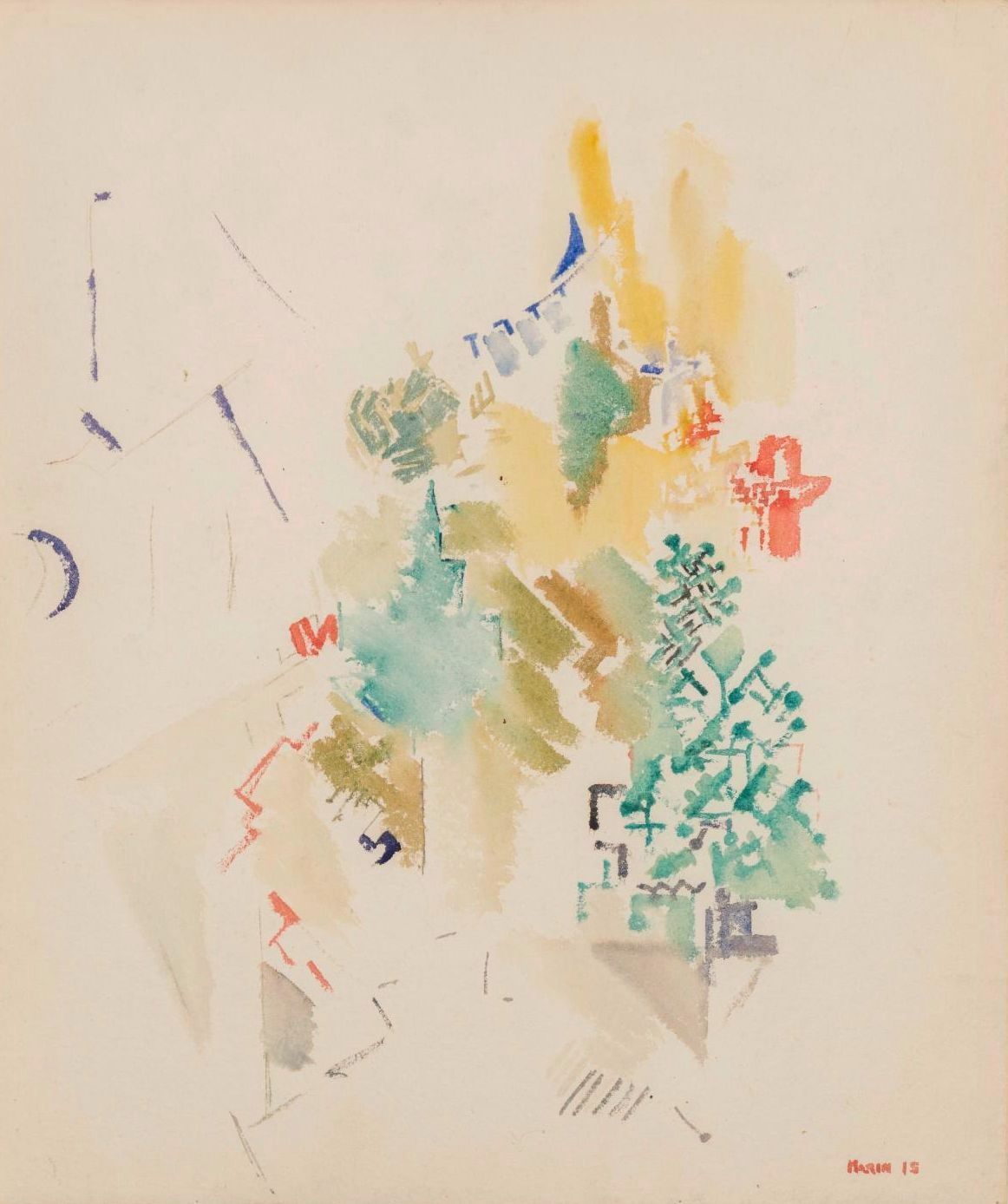
John Marin (1870-1953), Tree Forms, Autumn, 1915, watercolor on paper, 19 x 16 1/8 in.
|
|
Edith Halpert had always had her eye on John Marin. In her days as a teenager studying art at The National Academy of Design and the Art Students League, she had visited Alfred Stieglitz’s groundbreaking “291” gallery to see works by Marin alongside the European avant-garde. However, despite Halpert’s persistent entreaties, Marin was in no rush to join the Downtown Gallery roster. After Stieglitz’s death in 1946, Marin, whose popularity was at its height, was quickly courted by many of Halpert’s competitors. By August 1949, her patience and restraint wore out, writing to Marin: |
|
I have always been hesitant, because of my admiration and awe of you, and my deep regard for Stieglitz, in pushing myself forward into your plans . . . I can say, without hesitation — and I am sure that you know it — that you are my favorite artist, American or otherwise, possibly more so because not otherwise. I can also say, with all due modesty, that I — or The Downtown Gallery — is the logical and only place for Marin . . . I want to be the agent for John Marin. (Downtown Gallery Records, AAA) |
|
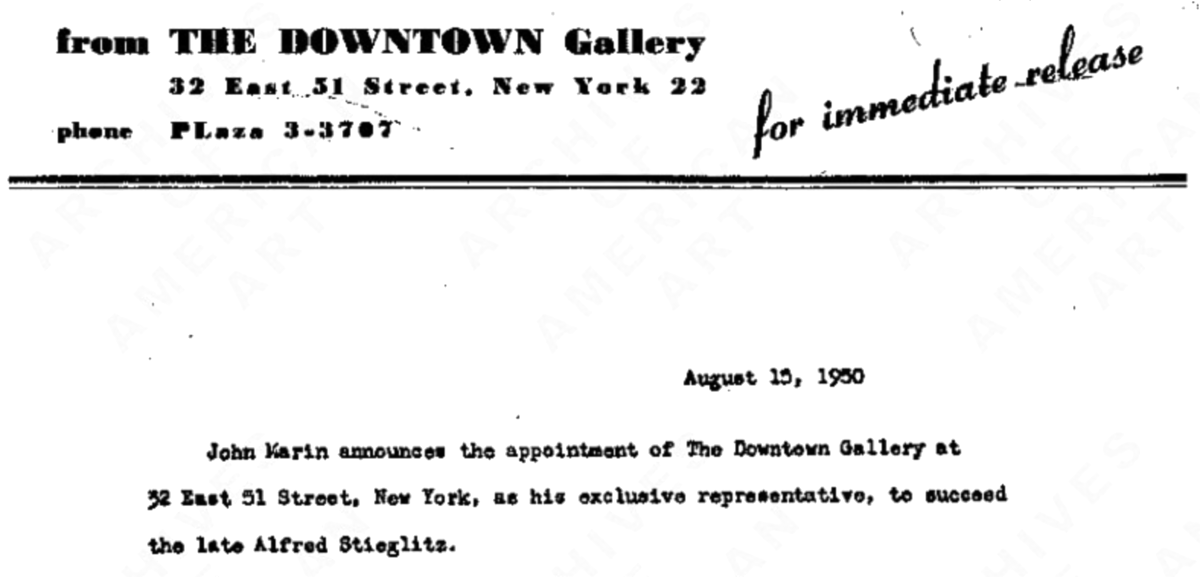
In order to secure Marin, Halpert agreed to hire his son, John Jr., and provide a space for the year-round display of Marin’s work. Constructed in the gallery’s backyard, the Marin room not only exhibited his paintings, but included a dedicated area for etchings and books on the artist. With these extra enticements in place, Halpert could announce in August 1950 that the Downtown Gallery was the exclusive representative of John Marin. |
|
Downtown Gallery press release announcing representation of Marin.
Courtesy of the Archives of American Art.
|
|
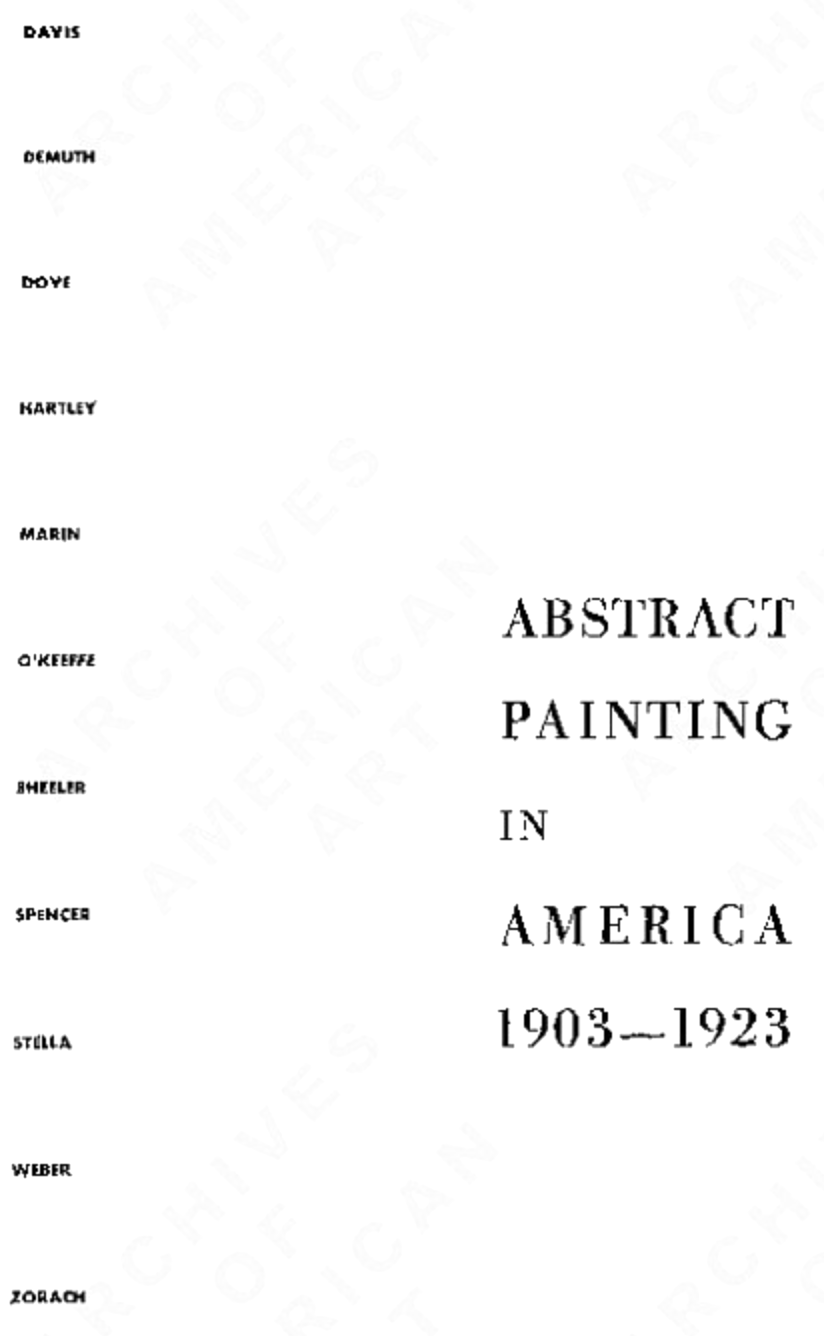
Halpert was resolute in cementing Marin’s contributions to American art after his death in 1953. Tree Forms, Autumn, 1915, had been in Stieglitz's personal collection, and Halpert included it in her 1959 retrospective John Marin before 1920: Oils, Watercolors, Pastels, Drawings. She also included Tree Forms in her 1962 exhibition Abstract Painting in America, 1903-23. Mounted in the face of the all-consuming juggernaut of Abstract Expressionism and Pop Art, Abstract Painting in America was intended to debunk the myth that original, avant-garde American art only began in the Post-War period. Halpert included works by Marin and ten other Downtown Gallery artists, emphasizing in the press release her original philosophy of being directed “by what is enduring—not what is in vogue,” (Downtown Gallery Records, AAA):
|
|
Downtown Gallery exhibition catalogue cover. Courtesy of the Archives of American Art. |
|
[The exhibition] comprises 65 paintings produced during the two decades cited—ten years prior to the Armory Show and ten years after . . . There was no pause in exploration, no sign of converting discoveries into mannerisms, or shifting into what was acclaimed as immediate fashion. And it is this quality of inner integrity, vision and creative continuity that has sustained the reputation of these artists . . . not only as legitimate ancestors in American abstract art, but carried far beyond 1923 into their latest work. (Downtown Gallery Records, AAA) |
|
Halpert places her artists at the beginning of the story of American abstraction. She bridges the 1913 Armory Show, considered the first shock of avant-garde art in America, presenting ample evidence of the tireless invention of American artists working in abstraction even before then. By promoting her artists as pioneers, Halpert aimed to ensure their legacy and the legacy of the Downtown Gallery in American art history. |
|
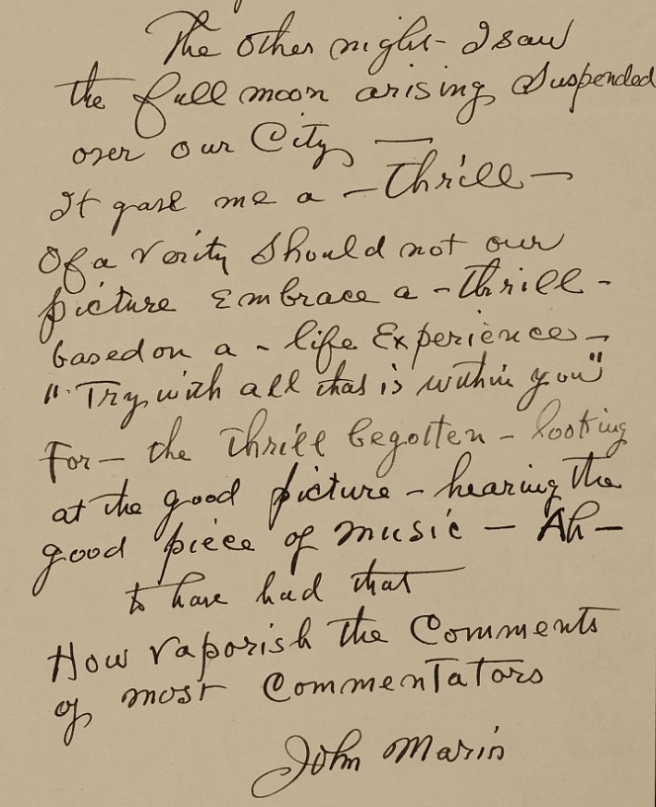
Section of an undated letter from John Marin to Edith Halpert.
Courtesy of the Archives of American Art.
|
|
Sources
Downtown Gallery Records, Archives of American Art, Smithsonian Institution, Washington, D.C.
Oral history interview with Edith Gregor Halpert, 1962-1963, Archives of American Art, Smithsonian Institution, Washington, D.C.
Lindsay Pollock, The Girl with the Gallery: Edith Gregor Halpert and the Making of the Modern Art Market (2006).
Rebecca Shaykin, Edith Halpert, The Downtown Gallery, and the Rise of American Art (2019), Exhibition catalogue, The Jewish Museum, New York.
|
|
We are pleased to present the online exhibition Telling Stories: Edith Halpert and Her Artists. Over the coming weeks, we will be sharing stories about Halpert and her artists told through artworks at Meredith Ward Fine Art.
|
|
|
|
|
|
|