Tennessee, 10/28, 29, & 30: Installment Payment Plan | |
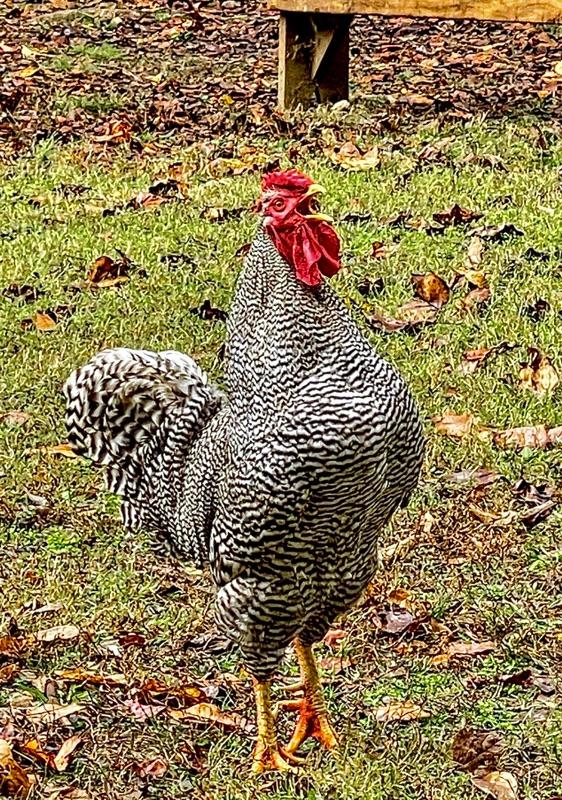
Getting out to do something during these days of rain is something to crow about. | |
|
THURSDAY: THE FIRST INSTALLMENT
After Tuesday and Wednesday’s perfect weather, all of our weather apps laughed at us. They knew that we’d have to PAY for that stretch of fine weather with three days of near-continuous rain.
Consequently, we turned today into “chore- day”. I played around with the water system - emptied the grey water into our portable tank, refilled the fresh water tank from our water jugs, and refilled the water jugs from the campground water spigot. I got most of that accomplished during a brief rain reprieve. Now we have to find an appropriate place to drain the portable grey water tank. Perhaps we can sneak past one of the Developed campground gates and use their dump station. Shhh, that will be our secret.
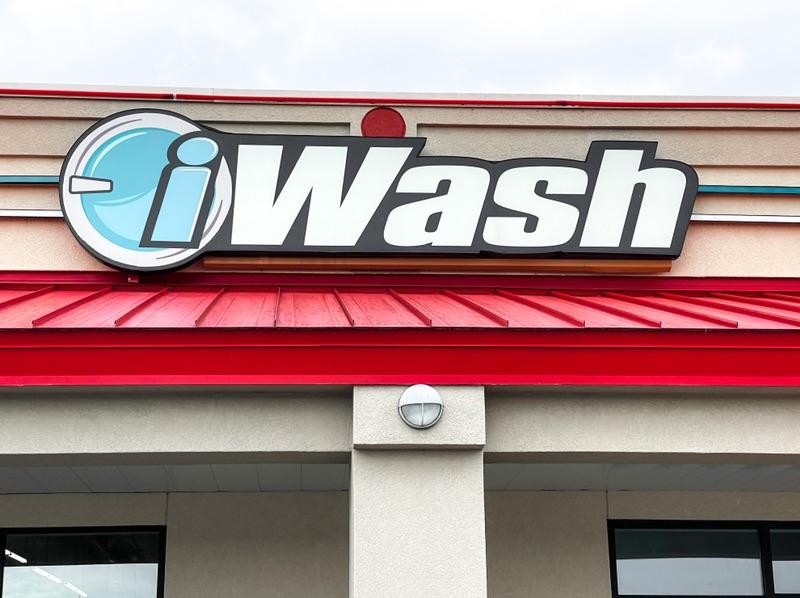
Although Wanda announced that we still had five days of clean clothing left, we thought doing laundry today would help kill one lousy day. A google search brought up iWash in Murray, Kentucky, just 15 miles away.
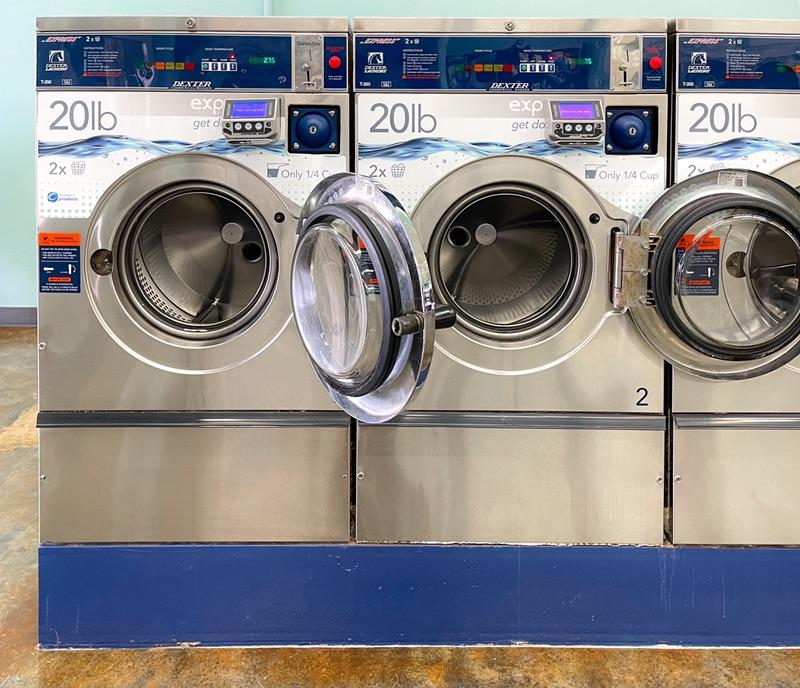
Most laundromats on the road are pretty dismal. Laundromats in Europe are sparkling clean but insanely expensive. IWash threaded the needle very nicely. It was clean, modern, and cheap - my favorite combination of factors.
When we were on our 3 1/2 month Spring trip to the Southwest, I forgot to bring cash. We only had about $30 in cash. We don’t have a credit card that can access an ATM machine, so coin-op laundromats presented us with a problem. We had to squeeze and squeeze our dollars until the eagle grinned. (I got that from a BB King song. “If I ever get my hands on a dollar again, I’m gonna squeeze it, and squeeze it, until the eagle grins.”)
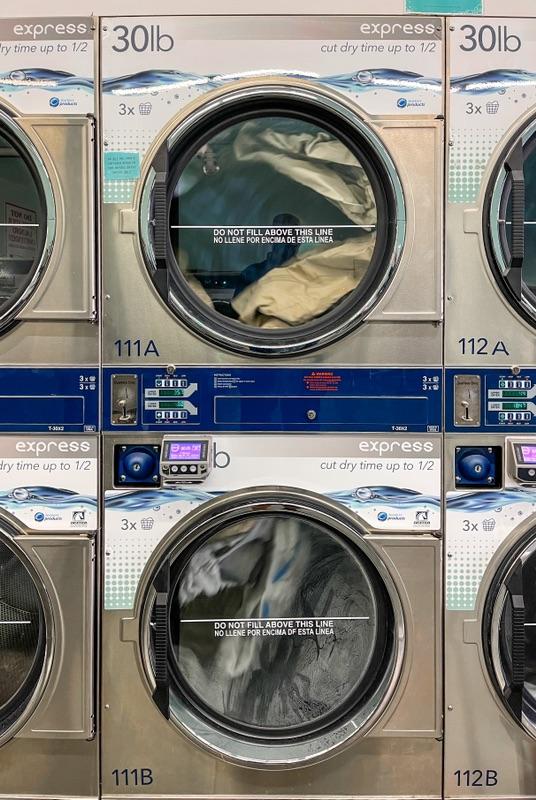
This time I brought $100 in cash, mainly for laundromats. However, iWash took credit cards. The wash machines were $2.75. The driers were 25 cents for 9 minutes or 45 cents for 18 minutes. Imagine taking a credit card for 25 cents? It did!
| |
iWash was a rare pleasant laundromat experience. At least as pleasant as laundry can get. | |
|
Next, it was Walmart, the black hole, to replenish our pantry. Our pantry is small. We just needed one or two things. It took $197 to escape the black hole’s intense gravity. Jeez, that place spins my head.
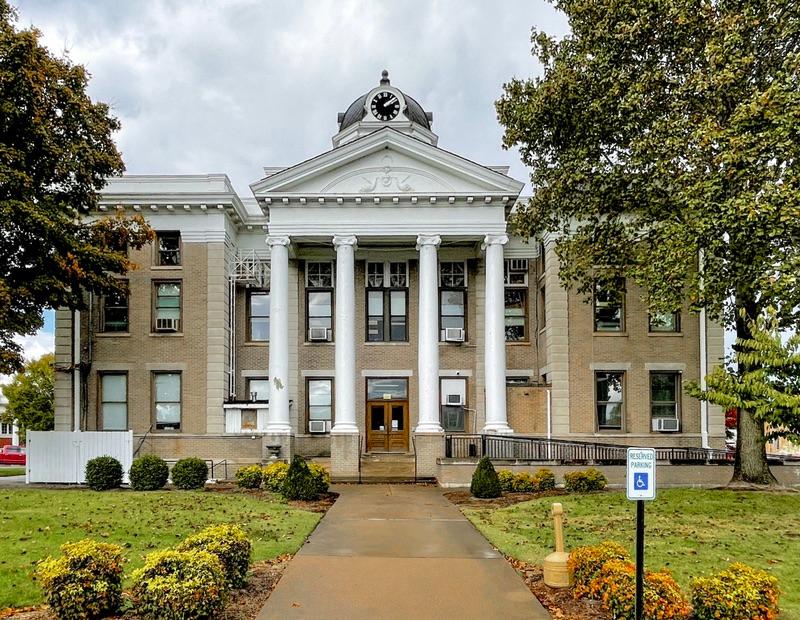
The rain slacked enough to seek out Murray’s downtown to see what's shaken. Not much. The downtown district was a square of mostly empty nondescript buildings with a nice looking county courthouse in the middle.
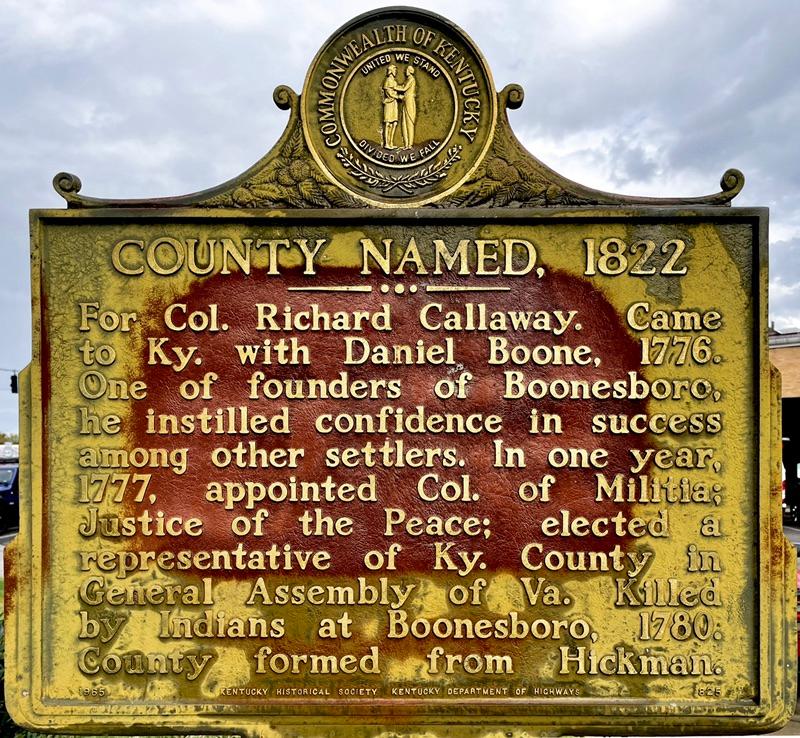
There were two items that caught my eye. The first was a plaque about Richard Callaway. Callaway County was named after him, and he was a buddy of Daniel Boone.
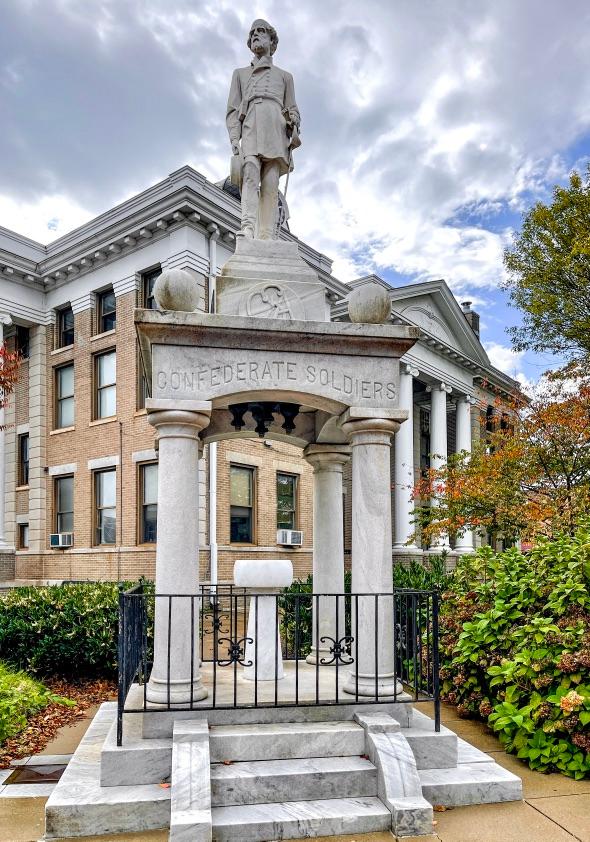
The second was a statue honoring Confederate soldiers. First of all, Kentucky fought on the Union side. Nope, there wasn’t a statue honoring Union troops. I did a little googling, and sure enough, the statute is contentious. It was erected in 1917 as part of the phony “Lost Cause” effort to redefine the Civil War. After the war, the South desperately tried to change the root cause from slavery to state’s rights. Of course, just what state right were they trying to protect?
Also, even though Kentucky was officially on the Union side, this part of Kentucky sent many men into the Confederate army.
After the George Floyd murder, the city voted to have the statute removed; however, since it is on county property, the county refused. It has been the scene of a good deal of protest. I guess it is still a work in progress for those offended by the statute.
Not much else to report. Just a sloppy wet day.
| |
Callaway must have made quite an impression back then. He was killed after only being in the area for four years. | |
The county court house in the center of the downtown. | |
The controversial statue on the county court house grounds. | |
|
FRIDAY: SECOND INSTALLMENT
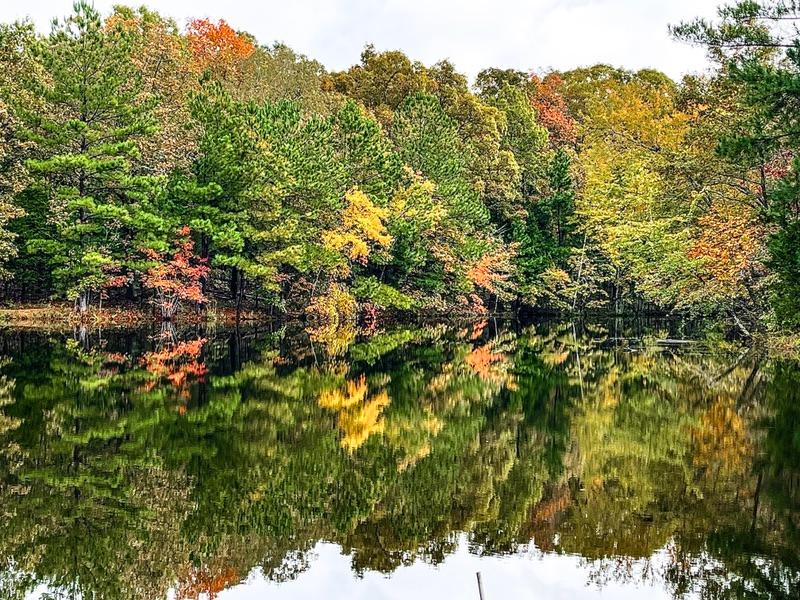
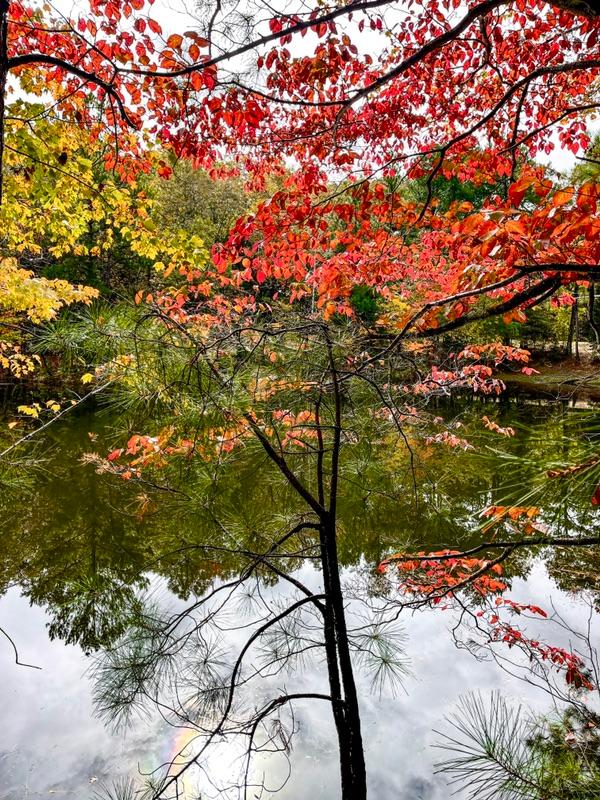
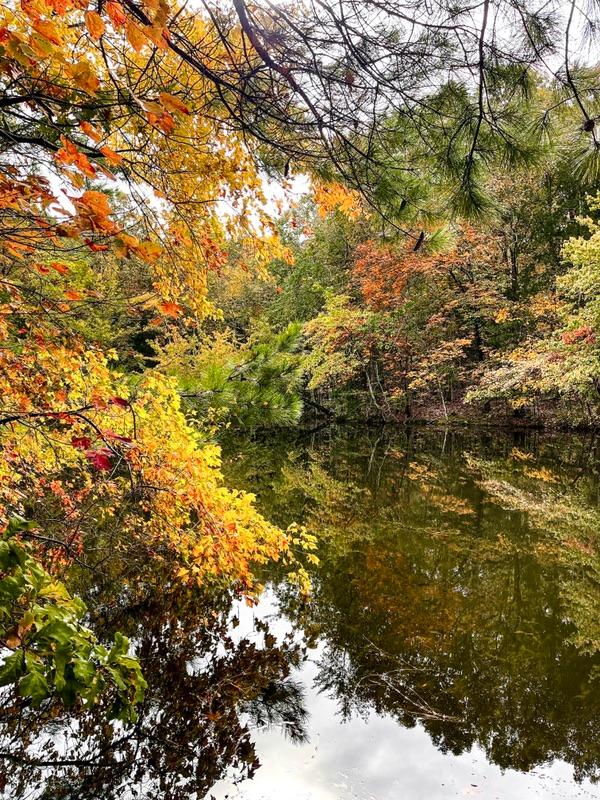
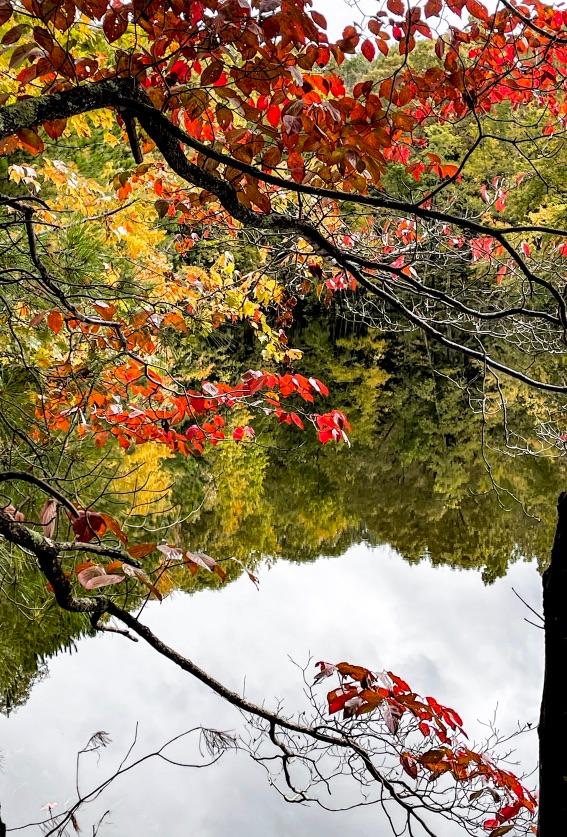
With all the chores done yesterday, we decided to go on a road trip. We headed south, down the Woodlands Trace National Scenic Byway. Cedar Pond, with its smooth glassy surface, drew me in for a couple of photos.
| |
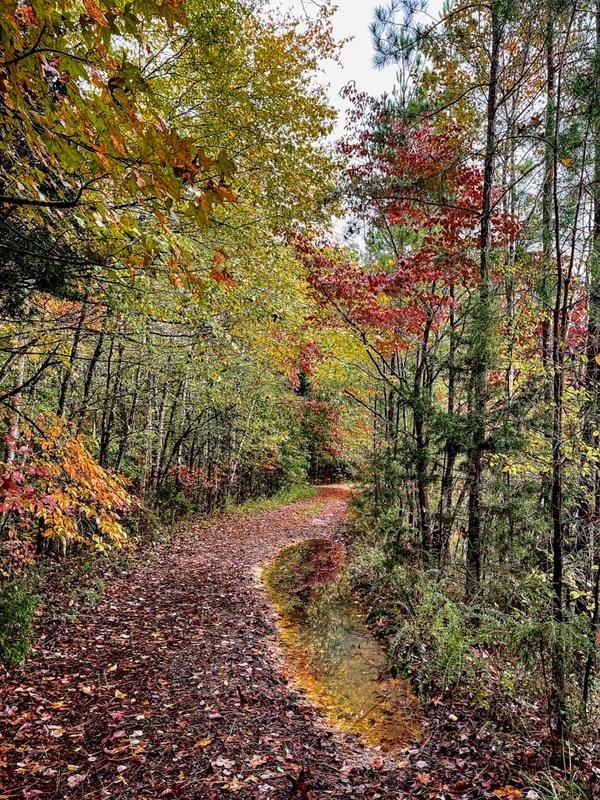
The forest roads were getting sloppy. | |
|
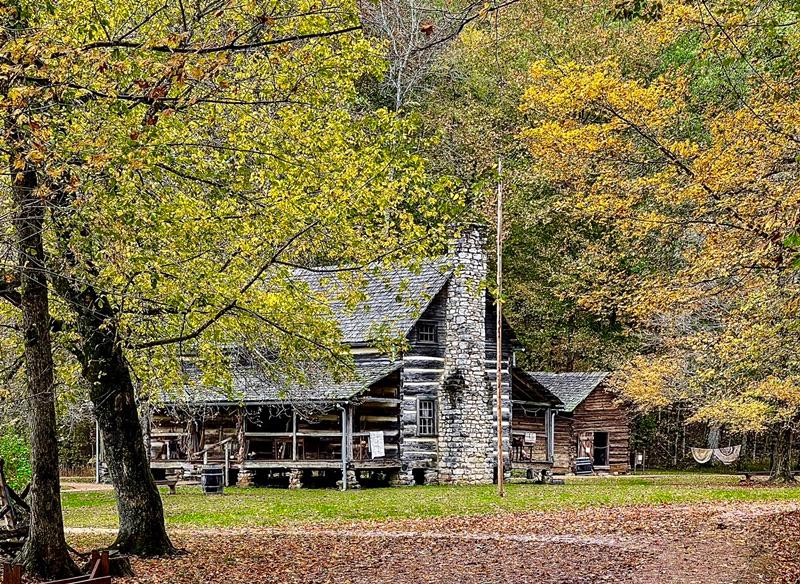
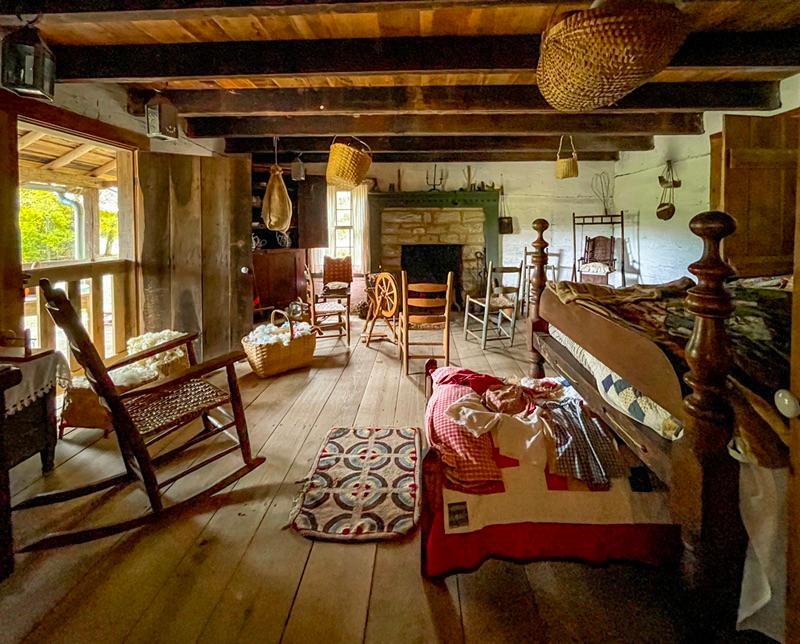
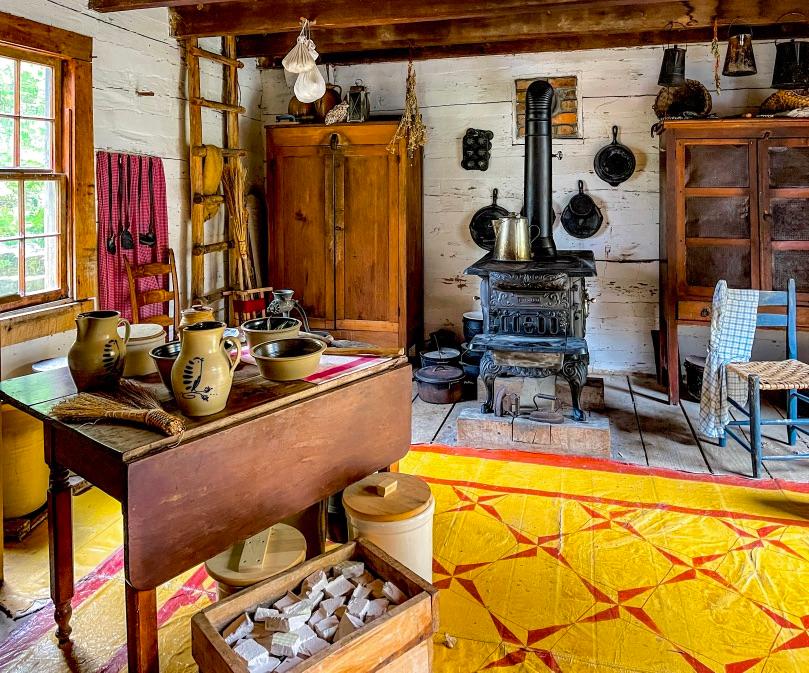
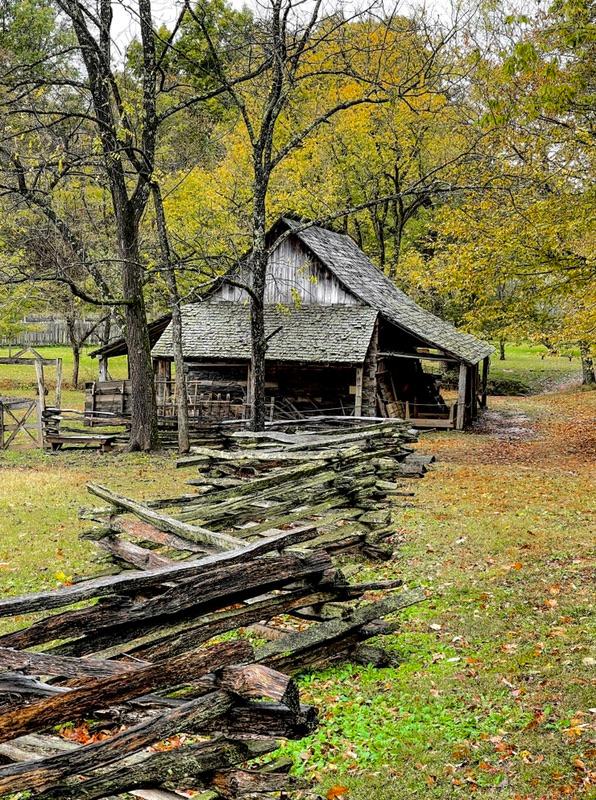
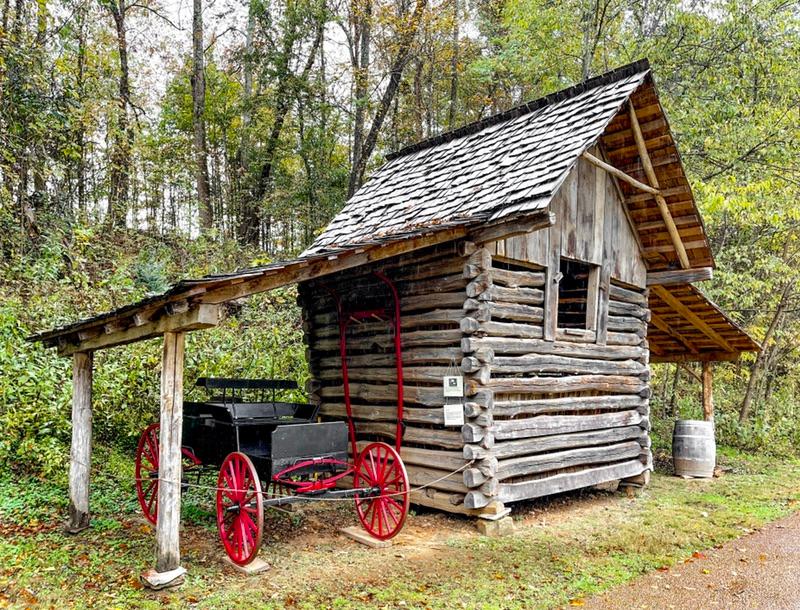
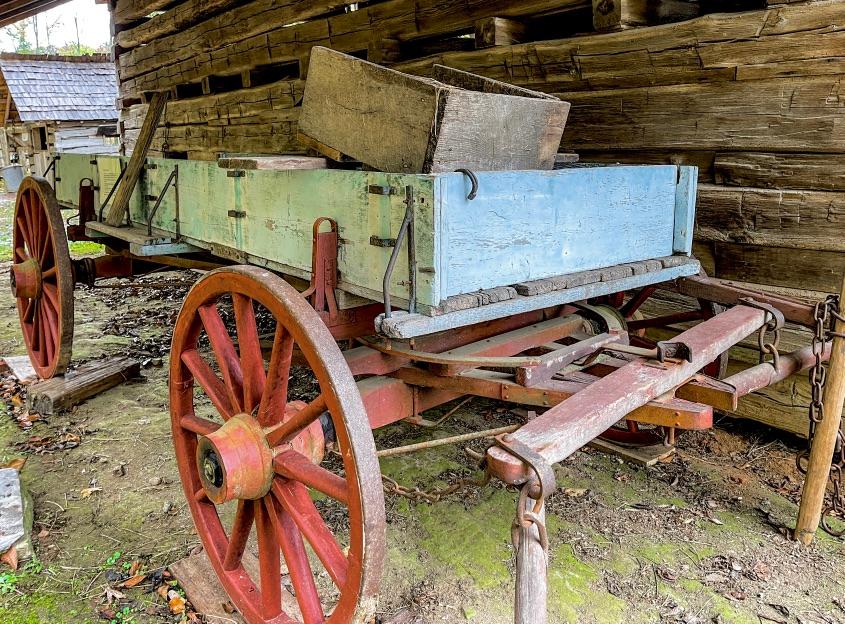
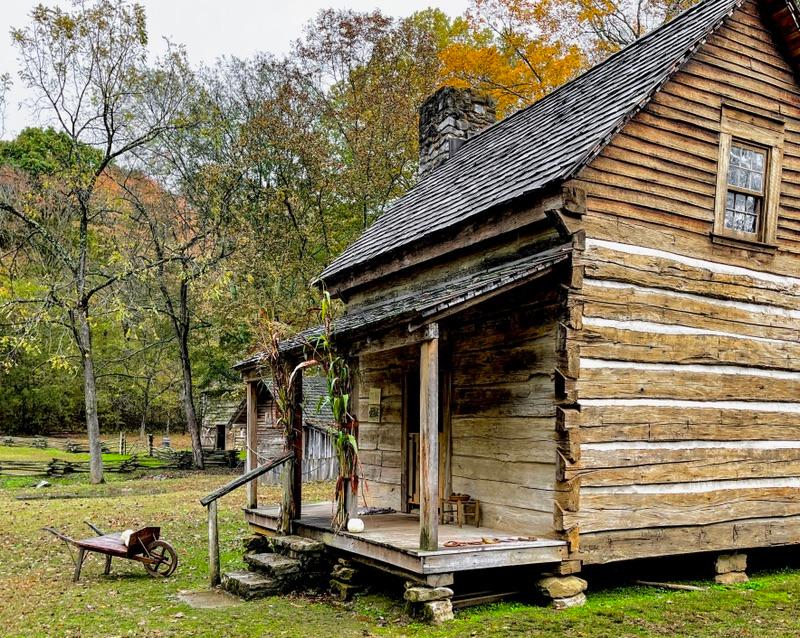
The rain had turned to mist, so we took a chance and went to the 1850 Homestead. This is a living museum of a Kentucky farm, circa 1850. Living museum means that attendants dress up in period garb and perform various chores and create crafts from the era.
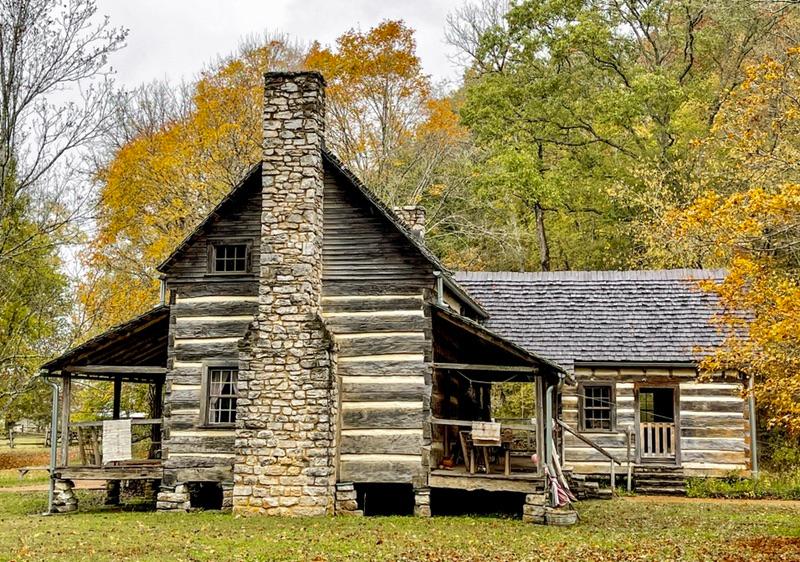
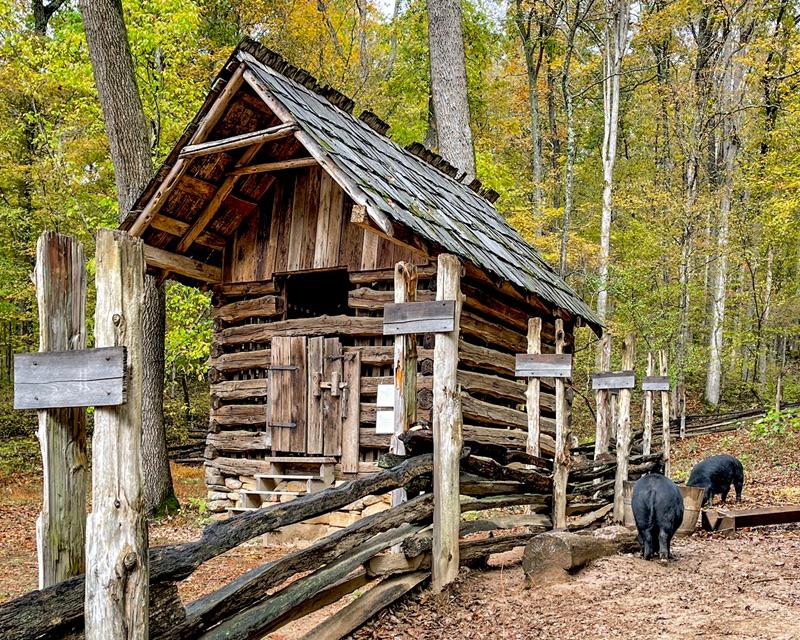
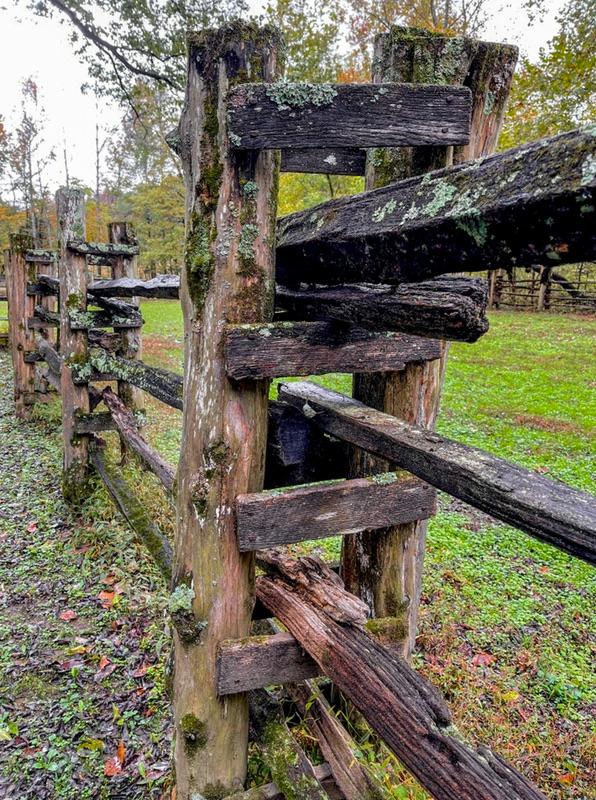
We were pleasantly surprised with the farm presentation. The grounds were extensive and beautiful. The houses and buildings were meticulously refurbished to perfect 1850 detail. On such a crappy day, we were the first and only visitors. That also meant that only three attendants were at the site; however, we got a lot of attention from them.
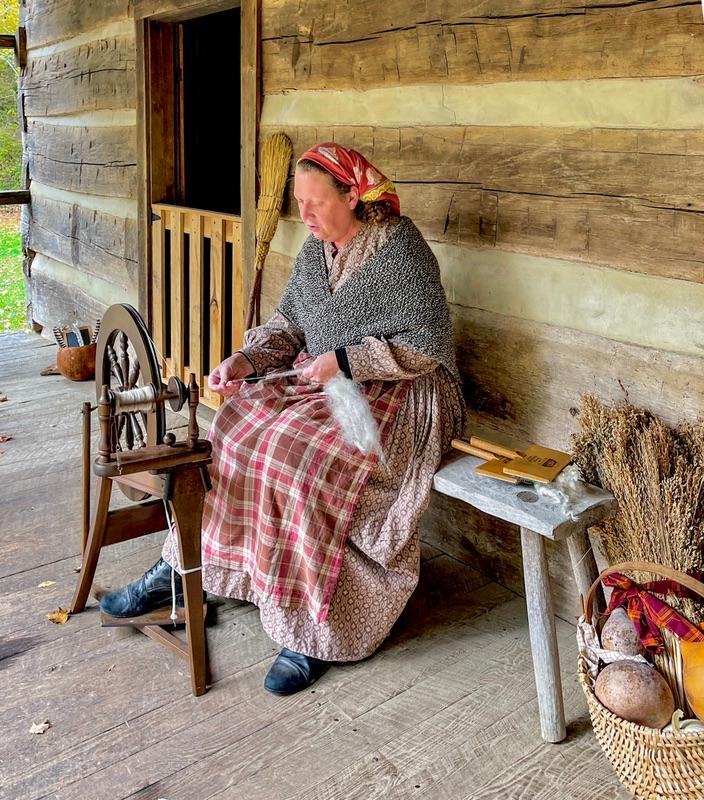
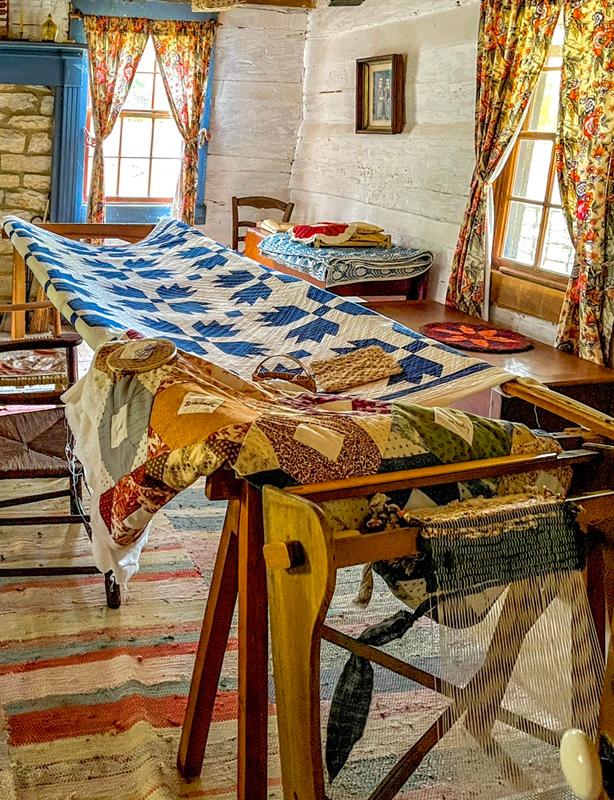
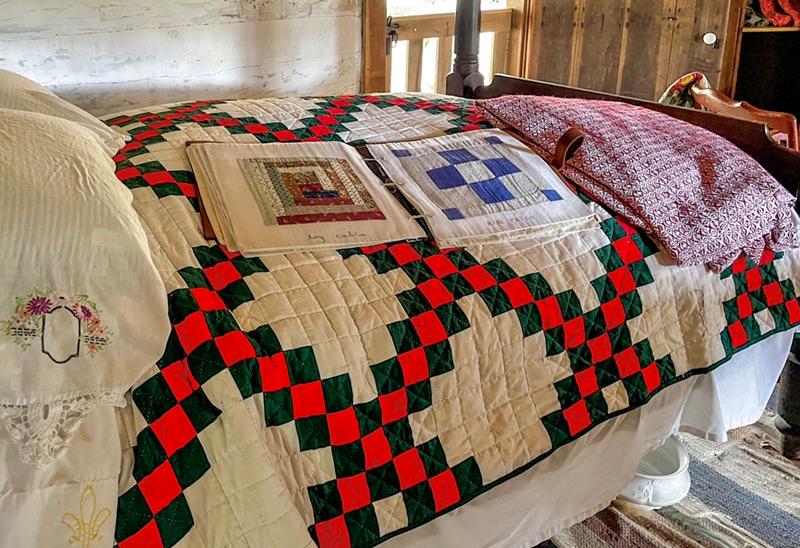
The homestead’s lady-of-the-house showed off the handmade quilts she, and the various ladies that have worked at the Homestead, have made over the years. Between presentations, they are required to work on the quilts, as well as do other sundry chores. Today, this lady was spinning yarn from fleece sheared from the sheep kept on the farm.
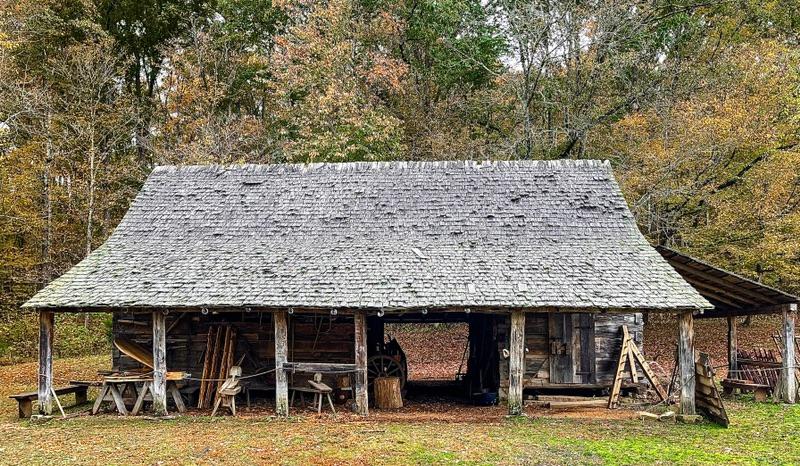
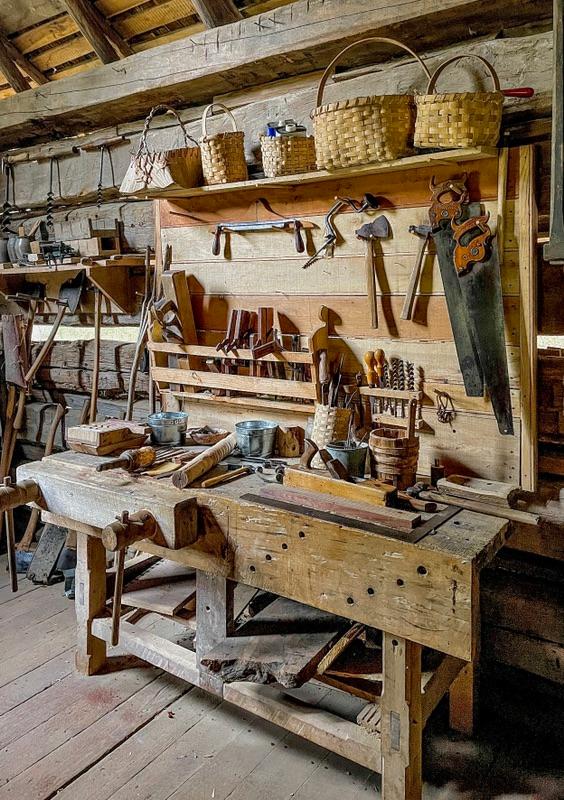
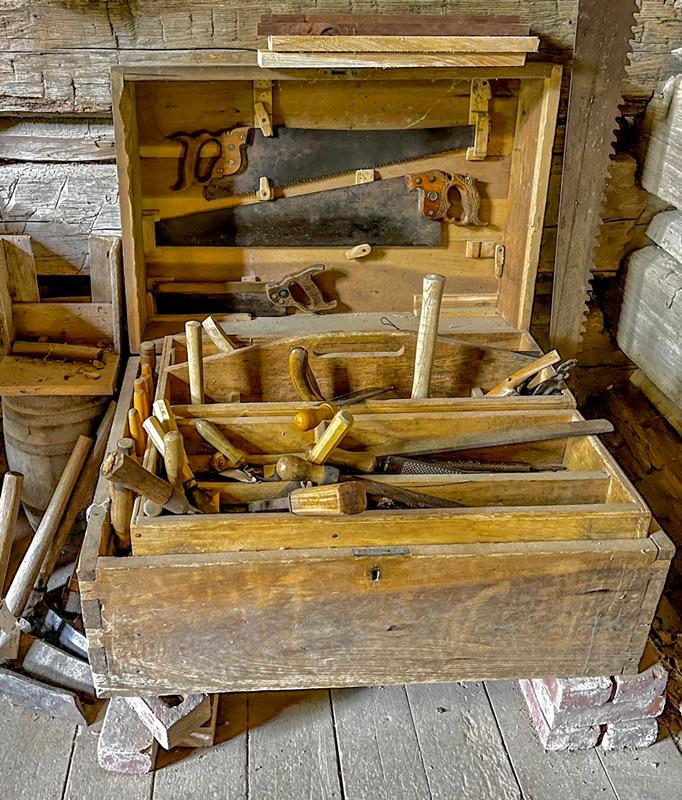
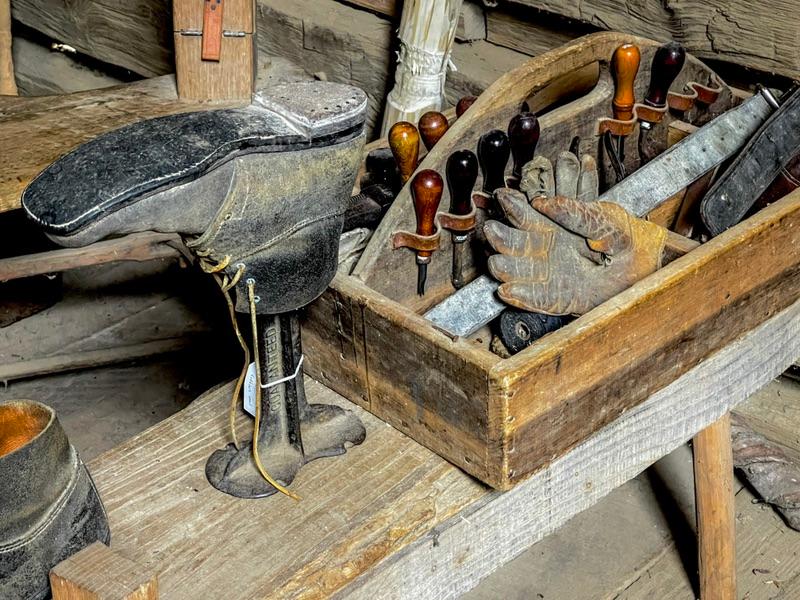
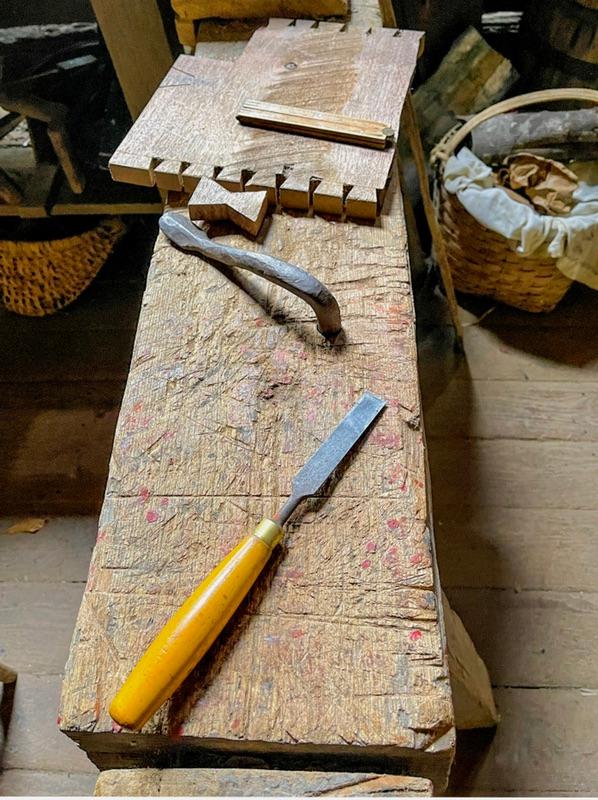
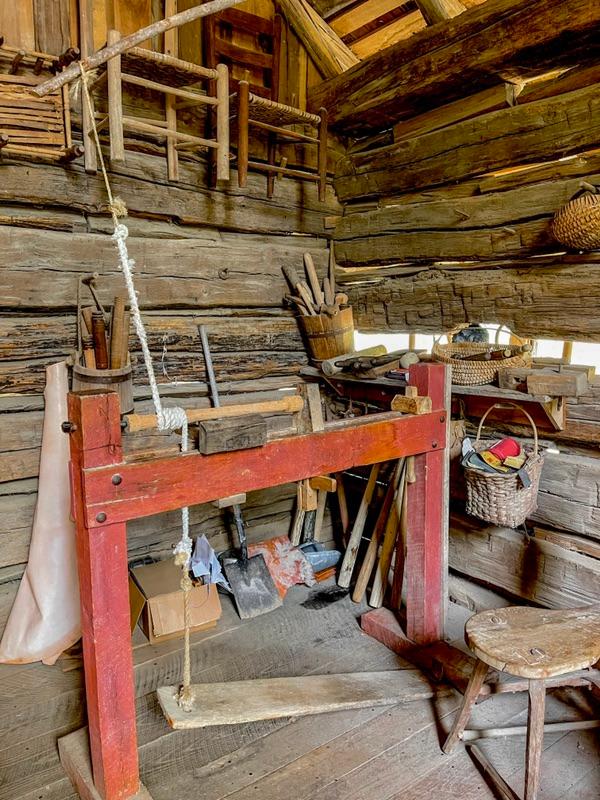
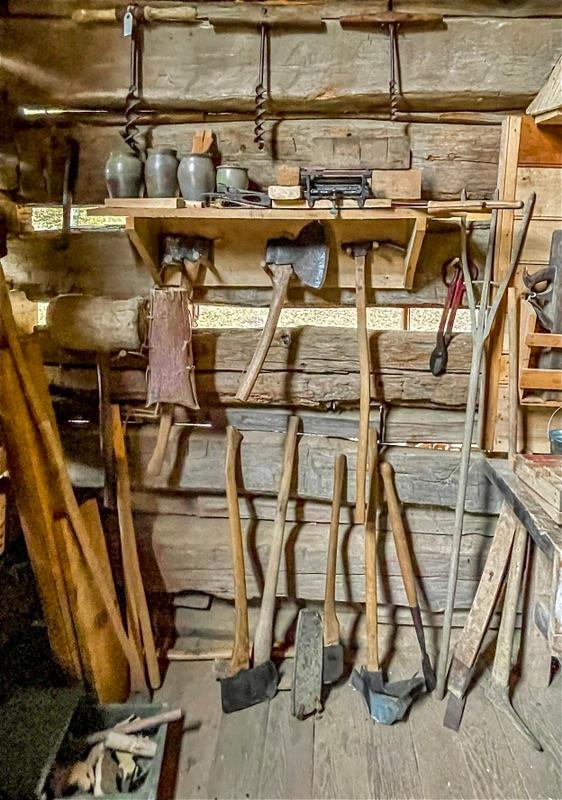
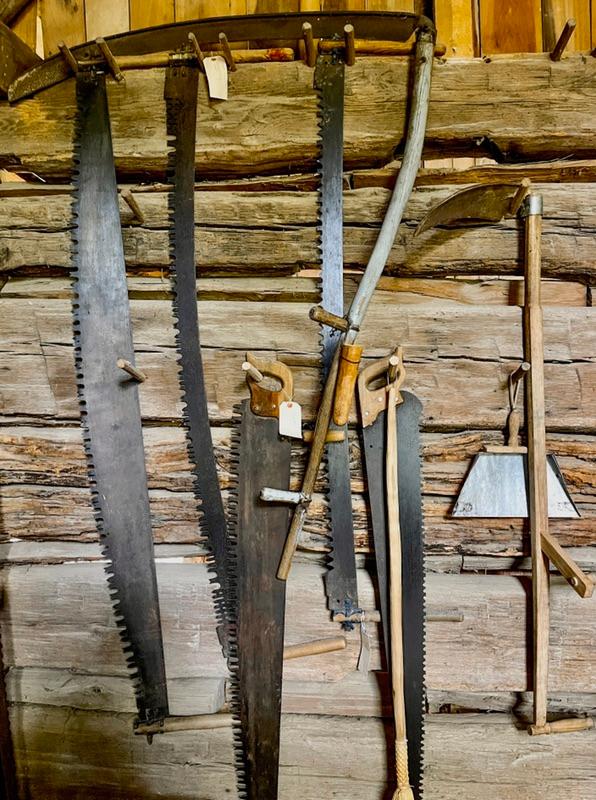
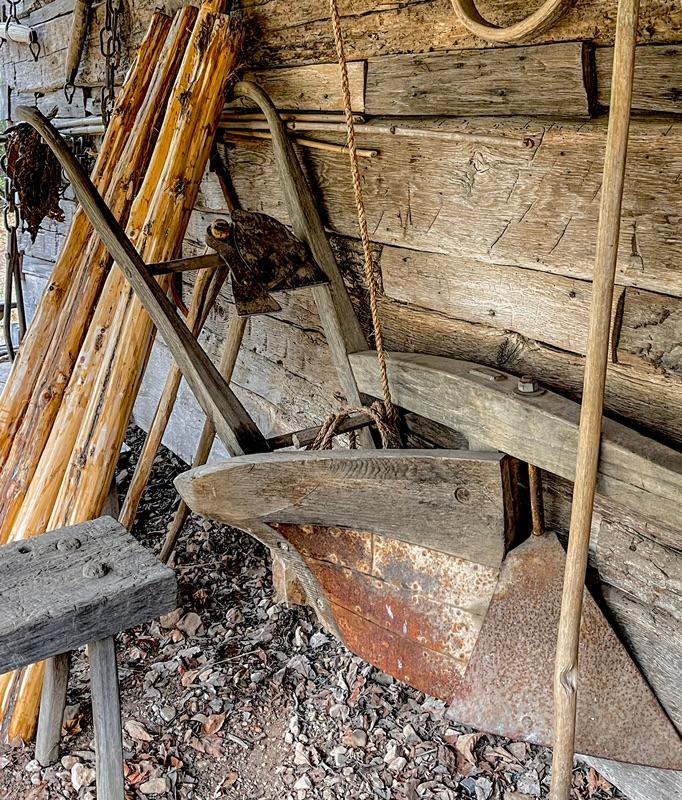
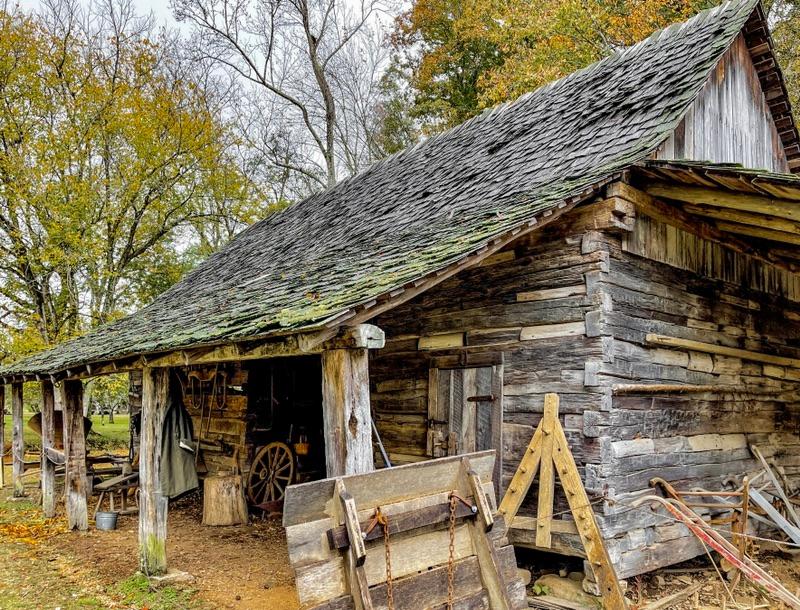
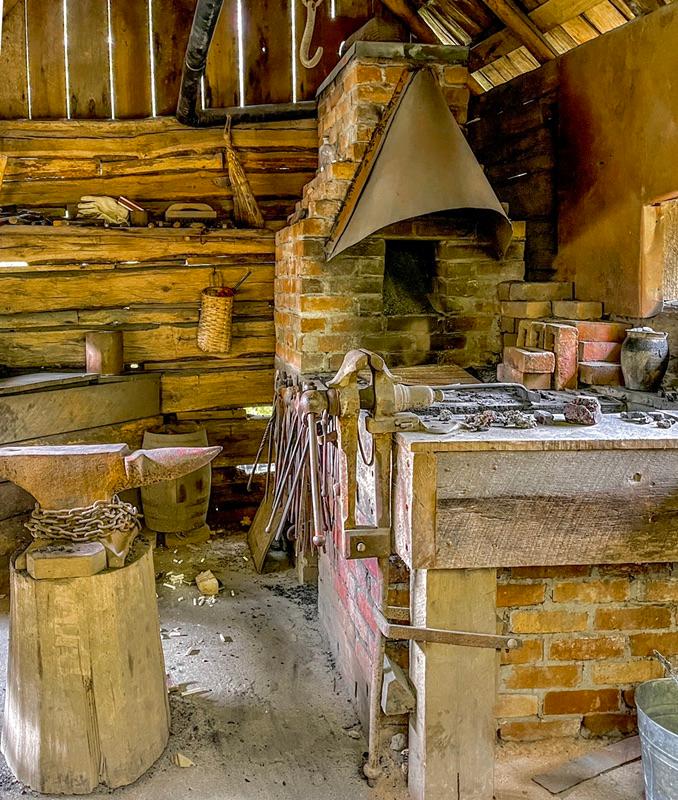
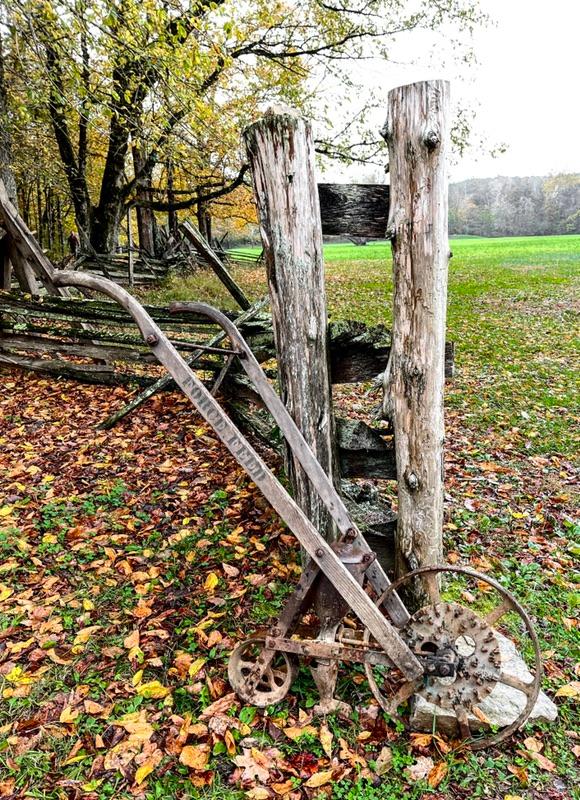
The workshop was my favorite building. It was well equipped with hand tools. It was looked after by a guy with a good deal of knowledge regarding old-world agriculture. He has a degree in “ag” and his “pappy” farmed in the days before factory farms and mega-machines. He detailed the history of farm implements from the dawn of agriculture up to the 1850s. It was fascinating.
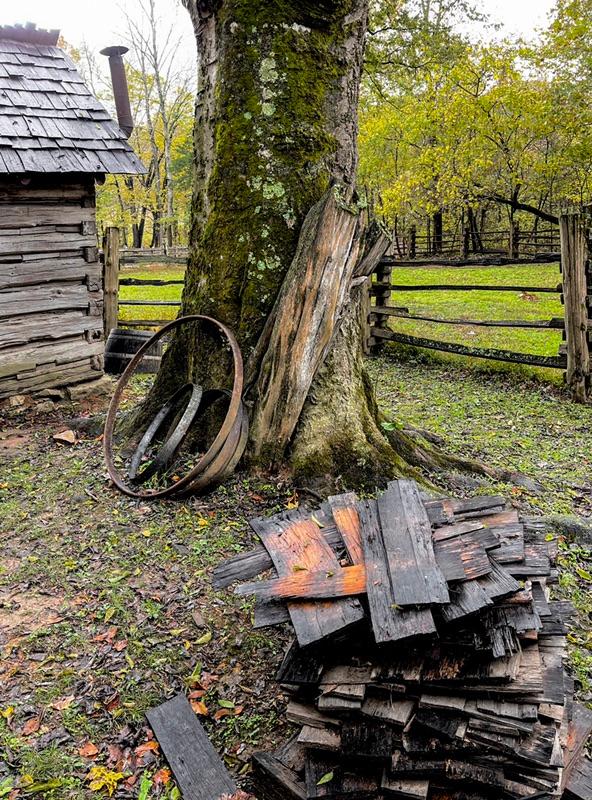
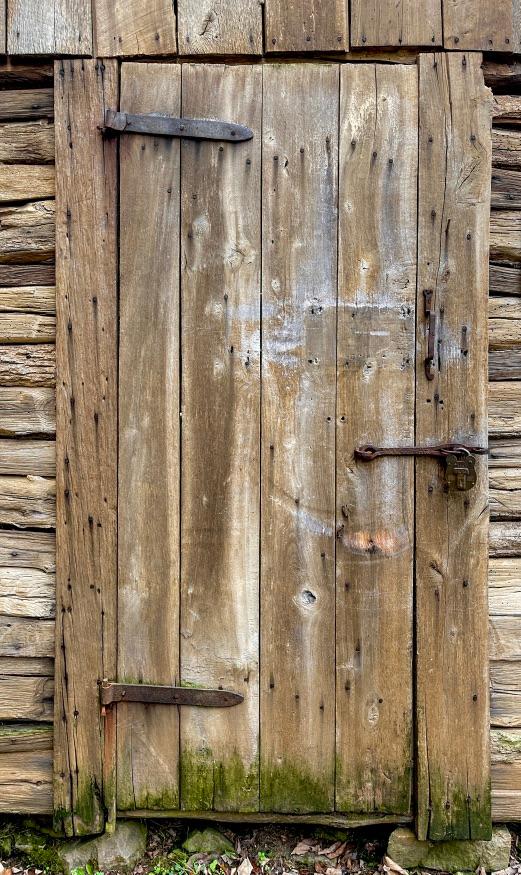
It was unfortunate that the lighting was so dreary for photography. The texture of the rough-hewn building materials would have made for great shots. I did the best I could. We had intervals of rain and mist while we were there. During the downpours, we could duck into the buildings. Finally, when a strong shower showed up, we ran for the exits.
| |
The main house at the Homestead. All the buildings were originally from the 1850s and from the general area. They were brought to this site, rebuilt, refurbished, and arranged as a typical farm would have looked. | |
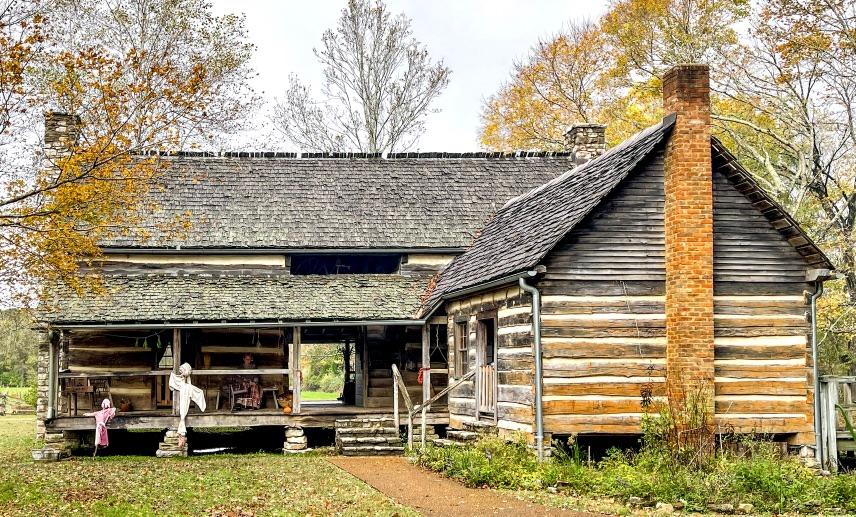
The house is what they call a “Two Pen” house. It consisted of two distinct structures separated by a breezeway. The breezeway gave ventilation for the hot summer days. You can clearly see the breezeway through the middle of the house in this photo. This house also has a third structure added to the back of the house. | |
The “lady-of-the-house” spinning wool yarn. | |
All the quilts were hand made. Quilting is one of the chores that the ladies are constantly engaged in. | |
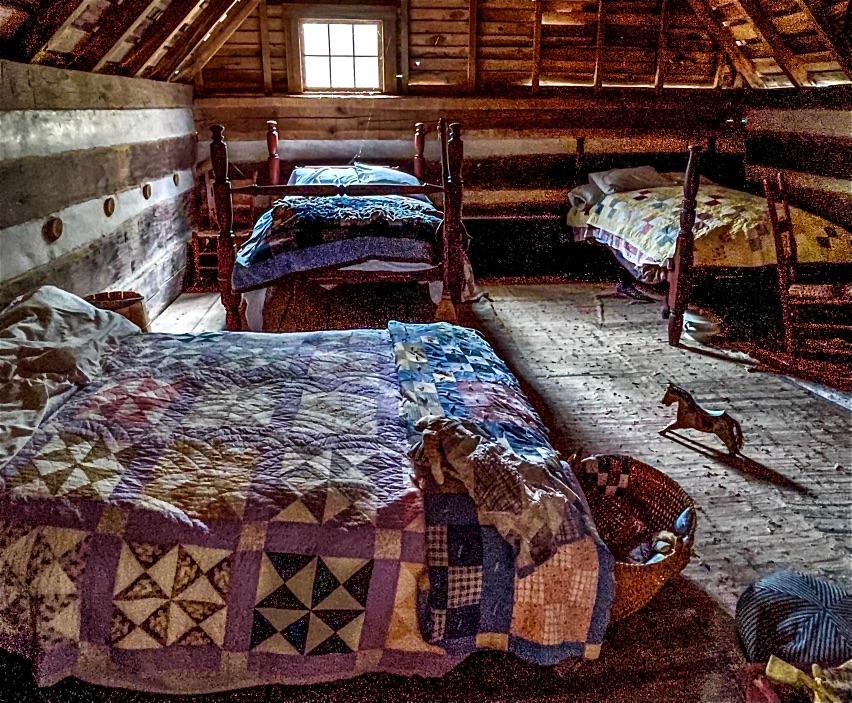
The rooms upstairs were dormitories for the kids. Farm families in the 1850s were huge. Kids provided the main source of farm labor. | |
In this house, the third structure in the back was the kitchen. | |
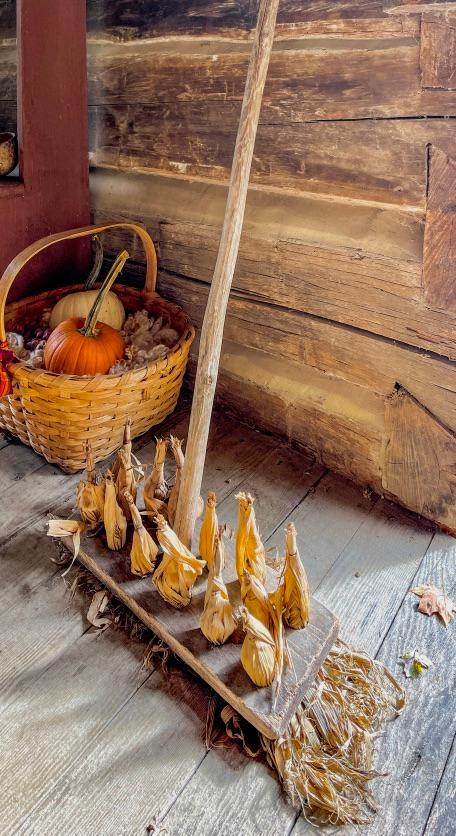
A homemade mop that the lady attendants made and use. We were told that it works surprisingly well on the old wooden floors. | |
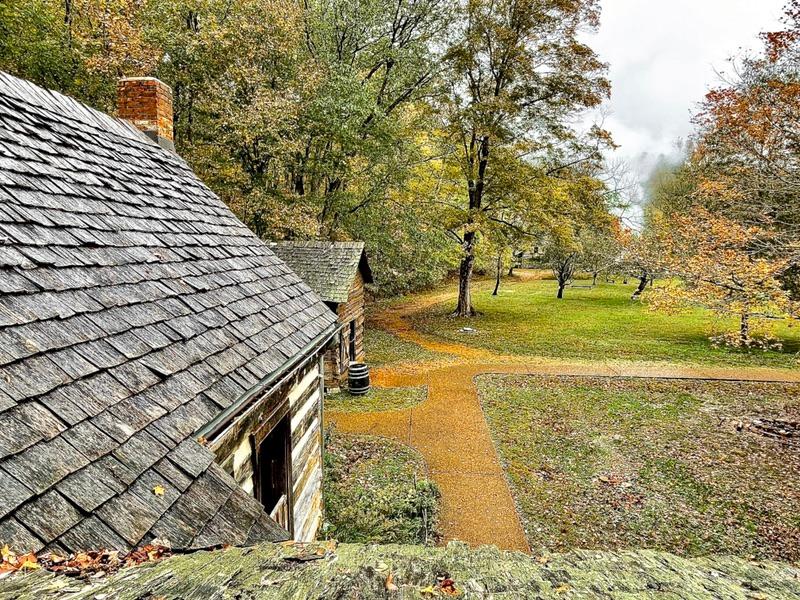
Looking out over the grounds from a 2nd story window. | |
A homemade lathe. When you press on the foot pedal, the rope turns the wood post, and the branch above provides the spring to reset the foot pedal. It worked! | |
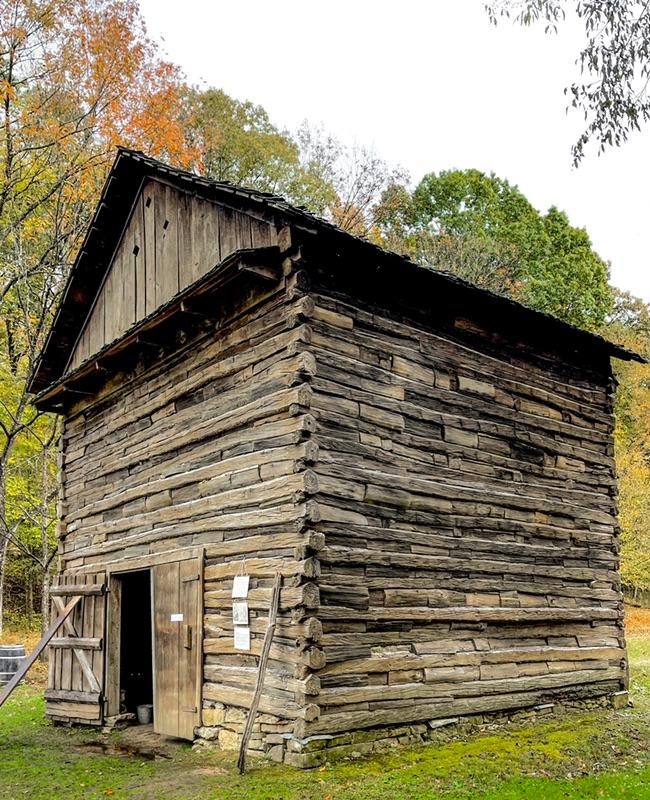
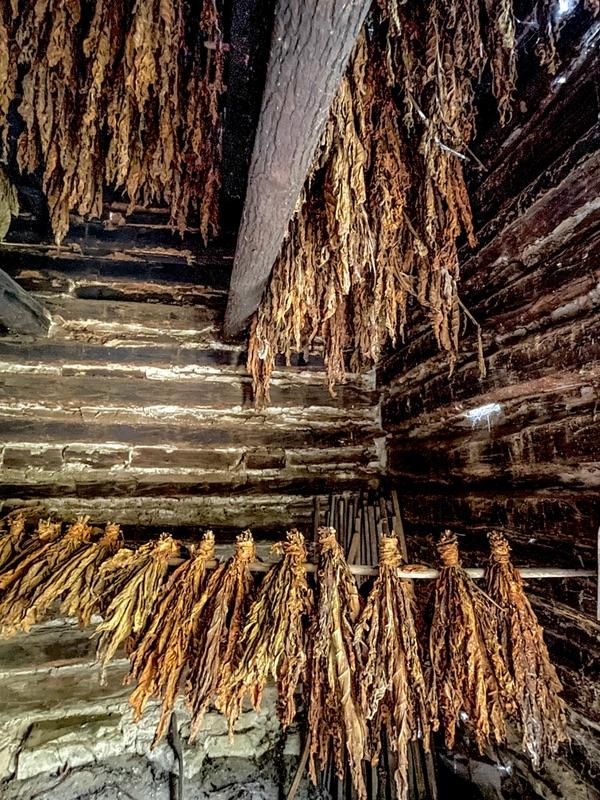
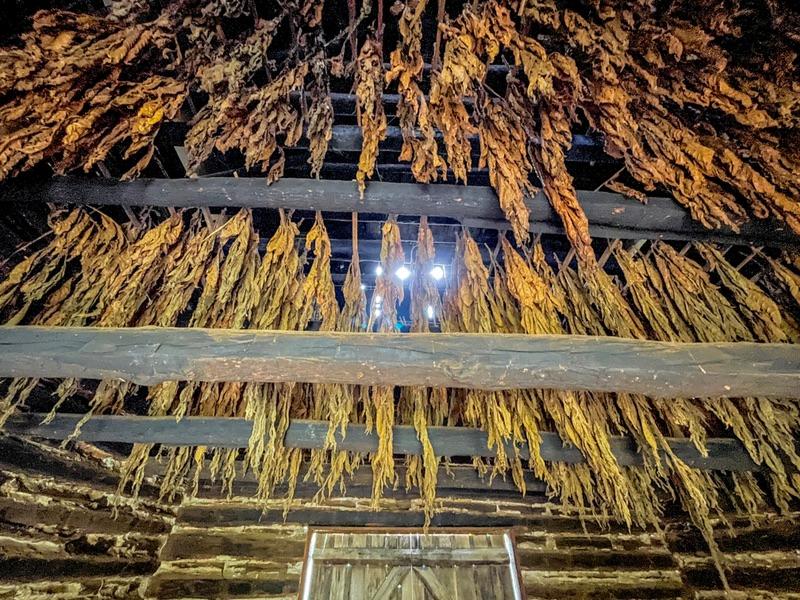
The tobacco drying building. Preparing tobacco is an amazingly complex set of steps for a product that kills you. Tobacco was a cash crop that brought in the money. | |
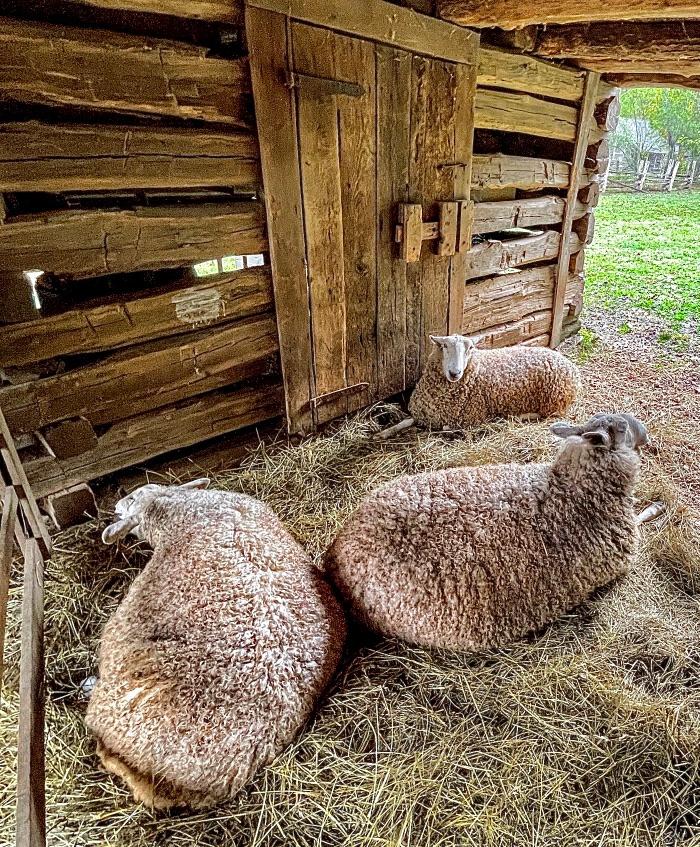
The sheep that provide the wool for the farm. | |
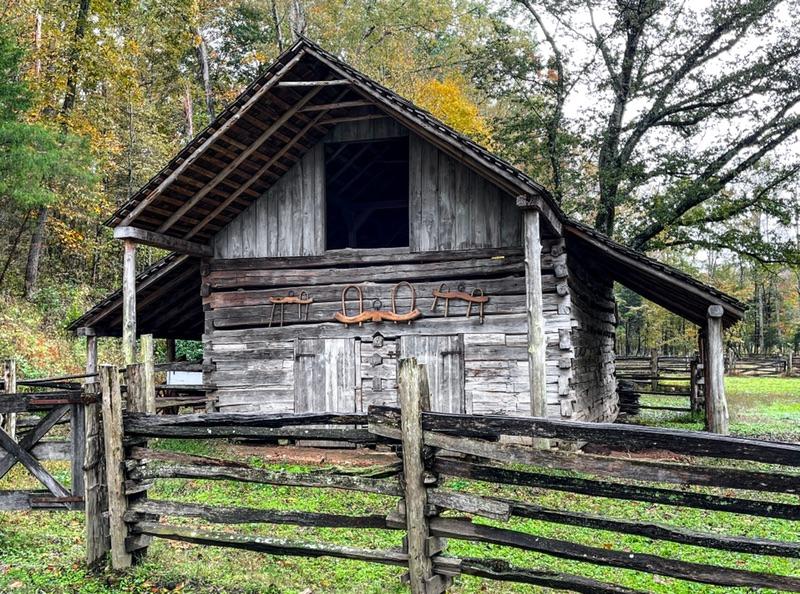
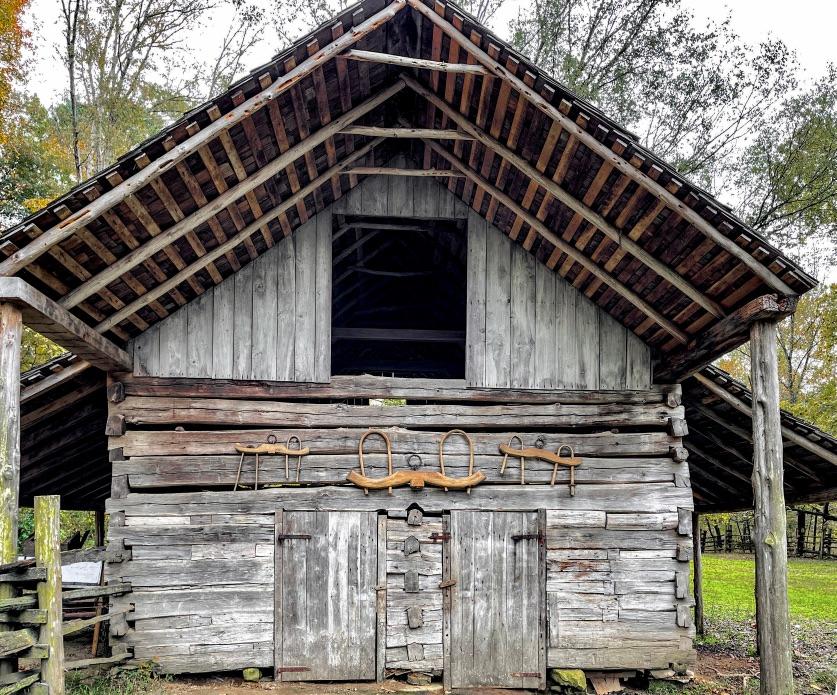
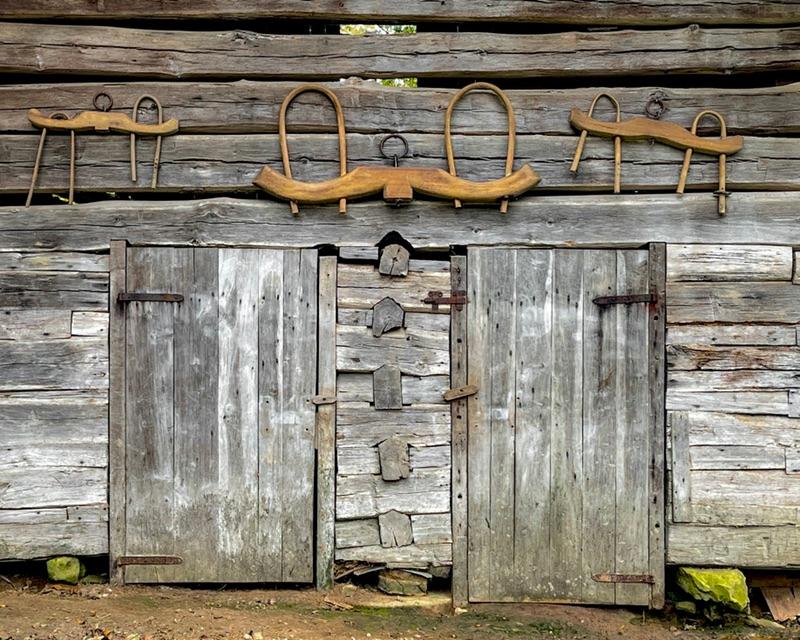
The oxen stable. Oxen were the primary work animal. | |
This is an example of a “single pen” house. It is a “starter home”, with only one structure and no breezeway. | |
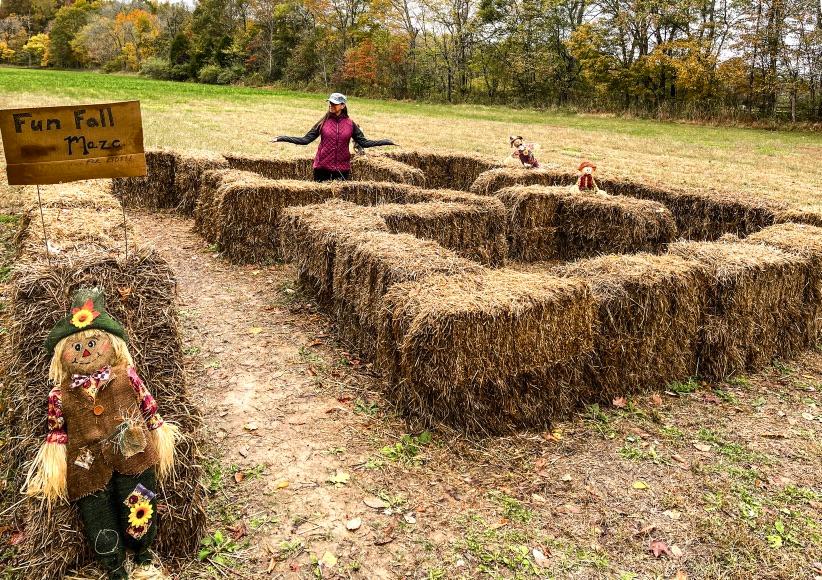
Wanda getting lost in the hay bale maze. | |
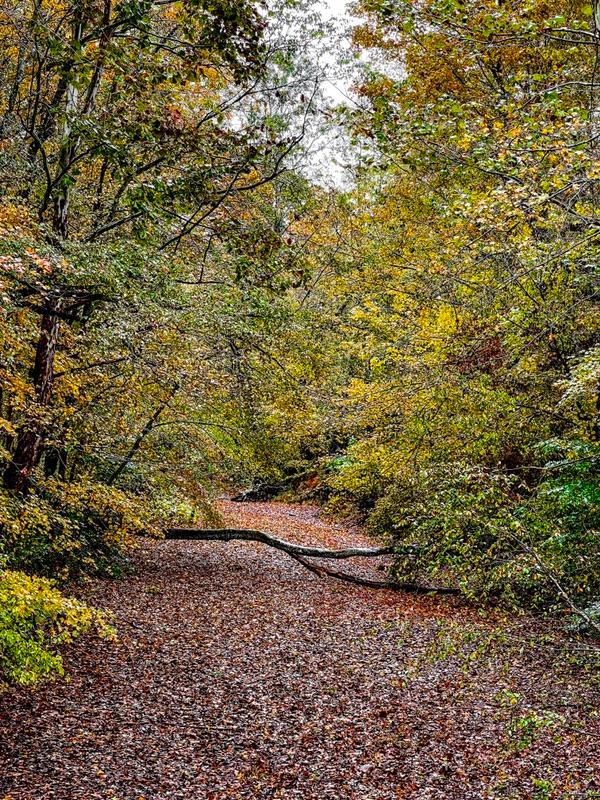
Even after all this rain, this creek bed was completely empty, covered only with fallen leaves. | |
|
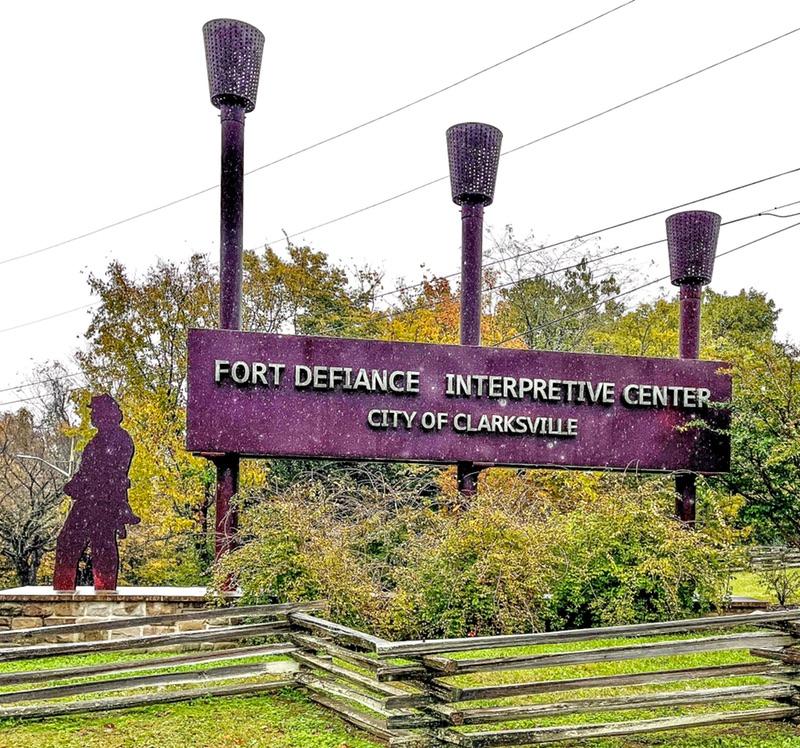
We next aimed for the Fort Defiance Civil War grounds in Clarksville, Tennessee. Clarksville is the gateway to modern-day Fort Cambell, the home of the famous 101st Airbourne Division. The 101st Airbourne was featured in the HBO series, Band Of Brothers.
When we were on our hike at Fort Henry and our walk at Fort Donelson on Tuesday, we could hear thunderous cracks that we felt in our chests. Ah, I thought, they really recreate the civil war experience at these sites. Well, not exactly; soldiers at Fort Campbell were playing with munitions at their gunnery range. It must be fun.
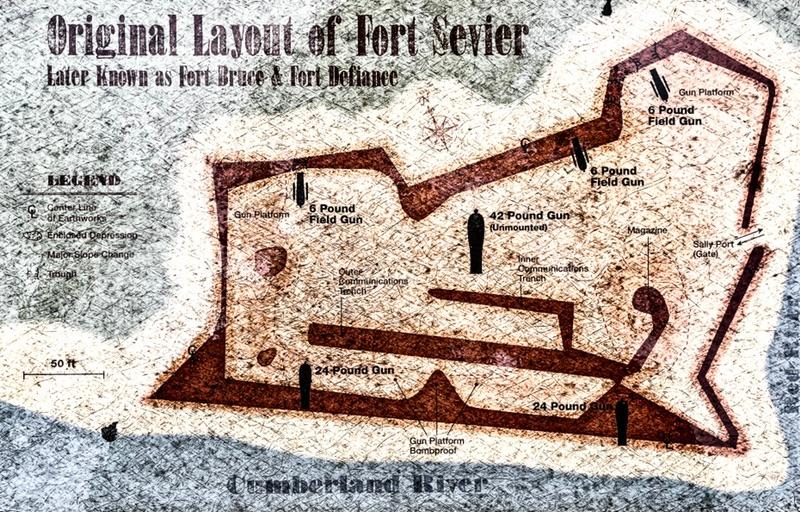
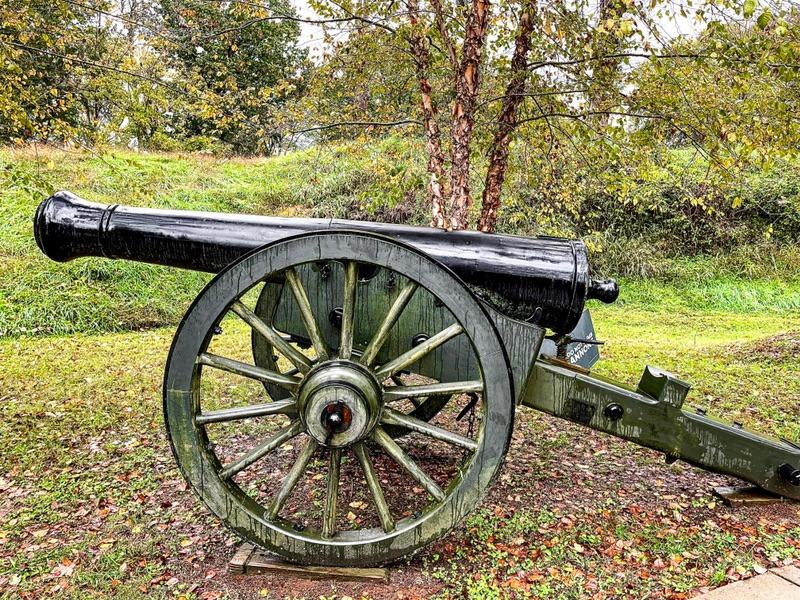
Back to Fort Defiance in Clarksville. Like Fort Donelson, the fort was more of a commanding view over the confluence of the Cumberland River and the Red River. Earthworks? Yes. A fort with walls and buildings? No.
It didn’t matter what the fort was comprised of. The Confederates vacated for Nashville immediately after Fort Donelson fell. So, that was pretty much it. A band of Confederates returned to occupy the town for a short time but were driven away. Clarksville was mostly an occupied town for the war.
It was raining hard when we pulled up to the parking lot. There is a little museum on the grounds. We watched a 20-minute video laying out Clarksville’s civil war history. The most interesting fact was that Clarksville was used as a center to recruit and organize a lot of former slaves into the Union army. Black soldiers were eventually used to occupy and guard the city. That had to hurt, but that’s karma.
Clarksville, a surprisingly large city of 152,000, was arduous to drive through. We never found a downtown. Instead, we drove through miles and miles of streets intersected with hundreds of stop-n-go lights, lined with every franchise restaurant and box store imaginable, and we witnessed three accidents.
| |
A drawing of the fort layout. Sadly, the plaque is in poor shape. Th heavy brown lines were earthworks, not walls. The fort was originally called Fort Sevier, then Fort Bruce, and finally Fort Defiance. | |
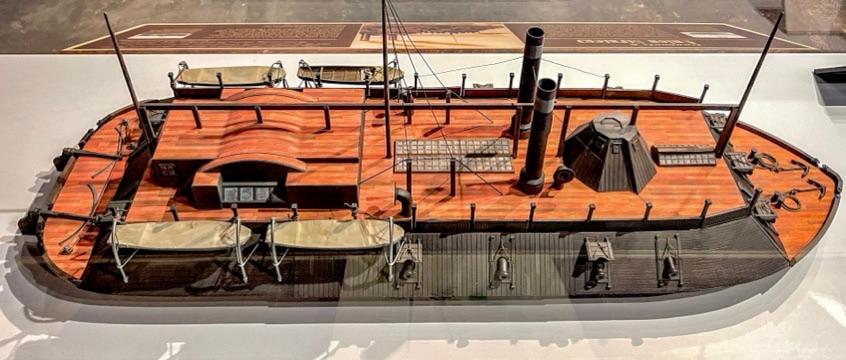
A model of a US Navy river gunboat. This was before the all-iron ironclads. These were wooden boats with some iron plating attached to the sides. | |
|
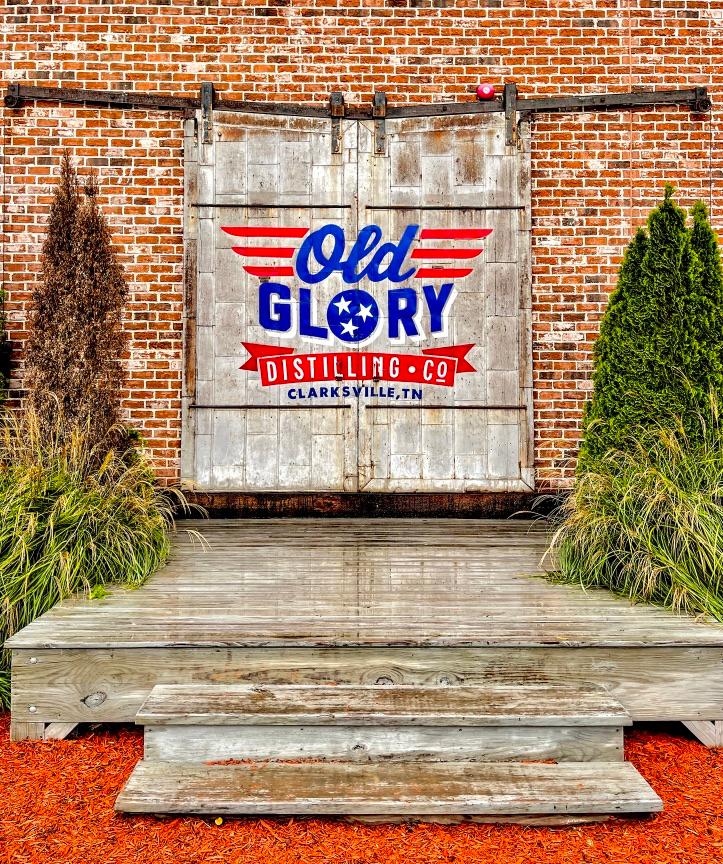
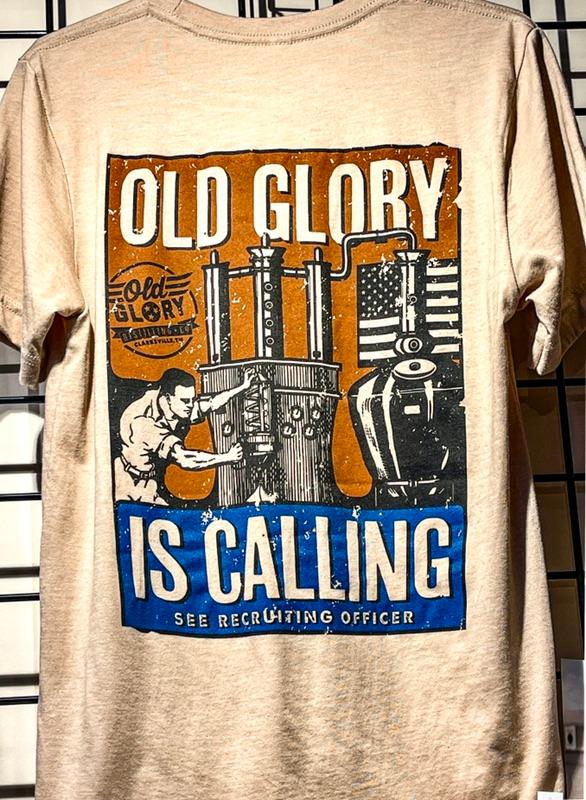
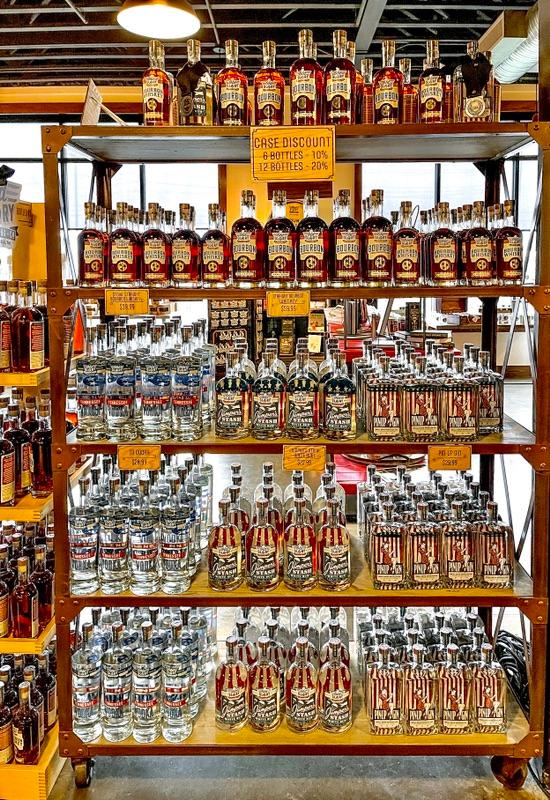
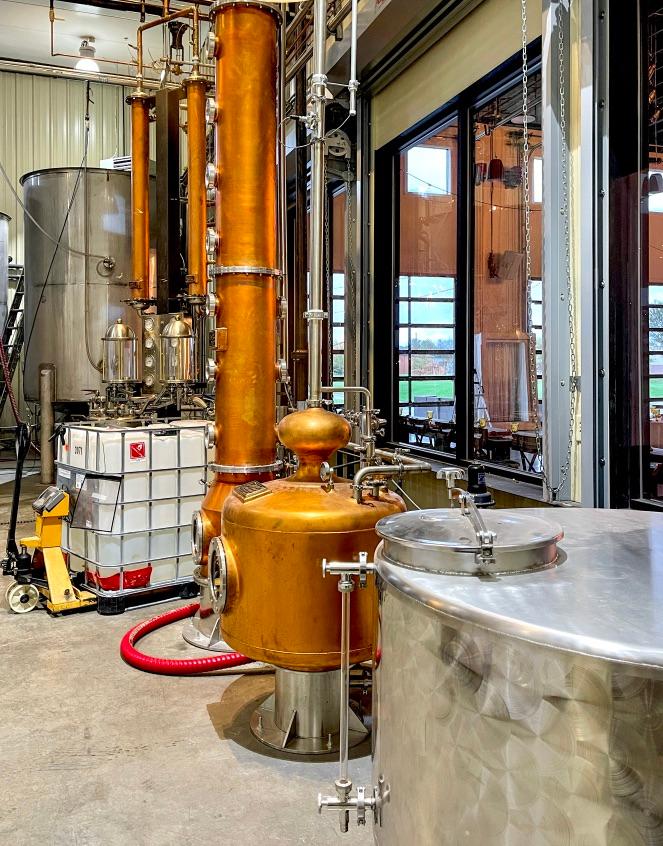
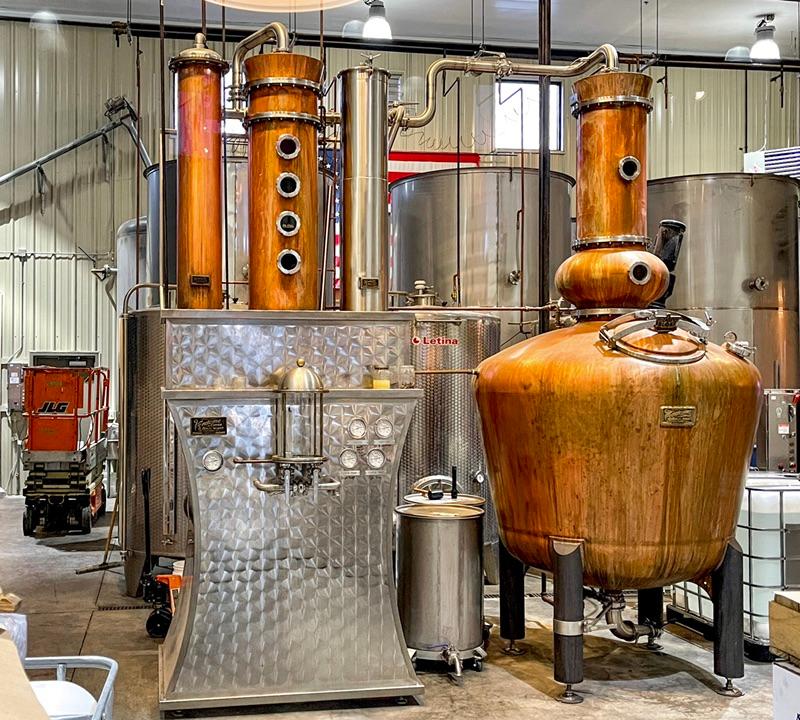
We finally reached our final stop, Old Glory Distillery. Kentucky Bourbon and Tennesee Whiskey are the spirits of the region. Old Glory is one of the stops on the Bourbon Trail, a series of distilleries in the area.
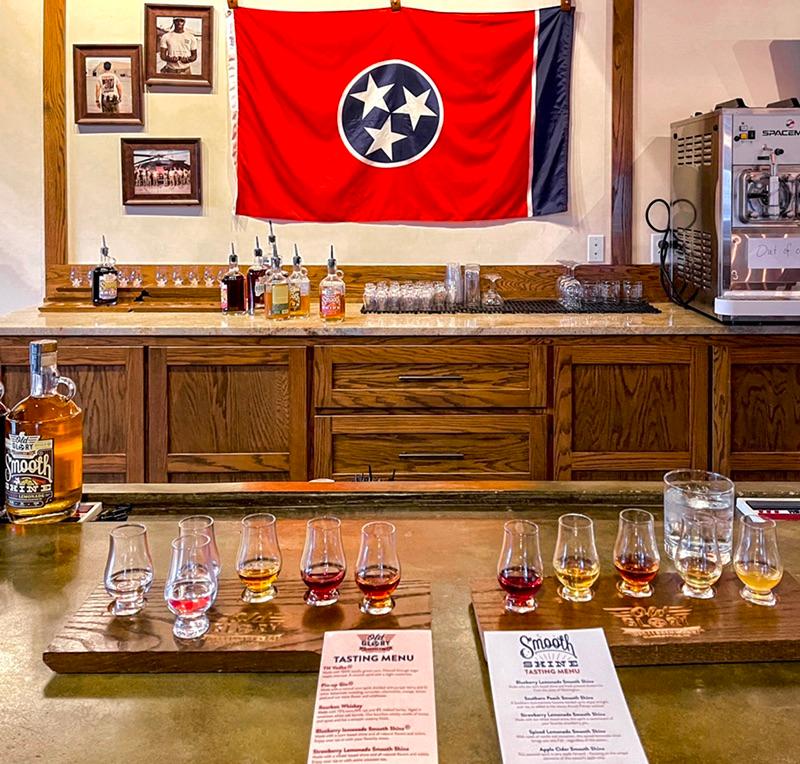
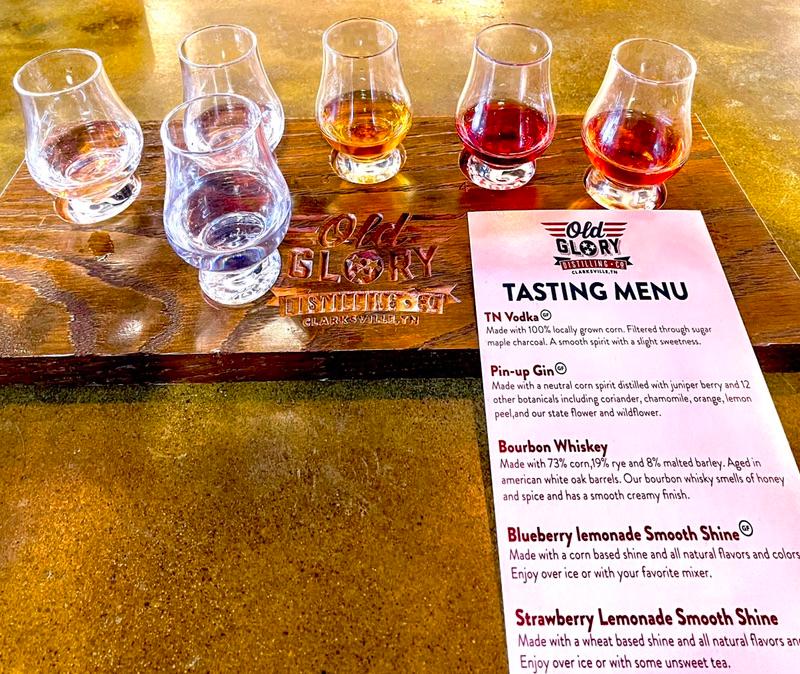
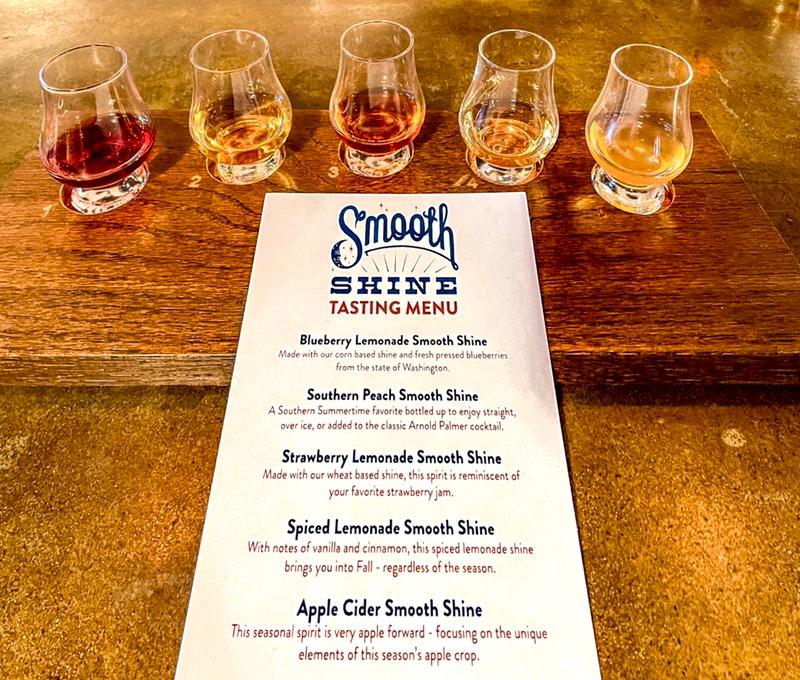
For $5, we got to sample five of their products. Wanda took the moonshine sampler. I tried the traditional sampler. The samples were surprisingly ample. $5 for five large shots was pretty generous.
We have a certain relative, that we will keep anonymous, that makes the finest peach moonshine ever squeezed out of a still. Old Glory made decent moonshine, but it didn’t stack up to “anonymous”.
The vodka was smooth. The gin was horrible straight, but mixed with tonic, it was nice. The bourbon, however, was excellent. It was hard not to plunk down the $39.95 for a bottle.
I’m not a hard liquor drinker per se, but I do dabble with tequila down in Mexico; I enjoy the concoctions that my mixologist friend, Jeff, conjures up; and I could have my arm twisted when it comes to this bourbon. Twisting my arm would probably consist of lowering the price to something like $17.95 a bottle. I admit that a good German beer is more to my taste.
We learned that until recently, to be labeled “Bourbon”, it had to be made in Kentucky. Now, it can be made outside of Kentucky, but it has to be made from at least 51% corn and aged in new charred oak barrels.
We left Old Glory in the rain and got “home” at dusk. I thought we did a pretty good job of killing the day.
| |
Each star on the Tennessee flag represents a region of the state - east, west, and middle. They arranged the flag so no star is dominant. Wanda’s five drinks are on the right. Mine are on the left. Mine also includes a glass of tonic for the gin. | |
|
SATURDAY: FINAL PAYMENT?
This weather has made us lazy. Yes, we awoke to…… RAIN. By noon, it let up, but it was cold and gloomy. Wanda worked on her website: alloverthemaptravelventures.net. Check it out if you are so inclined.
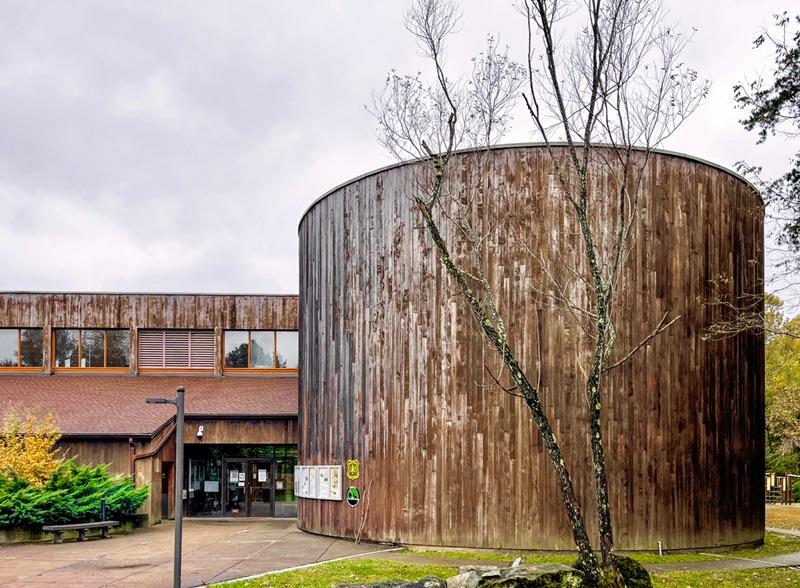
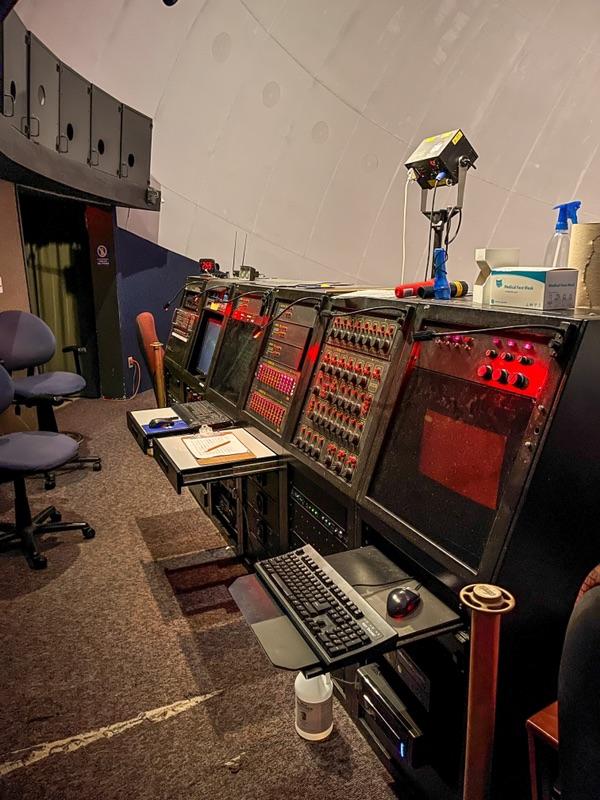
I putzed around and accomplished very little. Finally, we got off our asses and went to the Golden Pond Planetarium for an afternoon show. Although the show was only fair-to-middlin’ it seemed awesome just because we were doing something besides sitting.
We drove around a bit afterward. The drab skies couldn’t completely hide the forest’s beauty. I checked the weather for Stevens Point, Wisconsin, our hometown. It was the same temperature as here. However, it was sunny up there. Jeez, that’s irony for ya - you head south for warmth and it's nicer back up north.
No matter, tomorrow morning we move out and head for Mammoth Cave. The weather promises to improve.
| |
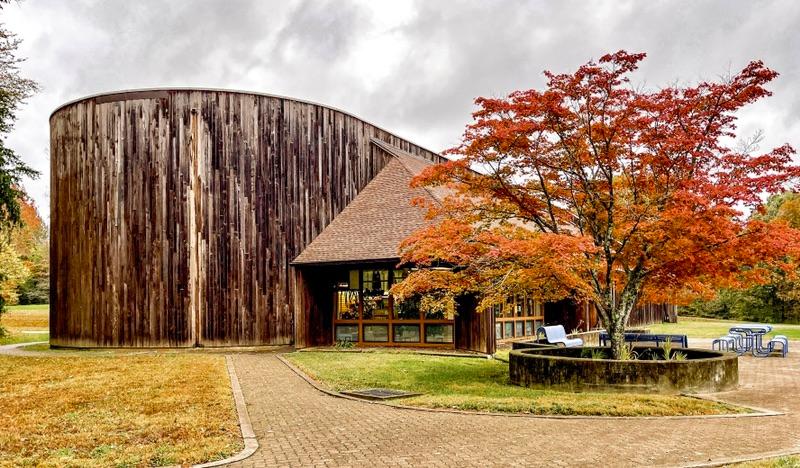
The round structure is the planetarium. | |
The control room for the planetarium. | |
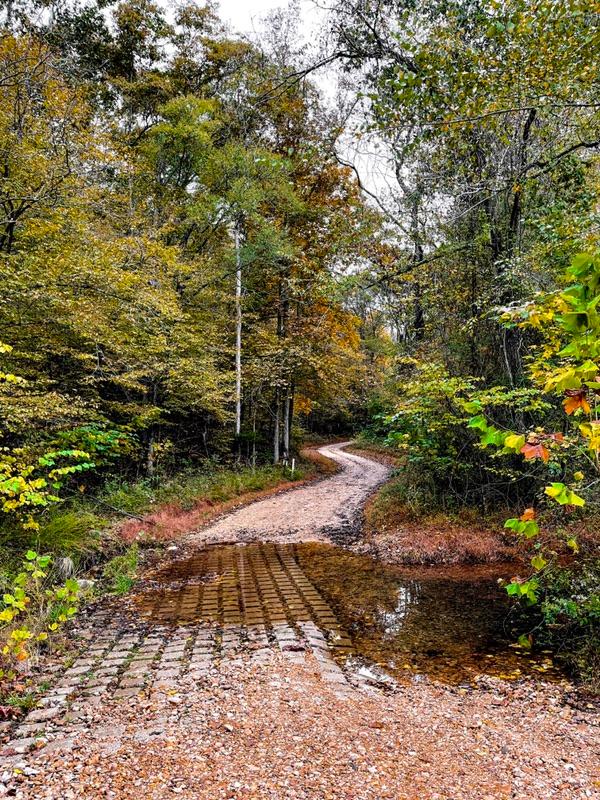
On our drive we found one creek that was filling up with a little water. | |
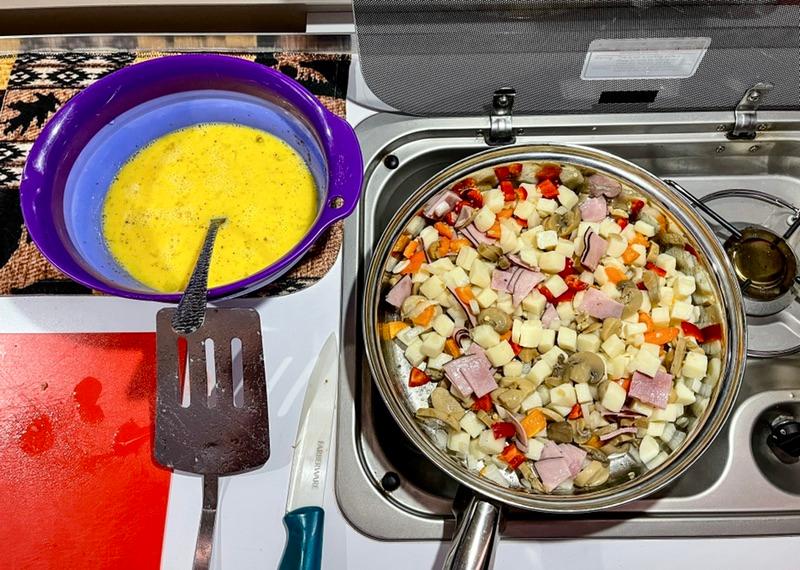
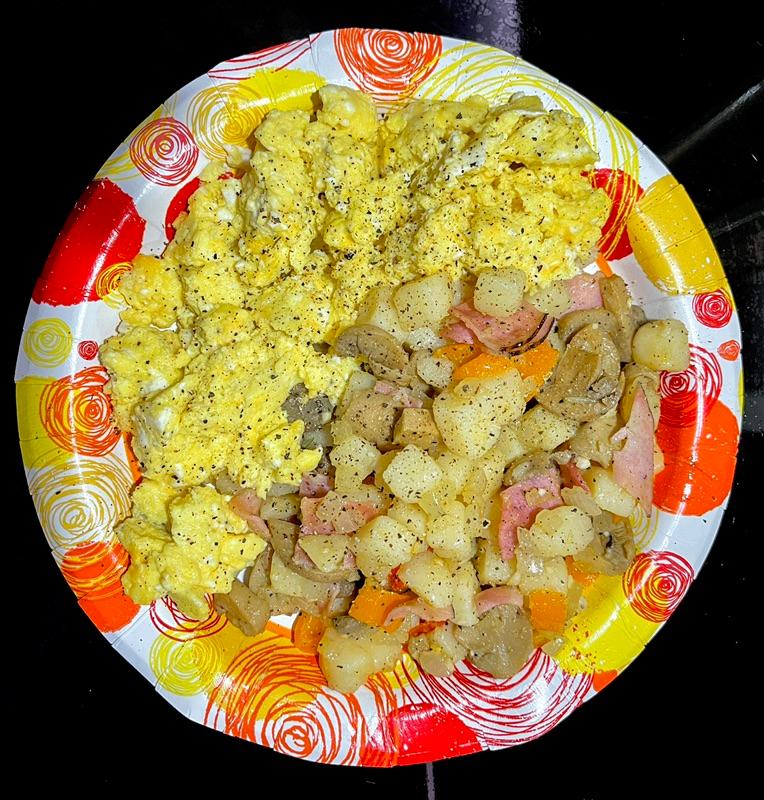
Having breakfast for supper - scrambled eggs and a fried potato dish. | |
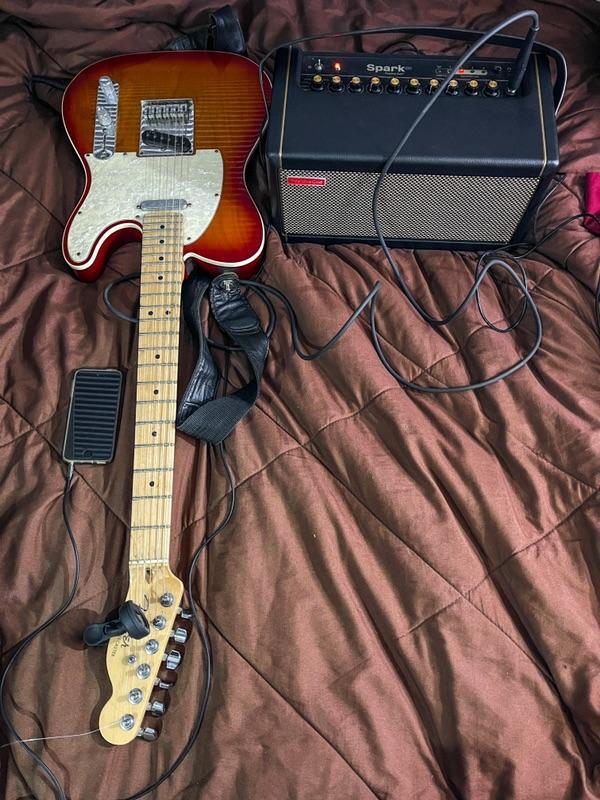
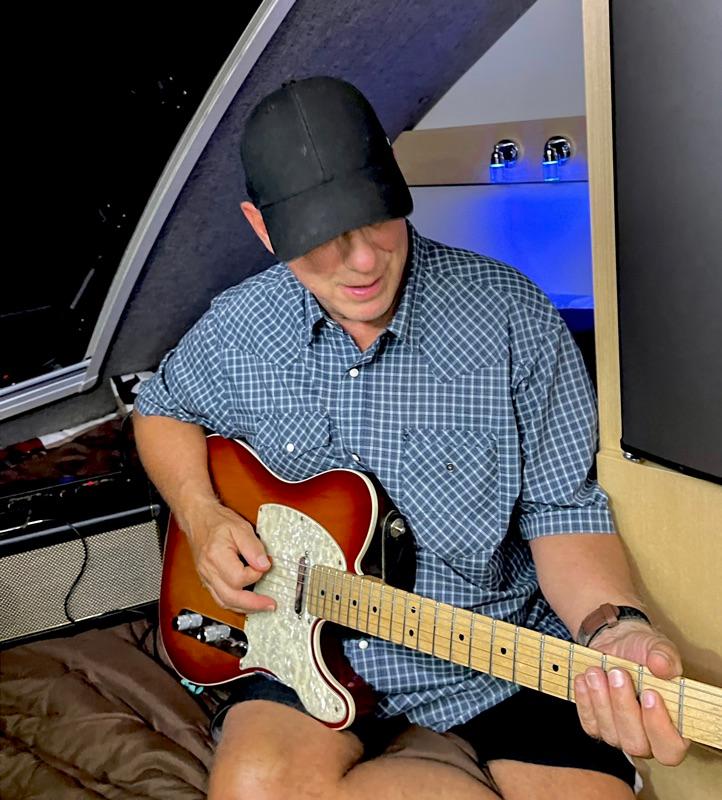
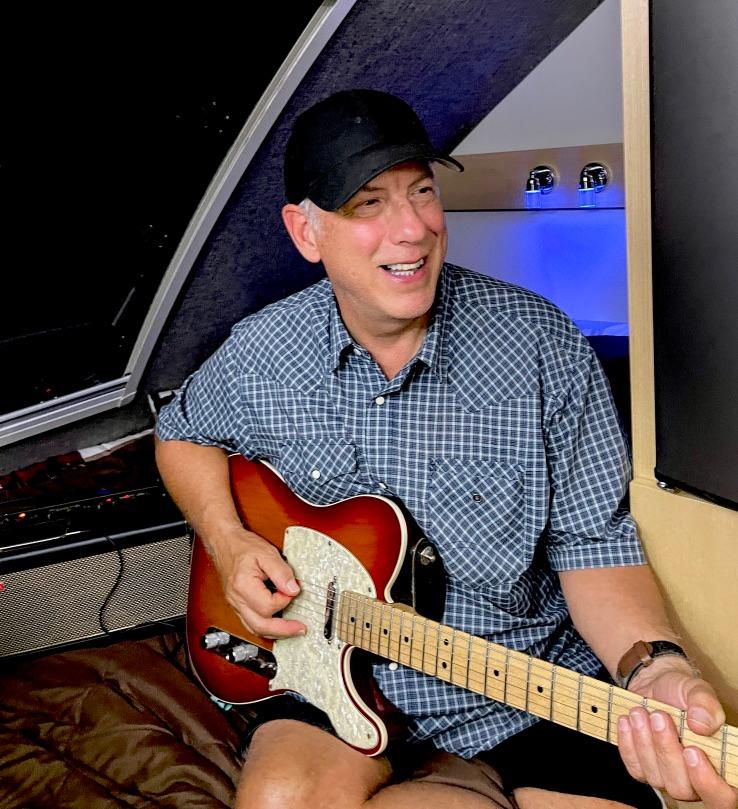
What do you do on a cold wet evening? Bring out the guitar and amp. I run tracks of songs on the iPod. The guitar parts have been taken out of the tracks. I run the iPod and the guitar through the amp. Voila, I have a one-man band. | |
Glossary of terms used for newcomers: 1) V-Jer. The name of our camper. 2) Saturn. The name of our Van. 3) Duende. Our mischievous gremlin that breaks things. 4) Tata. The good gremlin that helps us fix Duende’s dirty work. 5) The Black Hole. This is what we call Walmart because every time we go in for just a couple of items, we come out spending way more than we figured. 6) QT. Quaint Town. 7) Little Buddy. This is what we call our Dyson cordless stick vacuum. | | | | |