|
Always assume a sounding smoke alarm means there’s a fire and you should get to safety as quickly as possible.
But what do you do when it’s a false alarm that doesn’t stop? A scenario like that can be caused by dust, humidity, electrical malfunctions, and even spiders crawling inside the device.
To fix the problem, you may need to understand how the alarm operates. Your approach will vary based on the type of power the alarm uses:
- Replaceable batteries
- Long-life lithium batteries
- 120-volt hardwiring (with batteries as a backup power source)
The first step is to find the device that’s going off and press and hold the reset button.
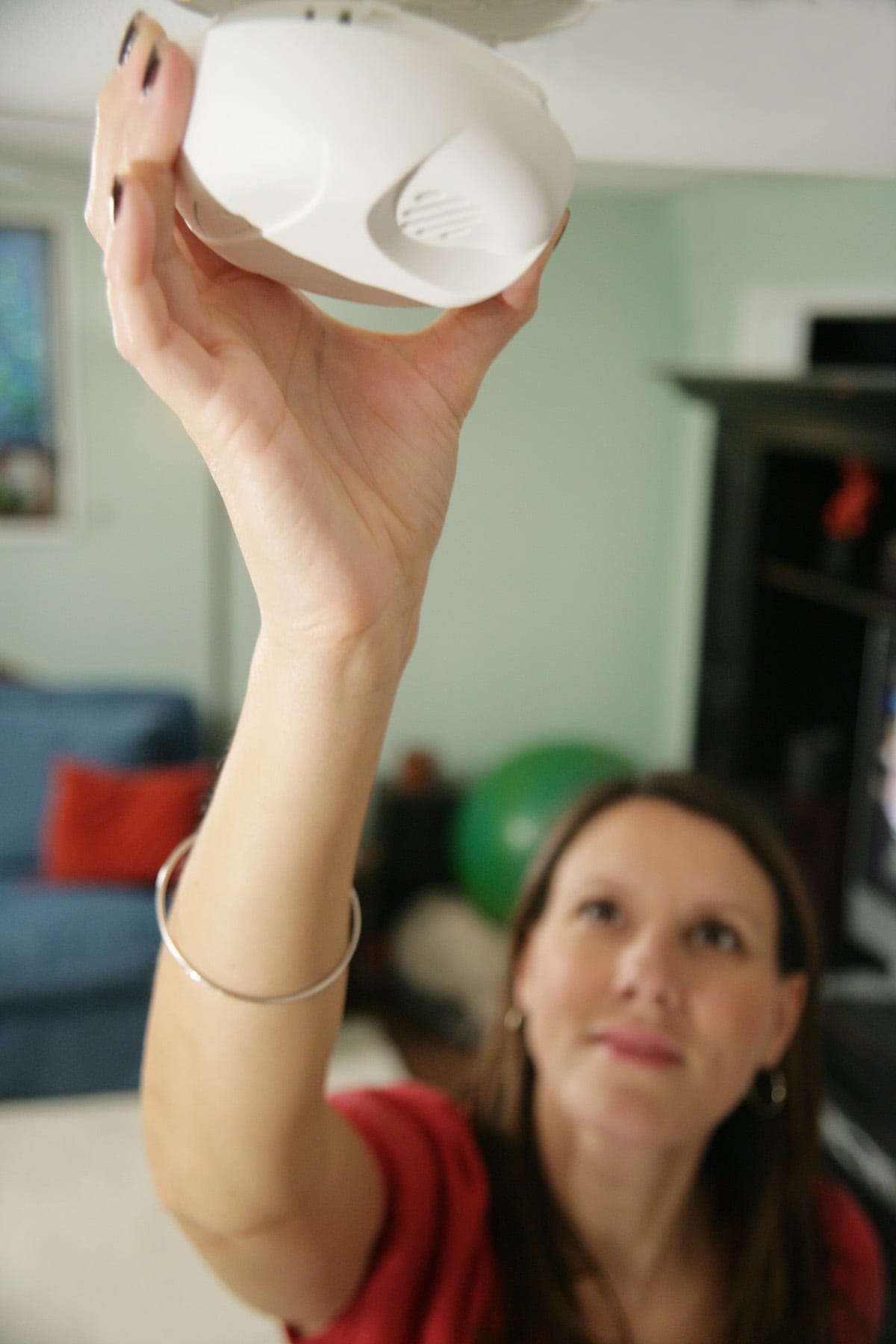
If that doesn’t work, take the smoke alarm down and, if you can, remove the batteries.
If the unit has a built-in lithium battery, it’s more of a challenge because you can’t remove the battery. In that case, try to muffle the alarm in a blanket, under a sofa cushion, or in your freezer until it stops.
Hardwired smoke alarms are interconnected through electrical wires, so if one sounds, they all sound, and it can be difficult to figure out what’s going on, First, try the reset button on each smoke alarm. If that doesn’t work, flip the circuit breaker off and on. If that fails, you may have to disconnect the smoke alarms and remove the backup batteries inside them one by one. (The batteries are there to protect you during a power outage.) A small connector at the back of each alarm can be unclipped to let you safely remove the device from the network.
Need to replace a smoke alarm? Check out Consumer Reports recommendations here.
|