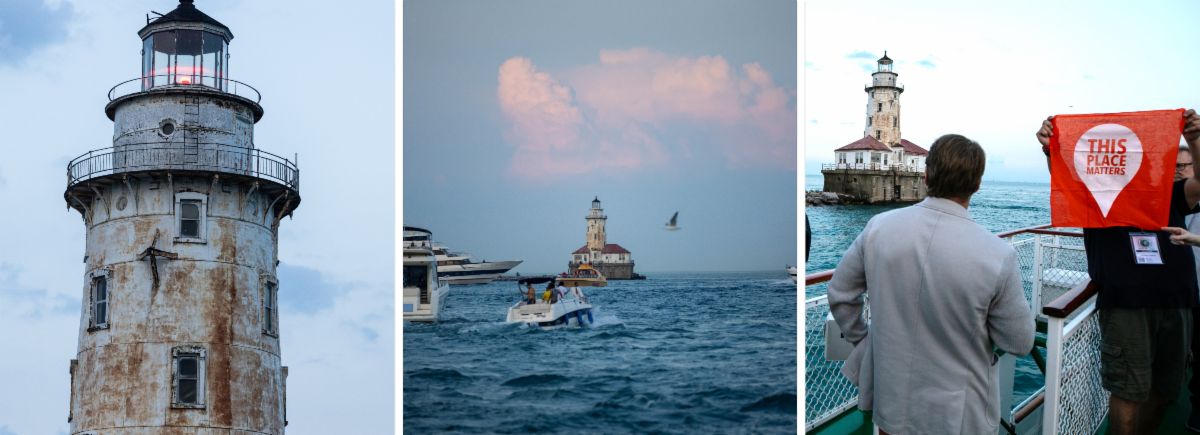
LIGHT THE WAY - SPECIAL EDITION - Volume 4, Issue 9 - September 2026 | | |
Dear Friends,
As summer begins to give way to September, I want to start with two very simple words: thank you.
Thank you to everyone who joined us for Light the Way 2026:
A Night for the Chicago Harbor Lighthouse.
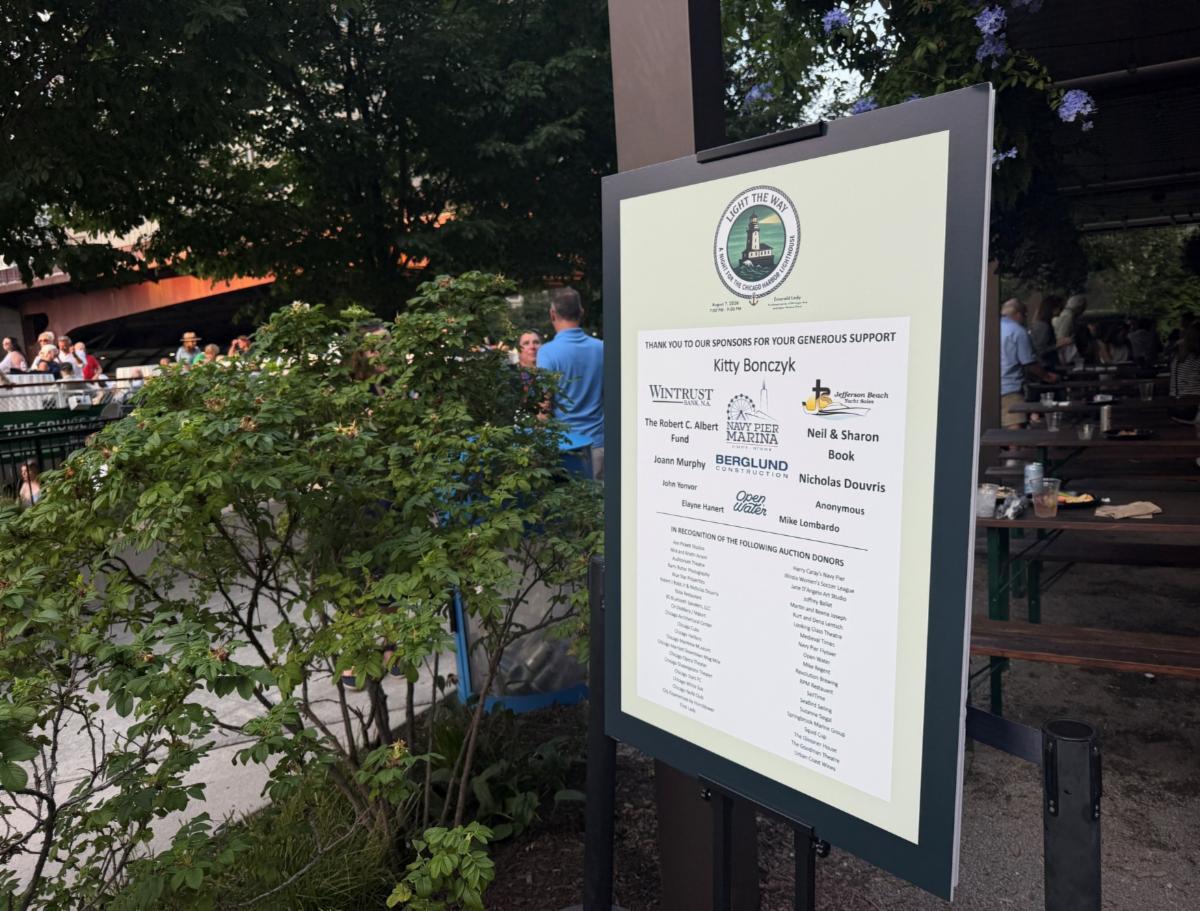
Thank you to our sponsors, donors, auction bidders and winners, paddle raisers, volunteers, partners, and everyone who believed enough in our mission to help us Preserve, Restore and Celebrate the Chicago Harbor Lighthouse.
| | |
Together, you made this year's Light the Way another remarkable success.
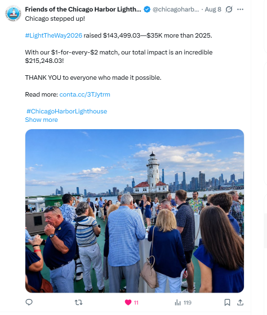
We raised $143,499.03 through Light the Way 2026. With the support of our anonymous matching foundation, an additional $71,749 was added, bringing the impact of the evening to $215,248.03 for the Chicago Harbor Lighthouse.
That is more than a fundraising total. It represents people throughout Chicago and beyond saying that this lighthouse matters, its history matters, and its future is worth investing in.
A special thank you to First Lady, The Northman Beer & Cider Garden, and Harry Caray's for helping us create such a memorable evening. And to every sponsor who stood behind us, every person who raised a paddle, every auction winner who kept bidding, and every guest who simply came aboard to be part of this journey — thank you for helping us Light the Way.
And yes, we're already looking ahead.
Mark your calendars for Light the Way 2027!
Back to School. Back to Work.
September also means back to school — and for us, it means getting back
to work on one of the most important parts of our vision for the future: our Classroom on the Lakefront.
Restoring the lighthouse is an extraordinary goal, but simply saving a building isn't enough.
We have an opportunity to create an impact that extends far beyond the physical restoration — a place where young people can experience Chicago history, maritime heritage, science, engineering, architecture, weather, navigation and public service in the very place where those subjects come together.
A lighthouse exists to help people find their way. We believe this one can continue doing exactly that — not only for mariners on Lake Michigan, but for generations of young people discovering their city, their lake and perhaps even their own path forward.
That's the future we're working toward.
And in this month's newsletter, you'll discover why understanding the lighthouse's past is so important to imagining that future.
Our historian, Steve Clements, takes us back to the extraordinary growth of nineteenth-century Chicago and tells the fascinating story of a lighthouse that didn't simply witness Chicago's transformation — Chicago grew so rapidly that the lighthouse itself had to move. His article reminds us that the story of the Chicago Harbor Lighthouse has always been inseparable from the story of Chicago.
You'll also read about our recent return to the lighthouse and a day I don't think any of us who were fortunate enough to be there will soon forget.
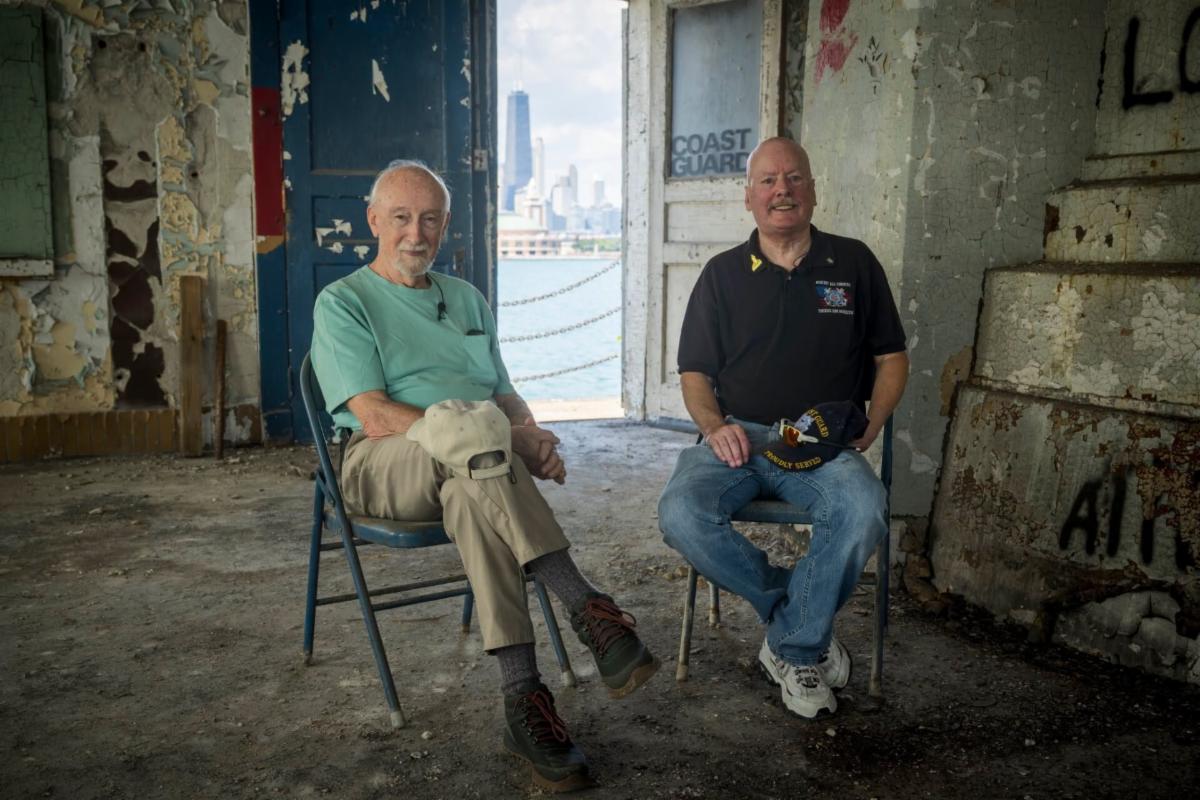
Former keepers Wayne Barton and John Gach returned to the lighthouse for the first time since they served there as young men. They climbed together, compared memories and brought pieces of the lighthouse's history back to life.
Wayne summed up the experience with six words that have stayed with me ever since:
“You’re still here, and I’m still here.”
It was a special day for everyone who attended, and thanks to our team, we captured much of it. We can't wait to share more of that day — and Wayne and John's stories — with you.
Thank You for Believing in the Dream
As we head into fall, there is much more work ahead. But everything we accomplished this summer happened because people like you decided to be part of this story.
Whether you sponsored Light the Way, raised your paddle, won an auction item, volunteered, donated, shared one of our posts, told a friend about the lighthouse, or simply continued to follow our journey — thank you.
We're building something together that we hope will outlive all of us.
A restored lighthouse.
A Classroom on the Lakefront.
A place where Chicago's past can help illuminate its future.
And if you missed your opportunity to help us Light the Way in August, you can still be part of what comes next.
Give today at give.SaveTheLighthouse.org and help us Light the Way!
Thank you!
Be Safe and Be Well!
Regards,
Kurt Lentsch
Chief Dreamer and President
| | |
2026
LIGHT THE WAY
A Night for The Chicago Harbor Lighthouse
| |
Thanks to your generous contribution, our 2nd annual
Light the Way event was a tremendous success!
| |
|
“What a night to remember! On behalf of the Friends of the Chicago Harbor Lighthouse, thank you for making our second annual Light the Way: A Night for the Chicago Harbor Lighthouse an extraordinary success. We are deeply grateful to our sponsors, donors, guests, volunteers, and partners whose remarkable generosity, enthusiasm, and belief in our work made this celebration possible. Your support brings us closer to fulfilling our mission to preserve, restore, and celebrate the Chicago Harbor Lighthouse for future generations.”
Kurt Lentsch
Chief Dreamer and President
| |
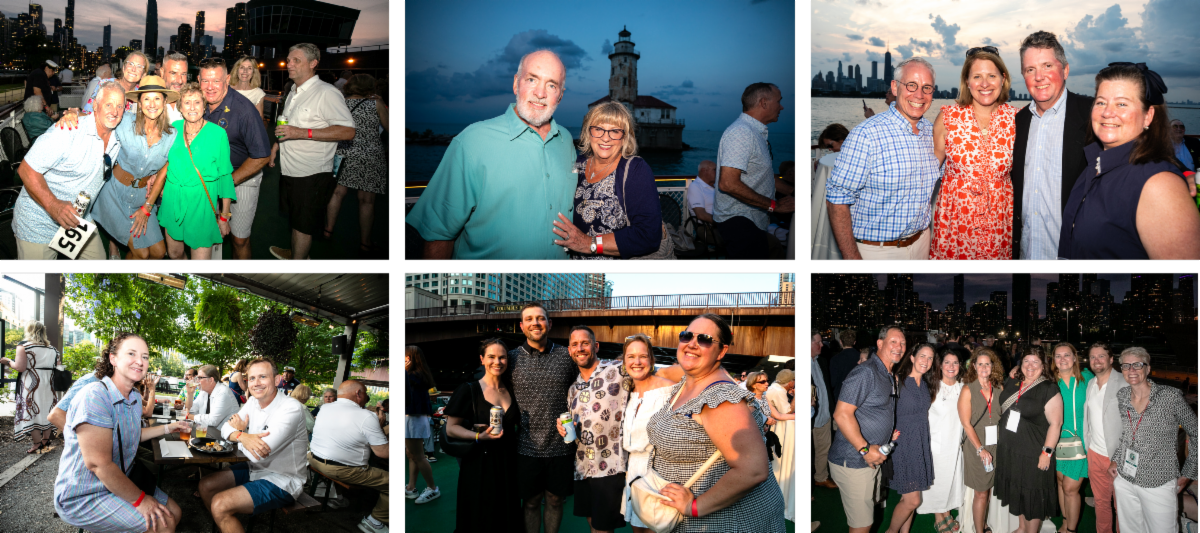
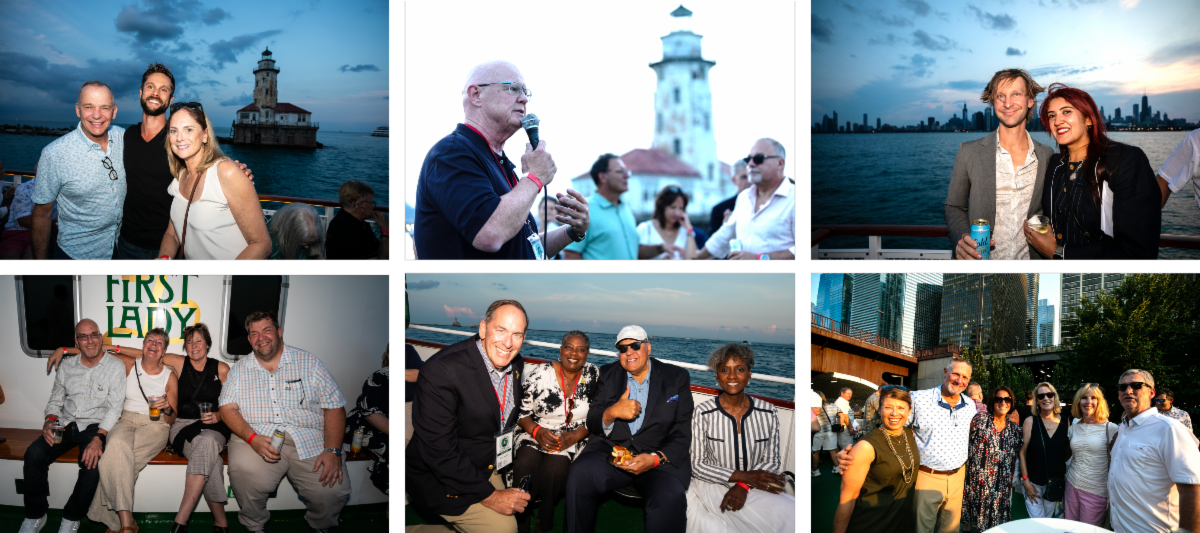
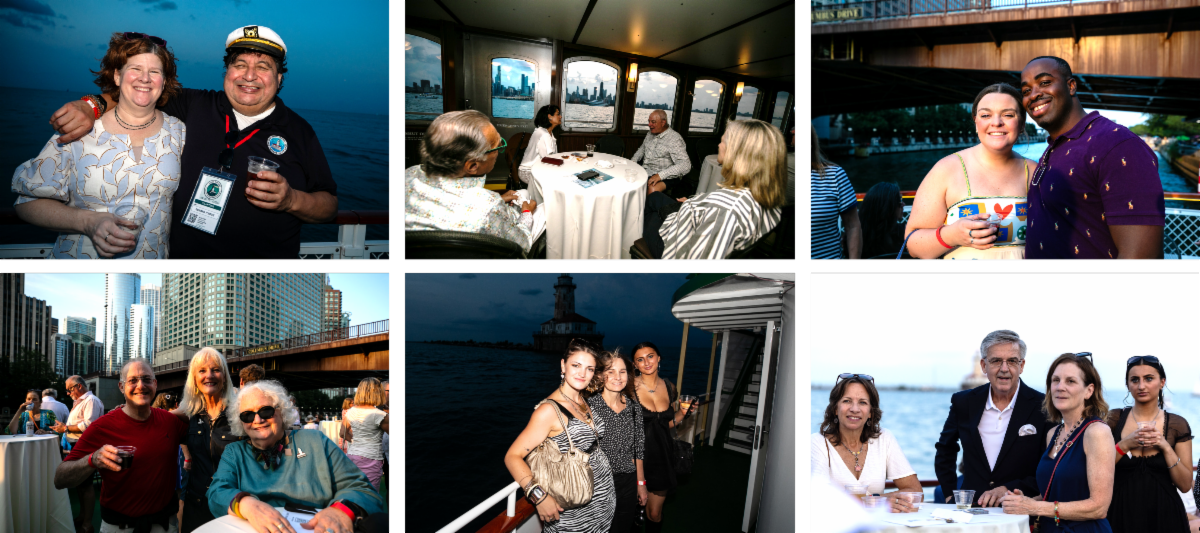
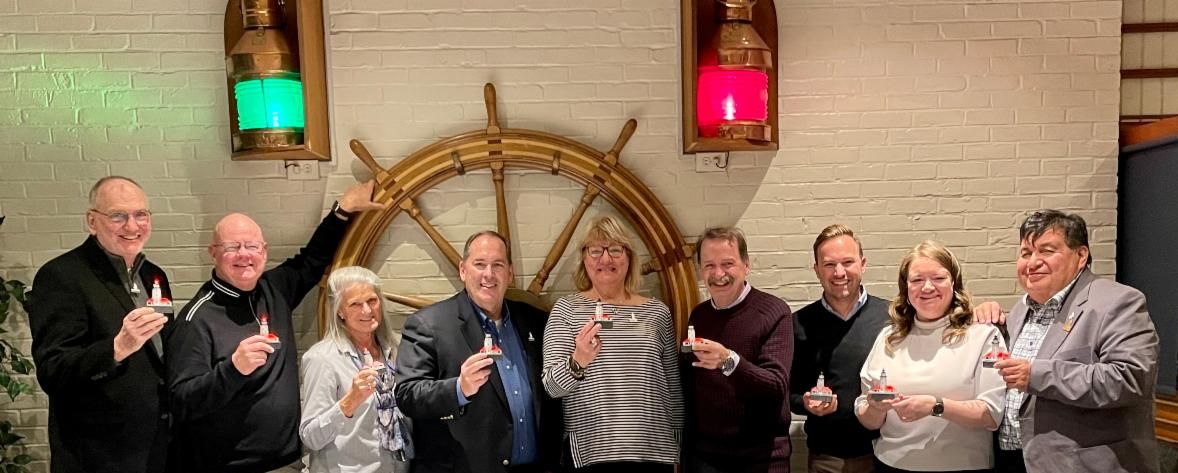
2nd Annual Light the Way Fundraiser
•Raised over $215,000
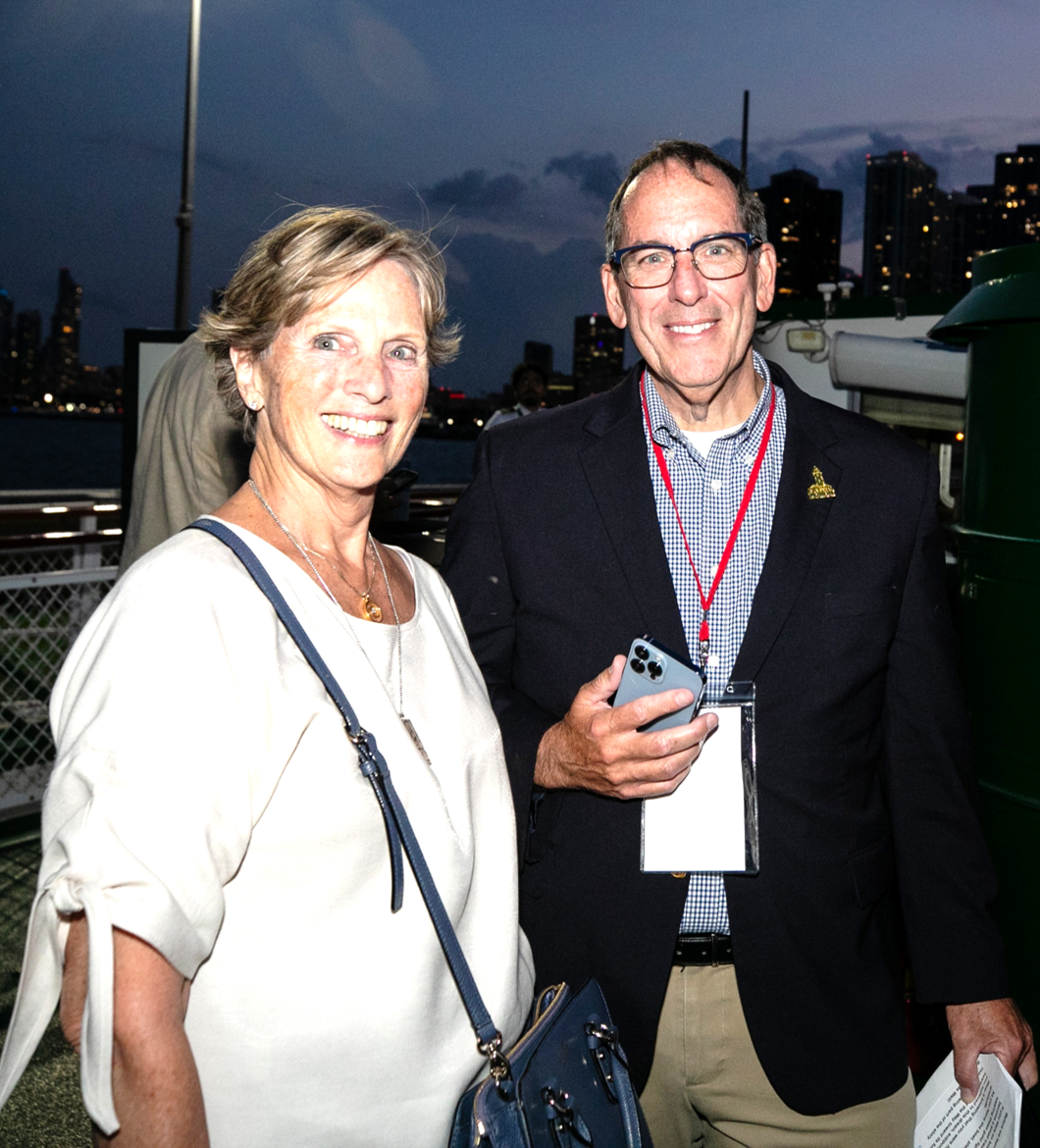
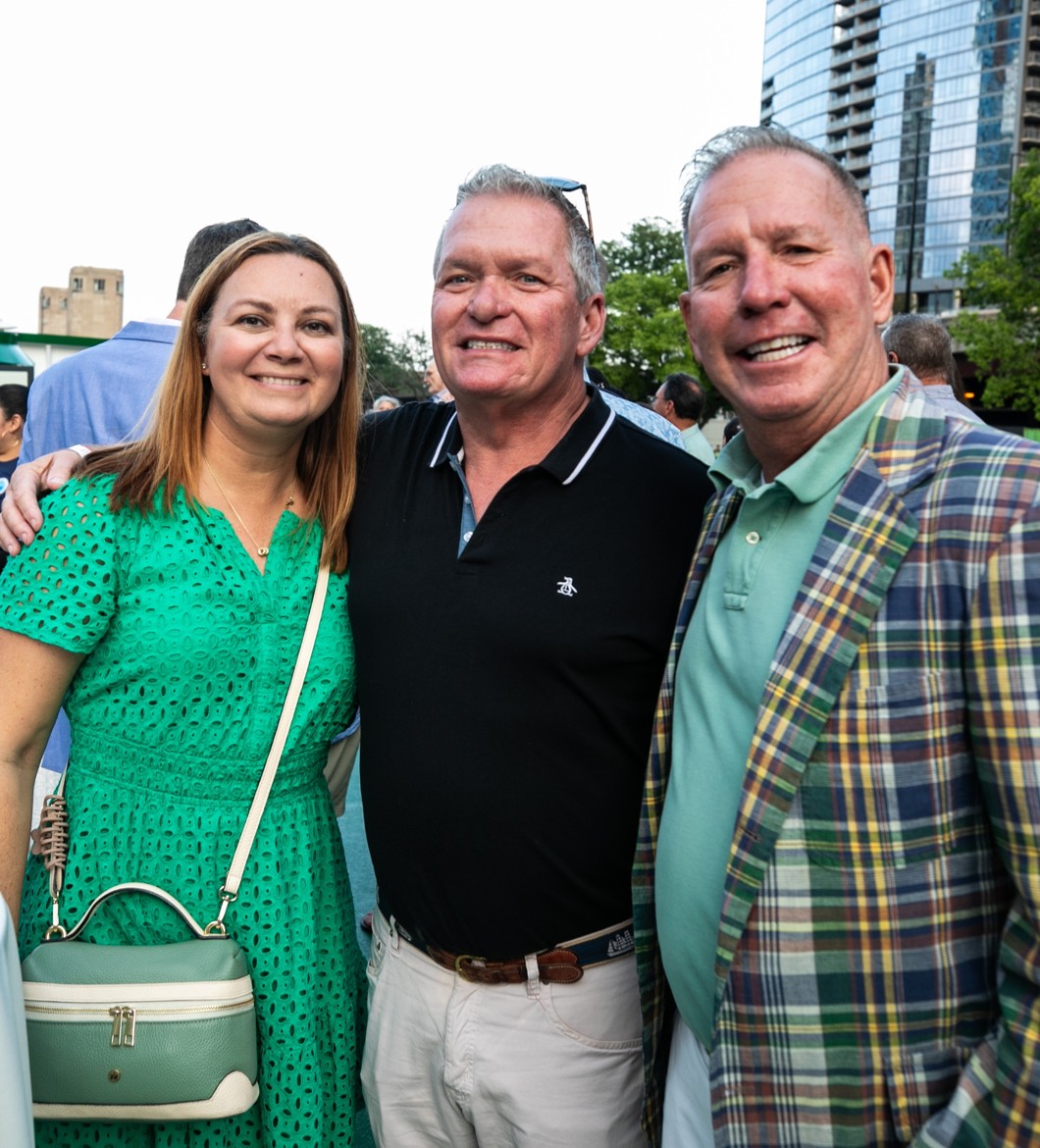
•215 Guests Attended – a sell-out!
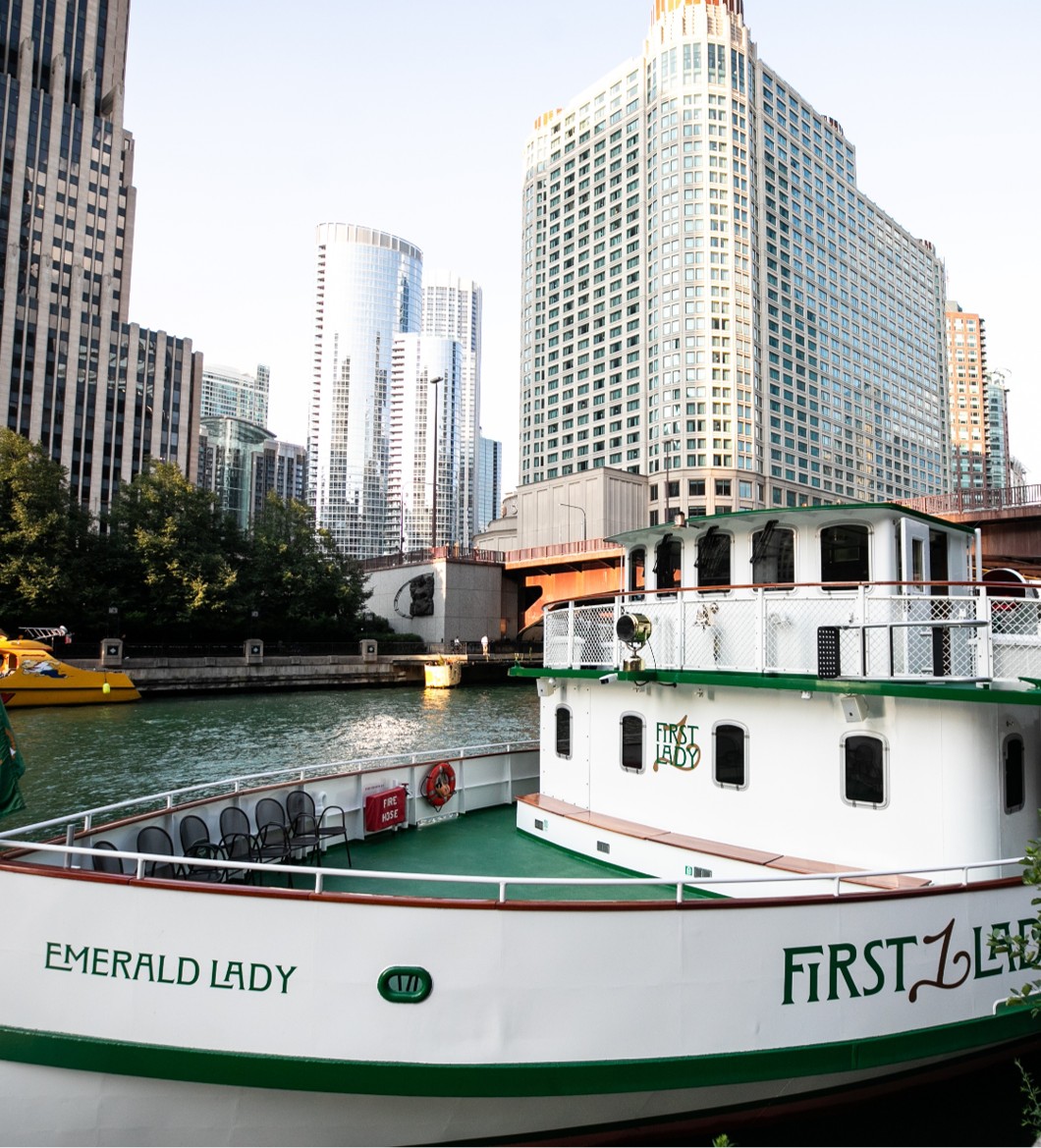
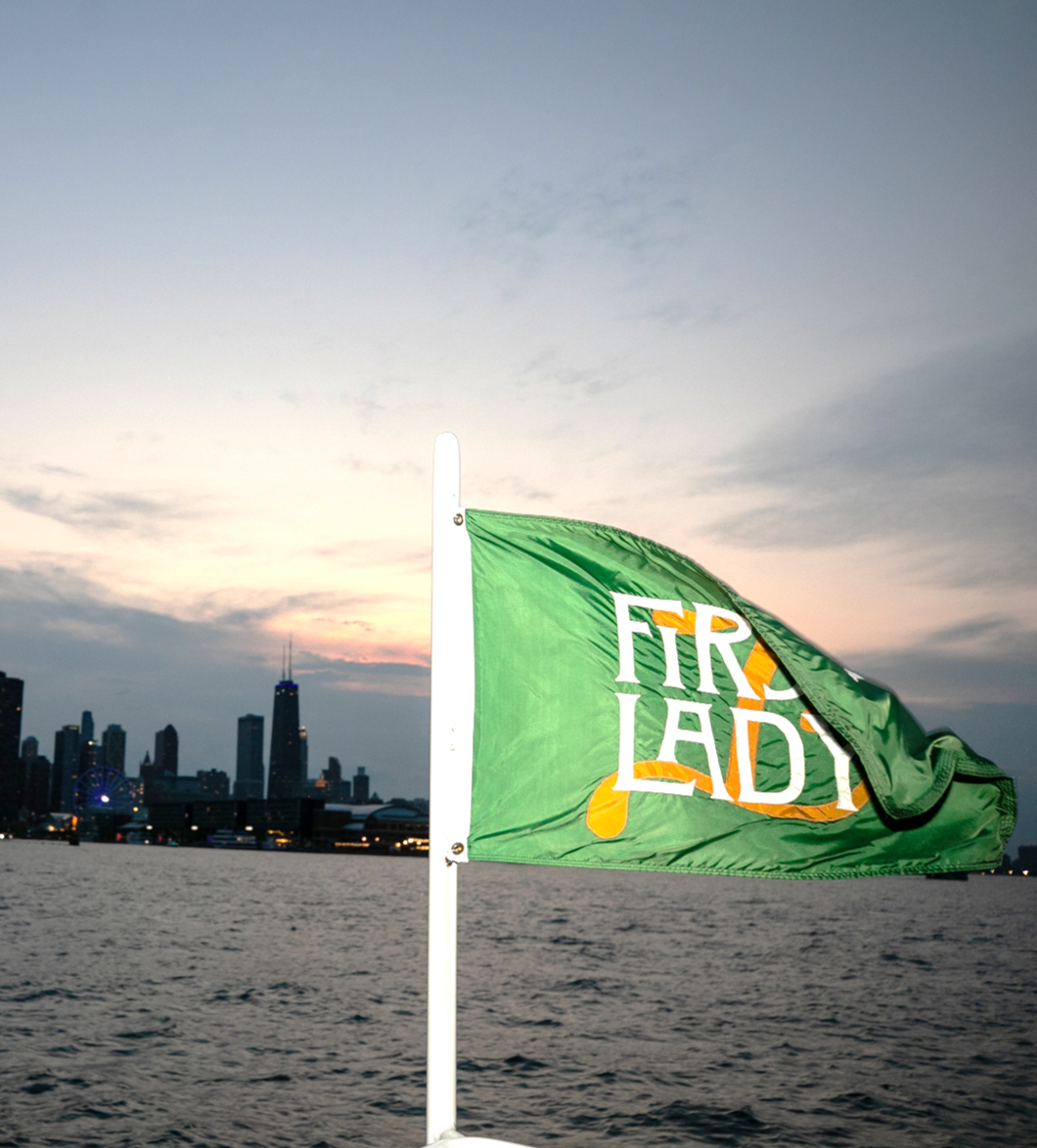
•Hosted on First Lady’s Emerald Lady
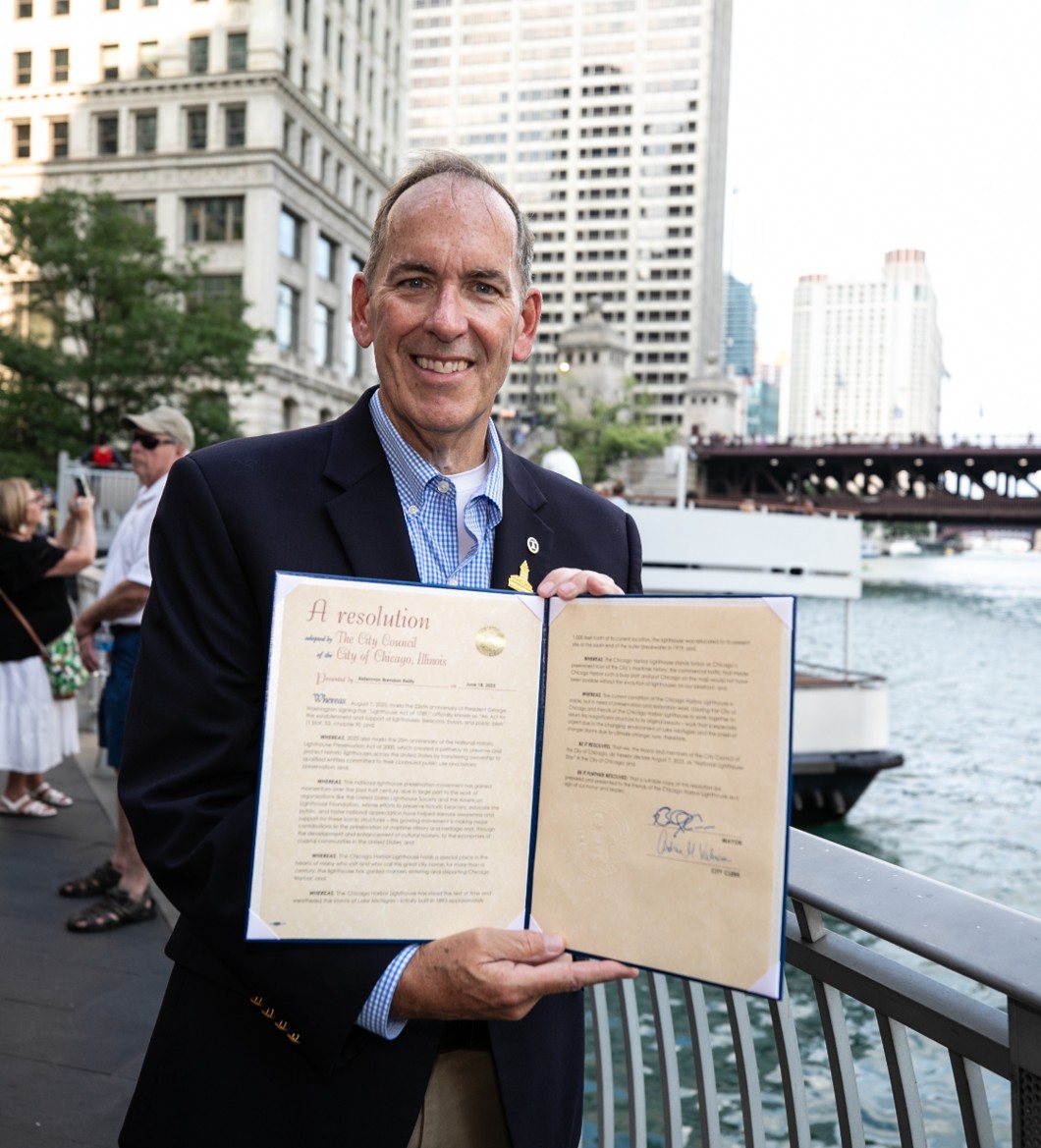
•Alderman Brendan Reilly secured a City Council Resolution officially designating August 7th National Lighthouse Day in Chicago.
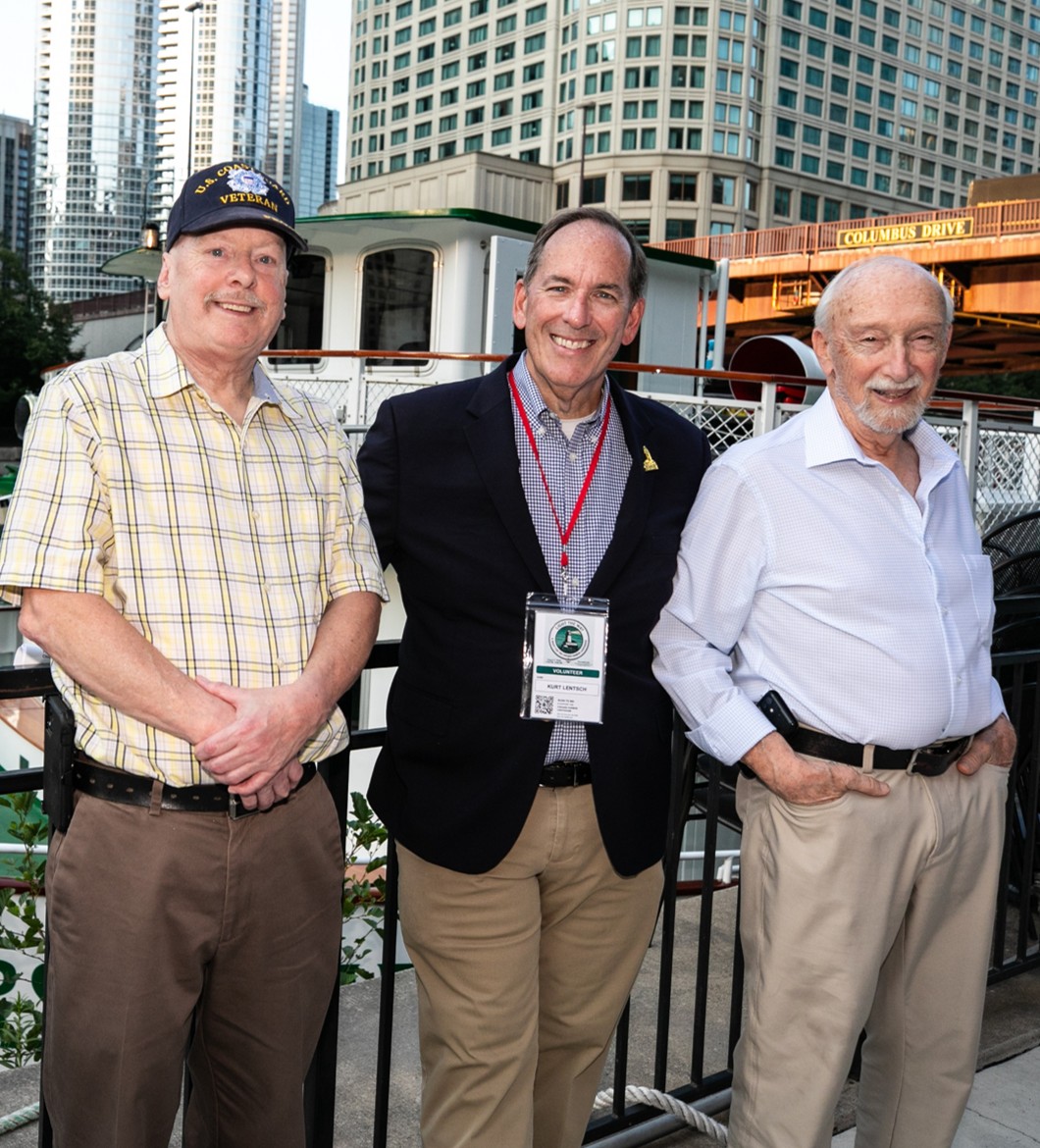
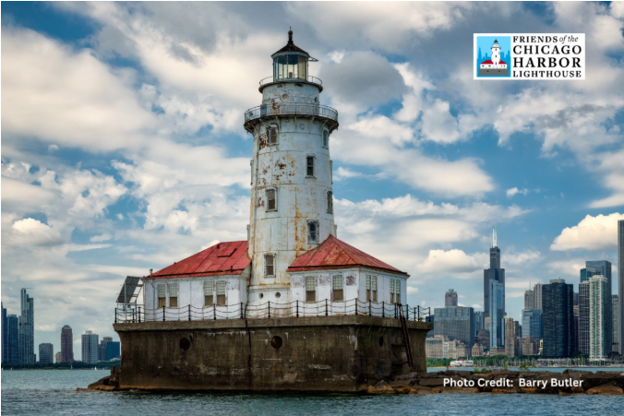
•Distinguished guests at the event included Friends of the Chicago Harbor Lighthouse, photographer Barry Butler, and two former lighthouse keepers, Wayne Barton and John Gach
•Held on National Lighthouse Day, August 7th
| | |
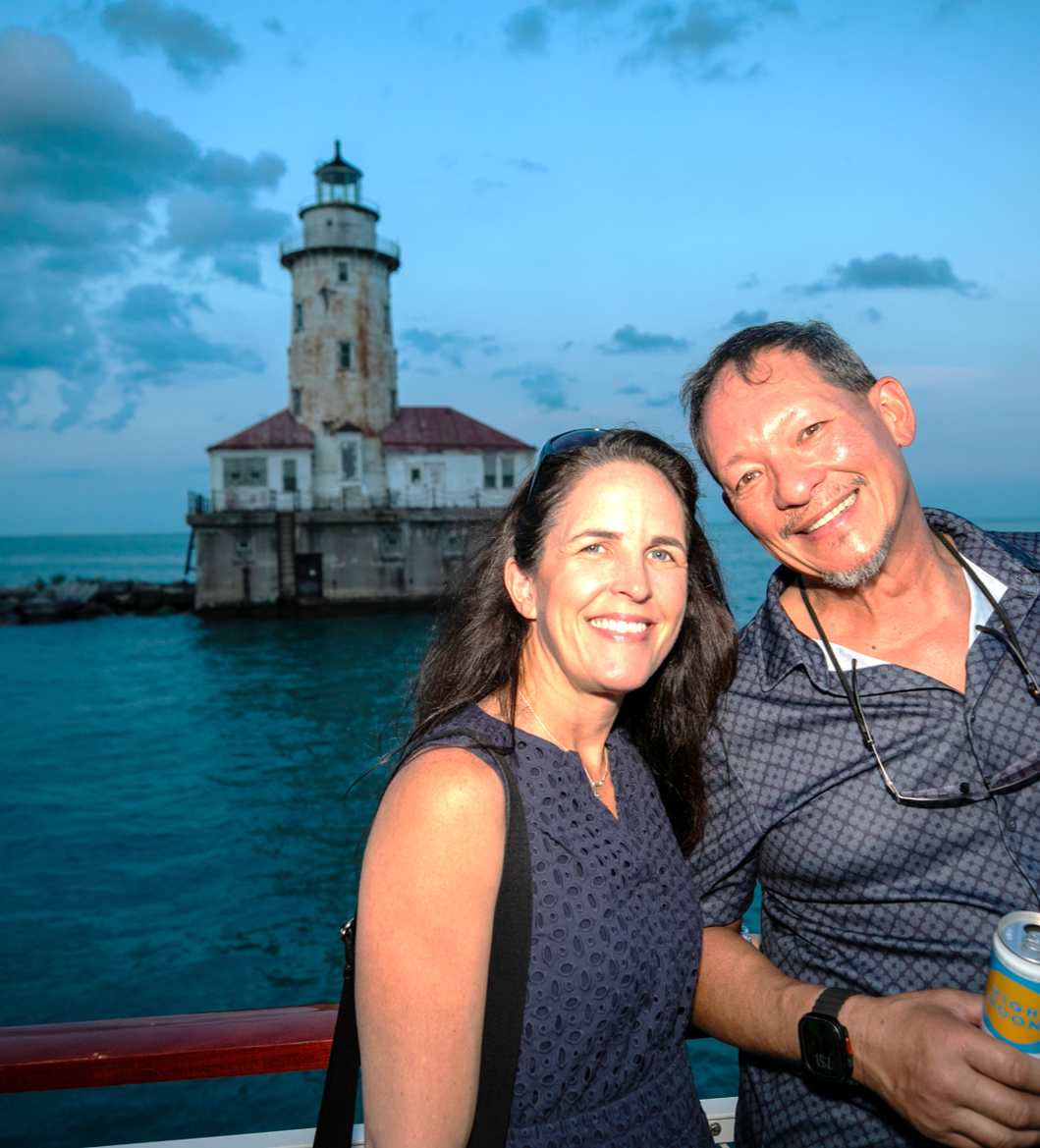
2026 Light the Way
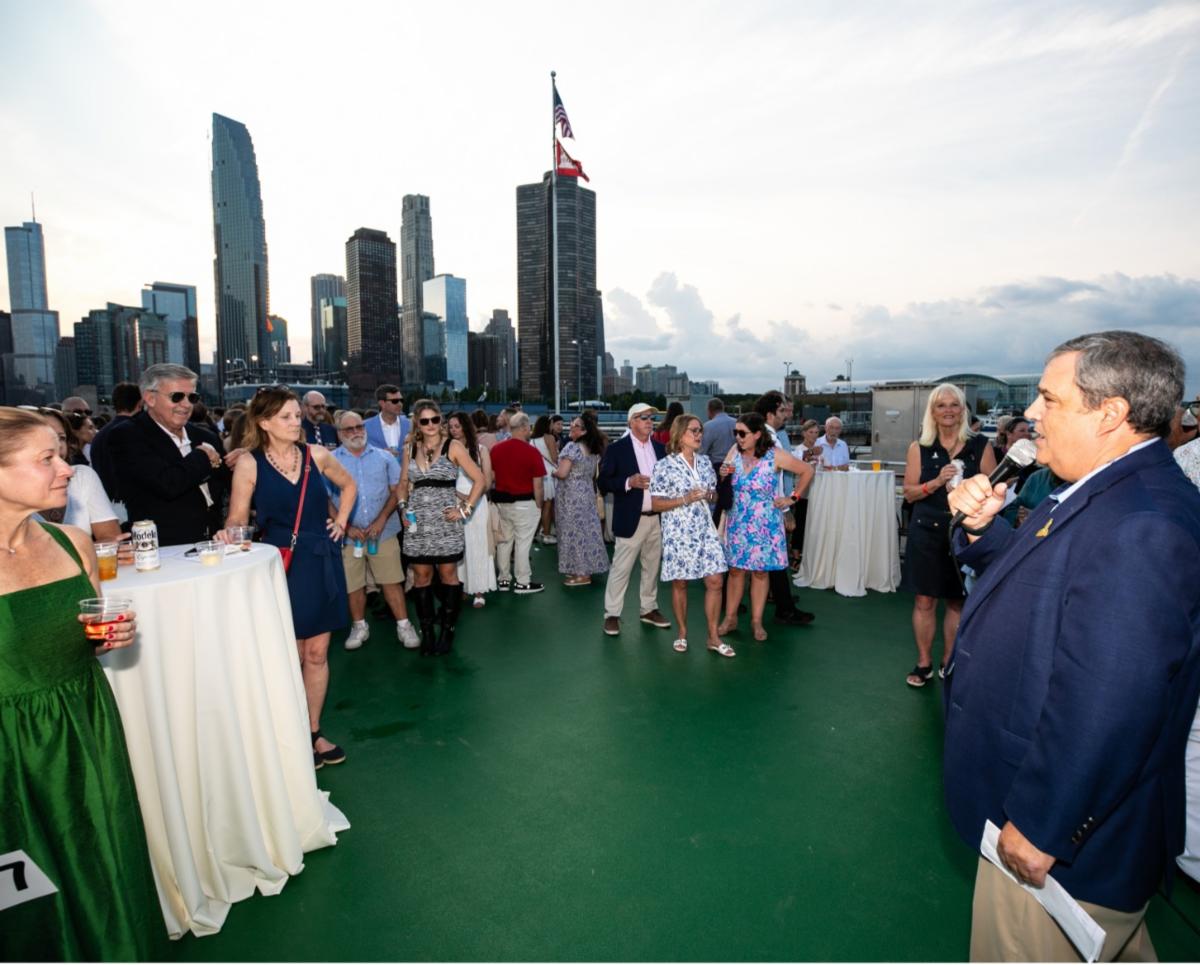
First Lady's Emerald Lady offered a unique venue
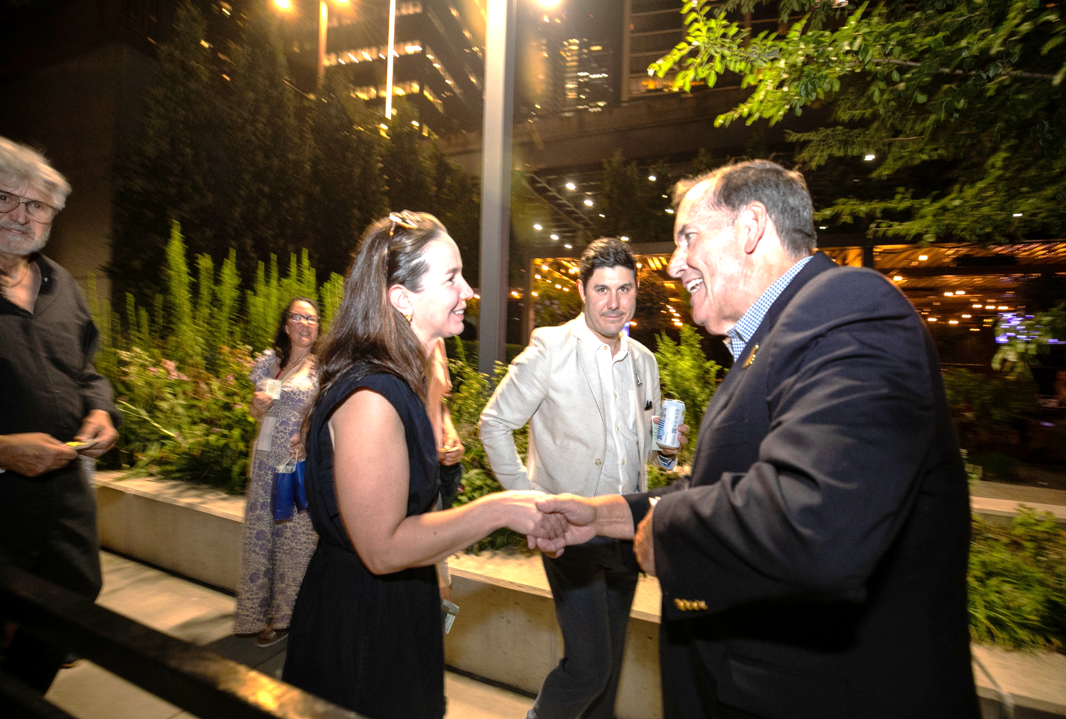
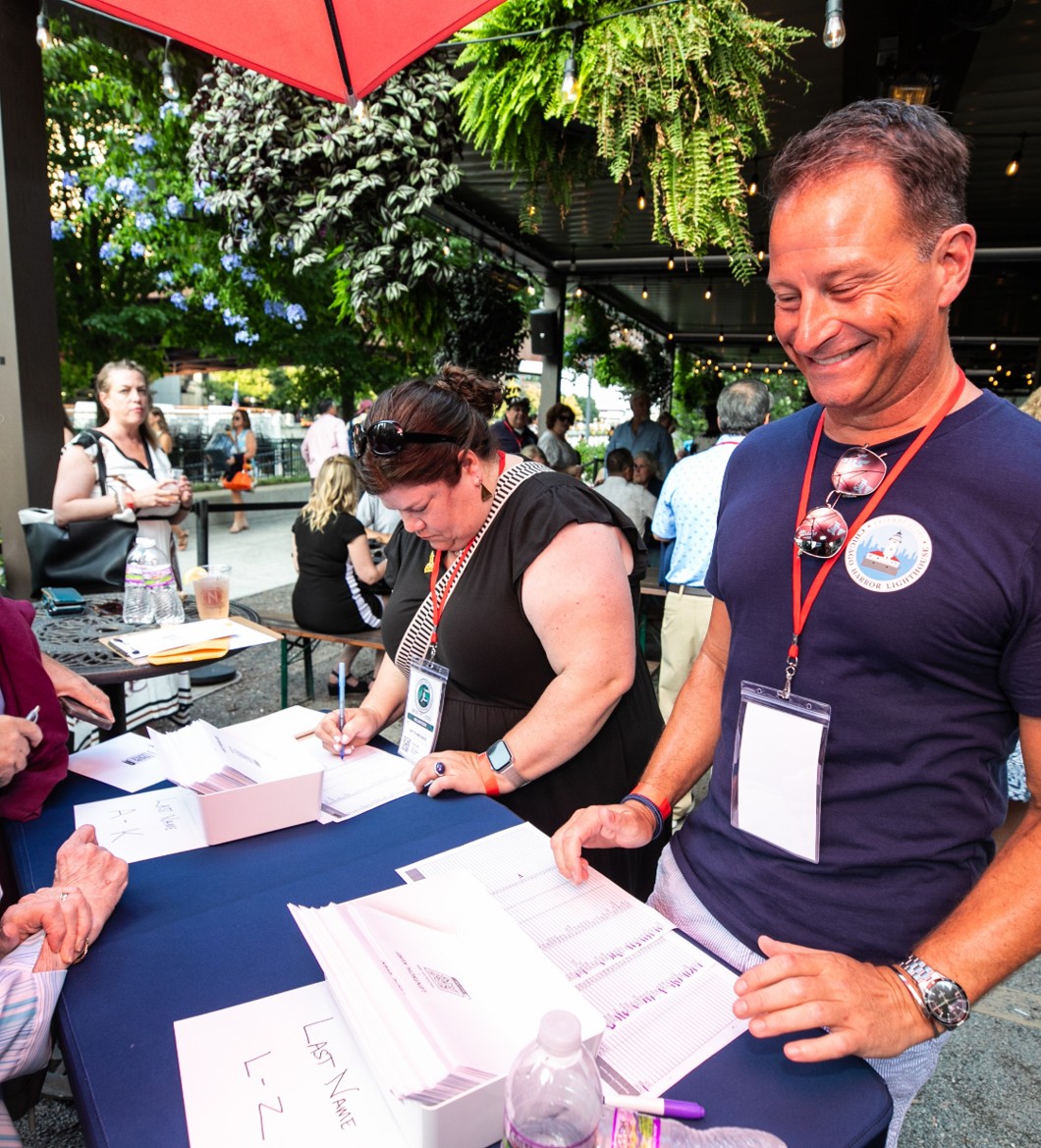
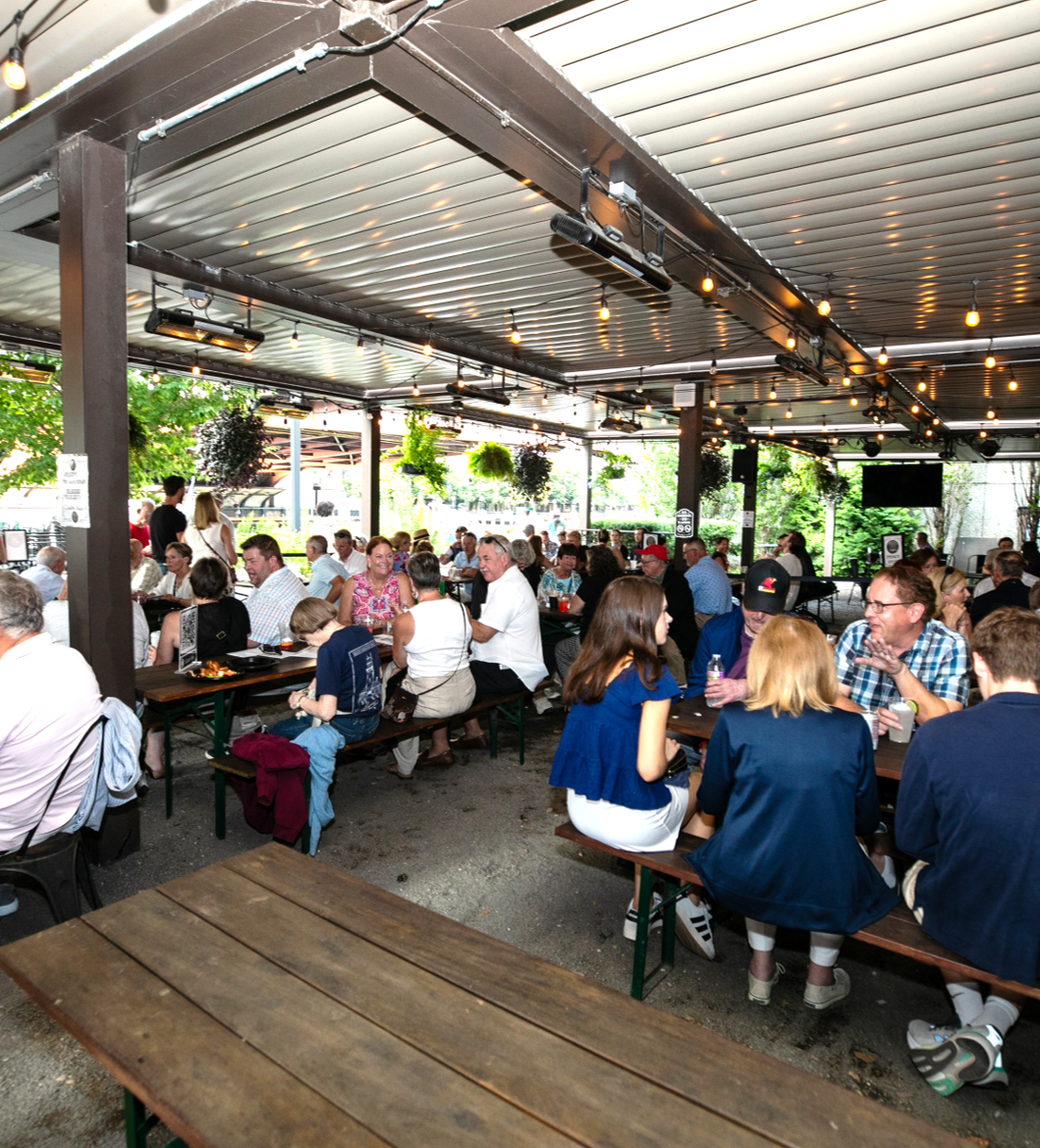
| | New Location for pre-boarding reception at The Northman Beer Garden on the Riverwalk | | |
2026 Light the Way
Sponsor Logos Inclusion on Signage
| | |
2026 Light the Way
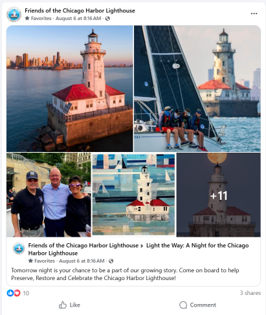
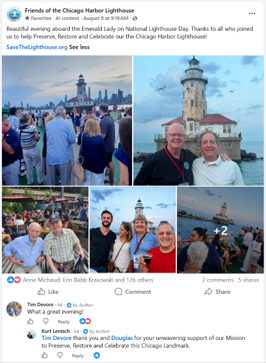
Social Media
| | |
2026 Light the Way
Sponsorship acknowledgment during the event, and pre-/post-event by Kurt Lentsch, Chief Dreamer & President of Friends of the Chicago Harbor Lighthouse
| | |
2026 Light the Way
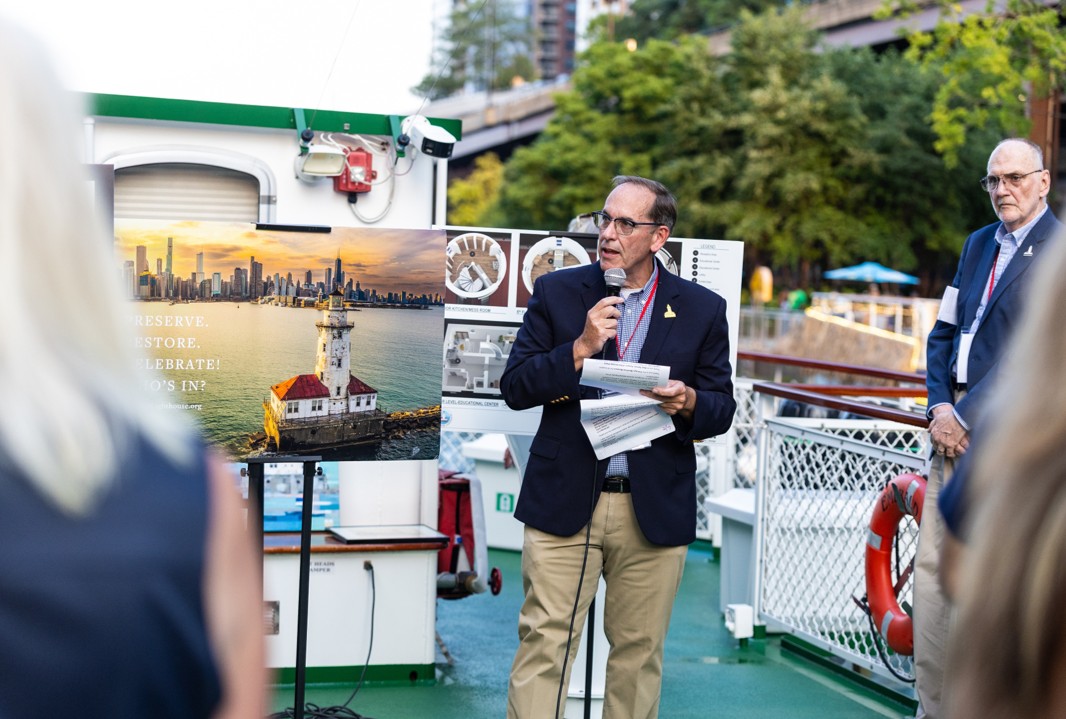
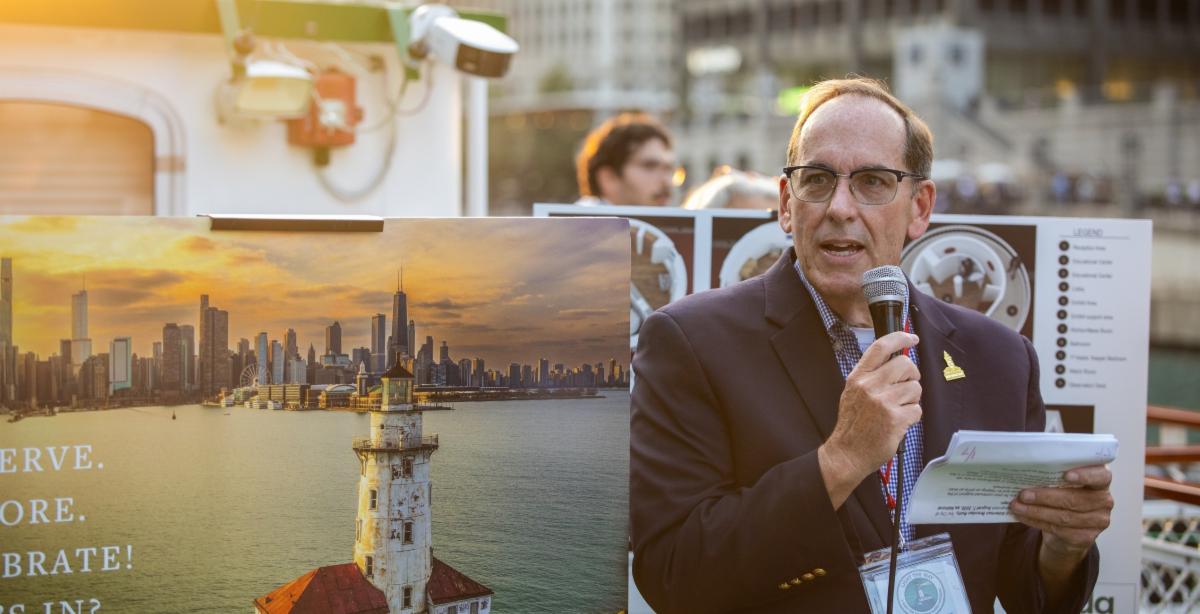
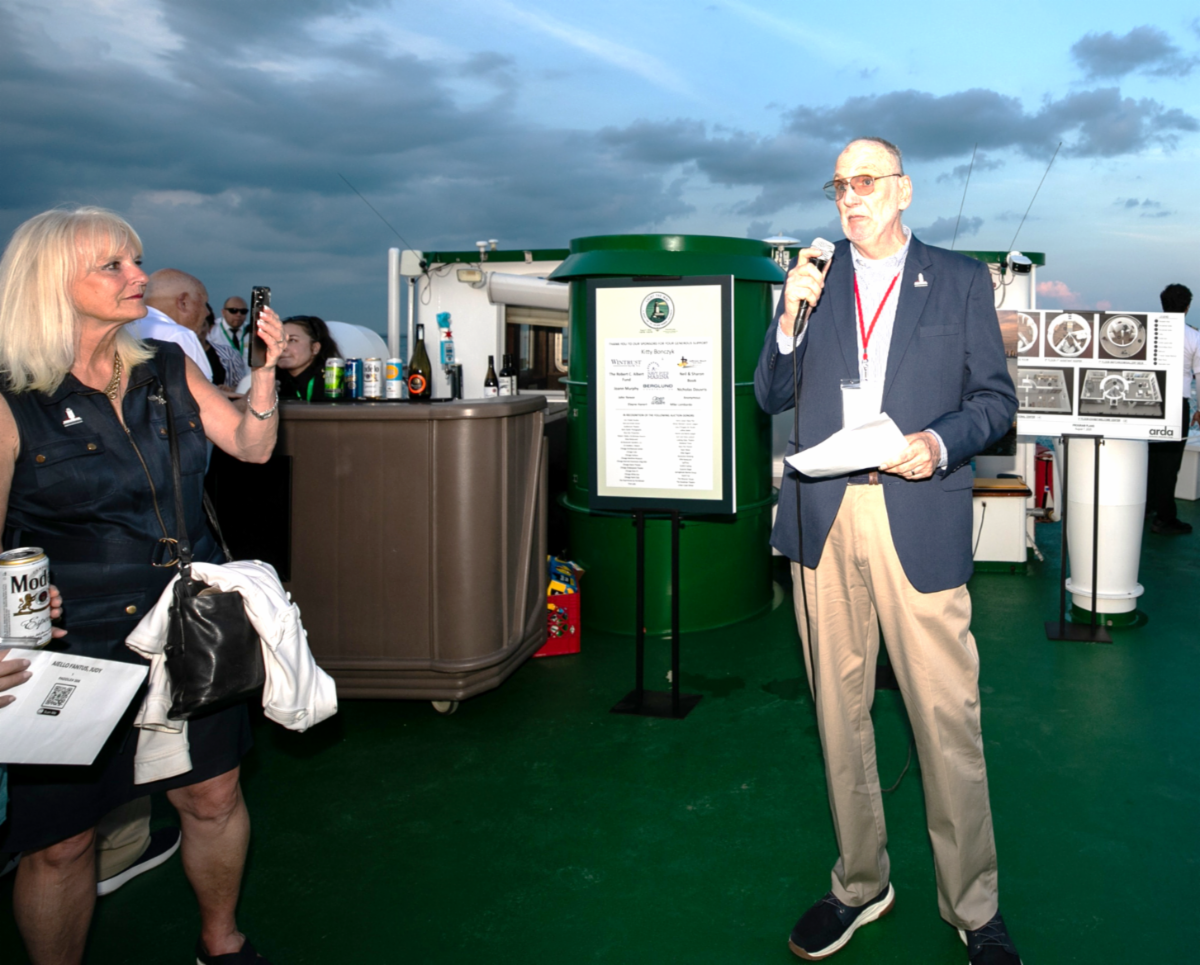
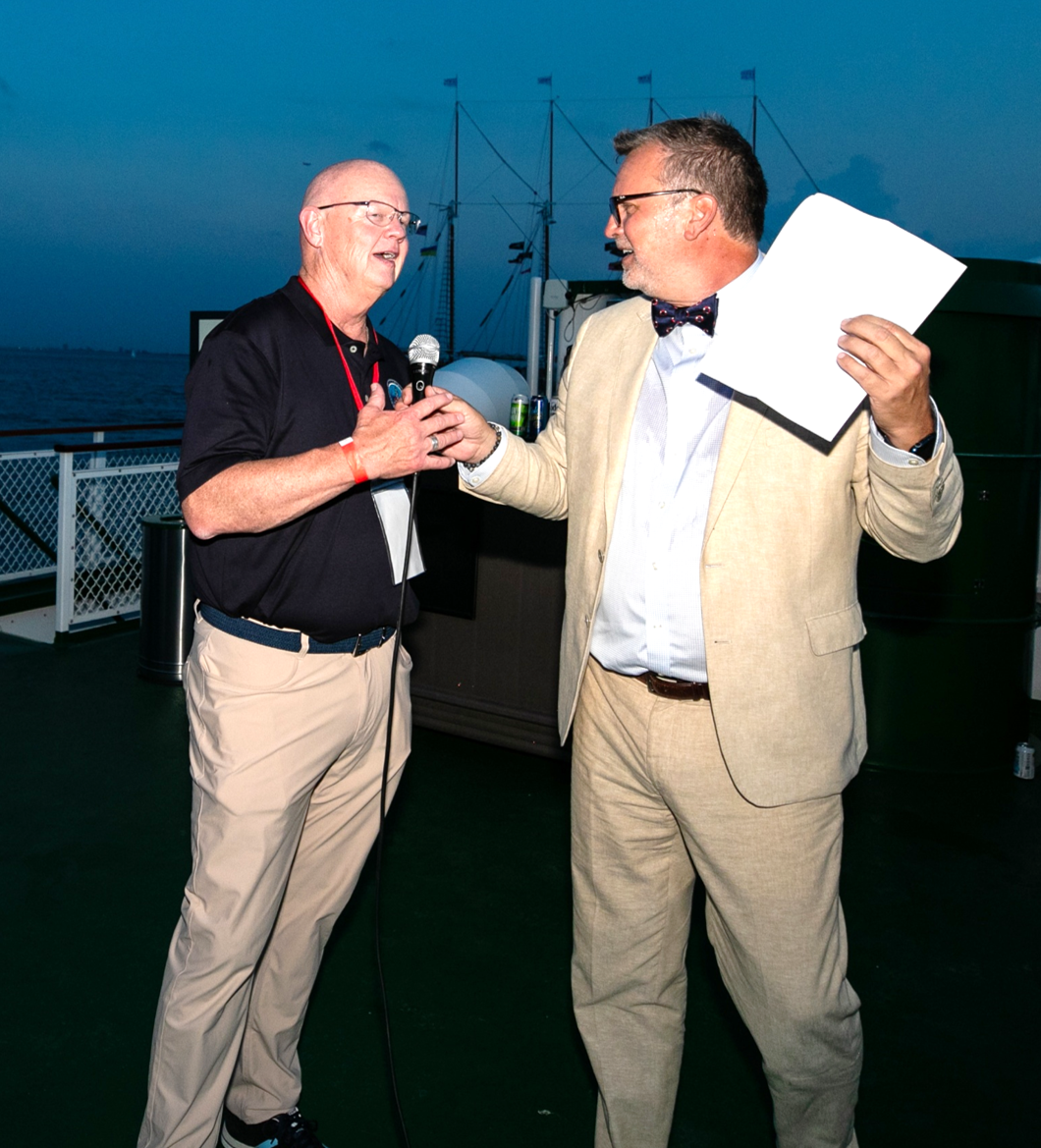
Engaging and educational speakers enriched the event
| | |
2026 Light the Way
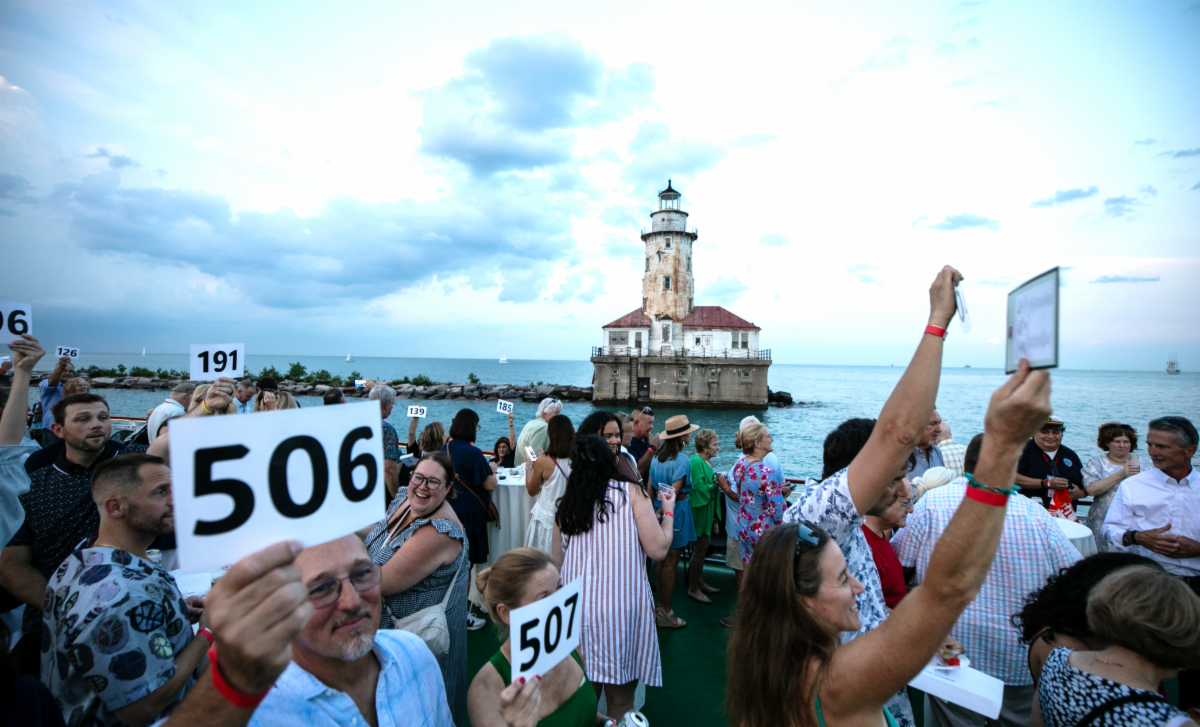
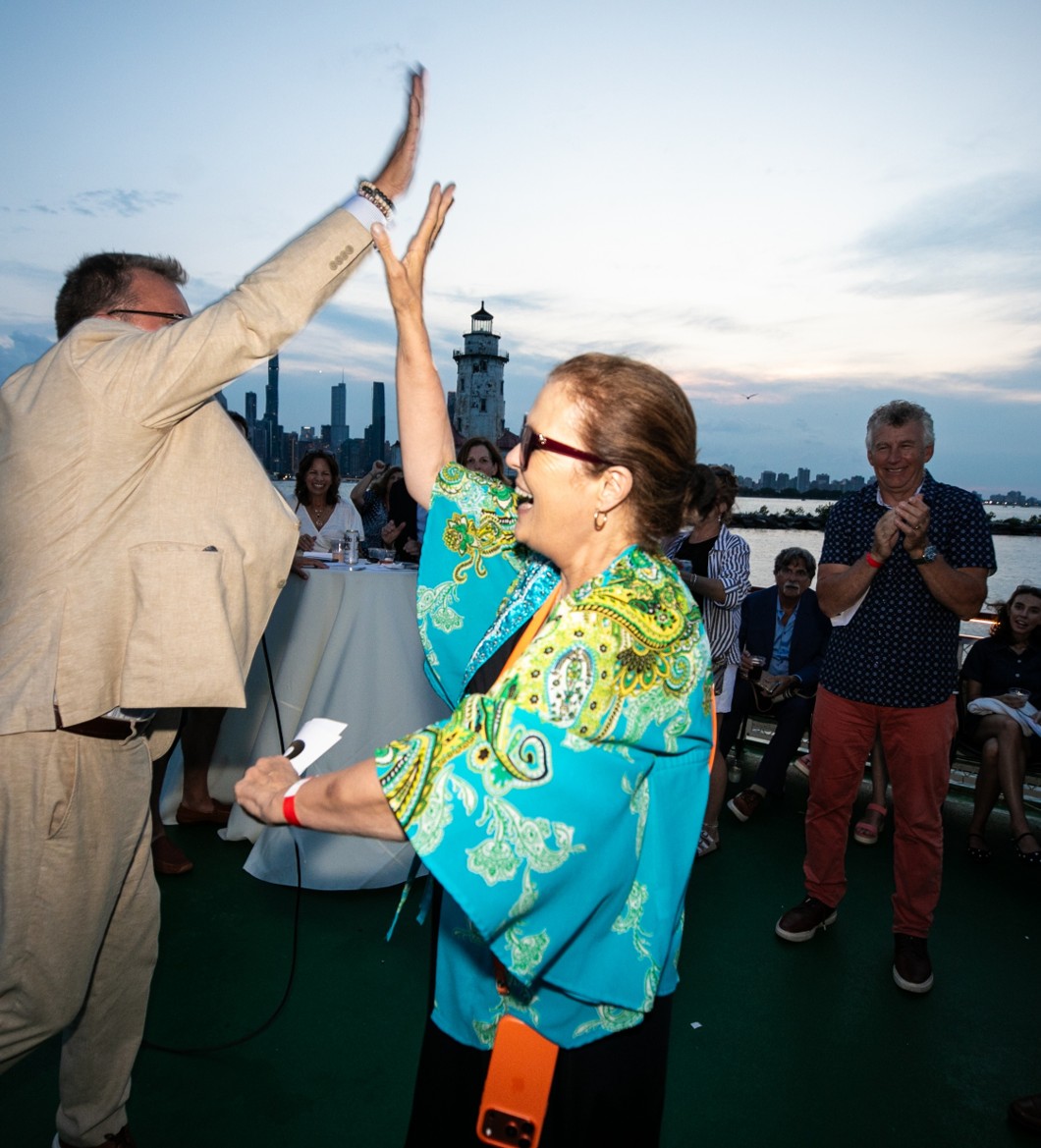
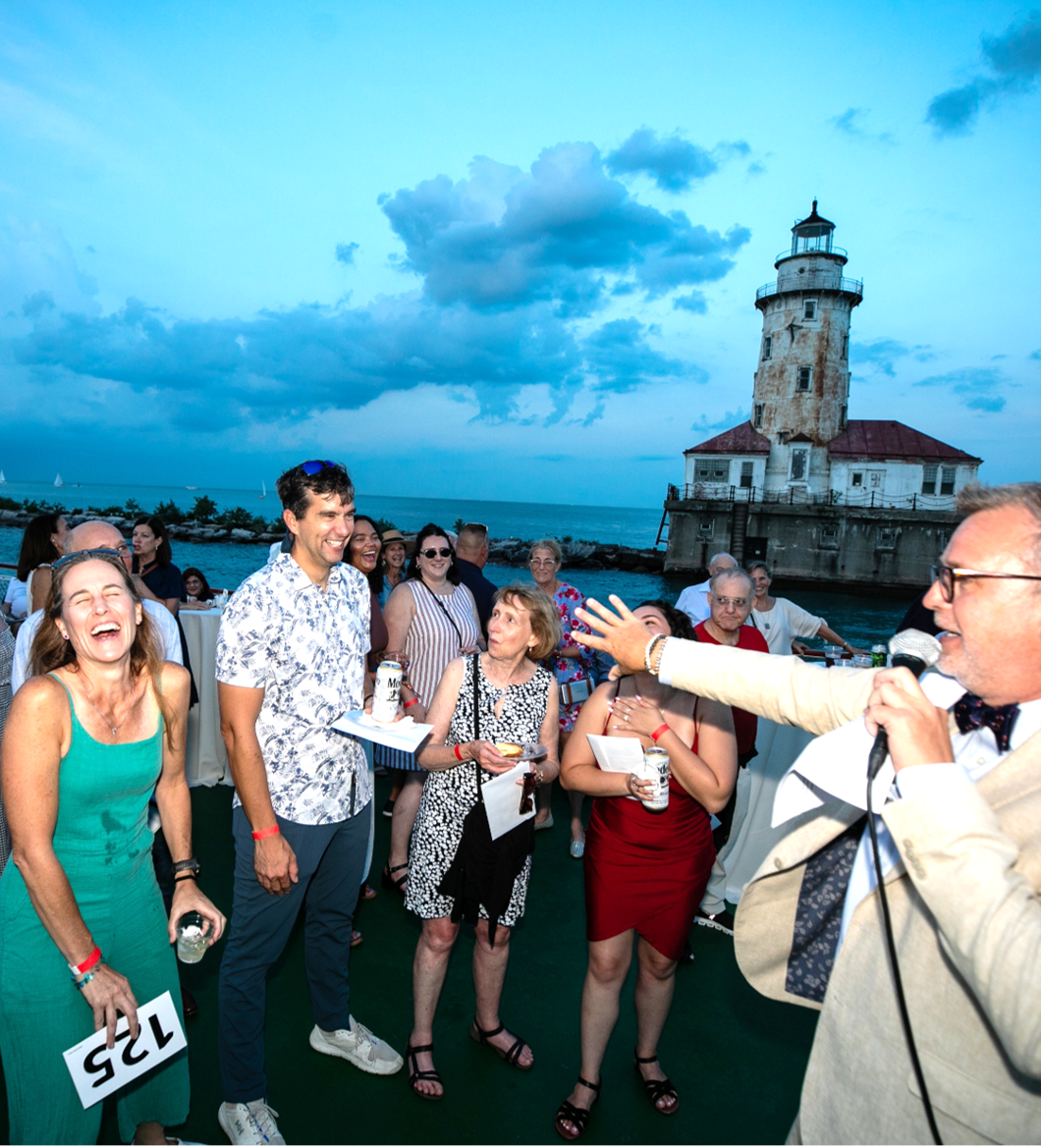
Raise the Paddle, Live & Silent Auction, and Auctioneer Jim Miller
$46,255 was raised through the auction and paddle raise
| | |
2026 Light the Way
Thank you for lighting the way!
| | |
The 1893 Lighthouse: Built for a City That Wouldn’t Stop Growing
By Steve Clements
| | |
On National Lighthouse Day, August 7, Friends of the Chicago Harbor Lighthouse welcomed supporters aboard our annual Light the Way fundraising cruise. With the Chicago skyline behind us and the lighthouse rising from the breakwater ahead, it was an ideal setting to reflect on a remarkable fact about this historic structure.
The 1893 Chicago Harbor Lighthouse didn't simply witness Chicago's extraordinary growth.
It was physically moved because of it!
To understand why, we need to return to the second half of the nineteenth century, when Chicago was transforming at a pace almost unimaginable today.
In 1850, Chicago had a population of fewer than 30,000 people. By 1890, more than one million people called the city home. Railroads radiated from Chicago in every direction, factories lined the river, grain elevators towered over the waterfront, and ships crowded the harbor.
Chicago had become one of the great transportation centers of North America.
And while we often think of railroads when we picture Chicago's nineteenth-century growth, the city's rise began at the water.
A Harbor Working at Full Capacity
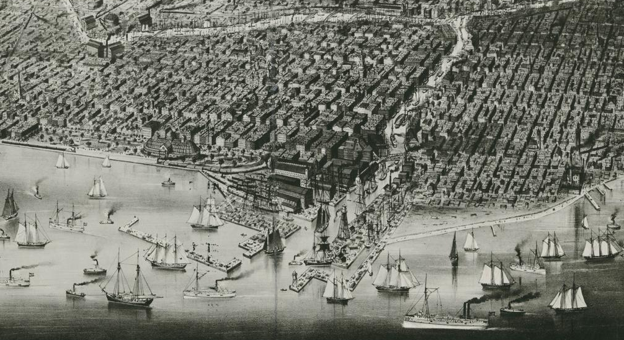
By the early 1890s, Chicago Harbor and the Chicago River were extraordinarily busy.
In 1892 alone, nearly 19,000 vessel arrivals and departures were recorded at the Port of Chicago. Schooners, steamships, passenger vessels, lumber carriers, and freighters all competed for space along a working waterfront that bore little resemblance to the recreational lakefront and riverfront we know today.
Much of that traffic was funneling toward the narrow entrance of the Chicago River.
| | Excerpt from an 1874 bird's-eye view of Chicago by Currier & Ives, courtesy of the Reyeron & Burnham Archives at the Art Institute of Chicago, depicting commercial, crowded marine traffic both at the mouth of the Chicago River and on the river. | | |
For mariners approaching Chicago from Lake Michigan, navigational aids weren't decorative landmarks. They were essential infrastructure.
Chicago had maintained lighthouses since 1832, but by the late nineteenth century the expanding harbor required something much more substantial.
The answer was the lighthouse that still stands in Chicago Harbor today.
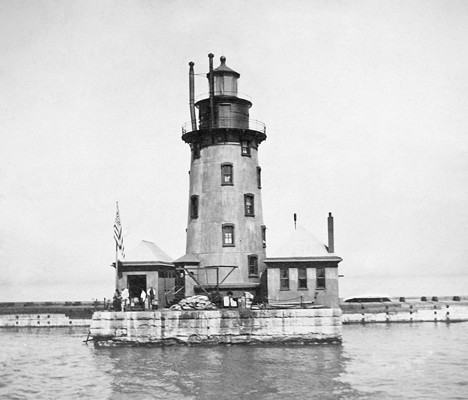
Construction of the new Chicago Harbor Lighthouse began in the early 1890s. Its cast-iron tower was equipped with an impressive third-order Fresnel lens, one of the great optical innovations of the nineteenth century. Rather than allowing light to scatter in every direction, the precisely arranged glass prisms concentrated it into a powerful beam visible far across Lake Michigan.
| | A 1914 photo of the 1893 Chicago Harbor Lighthouse. | | |
On November 9, 1893, the new light was illuminated for the first time.
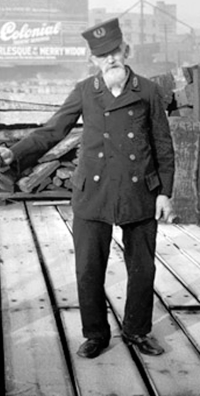
Its first principal keeper was Thomas J. Bailey, an experienced lighthouse keeper who had already served at Big Sable Point on Lake Michigan. Bailey had arrived in Chicago earlier that year to prepare the new station for operation.
| | Thomas J. Bailey, the first Principal Keeper at the 1893 Chicago Harbor Lighthouse. | | |
Imagine what he saw from that tower. The World's Columbian Exposition had just drawn millions of visitors to Chicago. The city was booming. Smoke rose from factories and locomotives. Ships entered and departed the harbor throughout the day and night. Beyond the breakwater stretched a city whose population had multiplied many times over in only a few decades.
The lighthouse represented the latest technology available to help guide that maritime traffic safely into Chicago.
Yet almost as soon as it was completed, the city around it continued changing.
Chicago Outgrows Its Harbor
During the next two decades, Chicago continued to expand its lakefront and rethink the relationship between the city and Lake Michigan.
Daniel Burnham and Edward Bennett's 1909 Plan of Chicago envisioned a more organized and ambitious lakefront. At the same time, engineers and city planners were confronting the problem of increased maritime congestion.
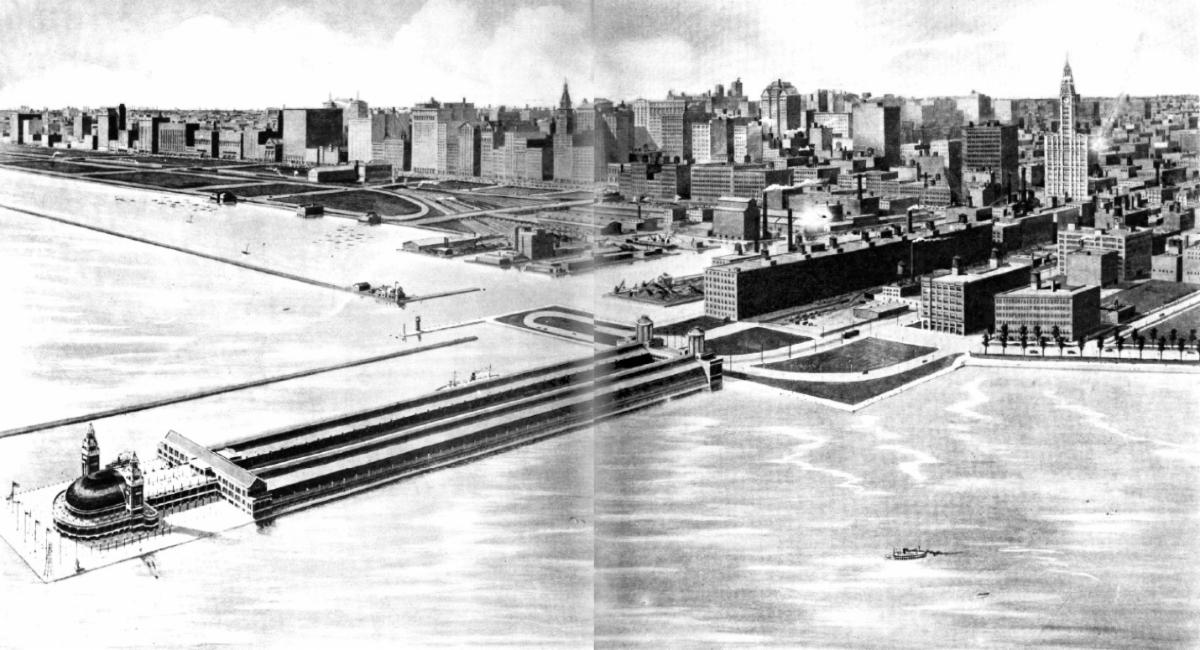
One of the most visible results was Municipal Pier No. 2, what we now call Navy Pier.
Construction began in 1914, and when the enormous 3,300-foot pier was completed in 1916, it extended farther into Lake Michigan than any other pier on the Great Lakes.
| | |
A 1921 painting of the Chicago Lakefront, featuring the recently completed
Municipal Pier No.2, painted by Walter S. Harrington for Fort Dearborn Magazine
| |
In addition to providing Chicagoans and visitors with a new recreational option on Chicago’s lakefront, Municipal Pier was designed to serve passenger ships and freight traffic while helping to relieve congestion along the Chicago River. But accommodating the pier and Chicago's changing harbor required more than constructing one enormous structure.
The protective breakwaters were expanded and reconfigured. The harbor entrance changed. Navigation routes shifted.
And suddenly Chicago's relatively new lighthouse was no longer in the right place.
Think about that for a moment.
The lighthouse was barely two decades old, yet Chicago had grown and changed so rapidly that the harbor for which it had been designed was already being redesigned around it.
Federal officials faced a choice: build another lighthouse or move the existing one.
They chose to move it.
Moving a Lighthouse
In June 1917, Congress appropriated $88,000 for the project; a substantial federal investment at the time.
A new foundation was constructed roughly 2,000 feet south of the lighthouse's original location, at the end of the newly extended north breakwater.
Then the 1893 lighthouse was relocated.
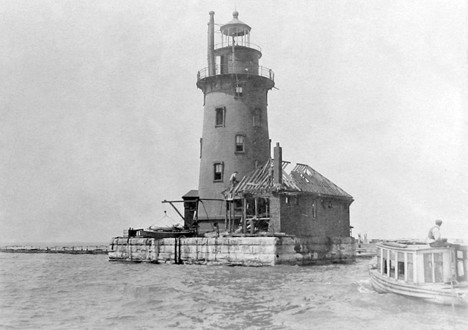
| |
The 1893 Chicago Harbor Lighthouse during deconstruction in
preparation for its relocation, circa 1917–1918.
| |
Exactly how the brick-lined cast-iron tower structure was moved remains one of the fascinating unanswered questions in its history. We know from engineering drawings and other records what was constructed at the new site, but surviving documentation has yet to reveal every detail of the physical move itself.
What we do know is that this was much more than simply picking up a lighthouse and setting it down somewhere else.
The station was substantially rebuilt and expanded.
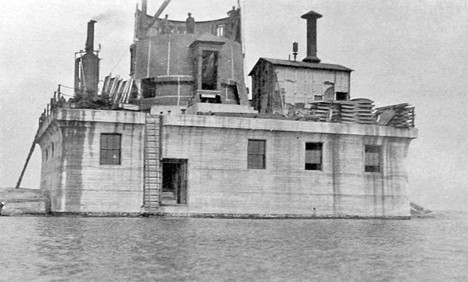
| |
A 1918 photo of the 1893 tower being reconstructed in its new location, 2,000 feet south
at the new (and current) entrance to Chicago Harbor.
| |
The original cast-iron tower was placed atop a new, approximately 20-foot-tall base. This raised the focal plane of the light and created additional space for machinery and operations. A boathouse was constructed on the north side of the station, and expanded fog-signal facilities were added to the south.
The compact lighthouse of 1893 had become the larger offshore complex recognizable to Chicagoans today.
On August 1, 1918, the light was first exhibited from its new position, better aligned with the entrance to the Chicago River and the redesigned harbor.
In a sense, the lighthouse had been born twice: first in 1893 and again in 1918.
A Front-Row Seat to Chicago History
From its new location, Chicago Harbor Lighthouse would witness another century of change.
The commercial sailing vessels that once crowded the harbor disappeared. Steam gave way to diesel. Chicago's industrial waterfront evolved. Municipal Pier became Navy Pier. Chicago's principal commercial port operations shifted from Navy Pier to new deep-water facilities on Lake Calumet in 1958. All while the city and its skyline rose dramatically behind the lighthouse.
Technology changed inside the station as well.
The Fresnel lens that had once represented the pinnacle of lighthouse technology was eventually replaced by more modern, automated equipment. Fog signals changed. Electrical systems replaced much of the machinery that keepers once tended by hand. By 1979, the lighthouse was completely automated, ending the era when people lived and worked continuously at the station.
Yet the lighthouse remained.
Today, when we look at it from the lakefront, Navy Pier, or a passing boat, it can appear almost timeless; a familiar red-roofed structure standing alone against Lake Michigan.
But its history tells us something very different.
Chicago Harbor Lighthouse is there precisely because Chicago never stood still.
Its location, architecture, and equipment were repeatedly shaped by the changing needs of the city and its harbor. It guided the vessels that helped build Chicago, and then Chicago's extraordinary growth forced the lighthouse itself to adapt.
That is what makes preserving this structure so important.
| |
The lighthouse is not simply an attractive object on the horizon. It is physical evidence of Chicago's relationship with Lake Michigan and of the maritime transportation network that helped transform a small settlement into one of the world's great cities.
When Friends of the Chicago Harbor Lighthouse talks about our mission to Preserve, Restore, and Celebrate this landmark, we are talking about preserving that story as well as the building itself.
Someday, our goal is for people to experience that history firsthand; to arrive by boat, step onto the foundation, enter the lighthouse, climb the tower, and look back toward Chicago.
And from that vantage point, perhaps they will understand what Thomas Bailey must have understood when he first tended the light in 1893: The story of Chicago Harbor Lighthouse has always been inseparable from the story of Chicago itself.
________________________________________
Want to learn more?
See the entire Currier & Ives 1874 bird’s-eye view of Chicago here: https://bit.ly/4gifsDJ
Explore the history of Municipal Pier no. 2, now Navy Pier at the Chicagology website: https://chicagology.com/skyscrapers/skyscrapers123/
| “You’re Still Here, and I’m Still Here.” | |
Sometimes a few simple words capture an entire story.
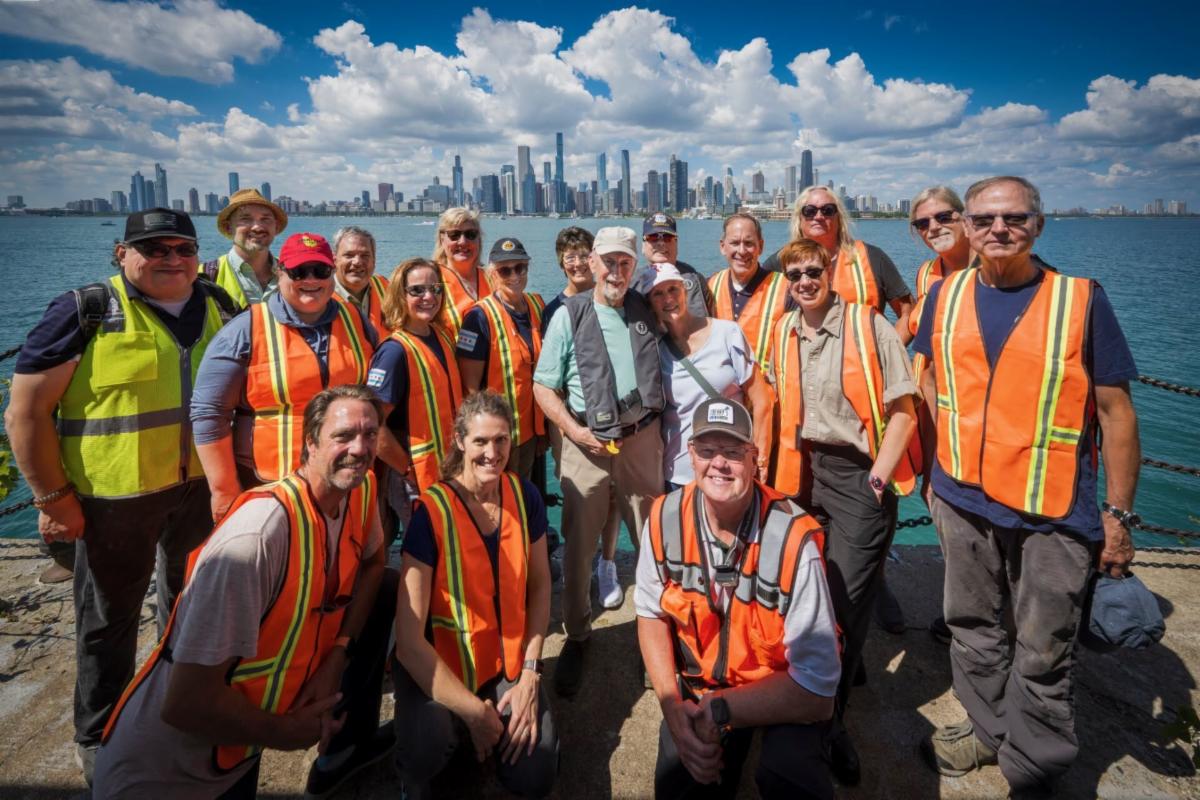
On Thursday, August 27th, the Friends of the Chicago Harbor Lighthouse made our largest visit to the lighthouse to date. Members of our team were joined by construction and restoration professionals to inspect the lighthouse, assess its current condition, and determine whether anything needed immediate attention before another Chicago winter sets in.
We were pleased with what we found. Previous repairs to one of the lighthouse portlights remain intact, and our team completed one minor repair to a damaged glass block.
She is secure and ready for winter.
But that wasn't what made this visit so memorable.
If you've been following our story, you know Wayne Barton and John Gach.
Wayne served at the Chicago Harbor Lighthouse in 1959. John served there in 1976. Both were only about 20 years old when they found themselves serving offshore at this remarkable place.
They have shared their stories with us before, including joining us aboard our Light the Way cruises. But this trip was different.
For the first time since they served there, Wayne and John returned to the Chicago Harbor Lighthouse.
Together, they walked through the rooms they once knew and climbed the lighthouse all the way to the top. Along the way, they shared and compared memories — what had been where, what had changed, what remained familiar, and what daily life was like for two young men who served at the same lighthouse 17 years apart.
For a few hours, two chapters of the lighthouse's history came together in the place where those stories happened.
| |
Wayne, who turns 90 next year, perhaps captured the significance of the day better than any of us could.
Standing inside the lighthouse nearly seven decades after he had served
there, he thought:
“You’re still here, and I’m still here.”
Those words have stayed with us.
For 133 years, the Chicago Harbor Lighthouse has stood at the entrance to Chicago's harbor. It has guided generations of mariners, welcomed vessels to our city, and been home and workplace to the men charged with keeping its light.
But its history isn't simply a collection of dates, architectural drawings, bricks and steel.
Its history is people.
It's Wayne at 20 years old climbing those stairs in 1959. It's John doing the same 17 years later. It's generations of mariners looking toward that light as they approached Chicago. And it's the countless connections between the lighthouse, Lake Michigan and the growth of the city around it.
That's an important part of what we are working to preserve.
When we talk about restoring the Chicago Harbor Lighthouse and creating our Classroom on the Lakefront, we aren't simply talking about restoring a historic building. We want future generations to be able to climb those same stairs, look across the lake and Chicago skyline, and hear the stories of the people who came before them.
On August 27th, we had the privilege of bringing two of those stories home.
And thanks to our team, Wayne and John's return was documented. We look forward to sharing more of their memories and this remarkable day with you in the future.
Wayne's words remind us both how fortunate we are and why there is still work to do.
“You’re still here, and I’m still here.”
Our job is to make sure the lighthouse is still here for the generations yet to come.
Help us continue the work. Your support brings us closer to restoring the Chicago Harbor Lighthouse and returning it to the public.
Give at give.SaveTheLighthouse.org
| | |
Help Light the Way
Every gift makes a difference. As we approach the final stages of acquiring the Chicago Harbor Lighthouse, your support powers the future-- restoration, public access, education, and celebration of this enduring symbol of our city’s maritime history.
This summer, we’re raising critical funds to launch our first major restoration efforts and create engaging programming that brings students, families, and visitors to the lighthouse for generations to come.
- Donate today and become part of the story.
- Share our mission with friends, neighbors, and colleagues.
- Be a Lightkeeper and help us preserve this national treasure.
The Friends of the Chicago Harbor Lighthouse is a 501(c)(3) nonprofit organization.
Your donation is fully tax-deductible.
Visit Give.SaveTheLighthouse.org
Together, we can Save the Lighthouse. Thank you!
| | If you are part of an organization that has an interest in financially supporting our efforts to Preserve, Restore, and Celebrate the Chicago Harbor Lighthouse, please reach out to Nick Naber (nicknaber@savethelighthouse.org), our treasurer and a member of our fundraising working group. | | Copyright © 2026 Friends of the Chicago Harbor Lighthouse - All Rights Reserved. | | | | |