|
Just this September, in a Brazelton Institute Symposium called What Babies Need: Perspectives on Culture, Policy, Research and Intervention, Dr. Jack Shonkoff presented findings that echo what Magda Gerber understood decades ago. After reviewing extensive research on early learning environments, the scientific consensus wasn't about expensive toys, curricula, or explicit instruction. It was about how adults interact with young children in ordinary moments. The relationships. The responsiveness. The noticing.
Even more striking in his 2025 talk: Shonkoff emphasized that we must expect individual variation in how children respond to our care. He drew a powerful analogy to pediatric oncology—survival rates transformed not from miracle cures, but from recognizing different subtypes and adapting treatment accordingly. Doctors learned to observe, expect variation, and respond to what each patient actually needed.
This is exactly what authentic Educaring® looks like in practice. We don't approach each child with a predetermined script. We observe carefully. We notice how each child communicates and responds. We trust their competence to show us what they need. We expect variation because we recognize each child's authentic self.
Shonkoff's conclusion? Despite all the community-level and policy interventions we might implement, "responsive caregiving is what brings all that into the body and affects health and development and behavior." Everything—all learning, healing, and development—ultimately comes through relationships.
Through our authentic presence with each unique child.
In a world increasingly focused on programs, interventions, evaluations, and measurable outcomes, both that New Yorker cover and this research offer the same gentle reminder: the most powerful tool we have is not a curriculum or a toy or a technique. It's our authentic, respectful presence with children in ordinary moments.
~Melani Ladygo
RIE Associate
RIE Executive Director
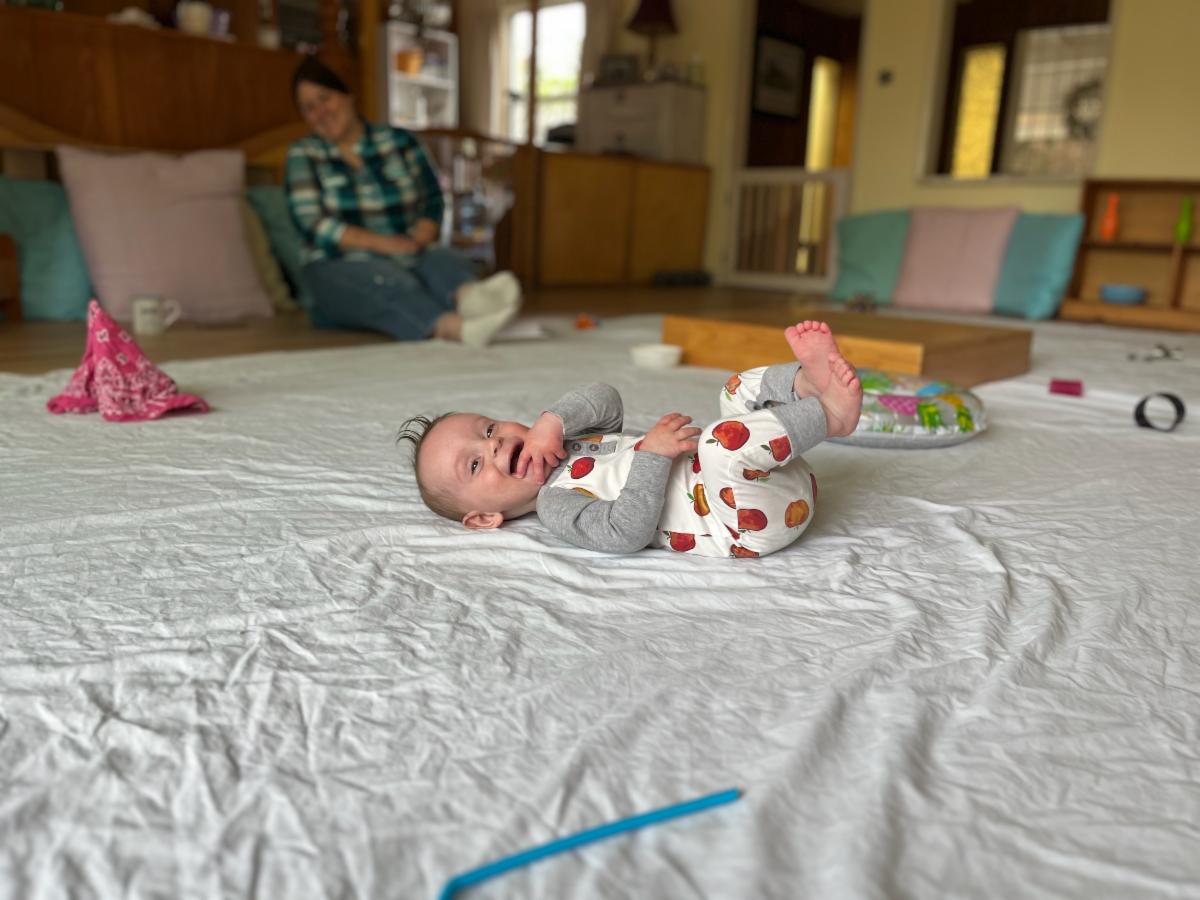
PS, if you've been reading our emails, you probably recognize this picture from a recent email. I couldn't resist using it again since it speaks so directly to the theme of this email!
|