|
Okay, be honest. If you’ve been on my table, there’s a good chance you’ve said, “Ohhh. THAT’S the spot.” Usually with a little wince, a big exhale and a look that says, “don’t you dare move your thumb.”
It’s tender, it’s intense, and yet you’re quite happy for us to stay there. It sounds a bit ridiculous when you say it out loud, but if you’ve felt it, you know exactly what I mean.
I've always loved that moment, and some researchers decided to investigate something very similar.
They applied pressure to two spots in the same forearm muscle in 48 people. One spot was tender, and the other was just two centimeters away and wasn’t tender. They adjusted the pressure at each spot until it felt moderately painful, then asked people to rate the experience.
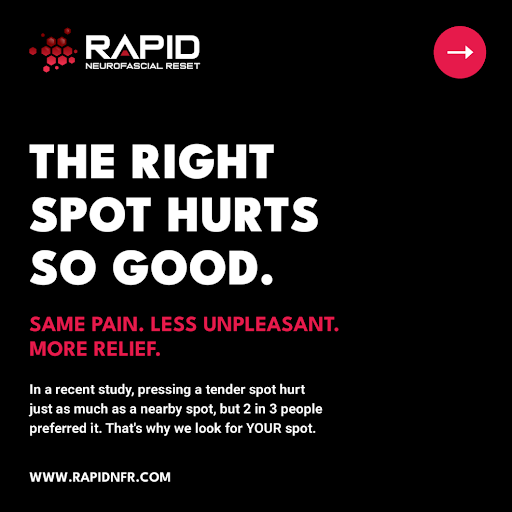
Both spots hurt about the same amount, but pressure on the tender spot felt less unpleasant and more relieving. Two out of three people preferred it. And most participants couldn’t even tell which spot was which.
So what’s going on here? How much something hurts and how much it bothers you aren’t quite the same thing. Think about that familiar “hurts so good” feeling. You can absolutely feel the discomfort, but you’re also saying, “Yes, please. Right there.”
The researchers suggested that how the brain evaluates the sensation, including its involvement in relief and reward, might help explain this. There’s still more to understand, but it’s a pretty interesting finding for anyone who has ever willingly asked me to go back to a sore spot.
It also fits with why Iam so particular about where I work. I'm looking for the spot that brings on your familiar complaint, the one that makes you say, “Yes, that’s MY pain.” Your feedback helps me find it, so please don’t lie there politely while I miss it by two centimeters. Tell me!
Once I find it, I work there briefly and within your tolerance. You don’t get bonus points for gritting your teeth, and I don’t get bonus points for making you. Then we check what changed. Is it easier to turn your head, raise your arm or get out of the chair?
Move it to prove it.
Finding the spot is useful, but what you can do afterwards is what I really want to know.
One detail I particularly liked: people didn’t rate the tender spot as significantly more pleasant. It simply felt less unpleasant and more relieving. Nobody was mistaking it for a relaxing spa treatment. It just felt like the right bloody spot.
That’s why more pressure and more time aren’t automatically better. I want to be precise, see how you respond and give you a reason to say, “Oh, that feels better,” when you get off the table.
Have a question about something you’ve felt during a treatment? Hit reply. I'm always happy to nerd out with you.
Your RAPID Therapist,
Jackie Pearce
|