"It is difficult to get a man to understand something when his salary depends upon his not understanding it." — Upton Sinclair | | Leading Off: Observations from the Couch | | |
By no means am I an expert on television advertising today. Years ago, as a franchise operator for a restaurant chain, I had a major voice in how almost a million dollars a year was spent on media.
Back then, I studied ratings, demographics, reach, frequency, and all the other things advertising people talk about while trying to convince you that spending more money is actually saving money.
Today, however, I am manipulated just like everyone else by whatever happens to be on the airwaves.
I also have restrictive viewing habits. If it isn't related to the Red Sox, Celtics, Bruins, Patriots, or the news, I'm probably not watching. The only network show I regularly watch is Boston Blue, for obvious reasons.
Occasionally, I'll walk through the living room and discover that someone is watching a game show, a cooking show, or one of those daytime talk shows where everyone appears to be angry about something. I'll stop for a minute or two, then continue on my way. Which means that if I'm seeing the same commercials over and over again, imagine what happens to people who actually watch television more than me.
| | |
The $15 Billion Commercial Break:
An Observation from the Couch
| | |
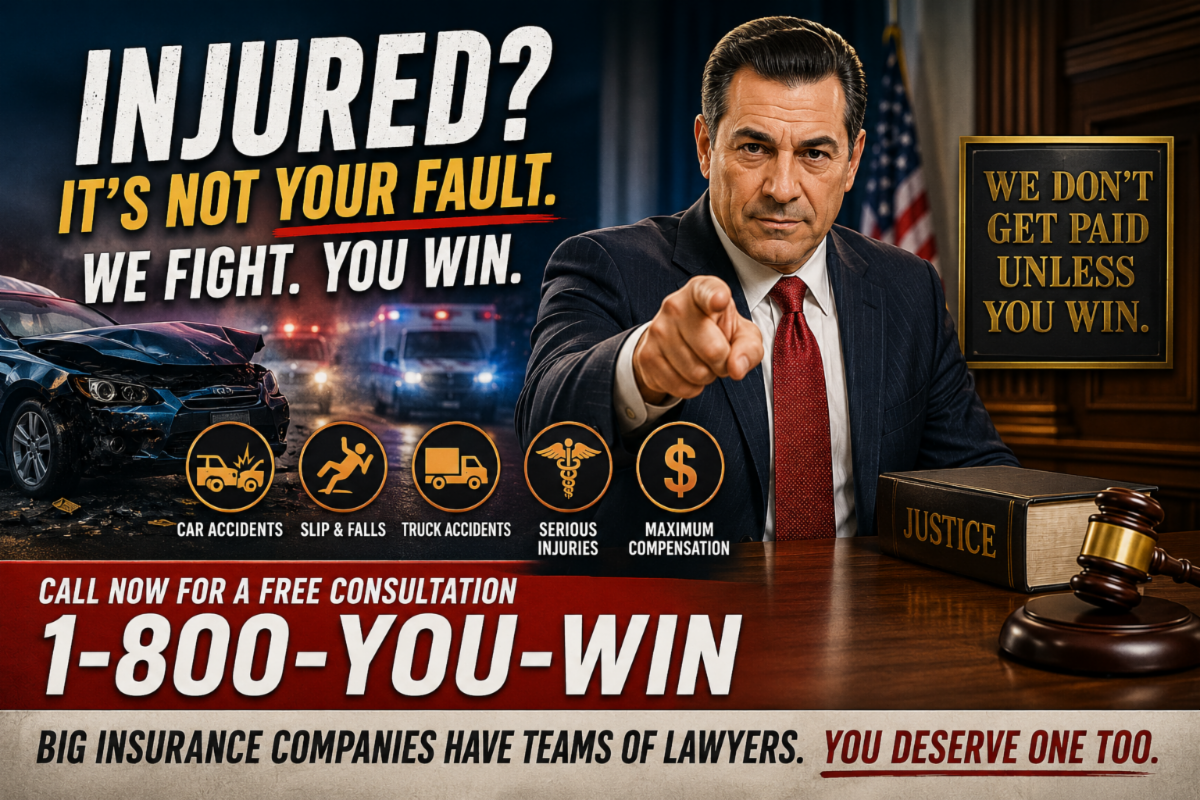
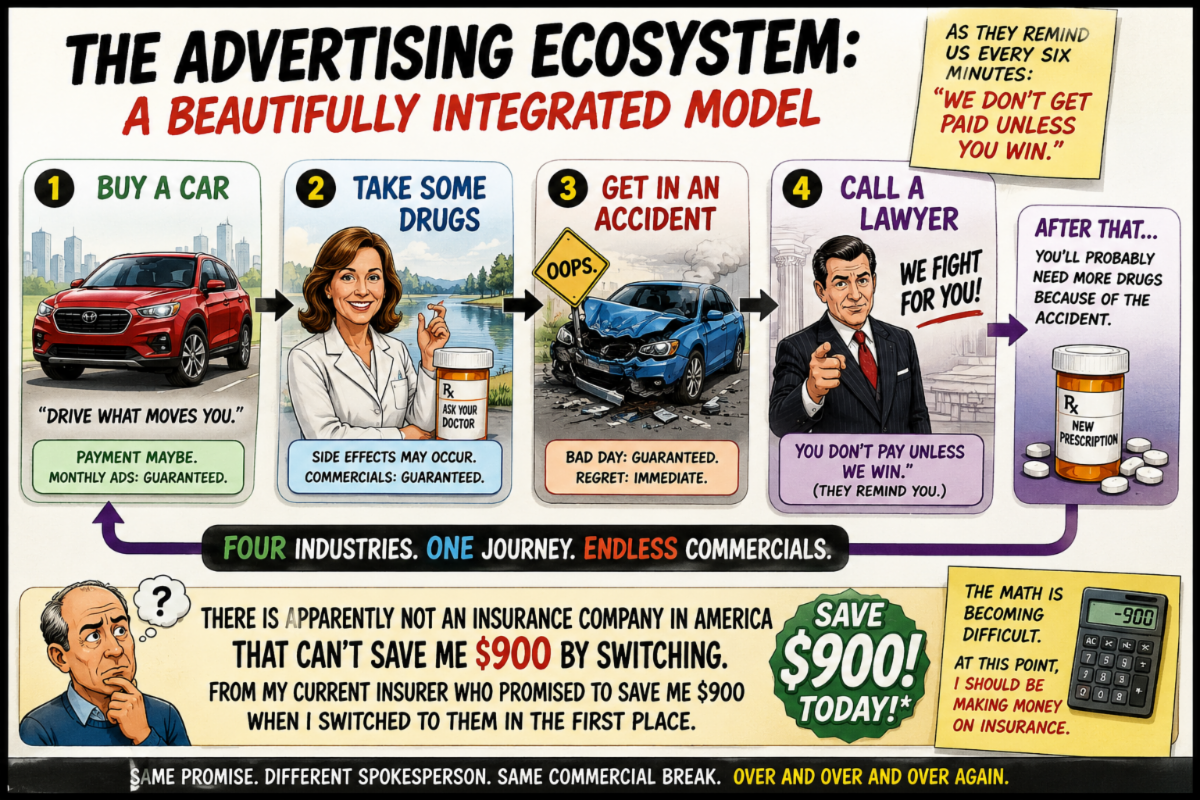
Advertising today appears to be built around three products: car insurance, drugs, and personal injury lawyers. I think the intended sequence is pretty straightforward.
- First, get some car insurance,
- Then take some drugs.
- Then get into an accident and call a lawyer.
- After that, you'll probably need more drugs because of the accident.
From a business standpoint, it's a beautifully integrated ecosystem. As they remind us every six minutes, "We don't get paid unless you win."
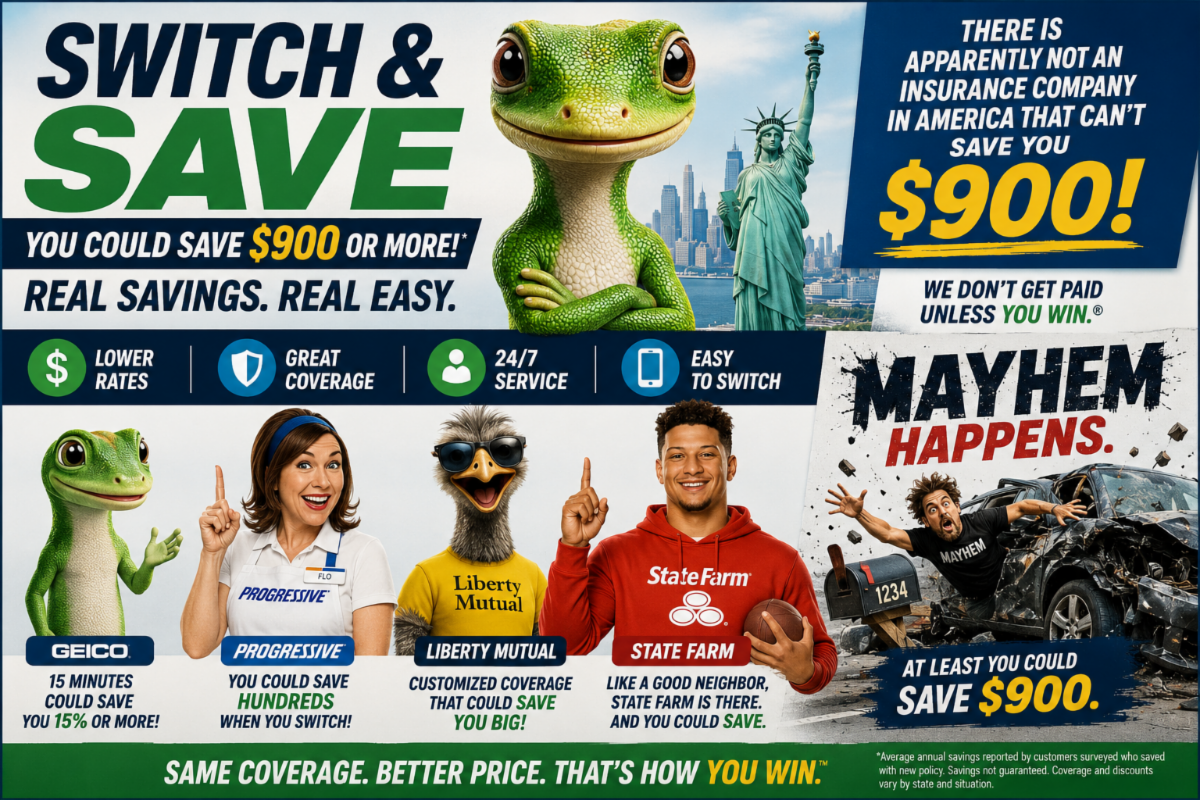
There is apparently not an insurance company in America that can't save me $900 by switching from my current insurance company—the same insurance company that promised to save me $900 when I switched to them in the first place. The math is becoming difficult. At this point, I should be making money on insurance.
And the cast of characters is remarkable. If the Statue of Liberty appears in the background, you're about to save money. If there's an emu wandering around, you're about to save money. If Flo shows up in a white apron, you're about to save money. If Patrick Mahomes appears, you're definitely about to save money. And if that guy named Mayhem crashes a car, falls off a roof, drives into a mailbox, or somehow destroys civilization in under thirty seconds, you're about to save money while simultaneously being terrified.
| | |
The insurance companies have mastered the art of making us laugh, which is interesting because the very next commercial usually features a personal injury lawyer explaining why the insurance companies are heartless villains who refuse to pay legitimate claims.
The transition is breathtaking. One minute an insurance company is your trusted friend, represented by a gecko, an emu, or a celebrity spokesperson. Thirty seconds later, a lawyer is explaining why the same company is the reason society is unraveling. Another thirty seconds pass and the insurance company is your trusted friend again.
The most fascinating part is that both sides seem to sponsor everything. Every major Boston sports team appears to have both an Official Insurance Company and an Official Injury Lawyer. The Bruins have one. The Celtics have one. The Red Sox have one. The Patriots have one. It's like watching a television duel. A very expensive duel.
One side is spending billions trying to become your insurance company. The other side is spending billions hoping you'll need a lawyer because of your insurance company.
Somewhere in the middle sits a confused viewer trying to watch a baseball game.
| |
The numbers are staggering. The four largest auto insurers alone spend roughly $3.7 billion a year on advertising.
Industry-wide, auto insurance companies spend an estimated $6 to $8 billion annually trying to convince us they can save us money. Personal injury lawyers aren't exactly operating on a shoestring budget either. Legal advertising across all media now exceeds $2.5 billion annually, with roughly $1 billion spent on television advertising alone.
And then there are the pharmaceutical companies. Just when you've finished hearing about your insurance deductible and your legal rights, someone appears on a beach, in a meadow, or paddling a kayak while explaining a medical condition you've never heard of.
The pharmaceutical industry spends another $4 to $6 billion annually advertising directly to consumers, much of it on television. By this point, the commercial break has become a complete life cycle. First buy insurance. Then buy medication. Then have an accident. Then hire a lawyer. Then ask your doctor if another medication is right for you.
| |
Collectively, these industries are spending more than $15 billion a year competing for our attention. No wonder I can't watch three innings of a Red Sox game without being told either how much money I can save, how much money I deserve, or what medication I should ask my doctor about.
Twenty years ago, television advertising looked very different. Commercial breaks were filled with local furniture stores, department stores, banks, restaurants, appliance dealers, and car dealerships.
Today, the local hardware store doesn't stand much of a chance against an insurance company willing to spend millions creating a gecko, an emu, a celebrity spokesperson, or a pharmaceutical company introducing us to a disease we didn't know existed ten minutes earlier.
The economics are simple. An insurance customer may be worth thousands of dollars over a lifetime. A legal case may be worth tens of thousands of dollars. A long-term prescription customer may be worth even more. That allows these industries to spend extraordinary amounts of money chasing our attention.
| |
Which brings me to the observation.
Whenever I see three groups spending more than $15 billion trying to influence the same audience, I become curious.
Insurance companies want us before an accident. Personal injury lawyers want us afterward. Drug companies seem perfectly willing to meet us at any point along the journey. All three are competing for the same audience, just at different stages of life.
As leaders, that's a useful reminder. If you want to understand why a system behaves the way it does, follow the incentives. The commercials may be funny. The mascots may be memorable. The slogans may be clever. But underneath all the humor, geckos, emus, celebrities, beaches, kayaks, lawyers, and promises of savings is a simple truth: the most expensive competition on television isn't happening on the field. It's happening during the commercial break.
| | Surprise Photo At The End | | Join the Smart Subscribers | | If you are reading this on a social media platform, click below and you'll automatically receive a 'different' story every week on Wednesday. | | |
The Roll Call of states and countries where readers reside: Arizona, California, Colorado, Connecticut, Delaware, Florida, Georgia, Hawaii, Illinois, Indiana, Iowa, Kansas, Kentucky, Louisiana, Maine, Massachusetts, Michigan, Mississippi, Missouri, Montana, New Hampshire, New Jersey, New Mexico, New York, North Carolina, North Dakota, Ohio, Pennsylvania, Puerto Rico, Rhode Island, South Carolina, South Dakota, Tennessee, Texas, Vermont, Virginia, Washington and Washington DC, Wisconsin plus Canada, Conch Republic, Australia and the United Kingdom.
| |
Observations At The Speed Of Life Archive | | |
Ed Doherty
774-479-8831
www.ambroselanden.com
ed-doherty@outlook.com
Forgive any typos please.
| | | | | |