What Is In This Newsletter?


  • The $50 Trillion Dollar Heist
  • Final Round: Name The Billboard Project
  • The Geography of Love: Progressive Strategies Northwest
  • What Happens When Newspapers Die: Ronan Farrow
LinkedIn Share This Email

The $50 Trillion Heist


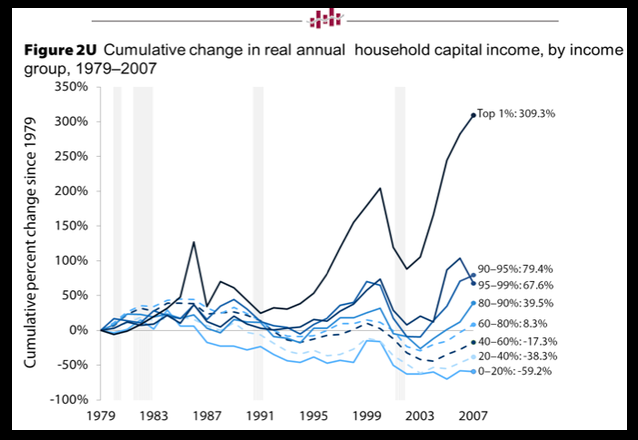
Over the last fifty years roughly $50 trillion moved from the American working class to the wealthiest Americans. This did not happen by accident. It happened through policy. Republicans pushed the policies that made it possible, and too often Democrats stood aside or drifted away from the very people who once formed the backbone of the party: unions, rural communities, and working class voters. The result was the largest upward transfer of income in modern American history.

For decades after World War II the American economy followed a simple rule. When productivity increased, wages increased. When the country produced more wealth, working people shared in the gains. Rural towns were stable. Labor unions had real power. A single income could support a family. Public investment built highways, schools, hospitals, and universities. The people who did the work shared in the prosperity they created.


Then the rules changed.


Around the mid 1970s productivity kept rising but wages stopped keeping pace. The economy kept producing more wealth, but working people stopped receiving their share. Economists at the RAND Corporation estimate that if income growth had continued to be distributed the way it was in the postwar decades, Americans in the bottom ninety percent would have earned about $50 trillion more since 1975.


• RAND Corporation income distribution research by Carter Price and Kathryn Edwards

• Economic Policy Institute inequality and productivity data

• World Inequality Database global income distribution data

That money did not vanish.


It moved upward.


Republican leaders drove many of the policies that made this shift possible. Taxes on high incomes and capital gains were cut. Labor unions were weakened. Regulations on corporations were rolled back. Corporate consolidation created powerful monopolies. Executive compensation was increasingly tied to stock prices, rewarding executives for enriching shareholders above all else.


Democrats share responsibility for what happened next. Over time much of the party drifted away from the working class coalition that once defined it. Labor unions lost influence. Rural organizing declined. Campaigns increasingly focused on wealthy donors and professional suburban voters. The party that once represented factory workers, farmers, and union members slowly became less present in the communities where those voters lived.


Working class voters noticed.


The results are impossible to miss, especially in rural America. The average CEO of a large American corporation now earns roughly $16 million to $20 million per year, often far more when stock awards vest, while many workers earn between $20,000 and $35,000 annually. Median rural household income is about $55,000. A $20 million CEO salary equals more than three centuries of rural household income. In many rural counties a corporate executive earns more in a single week than a local household earns in an entire year.


While inequality exploded, the political conversation in many rural communities shifted away from economics and toward cultural conflict. Immigration. Identity politics. Urban versus rural resentment. These issues dominate political messaging while the economic structure that hollowed out rural communities continues largely untouched.

If rural communities are going to reclaim their future, the conversation about economic power has to return. That is one reason Rural Americans United is launching a communications effort across rural Washington, including a network of billboards placed along rural commuter corridors. The goal is simple: create a visible presence that encourages voter participation and reminds people that democratic government can still work for working people.


The working class built the prosperity of this country. Over the last half century $50 trillion was taken from them through policy and political power.


It is time we take it back.

Final Round: Help Us Name the Largest Rural Voter Engagement Effort in Central Washington


We have narrowed the list. This is the final round, and now the choice is yours. The name selected will become the public identity of the largest rural voter engagement effort currently underway in Central Washington. Rural Americans United is investing $225,000 this election cycle to place thirty billboards across communities where voter participation has been declining and where pro democracy messages are rarely seen. The name you choose will represent this effort across the region.


Cast your vote and help shape what rural Washington sees next.

Your donation to Rural Americans United Education Foundation 501(c)(3) is tax deductible.

The Geography of Love - Provided by Progressive Strategies Northwest


We hear a lot about the demographic variables in politics – age, race, income, and college education. However, there are many more aspects of people’s “ages and stages” that often get ignored. One: Relationships.


Marriage has a lot of electoral correlates – around voter turnout, even political opinions. It’s also a powerful lens for understanding voters’ perspectives. Even within a party, research consistently shows that unmarried 27-year-olds bring different lived experiences and viewpoints than a middle-aged couple with children. Perspective matters!


In rural Washington, about 67% of voters are married – far above the rates in suburban areas), towns and small cities (54%), and urban areas (40%). Even then, there are striking differences. Both Washington’s most-married county (Garfield, 83%) and Washington’s least-married county (Adams, 51%) are mostly rural.


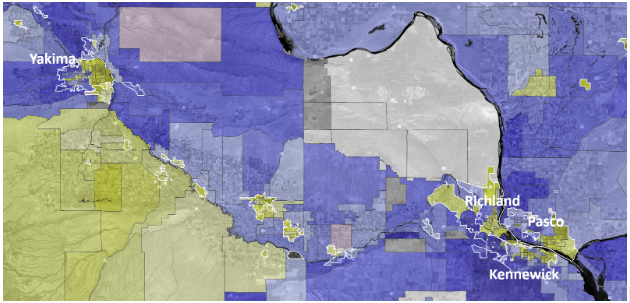
A look at Yakima and the Tri-Cities helps explain this contrast. Below, voting precincts in blue are majority-married; voting precincts in yellow are mostly single.

Hispanic areas, with their very young voter populations, lead the charge in singletons. East Yakima is only 23% married; Central Pasco, 29%. Even Hispanic farming areas skew unmarried.


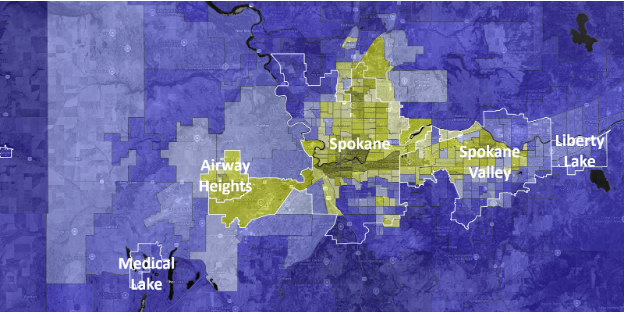
Turning to an area with a low Hispanic population, Spokane, we can see how issues like class tie in. Unsurprisingly, apartment-heavy areas like Downtown Spokane have few married voters (8%). However, in many single-family areas that are relatively working-class, unmarried voters are a clear majority: that includes areas like Chief Garry Park (32% married), Hillyard (33%), and Lidgerwood. Older, rural areas are overwhelmingly married. Although, even there, you can see that more working-class rural areas (such as those between Airway Heights and Deer Park) have fewer married voters.

Undeniably, life events – marriage, having children, buying a home, etc. – connect closely with how people process stages. Local campaigns should spend time learning the “ages and stages” of their community. After all, showing understanding is the best way to show some love!

What Happens When Newspapers Die? by Pulitzer Prize Winning Ronan Farrow. This TikTok is a must watch.


https://www.tiktok.com/t/ZThnHaqyF/

Rural Americans United will not waver in its efforts to bring racial and social justice to rural Washington State by engaging people in the political process. The words “of, for, and by the people” are not idle. Manifest within them is the power to shape and control our collective destiny. Please help us continue this important work.

 
Facebook  Instagram  Email