|
IDENTIFY THE HAZARD
The first step is to evaluate whether your work environment contains a gas/vapor hazard (for example chlorine gas, solvent vapors) particulate hazards (for example dust/fibers), or both. Generally cartridges are used to filter against gas and vapors and a filter to protect against particulate hazards. When both hazards are a risk to your employee, combination options are available.
ASSESS THE EXPOSURE
When assessing exposure levels for the substances in the environment, results are most commonly measured in parts per million (ppm) or milligrams per cubic meter of air (mg/m3). These figures are then calculated to an average exposure over the length of a typical work shift. OSHA has established occupational exposure limits (OEL) or permissible exposure limits (PEL). These values will assist you in determining if providing respiratory protection is required by law. Short-Term Exposure Limits (STEL) or Ceiling Limits (C) are other measurable metrics that may also be noted. STEL is in the form of 15-minute exposure intervals and C is the absolute limit never to be exceeded by a worker.
Should your environment expose employees to levels below the OEL, you are not legally required to provide protection. That being said, you may choose to still offer voluntary respiratory protection for the benefit of your workforce. If levels are above the limit, appropriate respiratory protection to bring exposures to an acceptable limit must be selected.
DETERMINE THE PROTECTION LEVEL NECESSARY
Respirators approved by NIOSH are the only respirators OSHA allows for use in the workplace. NIOSH approved respirators are given an Assigned Protection Factor (APF). This is a numerical metric ranging from 10 to 10,000. The assigned value relates to the workplace level of protection a respirator is expect to provide. For example, an APF of 10 represents that the respirator is expected to protect against exposure levels that are up to 10 times the PEL for that particular hazard. A calculation known as the hazard ratio is a helfpul too to see what level of APF a work environment will require.
Exposure level of 100 ppm ÷ OEL or PEL of 10 ppm = APF of 10.
CHOOSE A RESPIRATOR TYPE
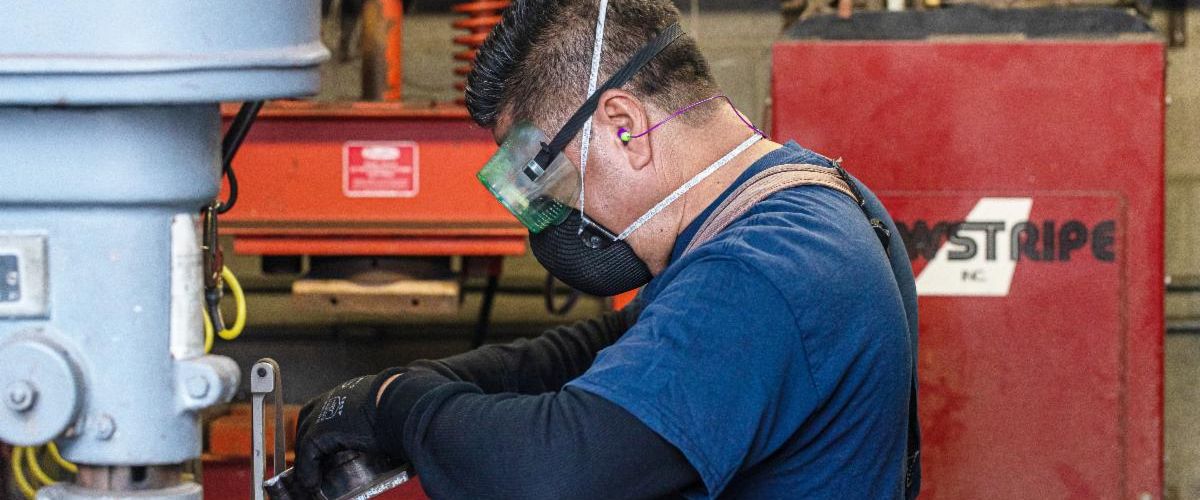
After your APF has been determined, selecting your respirator becomes much simpler as you only consider respirators that can reduce exposure below the OEL. It is also to important to evaluate the compatibility of your respirator with other required PPE that your employee may be wearing. For example, when an employee is wearing safety glasses, some half face respirators may have a difficult fitting correctly over the bridge of the nose. Be cautious to select a respirator that works well together without sacrificing the protection of co-existing PPE solutions. In this example it is essential that there is no loss in eye protection as well as ensure there is no leakage around the respirator. Application, shapes/size of your worker's face, and other factors need to be to considered. Multiple sizes or lightweight solutions may be needed.
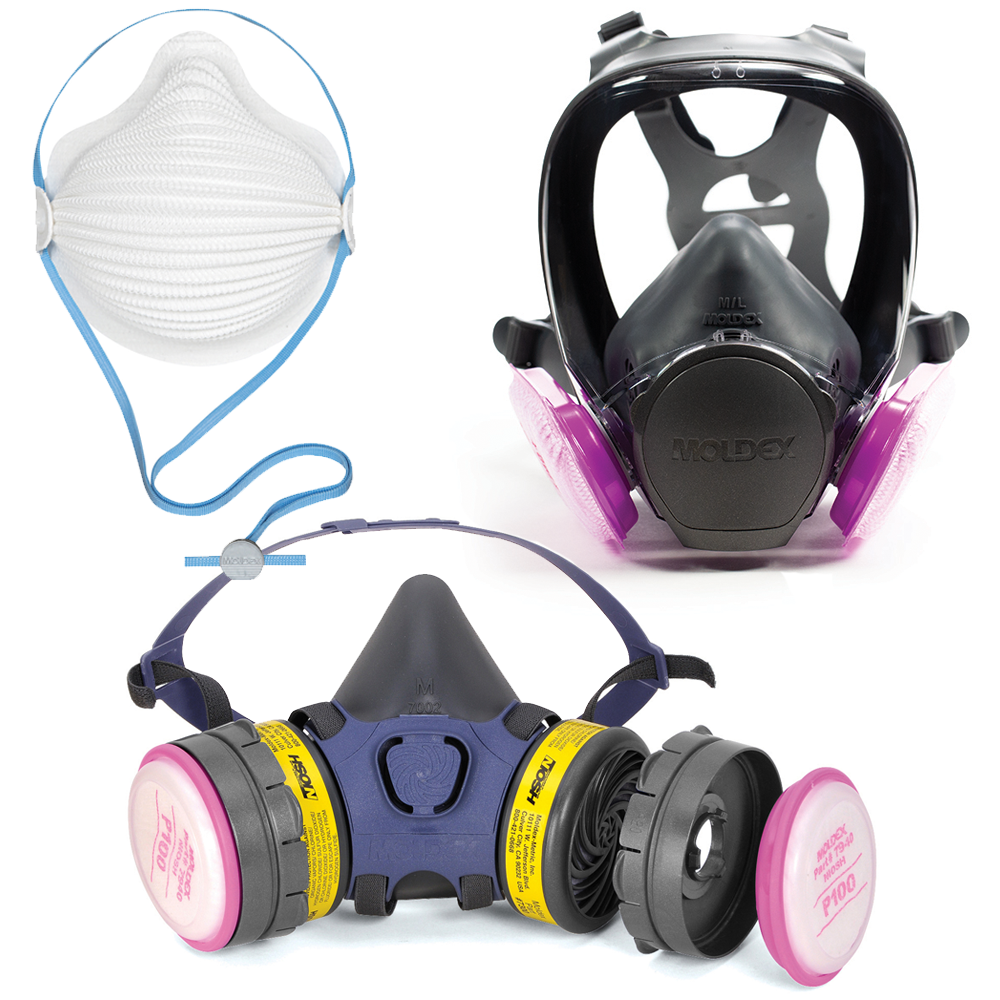
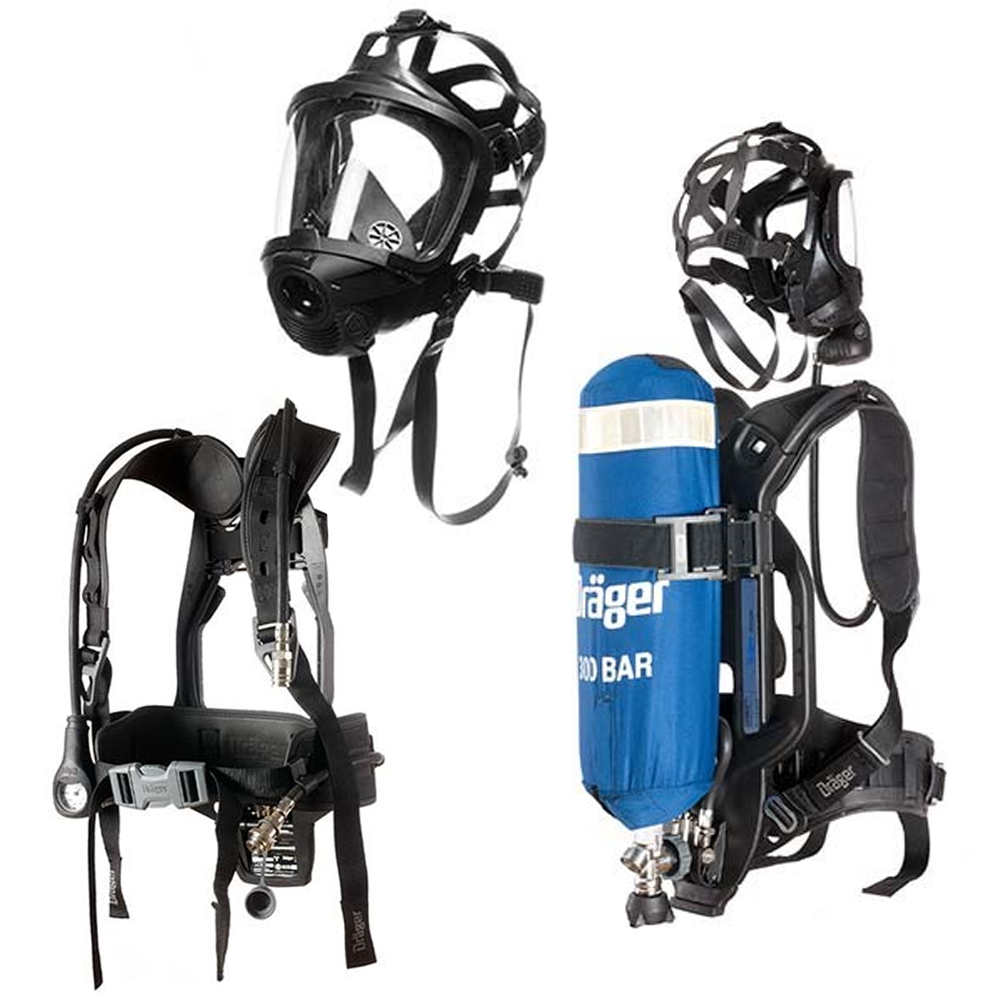
Now that you're able to identify the hazard and the level of protection that you need, below is a refresher of the different types of respirators.
|