2024 Header Update
 

September 2026

The ACCESS Advance is a monthly newsletter produced by the U.S. National Science Foundation's ACCESS (Advanced Cyberinfrastructure Coordination Ecosystem: Services & Support) program. It contains science stories enabled by ACCESS, program news and opportunities for users.

In this Issue

  • NSF AI Datasets Webinar, September 9
  • Setting Students Up for Success with ACCESS
  • Cloudbank 2 Offers Commercial Cloud Access

Opportunities

Events & Trainings

Community Announcements


Science Stories

enabled by ACCESS


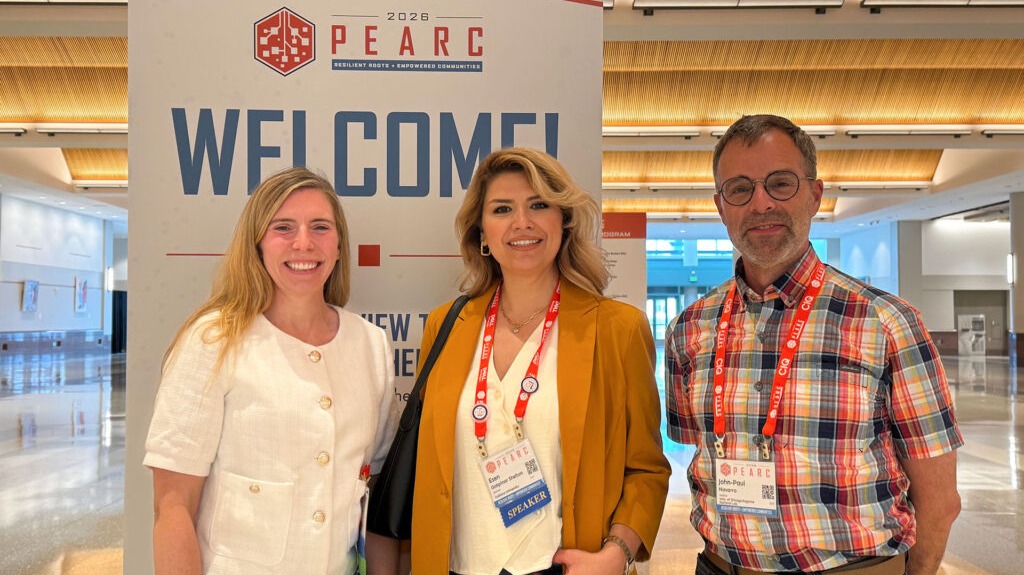
ACCESS-Authored Papers Honored at PEARC26

Four papers authored by ACCESS staff were honored with awards.


Read the full story here

Fact-Checking Large Language Models

Researchers use ACCESS-allocated Delta to create new metric for accuracy.


Read the full story here

Building a Biologically Constrained Artificial Neural Network

Rutgers University researchers use ACCESS-allocated resources to help explain how learning is coordinated across the brain.


Read the full story here


What's New?


Setting Students Up for Success with ACCESS


Are you an educator using, or considering using, shared computational and data storage resources with your students? As the fall semester begins, ACCESS resources are available to support students, instructors and classroom projects. Explore ACCESS projects are a great fit for smaller classes and training events. For larger classes or more resource-intensive coursework, Discover ACCESS projects provide medium-scale allocations well suited to bigger cohorts and more extensive training events. Both project types can be requested year-round. Graduate students working on thesis or dissertation research can also serve as principal investigators on either project type, with a letter of support from their advisor. Educators planning multiple courses should submit a separate request for each endeavor. Take advantage of ACCESS resources this semester to set your students up for success! See how other Educators have used ACCESS resources in the classroom.

NSF Presents AI Datasets Webinar

September 9


Join the U.S. National Science Foundation program staff for an informational webinar on the NSF AI Datasets: Unlocking Dataset Value for AI-Enabled Scientific Discovery program. The session will provide an overview of the funding opportunity, which supports efforts to increase the value of existing scientific datasets by making them more accessible, interoperable and ready for artificial intelligence-enabled and automated analysis. Find out more.

ACCESS Metrics Hosts Summer Interns


Justin Rimpel is a junior in the Computer Science Department at the University at Buffalo. This summer, he worked on integrating charts from XDMoD into the Metrics team's hosted JupyterLab instances running the Data Analytics Framework. This feature enables users to open charts from the Metric Explorer in a JupyterLab server with some example Python code to generate the chart. In addition to the JupyterLab integrations, Rimpel worked on a production Docker image for XDMoD to facilitate the installation, setup and management of XDMoD for HPC centers. Kyler Shih is a senior in the Computer Science Department at the University at Buffalo. He worked on making XDMoD compliant with MariaDB's strict SQL mode. This involved changes to both the PHP code and SQL queries, allowing XDMoD to make better use of the data integrity protections built into the database software. Updating XDMoD to use a standard-compliant variant of the SQL language should also reduce the development effort needed to update to a new database software version or different database engine. Rodney Garnett is a senior in the Computer Science Department at the University at Buffalo. This summer he improved the performance of the testing framework for the XDMoD-data Python library (part of the Data Analytics Framework). He also developed new features for the Data Analytics Framework APIs to improve the types of analyses and visualizations that can be done with XDMoD data and improve ease of use.


Thank you, ACCESS Metrics interns, for your exceptional contributions!

See How Researchers and Educators Use ACCESS Tools


ACCESS provides a number of tools to make the job of running a project easier. Now, you can see how those with ACCESS allocations have used tools, including ACCESS OnDemand, Pegasus, XDMoD and Globus, on a variety of research projects across an array of domains. You'll also be able to see information such as which software they used, the project type, how many GPUs/CPUs were used and much more, making this "Tools in Practice" handy for those looking to get the most from their ACCESS allocations.


Spotlight


CloudBank 2 Offers Commercial Cloud Access for Researchers


CloudBank 2 provides researchers with access to commercial cloud computing, AI tools and model access with support from the U.S. National Science Foundation.  


Available platforms include Amazon Web Services, Google Cloud, IBM Cloud and Microsoft Azure, including models from Anthropic and OpenAI. Support and training are available to researchers at all experience levels, including assistance with cost estimation, onboarding and troubleshooting. CloudBank 2 also aims to support institutions with limited computing infrastructure, including community colleges and smaller universities, and provides cloud-based classroom teaching resources.


Researchers and educators can apply through the NAIRR Pilot or NSF's ACCESS program, where CloudBank is published as two resources: CloudBank Research and CloudBank Classroom. Typical uses include:

  • AI workloads and model access
  • Small-scale production infrastructure requiring high availability and resilience
  • Scalability and performance testing under realistic cloud conditions
  • Access to specialized hardware and cloud services
  • Studying regionally or globally distributed cloud environments, including network performance and latency
  • Hosting community tools, datasets and science gateways


Learn more at cloudbank.org.


CloudBank is operated by UC San Diego's San Diego Supercomputer Center and Information Technology Services Division, the University of Washington's eScience Institute and UC Berkeley's College of Computing, Data Science and Society, with support from the National Science Foundation (Awards #1925001 and #2505560).


ACCESS Impact


622

projects were awarded to


609

researchers and educators at


231

institutions

in August 2026

See more of ACCESS's Impact


ACCESS Website

Events & Trainings

Community Announcements


ACCESS is supported by the

National Science Foundation.

 
Facebook  Bluesky  YouTube  LinkedIn