The ASBN Global Neurosurgery Committee Newsletter
The American Society of Black Neurosurgeons Global Neurosurgery
Committee Presents:
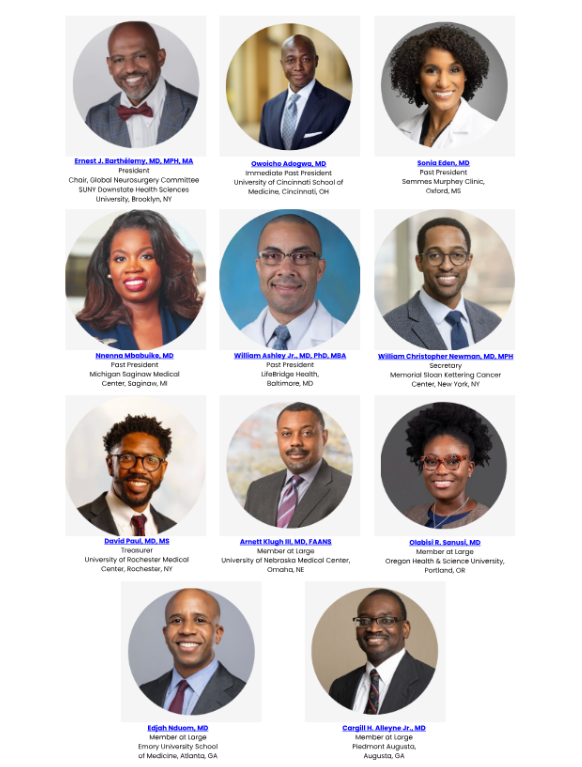
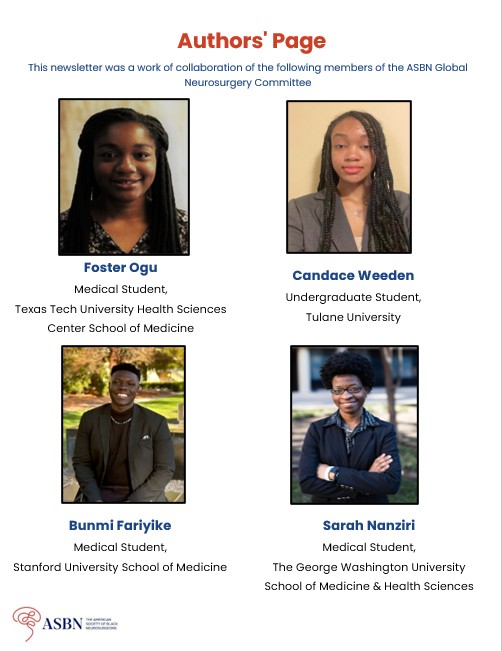
Our monthly newsletter delivers updates on events, research, resources, and initiatives of the global neurosurgery committee (ASBN-GNC) and in the larger global neurosurgery space, all curated specifically for our ASBN members.
The ASBN Global Neurosurgery Committee (ASBN-GNC) is a subcommittee of the Service and Communications/Outreach committee. Building on the ASBN mission, ASBN-GNC centers on three core values:
I. Global Health Equity
II. Decoloniality
III. Pan-Africanism
Research Highlight:
Stay informed with the latest updates and information on groundbreaking research, innovative projects, and cutting-edge developments within ASBN-GNC.
Neurosurgeon Highlight
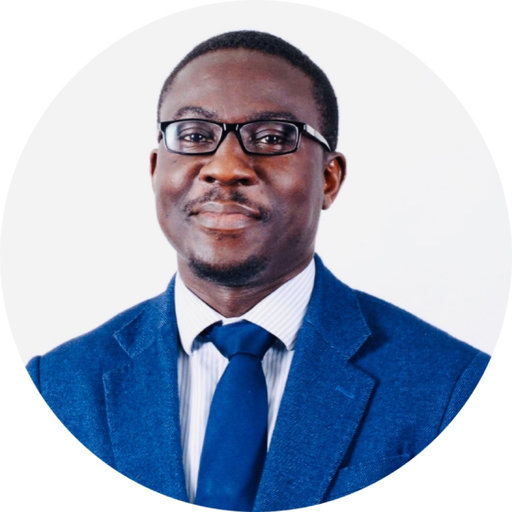
Andrew F. Alalade, MBBS
Dr. Alalade was born in Wales, United Kingdom to a young immigrant Nigerian couple. He later moved back to Nigeria for the rest of his childhood years. He attended Staff School, University of Ibadan and then the Nigerian Military School, Zaria. Dr. Alalade had always wanted to be a neurosurgeon - some of his old classmates still refer to his high school slum book and medical school year book where he signified his career intentions. His dad was diagnosed with a brain tumor during Dr. Alalade's second year of medical school - this experience made his commitment even stronger.
He went to the University College Hospital in Ibadan for his medical education and earned an MBBS degree. He joined the foundation program in Scotland, before being one of 9 successful candidates selected at ST3 level in the national neurosurgery interviews 3 years later. He was Chief Registrar at the National Hospital in Neurology and Neurosurgery and received his Certificate of Completion of Training in September 2016. He was awarded the HCA Travel Fellowship Award in 2017 to do the Minimally Invasive Endoscopic Skull Base Fellowship at the Department of Neurosurgery at Weill Cornell Medical College in New York before going on to do an advanced skull base fellowship at Princess Alexandra Hospital in Brisbane, Australia. He was also a Skull Base Fellow at The Walton Centre, Liverpool.
Currently, Dr. Alalade is a consultant neurosurgeon with specialist interests in skull base surgery, vascular neurosurgery and general neurosurgery. His practice spans both the UK and Nigeria, and his work sits at the intersection of clinical education, research and global neurosurgery.
A major focus of his career has been advancing skull base and vascular neurosurgery in low- and middle-income settings, particularly in Sub-Saharan Africa. He is passionate about sustainable capacity building through training, technology transfer, and systems strengthening rather than short-term mission models.
Academically, he is currently pursuing a PhD by Portfolio, examining emerging and established technologies in skull base and vascular neurosurgery through the lens of Gartner’s Hype Cycle, with the aim of guiding evidence-based adoption of innovation in neurosurgical practice.
Around the Globe: Impacts and Projects
A Look at Current Events in Global Neurosurgery
Dr. Alalade:
Training, Teaching, Research & Initiative
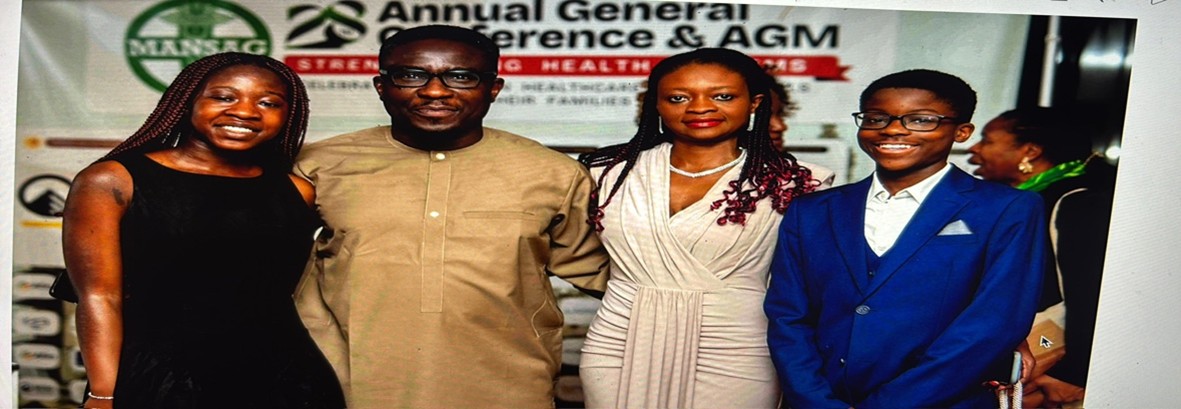
Dr. Alalade with his wife and two children.
Leadership & Global Engagements:
General Secretary: Medical Association of Nigerians Across Great Britain (MANSAG)
Member: European Association of Neurosurgical Societies (EANS) Diversity in Neurosurgery Committee
Member: Specialty Advisory Committee (SAC) for Neurosurgery
Regional Director: North-West England & Yorkshire Neurosurgical Teaching Programme (2022–2025)
Trustee: British Association of Black Surgeons (BABS)
Research Lead: Department of Neurosurgery, Royal Preston Hospital
Undergraduate Education Lead for University of Lancashire: Lancashire Teaching Hospitals NHS Foundation Trust.
Guest Faculty: West African Stroke Initiative (WASI)
Advisor: Melanin Medics, a UK charity promoting racial diversity in medicine.
Tutor: Neurovascular Module, Masters of Science (MSc) Neurosurgery, The University of Buckingham
Recent and upcoming activities & projects:
Dr. Alalade's ongoing global initiatives include
Training, mentorship, and systems development in West Africa e.g., Lagos Neurosurgery Course and West African Stroke Initiative (WASI)
Keynote Speaker at multiple UK and Nigerian medical conferences e.g., Nigerian Academy of Neurological Surgeons (NANS) annual conference, The Neurology and Neurosurgery Interest Group (NANSIG) conference etc
Ongoing academic work and publications related to skull base and vascular neurosurgery
Medicolegal practice alongside clinical work, contributing expert opinions in neurosurgical cases as part of the British Medical Experts (BME).
Documentary project exploring the journeys of one of Africa’s largest medical school cohorts and their global impact
International neurosurgical meetings, workshops, and conferences, particularly those focused on global health, innovation and surgical equity
Dr. Alalade's upcoming global initiatives include
British Skull Base Society (BSBS) Meeting 2026
UK National Neurosurgery ST1/2 Shortlisting and Interviews
IRCAD Africa 360-Skull Base Approaches Training Course
Beyond the Practice: Hobbies & Interests
Clinical interests
Global neurosurgery
Cerebrovascular neurosurgery
Skull base
Open for collaboration especially within
Global neurosurgery research
Skull base and vascular neurosurgery training
Health systems strengthening in LMICs
Hobbies
Traveling with family
Participating in trivia quizzes
Exploring new cultures and cuisines
Reading
Hiking or long walks on some of the beautiful hiking routes in NW England
Favorite color
Blue
Care and Impact
Healing, Hope, & Human Impact
Dr. Alalade
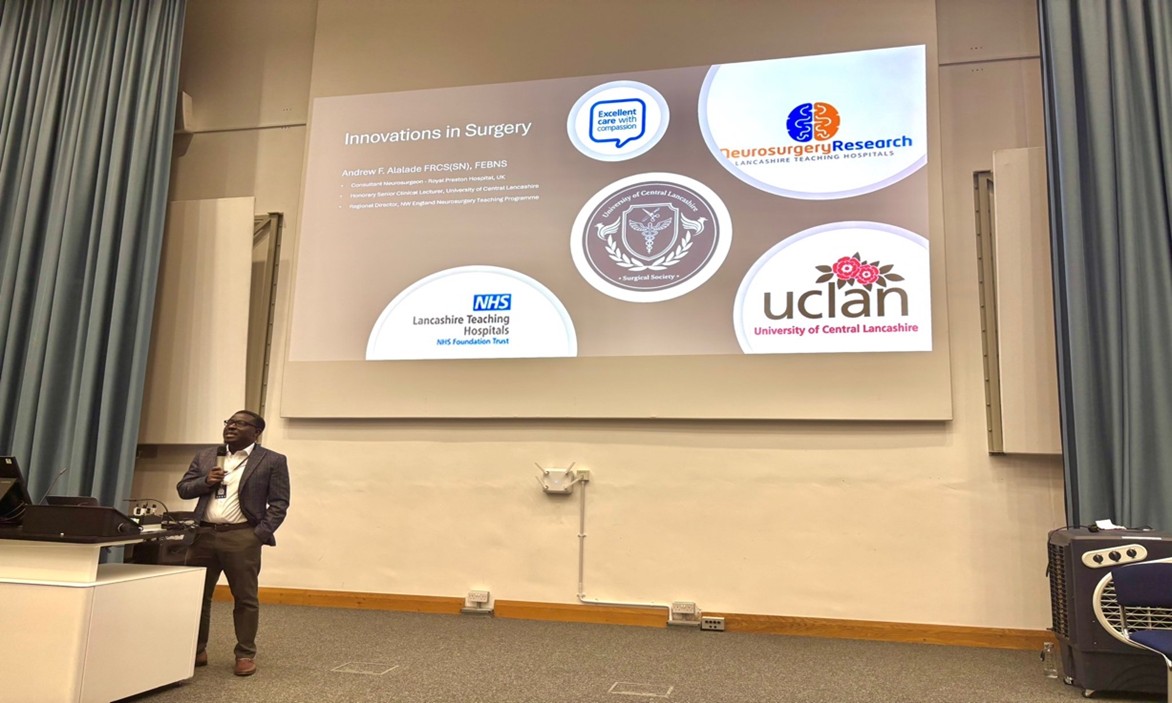
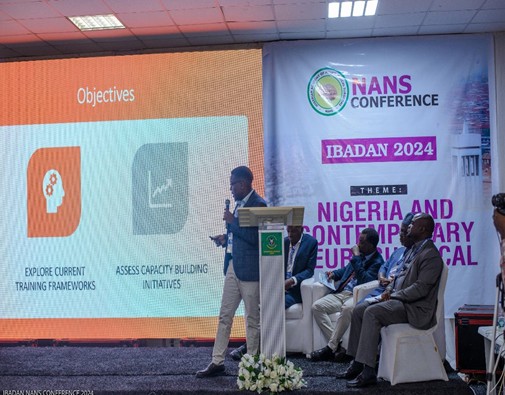
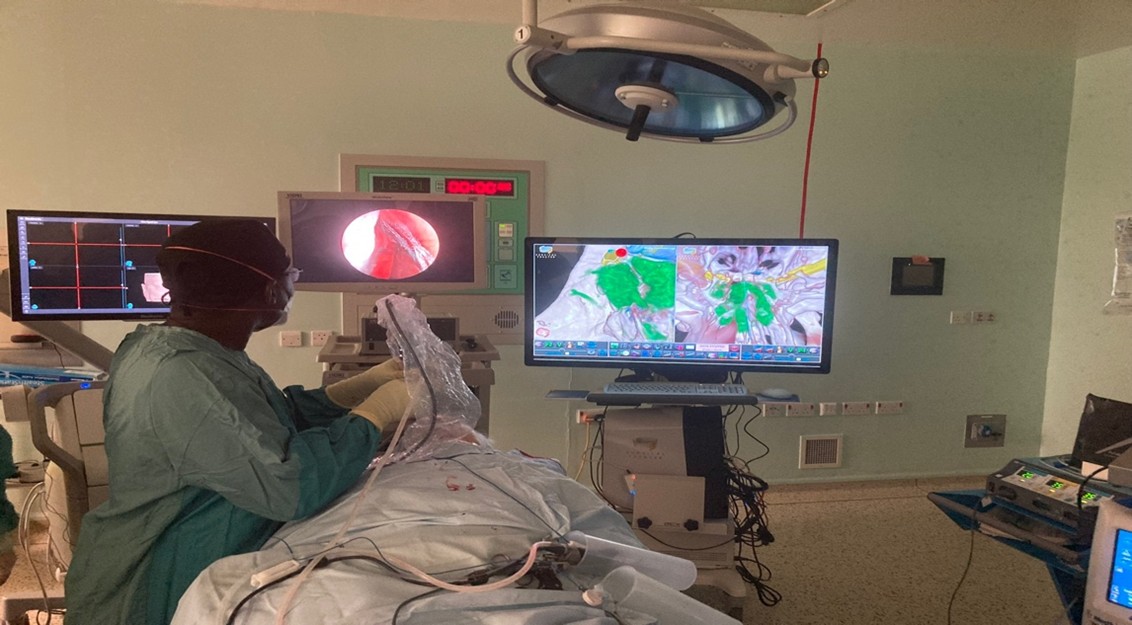
Dr. Alalade as guest speaker at the University of Lancashire (left), giving a talk at the 2024 NANS Conference (center) and doing endonasal surgery (right)
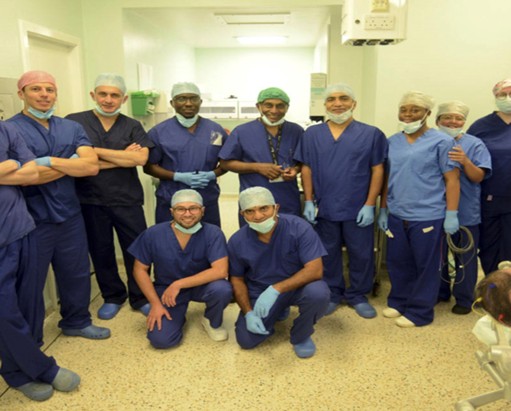
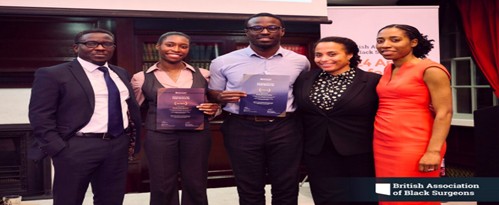
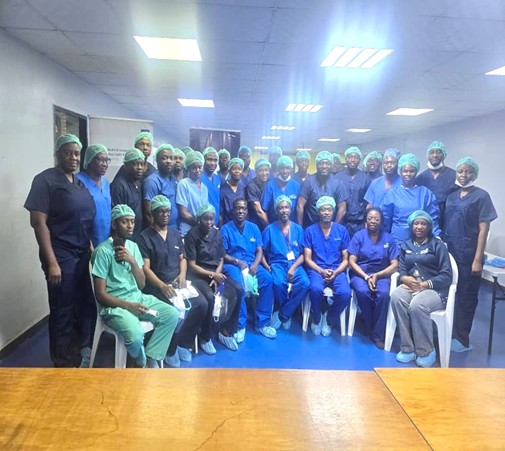
Dr. Alalade with colleagues in various settings engaging in collaborative clinical and academic activities: with members of the Royal Preston Hospital Skull Base Team (top left), talk at the University of Bristol Medical School (bottom left), congregation of British Association of Black Surgeons (BABS) (top right), and faculty for the Lagos Neurosurgery Course (bottom right)
Nigeria, often called the “Giant of Africa,” is a populous West African nation of over 220 million people situated along the Gulf of Guinea, with a vast and diverse geography that ranges from mangrove swamps and sandy Atlantic beaches in the south to savannah and semi-arid landscapes in the north. It is richly endowed with natural resources including crude oil, natural gas, limestone, tin, coal, and arable land, alongside a large agricultural sector producing cassava, yam, maize, rice, cocoa, and groundnuts. Nigeria’s ecological diversity, cultural heritage sites, and dynamic cities support tourism, trade and regional economic activity.
Nigerian society is profoundly diverse, with more than 250 ethnic groups and 500+ languages, the largest being Hausa-Fulani, Yoruba, and Igbo, alongside many minority groups. English serves as the official language and a unifying medium, complemented by widespread use of indigenous languages and Nigerian Pidgin. Social life is shaped by strong family structures, professional and community associations, and vibrant traditions of music, dance, storytelling, and visual arts that have gained global recognition. Religious pluralism is a defining feature of the country, with Islam and Christianity widely practiced alongside indigenous belief systems; despite periodic tensions, interfaith coexistence and shared cultural practices remain central to everyday life. Staple foods vary by region but commonly include rice, cassava-based dishes such as garri and fufu, yam, and maize, typically served with richly spiced soups and stews like egusi, og`bono, vegetable, and pepper soups, often prepared with palm oil, fish, or meat.
Nigerians are united by a deep love for football (soccer), fashion and Afrobeats, where the passion of the beautiful game meets the infectious rhythms that soundtrack everyday life.
Healthcare Delivery System:
Nigeria’s healthcare system is structured across public, private, and faith-based sectors within a three-tier framework involving federal, state, and local governments. Primary healthcare is largely the responsibility of local governments, secondary care is provided by state-run general hospitals, and tertiary services are delivered through federal teaching hospitals and specialist centers overseen by the Federal Ministry of Health. While significant challenges remain including uneven access, workforce shortages, and infrastructure gaps, ongoing reforms and partnerships focus on strengthening primary healthcare, expanding health insurance coverage, improving maternal and child health, enhancing laboratory and diagnostic services, and building emergency and referral systems. Non-governmental organizations and international partners play an important role in service delivery, training, disease control, and health system strengthening.
Neurology and neurosurgical services in Nigeria are more developed than in many neighboring countries but remain insufficient relative to the population size and disease burden. Access is constrained by shortages of specialists, limited neuroimaging and intensive care capacity outside major cities and significant regional disparities. Government initiatives, postgraduate training programs, and collaborations with international partners continue to support workforce development, infrastructure expansion and the growth of subspecialty services, with the long-term aim of delivering equitable, sustainable neurology and neurosurgical care nationwide.
Visit Federal Republic of Nigeria
Visit Nigeria to experience a blended vibrant culture, deep history, and breathtaking natural landscapes. It offers a dynamic mix of bustling cities like Abuja, Lagos, and Port Harcourt, rich in artistic tradition, world-famous fashion and music scenes, and warm and welcoming communities. Tourists can explore diverse ecosystems - from the beaches of Tarkwa Bay to the waterfalls of Erin‑Ijesha and the wildlife of Yankari Reserve - while also experiencing festivals, cuisines, and heritage that reflect the country’s extraordinary cultural mosaic represented by its 250+ tribes and 500+ living languages. Nigeria is an enclave of energy, creativity, and authenticity, making it a destination that leaves a lasting impression on anyone who visits.
Committee Meeting Highlights
January 2026 Meeting Summary
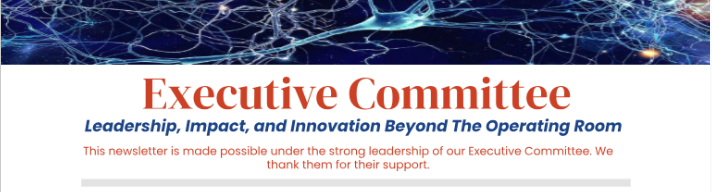
The committee chair, Dr. Barthélemy, shared possible handoff of committee leadership now that he has assumed the role of President but plans to remain highly involved.
The collaborative paper on decolonization with effort from organizations like WFNS, Mission:BRAIN, FIENS and CAANS was discussed. An outline has been created from 13 contributions. Contributors have been assigned a section based on their proposal to expand on with a due date of Feb 14. The sections will be harmonized and presented to the ASBN E-Board by Feb 28. Partner organizations and institutions will be invited to participate then. If interested in helping to write sections or add anecdotes of lived experiences, please reach out to Dr. Barthélemy. An update on the ASBN global neurosurgery paper series was also shared. The first and senior authors of each paper will be called upon to present the main points of their paper to the ASBN E-Board and encourage them to provide comments and feedback. First authors will then assist in submission while ways to cover APCs are discussed with the E-Board.
Frontiers in Neurology is having a call for papers with a focus on Equity in Global Neurosurgery. Papers can be clinical, reviews, perspectives and more. There is an opportunity for e-book and chapter authorship if more than 10-13 papers are accepted. Medical students interested din submitting are advised to invite the perspective of an attending/senior author. Funds are available to cover APCs for those who may need it.
PAN-BRAIN is a neurosurgical biobank now led by ASBN designed to collect and manage bio-specimens from African and Afro-descendant communities. The goal is to advance neurosurgical care in African and Afro-descendant regions with a focus on neurotrauma and neuro-oncology. An MOU with CAANS is in the process of being formalized to strengthen their relationship with ASBN given their interest in PANBRAIN as well.
Join the GNC Newsletter Team !!!
Interested members should join our GNC Newsletter team!
Networking & mentorship across borders
Highlight impactful global leaders and initiatives
Journalism and leadership development skills
Interested?Email Dr. Barthélemyatglobalneurosurgeon@gmail.com with brief statement of interest and attend our February Monthly Meeting to meet the team!
Fostering Worldwide Global Neurosurgical Care Advancements
Any ASBN member (student, resident, attending, etc...) who is engaged in a project, particularly one focused on global neurosurgical healthcare and international or multi-organizational collaboration, is encouraged to reach out to our team. We are committed to fostering partnerships and facilitating proper collaboration to achieve our shared goals. Let's work together to make a meaningful impact.
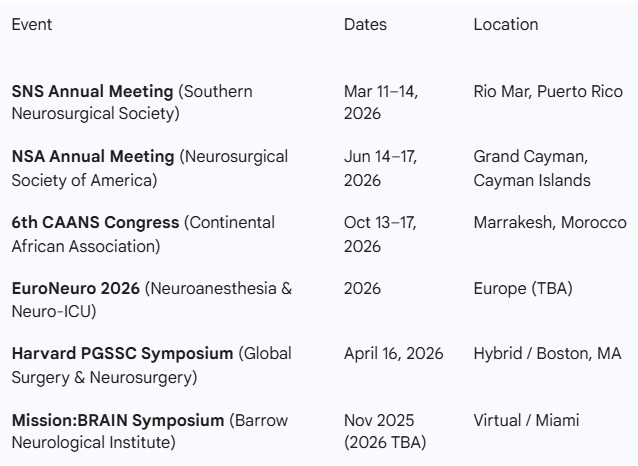
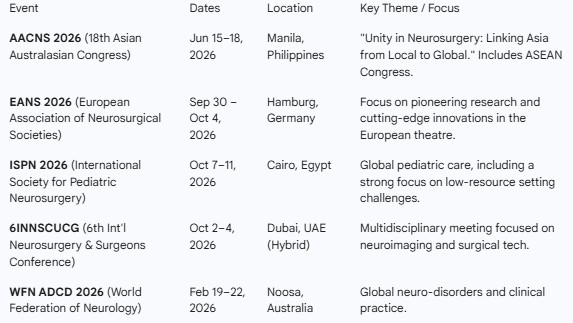
Upcoming Conferences and Conventions
1st World Conference of Computational Neurosurgery. February 13-15, 2026 in Sydney, Australia. Online/Virtual. Explore more at https://wccns.com.au/
3rd Congress of Yaşargil Microsurgery Academy. March 4-7, 2026 in São Palo, Brazil. Explore more at https://yasargilcongress.com/
2nd WFNS International Global Neurosurgery Conference. April 16-18, 2026 in Dar es Salaam, Tanzania. Explore more at https://tanzanianeurosurgicalsociety.org/global-neurocon-26-dar-es-salaam
94th American Association of Neurological Surgeons Annual Scientific Meeting. May 1-4, 2026 in San Antonio, Texas. Explore more at https://annualmeeting.aans.org/
G4 Alliance Global Surgery Day. May 2026. Explore more at https://theg4alliance.org/
6th African Congress of Neurosurgery (CAANS). October 13-17, 2026 in Marrakech, Morocco. Explore more at https://neurosurgerymorocco.com/rushmore_event/6%E1%B5%89-congres-africain-de-neurochirurgie-marrakech-2026/
76th Congress of Neurological Surgeons Annual Meeting. October 31-November 4, 2026 in Washington, D.C. Explore more at https://www.cns.org/annualmeeting
Key Registration Hubs for Global Neurosurgery Conferences
WFNS Events: wfns.org/events (definitive source for endorsed international meetings).
AANS Events: aans.org/about/events-calendar/ (best for North American and major global summits).
EANS Events: eans.org/events (best for European and Mediterranean training courses).
Recommended Readings
Representation in Neurosurgery
Each issue, we recommend published research articles with a unifying theme. You can also always check out our comprehensive reading list linked below!
In this article co-authored by this month’s spotlighted neurosurgeon, Dr. Andrew Alalade, the authors investigate a phenomenon seen across several industries: a continued increase in the diversity of organizations that does not translate to consummate increases in representation among leadership positions in said organizations. In a cross-sectional study of neurosurgical departments across 32 European countries, they found that ethnic minorities remain poorly represented in neurosurgical leadership across Europe. However, representation was found to be most robust in countries with large immigrant communities.
This study traced the migratory and training behaviors of 5,307 American neurosurgeons over the course of 70 years. They found that women were more likely to complete fellowship than their male counterparts. They also noted a trend towards increased migration to the southern US, although the Northeastern corridor still boasts the highest density of trained neurosurgeons.
In this literature review, the authors sought to quantify the linguistic and geographic representation of the neurosurgical literature, with the goal of improving global communication of neurosurgical research. Of the 74 neurosurgery journals ultimately included in their analysis, more than two-thirds were published in English, more than two-thirds were from high-income countries, and more than one-third had origins in the Americas. These findings highlight the need for dissemination of research in other global languages beyond English as well as for the promotion of research journals from traditionally underrepresented regions.
In this study, the authors assessed the racial and ethnic diversity among nine procedure-focused specialties, including neurosurgery, from 2005 to 2019. Notably, the field of neurosurgery saw the greatest discrepancy in diversity between residency applicants and current residents, with the percentage of Black applicants almost doubling that of the current Black resident population. As the starkest discrepancy seen in this work, this highlights a crucial need for supporting Black neurosurgery hopefuls in their quest to pursue neurosurgical training. However, it also represents a source of hope and inspiration: that current efforts have succussed in generating interest in neurosurgery among Black medical students that, with continued focused initiatives, may translate into increasing Black representation in the field.