| |
Advancing the art, sport, and science of aviation since 1905 | | From the Director's Chair: The Importance of Validation | | |
Dear NAA Members,
As I walk through the NAA headquarters, I am surrounded by the physical weight of aerospace history. It is easy to view our recognitions and trophies as a collection of legacy moments. But as we wrap up our annual selection cycle, I am reminded of our true purpose - the NAA isn't a passive record-keeper; we are the definitive validation authority for the entire aerospace ecosystem.
This responsibility entails a significant ethical obligation.
In an industry with a long history like ours, it can be easy to depend on strict, top-down systems. However, real progress requires focusing on context rather than just control. Our selection process shows this change. Each award we give, whether it is for an industry leader, a dedicated team, or a significant aerospace innovation, must be based on fairness, integrity, and merit.
When our selection committees meet, we instruct them to focus on the facts. We gather respected experts, review the data, and follow a careful process to make sure every nominee is evaluated fairly.
* We look beyond presentations. Our focus is on verified data and real-world results, not on who made the nomination or who presents the best or speaks the loudest.
* We require clear evidence of impact. To maintain the value of an NAA honor, achievements must demonstrate real, proven contributions to aerospace.
* We are open and honest in our discussions. In our selection committee meetings, we carefully review the information to make sure our decisions are objective, fair, and ethical.
At the NAA, we recognize the true foundations of flight. By maintaining these rigorous standards across all our awards and recognitions, we honor those who came before us and ensure a clear benchmark for future innovators to strive for. I look forward to joining you at our upcoming presentations as we etch the newest, carefully chosen names into aerospace legacy for all time.
Amy
Amy Spowart
President and CEO
National Aeronautic Association
| | The Collier Trophy Explained | | |
For over a century, this process has stood as the ultimate validation authority for American aerospace. Each Collier Selection Committee comprises more than 50 of the industry's most trusted leaders, innovators, and pioneers. When we convene,
the air is thick with a shared gravity.
We are not only selecting a recipient;
we are recording a significant moment in aerospace history.
The Criteria: Making a Meaningful Impact
Every nomination faces a strict, unyielding standard established in 1911; the achievement must be the absolute greatest in aeronautics or astronautics in America.
Its value must be demonstrated by actual use during the preceding calendar year.
To ensure we recognize true achievement in modern aerospace, we evaluate each project using three main criteria:
| | |
Performance: Does the project introduce clear improvements in speed, capability, or endurance, with measurable results that demonstrate progress in aerospace operations?
| | Efficiency: Does the project tangibly streamline logistics or significantly reduce operational challenges for aerospace organizations, as shown by practical examples? | | Safety: Does the project provide demonstrable advancements in protecting individuals or enhancing the reliability of autonomous systems, supported by concrete evidence? | |
The Selection Process
The process takes place over a single, focused day:
| | |
The defenses: Finalists present data, showcasing innovations from deep space to electric propulsion and autonomous logistics.
| |
The strategic debate: Once the doors close, the room shifts from a technical review to a strategic debate on impact. We weigh whether the "greatest achievement" is a single groundbreaking leap or a masterfully executed framework that transforms the industry.
| | |
The cross-examination: The committee reviews data and telemetry, focusing on real-world cases rather than presentation slides.
| |
The verdict: Multiple ballots are cast until a majority selects the winner.
| |
Recognizing Progress
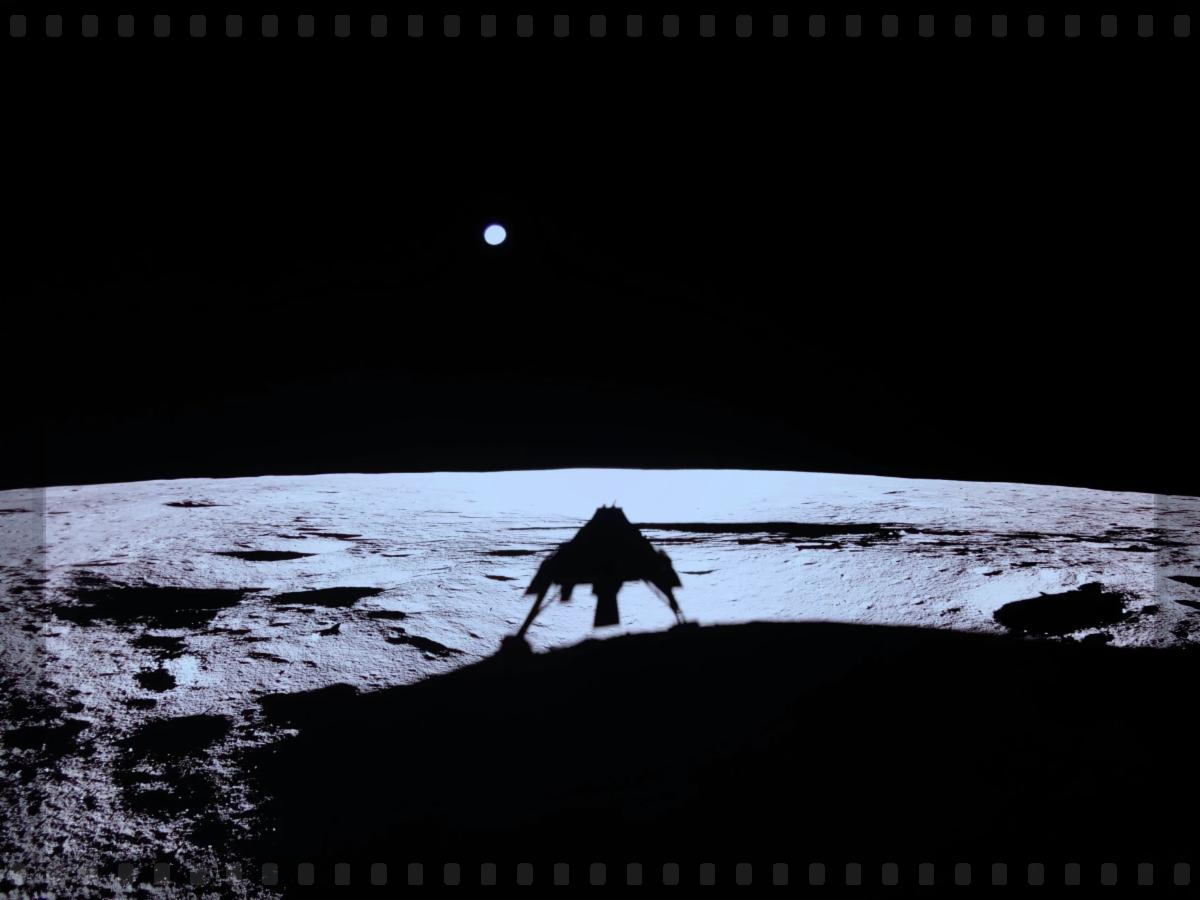
Selecting Firefly Aerospace’s Blue Ghost Mission 1 Team represents an important milestone: the first fully successful commercial lunar landing with critical NASA payloads. By recognizing a commercial team for creating a reliable logistics model on the Moon, the committee continues its tradition. The focus remains on looking beyond short-term attention to support the foundation for future progress in aerospace.
When the Blue Ghost team steps into the spotlight this June in Washington, D.C., they claim their place in history as innovators whose achievement reshapes what is possible in aerospace.
| | Join us in honoring the Blue Ghost Mission 1 Team | |
For over a century, the National Aeronautic Association (NAA) has held the distinct honor of presenting the Robert J. Collier Trophy. This award is reserved for those who don’t just innovate, but fundamentally redefine the performance, efficiency, and safety of aerospace flight.
The Collier Trophy is awarded for achievements that have moved beyond the drawing board and into successful operation. With Blue Ghost Mission 1, Firefly Aerospace isn’t just launching a lander; they are establishing a reliable, commercial gateway to the Moon. They are taking the “impossible” and making it a repeatable, historic reality.
Today, the Collier Celebration remains the most prestigious gathering in aerospace. The NAA is honored to recognize the visionaries at Firefly who are setting the new standard for the industry and securing our future among the stars.
Please join us in Washington, D.C. for an extraordinary
night of aerospace excellence!
| |
Lindbergh and the Power of Validation
"Everybody knows that Charles Lindbergh made the first solo transatlantic flight when he flew the Spirit of St. Louis from New York to Paris in 1927, but did you know that Lindbergh's achievement wasn't just a first? It became a certified record for “distance” of 3,610 miles."
-Art Greenfield, NAA SVP Contests & Records
This Month in Aviation History: On May 20, 1927, Charles Lindbergh climbed into the Spirit of St. Louis and chased a daring leap into the unknown. Thirty-three and a half hours later, he landed in Paris, changing global transportation forever. A not-so-well-known fact is that Lindbergh's achievement wasn't just a first—it became a certified record for “Distance” of 3,610 miles.
It is one of the most famous stories in human history. But what is often left out of the history books is how that historic milestone was officially proven to the world.
Lindbergh didn’t just take off on a whim. Because the NAA was, and remains, the sole validation authority of the Fédération Aéronautique Internationale (FAI) in the United States, it was our job to ensure this achievement was completely indisputable.
Before the Spirit of St. Louis ever left the muddy runway in New York, the NAA was on-site to install a sealed, certified barograph into the fuselage. This instrument was the ultimate source of truth, recording precise atmospheric pressure, altitude, and continuous flight duration.
When Lindbergh landed in France, those NAA seals were intact. We pulled the raw data, cross-examined the telemetry, and officially certified the first solo, nonstop transatlantic flight at 33 hours, 30 minutes, and 29 seconds. We looked past the immense media hype to focus strictly on verified facts.
Nearly a century later, this milestone reminds us of the true gravity of our mission. Today, as we look toward a future of autonomous systems, commercial cislunar logistics, and advanced propulsion, our methodology remains unchanged. True breakthroughs require more than a bold vision, and they require absolute validation.
Just as we did after his historic flight, the NAA stands ready to certify the giants who will define the next century of flight.
As well as the records Lindbergh earned via the NAA, he was also awarded these NAA trophies:
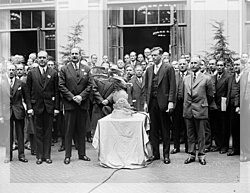
1928 - Harmon Trophy (escorted by Orville Wright)
1948 - Wright Brothers Memorial Trophy
| |
National Aeronautic Innovators Summit
As the aerospace landscape shifts toward autonomous systems and sustainable propulsion, the National Aeronautic Innovators Summit will serve as the premier forum for those bridging the gap between legacy excellence and future disruption. Held in the historic birthplace of aviation, Dayton, Ohio, our summit is designed for leaders who don't just follow industry trends but set them.
| | |
Do you have a record attempt in the works? Did you or a team member achieve a major milestone? We want to hear about it!
Use the guide below to submit your update for our next newsletter.
Submit Your News Here!
| |
What we’re looking for:
- Record Rumors: Are you prepping a bird for a speed or altitude attempt? Give us the "behind-the-scenes" on your prep.
- Workplace or Organization Milestones: Did you or a friend or colleague just hit an anniversary or take part in a successful record attempt, airsport event, or other exciting program?
- Innovator Spotlights: Know a member who just hit a career high or launched a new aerospace project?
- Photo of the Month: Send us your best high-res shot of NAA members in action.
| | NAA Member Spotlight: Hemlock Films | | |
When we talk about documenting the history of flight, it is easy to focus entirely on logbooks, telemetry data, and hardware. But aviation history isn't just a collection of cold facts; it is a narrative of human grit, barrier-breaking innovation, and relentless determination. That is exactly why Hemlock Films is such a vital member of the NAA ecosystem.
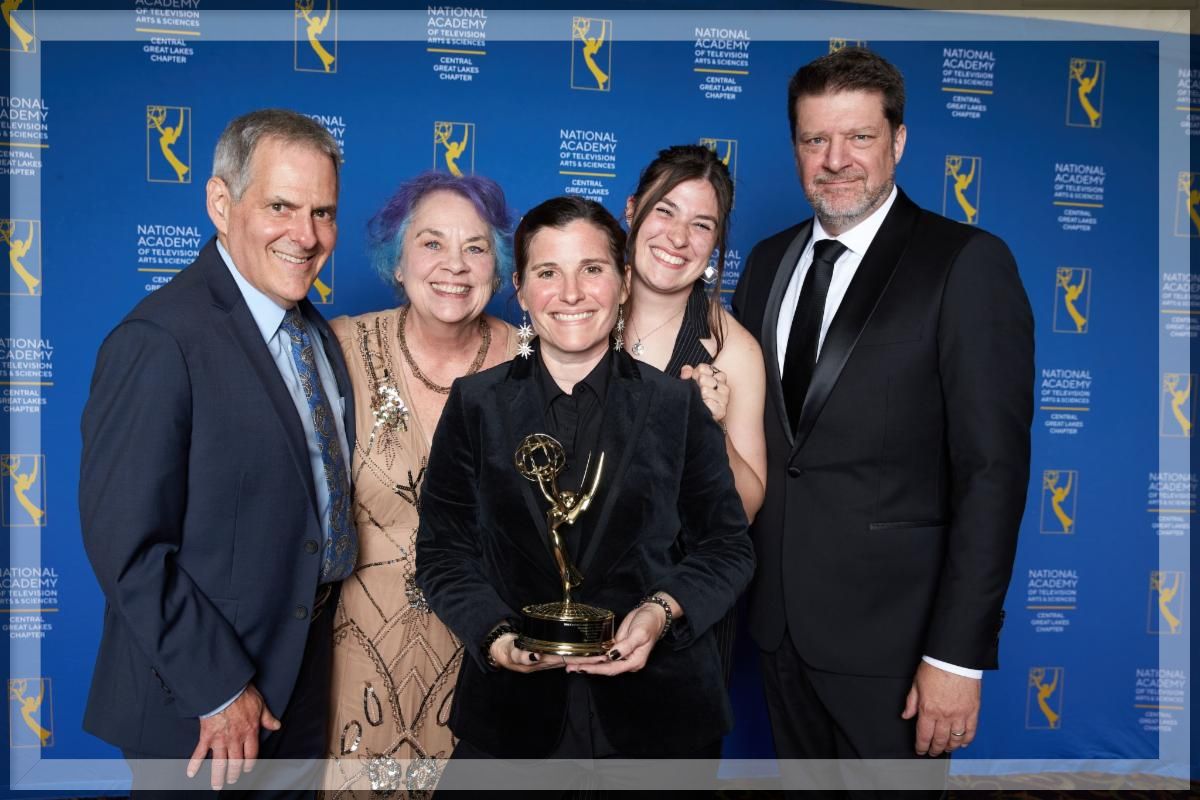
Led by Emmy-winning filmmakers Kara White and Adam White, Hemlock Films has spent years masterfully capturing the soul of aviation. From their acclaimed work on The Restorers series to documentaries like Rise Above: WASP, they don't just point a camera at old airplanes. They look past the polished surface to deliver the raw, authentic context of the pioneers who built the foundation of our industry.
At the NAA, we believe that preserving history requires a commitment to truth and integrity. Hemlock Films embodies that exact philosophy. Their work serves as a magnificent visual validation authority for our heritage, ensuring that the stories of women Airforce Service Pilots, master aircraft restorers, and legendary aerospace innovators are told with absolute accuracy, fairness, and cinematic brilliance. By bringing these critical stories to life, Hemlock Films doesn't just look backward - they actively fuel our industry's workforce pipeline. They inspire the next generation of engineers, pilots, and dreamers by showing them exactly what is possible when you refuse to accept limits.
We are incredibly proud to have Hemlock Films as a member of the National Aeronautic Association. They are the storytellers of our legacy, protecting our history while inspiring the innovators who will design the future of flight.
To learn more about their latest preservation projects and upcoming documentary releases, visit HemlockFilms.com.
| |
The National Aeronautic Association doesn’t just record history—we celebrate the people making it. Use this form to nominate an individual or organization that embodies the “art, sport, and science of aviation."
Nominations and recognition are member benefits. Join today and prepare to share your hero soon!
| |
The National Aeronautic Association doesn’t just record history -
we celebrate the people making it.
| | |
Don't Miss Our News!
Follow Us on Social
| | | | |