|
“Riddles and Parables”
We all love riddles, whether funny, complex, or head-scratching. According to “Word Riddles for Kids Spark Learning Laughter,” a riddle is a statement, question, or phrase with a hidden meaning. It uses double meanings, metaphors, and clever language to trick the listener. You solve it by guessing the hidden object or concept.
Try this riddle from Reader’s Digest, “I speak without a mouth and hear without ears. I have no body, yet I come alive with the wind. What am I?”
The answer is an echo.
Did you get the answer? Riddle answers can be difficult.
Do you have a favorite riddle? Please share it with me, and it might be included in a future edition of our newsletter!
In the gospels, parables are similar to riddles. A traditional riddle conceals its meaning behind wordplay ("I speak without a mouth..."). A parable conceals its meaning behind an ordinary story. Both invite the hearer to stop, think, and discover something not immediately obvious. The key differences are that riddles test your logic, while parables guide your morals. Riddles rely on wordplay or secrets. Parables use familiar characters and plots. Riddles have one correct solution. Parables have deep, open meanings.
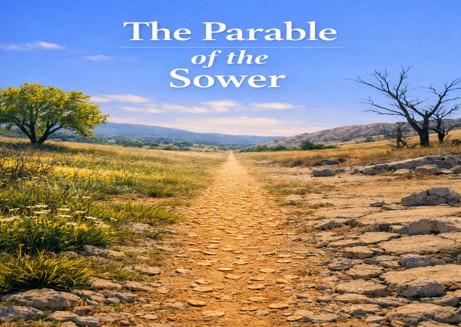
Jesus used parables to reach others, especially those willing to listen, ponder, and struggle to understand. In Sunday’s gospel from Matthew 13:10-17, one of Jesus' stated purposes for speaking in parables becomes clear. Those merely curious hear a story about farming. Those with "ears to hear" discover the mystery of God's kingdom. The parable is less about solving a puzzle than about being changed by what the puzzle reveals.
Now, a final riddle for you to solve.
I am given freely, never earned. I fall on saints and sinners alike. I never lose my power, though many reject me. When I take root, I produce a harvest no one could imagine.
What am I?
The answer will be revealed at worship on Sunday at 10:30 AM. If on vacation or unable to attend live worship, join us on Facebook at HopeClinton.
OK, I know you can’t wait for the answer to the riddle, so I’ll give you some clues. The answer keeps the focus on what Jesus does: not on admiring the good soil, but on the extravagant Sower and the living Seed. The parable is not simply to be solved, but to let it solve us. As with every good riddle, the answer is discovered only when we realize we are part of the story.
Ponder this week's riddle and come to worship seeking understanding and answers!
Peace+
Pastor Eric
|