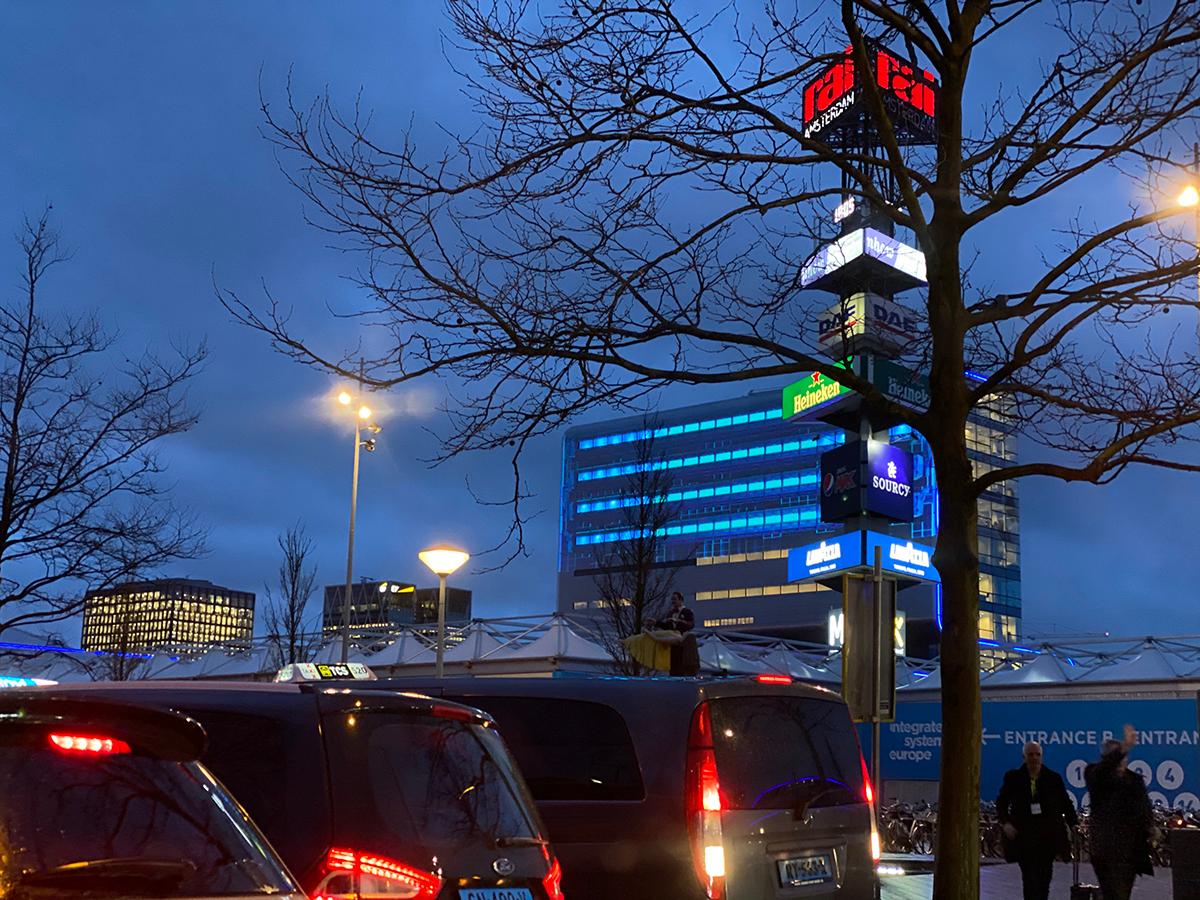
On Monday, February 10, it certainly looked like Integrated Systems Europe (ISE) 2020 was a show not intended to happen.
While companies were working hard on the finishing touches to their ISE 2020 exhibits and conference attendees were already gathered at the multiple events that take place prior to the show's opening, things were already off to a rough start. ISE organizers were looking nervously at the continuous barrage of announcements coming from Barcelona, where many major exhibitors were cancelling their expected appearances at the Mobile World Congress (MWC) 2020, a show scheduled for just 10 days after ISE 2020.
|
|
|
Integrated Systems Europe, a joint venture of the Audiovisual and Integrated Experience Association (AVIXA) and the Custom Electronic Design and Installation Association (CEDIA) says goodbye to the RAI and Amsterdam in February.
|
With the worrying news coming out of China about the coronavirus (COVID-19) outbreak, a travel ban in place for the affected areas in China, and flights from China and many connections around Asia closed due to fear of a major international epidemic spreading to other continents, many companies faced the dilemma of having to cancel their plans for major industry trade shows (and suffering heavy losses for commitments that in most cases are not refundable). At ISE, there had been already major cancellations, with LG Electronics one of the largest exhibitors, being the most notable. Approximately 50 Chinese exhibitors and about 20 exhibitors from other regions of the world didn't want to expose their employees to the risk of the contagious virus and also cancelled their presence at ISE.
To make matters worse, in the days prior to the show's opening, a storm (or multiple storms) across Europe were causing havoc at all major central European airports, and in Amsterdam, news of flight cancelations and failed attempts to land at Schiphol were causing additional worries of lower attendance, even though the pre-registration numbers for the 2020 shows were originally 7% higher than the previous year's attendance.
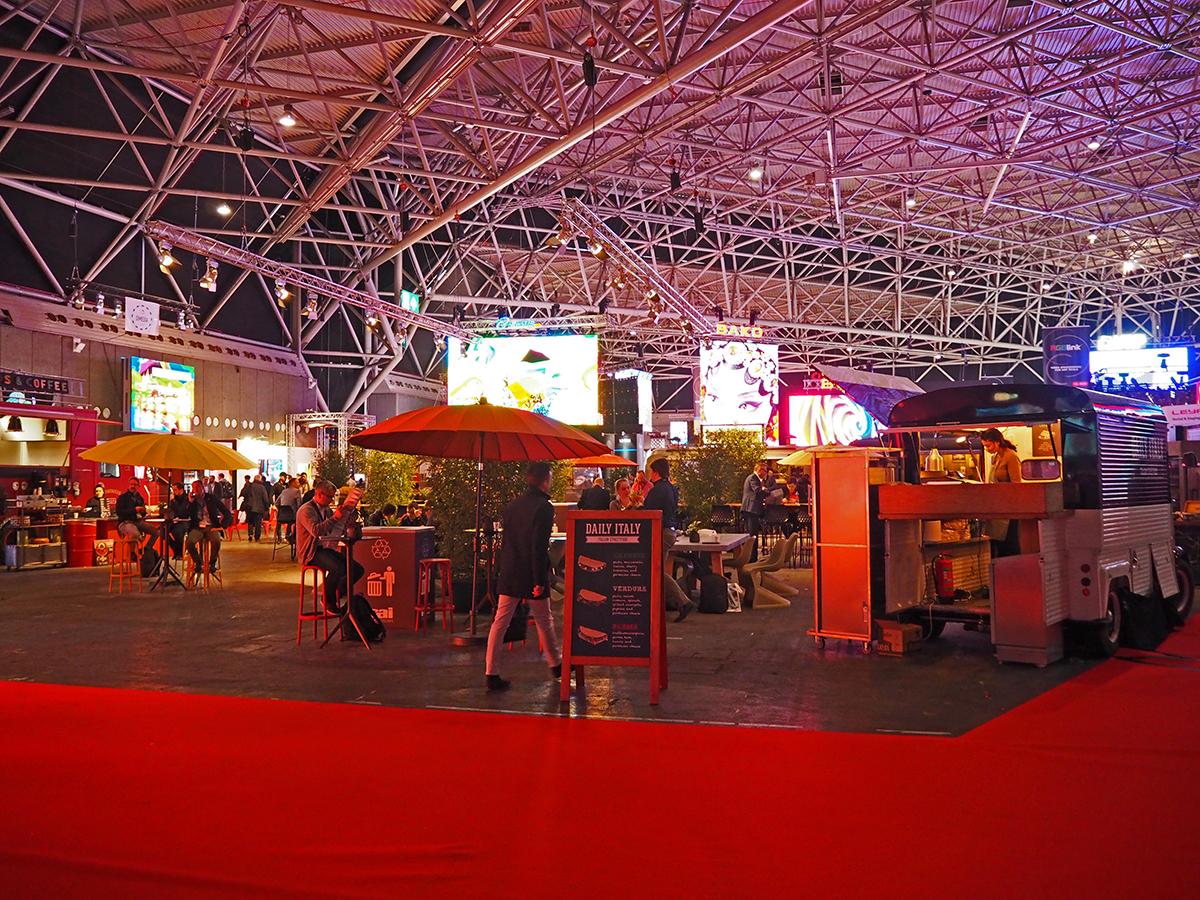
In Amsterdam, the ISE organization had to work hard to quickly reorganize the exhibition spaces, create new food court areas to fill-in empty areas such as the planned massive LG booth space, while making sure they also accommodated requests from justifiably disappointed exhibitors located in less convenient aisles, eventually surrounded by empty spaces. That effort was certainly one of the great success stories for the show and should be commended.
|
|
|
A new food court at ISE 2020, where LG Electronics was supposed to be exhibiting.
|
During the show's opening press conference on Tuesday, Mike Blackman, Managing Director at Integrated Systems Events, could not hide the concerning changes even though the message was: "The show must go on." Show promoters are well aware of the risk of a virus outbreak and the fact that trade shows are "super incubators" for something like the coronavirus. But for ISE, even though some exhibitors had already decided to withdraw from the show, it was too late to cancel, and instead the effort was focused on making sure that all possible prevention measures were in place and following recommendations from health organizations.
And suddenly this brings an entirely new perspective to the relatively petty politics of trade shows. While trying to behave normally and conduct business as usual, the risks of "being there" were certainly on the minds of visitors and everyone working at the event.
|
|
|
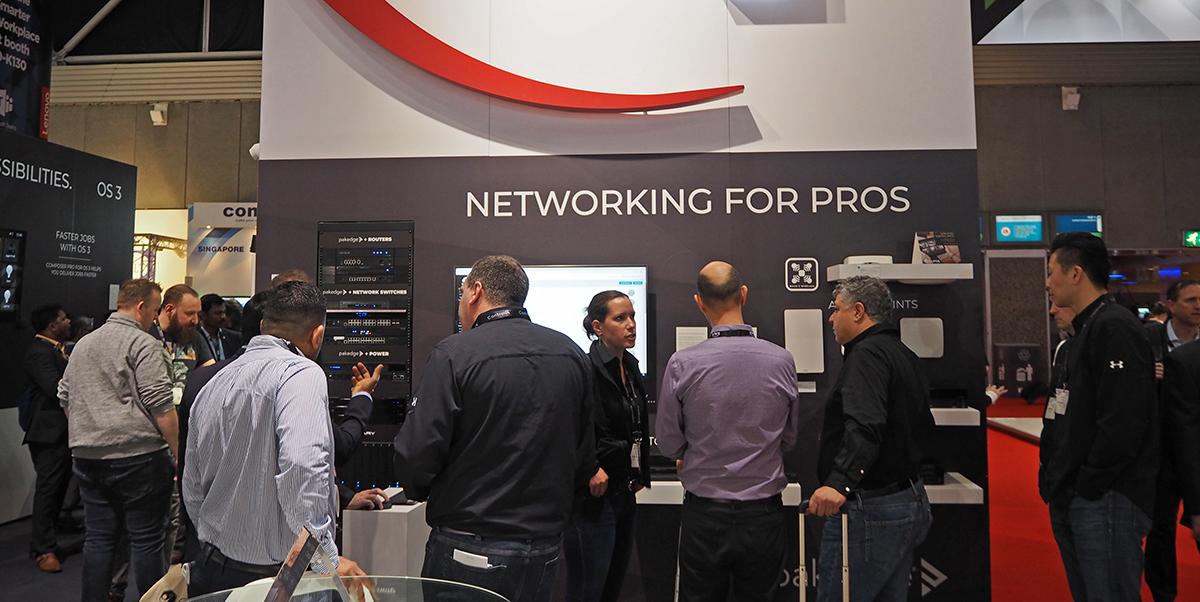
With the virus epidemic news, "Networking for Pros" suddenly gains a whole new meaning.
|
When ISE 2020 opened its doors on Tuesday, February 11, it was visibly apparent that attendance was lower. And the more than 1,300 exhibitors in attendance adapted to new measures such as handing out disinfectant dispensers and adopting a "no hand-shake" policy. For future reference, companies did not adopt the recommended "bumping fists" alternative, and instead many opted for the occasional elbow rubbing... Apparently, there's a whole new protocol that needs to be researched and promoted for future events.
And then there was Barcelona. ISE, aware of the limitations regarding the show's continuous growth trajectory being hampered by the constricted RAI exhibition center, had already decided to change the venue for the 2021 show. ISE had already announced the show would be leaving Amsterdam and moving to Barcelona next year to embrace the modern Barcelona Fira complex, which the city built to accommodate some of the largest shows in Europe and the world. Among which, is Mobile World Congress (MWC).
|
|
|
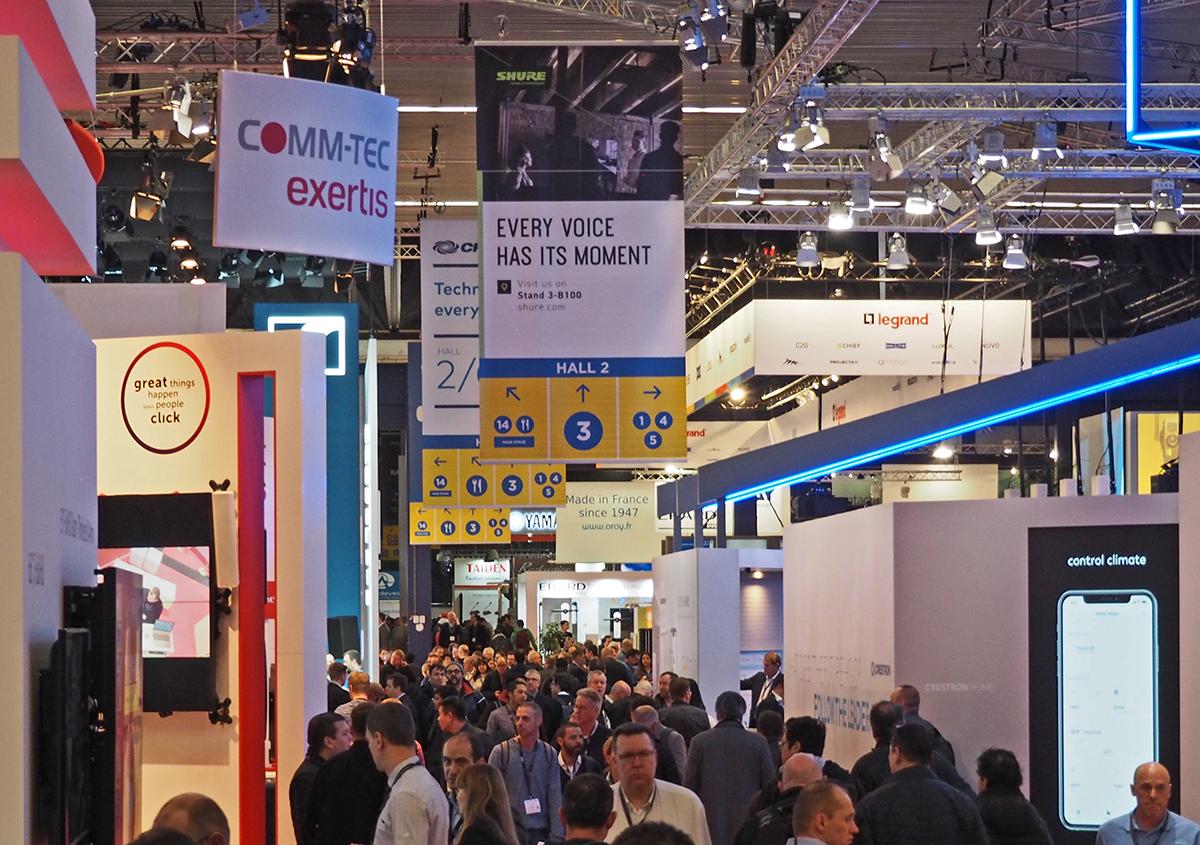
Second show day and the crowds made ISE 2020 look like everything would be business as usual.
|
At the end of that Wednesday, ISE 2020 was finally looking like much as it had been the prior year, and in some of the halls, the environment felt like some of the best moments in the industry. In the audio sections of ISE, in particular, it felt like they were "partying like its 1999!" The audio booths this year were larger and better than ever. The number of press conferences were more numerous than ever. New product announcements - some of which were clearly more intended for Prolight+Sound then ISE, were taking place here, and every single company was throwing a party or a booth reception with free food and drinks at the end of the day.
Add to this the fact that hundreds of companies were showing exciting new technologies and it appeared as if finally the industry was supportive of some of the open standard efforts and specifications promoted by industry alliances, and the perspectives for the show's exhibitors and everyone that attended, couldn't be better. In fact, it was extremely positive considering the proposed expansion of the show itself and the industries that converge on ISE, with the move to Barcelona. No doubt, ISE's relevance for a wide community of business media professionals has increased year after year as the show has grown to become the world's leading AV systems integration exhibition.
ISE organizers issued multiple statements regarding the perspectives for its last show in Amsterdam, including an early one saying: For the past 16 years the show's co-owners AVIXA and CEDIA have been committed to delivering an event that benefits the global audiovisual industry. ISE has always perceived itself as the steward of this event - a place and time for the industry to come together and grow together. We reaffirm and continue that commitment for our last time in Amsterdam."
As the last hours of ISE 2020 approach, it is already clear that nowhere near the 80,000 registered attendees actually made it to Amsterdam. The third show day was already visibly less busy - with news that many companies where moving meetings to hotel rooms instead of their booths. Friday, the show opened its doors and again, while not exactly crowded, looked like a normal show day, with business being conducted as usual.
The big question, hanging over the industry, is not so much about actual trade shows, but what this disruption in China will mean for the whole supply and production chain. After all, what's the point of announcing new products at a trade show and piling up orders, when the whole production and get-to-market schedule is compromised by factory shutdowns, travel bans, and logistical constraints?
|
|
|
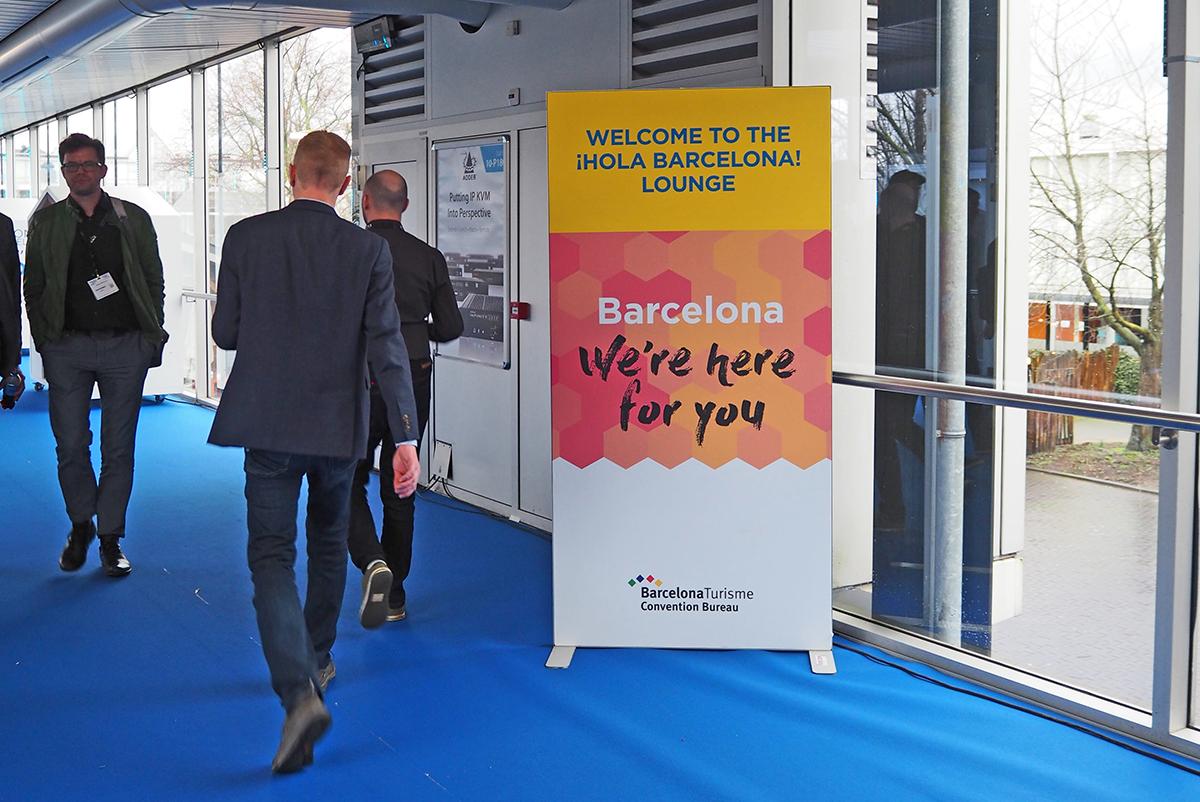
Hola Barcelona! ISE is scheduled to return in 2021, from February 2-5.
|
Most of the companies affected by the cancellation of MWC Barcelona will suffer much heavier consequences especially when taking into account that the launch of the new smartphone or network equipment that would be normally be introduced at the show is also compromised by the inability to actually ship anything in the proceeding months.
For the companies that successfully attended ISE 2020 in Amsterdam and should be looking forward for the following weeks, there's no assurance that business will proceed as usual. For companies like Samsung, who have production facilities mostly concentrated in South Korea, and managed to anticipate the S20 product generation hardware launch just hours before the GSMA announcement for Barcelona, there's no assurance that products will ship as scheduled. One single chip or component that is produced by a supplier based in one of the affected areas in China, can compromise the whole product introduction plan. So, canceling press conferences or not being able to display the company's strategy in a big industry forum such as MWC is not exactly the problem.
The biggest danger, even if the virus outbreak proves not to be as severe as feared, is the domino effect of the global production chain affecting multiple industries, while the world's economy contracts in direct consequence of the whole process.
For some reason, that exciting new subwoofer model launched at ISE is not looking as something relevant to talk about for now
.