In these days of stay-at-home self-isolation - or mandated shelter in place as California has called it - we've been focusing on producing the best possible monthly magazines for our readers and updating the website daily with relevant news and content. It keeps our minds focused and our spirits higher. Not surprisingly, our website traffic is peaking.
I also have to thank the messages of appreciation for our recent The Audio Voice articles about cancelled trade shows and Dealing with COVID-19. Those came naturally from many concerned executives looking for a word of confidence and strategic guidance. You're welcome. Really glad it's useful.
For this week, I would like to share a few thoughts and notes, not necessarily audio related, but which I'm certain everyone can relate to - even if you have to find the audio industry connection for yourself.
Yes, Of Course Everyone's Worried
With the barrage of negative news that continues to pour in from everywhere, no wonder. Also, there's a lot of useless analysis and limited perspectives when trying to characterize this crisis. This is no one's fault. Some companies were really caught off guard by this, with lots of debt resulting from investments, which might look senseless today (today I was reading about Xerox' hostile takeover offer for HP...). Others have plenty of money on hand and will wait for the best moment to leverage "opportunities."
A report from International Data Corp. (IDC) on the impact of COVID-19 on the semiconductor market says there is "an 80% chance for significant contraction in worldwide semiconductor revenues in 2020, instead of a previously expected minor overall growth of 2%. There is still a one-in-five chance that a fast, strong bounce back from COVID-19 in 2020 is possible." This is so pointless... As pointless as saying "carbon dioxide emissions have seen the biggest drop ever," or that "people are spending more time with their children."
Juniper Research predicts that Coronavirus can cause "around a $42 billion revenue gap over the next 9 months" for verticals including smartphones, tablets, smart speakers, and wearables, as "delays to the delivery of components (e.g., batteries, processors, and displays) will each have the potential to disrupt production rates from device vendors." Direct consequences also include delaying new product launches and rethinking "just-in-time manufacturing" strategies. Yes, a lot will change in manufacturing after this, including strategic stock reserves. But these predictions apply to only a few.
|
|
| "COVID-19 pandemic will force companies around the world to radically rethink how they operate and embrace technological investment." Or maybe they should do it every year? I say. |
One possible angle was the recent announcement by Lenovo, which owns operations all over the world and recently "resumed operations at its Shenzhen manufacturing facility," and is "getting ready to supply the global market as needed." Lenovo cites "early planning and adequate preparation," stocking up "as many components as possible, including product packaging." Lenovo also cites "a global supply chain" as a strong unique advantage. Not having its suppliers all located in the same affected area is a sensible idea then?
Thinking about that from the manufacturing perspective, I can't resist quoting another Lenovo press release statement: "The resumption speed and safe production reflect the direction of Chinese manufacturing industry's transformation and upgrading in the future.
"Lenovo wants to prove that Chinese manufacturers have the responsibility and capability to ensure China's normal economic operation and secure China's position as the world's factory, making contributions to the Chinese economy's rapid recovery and the world economy's stability." I'm starting to feel better now.
And speaking of Lenovo (it does all the IBM-branded PCs these days...), the moment countries received the "lockdown" mandates from governments, and in particular, since schools are shut down and children sent home, sales of PCs peaked immediately. Not tablets. Computers. (And I think again about HP for some reason...)
We're All in This Together
Of course, there's the more pressing human perspective. It's absolutely tragic how the creative, event, and entertainment professional communities were forced to stop activities, how the millions of independent professionals are forced to shelter at home and face the perspective of no income for weeks and maybe months. At the same time, company owners and managers struggle to keep up with business and maintain their valuable employees working from home with largely reduced or no revenue. Yes, these things might seem overwhelming. But just look around.
This is the same for everyone. Governments, corporations, institutions, and citizens. And more importantly, this is a temporary situation. Things are getting better in the countries first affected by coronavirus, while the situation is critical in countries trying to contain the pandemic, like most countries in Europe, and in the US. But, no matter if it will take 100 days or more, we will get through this (we've done it before).
And when we do, leave the macroeconomics to economists and politicians. The real challenge is going to be quickly getting back to our lives and businesses and recover the loss of revenue. The smartphone market dropped 8%, 30%, or 60%? Who cares? We will get back to buying smartphones once we're able to get out to watch a concert and be with friends. And if I really need to feel optimistic about the future, I certainly don't need to know that Video-on-Demand subscriptions have grown 200% since the coronavirus pandemic started.
|
|
|
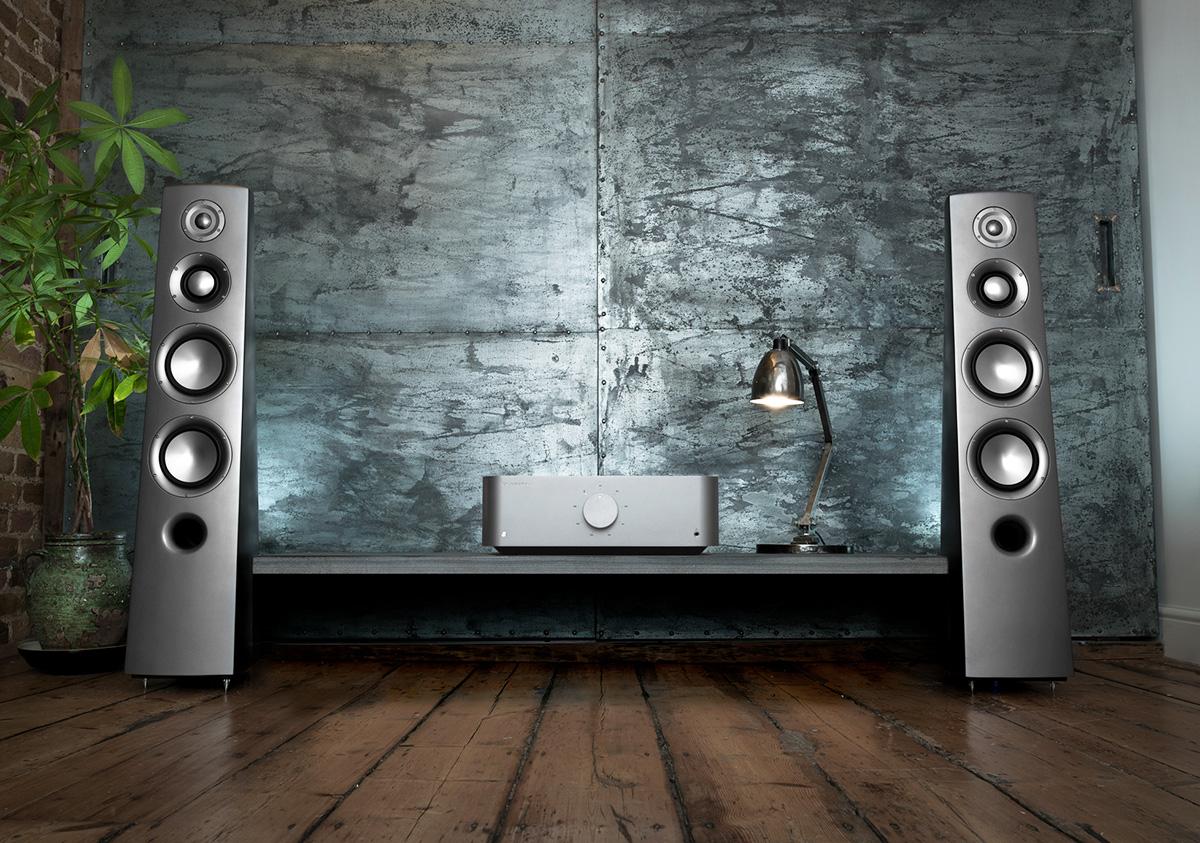
We could show you a graphic of the coronavirus, but we've chosen to show this home audio system instead, courtesy of Cambridge Audio. Hope you have one of these while "working from home."
|
And to end with more unoriginal thoughts, this COVID-19 situation serves to show us all how precious and fragile are those things that we depend upon and took for granted. And even with meaningless borders closing again, how people all over the world are feeling more connected and interdependent than ever. There's a sense of vulnerability that I can only hope will contribute to a better future.
But until then, we'll need to survive somehow dealing with the pettiness of household management and WFH (is it just me, or that acronym was already being used before by teenagers with a totally different meaning?) Anyway, I promise next week I'll address more audio-related things... hopefully.