Welcome to the Aviator’s Ledger. This newsletter provides monthly updates, upcoming events, and stories from aviation history. We are getting ready for a very busy November and a great holiday season. We look forward to welcoming you to the Museum to celebrate aviation and a lovely central Florida fall season! | | |
StoryTime - Tuesdays at 10 AM -Bring young learners to the Florida Air Museum for stories and songs that introduce the possibilities of science, technology, engineering, mathematics, and aviation. StoryTime is free, and Museum admission is included.
Wings ’n Waffles - Saturday, November 14, 9 AM - Join us at the Museum for chicken and waffles! This month, in honor of the upcoming 100th anniversary of Charles Lindbergh’s historic first transatlantic flight aboard the Spirit of St. Louis, come experience a presentation about the history of the aircraft, the mission, and the pilot who made it possible. Click here for reservations.
Wings ‘n Things - Saturday, November 7, 10 AM - 2 PM - Explore aviation and aerospace through hands-on activities, flight simulation, and more during this free family event in Skylight Hangar A at the SUN ’n FUN Expo Campus. Learn more here.
StoryTime Under the Stars - Saturday, November 23rd, 6 PM - 7:30 PM - Join Ms. Jennilyn and friends for an evening of stories, astronomy-inspired learning, and s’mores around the fire ring at the SUN ’n FUN Expo Campground. Click here for event details.
| | MUSEUM CLOSURES & DAYS OF AWARENESS | |
-
SUN ’n FUN 2027 tickets are on sale now!
Get your tickets here.
- Halloween | October 31
- Election Day | November 3
- Affordable Flying Expo (Hangar A) | November 13-15
- Thanksgiving Museum Closure | November 26-27
- smART Class | November 28, 9AM - 12 PM
| | |
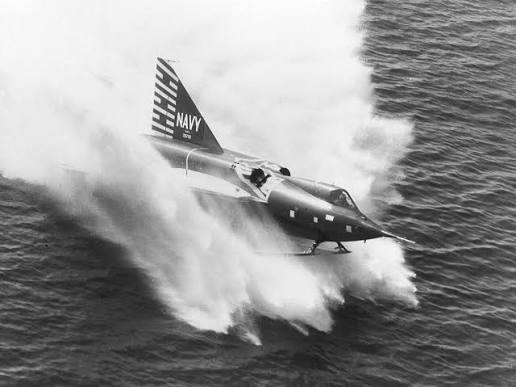
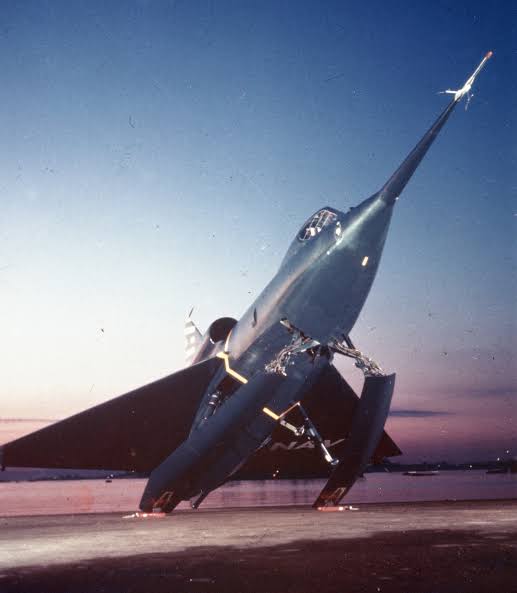
One of the Florida Air Museum’s most unique aircraft is the Convair F2Y Sea Dart. In the 1950s, the US Navy was on a quest to create new and innovative aircraft that would be perfect for military combat on the open ocean. Since the creation of the aircraft carrier during World War I, military organizations had been attempting to create something that would be both cost-effective and support all necessary combat needs while out at sea. Famous aircraft such as the Corsair were created and used heavily during World War II. However, once the jet age began in the early 1950s, propeller-driven military aircraft became obsolete fast. So, the Navy began its mission to create the next big thing: seaplanes with jets. Thus began the design of the Sea Dart. With only 5 ever created, the Sea Dart was quickly realized to have its issues. For one, the airplane could only taxi and take off on the water, as the landing gear were two retractable hydro-skis. This made maintenance difficult because the aircraft had to be hoisted onto an aircraft carrier using pulleys and cables to be serviced. The skis also made takeoff difficult, as they created heavy vibration in the aircraft when skidding across the water. Another glaring issue was the weight and power of the two J46 engines. Due to operations being mainly over the ocean, the Navy required jet aircraft to have two engines, in case of a single-engine failure, which was a much-needed redundancy. However, this meant that the Sea Dart had to compensate power for weight, making it completely unable to reach supersonic speed during level flight, though it did exceed Mach 1 in a shallow dive, making it the only supersonic seaplane yet.
Tragedy struck on November 4, 1954, during a demonstration over San Diego Bay for naval officials and the press. Convair test pilot Charles E. Richbourg, who was performing the demonstration, accidentally exceeded the aircraft’s limits. This led to the aircraft breaking apart midair, killing Charles and the Sea Dart program with him. The Navy was already losing interest in the program, and this unfortunate event set the end of the Sea Dart experiment in stone. Although it never worked out with the Sea Dart, it still helped to make incredible contributions to military aircraft history, even if the way it helped was by showing us what not to do!
| |
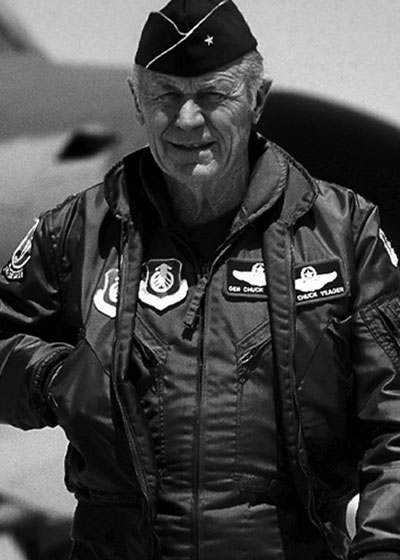
Chuck Yeager
Chuck Yeager was a legendary pilot. One can attribute his greatness to many things. One can attribute his greatness to his 11.5 aerial victories against German aircraft during WWII. Or maybe one thinks of the time he became one of the first pilots to shoot down a German aircraft, the Me 262, flying a P-51. Or perhaps one thinks about the day that Chuck Yeager became the first human being to break the sound barrier. In 1947, Chuck had been home from the war for a while, but was still flying experimental aircraft for the Air Force at Muroc Army Air Field (now called Edwards Air Force Base). The USAF had selected 24-year-old Chuck to be the test pilot to break the sound barrier because the person originally chosen had demanded $150,000 to perform the test, which is equivalent to over two million dollars today. With the test flight coming up on October 14, 1947, Chuck was ready to create history. So ready, in fact, that a few nights prior, he was horseback riding with his wife when he fell off and broke two ribs under his right arm. Scared that this would impact his spot in the test, he told only a civilian doctor, who taped his ribs. Then, on the day of the test, Chuck climbed in the Bell X-1, a small, rocket-engine-powered aircraft, and took off in the bomb bay of a B-29. When the Bell X-1 (nicknamed Glamorous Glennis after his wife) was dropped from 22,000 ft. AGL, he reached Mach 1.06, or 700 miles per hour. This historic flight was one of many for Chuck Yeager, and he will always be remembered for his bravery both in and out of the cockpit.
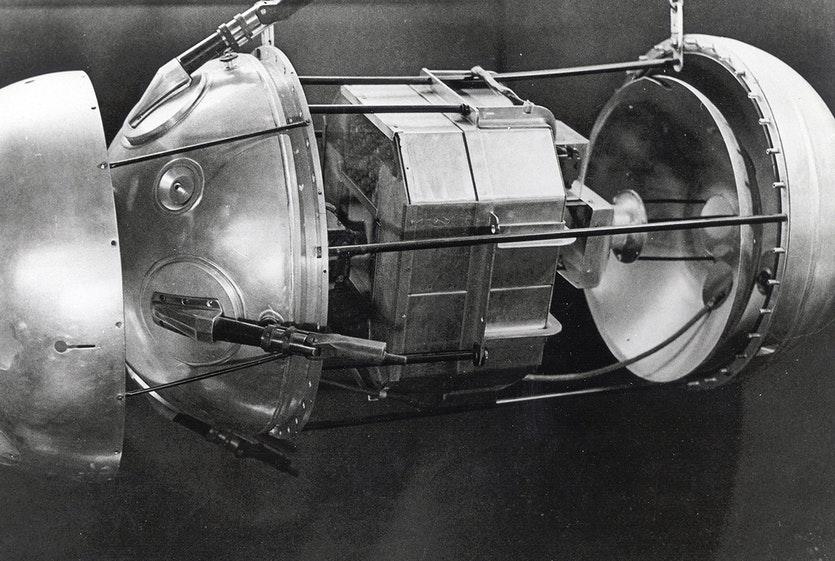
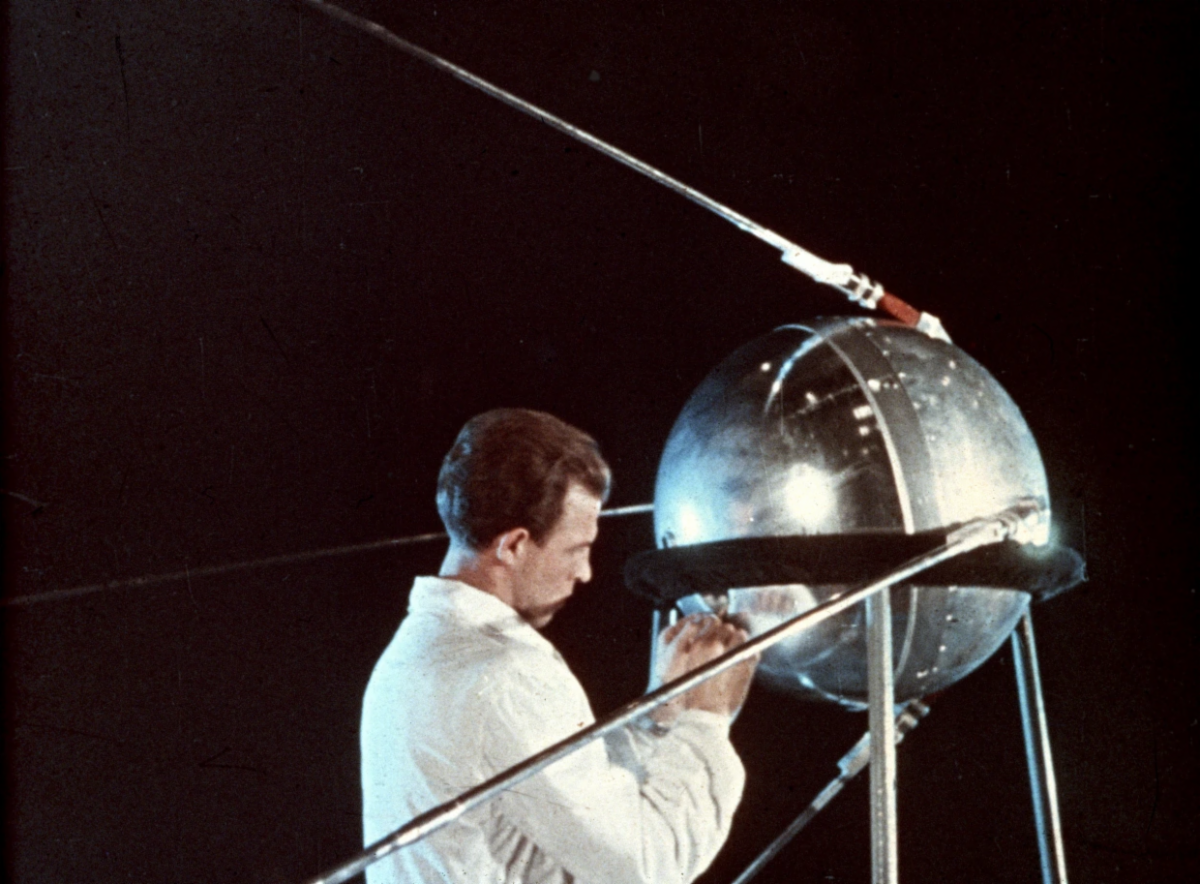
| | Only twelve years after the end of World War II, with tensions rising between the Soviet Union and the United States, something happened that would change history forever. On October 4, 1957, the USSR launched a beach ball-sized satellite called “Sputnik” into orbit around the Earth. The satellite could orbit Earth in 98 minutes and was in orbit for 92 days, just three days shy of three months. Sputnik’s launch marked the first satellite in space, and the first man-made object to orbit the Earth. Two years prior, in 1955, the United States announced its goal of launching satellites into space. When Sputnik launched two years later, it took America completely by surprise. The launch made the US government drastically speed up the process of getting America’s own satellites into space, which prompted the government to create NASA after passing the National Aeronautics and Space Act in 1958. The launch of Sputnik is credited with not only beginning the space age and space exploration age, but also with being the notable beginning of the space race, which was a major battlefront of the Cold War. | | Come visit the gift shop and pick up a new souvenir! Browse aviation-themed jewelry, plushies, T-shirts, and more. | | As a Florida Air Museum member, you can visit other museums that participate in the ASTC Passport Program for free. One participating museum is the Discovery Center in Ocala, Florida. Experience hands-on STEAM-centered programs and fun for all ages! Visit ocalamarion.com for more information. | | | | |