|
Clinical Trials Highlight: Neurological Surgery
OPEN FOR ENROLLMENT NOW:
BrainGate2: Feasibility Study of an Intracortical Neural Interface System for Persons with Tetraplegia
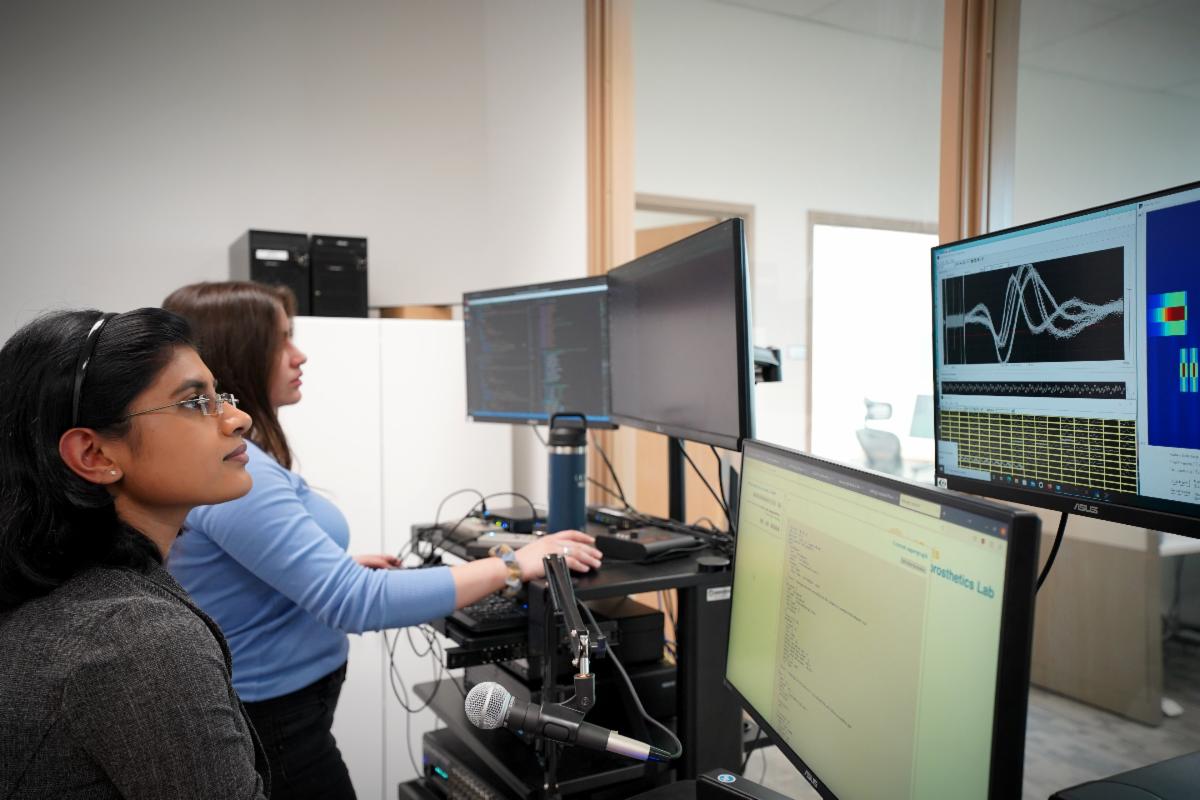
For people with ALS, brainstem stroke, and other related conditions, the cortical areas that control language and speech are intact but cannot transmit their signals to the motor structures that produce speech. Through research discovering the neural signals responsible for speech production, and by utilizing cutting-edge machine learning techniques to generate advanced decoding algorithms, our research team is developing a system to restore fluent communication for people who have lost the ability to speak.
This study will involve implanting an FDA approved research device into the brain, in hopes that it may allow an individual with quadriplegia to control a computer cursor and assistive devices by thought.
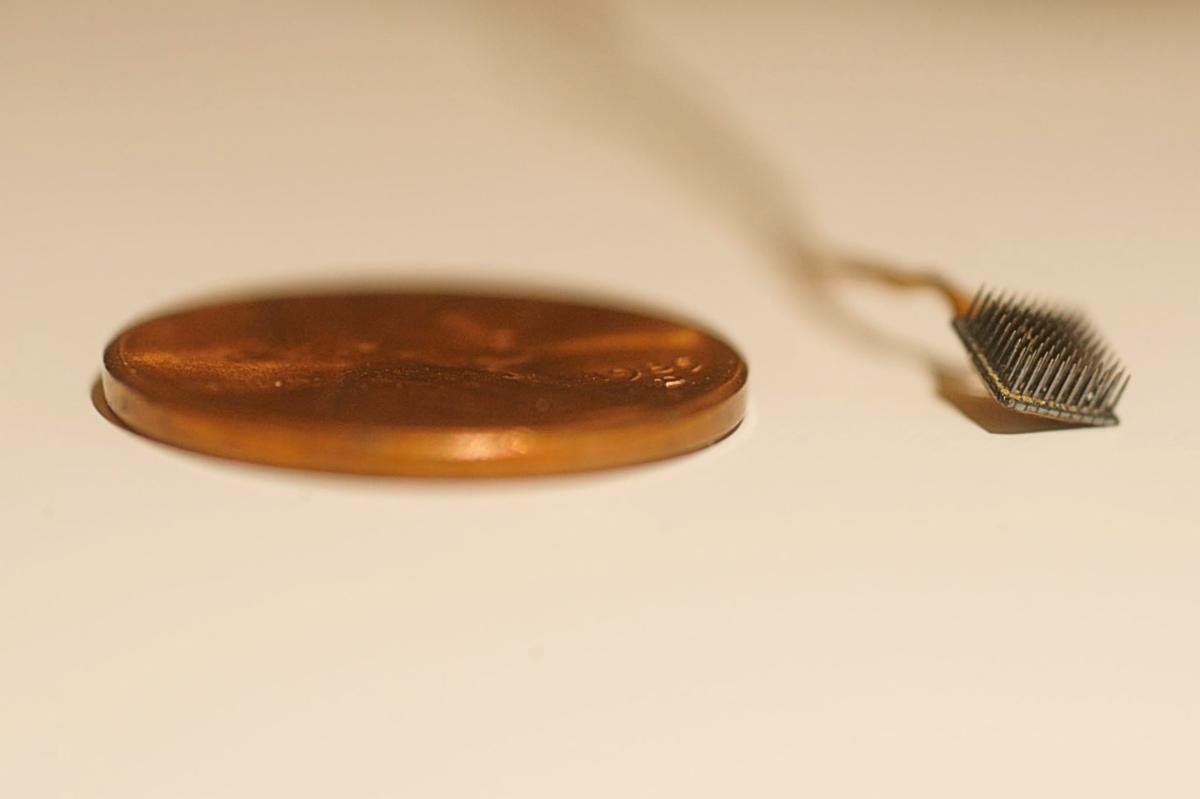
The BrainGate2 device is made of tiny arrays that can obtain impulses from nerve cells--neural recordings. These recordings are conveyed to two small metal pedestals on top of the head. The pedestals are about a half-inch in diameter. From there, the signals can be connected to a computer that decodes intended speech directly from the cortex and pairs signals with text-generating or synthetic speech-generating devices to restore fluent conversational speech for people affected by neurologic injury or disease.
|