|
Friends,
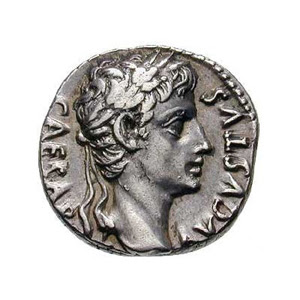
I suspect most people don’t give much thought to whose image is on the money they use. For as long as I can remember, I have been fascinated by the images on national currencies. The history around images on national currencies is long and varied. In the early days of currency minting, the image of the leader of the region, state, or nation issuing the currency was imprinted on the currency. This gave the currency its value.
As someone who has lived overseas and traveled to a number of countries around the globe, I have had the opportunity to see and use currencies from more than 30 countries. Currencies from other countries tend to be more colorful than US currency. The images on the front range from royalty and current leaders to historic rulers, while those on the back range from wildlife to historic sites and buildings.
The first currency I saw from another country was Canadian. In the 1970s, Queen Elizabeth II’s face was on all Canadian coins and 1- and 2-dollar banknotes, and former prime ministers were on other denominations. I recognized Queen Elizabeth II, but not the various former prime ministers.
As most of you know, I served in the Peace Corps after college. I was a volunteer in the Democratic Republic of Congo, formerly Zaire. When I lived in Zaire, the image of the Zairian president, Mobutu Sese Seko, was on all the currency. The image of Mobutu chosen for the coins showed him wearing his signature leopard-skin hat. The image on the paper currency was of a young Mobutu in full military garb.
The first time I traveled through Europe was in 1998, the year before the euro was introduced. I marveled at the images of kings, queens, and national leaders pictured on each coin and banknote, and at the banknotes’ vivid colors. I kept small amounts of currency from each nation I traveled through as souvenirs. The currency I kept is no longer legal tender, not because the people pictured on it are no longer in power, but because of the switch to the euro.
The question put to Jesus about whether it was lawful for Jews to pay taxes to Rome was a trap. Jesus understands the trap. If he says, “Yes, it is lawful,” he’ll be labeled a blasphemer, because the Roman emperor is a viewed as a god. If he says, “No, it isn’t lawful,” he’ll be labeled a political instigator. He invites the questioners to take out a coin, and then he asks, “Whose image is on the coin?” Jesus is setting his own trap. He knows whose image is on the coin. The image on the coin implies ownership, and therefore it is appropriate to return the coin to its owner.
Jesus does not stop at the currency question. He goes to the heart of the matter: To whom do we belong? While he does not mention that all of humanity is created in the image of God, he implies it with the statement, “and to God the things that are God’s.” God’s image is not limited to a nation-state, nor is it controlled by national leaders; therefore, it is an indelible mark upon all of humanity. May we live lives that reflect and exemplify the grace and mercy, the love and justice, of a God whose image we all bear.
Peace,
Rev. Tim
|