|
Dear friends in Christ,
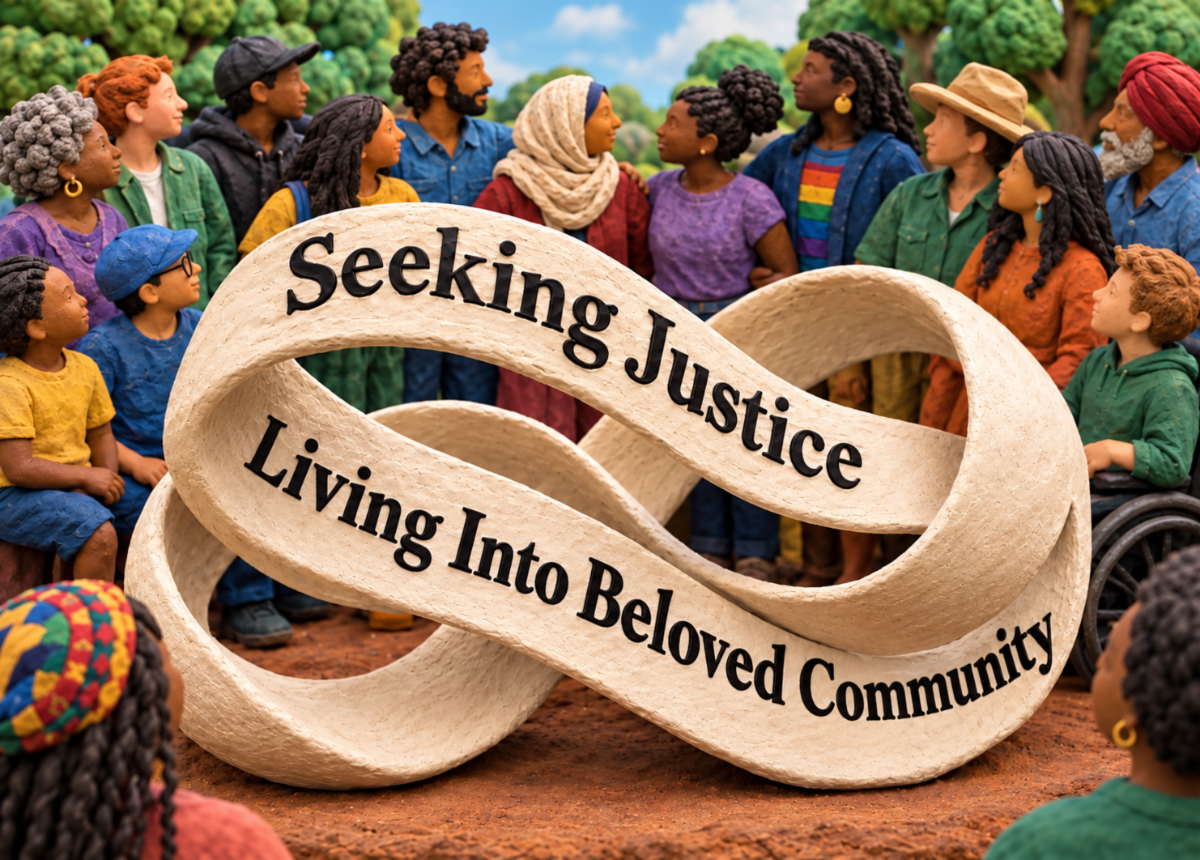
I loved the opportunity to be with you at the Annual Meeting, and here I am again! Thank you to the Supportive Ministries Team for inviting me to kick off your fall conversations with a focus on the Seeking Justice in Pursuit of the Beloved Community. I love connecting the Beloved Community with justice, but before talking more about that, I want to make sure we are on the same page about the definition of justice, since justice is sometimes confused with mercy. To make this distinction, I turn to the words of the Rev. William Sloane Coffin, who served as pastor of Riverside Church for many years:
Charity is a matter of personal attributes; justice is a matter of public policy. Charity seeks to alleviate the effects of injustice; justice seeks to eliminate its causes. Charity in no way affects the status quo, while justice inevitably leads to political confrontation.
Many, if not all, congregations engage in some form of mercy/charitable ministry. Examples of mercy ministries include food pantries, disaster relief, support for local schools, partnerships with community organizations to provide shelter and clothing for those who are houseless, adoption of schools, and many others. These ministries are crucial, and communities expect and depend on congregations to be partners in meeting these and many other needs.
On the other hand, working for justice is about systemic change, addressing the root causes of hunger and houselessness that create the need for mercy/charity. Because systemic change requires engaging political systems, many leaders and churches shy away from justice as too controversial.
One additional clarification might be helpful. While the idea of the Beloved Community resonates with many, the King Center notes that for Dr. King, it was more than a lofty goal; It was “a realistic, achievable goal that could be obtained by a critical mass of people committed to and trained in the philosophy of nonviolence.”
The King Center defines the Beloved Community as a society of justice, peace, and harmony. In fact, every definition of “the beloved community” includes the word justice. If congregations are not working for justice and systemic change, the Beloved Community becomes little more than an idealized, kumbaya feel-good concept.
The request was that this article somehow build on the keynote at the Annual Meeting. Because I assume no one actually remembers it, let me quickly summarize it as focusing on two very challenging concerns in our country: race and the LGBTQ+ community. It would be wonderful to write that the attacks in these two areas by those with political power have diminished since your Annual Meeting, but, not surprisingly, that is not true. All anyone has to do is read or listen to the news from almost any source to find the endless and exhausting continuation of race and LGBTQ+ attacks. And while you may not know of someone who has PERSONALLY been impacted, make no mistake: the impacts are there, and in some cases, they are deadly.
-
Did you read about the 20-year-old Haitian from Springfield, Ohio, who committed suicide after being fitted with an ankle bracelet? He was from the same community in Ohio that came under attack during the presidential campaign: “they are eating the dogs; they are eating the cats.” It’s easy to say this isn’t about race; it’s about immigration. Really? Take a good look at the vast majority of people being deported.
- How about the resignation in early September of Smithsonian Secretary Lonnie Bunch? Constantly badgered by the current administration to present a more “patriotic view” of history, Bunch tried for the past year to maintain the Smithsonian's integrity and to withstand the administration’s onslaught of attacks. I don’t know Lonnie Bunch, but I imagine it's been an exhausting, emotionally draining 18 months.
-
The ACLU is tracking 529 anti-LGBTQ bills in the U.S., and the most recent report from the Trevor Project highlights the impact of rhetoric and executive orders on LGBTQ+ youths.
No, things have not gotten better. If we are committed to becoming the Beloved Community, we can’t just sit on the sidelines and wring our hands. Cathy Wille's May article focused on internalizing that we are beloved; that’s a given, a wonderful gift from God. But the Beloved Community isn't a given. It’s not something that just happens; we can’t wish or pray it into being. While raising awareness and book studies are important, neither will make the Beloved Community a reality. Unjust and inequitable systems require change. Systems don’t change on their own, and power is rarely given up voluntarily. Change happens when we make it happen.
So, if you haven’t already, NOW is the time to ask what this means for you and maybe for your congregation. You know your context better than I do, but I do know that if you take the work of justice seriously, it will not be easy or quick. Working for justice and systemic change is a journey, not a sprint. Also, whatever you and your congregation decide to do, be ready to accept that it may not be popular; in fact, it may be very UNPOPULAR with some in your own community, maybe even in your own church. It's so much easier and safer to do good work that supports the status quo. No one is going to balk at the church being involved in food pantries or school supplies for children; both are important, but neither will change systems. So, where do you start, and what can you actually DO? Here are some suggestions:
Decide on a focus. There are so many things that need attention, but no one person or congregation can do it all. Ask yourselves why a particular focus. Is the focus you choose easy? Is it something you (or your congregation) will face less pushback on? If that’s the reason, be honest about it; say it out loud and decide whether the focus is the right one for the right reasons.
Assess where you and/or your congregation are. Maybe you DO need to start with a book study or a series of conversations and educational experiences. Maybe you need education. If you decide to focus on justice for the LGBTQ+ community, understand why pronouns matter and read about the challenges LGBTQ+ people, especially the trans community, face day to day. If the decision is to be more engaged and work for racial justice, maybe you need some reminders about history: why IS Wisconsin so white? And what are the historical experiences of People of Color that are still at work in Wisconsin, maybe in your own community?
Remember that race and racism are complex issues; we all carry both personal and institutional history (or baggage). Knowing and owning that history is an essential key to your readiness to move into the community and form partnerships with like-minded people and/or groups.
Intersectionality is real: People of Color are part of the LGBTQ+ community; the administration’s deportation efforts are about immigration, but they are also about race. While you may choose a particular focus, don’t be surprised by the complexity, as these concerns overlap in our communities.
Look for partners: You don’t have to know EVERYTHING before venturing beyond your safe zones. Developing partnerships with other churches or community groups is an excellent way to build momentum and impact. But readiness matters. If the partnership will be with organizations that are diverse and different from your congregation, is there internal or congregational work you need to do before you're ready for a partnership? How will you ensure you are ready to engage with partners for the long haul? If you have carefully considered these and other questions, it’s time to think about how you will build credibility. Marginalized communities have been disappointed by the white church, and trust is earned. Every time you show up, speak up, and accompany those on the margins, you are building credibility and trust that become the foundation on which a real partnership can be forged.
Remember that working for justice takes many forms. Find what fits you and your gifts. Joining a march might not be your thing, but maybe you can write letters or join a group at the Capitol to advocate for immigrants' rights or the LGBTQ+ community. Maybe you can write for the local paper in support of DEI or the importance of welcoming everyone. Speak up when it’s easier to be quiet. Maybe you have contacts and can connect yourself or others with local school board members or state representatives so you can explain why you support an open and inclusive community. If you put yourself out there, you will find opportunities, or opportunities to be engaged will find you.
Finally, remember that if you are serious about Becoming the Beloved Community, you HAVE to be involved in working for justice. No justice, no Beloved Community. In fact, as I think about your fall focus, the Beloved Community as a Pursuit of Justice, maybe it’s really Justice in Pursuit of the Beloved Community.
May God’s grace and guidance be with you in this sacred work.
|