|
Yes
Viktor Frankl (1905-1997), a psychotherapist, survived three years in Auschwitz, Dachau and other concentration camps. But he did more than survive. He helped others survive. The first thing Frankl discovered in Auschwitz was that you needed a reason to carry on living. If you lost the will to live, you died. The conditions in the camp were designed to break not just the body, but also the spirit.
A turning point for Frankl came one bleak grey day in the camp. As he describes the experience:
… we were at work in a trench. Grey was the sky above; grey the snow in the pale light of dawn; grey the rags in which my fellow prisoners were clad, and grey their faces. I was again conversing silently with my wife, or perhaps I was struggling to find the reason for my sufferings, my slow dying. In a last violent protest against the hopelessness of imminent death, I sensed my spirit piercing through the enveloping gloom. I felt it transcend that hopeless, meaningless world, and from somewhere I heard a victorious 'Yes' in answer to my question of the existence of an ultimate purpose.
Reflecting on all that the Nazis robbed him and his fellow inmates of in terms of their humanity—their possessions, their clothes, their hair, and even their names replaced by numbers tattooed on their arms---he reflected further that there was one thing they could not take away: the freedom to choose how to respond. That one slender hope was all that remained, but it was enough.
This realization led Frankl to redefine his situation in the camp to preserve his sanity. He did this by persuading himself that he was not a prisoner in a concentration camp but a psychotherapist taking part in an experiment. This allowed him to salvage a tiny bit of freedom and dignity---enough to go to work and try to rescue his fellow prisoners from despair. For one it was to concentrate on work yet to be completed if one survived to do so. For another, the goal was to fight for life to rejoin a child who escaped to Canada who needed him.
Finally, Frankl discovered in the camps that to find meaning in life we must ask not what do I need from life, but what does life need from me? Each of us is here for a purpose, a task, that only we can fulfill. To find meaning is to find that task. To find meaning is an acute task grounded in time and reality. Frankl wrote:
We needed to stop asking about the meaning of life, and instead to think of ourselves as those who were being questioned by life---daily and hourly. Our answer must consist, not in talk and meditation, but in right action and right conduct.
Robert Ellsberg, commenting on Frankl’s call to translate the quest for meaning into purposeful activity and service, noted (in his excellent book The Saints’ Guide to Happiness):
Those who remain disengaged from these tasks become, like the bored and unhappy guests in Tolstoy’s story, prisoners of their own talk. In contrast, those who rise to the challenge can discover a type of happiness that endures---even in the midst of horrendous circumstances.
I remembered Viktor Frankl and his book Man’s Search for Meaning when I remembered that January 27th is the day every year we commemorate the International Holocaust Remembrance Day, the day on which Auschwitz concentration camp was liberated in 1945 and the day on which we remember the killing of six million Jews and millions of others.
In remembering Frankl and his definition of our search for meaning as a search grounded in acute action and in asking what life needs from me and each of us: I find myself reflecting further on the role of the will or the ‘doing’ aspect of our response to God in faith. To end with a prayer:
Lord, give me the courage of my convictions.
Make me put up or shut up.
| |
|
Week of Prayer For Christian Unity
January 18-25, 2025
| |
|
"...that they may all be one. As you, Father, are in me and I am in you, may they also be in us, so that the world may believe that you have sent me.’---- John 17.21.
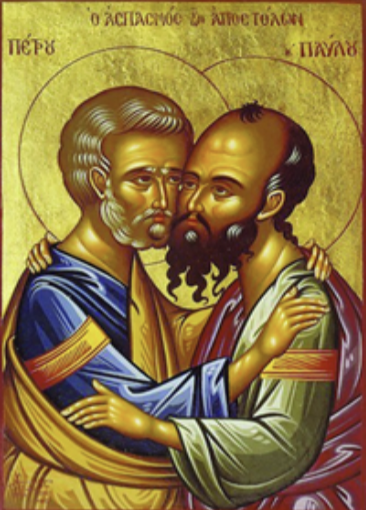
Saints Peter and Paul
Did you know? Every year in January since 1908 a week is set aside for our churches to pray for Christian unity. The week starts with the feast of one apostle—The Confession of St Peter (January 18)—and ends on the feast day of another--- The Conversion of St Paul (January 25).
In general, we may think of St Peter as the quintessential saint of the Roman Catholic Church and St Paul as the foundational saint of the Protestant Reformation. Again, in popular imagination, we may think of Peter and Paul as the pillars of the Christian Church: Urbi et Orbi --- St Peter for the City-Urbi (Rome) and Paul, the Apostles of the Nations or World—Orbi. However, for all their distinction, and even their differences, they are united in their love of the Lord Jesus Christ--- as we in our churches today are meant to be. There is a joint celebration for these saints on July 29th--- the Feast of Saints Peter and Paul, both martyred in Rome.
| |
|
Martin Luther King Jr. Day
One Family's Observance
| |
|
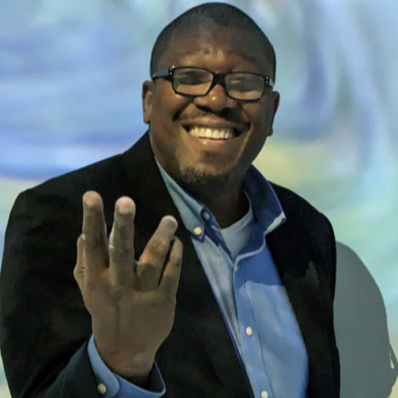
Tyrone Jackson is the owner of a computer repair, service and consultation business in Jacksonville that serves several churches in our Diocese. He is a dedicated Christian layman and a member of Mount Olive Primitive Baptist Church, Jacksonville founded in 1888.
I was so impressed by the engagement of his family in their observance of this holiday that I asked Tyrone to share it with all of us. The family had fellowship and fun and did some learning along the way.
| |
|
Tyrone Jackson writes:
In honor of Martin Luther King Jr. Day, I want my family to share some lesser-known facts about this incredible leader. Often, history and society tend to condense complex figures like Dr. King into just a few memorable phrases and soundbites, such as "I have a dream" or "judged by the content of their character." While these are powerful and important messages, they represent just a small fragment of a rich and multifaceted life.
As we celebrate Dr. King today, I encourage my family to re-evaluate what we know about him and look deeper, beyond the well-known and publicized speaking points. This exercise in exploring unusual and obscure facts about his life aims to do just that. It's a reminder that history is not just one speech or one march; it's a collage of hardships, triumphs, and the countless "baby steps" that contribute to our collective future.
I actually engaged with over 60 family members via text message about this, and I believe all of us learned something new about Dr. King!
By understanding Dr. King more fully - his complexities, his struggles, his lesser-known passions and experiences - we gain a richer appreciation for his legacy and the ongoing struggle for equality.
Here are some lesser-known facts about Dr King that we learned:
His birth name was Michael: He was born Michael King Jr., but his father later changed both his and his son's names to Martin Luther after being inspired by the Protestant reformer.
He was a college student at 15: King skipped two grades in high school and entered Morehouse College at the young age of 15.
He was almost assassinated a decade before his death: In 1958, Izola Curry stabbed him in the chest with a letter opener. He narrowly survived.
He was a Trekkie: King was a fan of the original Star Trek series, even encouraging Nichelle Nichols (Lt. Uhura) to stay on the show when she considered leaving.
He got a C in public speaking: Despite being one of the greatest orators in history, he received an average grade in a public speaking course in college.
He was the author of 5 books: His written works expanded on his philosophies and activism.
These include:
Stride Toward Freedom: The Montgomery Story; Why We Can't Wait; Strength to Love; Where Do We Go from Here: Chaos or Community? And The Trumpet of Conscience.
Hospital Bill for Julia Roberts: The King family paid the hospital bill for the birth of actress Julia Roberts. Her parents, who ran a theater school attended by King's children, couldn't afford the bill, so the Kings stepped in to help.
He met with three different U.S. Presidents: In his fight for civil rights, he met with Presidents Eisenhower, Kennedy, and Johnson, advocating for equality and legislative change.
He rarely wrote speeches in their entirety: He typically outlined key points and improvised the rest, demonstrating his remarkable oratorical skills.
He delivered over 2500 speeches and sermons: His powerful voice and message resonated with audiences across the country, inspiring hope and action for equality.
| |
|
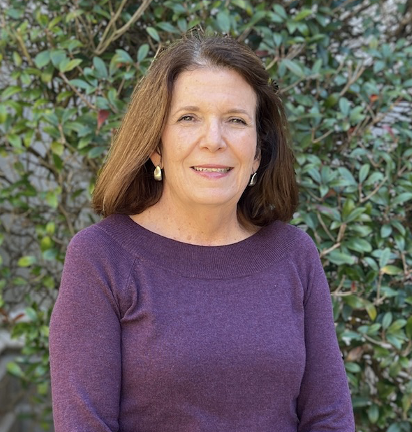
Reflection by Owene Courtney,
St. John's Cathedral, Jacksonville
The Star
| |
|
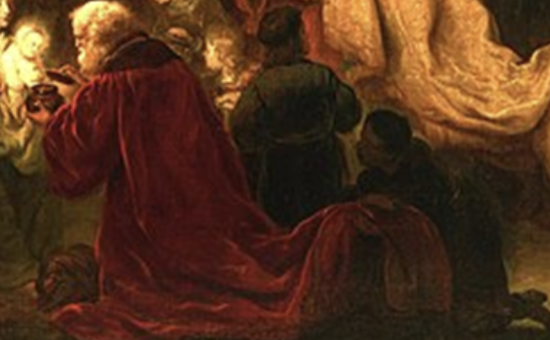
...they departed to their own country by another way. Matthew 2. 1 - 12 RSV
My daughter in law told me I had to watch the movie called The Star. "You will love it," she said. So last week I sat down with three grandchildren watching the entire show. And it was great. Yet another retelling of the wise men and the star, embellished to bring the story to life for children and adults who needed a little more pizazz.
Throughout the movie, the children asked me if that really happened or this really happened, and it was a great bible study to point out what we don't really know about the story, as well as what the capital T truths are of the story.
For me, the great Truth of the story of the wise men is that what made them wise was not only their knowledge about the Star and their ability to follow it or their distrust of Herod, but their wisdom to "depart to their own country by another way." Because you see, once we have seen the Light of Christ, once we have known the Love of God and the movement of the Holy Spirit among us, we can never stay where we are, never stay on the same road, never be the same. But, you might say, temptations and distractions will still arise, leading us on broken paths and down dark alleys...Yes, but I choose to believe that the Light that once pierced the darkness will forever be imbedded in our soul's memory, and we must only look up to be reminded. Looking up is often the hardest task, however.
In this season of Epiphany, the manifestation of the Light to the Gentiles, I pray that wherever we are on our journeys, we will be reminded of the great Love of God and all that goes with it, following the Star and how that changes us forever, leading us to go forward on another road, home by another way.
"I wonder" Where might going home by another way be appropriate in our lives right now?
For part 2 of Owene's Reflection, please click here.
| |
An Interview with Felicia Bullock | |
|
Felicia B. Bullock is the Director of Children and Families Ministry. She is also Chaplain to The Cathedral School on Duval and N. Market Street, directly across from St John’s Cathedral on Duval Street.
1. Felicia, you are the Director of Children and Families Ministry on the Cathedral staff. How were you led to this ministry and what does it involve?
My passion for children’s faith formation began when I became certified as a Godly Play Leader several years ago. In 2020 I was asked to help with children’s formation at the Cathedral. I saw a need for more dedicated programming and coordination for children and families but as I was working full time, I could not devote the time I felt was needed. When Father Mark Anderson approached me about taking on a more formal role to support children and families, I began discerning God’s will while he explored how this position could be established. Many people were in prayer over this! It took several months, lots of hard work on Fr. Mark’s part, and God provided clarity and affirmation.
2. Is there anything unique about children and families ministry in a large, downtown urban church like the Cathedral in comparison or contrast to a neighborhood church in the suburbs or in a different setting? What are the challenges or opportunities?
As Director of Children and Families Ministry, my role is to provide faith formation programming for children, from newborn through elementary school, oversee the staff and volunteers, and coordinate with other ministries for Church and community events. Engaging children as part of our worship is central to the work we do. Children are now carrying liturgical streamers to actively engage in the Procession and be as integral to our worship as an acolyte or choir member. We’ve also added a Family Service once a month with a special liturgy using emojis to show when to look, speak and listen, followed by a hands-on activity to reflect on the Gospel at the end of the service. And we have a weekly opportunity for fun, fellowship and a delicious breakfast during our Sunday Flex Cafe. A quotation from Jerome Berryman, creator of Godly Play, perfectly captures how central children are to our worship - “Children are a sacrament that won’t sit still.”
3. You are also Chaplain to the Cathedral School. What does this ministry involve? How do you interact with the children, e.g. a weekly worship service? Or teaching?
As Chaplain to The Cathedral School, I lead a weekly Chapel service for the 3-, 4- and 5-year-olds, and then follow up with an enrichment lesson in the classroom once a week. The Licensed Lay Worship Leader through the Bishop’s Institute helped prepare me for this role. I love being with these children sitting on the stairs of the Altar, sharing our faith. And getting to know the staff at the school has been wonderful! The Cathedral Bookstore has also been so creative in finding ways to support the school’s mission with a birthday book program and dedicated funding for building the classroom libraries. Parent Forums are in the planning stages that will address topics relevant to their needs and interests and on issues that matter most to them and provide opportunities for building community for the families of the Cathedral and the school.
4. Are there any particular blessings you feel you have received in your work with Children and Families Ministry work or with the Cathedral School?
What first inspired me to pursue more dedicated programming was the vibrant and dynamic families and children at the Cathedral and The Cathedral School. Offering faith formation through the traditional Sunday School format is challenging, as many families have packed schedules over the weekend. We are also seeing more neurodivergent and trauma-affected children, youth, young adults and within our homeless population. These families and individuals have found a safe haven in the Episcopal Church which has been such a blessing for the Cathedral. Education and training of our staff and congregation on understanding behaviors and how to engage compassionately and effectively communicate is a priority. It was such a grace-filled moment when Kristine Rodman, Director of The Cathedral School, mentioned Hope & Healing Jax.
5. You and I have talked about two upcoming workshops sponsored by Hope & Healing Jax aimed at those who teach or work with children in schools or in churches. I understand there is a particular emphasis on neuro diverse and trauma affected children .and how those who work with children may more effectively support them. Tell us a little more about these workshops and who you think would benefit from attending them?
Hope & Healing Jax (hopeandhealingjax.org) is a non-profit organization dedicated to providing training and tools for a trauma informed Jacksonville. Their free, two-part Communication training workshop for all in the Diocese will be held at the Cathedral. The specialized training provides understanding, strategies, and skills to strengthen connection and felt safety for individuals in our congregations. Parents, grandparents, teachers, children and youth ministers and volunteers, ushers, adult acolytes, and vergers can all benefit from the tools provided. Continuing Education credits will be granted if needed for professional licenses and certifications. The dates for this are February 15th and 22nd, from 9 am to 12 noon in Taliaferro Hall. Please be sure to register separately for each day.
I am also hopeful that this training will draw us all in the Diocese together to share what’s going on in our congregations and collaborating in our children and families’ ministries. It would be great if we could develop a group that meets quarterly to share ideas and support each other. I hope to see you at the training!
NB The QR codes for registering for these Hope % Healing Jax workshops may be found on the Cathedral website under “Events” at https://www.jaxcathedral.org/events/
Felicia Bullock may be contacted at: FBullock@jaxcathedral.org.
| |
Rector's Picks: January Books | |
|
For Lent
It is not too early to line up books to support our Lenten journey so that when Ash Wednesday arrives (March 5th) we are primed and ready to go.
| |
|
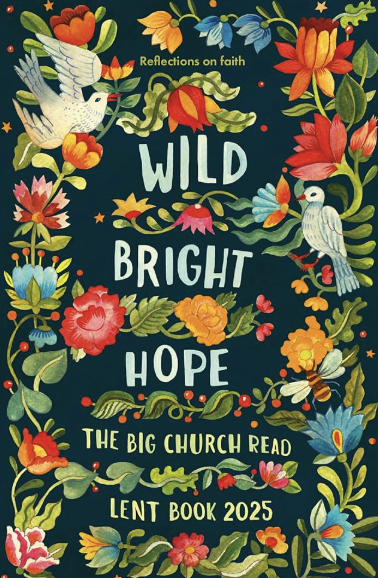
Alysia-Lara Ayonrinde and others. Wild Bright Hope: Reflections on Faith-- The Big Church Read Lent Book 2025 (Paperback). Pre-order for February 18, 2025.
This is the SPCK Lent book for 2025 and the lead reflective essay is by Alysia-Lara Avonrinde, the Schools Project Lead for the Archbishop of Canterbury’s Reconciliation Ministry.
| |
|
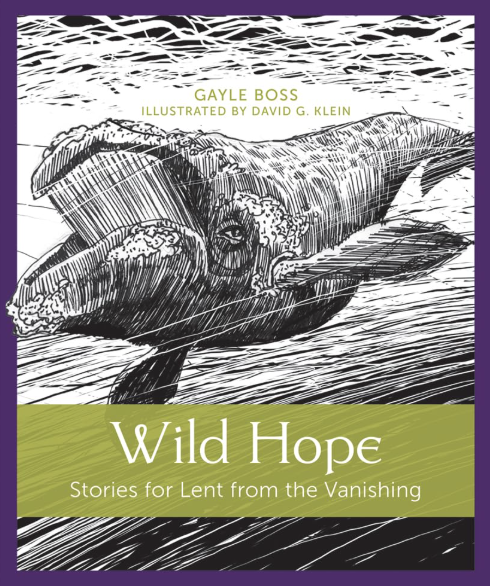
Gayle Boss (Author), David G. Klein (Illustrator). Wild Hope: Stories for Lent from the Vanishing (Volume 1) ((Paperback) – January 21, 2020.
“Gayle Boss writes vividly of wild, imperiled creatures as expressions of God’s own self—and of God’s own suffering. What better subject for Lent?
Here’s a compelling, relevant way to wake out of our small, ego-centered lives into a deeper compassion and to meet there the One who transforms suffering into something unimaginably new. That’s the wild hope of all creatures!”
—Richard Rohr, OFM.
| |
|
Timothy Keller. 5 Minute Lent Devotional for Teens in 2025: Strengthen your Faith in Christ with Daily Reflections, Scripture Readings, and Prayers for the Season of Lent. (Paperback) – Large Print, December 25, 2024.
Timothy Keller wrote as persuasively and clearly for young people as for older adults.
| |
|
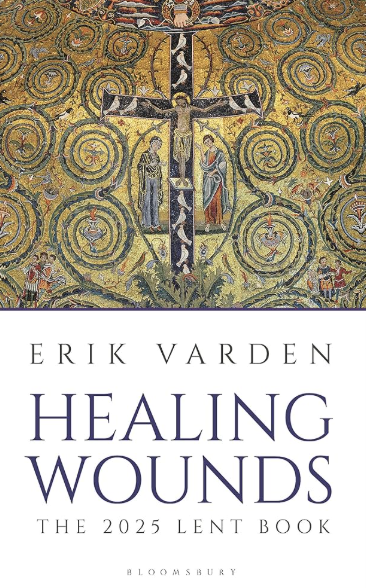
Erick Varden. Healing Wounds: The 2025 Lent Book (Paperback) – pre-order for February 11, 2025.
Bob Dylan once said, tongue in cheek, 'Pain sure does bring out the best in people.' The philosopher Donald MacKinnon said, 'Suffering never ennobled anyone.' Suffering by nature poses questions people wrestle with today in many fields of life with counsellors, therapists, philosophers, and spiritual directors. But the conundrum remains and, in this book, Varden sets out to resolve it.
Amazon review.
Erik Varden is a Norwegian monk, bishop and spiritual writer. Prior to his appointment as Bishop of Trondheim in 2020 he was a professor of Syriac and of Christian anthropology at the Pontifical Atheneum of St Anselm in Rome.
| |
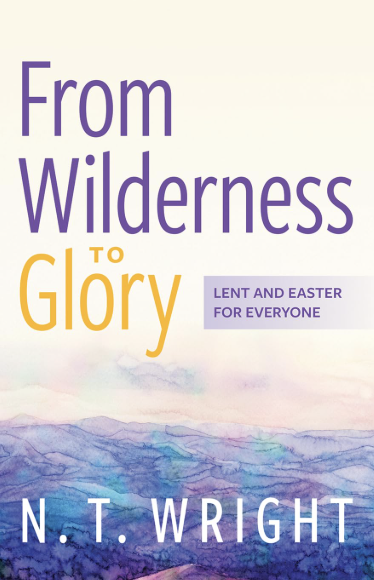
N.T. Wright. From Wilderness to Glory: Lent and Easter for Everyone Paperback – January 7, 2025. | |
|
Rowan Bain. Tulips and Peacocks: William Morris and Art from the Islamic World (Hardcover)– October 8, 2024.
. . . William Morris was responsible for hundreds of patterns for wallpapers, fabrics, tapestries, and carpets that are iconic of the late nineteenth century and continue to resonate today. . . his artistic production was stimulated by his deep familiarity with embroideries, woven velvets, silks, carpets, and metalwork from Iran, Syria, and Turkey, which he collected throughout his lifetime. Amazon review.
| |
|
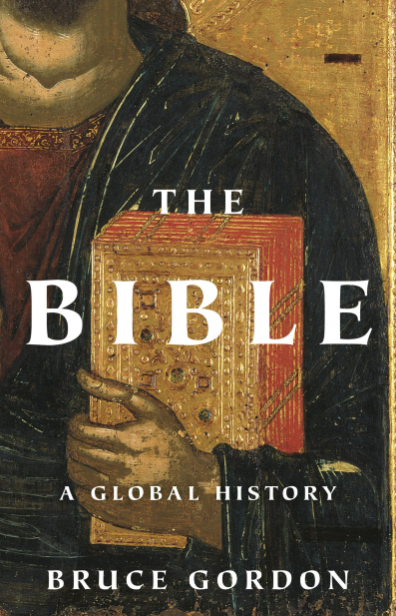
Bruce Gordon. The Bible: A Global History (Hardcover)– September 17, 2024.
A marvelous work of scholarship and storytelling…Mr. Gordon has written the life of the Book of Books, and the sense in his narrative that this book is alive, as if somehow it has agency and finds ways to make itself known and felt, is inescapable.―Barton Swaim, Wall Street Journal
| |
|
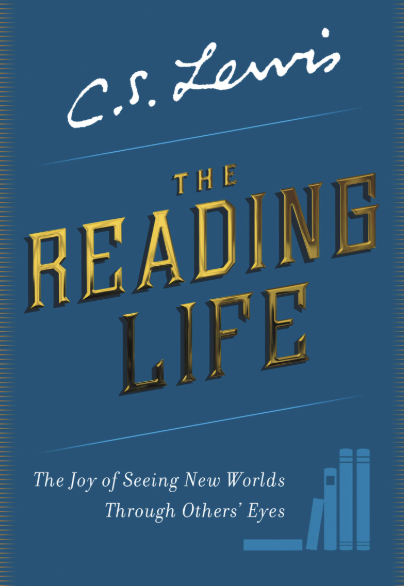
C.S. Lewis. The Reading Life: The Joy of Seeing New Worlds Through Others’ Eyes (Paperback)– October 15, 2020.
Settle your mind with this delightful compilation of excerpts from the letters, essays and classic works of C.S. Lewis on the books he loved and on the art of reading.
| |
|
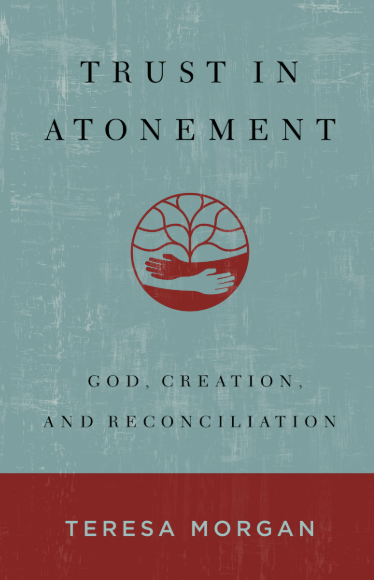
Teresa Morgan. Trust in Atonement: God, Creation, and Reconciliation. (Hardcover) – October 29, 2024.
Teresa Morgan is the McDonald-Agape Professor of New Testament and Early Christianity at Yale Divinity School.
“Teresa Morgan has long been recognized for her groundbreaking interdisciplinary work on pistis in the ancient Greco-Roman world. Trust in Atonement now establishes her as a prophet who speaks directly to our fractured times. Dealing directly with the many and varied critiques of atonement, Morgan—quite remarkably—develops a new model that is at once faithful to scripture and pertinent to this moment.”
—Gabrielle Thomas, Emory University
| |
|
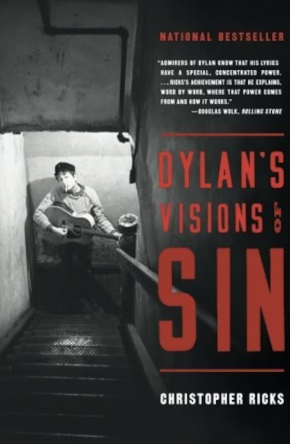
Christopher Ricks. Dylan's Visions of Sin. (Paperback) – July 26, 2005.
You may have been moved recently to see the new biopic of Bob Dylan, ‘A Complete Unknown’, and your mind is set thinking about him and his world. Sir Christopher Ricks is a distinguished poetry scholar and literary critic with a passion for Dylan as a songwriter and musician.
Why read Ricks on Dylan? ". . . literally hundreds of books have been written about Bob Dylan and his music, but very few have considered his lyrics as works of literature." –Alison Lewis, Library Journal
| |
|
The origins of church music can be traced back to the early Christian communities, which emerged out of the Jewish tradition. Music played a significant role in Jewish worship and ritual, and this influence carried over into early Christian practices. The synagogue music of Judaism provided a basic structure for what would become early church music. Psalms, hymns, and spiritual songs were integral to the worship in synagogues, and they were adopted and adapted by early Christians to express their faith.
As Christianity grew, the need for a distinct identity in worship music became more prominent. The early Christians sang to bring scriptural narratives and teachings to life, turn prayers into communal experiences, and provide comfort and encouragement. Much of early church music was monophonic, consisting of a single, unaccompanied melodic line. This simple form kept the focus on the text and its meaning.
The most notable development in the architectural format of early church music was Gregorian chant. Named after Pope Gregory I, who is traditionally credited with organizing the chant repertoire, Gregorian chant grew to become the dominant form within the Western Church from the 6th century onward. Characteristic features of Gregorian chant include a haunting, flowing melody with free rhythm that serves liturgical purposes, primarily the Latin mass and canonical hours.
Meanwhile, the Eastern Orthodox Church developed its own styles of chant, which remained closer to the more ornate forms of Jewish and Eastern origins. Byzantine chant, as it is known, is principal among these, and it influenced other Eastern liturgies as Christianity spread through Eastern Europe.
The evolution of church music continued through the medieval period with developments in polyphony. Contrary to the singular tunes of Gregorian chant, polyphony introduced multiple independent musical lines sung simultaneously, providing a rich and textured musical tapestry. This became particularly significant with composers at Notre Dame in Paris during the 12th and 13th centuries, who composed organum (a plainchant melody with at least one voice added to enhance the harmony) and other early polyphonic music.
The Renaissance period saw further enrichment of church music, with an emphasis on harmony and expressiveness. Composers brought church music to new artistic heights, balancing intricate melodies and emotive harmonies with the clarity required to ensure the sacred texts remained understandable.
The Protestant Reformation in the 16th century brought about another major shift. Reformers such as Martin Luther emphasized congregational singing, leading to the development of chorales in Germany. Similarly, the influence of John Calvin led to the production of the Genevan Psalter, another monumental contribution to church song.
During the Baroque, classical, and Romantic eras, church music continued to evolve with complex compositions by great composers like J.S. Bach, whose cantatas enriched Lutheran worship, and W.A. Mozart, whose masses and sacred choral works enriched the Roman Catholic tradition.
By the contemporary period, church music has diversified greatly, incorporating spirituals, gospel music, and pop influences, reflecting a broader cultural engagement. This would include Jacksonville’s own James Weldon Johnson (“Lift Ev’ry Voice and Sing.”). However, traditional forms endure in liturgical contexts, underscoring the fundamental interplay between music, faith, and community that has characterized church music since its beginnings.
Thus, church music, deeply rooted in the practices of early Jewish worship, has evolved through time to accommodate and reflect broader theological and cultural expressions within Christianity.
Praying that our Lord finds you and yours well.
Archdeacon,
The Ven. Mark Richardson
| |
|
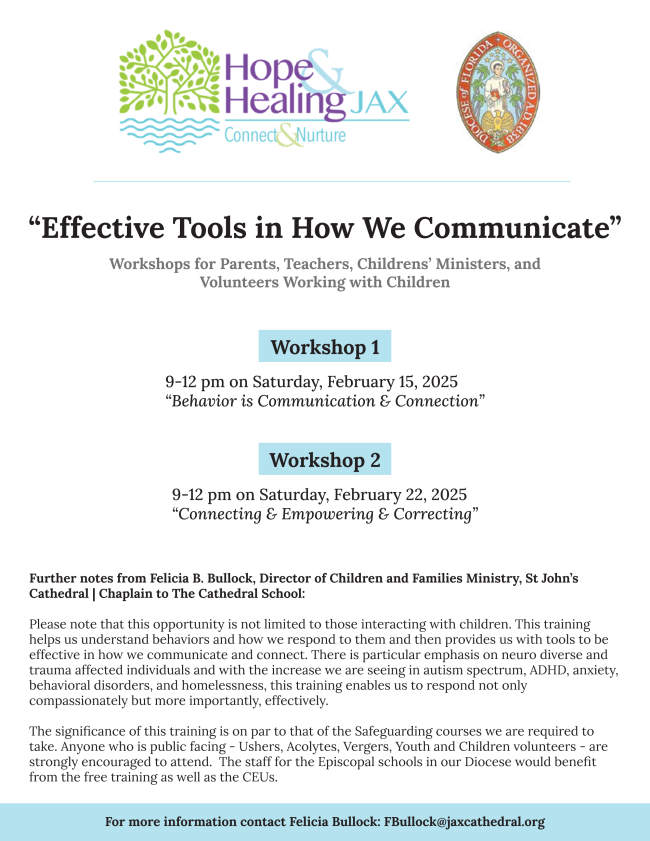
Two Engaging Workshops:
Effective Communication Tools for Parents, Teachers, and Children's Ministry Volunteers
| |
|
Workshop 1: Behavior is Communication & Connection: 9-12 pm
Saturday, February 15, 2025
| |
|
Workshop 2: Connecting & Empowering & Correcting: 9-12 pm
Saturday, February 22, 2025
| |
St. John's Cathedral Bookstore | | | | |