|
‘As the sun was going down, a deep sleep fell upon Abram, and a deep and terrifying darkness descended upon him’. Genesis 15.12
I did not preach this last Sunday (the Second Sunday in Lent) but I was so struck by the appointed lessons that I studied them in advance anyway. It was really the Old Testament lesson (Genesis 15.5-12, 17-18) that captured my attention. Every now and then some of the Old Testament readings strike us as particularly ancient and other-worldly and indeed, as in this case, maybe even downright pagan. But dig deeper and go further, and we discover that the reading might just be consistent with the fundamental theme of Lent--- the mystery of our Lord’s passion and death.
This passage in Genesis 15 describes a covenant between God and man. Abraham is in conversation with God and bares his soul to his Maker. He is worried that his inheritance will come to nothing, as he is old and without an heir. God promises him an heir and many descendants and the land to possess.
God’s covenant is sealed with the sacrifice and cutting in half of animals and the participants walking between the halves. The covenant and the walking between the split animals contain the hint of a curse. If a partner fails to keep the covenant, the curse will reign down upon him, and he will be torn asunder as the animals had been split in two. The covenant is a promise or an act of faith.
The deep sleep and the strange dream that falls upon Abraham as the sun goes down is dark and mysterious. The burning furnace and fiery pot that passes between the pieces of animals are a symbol of God’s presence in the sealing of the covenant. The Divine presence, sealing the covenant, signifies that God is willing to suffer for his creature—and it is the awareness of that unthinkable possibility that links this passage to the profound Lenten theme of Christ’s passion and death on the Cross.
Joseph Ratzinger (Benedict XVI), in a wonderful commentary on the passage, writes:
This [passage] must strike us at first as at the worst monstrous and as at best absurd. How, we ask, should God suffer for man? How should he die? How can he link his fate to a promise made to an Israelite? The answer to this is: the suffering and crucified Christ...
He goes on to write:
It was in Christ that the unthinkable became a reality. In Christ, God showed that man was worth suffering for. He revealed his faithfulness to man by letting his Son lose his life. Christ was torn to pieces by the animals. He became himself the sacrificial Lamb. . . God does not play with us. He has linked his fate to his faithfulness and in this way he has linked his fate to ours...
In Abraham’s vision, the first station of the cross was, so to speak, driven into the ground of human history.
There is more of Lent to come. And in every week and day in it remaining, we are given to ponder how God sent His Son for love of us, and that Cross at the center of the story of our salvation. The various readings from the liturgy will, by God’s grace, continue to shine forth ‘the undifferentiated light of the love of God’.
The Lord bless and keep us all in this good season.
| | Commemoration of the Passion | | |
V. Christ became obedient for us unto death;
R. Even the death of the Cross.
Almighty God, whose most dear Son went not up to joy but first he suffered pain and entered not into glory before he was crucified: Mercifully grant that we, walking in the way of the Cross, may find it none other than the way of life and peace; through the same thy Son Jesus Christ our Lord. Amen.
| | A Spiritual Exercise for Lent | | Here is a short but challenging exercise suggested by Bishop John Pritchard in his book Living Faithfully: Following Christ in everyday life Paperback--- April 2013. | | |
Read once, take a full two minutes to reflect, then read it again:
Romans 12: 1-2, 9-21.
To think about
Opener: ‘Present your bodies as a living sacrifice …’ How healthy do you think your body/whole self is as a disciple of Christ? What would a ‘spiritual doctor’ say?
- Where are we, and most Christians, ‘conformed’ rather than ‘transformed’ (v. 2)?
- Which of those short, sharp exhortations in vv. 11–21 do you find most of a
challenge?
- When do you think you have received most help from your church in living
out your faith from Monday to Saturday?
- What would you like your church to do to help people relate their faith to the everyday decisions that face them?
- What area of your discipleship would you most like to get sorted out?
Prayer: Write on a small piece of paper an area of life that you intend to integrate more fully with your faith this week. Pray over it quietly, offering it bit by bit to God. Then place the piece of paper in a wallet or handbag and resolve to look at it again at the end of the week to see what you and God have done about it.
Gracious God, you make all ordinary things to be holy, and all holy things to be of use in the world. Help us to see all of life as a gift and our whole life as an opportunity to serve and to save through the love you pour into our wounded world.
| | |
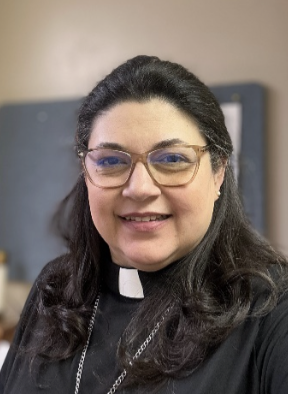
The Rev. Natalie Blasco,
Rector, St Peter’s Episcopal Church, Jacksonville and President of the Board of Directors, Community Health Outreach (CHO)
1. Natalie, tell us a little about yourself, i.e. where you were born and grew up; education; seminary background; ordination and ministry assignments to date and family.
I was born in San Juan, Puerto Rico during the time when my father was the Rector of San Jose Episcopal Church in a barrio called Caimito. I am the youngest of three. We lived in Puerto Rico until 1976, when my father was called to plant a new Latino mission in a suburb of Miami called Hialeah. The family served that parish until my father’s passing in 2003. At the time of his death, we all lived in Broward County and remained there until 2021, when we decided to follow one of my sisters and her family to Jacksonville.
In January of 2012, I was accepted as a Postulant for Holy Order. I attended seminary at Yale/Berkeley Divinity Schools. I was ordained to the Diaconate in December of 2014 and to the Priesthood in December of 2015, at the hands of Bishop Leo Frade…
I have been married to Antonio Buehler since 1997 and very openly struggled with infertility. We were never able to have a live birth but are blessed with three nephews from my side of the family and four nieces from Tony’s. My mother, Carmen, suffers from dementia and lives with us full-time in our home on the Westside of Jacksonville.
2. What form did your call to the ordained ministry take? Seemingly straightforward and/or dependent upon a particular event or series of events or moments in your life and Christian formation? You are the daughter of a priest. How might growing up in a clergy family have informed your formation for ministry?
By the time my father passed away, he had been retired for about eight (8) years. He had been still serving the same Latino congregation, although, by then, as a supply priest. The church building that they had occupied for 18 years had been sold some years before and the congregation was meeting in the chapel of an assisted living facility. With no church building and no priest, the congregation, led by the vestry, asked me to accept appointment as a vestry member and the position of Senior Warden…
For three years after my father’s death, we paid supply clergy for our weekly Sunday services, and I took on the administrative responsibilities. After a few years of that, the Assistant Bishop of Southeast Florida, Bishop James Ottley, asked me to rent space from the nearest church, All Angels Episcopal Church in Miami Springs. I met the priest there, Mother Susan Keedy, and together we made a plan. A few short months later, we concluded that two Episcopal churches sharing one space was a silly situation. Being one church was a much better solution…
Bishop Ottley then turned his attention towards trying to convince me to enter into a discernment process. I eventually did, although I did it kicking and screaming all the way….
3. What has been the pattern of your life as a full-time priest? How did your former charges or responsibilities prepare you to date when you accepted a call to St Peter’s, Jacksonville? You came directly to St Peter’s from St Catherine’s Church, Jacksonville, where you had oversight of a Hispanic congregation (within the fold of the wider St Catherine’s congregation--- if I understand correctly).
Yes, at St. Catherine’s, I was considered the Associate in charge of the Latino congregation. That meant that I also ministered to the English-speaking parishioners and congregations, if Mother Michael needed me to….
Much of how I serve the community at St. Peter’s is informed by my time as Associate Rector at St. Mary Magdalene in Coral Springs, Florida. St. Peter’s has lived through some very good and prosperous times but there has also been a lot of bad times here. I lived the bad times at St. Mary Magdalen. Just six months after beginning my ministry there, the school shooting at Marjorie Stoneman Douglas occurred. Our beloved youth group president, Carmen Schentrup, was a victim of that event. This church, with an AWA of 350, went into mourning alongside the family. It was a time of trauma, not just for the parishioners but also for us as clergy… We were able to provide pastoral care to the congregation, on a one-to-one basis or in small group settings, and, by the time an Interim was called, the congregation was intact and working really hard to overcome the lived traumas of the community…..
4. What is the nature of your ministry at St Peter’s? Do you continue to combine being Rector to a wider congregation while maintaining ministry to Hispanic Episcopalians?
At St. Peter’s, I am the full-time Rector of a bilingual community. We have a small English-speaking congregation and an even smaller Latino congregation. I celebrate two services every Sunday, one in each language. On special occasions, we have bilingual services, such as during Holy Week and on Easter Sunday and Christmas. It is my intention to create one community that loves each other and works together to serve the greater community. We need to grow but we need to do that together.
As Rector of St. Peter’s, I am also the President of the Board of Directors of Community Health Outreach (CHO). CHO has three different ministries. The first is a medical and dental clinic that offers completely free services to people who do not have insurance and cannot afford medical care. The second is The Lord’s Pantry. Every Saturday morning, we offer groceries to the surrounding community, most of which is Latino. Finally, the third ministry is called Baby Luv. On Wednesday mornings, families line up to receive diapers, formula, and fresh and healthy food for their babies.
Outreach is an essential component of St. Peter’s. When I first interviewed for the position, I was worried that this church, that could not afford a full-time priest, would die off and the community being served, both at the church and at CHO, would not have the resources needed for their survival.
To continue reading please click here.
| | |
By Owene Courtney,
St John’s Cathedral
| | |
Humility Revisited
Humility, the Rule of Benedict says, is an antidote to violence and a key to mental health.
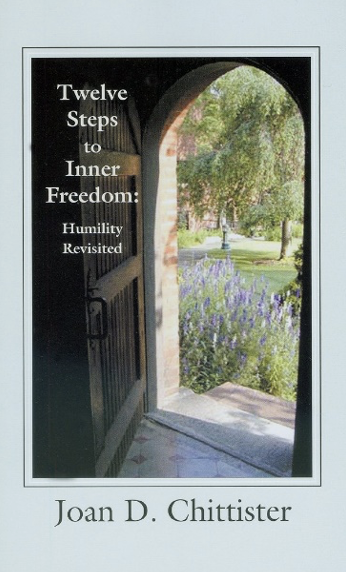
In her little book Twelve Steps to Inner Freedom: Humility Revisited , Benedictine sister, Joan Chittister lays out 12 steps of Humility which she calls the 12 steps to inner freedom. Chittister says that Benedict would want us to list these 12 steps of spiritual development in this order. (See below.) Then, in Benedict's words, we will "come to interior peace that is a sign of a life well lived."
(1) Recognize the presence of God
(2) Accept the will of God
(3) Accept spiritual direction
(4) Persevere
(5) Acknowledge faults
(6) Live simply
(7) Be honest about yourself
(8) Be willing to learn from others
(9) Listen to people
(10) Speak kindly to others
(11) Accept others the way they are
(12) Be centered and serene.
"God is not a goal to be achieved; God is a presence to be reckoned with," Chittister says, and thus to begin our journey to inner freedom, we must recognize the presence of God, centering our lives on God rather that God in our lives.
Not a bad way to journey through Lent. Yet another 12 steps we might follow.
| | |
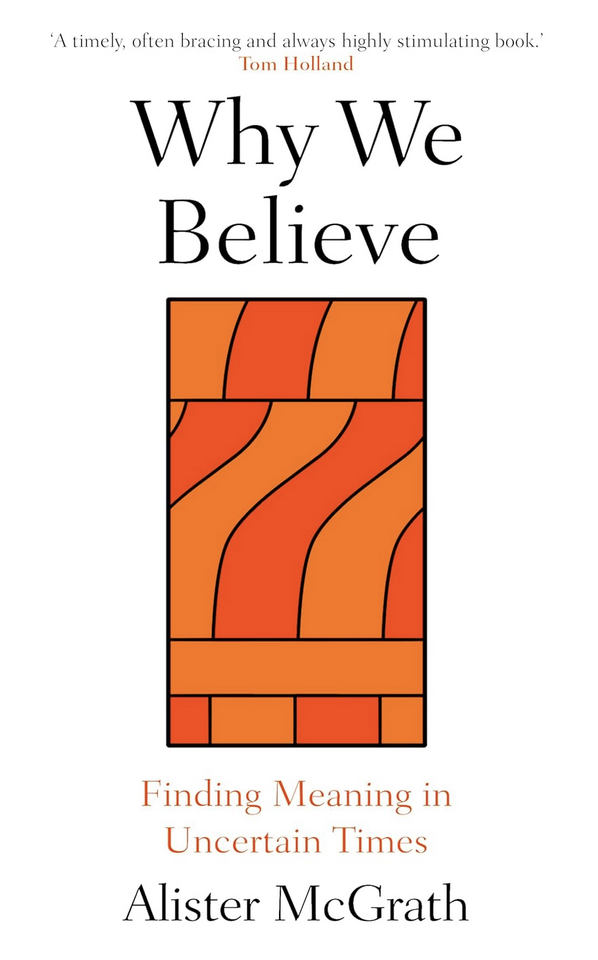
Alister McGrath. Why We Believe: Finding Meaning in Uncertain Times Hardcover – March 11, 2025.
'A salutary corrective to those who might imagine they have emancipated themselves from belief, and a reassurance to those who have not that to believe is the very essence of being human. A timely, often bracing and always highly stimulating book.' —Tom Holland, author of Dominion
| | |
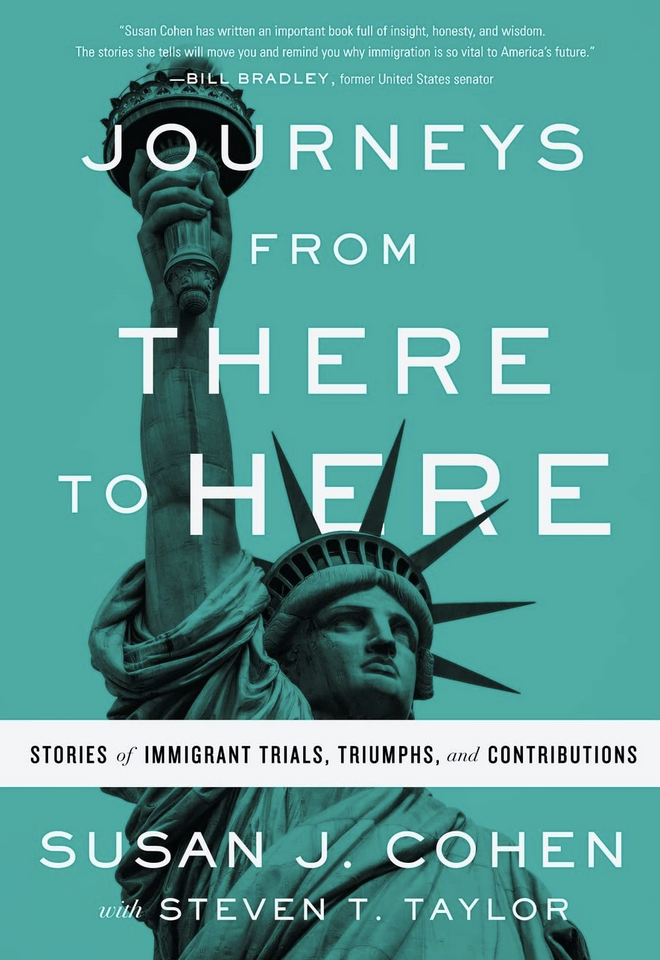
Susan J. Cohen and Steven T. Taylor. Journeys from There to Here: Stories of Immigrant Trials, Triumphs, and Contributions Paperback – October 13, 2021.
The Fortune 500 list of new American companies in 2024 shows that 46%, or 230 companies, were founded by immigrants or their children. 108 had immigrant founders and 123 had founders who were children of immigrants. In this volume of immigrant profiles, leading immigration lawyer Susan Cohen introduces us to a selection of immigrants who strengthen the soul of our nation.
| | |
David A. Gerber. American Immigration: A Very Short Introduction (Very Short Introductions) 2nd Edition Paperback.
Who are we? A relatively young society ‘with a population continually refigured by massive immigrations and ceaseless movements within its borders. ’Gerber looks at immigration history and past policies---approximately 35 million of the 50-55 millions of Europeans who emigrated from 1820 to 1920 came here--- and current policies since changes to our immigration laws in 1965 that opened America on an equal, regulated basis to the non-European world. A concise helpful little book to clarify the question.
| | |
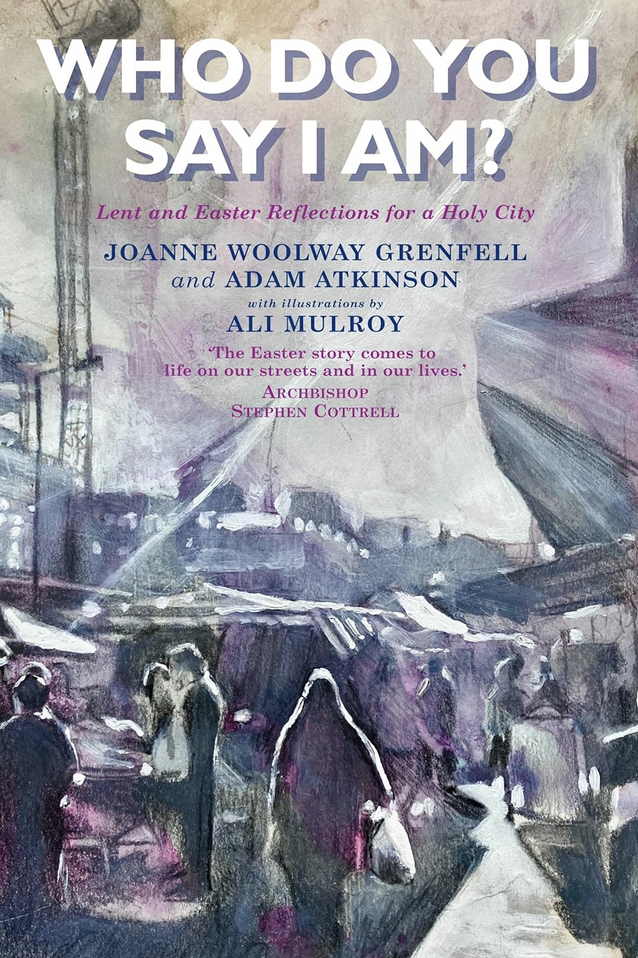
Joanne Grenfell, Adam Atkinson. Who Do You Say I Am? Lent and Easter Reflections for a Holy City Paperback – August 30, 2024.
The book springs from a series of talks given at St Paul's Cathedral, London in Holy Week 2023.
| | |
Flannery O’Conner. Flannery O’Connor: Collected Works: Wise Blood / A Good Man Is Hard to Find / The Violent Bear It Away / Everything that Rises Must Converge / Essays & Letters Hardcover – September 1, 1988.
March 25 is the 100th anniversary of the birth of this extraordinary Christian soul and American writer. The Library of America Collected Works is a wonderful collection of all her fiction and the best of her essays and letters.
| | |
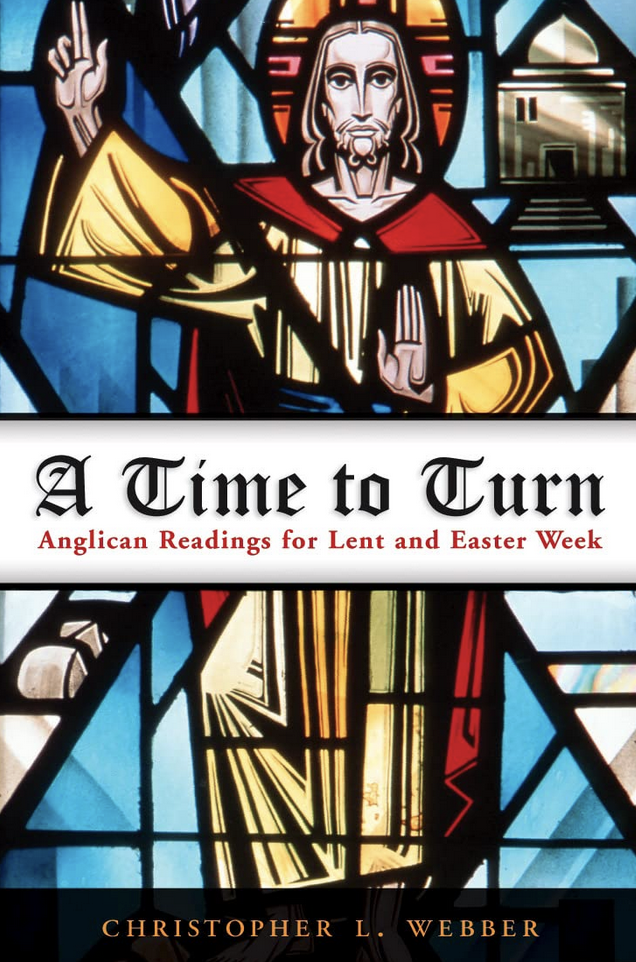
Christopher L. Webber. A Time to Turn: Anglican Readings for Lent and Easter Week Paperback – November 1, 2004.
A Time to Turn draws on the best sermons, books, poems, and hymns of Anglican writers throughout the centuries, with a reading for each day, followed by the brief suggestion for focusing the reader's meditations. Writers include Christina Rossetti, John Donne, Philips Brooks, John Keble, Thomas Traherne, Harriet Beecher Stowe, and many others. --- Amazon review.
| | |
Keon West. The Science of Racism: Everything you need to know but probably don't - yet Hardcover – January 23, 2025.
Author and professor Keon West offers a facts-based analysis of racism, asking “Is racism still
enough of a feature in our society that it has detectable, significant effects on how people are
treated and what their life outcomes are liked to be?” Reviewers from different quarters have
been favorable in their response to this study that strives to be deliberately science based.
| | |
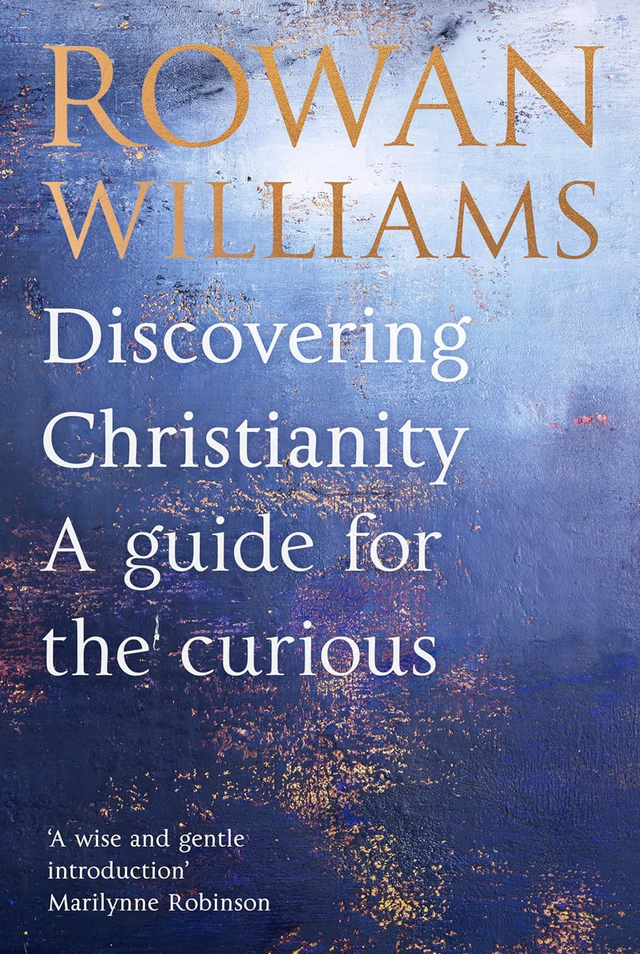
Rowan Williams. Discovering Christianity: A guide for the curious Paperback – Picture Book, March 18, 2025.
'Rowan Williams offers a typically intelligent, attractive, and beguiling picture of what it means to be a Christian... When I read Williams, I feel something coming to birth inside me, whispers from a shore I want to set out for.' -- Mark Oakley in Church Times
| | |
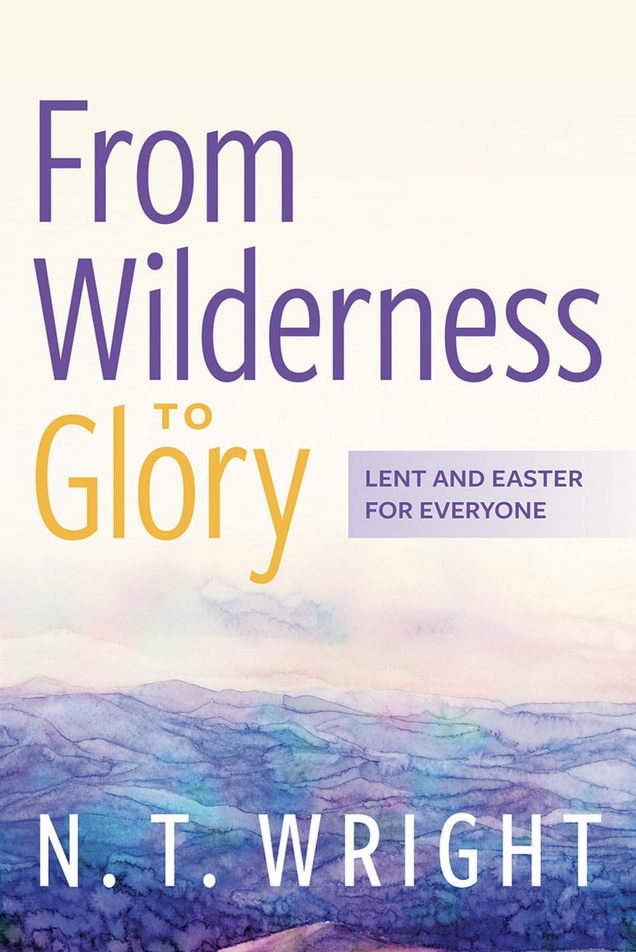
N.T. Wright. From Wilderness to Glory: Lent and Easter for Everyone Paperback – January 7, 2025
Think and pray your way slowly through Lent and Easter (or whenever you are ready to start) by following the stories of Jesus’ life, death and resurrection.
| | |
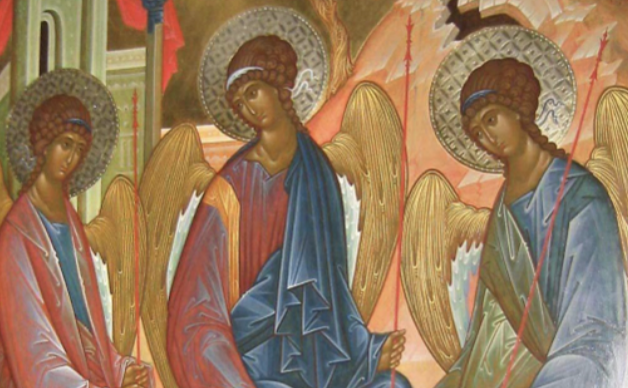
A Belief in Guardian Angels
As a little boy my mother told my brother Steven, sister Celeste (the Rev Celeste Tisdelle), and me that we each had our own guardian angel, who watched over us. Steven asked why we couldn’t see the angel. Mom explained that the angel was just out of sight, but with us always.
Not doubting, I was convinced that I could catch a glimpse of mine. I would pretend to be interested in something and then immediately spin around, hoping to surprise my angel unaware. After watching me spin around for no apparent reason, Mom asked just what I was doing. After explaining my plan to trap my angel, Mom patiently said that the angel was always a few seconds ahead of me in case I took a misstep, to catch me. She laughed and said I would never catch my angel, and to knock it off.
Undaunted, I continued my quest for some time, but out of Mom’s sight. She was a little (but only a little) easier to fool than my angel.
Throughout history, we have sought comfort in the belief that divine beings watch over us, guiding and protecting us in times of need. The concept of guardian angels—spiritual entities assigned to protect and guide individuals—is a belief that transcends cultures and religions, but it is most associated with we Christians. The Bible offers insight into this belief, with several passages suggesting that angels serve as protectors for God’s people.
The belief in guardian angels is rooted in the understanding that God, in His infinite love and care, sends angels to provide guidance, protection, and deliverance from harm. One of the most frequently referenced scriptures about guardian angels is found in Matthew’s Gospel. Jesus says, “See that you do not despise one of these little ones. For I tell you that their angels in heaven always see the face of my Father in heaven.” (18:10) This passage is often interpreted to mean that each person, especially children, has a guardian angel assigned to protect them.
Another key scripture comes from the book of Psalms, “For he will command his angels concerning you to guard you in all your ways; they will lift you up in their hands, so that you will not strike your foot against a stone.” (91:11-12) This passage shows God providing angelic assistance for those of us who trust in Him, offering comfort that no harm will come as long as we are under His divine protection.
The idea of angels providing guidance is also prominent in other passages. In Hebrews, it is written, “Are not all angels ministering spirits sent to serve those who will inherit salvation?” (1:14) This suggests that angels are not only protectors but also serve as messengers or guides, helping believers navigate our lives according to God’s will. Angels can serve as instruments of divine intervention in human affairs, bringing God’s messages to ensure that His purposes are fulfilled.
In the New Testament, the story of the apostle Peter’s escape from prison is another testament to the intervention of angels. In Acts 12:7-10, an angel appears to Peter in prison, helping him escape by unlocking his chains and leading him out of the prison safely. This miraculous deliverance shows how angels can protect individuals from physical danger, guiding them when it seems like all hope is lost.
Another passage in Hebrews, says, “Do not forget to show hospitality to strangers, for by so doing some people have shown hospitality to angels without knowing it.” (13:2) This verse suggests that angels may not always be recognizable, and at times, they may interact with us in ways that are unseen or unrecognized. This idea supports the belief that angels are constantly working behind the scenes to help God’s people.
While the Bible does not provide an explicit list of who specifically has guardian angels, it is clear from various scriptures that angels have a role in guarding and guiding God’s children. This belief brings comfort to many, reinforcing the idea that God is watching over them and providing divine assistance, even in the midst of life’s struggles and uncertainties.
The belief in a Guardian Angel is a deeply rooted part of our Christian faith, supported by various scriptures in the Bible (at least 270 times). From providing protection to offering guidance, angels are seen as messengers and guardians of God’s will. Whether recognized or not, the presence of these divine beings serves as a reminder of God’s continuous love and care for His people, and that He will never leave us nor forsake us.
So, if you happen to see me, seeming alone, and for no apparent reason I quickly spin around. I’m still hoping to catch just a glimpse, because perhaps like me, my guardian angel has gotten a little older and slower
Praying that our Lord finds you and yours well.
Archdeacon,
The Ven. Mark Richardson
| | |
Art @Noon Stained Glass Artists:
March 27 at 12 - 1 p.m.
| | |
Stained glass can traced as far back as Ancient Rome, when craftsmen started using colored glass for their decorative wares. In the 7th century, glassmakers and artists started to create stained glass windows to adorn the interiors of churches, monasteries, abbeys, mosques and other place of worship around the world.
The colors in stained glass are created by working with metallic oxides during the manufacturing process. By adding different additives, different hues can be produced. After cooling, the glass fragments are held in place by materials like lead, stone and copper foil.
Stained glass may have started out as a very particular craft undertaken by glassmakers and stained glass artists for places of worship, but artists from other fields also became fascinated with the artistic medium, likely seduced by the exalted place the medium has had in the spiritual lives of communities for centuries.
| | | | |