Volume 79, September 2025 | | |
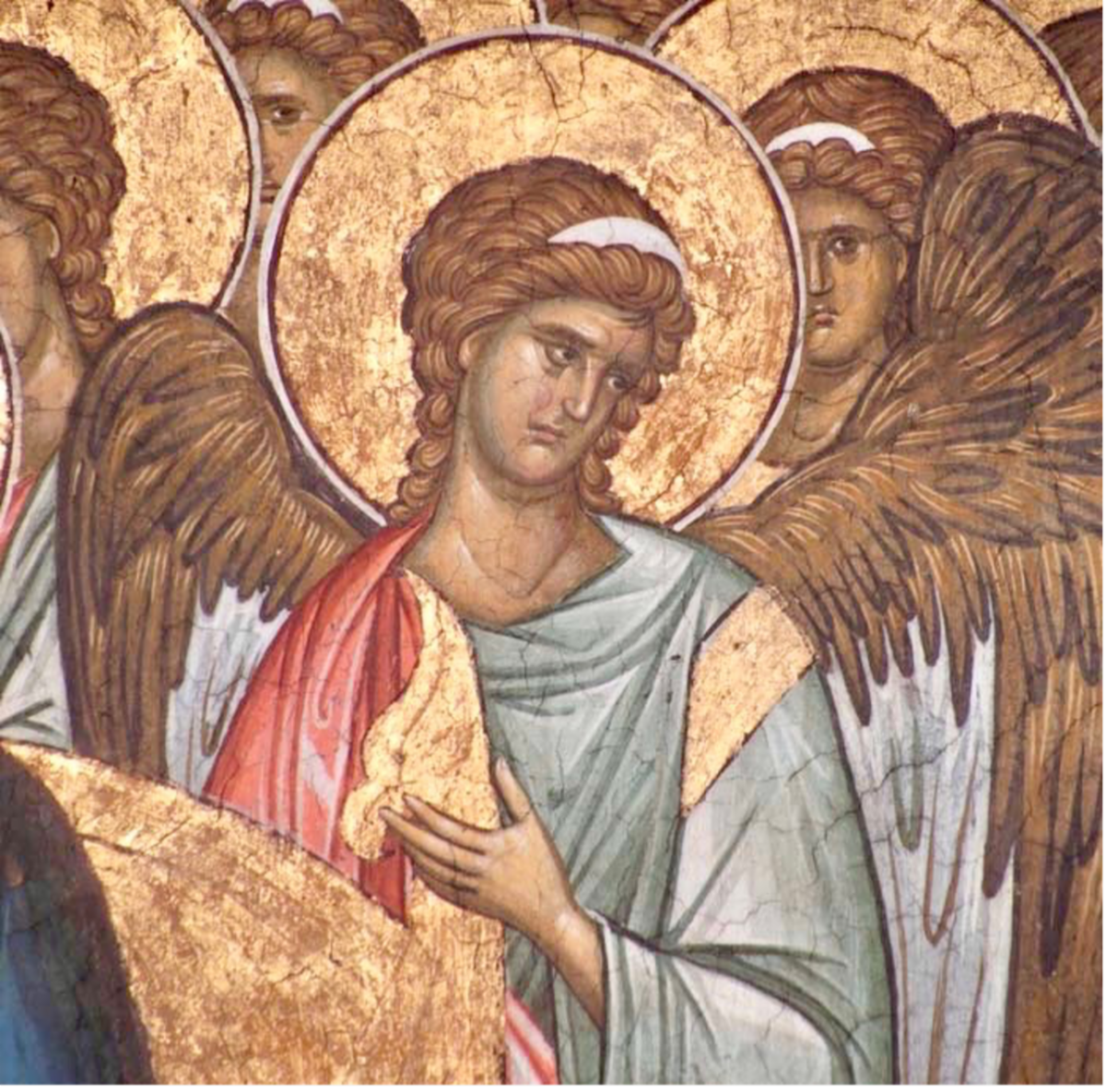
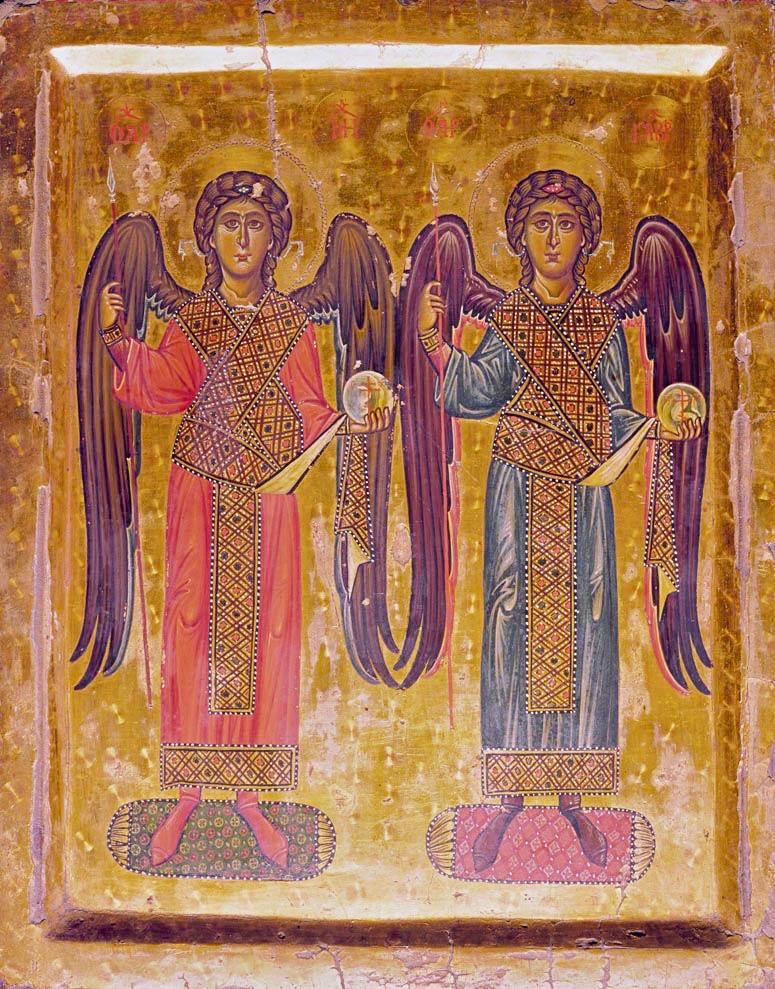
ST MICHAEL AND ALL ANGELS
‘O ye angels of the Lord, bless ye the Lord:
praise him and magnify him forever.’
The trend of using Old Masters paintings on chocolate boxes became popular in the late 19th century. This was when chocolate started being made and manufactured as a luxury item, and it was thought fine art would market it all the better. The trend continued strongly through the 20th century.
One such painting on a chocolate box permanently lodged in my imagination from early days is that of an image of two angels snatched from a tiny scene at the very bottom of Raphael’s famous painting of the ‘Sistine Madonna and Child’: two impish looking chubby cherubs resting on their elbows looking like children who, having ducked under the dinner table and scampered around their elders’ feet, emerge out from under the tablecloth looking about eyeing for their next bit of mischief. Wherever there is a surface to decorate—souvenir key chains, plastic aprons, posters, or chocolate boxes—look for those cherubs. That’s the image I sometimes struggle to shift from center stage whenever I think of the heavenly host.
In the original preface to The Screwtape Letters, C.S. Lewis wrote some interesting things about the way we picture angels.
Writing specifically about the visual, in contrast to the literary, images, he says:
These forms are not only symbolical but were always known to be symbolical by reflective people. The Greeks did not believe that the gods were really like the beautiful human shapes their sculptors gave them. In their poetry a god who wishes to “appear” to a mortal temporarily assumes the likeness of a man. Christian theology has nearly always explained the “appearance” of an angel in the same way. It is only the ignorant, said Dionysius [a Christian writer] in the fifth century, who dream that spirits are really winged men.
Lewis then goes on to express the conviction that in the visual arts these symbols of angels have ‘steadily degenerated’:
Fra Angelico’s angels (1395-1455) carry in their face and gesture the peace and authority of Heaven. Later come the chubby infantile nudes of Raphael (1481-1520); finally the soft, slim, girlish, and consolatory angels of nineteenth century art, shapes so feminine that they avoid being voluptuous only by their total insipidity—the frigid houris of a tea table paradise. They are a pernicious symbol. In Scripture the visitation of an angel is always alarming; it has to begin by saying “Fear not.” The Victorian angel looks as if it were going to say, “There, there.”
Lewis would refer us back to the books—to the Bible and to Dante’s Divine Comedy: Dante’s angels ‘are the best’.
Reflecting on the place of angels in Creation and throughout the Bible always has the effect of re-setting some boundaries in my own ego. Man may be the measure of all things—but God is the measure of man—and the Creator of a vast universe lower and higher than my own dear self.
The wonderful priest and theologian, John Macquarrie (1919-2007), once wrote that he thought it strange that we should close our minds to the possibility of angels when we otherwise thrive on the revelations of astronomy and the theories of physics that imprint on our mind the vastness of space and the proliferation of worlds beyond our own.
Macquarrie wrote:
The panorama of creation must be far more breathtaking than we can guess in our corner of the cosmos, for there must be many higher orders of beings whose service is joined with ours under God. The doctrine of angels tells us that human beings live in a universe created by God that is infinitely more wondrous than we know.
Sincerly yours,
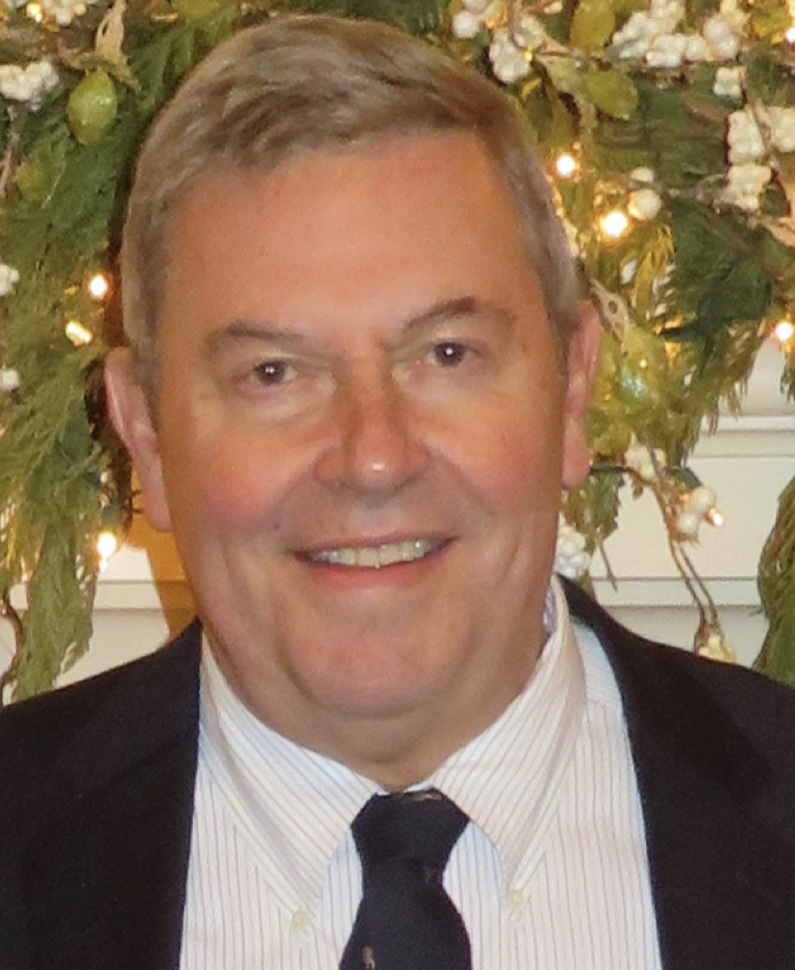
Douglas Dupree
| | Feast of St. Michael and All Angels | | |
COLLECT
O EVERLASTING God, who hast ordained and constituted the services of Angels and men in a wonderful order; Mercifully grant that, as thy holy Angels always do thee service in heaven, so, by thy appointment, they may succour and defend us on earth; through Jesus Christ our Lord. Amen.
Commentary
Of the several such festivals that appear in the medieval missals, this is the only feast of angels the English Reformers retained. It was especially popular in medieval England. Its institution goes back to the fifth century, when a basilica was dedicated to Saint Michael on the via Saria, a little north of Rome—the first church in Italy in honor of the Archangel.
Angels appear frequently in the Bible as innumerable and as intermediators between God and man. In the earlier books of the Old Testament, they are messengers on a mission. In the later books they are more finely defined. In Isaiah 6 and in Job they form the heavenly court and sing the praises of God.
The Lord himself speaks of angels: they are spiritual beings (Mt. 22.30) who enjoy always the vision of God in heaven (Mt.18.10). And they will accompany him at his second coming (Mt. 16.27).
The New Testament authors represent Christ as surrounded by angels at the most important periods of his life. They announce his incarnation (Mt. 1.20, 24) and his birth (Lk. 2.9-15); they minister to him in the desert (Mt. 4.11); strengthen him in his agony (Lk 22.43); would be ready to defend him when he is captured (Mt.26.53); and are the first witnesses of his resurrection (Mt. 28.2-7); (Jn. 20.12ff).
| | A Book Review by Owene Courtney | | |
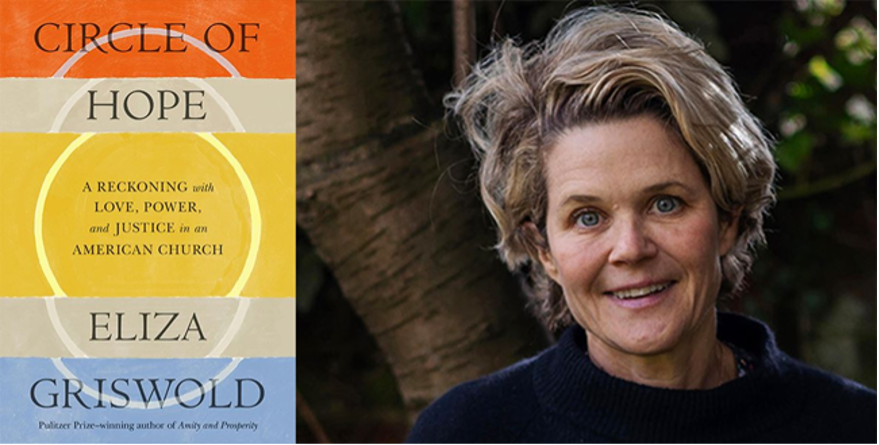
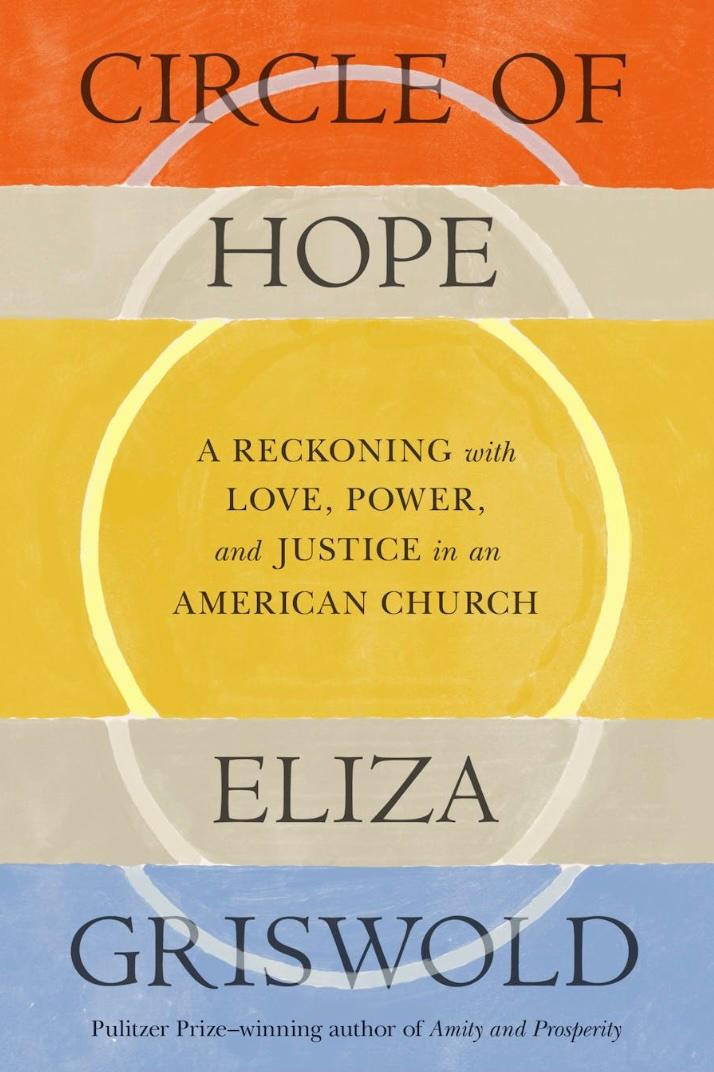
Circle of Hope: A Reckoning with Love, Power and Justice in an American Church
by Eliza Griswold
In 2003, Presiding Bishop Frank Griswold consecrated the first openly gay bishop of the Episcopal Church, dividing the church in a modern schism caused by a profound rift. Griswold’s daughter Eliza was 30 years old, an investigative journalist and poet, who remembers watching her usually reserved father “put his head in his hands and cry over his failure to hold the church together.” Today Eliza Griswold is considered by some one of the best political reporters in the country, she is a Guggenheim fellow and a Pulitzer Prize winner for general nonfiction.
As a pastor’s kid, reporter for the New Yorker and a poet, Eliza Griswold says, “I’ve spent much of my life at the edge of belief, observing how people organize their lives around what they hold sacred.” She earned a front row seat for this journey because of her father’s ministry, and she used what she learned from that vantage point to “analyze human concepts of the divine in order to understand their universal principles.” Her discovery that “almost every religious community has to contend with a leaky roof because inevitably the outside world bears down,” led to her most recent book Circle of Hope: A Reckoning with Love, Power and Justice in an American Church.
In 2019, Griswold encountered the Circle of Hope “church,” four thriving congregations which began in 1996 as a group of people who felt called to come east from California and bring young people to Jesus. They billed themselves as progressive evangelicals, a microcosm of the radical evangelical movement, promising “not only to reclaim the moral heart of evangelicalism but also to serve as Christianity’s last, best shot at remaining relevant.” When Griswold met with the pastors for the first time in 2019, their “roof” had already begun to leak.
This book is not only the story of the rise and fall of yet another effort by human beings to claim the truth about Jesus, but it is also the story of Griswold actually joining Circle of Hope. She immersed herself as a reporter, not only intricately weaving her own life into the lives of the pastors and a group of people attempting to live with Christ in the center of all things, but also ultimately buying into their theology and ministry. Perhaps this total immersion by the author was an attempt to recover from the pain she witnessed her father exhibit and internalize with the breakup of his beloved Episcopal denomination. She said, “I really thought it was going to be fun and inspiring, an existential and important project.”
To continue reading, please click here.
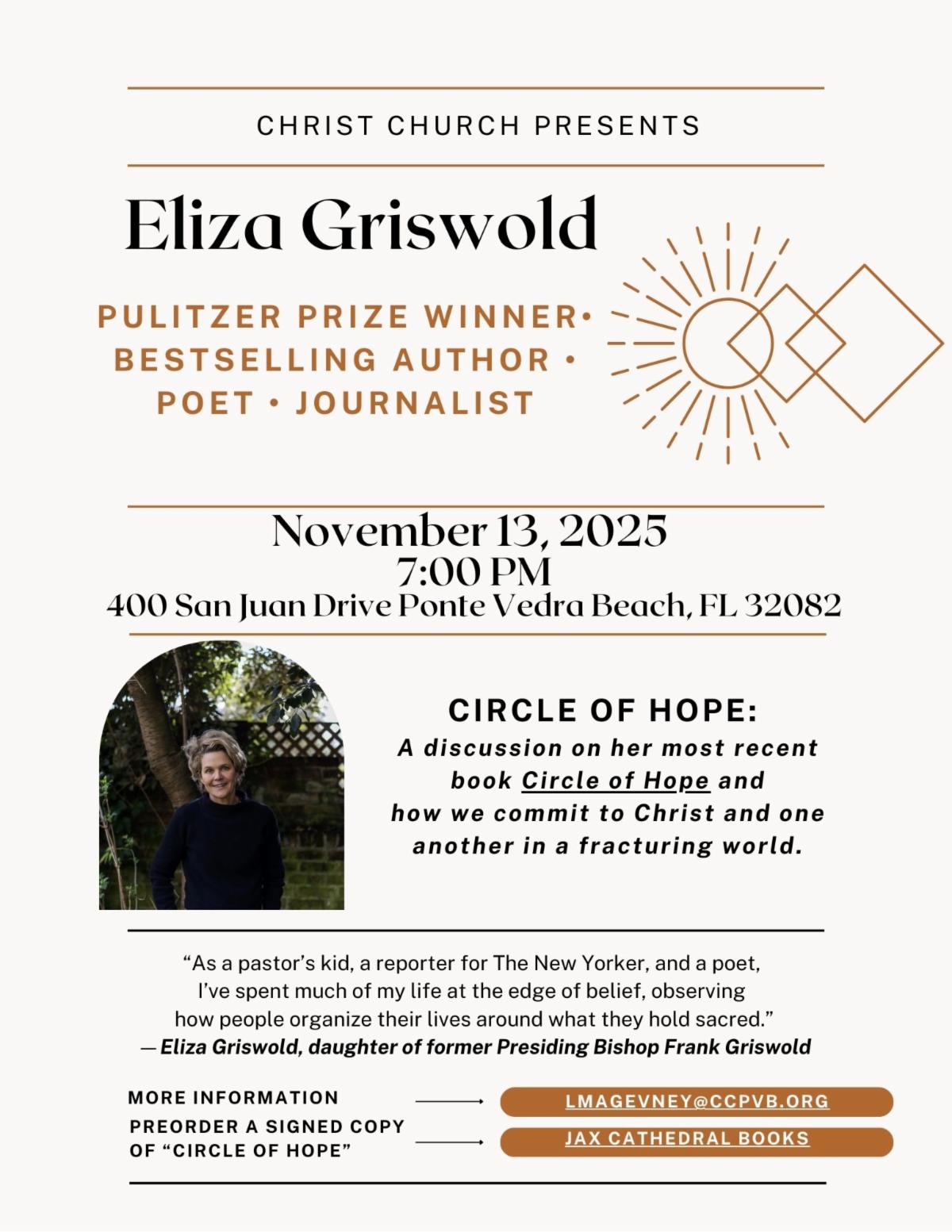
NB Eliza Griswold will lead a discussion of Circle of Hope at Christ Church Ponte Vedra Beach November 13, 2025, at 7 p.m. For more information, contact lmagevney@ccpvb.org.
| | St. Matthew (September 21) | | |
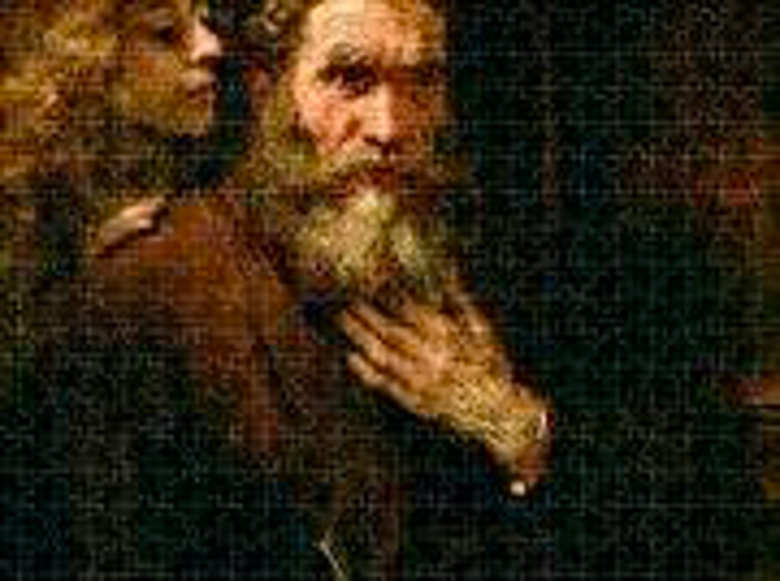
St Matthew and the Angel, 1661 Rembrandt
First of the four, saint Matthew is the Man;
A gospel that begins with generation,
Family lines entwine around the Son
Born in Judea, born for every nation
Born under Law that all the Law of Moses
Might be fulfilled and flower into Grace
As every word and deed in time discloses
Eternal love within a human face.
This is the gospel of the great reversal
A wayside weed is Solomon in glory
The smallest sparrow’s fall is universal
And Christ the heart of every human story
'I will be with you, though you may not see
And all you do, you do it unto me'
A Sonnet for St Matthew’s Day 21 September
from Sounding the Seasons by Malcolm Guite
| | Article by The Rev. Canon Donald Woodrum | | |
Fr. Woodrum is a Canon of the diocese who was the Rector of St. Luke's Live Oak for 35 years. His interest in evangelism and physics commenced in High School. His goal is to inspire creative thinking.
The view that science is about facts and religion about opinions would be embraced by many people. This essay challenges that thinking by offering some clear connections between science and many fundamentals of Christian theology. The laws of the conservation of energy and matter are defining accomplishments of modern science. They establish that neither can be created nor destroyed but only transformed from one way of being to another. I want to illustrate a few of the connections as an encouragement for others to think outside of the traditional boxes.
The biblical book of Genesis describes how God, the ultimate “Energy” undertook the creation of “Matter” in a manner consistent with evolution—smaller things like atoms into molecules into larger arrangements until there was Heaven and Earth. The ultimate creation being human beings, sexually arranged for pro-creation, to be the stewards and managers of this complex system which is always “on the move.”
Let’s consider how this transformation process plays out in the life of an individual human being. In the span of one soul’s “incarnation” small matter such as atoms and molecules come to be part of them for a time and then move on to be part of someone or something else. Each autonomous element never stops being what it was created to be—its identity being conserved as it “relocates.”
This naturally leads to the reasonable question of what happens to the energy of a human “soul-personality” when it detaches from a material body? If it cannot die but must “relocate”, where is it? This question points to the scientific evidence that there are many more dimensions than the five our material equipment allows us to sense. Whether there are ten or fifty dimensions we are living in all of them. Christianity describes this unseen “around the corner” reality as heaven. Each human is a unique expression of the “image and likeness” of God which, like an atom, cannot “uncreate.” After a death it is common for relatives and friends to “sense” their continuing presence. People with “near death” physical experiences routinely describe similar “spiritual energy” events. Multidimensionality reasonably accounts for these experiences. Out of “sight” does not mean out of “proximity.”
To continue reading, please click here.
We are thankful to Canon Woodrum for sharing his essay with the Newsletter. If anyone would like to contact him to discuss further you can reach him at dleewoondrum@gmail.com.
| | Rector's September Book List | | |
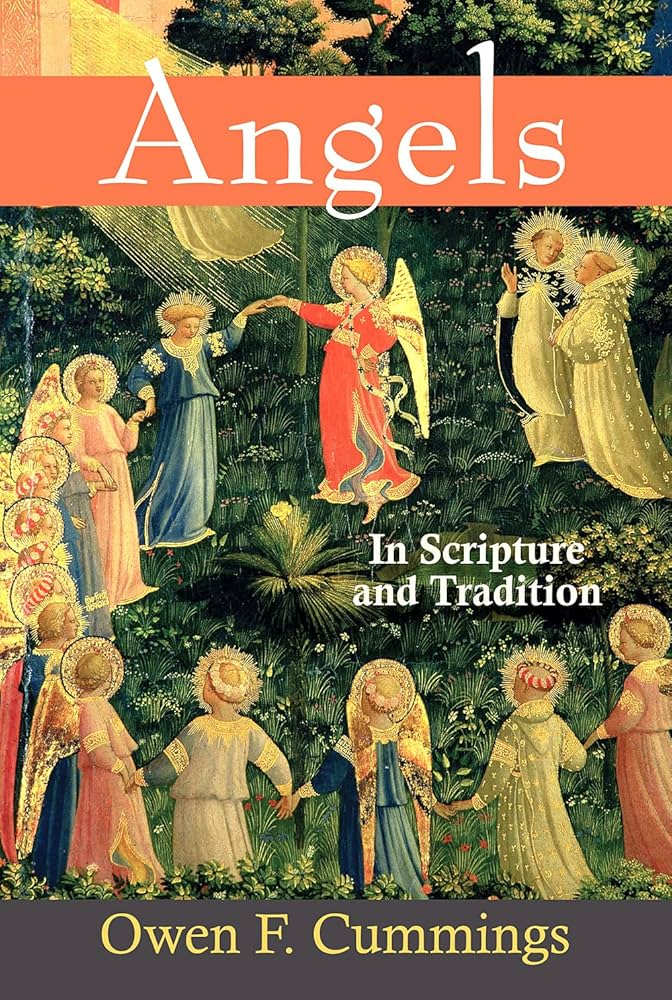
Owen F. Cummings. Angels: In Scripture and Tradition Paperback – February 4, 2023.
This is a balanced and persuasive account of how the Church, scripture, literature speak to us about angels. Helpful perhaps in thinking for oneself the place of angels in building a framework of theology. Also valuable to assist in talking to your children or grandchildren about angels, (e.g. “Grandad, are angels real?”) as they sort through the welter of fictional and other characters in children’s literature and cartoons and video games.
| | |
Eliza Griswold. Circle of Hope Paperback – August 5, 2025.
"Eliza Griswold has crafted an intimate, immersive, tenderhearted portrait of a community, as well as a riveting chronicle of its transformation. . ."
— Amazon review.
Owene Courtney reviews Circle of Hope above in this newsletter.
| | |
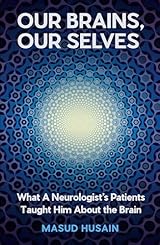
Masud Husain. Our Brains, Our Selves: What a Neurologist’s Patients Taught Him About the Brain Hardcover – February 13, 2025.
"Our identity involves mind, body, and spirit. Here, an acclaimed neurologist shares some of the fundamental ways our brain makes and shapes our identity: He does this through the stories of seven of his patients. . . Among the people we encounter is a man who ran out of words, a woman who stopped caring what others thought of her and another who, losing her memory, started to believe she was having an affair with the man who was really her husband."
— Amazon review.
| | |
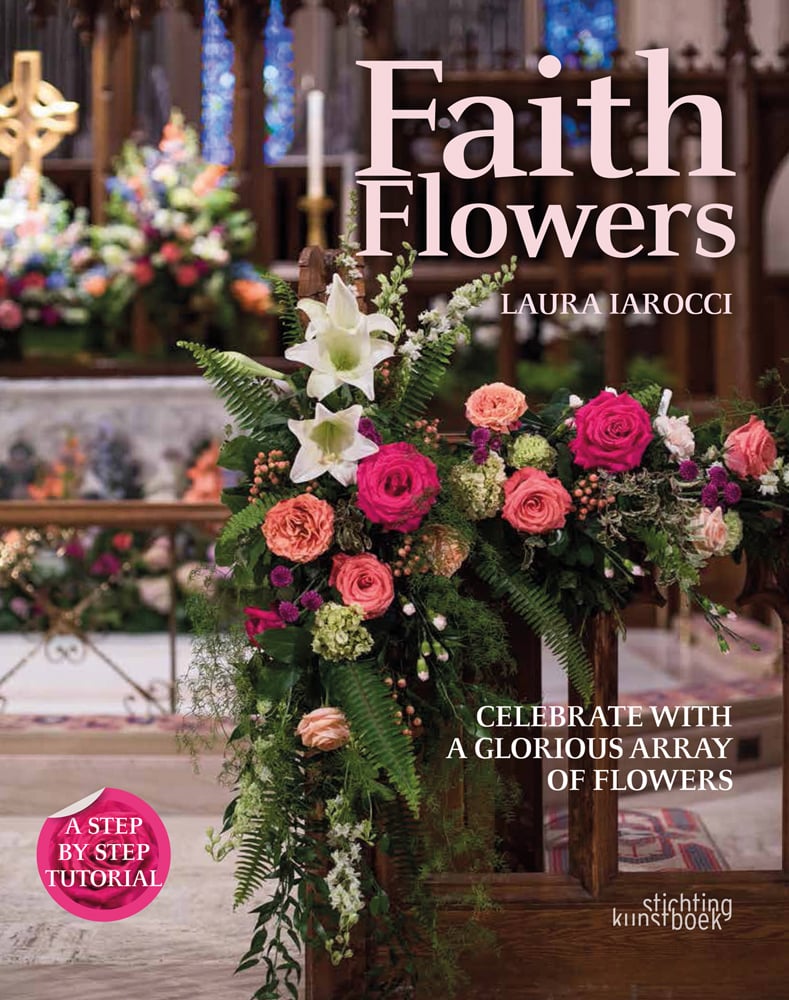
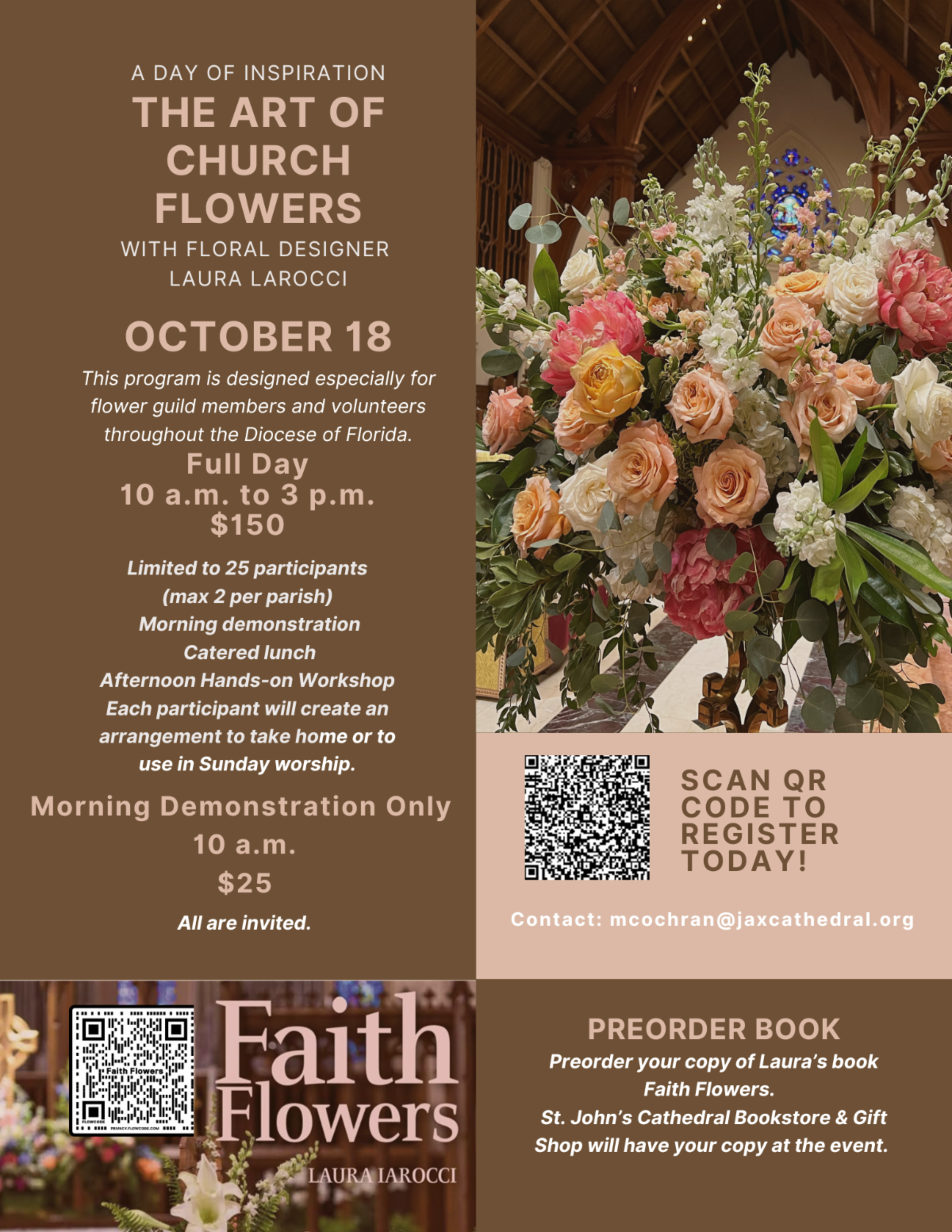
Laura Larocci. Faith Flowers: Celebrate With a Glorious Array of Flowers Hardcover – August 31, 2018.
Laura Larocci will lead the flower workshop for the Diocese, sponsored by St John’s Cathedral and the Bishop’s Institute on October 18, 2025, at the Cathedral. Look for the registration link at the end of this Newsletter.
Laura Larocci has chaired the 50 member Flower Guild at the Cathedral of St. Philip in Atlanta for some two decades. Her book starts with the fundamentals of flower arranging and works up to advanced designs for festivals. Step-by-step instructions and photographs clearly show how to create many different arrangements.
| | |
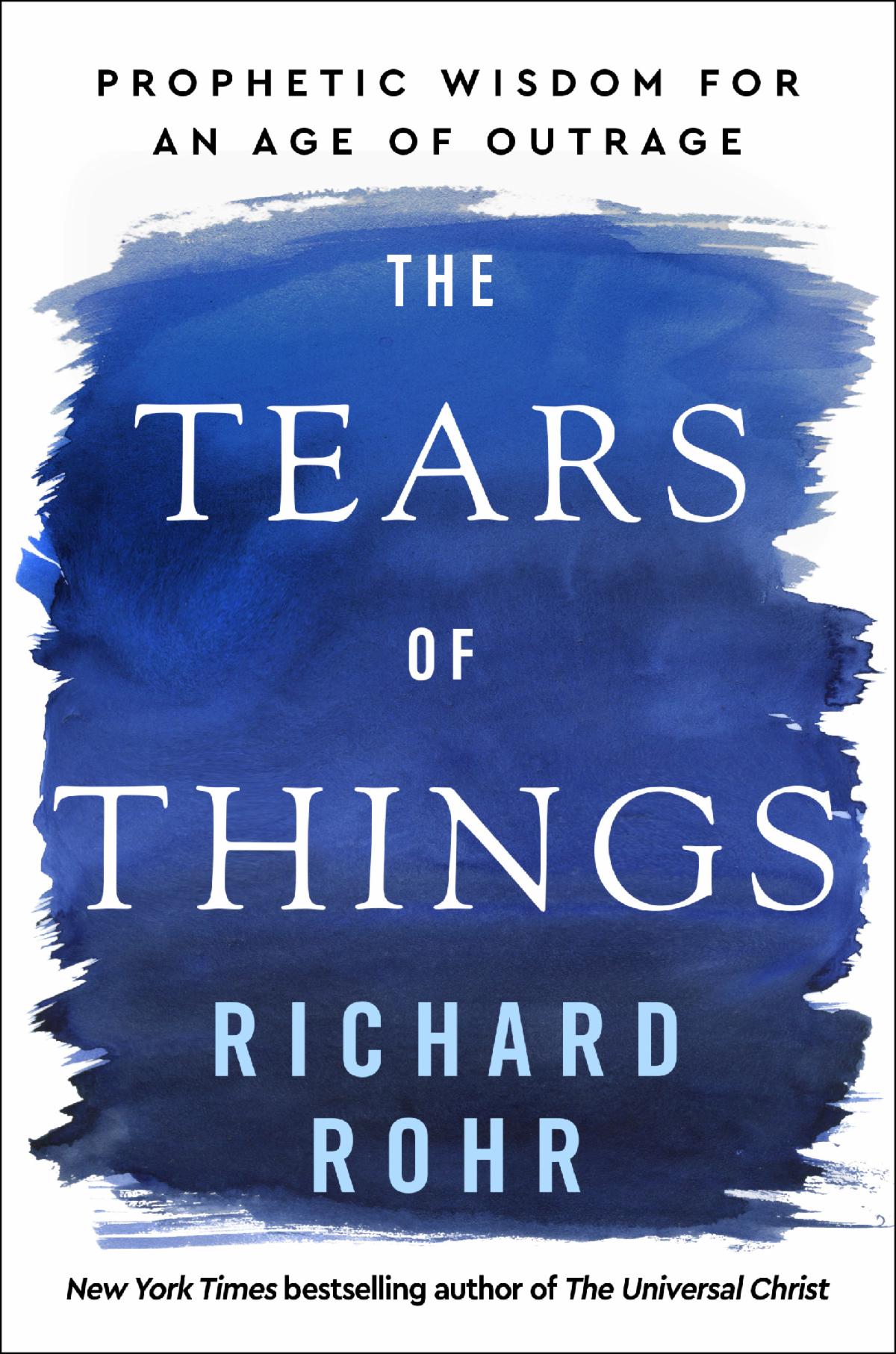
Richard Rohr. The Tears of Things: Prophetic Wisdom for an Age of Outrage Hardcover – March 4, 2025
"How do we live compassionately in a time of violence and despair? What can we do with our private disappointments and the anger we feel in such an unjust world? In his most personal book yet, Richard Rohr turns to the writings of the Jewish prophets, revealing how some of the lesser-read books of the Bible offer us a crucial path forward today."
— Amazon review
| | |
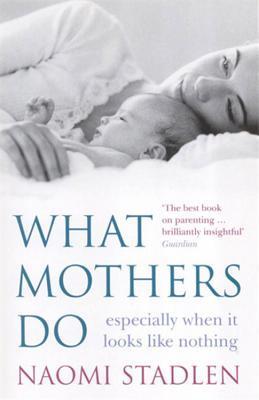
Naomi Stadlen. What Mothers Do Especially When It Looks Like Nothing Paperback – September 6, 2007.
A much-appreciated book by the distinguished author and psychotherapist Naomi Stadlen.
"As the author correctly identifies right from the get-go, most mothers struggle deeply to articulate their experiences, not just to the outside world but even to themselves. This restlessness can lead to self-doubt and all manner of other negative feelings. As she [Stadlen] says so succinctly, 'People like to understand what they are doing and why. A mother might well feel frustrated, anxious, and uncomfortable if she doesn't.'" — one reviewer
| | | | |
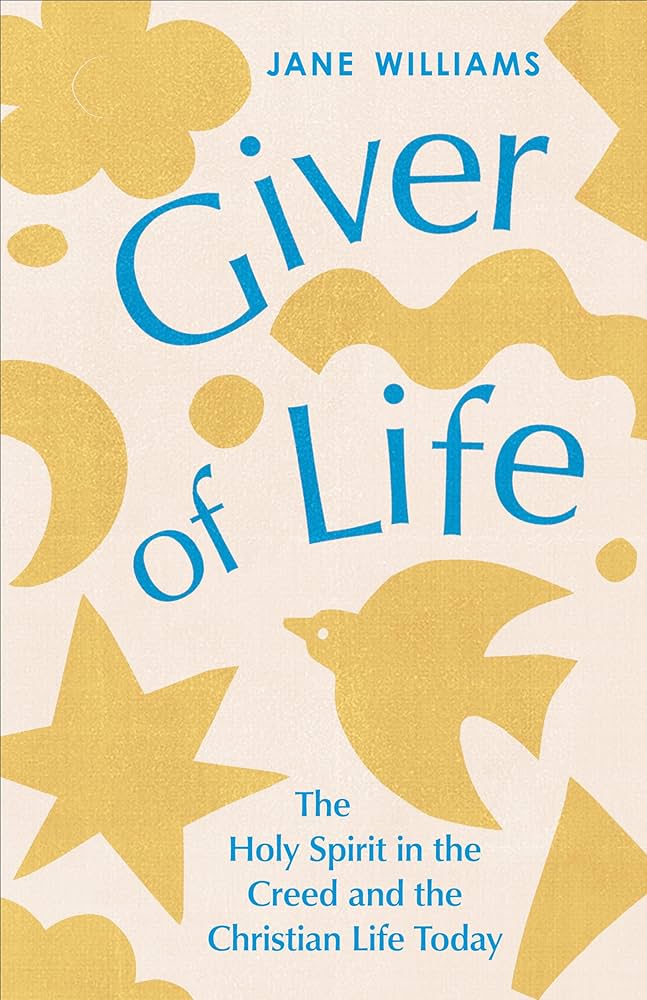
Jane Williams. Giver of Life: The Holy Spirit in the Creed and in the Christian Life Today Paperback – September 9, 2025.
An ideal read from a great author for 2025 to mark the 1700th anniversary of the Nicene Creed.
"An extraordinary rich meditation on what the Nicene Creed says about God, and in particular the Holy Spirit."
— The Rt Rev. Graham Tomlin
| | |
I hope you saw the interview with Susanna Barton from the St John’s Cathedral Wellness Center in the August Newsletter. Susanna gave a very personal and moving account of how she was unexpectedly immersed in the work of being a caregiver. This was a significant step in leading her to her present work and vocation.
Are you a care giver for a loved one—a spouse, family member or someone else? Did you make a commitment with many questions and few answers?
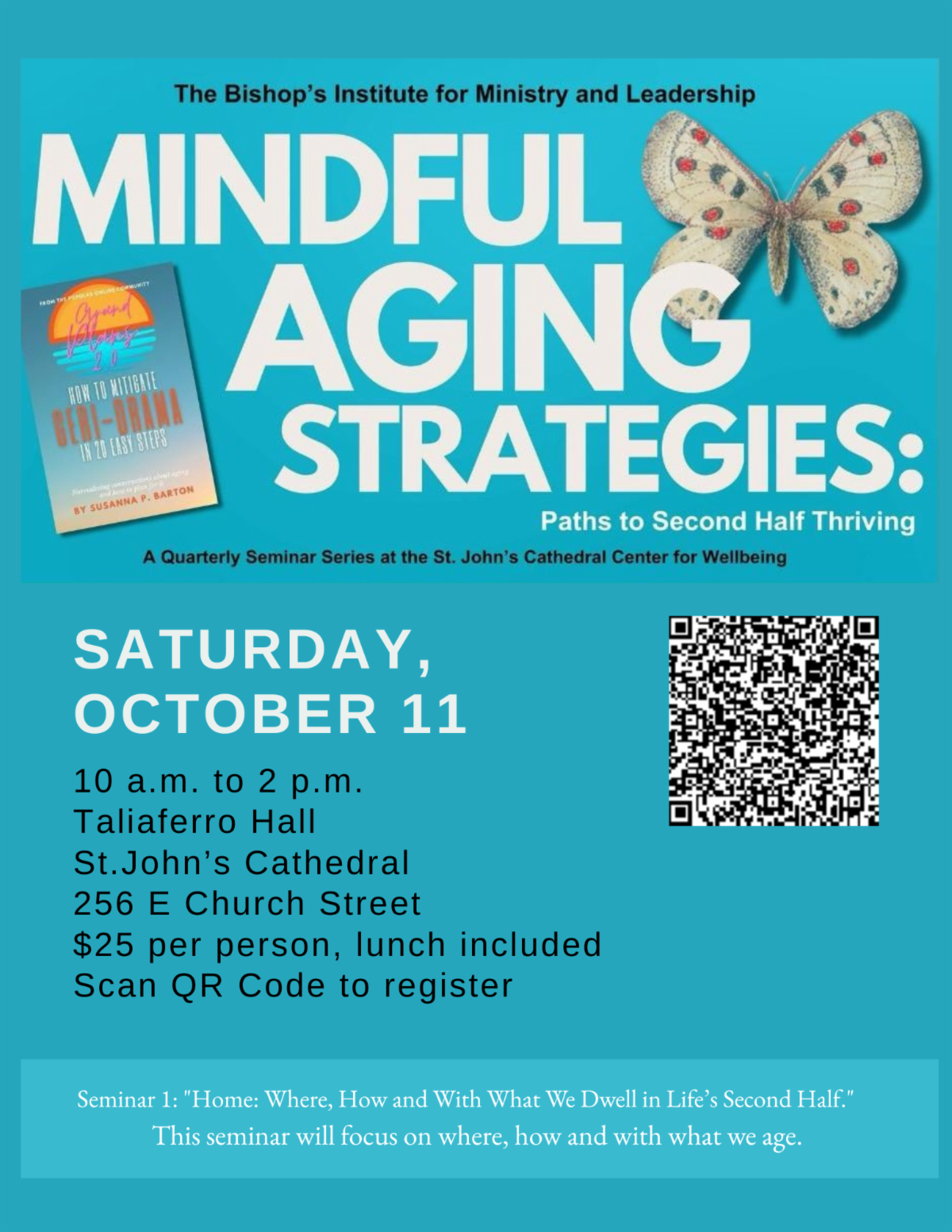
I hope you will consider joining the Bishop’s Institute with the Wellness Center at St John’s Cathedral for the first of four Saturday workshops on Mindful Ageing with Susanna Barton on Saturday, October 11 at the Cathedral: Seminar 1: "Home: Where, How and With What We Dwell in Life’s Second Half." More information and registration link at the end of this Newsletter.
A recent survey by the AARP reveals:
One in every four adults is a caregiver. Of these, 94% care for adults, and one in three is under age 50. Caregivers are increasingly diverse across race, income, and generation. 29% are sandwich generation caregivers, supporting both children and adults.
Where to start: A first step
An advance direction (or caring) plan is a first step. This involves discussing and documenting the future healthcare wishes for your loved one (and yourself). Here are some good resources Susanna Barton shares with us about this:
-
The Conversation Project: Another very cool website that encourages conversation about advance directives and how to make good on them.
-
Five Wishes: This nonprofit organization bills itself as "the nation's only national advance care planning program. Providing peace-of-mind for more than 25 years." This program is a gold standard in advance directives conversation and planning.
- And lastly, this very handy AARP database is extremely easy-to-use and directs you to your state's printable advance directives paperwork. In 10 minutes, you can knock out your advance directives according to the laws of your state and feel very relieved and accomplished and awesome. Do it today!
| | |
Angels and ministers, spirits of grace,
friends of the children, beholding God's face,
moving like thought to us through the beyond,
moulded in beauty, and free from our bond!
Messengers clad in the swiftness of light,
subtle as flame, as creative in might,
helmed with the truth and with charity shod,
wielding the wind of the purpose of God!
Earth's myriad creatures live after their kind,
dumb, in the life of the body confined;
you are pure spirit, but we here below
linked in both orders, are tossed to and fro:
You do God's bidding unshaken and strong,
we are distraught 'twixt the right and the wrong;
yet would we soar as the bird from the mesh,
freed from the weakness and wonder of flesh.
We too shall join you as comrades in grace,
here but a little below you in place;
then, when we climb from our lowness in worth,
we too shall herald good will upon earth.
Hymn by Percy Dearmer (1867-1936)
| | |
A Quarterly Seminar Series with The Bishop’s Institute and the Center for Wellbeing
Seminar 1: "Home: Where, How and With What We Dwell in Life’s Second Half."
This seminar will focus on where, how and with what we age. The day begins with a conversation on the importance of mindful aging strategies between presenter Susanna Barton and Dean Kate Moorehead Carroll, who also will lead a short morning session on the theology of home. A late morning talk explores the sheltering grace of housing options during life’s second half. After lunch, there will be presentations on curating essential information, documents and obituary and funeral information and on paring back with purpose -- practical tips for decluttering, downsizing and shedding the sense of self as we age.
Lunch will be provided.
Saturday, October 11, 2025 10:00 am - 2:00 pm
Taliaferro Hall: 256 E Church St, Jacksonville, FL 32202
| | From St. John's Cathedral, Jacksonville | | | | |