|
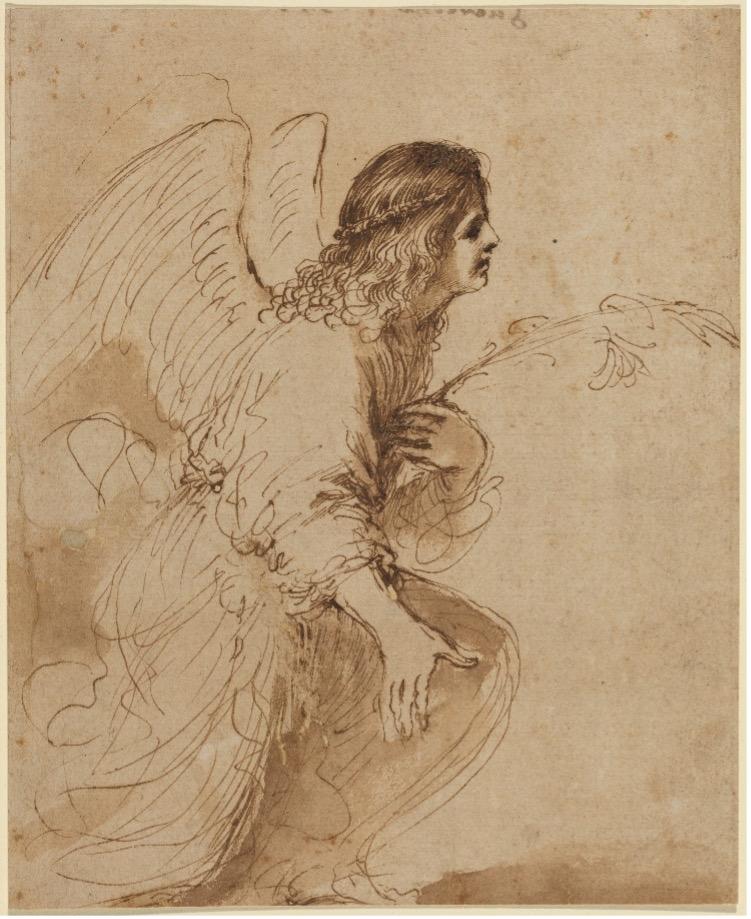
ANNUNCIATION
"Behold the handmaid of the Lord; be it unto me according to thy word." — Luke 1:38
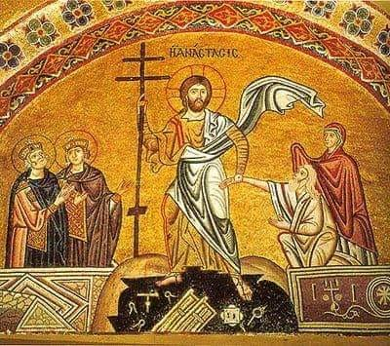
The Feast of the Annunciation (March 25) is the one major feast in the Church Calendar that falls during the season of Lent.
That isn’t to say that there are not plenty of saints’ days during February and March—you can count on one or more every single day during these two months of Lent 2026, as there are every month. They include, of course, St. Patrick’s Day, and if you were stopped in traffic in Boston, New York, or Savannah on March 17, with scores of revelers swarming past your marooned car, shouting Erin go Bragh!, and swilling beer dyed green, you might think that that is the major feast that falls during Lent. But no, it is the Feast of the Annunciation.
The Feast of the Annunciation signals the inauguration of the Incarnation in commemorating the message of the angel to Mary foretelling the birth of Jesus (Luke 1:26-38). The early Church chronographers’ timeline of the Incarnation of Christ deduced the date as December 25 and reckoned that the beginning of the process—with the announcement of the angel to Mary—might be dated as March 25, nine months before Christmas. With this linking of the Annunciation directly to the Incarnation, we can understand why in England (and in her American colony) March 25th was observed as New Year’s Day from the time of the Norman Conquest down to the year 1752. Richard Hooker, the Anglican divine, commented in his famous Ecclesiastical Polity (1594): "We begin therefore our ecclesiastical year with the glorious annunciation of his birth by angelical embassage." Hooker knew how to turn a phrase.
The Prayer Book Collect for the Annunciation is beautifully balanced as it links the Annunciation to the Christmas cycle of feasts, to which it belongs, and then onwards to the themes of Holy Week and Easter, which we are about to observe.
The Gospel for the feast (Luke 1:26-38) is also beautiful in recording the angelic messenger’s meeting with Mary, while sharing the knowledge of her essential character: "Behold the handmaid of the Lord; be it unto me according to thy word." We will hear similar words, spoken in a Garden, that echo her words this Passiontide and Holy Week — "not as I will, but as thou wilt."
Every blessing to you and your church family, this Lent and Easter.
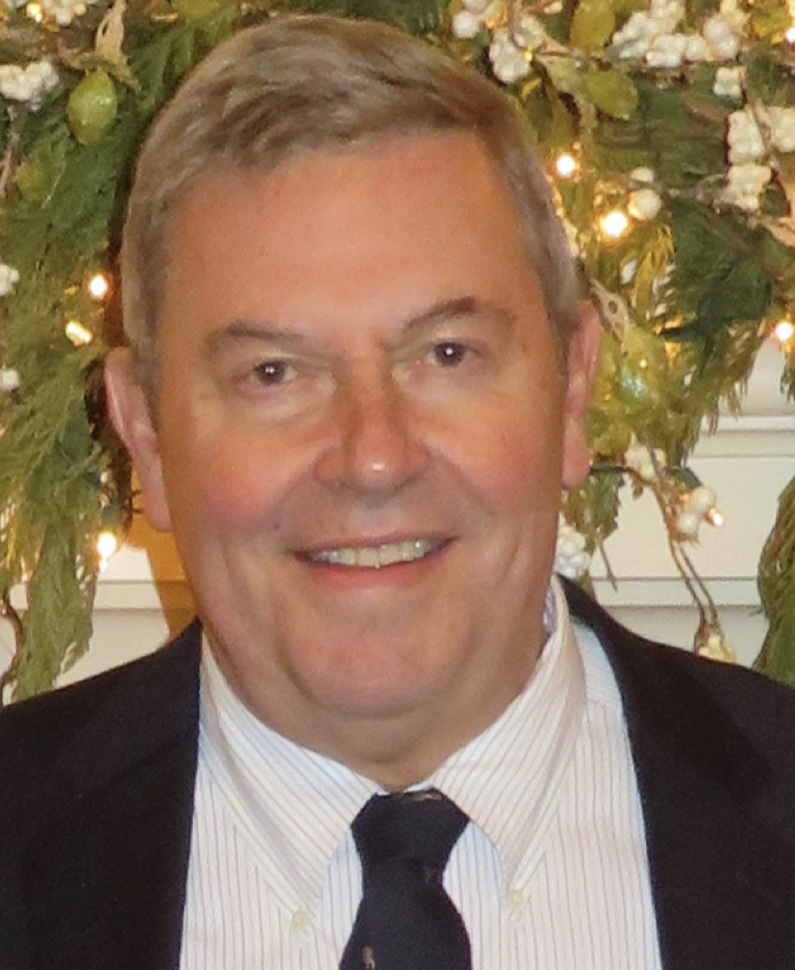
Douglas Dupree
| | |
We beseech thee, O Lord, pour thy grace into our hearts, that
we who have known the incarnation of thy Son Jesus Christ,
announced by an angel to the Virgin Mary, may by his cross
and passion be brought unto the glory of his resurrection;
who liveth and reigneth with thee, in the unity of the Holy
Spirit, one God, now and for ever. Amen.
| | James Pierce, License to Serve | | |
St. Philip’s Episcopal Church, Jacksonville
What does a parish or mission do to ensure Sunday worship takes place regularly or without interruption if the church is experiencing a pause in leadership due to an interregnum or for a longer period for some other reason?
The obvious answer is that the church will seek to find an interregnum priest on a short-term basis or schedule supply priests to celebrate the Eucharist on Sundays. If the need is for a longer period than a six month or year’s interregnum, the church may find it needs to develop a schedule for Sundays that includes both supply priests for some Sundays when available and licensed or trained lay worship leaders on other Sundays.
James Pierce is one such lay person licensed by the Diocese as a Lay Worship Leader and Catechist (teacher). He is one of several so trained by the Bishop’s Institute and serving in St. Philip’s Episcopal Church in Jacksonville. The other Licensed Worship Leaders in St. Philip’s are Arelia Donaldson, Laurie Johnson, Kristen Munroe, and Ed Wright.
St. Philip’s is thankful for the service of their team of dedicated licensed lay worship leaders, preachers, eucharistic visitors, catechists, and pastoral care resources.
INTERVIEW
James, a goodly number of us from churches in the Diocese are familiar with you—and especially your fine voice—through the St. Philip’s sponsored Monday Evening Prayer Service that reaches far beyond your parish borders. Please tell us about this ministry.
JP: From March 23, 2020, through the present time, our regular prayer group, which was originally comprised of approximately eight parishioners, has provided a Monday Evening Prayer Service. This service is done by teleconference, and attendees include individuals from our parish, within the diocese, across the nation, and even in other countries. I have either prepared or trained others to set up and lead the service, including our friends at St. Gabriel’s and St. James’ in Lake City, for each Monday service as well. This service has been continuous non-stop since the beginning. We average approximately 30-40 attendees. In addition, I have encouraged others to lead and a similar Friday Morning Prayer service, which has been continuously and actively broadcasted by Zoom since August 7, 2020. Additionally, we serve our community during Advent season by conducting a Blue Christmas service by Zoom each year between 2020 and 2024. Of course, these services were directly related in responce to the pandemic, but they have stood the test of time.
We welcome anyone to participate in the Monday and/or Friday service. Please look at our website at www.stphilipsjax.com. You will see the contact information posted to join us.
Please share with us a little about the number of lay ministries in which you are involved in supporting the mission of St. Philip’s.
JP: In addition to being licensed as a Lay Worship Leader and Catechist, I am a Licensed Lay Pastoral Care Minister, Eucharistic Visitor, and Lay Preacher. I have performed all these services for our parishioners and continue to grow through study and experience. Since our parish does not have clergy leadership, I lead worship services based upon a schedule between supply priest and other Worship Leaders/Preachers. I lead a Pastoral Care Team within the parish, and we strive to serve individual needs as appropriate. I also take communion to individuals as requested or needed.
What a rich and diverse pattern of service. What do you think or feel you have learned from these ministries—some of the challenges, rewards, difficulties, etc.?
JP: My life has been truly enriched by serving God and the body of Christ through my various ministries, because it allows me to engage in ministry that both satisfies and delights others. It builds personal relationships and bonds us together in a common ministry. That is to share the word of Jesus Christ. I have to be careful not to sound like clergy, by humbling myself in knowing what I don't know and seeking clergy guidance to share the "Good News" the way God intends for me to do. The rewards are never-ending. By the way, my wife Pam joins me in sharing Pastoral Care and travels with me on most Eucharistic visits. So, it’s a family affair.
What are some of the resources you rely on most consistently in performing your duties as a Worship Leader, e.g. the Lectionary, Bible, Book of Common Prayer, and any other sources?
JP: I use every resource that gives me both a traditional and creative way to share the word of God. I use the Book of Common Prayer as a basic resource, but also various Bibles and commentary as learning tools. The Episcopal Church’s website is also a great source of research and information. I also use quotes from books I have read or study guides as a means of sharing the human side of the understanding of God's word. Prayer is also my chief resource, because it inspires me to discern the direction I should take to achieve delivering the message God calls me to share.
Continuing Education. Are you doing anything in this area? E.g. Reading any books in the areas of Christian spirituality, Biblical studies, church history, creeds, devotional materials? And/or general reading that you feel broadens your spiritual horizons.
JP: I am constantly using all the resources stated in your question, plus discussing issues with personal friends who are both clergy and spiritual directors for helping me to maintain my spiritual understanding and humility. Preparing for licensing in other areas, to include pastoral care and preaching, directs me to read and study the words taken from the Bible or theologians who have provided historical and spiritual insight to improve my ability to understand my role in this ministry. When my wife and I traveled to the Holy Land and Greece and Turkey it gave me a visual understanding of the history of the Bible and learn more about what the individuals we read about experienced during their lifetime. It is not just about leading a service but understanding why and how you do things to enhance the experience for the congregation. It is also all about love.
Anything else you would like to add about your experience?
JP: The only thing to add is I take this role as Worship Leader very seriously and believe that Lay Ministers can play a valuable part to help spread the "Good News" while supporting clergy in their work in the church. If the laity can serve in expanded ways, clergy can be more effective to do their work, because qualified lay persons can help reduce their overall workloads. We should be able to share the work and support each other in ministry. In addition, Lay Leaders can strengthen parishes that don't have clergy present. We have had to learn this the hard way during the absence of a priest in our parish. I appreciate the opportunity this ministry has helped me to grow and do God's work. I hope this experience will help others who must review their ministry and feel the desire to continue the learning process. A process that lasts a lifetime.
| | |
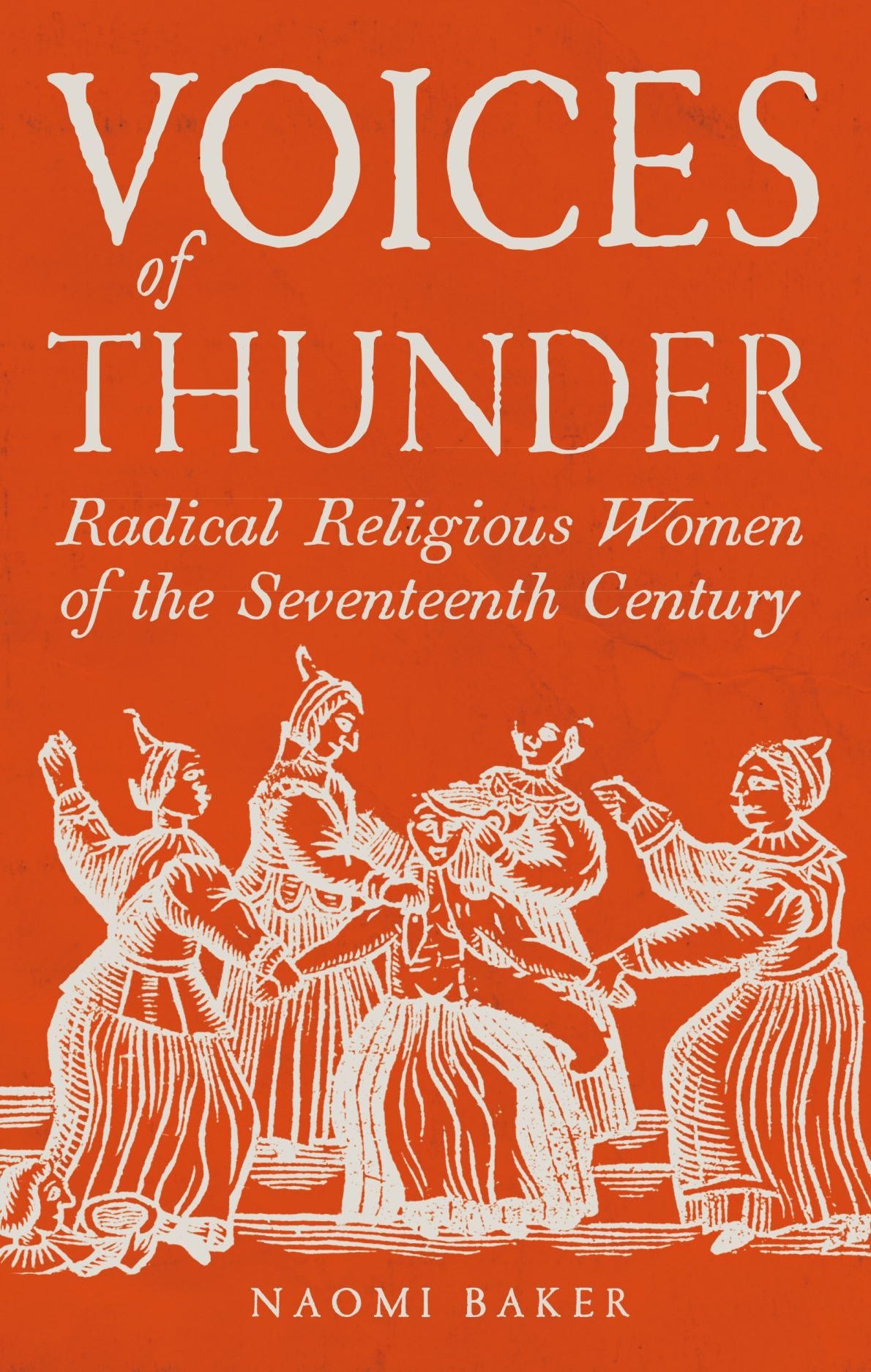
Naomi Baker. Voices of Thunder: Radical Religious Women of the Seventeenth Century Hardcover – December 11, 2025.
The portraits penned by Naomia Baker of the 12 women dissenters presented here are so vivid and striking that I had to include this book. The anecdotes, and the women’s speeches they are based on, deliver punch after punch:
"When the Quaker Hester Biddle was brought before the Old Bailey courthouse for attending a meeting and preaching, she defended herself: she wasn’t sermonizing but rather restating that 'which cometh immediately from God.' Hadn’t the judge heard of the female prophets of the Old Testament? He spat: 'That was a great while ago.'"
| | |
Lavinia Byrne. A Place of Belonging: Finding Your Space in the Bible, During Lent and Beyond. Paperback
"Where do you feel most at home?
Where do you belong?
How can it help me to live in strength and with hope?
A Place of Belonging connects the spiritual focus of Lent with a physical sense of place, as described at various points in the Bible. Lavinia Byrne helps us to consider these places, to slow down and imagine ourselves inhabiting them, to reflect and draw wisdom that may inform how we respond to the world around us today." — from the publisher’s review
Lavinia Byrne is a prolific author, former nun and tutor at Westcott House, Cambridge, the Anglican theological college (that Fr. William Stokes, Rector of St .James’, Live Oak attended).
| | |
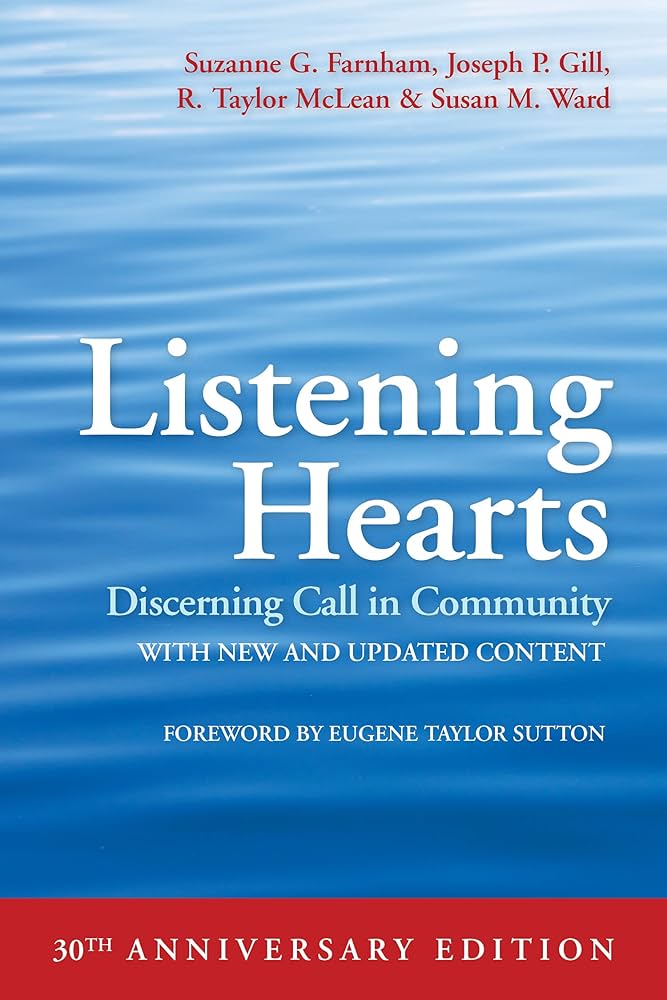
Suzanne G. Farnham, Joseph P. Gill. Listening Hearts (Large Print Edition): Discerning Call in Community (30th Anniversary Edition) Paperback – Large Print, June 17, 2021.
"An ideal book for individuals and for small groups. Written to make the often elusive and usually clergy-centered spiritual practice of discernment accessible to all people, Listening Hearts features simple reflections and exercises drawn from scripture and from Quaker and Ignatian traditions." — Amazon review
“With updated language, revised appendices, and added stories, Listening Hearts can impart the deep wisdom embedded in its pages to new generations of those who seek to answer the call of Jesus to ‘follow me.’” – The Most Rev. Michael B. Curry, Presiding Bishop of the Episcopal Church
| | |
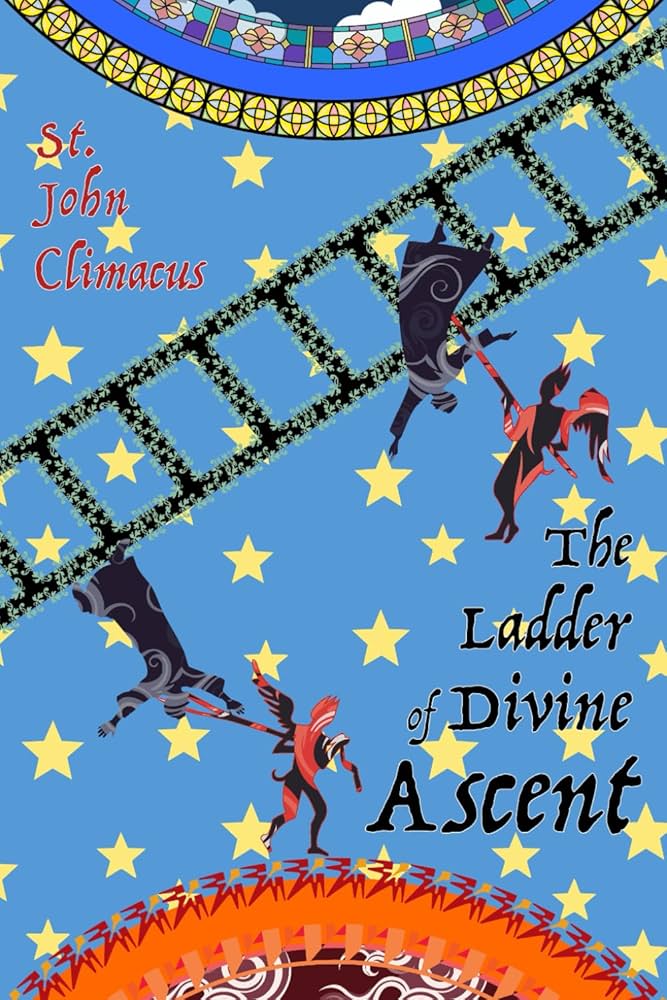
The Ladder of Divine Ascent: A New Translation Paperback – June 30, 2025.
A guide to the spiritual journey much loved by Orthodox Christians. John Climacus is celebrated in the Eastern Orthodox churches on the Fourth Sunday in Great Lent. John Climacus is celebrated in Western churches on March 30th. The Ladder is a clear and insightful guide accessible to all.
| | |
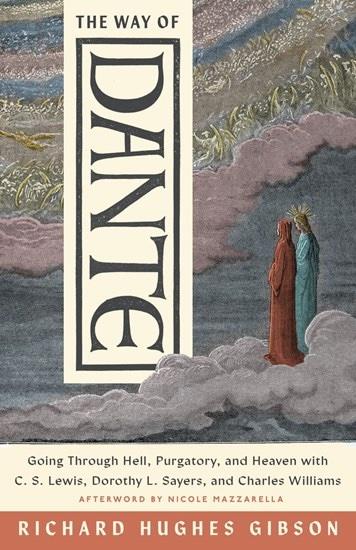
Richard Hughes Gibson, Nicole Mazzarella. The Way of Dante: Going Through Hell, Purgatory, and Heaven with C. S. Lewis, Dorothy L. Sayers, and Charles Williams (Hansen Series) Paperback – December 2, 2025.
The poet T.S. Eliot said of Dante (1265-1321), comparing him to Shakespeare, “Dante and Shakespeare divide the modern world between them; there is no third.” Gibson collects the wisdom of three of the 20th century’s leading apologists for the Christian faith in their reflections on Dante, il Sommo Poeta (the Supreme Poet). Dante was an exile in a world of political and ecclesiastical corruption and in his spiritual struggle out of ‘the dark wood’ he has been an encouraging voice in generations ever since.
| | |
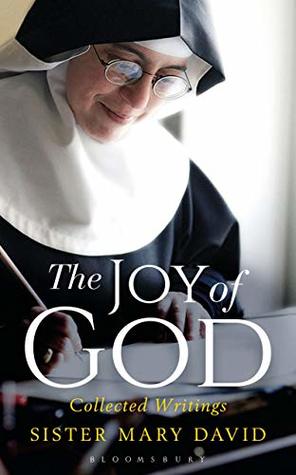
Mary David Totah (author) Erik Varden (Forward). The Joy of God: Collected Writings Paperback – May 5, 2020.
These essays share some of the questions and the answers the author posed for the novices she taught in her monastery over many years: What is the meaning of suffering? How do we cope with living with people who annoy us? How do we relate to a God we cannot see? How do we make the big decisions of life? The Introduction is by Erik Varden, the spiritual writer and bishop who is the author of The Shattering of Loneliness.
| | |
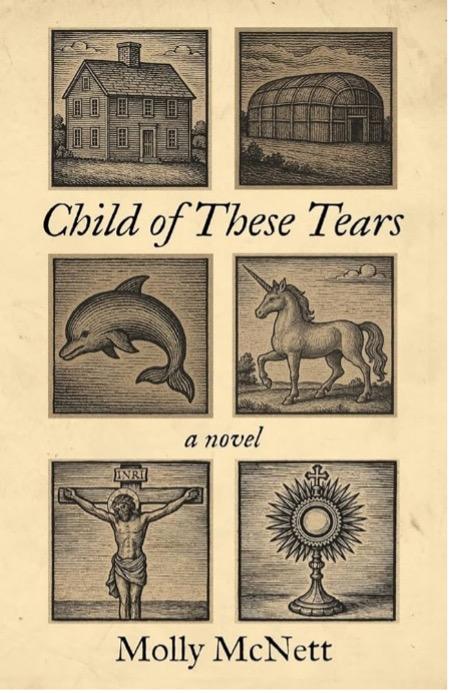
Molly McNett. Child of These Tears Paperback – September 30, 2025.
"A moving, brilliant book, which manages to stay within the bounds of eighteenth-century imagining and speaking-- yet is sharply contemporary and accessible. . . it is a novel of enormous depth and beauty." – Rowan Williams
Reviewed in this Newsletter by Owene Courtney.
| | |
Child of These Tears:
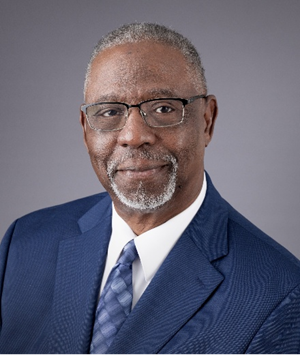
A Book Review by Owene Courtney
| | |
Who Cries for Whom?
19th century French novelist, Gustave Flaubert, advised authors to “be like God in the universe, present everywhere and visible nowhere.” Knowingly or unknowingly, Molly McNett heeded this advice well in her recent novel Child of These Tears allowing her characters to tell their own stories because of her excellent use of historical realities and her clever use of multiple styles of storytelling. With authority and yet faded into the background, McNett creates characters of great conviction shaped more by recovery from great trauma than by the traumas themselves. And she allows them to tell their stories so authentically that she said she lives their stories, thinks in their dialect and dreams with and about them.
Through the voices of just four characters, a priest, an eight-year-old child named Constance Baker, her mother, and her father, McNett engages the reader with intriguing styles of writing including journals, letters, commonplace books, and stream of consciousness 3rd person narration. Set in the early 1700’s during Queen Anne’s War in “English America” in a world in flux like ours, these characters struggle with the archetypal conflicts of man against man, himself, nature and God. McNett’s well researched story about the engagement of English colonists, Native Americans, and French Jesuits illuminates the themes of memory, belonging, redemption, and grace, while at the same time endearing the reader to the characters and the power and resilience of the human spirit.
Pulitzer Prize winner Paul Harding describes the novel as “A rich and mesmerizing collage of visions and dreams, nightmares and fevers—as artful as it is unnerving, as beautiful as it is strange.” McNett’s editor and publisher Greg Wolfe describes it as “a book that does justice to our complexly beating hearts.” After listening to an interview Greg Wolfe conducted with McNett, I put it into a category all on its own, one with polyphonic storytelling (many voices and styles) interspersed with rich character development, set in Colonial times when parental treatment of children was influenced by the Calvinist catechism which included the resignation to God’s plan for their lives, and trauma such as attacks and kidnapping by the Mohawk people. McNett’s description of the persistent but patient proselytizing French Jesuit Fr. Simon René Floquart includes an odd form of spiritual direction, but one that would have been quite relevant and made an interesting difference in young Constance’s life. Floquart is a character of inner contradictions including greed and gluttony, however when he is called on in a time of great need, he wills another’s good at his own expense.
The story begins with a brief letter from Constance’s father to the governor of the Province of Massachusetts Bay describing the initial conflict,
“Three of our flock were carried off last month by the Indians…I request that our poor hamlet be exempt from the Country Rates.”
It continues with voices from journals and reports of various sorts, describing the conditions of life in the Puritan settlement as well as a letter from the odd Jesuit priest Floquart as he tries to forge an existence in the wilderness all the while evangelizing the “savages.” The chapters from the child Constance are most revealing, including this 3rd person stream of consciousness chapter describing her behavior and her parents’ treatment of it.
“She loved many sinful things. She loved nonsensing…spinning to make herself dizzy while saying words of her catechism…she loved bacon fat…she loved her brother Ezariah but the wicked part of her loved to leave her chores and kiss the baby.”
These “sinful behaviors” prompted her mother to beat Constance with an open palm, “which stung terribly. But the girl knew, at least, to be quiet, for there would come more blows if she did not.” From that world, Constance was kidnapped and cast into a world of a very different sort…one which will surprise you.
Using many voices simultaneously to describe the same events and characters, McNett weaves a story which leaves the reader with a sense of the intense trials, suffering, and testing that God might use to refine, purify, and strengthen a person’s character. When asked how her faith journey was influenced by the individual characters in the novel, McNett replied in a refreshing way,
“You know, I feel like I took a faith journey while I was writing it…I ended up in a place at the end of this that I didn’t think I was going. I was raised Protestant, dabbled in Eastern religions, went to temple with my husband and children. I read many Mystics for this book and was influenced by Thomas Merton who went to the East to study…you know, I have no answers, I write to ask questions, and I am still on a journey and asking questions with my characters.”
Like her creator, Constance Baker was influenced by many world views: the Puritan/Calvinist background, the Jesuit influence, and the longhouses and extended family units of the Mohawk way of living. Perhaps like her character, McNett’s influences have led her to find peace and strength in places she never expected.
As I frequently say at the end of my reviews, run don’t walk to the St. John’s Cathedral Bookstore and pick up this little book…especially if you have a “complexly beating heart!”
* Review: Thanks to Katy Carl and her review: 'Molly McNett and making the unsayable sayable' March 12, 2026 attached here.
| | |
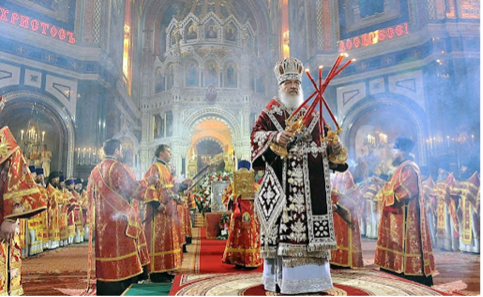
Lent in the East and in the West is essentially the same, marked by a period of prayer, fasting, and almsgiving. But a major difference is the timing of Easter (and hence the period of forty days in preparation) as it varies according to the use of different calendars (Gregorian in the West and the older Julian in the East). Sometimes Easter Day coincides in both great traditions—as it does this year on April 5.
Two features of Lent in the Eastern Orthodox churches may strike you as particularly special.
A DEPTH TO FASTING
Firstly, there is a depth to the emphasis on fasting in the Eastern Orthodox churches that gives Lent a special complexion. If you observed strictly the Lenten fast as do some Orthodox faithful, you might emerge as a certified vegan (or at least as someone with a closer appreciation of the winter diet of medieval European Christians). The Orthodox tradition is to abstain from food products that contain blood. The fast is enjoined for the entirety of Great Lent and Holy Week. Allowances are made for holy days, e.g. fish is allowed on the Annunciation, March 25, and on Saturdays and Sundays, except Holy Saturday.
Fasting is not an end in itself. Stavros Akrotirianakis, an Orthodox priest, writes: "The cornerstone of Lent is not fasting, but repentance and growing in our faith. Fasting is a tool that is used to assist in spiritual growth. . . fasting is not about giving up something only to get it back. Fasting is about getting control of our passions, maintaining control over them, and ultimately giving control of ourselves to God."
UNIQUE SUNDAYS
The second thing that might strike you about the Orthodox Lent is the way Sundays in Lent take on the personal character of specific saints held in particular honor. The first Sunday in Lent is commemorated as the Feast of Orthodoxy, celebrating the deliverance of the Eastern Church from the Iconoclasts who prohibited icons in churches (circa 726-843) and the restoration of these beautiful images as an aid to worship. The second Sunday is Gregory Palamas—a kind of Orthodox version of St. Francis in that he encouraged the faithful to trust in the immediacy or accessibility of God. The third Sunday commemorates the Veneration of the Holy Cross—placing the Lord Himself at the heart of the season. The fourth Sunday commemorates John Climacus, the author of The Ladder of Divine Ascent, the beloved guide to repentance and amendment of life adopted as a favorite Lenten resource early on by Orthodox Christians. The fifth Sunday of Lent commemorates St. Mary of Egypt, whose life to the Orthodox is an emblem of deep repentance and dramatic restoration. Think of Mary of Egypt with the same warmth and enthusiasm as you might in reading the Gospel stories of the Lord’s graciousness and protection of the woman taken in adultery or the Samaritan woman at the well.
| | |
A SAINT AND HIS LADDER
John Climacus (579-649)
The saint who stands out to me personally in the Orthodox Sundays in Lent is John Climacus. His feast day is March 30 in the East and the West. But in the East, the celebration of John Climacus is transferred to the fourth Sunday in Lent—the Sunday bearing his name. John takes his name Climacus (ladder) from his guide to the spiritual life, The Ladder of Divine Ascent, that was originally intended for his monks at the Monastery at Mt. Sinai but due to its clearness and directness, it was adopted as a guide to Orthodox Christians from all walks of life.
The reader who climbs The Ladder marks thirty steps to holiness. The general movement, slowly, step by step, but not necessarily in a slavish order, is towards a growth in holiness and away from the mortal afflictions and addictions of the flesh. The thirty steps or short chapters correspond symbolically to the thirty years of the life of Jesus in preparation for his baptism and the inauguration of his public ministry. The Ladder also recollects the ladder in Jacob’s dream in which he saw angels ascending and descending between earth and heaven. In John 1:51 Jesus makes a direct reference to Jacob’s Ladder in telling Nathanael: "Truly, truly . . . you will see heaven opened, and the angels of God ascending and descending on the Son of Man." Heaven is opened and God reveals our access to Him through Jesus as the ladder that connects the divine with humanity. We are saved by God’s grace not our works, but in response to the graciousness of God in Christ, our hearts and minds are moved to conform our life more and more according to God’s will for us.
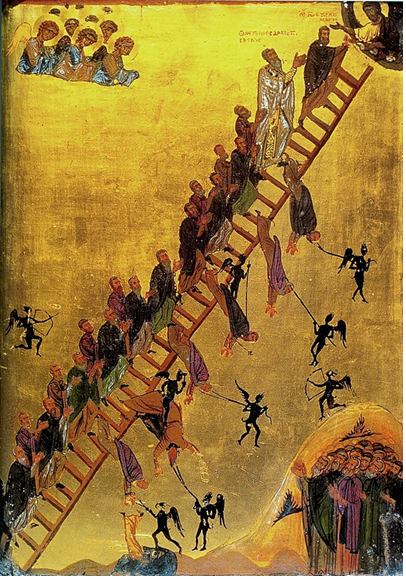
There is a well-known icon in Orthodoxy, known by the same name, Ladder of Divine Ascent, that is associated with John Climacus. (I have a small copy of it here in my office as I write this.) Several monks are climbing the rungs of the ladder; at the top is Jesus, arms outstretched, prepared and ready to pull them into heaven. All along the ladder there are angels assisting the climbers—but there are a few tiny demons as well on the latter side of the ladder, attempting to shoot them down, and there are a few dear figures falling downwards off the ladder. In the lower right-hand corner stands John Climacus, arms outstretched, beholding the drama of souls yearning in their hearts and steps towards the outstretched arms of Jesus.
| | A Poem by Langston Hughes | | |
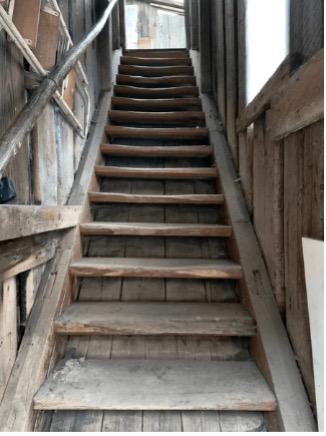
Climbing a ladder is a metaphor for the spiritual journey with a long pedigree, e.g. Jacob’s Ladder (Genesis 28:10-22); Jesus’s words to Nathanial (John 1:51) and in the spiritual direction of John Climacus, The Ladder of Divine Ascent.
In this poem, Langston Hughes (1901-1967) renders the testimony of a mother for whom life is a hard climb and yet one she offers as an example to her son that he might persevere. In many of his poems Hughes strove to celebrate the joy as well as the hardships and challenges of poorer people.
| |
Mother to Son
Well, son, I’ll tell you:
Life for me ain’t been no crystal stair.
It’s had tacks in it,
And splinters,
And boards torn up, And places with no carpet on the floor—
Bare.
But all the time
I’se been a-climbin’ on,
And reachin’ landin’s,
And turnin’ corners,
And sometimes goin’ in the dark
Where there ain’t been no light.
So boy, don’t you turn back.
Don’t you set down on the steps
’Cause you finds it’s kinder hard.
Don’t you fall now—
For I’se still goin’, honey,
I’se still climbin’,
And life for me ain’t been no crystal stair.
| | |
Philippians 2:5-11
Let the same mind be in you that was in Christ Jesus,
who, though he was in the form of God,
did not regard equality with God
as something to be exploited,
but emptied himself,
taking the form of a slave,
being born in human likeness.
And being found in human form,
he humbled himself
and became obedient to the point of death—
even death on a cross.
COLLECT
Almighty God, whose Son our Savior Jesus Christ was lifted high upon the cross that he might draw the whole world to himself: Mercifully grant that we, who glory in the mystery of our redemption, may have grace to take up our cross and follow him; who lives and reigns with you and the Holy Spirit, one God, in glory everlasting. Amen.
| | From St. John's Cathedral, Jacksonville | | | | |