At GLP, we believe that staying abreast of new ideas, trends, and information is essential to visionary leadership. This newsletter seeks to help leaders cut through the noise and find resources that are worth reading. Visit our website to explore earlier editions!

The Blueprint: The Summer Reading List is Out! June 2023


“Drink deeply from good books.”


~ John Wooden


The Summer Reading List: Books

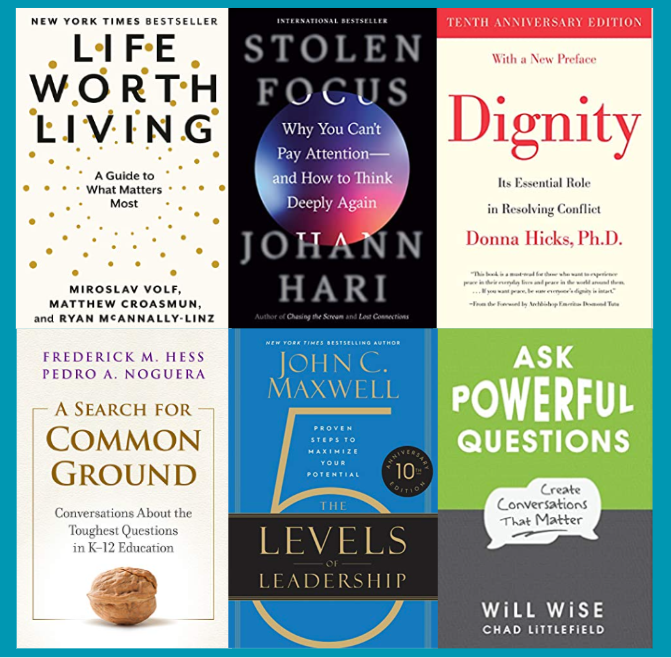
In this edition of the Blueprint, we present this year’s Summer Reading List, featuring recommendations for leaders, educators, and learners from some of our colleagues and from us. Summer can be very busy for so we also offer a “summer reading list” of articles too!


Whether you're seeking personal reflection, thought leadership about leadership, or innovative approaches to driving change and progress in your schools and organizations, our lists offer options for everyone.


Five Levels of Leadership

We believe leadership is a “way of being,” an alchemy of mindsets, abilities, and behaviors that mobilize, inspire, and support others to both lead and follow. Five Levels of Leadership speaks to anyone interested in making an impact. Author John C. Maxwell describes leadership levels as: 


  • Position—People follow because they have to.
  • Permission—People follow because they want to.
  • Production—People follow because of what you have done for the organization.
  • People Development—People follow because of what you have done for them personally.
  • Pinnacle—People follow because of who you are and what you represent.


This framework, and Maxwell's anecdotes, offer inspiration and insight for leadership - and the impact it can have on organizations and communities. 


In Search of Common Ground

We’ve always appreciated reading correspondence between smart people who are genuinely interested in exploring different perspectives. We reprise here a conversation between Frederick Hess and Pedro Norguera: In Search of Common Ground, explores their different views on education and highlights intersections in authentically curious and respectful written discourse. While not always in agreement, the two find that through earnest dialogue, they do indeed find common ground. As an exemplar for meaningful conversation when people disagree, and as a window into important ideas and insights surrounding the future of education, we offer this timely book.


Dignity: Its Essential Role in Resolving Conflict

With thanks to Meredyth Cole at The Lovett School, for this timely recommendation. For all who feel frustrated and despair about the current zeitgeist, this book invites us back to core human principles of dignity and calls us to live as our highest and best selves. Author Donna Hicks explains what the elements of dignity are, how to recognize violations to our dignity, how to respond when we are not treated with dignity, how dignity can restore a broken relationship, why leaders must understand the concept of dignity, and more. 


Stolen Focus: Why You Can’t Pay Attention and How to Think Deeply Again 

Feeling like you just can't concentrate? Dean of Faculty at Greenwich Country Day School, Lauren Waller recommended this excellent book for leaders who want to find their way back to deep focus, for educators who want to help learners, and, frankly, for anyone who is tired of goldfish-like attention spans. 


Ask Powerful Questions: Create Conversations That Matter

In their bestselling book, authors Will Wise and Chad Littlefield propose replacing small talk with meaningful conversations to establish genuine connections. They provide practical tools and a framework to focus on intention, rapport, openness, listening, empathy, and powerful questioning. The book offers insights and examples that apply to leadership, personal relationships, and education, and aim to build trust, foster understanding, and improve communication skills. 


Life Worth Living 

Our Office Manager, Julie Leeds, attended a lecture by the author and came away inspired! Based on Yale’s most popular class, this is a guide to defining and then creating a flourishing life, and answering one of life’s most pressing questions: How are we to live? What is a good life? We can’t think of a better set of questions with which to spend time this summer!


What are your summer reading plans? Share them with us and, if you do read a book from our list, let us know! We’d love to hear from you.

The Summer Reading List: Articles

Strategy, Leadership, and Change Work


As agents of change, it’s important for leaders to understand the experience of frontline employees. As this article (“CEOs, Step Into The Front Lines”) points out, leaders who stay connected to employees at the heart of the action better understand the experience, foster direct communication, and build relationships as they gain valuable insights. By engaging with employees who have specific knowledge about what is happening, leaders encourage genuine collaboration through the initiatives, challenges and transitions at the heart of organizational change.


If your organization or school is rife with workplace burnout, then the answer to the next article’s title is probably ‘yes.’ “Has Cynicism Infected Your Organization?” explores the ways in which cynicism contributes to burnout and offers solutions to tackle the problem. Cynicism can erode organizational trust, collaboration, and engagement among employees, which over time impacts performance, morale, and productivity. To combat it, leaders can cultivate positive climate, communicate with transparency, and address employee concerns and challenges openly. Hard to do, but well worth the effort and intention.


If leading change is on your mind, it is crucial to recognize the many ways in which to think about the "how". This article (“The Most Successful Approaches to Leading Organizational Change”) offers leaders four ways in which to think about the work: The first approach asks leaders to create a compelling vision for change, align the organization, and empower employees to drive the change process. The second approach focuses on designing the structure, systems, and processes that support the desired change and ensuring alignment across the organization. The third approach emphasizes actively involving employees, building coalitions, and fostering a sense of ownership and commitment to the change. The final approach involves sustaining change by embedding it into the organizational culture, continuously monitoring progress, and adapting to new challenges and opportunities. We like this article because it outlines how, by combining these approaches, you can be successful over time. 


In an era where “vulnerability” is applauded, it’s important to remember that context, and caution, matter. Sharing, or openly displaying your emotions, is not always a wise approach. “How Leaders Can Open Up to Their Teams Without Oversharing” points out that leaders can be open and vulnerable with their teams while also maintaining healthy, appropriate boundaries. Leaders who develop a strong sense of how their personal experiences and emotions can be shared strategically build trust and foster a supportive work environment. However, leaders (and frankly anyone inside organizations) who overshare or become “emotionally leaky” by disclosing excessively personal information often hinder effectiveness, create discomfort, and engender a lack of confidence in others. It’s not always easy, but with practice, it gets easier to “read the room” and discern what to share and what to withhold. 


This article (“Don’t Let Distractions Derail Your Company’s Strategy”) discusses the importance of maintaining strategic focus amidst the myriad distractions faced by schools and organizations. Emphasizing the fact that leaders must be vigilant in identifying and addressing distractions that hinder strategic execution, it provides practical advice on how to align priorities, foster a culture of discipline, and maintain open lines of communication within the organization. Ultimately, it underscores the critical role of leadership in safeguarding focus and advancing the strategic direction of the workplace.

Today, In Tech

AI platforms are advancing so fast that it makes us wonder who and how it will be regulated, and the US is likely to lag behind the EU and others in getting ahead of the issues. Who is Going to Regulate AI? suggests that regulation will require a multidisciplinary approach involving experts from various fields such as technology, ethics, law, and policy. Until such a regulatory body is created:


“... business leaders and academics should take their cue from the Department of Commerce’s ongoing initiative, and start to develop nongovernmental regulators, audits, and certification processes that identify and provide market incentives to purchase ethical and trusted AI products and services, making clear which applications are and are not reliable.”


We also enjoyed this article, (“How I Planned a Project Using ChatGPT”) written by a teacher, about the steps he took to design a project-based learning lesson plan using ChatGPT. Check it out!

What’s Next? Tell Us!

Thanks for reading! We want to hear about what matters to you! Help us make the Blueprint ever more valuable by letting us know what subjects, questions, and issues are top of mind and we'll get on it! Send your suggestions to Cara Gallagher.


From all of us at GLP, we hope you have a restful and quiet summer!

Subscribe to the Blueprint

Please feel free to forward the Blueprint to any friends or colleagues who may find it helpful. And if you're not already on our mailing list and you'd like to receive future editions of the Blueprint, click the button below to subscribe!

Subscribe