The Breakwater

A newsletter from the Prince William Sound Science Center

March 2026

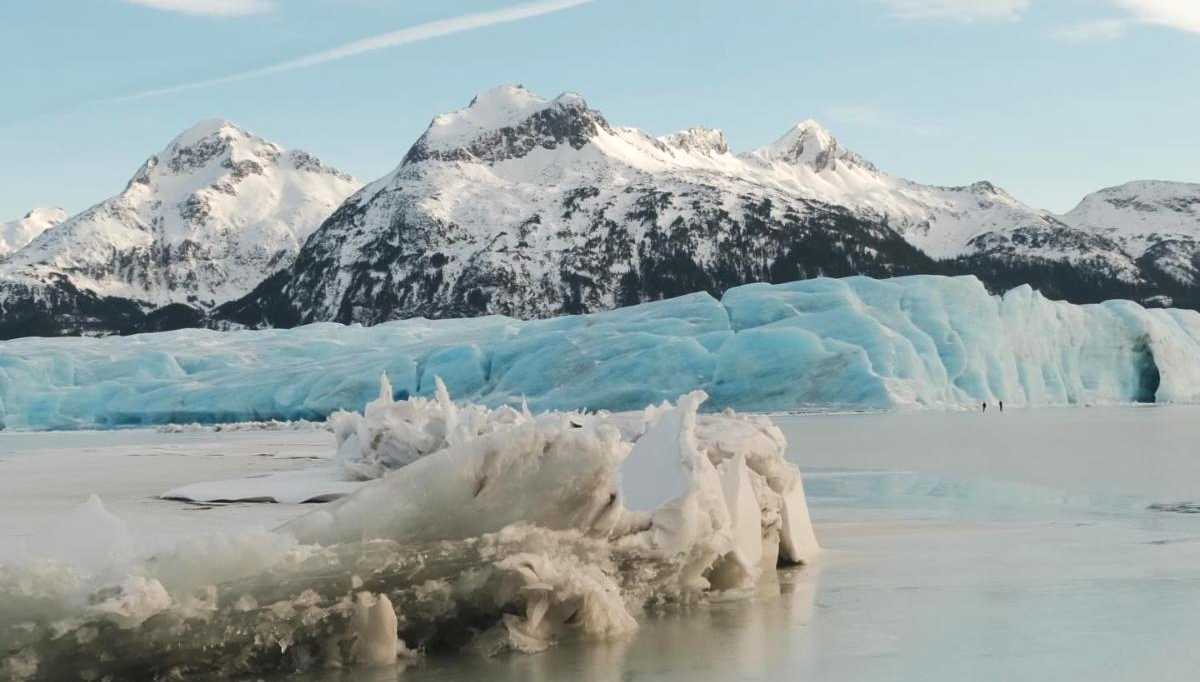
Ice skaters at Sheridan Glacier.

Join our Team! PWSSC is Hiring an Auction Coordinator

Are you looking for a meaningful way to support science and community in Alaska?


The Prince William Sound Science Center is hiring a temporary Auction Coordinator to assist with Copper River Nouveau, our annual fundraising gala celebrating regional resilience, accessible education, and healthy ecosystems in Prince William Sound.


Apply by March 13, 2026!

Community Events for March

Tuesday Night Talk:

Kelp-ing out Farmers with Dr. Angela Korabik

March 3rd, 5:30-6:30 pm

Tonight we will be joined by Dr. Angela Korabik, who will be discussing the Prince William Sound Science Center’s commercial kelp hatchery and research efforts. This talk will take place on March 3rd from 5:30 to 6:30 pm at the Prince William Sound Science Center. 


Sea Squirts:

Wet and Dry

March 9th, 10-11 am and 2-3 pm

Preschoolers will explore what things feel and look like when they are wet and dry. Playing at water tables, building sandcastles, and painting with ice cubes will help preschoolers learn to describe wet and dry objects and understand what it means to “absorb.”


Sea Squirts is a free monthly preschool program that will get your tot thinking like a scientist. The program is designed for kids ages 3 - 5. Each session starts with a story and then leads into discovery stations for you and your child to do together.


Spring Break Pajama Party!

March 11th 6:30-8 pm

Celebrate spring break with a pajama party at the Science Center. Bring your pjs, sleeping bags, and stuffies for popcorn and a movie on the big screen. Children in 1st grade and younger must be accompanied by a guardian. 


Build Your Own Soil Workshop

March 12th, 6pm

Are you tired of carting expensive potting soil from Anchorage? Are you wondering what to do with your compost? Are your plants acting like divas who need you to go above and beyond? Join the Science Center and Lee Collins, the Community Garden manager, for a workshop on how to mix and match materials to make a soil that fits your needs. 


Tuesday Night Talk:

Alaska's Curlews and Godwits with Dr. Dan Ruthhauff

March 17th, 5:30-6:30 pm

Tonight’s presentation will be a meeting of the Prince William Sound Audubon Society facilitated by Dr. Dan Ruthrauff from Manomet Bird Observatory. Dan will be discussing Alaska’s curlews and godwits, where he will compare migration ecologies of six species of curlews and godwits that breed in Alaska. This talk will take place on March 17th from 5:30 to 6:30 pm at the Prince William Sound Science Center. 


Hydroponics at Home

March 25th, 6pm

Join us at the Science Center to learn how you can make a hydroponic system at home to grow your own fresh veggies. The workshop is free and open to all. The first 15 participants to register will receive the necessary equipment for building a countertop hydroponic setup. You are still welcome to join and learn if you do not receive materials. To register, please email education@pwssc.org. You should receive a confirmation email within 24 hours. 


UAF Planetarium and Community Astronomy Night

March 26th, 5-8pm 

Stop by Mt. Eccle’s Elementary School gym and check out the inflatable planetarium from UAF. An astronomer will be giving planetarium presentations throughout the evening. You can also enjoy the Science Center's most popular astronomy activities. Participants will make moon craters, learn about the northern lights, and build a telescope to take home. This program is open to all ages, and adult community members without kids are welcome to join.


Science and Snacks

March 30th, 3:30-5:00 pm

Looking for an extra hour after school? The Science Center is here to offer Science and Snacks, our after-school program where your children will be transported from Mt Eccles to PWSSC, be given a snack, and partake in fun and educational activities centered around science. The theme for March will be Microscopic Safari! We will get up close to the mosses and lichens in our backyards and discover the creatures among them and their complexities. 

This program is FREE but limited to 15 children in grades 1st-6th. Registration in advance is required. Included in your child’s program registration: PWSSC pick up from Mt Eccles Elementary School at the end of the school day (3:30 pm) and transportation to the Prince William Sound Science Center, fun science-related activities, care/supervision of your child, and a snack. Your child will need to be picked up from the Science Center at 5:00 pm. To register, please email education@pwssc.org with your child(ren)’s name and grade level. We will respond with confirmation about available space and send you a permission form. 


Tuesday Night Talk:

Road Runoff and Tire Toxins with Brian DiMento

March 31st, 5:30-6:30 pm

Join the Prince William Sound Science Center every Tuesday from 5:30 to 6:30 p.m. to hear different speakers from your Alaskan community. Tonight we will be joined by Brian DiMento. Brian will be discussing Road Runoff and Tire Toxins: What We Know About 6PPDQ in Alaska. 6PPD-quinone (6PPDQ), a chemical found in tires, was recently discovered to be highly toxic to coho salmon as stormwater runoff washes tire wear particles into rivers and streams. This presentation will provide an overview about what we know about 6PPDQ, and the work currently being done to better understand its potential impacts in Alaska. This talk will take place on March 31st from 5:30 to 6:30 pm at the Prince William Sound Science Center. 


The first few months of the year bring an opportunity for Alaskans to support the causes closest to our hearts. 


If you choose to pledge a portion of your PFD to the Prince William Sound Science Center through Pick. Click. Give., you'll be supporting cutting edge ecological research and place-based education opportunities that build resilient coastal communities. 


Permanent Fund Dividend applications are available from January 1 to March 31, though Alaskans may choose to add or adjust their pledges online through August 31.


See here for information on how to Pick. Click. Give. today:


https://pickclickgive.org/how-to-pick-click-give/

Copper River Salmon 2125 Workshop Looks Towards the Future

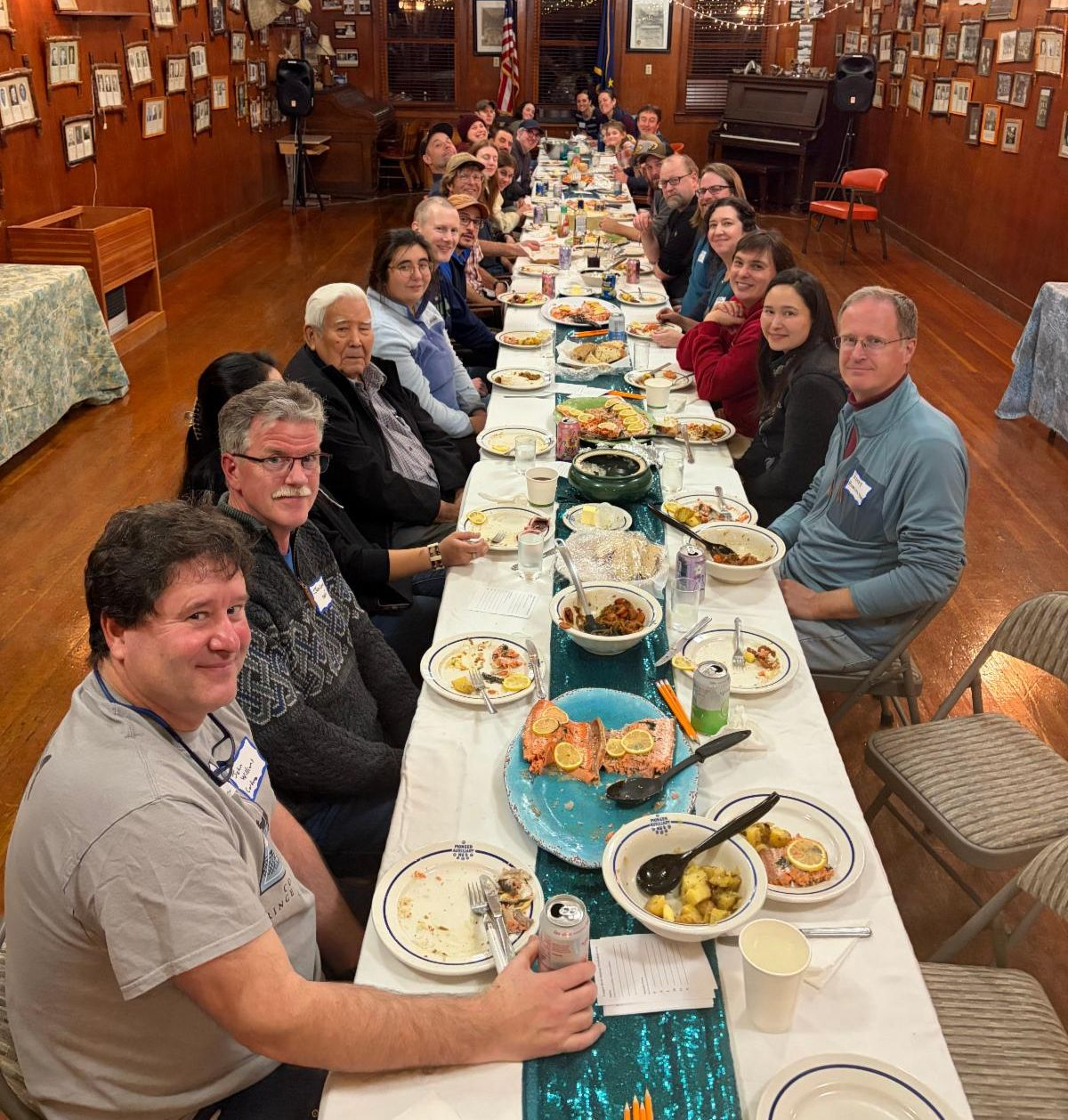
Participants in February's Copper River Salmon 2125 workshop gathered for a kickoff meal before the first day of talks.

What might the run of Copper River salmon look like in the year 2125? A group gathered in Cordova in February to share information and discuss the past, present, and future of these iconic fish. The Copper River Salmon 2125 workshop gathered approximately 100 participants — both in person and online — in Cordova during February 10–11, 2026. Attendees represented a diverse group of stakeholders, including representatives from Indigenous communities and Tribal organizations, university and institutional researchers, federal and state agency staff, and salmon harvesters. The first day introduced perspectives from each group, along with an introductory workshop designed to surface shared and differing views on the challenges facing Copper River salmon today. Lightning talks spanned a wide range of topics: glacier dynamics, rising river temperatures, declining fish size and body condition, pathogen loads, changing ocean conditions, and more. Across these presentations, a clear picture emerged — that compounding stressors, including thermal stress, disease, reduced somatic energy, and shifting ocean productivity, are collectively placing increasing pressure on Copper River salmon populations. There were, however, some positive changes that were discussed, including new stream and lake habitats that salmon could exploit as glaciers recede. This process may result in stronger returns in the future. Ken Roberson, a retired ADF&G biologist who has worked on Copper River fisheries issues for 4 decades, provided critical historical context, noting that some habitat changes may have contributed to shifts in the composition of the run.


Four breakout groups convened to translate key findings into actionable priorities. The freshwater group focused on the need to expand temperature monitoring and coordinate lake sampling across a glacial influence gradient, while the ocean group emphasized producing a synthesis review paper and making better use of existing datasets before pursuing new sampling efforts. The tributary escapement group outlined a stepwise approach to recovering historical escapement data, prioritizing key tributaries for abundance monitoring, and quantifying in-river mortality before fish reach spawning grounds. The management group considered a shift away from aggregate stock-scale management toward a more adaptive framework that emphasized separately managing different run-timing components and populations


There are troubling trends observed in other salmon rivers – much of the workshop discussion revolved around salmon fisheries management challenges in the Fraser and Yukon Rivers, and how we might avoid those issues in the Copper River. While new research ideas were introduced and discussed at the workshop, there was a strong consensus that we need to consider new management approaches to ensure the runs of Copper River salmon are sustainable. The meeting organizers are pulling together a summary of the meeting that will be shared widely. If you are curious to learn more or have questions about this workshop, please contact Krimson Anderson (kanderson@pwssc.org).

Conversations and Learning in our Shared Place: The Inaugural Cordova Science Gathering

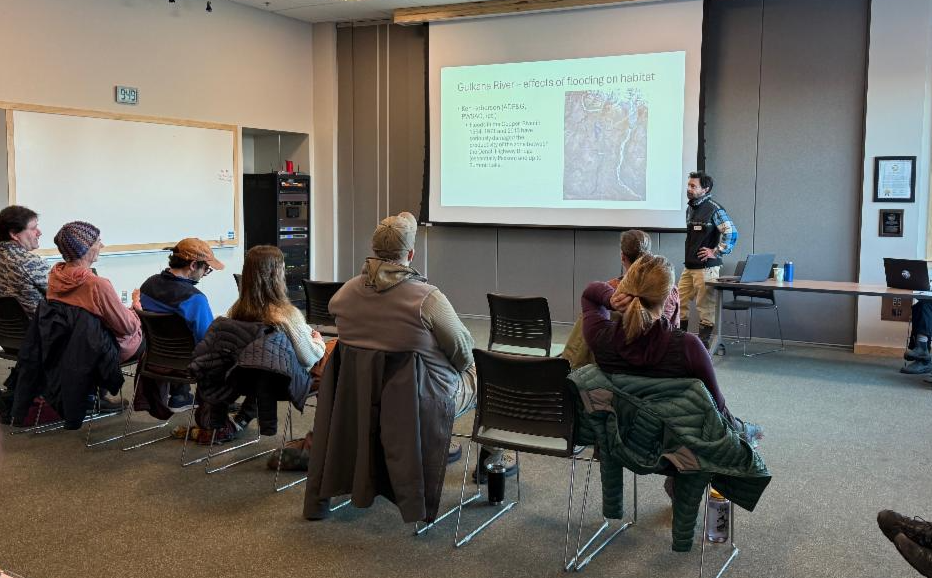
Dr. Pete Rand (PWSSC) leading the "Changing Ocean and River Conditions and Their Effect on Salmon: The Copper River 2125 Project" workshop 

Last month, Cordova hosted the inaugural Cordova Science Gathering, setting a new foundation for how knowledge can be shared, valued, and carried forward in our community. Over three days, the event brought together scientists, Tribal knowledge bearers, artists, harvesters, students, and community members to explore what shapes Cordova’s shared place. Through presentations, panel discussions, hands-on workshops, posters, and creative expression, participants of all ages gained a deeper understanding of the research, monitoring, and lived knowledge that shape our region.


The Native Village of Eyak, Chugach Regional Resources Commission, U.S. Forest Service, Alaska Sea Grant, National Park Service, Pacific Birds, Prince William Sound Science Center, and many others contributed to the success of the gathering. Speakers, organizers, volunteers, and community members showed up with openness and care, cultivating many meaningful connections. We are confident that the conversations, relationships, and work fostered here will continue beyond these walls. To learn more about the Cordova Science Gathering, please visit our website: https://pwssc.org/education/cdv-science-gathering/

Science, Culture, and Community Connections

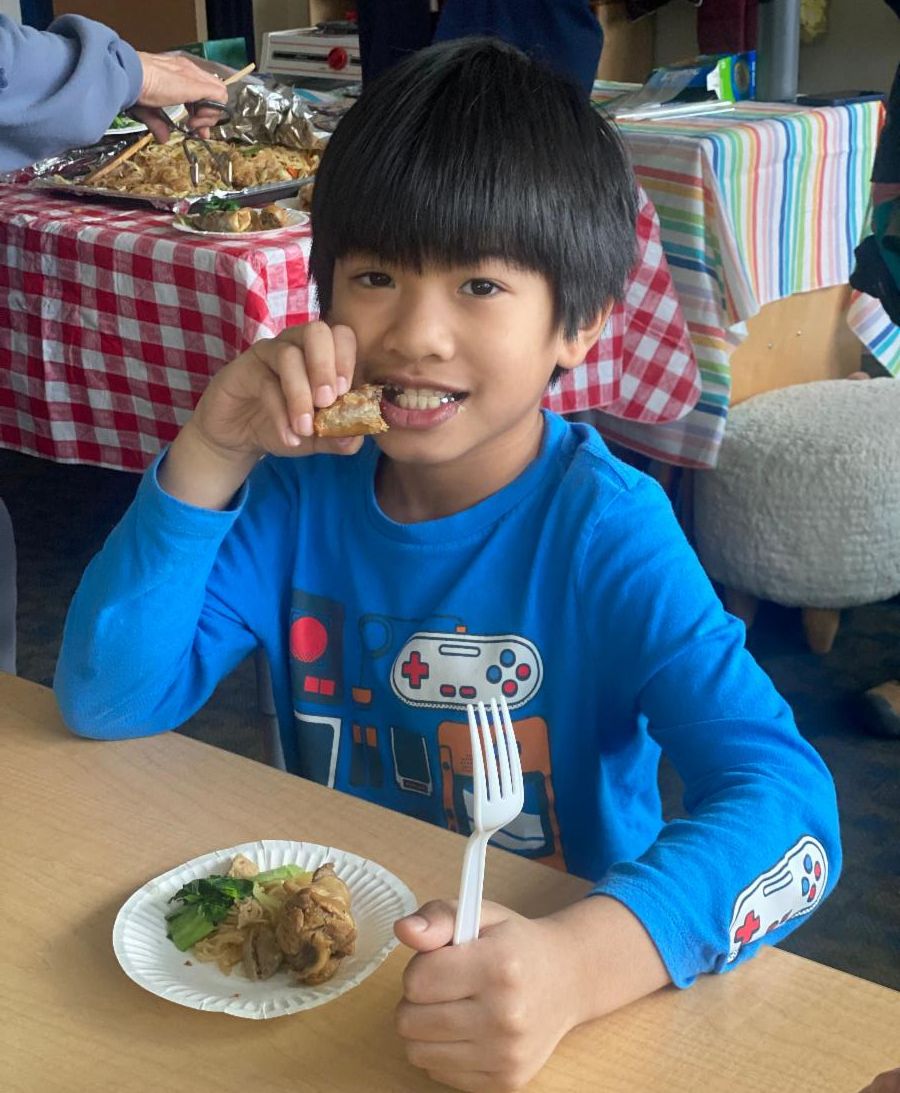
A student enjoys lumpia made with hyroponically grown bok choy.

This February, the second grade students at Mt. Eccles Elementary graduated from growing lettuce to growing bok choy in their classroom! The bok choy, a variety of cabbage commonly used as an ingredient in several Asian cuisines, grew from seed to harvest in only six weeks! During the growing period, the students watched over their plants. Students dutifully took notes on plant growth and compared the sizes of those grown directly under the grow lights to the ones on the edges. And what do you do with bok choy once you have grown it? Little did the second graders know that their classroom aids, Ms. Rowena and Ms. Bev, are also fabulous cooks! Ms. Rowena and Ms. Bev helped the students use their bok choy to make popular Filipino dishes including lumpia and pancit. Second grade teacher Mrs. Hanson showed the students where the Philippines are located on the map, and some students shared about their experiences visiting the Philippines and about different Filipino dishes they eat at home. Ms. Rowena discussed the cultural significance of the different dishes. For some students, this was their first time trying bok choy and pancit. All the students left the classroom begging for more and clutching baggies of bok choy to take home to share with their families.


If you want to try making pancit at home, check out Mrs. Alison’s recipe from last year on our blog.


The Prince William Sound Science Center facilitates hydroponics in the classroom as part of the Discovery Room. Throughout the year, second graders learn about the needs of plants and the role of plants in the ecosystem. The hydroponics lessons achieve Alaska state science standards as a hands-on experience, while demonstrating ways our community can use technology for problem-solving and community resilience. 


PWSSC Education in Review: February

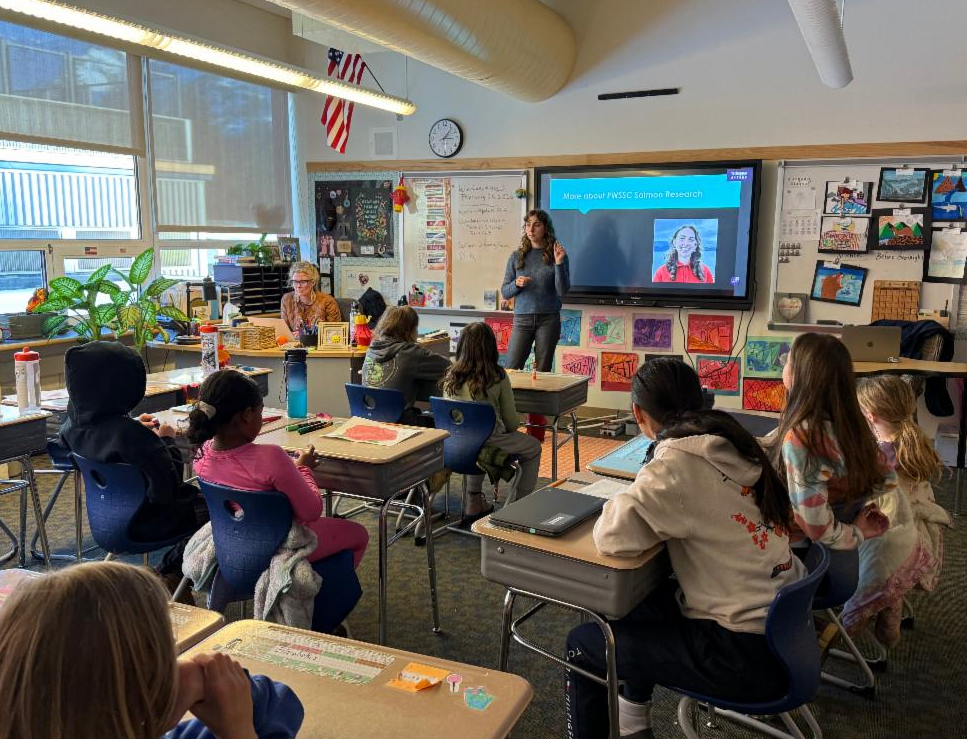
Jasmine Becker (PWSSC) leading a lesson on PWSSC salmon research with fourth graders at Mt. Eccles Elementary School.

Are you curious about what our Education Team has been up to this winter? If so, check out their updates below.


Programs for Kids


Sea Squirts celebrated the Ice Worm Festival by making gooey iceworms and getting wet and messy with ice experiments. Speaking of iceworms, our educators hosted a booth at the Ice Worm Paper Airplane Contest where we set up a fun plankton twist on basketball. Kids shot stuffed plankton toys into a plankton net, a tool used by our scientists to study marine microorganisms!


Science & Snacks focused on the several kinds of animal tracks that can be found in our area. They learned to identify different tracks, and even tried making their own.


Programs for Adults


You can catch up on our Tuesday Night Talk lecture series by visiting our YouTube Channel and clicking on the Lecture Series playlist. Follow the links to watch February's talks!


In-School Programs


  • In January, our educators met with grades K-6 as part of our Discovery Room program.
  • Kindergarten practiced making predictions with an experiment about wind speed. They predicted whether certain items could be moved by the wind. To learn about wind direction, they built windsocks.
  • First Grade saw sound waves using a scientific tool called an oscilloscope. They created a forest band outside with drumsticks as they explored the pitch created by different objects in nature.
  • Second Grade harvested their bok choy and enjoyed a pancit party. Special thanks to Ms. Rowena for sharing her recipe and celebrating Filipino culture with us!
  • Third Grade dissected owl pellets and created bar graphs to track what the owls ate. 
  • Fourth Grade learned about salmon and their role in the food web. Fourth grade students got to meet with our field and lab technician Jasmine Becker to learn about some of PWSSC’s salmon research efforts.
  • Fifth Grade tested the pH of different substances to better understand acids and bases. An experiment with CO2 and ocean water revealed that carbon dioxide increases ocean water's acidity.
  • Sixth Grade learned more about oil spill response by completing an oil spill response simulation.
  • PWSSC educators met with the high school chemistry class to continue environmental sampling efforts at Odiak Pond and the harbor as part of the Community Pathways to Student Science (COMPASS) program.

The Prince William Sound Science Center is committed to resilient communities and healthy ecosystems. We need your help now more than ever. If you believe in our mission and care about what we do, please consider donating today.

Facebook  Instagram  YouTube  LinkedIn