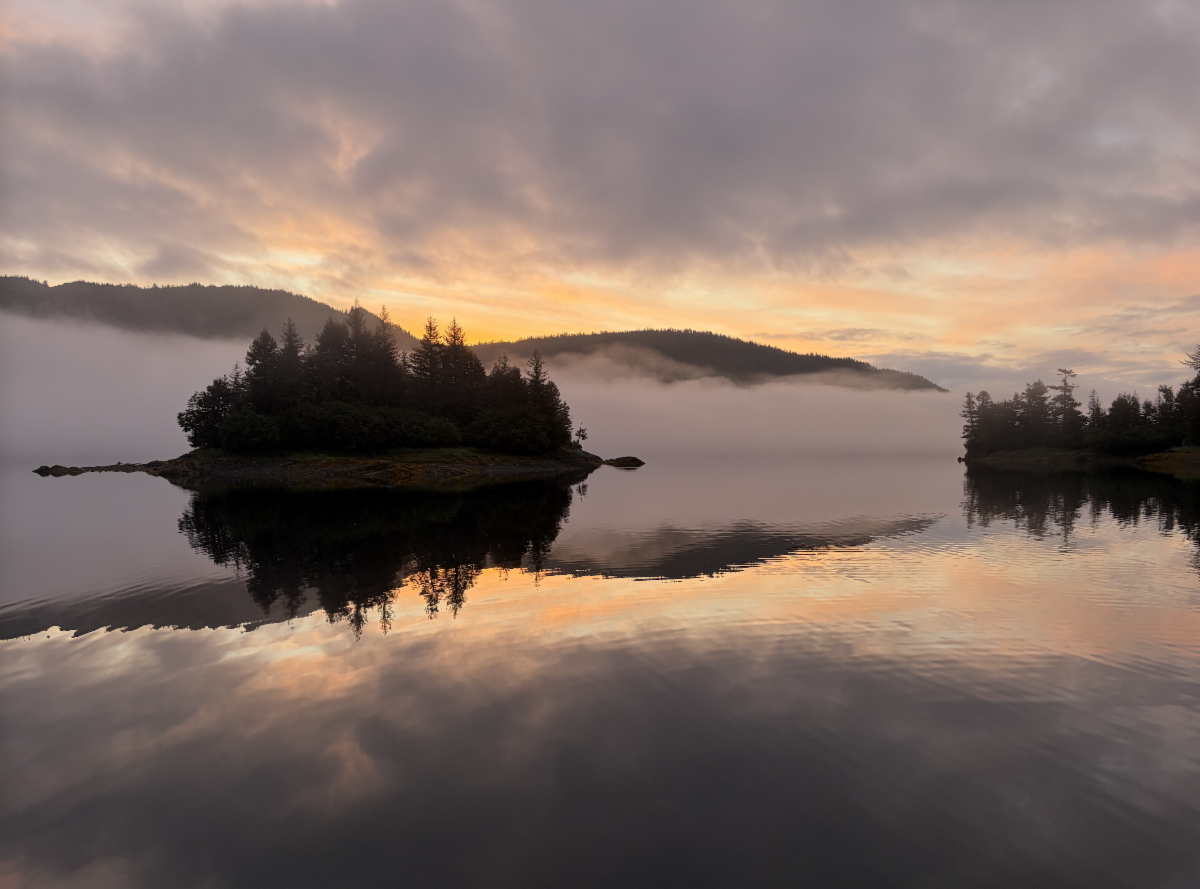
A newsletter from the Prince William Sound Science Center. Events, updates, and new research. | | | Morning fog. Photo by Pete Rand. | |
Upcoming Events in September | |
Tuesday Night Talk: September 8th, 5:30-6:30 pm
Join us at the Prince William Sound Science Center every Tuesday to hear different speakers from your Alaskan community. Tonight we will be joined by Emeryl Redwine as she discusses Maori culture and sealife conservation in New Zealand.
Sea Squirts - Mini Mycologists: September 14th, 10-11 am and 2:30-3:30 pm
Join us for preschool fun! We will explore what makes a fungus a fungus. Kids will dissect mushrooms, practice fine motor skills with mushroom stacking, paint with mushroom tops, and play in a mushroom sensory bin.
Sea Squirts is a free monthly preschool program that will get your tot thinking like a scientist. The program is designed for kids ages 3 - 5. Each session starts with a story and then leads into discovery stations for you and your child to do together
Tuesday Night Talk: September 15th, 5:30-6:30 pm
This night’s talk will be presented by Abby Tomita. Abby, a field technician at the Prince William Sound Science Center, will be discussing her recent research work in Antarctica, where she spent several months earlier this year. This talk will take place at the Prince William Sound Science Center.
Rainbow Mushroom Challenge: September 16-21st.
There is a myriad of colors to discover in the forest if you look closely. How many can you find? Collect photos of fungus that illustrate the rainbow (at least 7 photos -ROYGBIV). Once you have found all seven colors of fungus, bring your photo collection to the Science Center during business hours to claim your prize! Everyone who completes the challenge will get a fungus pin. The first person to complete the challenge gets a special prize. Get your game sheet at PWSSC or print from our website.
Children’s Mushroom Foray: September 17th from 4-5 pm
Join PWSSC for a mushroom walk specifically designed for mini-mycologists. This mushroom foray will meet at Crater Lake Trailhead. Children will learn the basics of what makes a fungus a fungus, how to identify common mushrooms, and tips for being good mushroom stewards.
Discover Cordova-Fungus Among Us: September 18th from 3:30-5 pm
Join us for this special fungus-themed Discovery Cordova. We will host fungus games and learning at Nirvana Park, targeted at children pre-K through elementary. We will enjoy some fungus dissection, arts and crafts, a mushroom hunt, and more!
Nature Journaling - Forest Finds: September 19th from 10-11:30am
Join The Prince William Sound Science Center for a free Nature Journaling session at Nirvana Park. This will be an introduction to Nature Journaling for all Fungus Festival Nature Journaling needs. Learn how to get started journaling your forest finds, learn about the fungus anatomy, practice new nature journaling techniques, and more!
Tuesday Night Talk: September 22nd, 5:30-6:00 pm
Join us at the Prince William Sound Science Center every Tuesday to hear different speakers from your Alaskan community. This night’s talk will be presented by Heather Parker of the Prince William Sound Science Center and the Oil Spill Recovery Institute. Heather will be discussing the Oil Spill Recovery Institute's latest projects.
Tuesday Night Talk: September 29th, 5:30-6:30 pm
This night’s talk will be presented by Cordova High School student Micah Phillips, who will be discussing the anatomy of a glacier. Micah will be joined by glaciologist Dr. Victor Devaux-Chupin, who will discuss his research on glaciers in Alaska. This talk will take place at the Prince William Sound Science Center.
| Become a Junior Scientist! | |
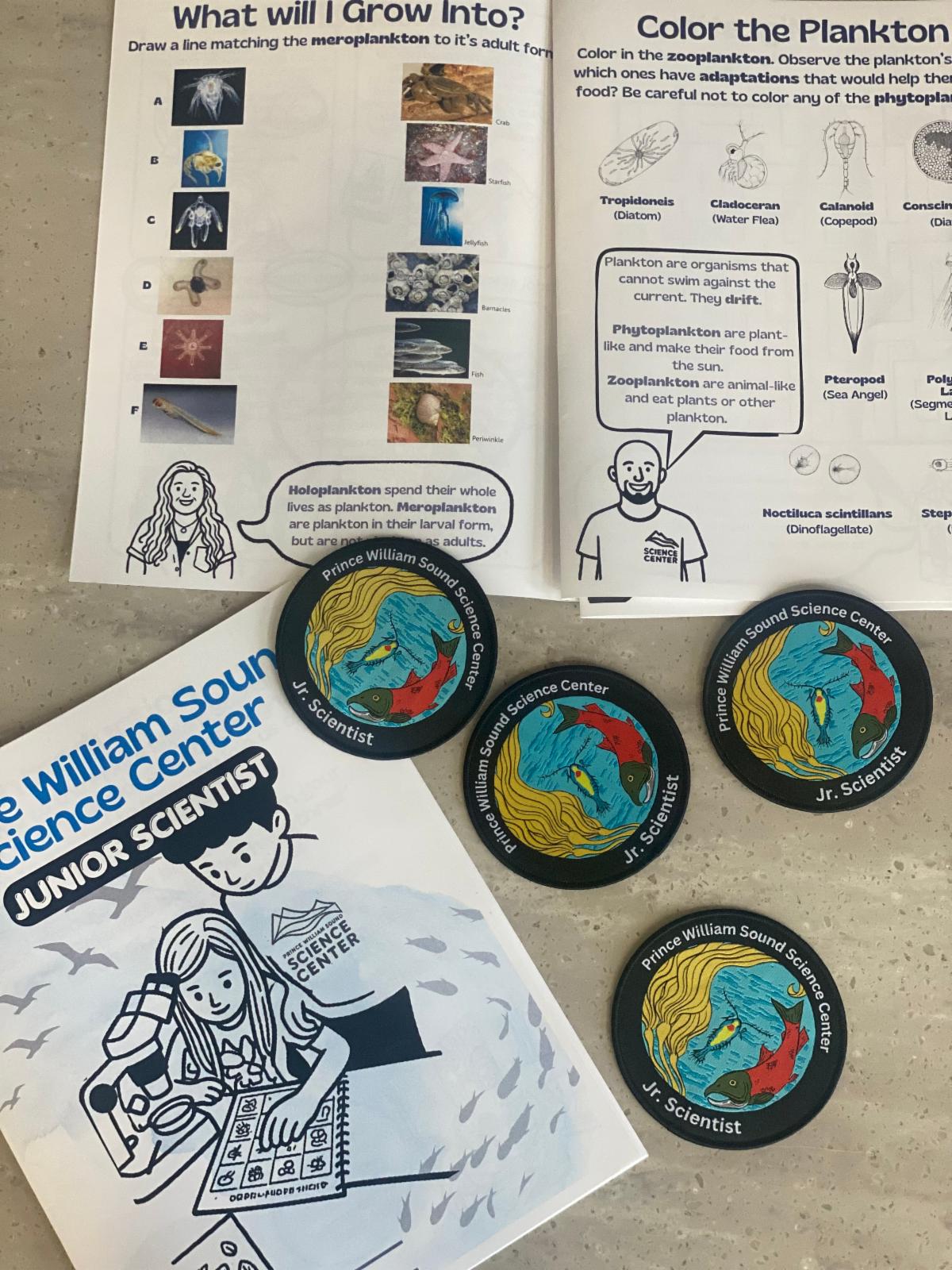
Do you know which plankton can photosynthesize? Can you count kelp spores in a microscope? What would you pack if you were going out on Prince William Sound to collect scientific data?
Experience some of the work our scientists do with our new Jr. Scientist Activity Book! These are available at the the Science Center's front desk during business hours.
This free activity book has something to entertain all ages, along with tidbits of knowledge from our scientists. Complete the workbook, and you can claim a coveted Jr. Scientist iron-on badge!
We extend a very special thanks to all our scientists who helped review this book, and a big thank you to Emeryl Redwine for designing the patch.
| Envisioning Cordova's Resilient Future: A Climate and Fisheries Adaptation Plan | |
Cordova, Alaska, is a fisheries-dependent community shaped by generations of stewardship, adaptation, and collective action. Located between Prince William Sound and the Copper River Delta, the community’s economy, culture, and identity remain deeply connected to marine ecosystems and commercial fishing. Yet Cordova now faces a convergence of accelerating challenges, including climate-driven ecological change, seafood market instability, aging infrastructure, rising operating costs, workforce shortages, and increasing pressure on the long-term viability of fishing livelihoods.
The report linked below presents a locally driven climate and fisheries adaptation plan designed to help the community respond proactively to these intersecting stressors while strengthening long-term resilience. The plan was developed through a multi-year participatory process led by the Prince William Sound Science Center in collaboration with fishermen, Tribal representatives, researchers, local government, industry stakeholders, and community organizations. Through vulnerability assessments, workshops, interviews, and collaborative strategy development, participants identified both the most significant risks facing the community and the assets that continue to support resilience.
A central finding of this process is that climate impacts cannot be addressed in isolation. Ecological change interacts with economic volatility, governance challenges, housing shortages, infrastructure needs, and demographic shifts, creating compounding vulnerabilities that require holistic and community-centered responses. Despite these challenges, Cordova remains uniquely positioned to adapt. The community retains strong social networks, a culture of innovation and stewardship, and deep local knowledge rooted in commercial fishing and subsistence practices. Participants consistently emphasized that resilience in Cordova depends not on replacing fishing, but on strengthening and diversifying the systems that support a thriving working waterfront and marine-based economy.
Ultimately, this adaptation plan serves as both a roadmap and a living framework. It reflects the knowledge, priorities, and aspirations of the community itself while recognizing that resilience planning must remain iterative and adaptive as conditions continue to change. By centering local leadership, strengthening social and economic capacity, and fostering collaboration across sectors and scales, Cordova can continue its long history of responding to uncertainty through stewardship, innovation, and collective action.
To read Cordova's climate and fisheries adaptation plan in its entirety, click here. If you have questions about the project, contact Katrina Hoffman or Hayley Fleming.
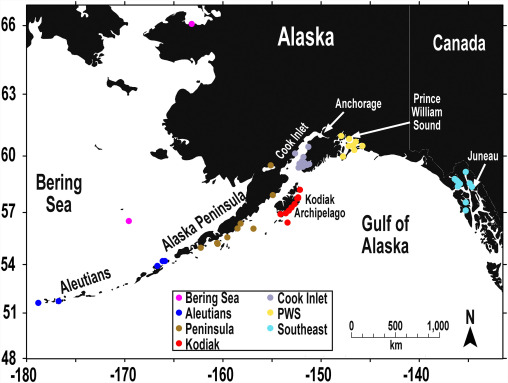
| Algal Toxins in Alaska's Marine Food Web | | The colored dots indicate where samples were collected for this study. | | |
Results of a new four-year study throughout Alaska have found that paralytic shellfish toxins, long known as a hazard in bivalves, are far more widespread in Alaska's marine food web than previously understood. The toxins turned up in invertebrates, forage fishes, and in the predatory fish that Alaskans rely on both commercially and for subsistence.
This research, recently published in the journal Harmful Algae, is among the first of its kind in Alaska. Led by Steve Kibler of the National Oceanic and Atmospheric Administration and carried out with partners across the state, including Dr. Rob Campbell of the Prince William Sound Science Center, the study analyzed more than 2,100 samples collected along the Alaskan coast. Prince William Sound was one of the sampled locations.
Paralytic shellfish toxins are produced by the microscopic dinoflagellate Alexandrium catenella, which blooms every summer along nearly the entire coastline of Alaska. The toxins work their way up the food web when zooplankton graze on the algae and are, in turn, eaten by fish and other animals. More than a third of forage fish sampled statewide carried detectable toxins, with the highest levels in Pacific sand lance and Pacific herring, two species central to the ecology of Prince William Sound.
Among the study's more striking results was the frequency of toxins in juvenile fish of commercially important species such as salmon and Pacific cod. The authors note that the toxins may be an overlooked stressor on the growth, behavior, and survival of fish already under pressure from a warming ocean.
In adult predatory fish, toxins were concentrated in the liver and kidney, while being lowest in muscle tissues. Importantly, levels in fillet muscle stayed well below the U.S. Food and Drug Administration advisory limit, meaning the study found little acute risk to people eating fillets of Alaskan salmon, cod, or halibut. The researchers suggest caution for harvesters who eat the liver or other organs, particularly during and just after the spring and summer bloom season.
The authors describe the work as a beginning rather than a conclusion. Questions remain about how toxin levels vary by region, how they change through the seasons, and what the long-term consequences may be for fish populations and the communities that depend on them. A follow-up publication is planned.
The study was funded by the North Pacific Research Board and NOAA's ECOHAB program, with additional support from the Knik Tribe of Alaska. Visit our website to learn more.
| | Welcoming the New Kelp on the Block | | A view inside PWSSC's kelp hatchery. | | |
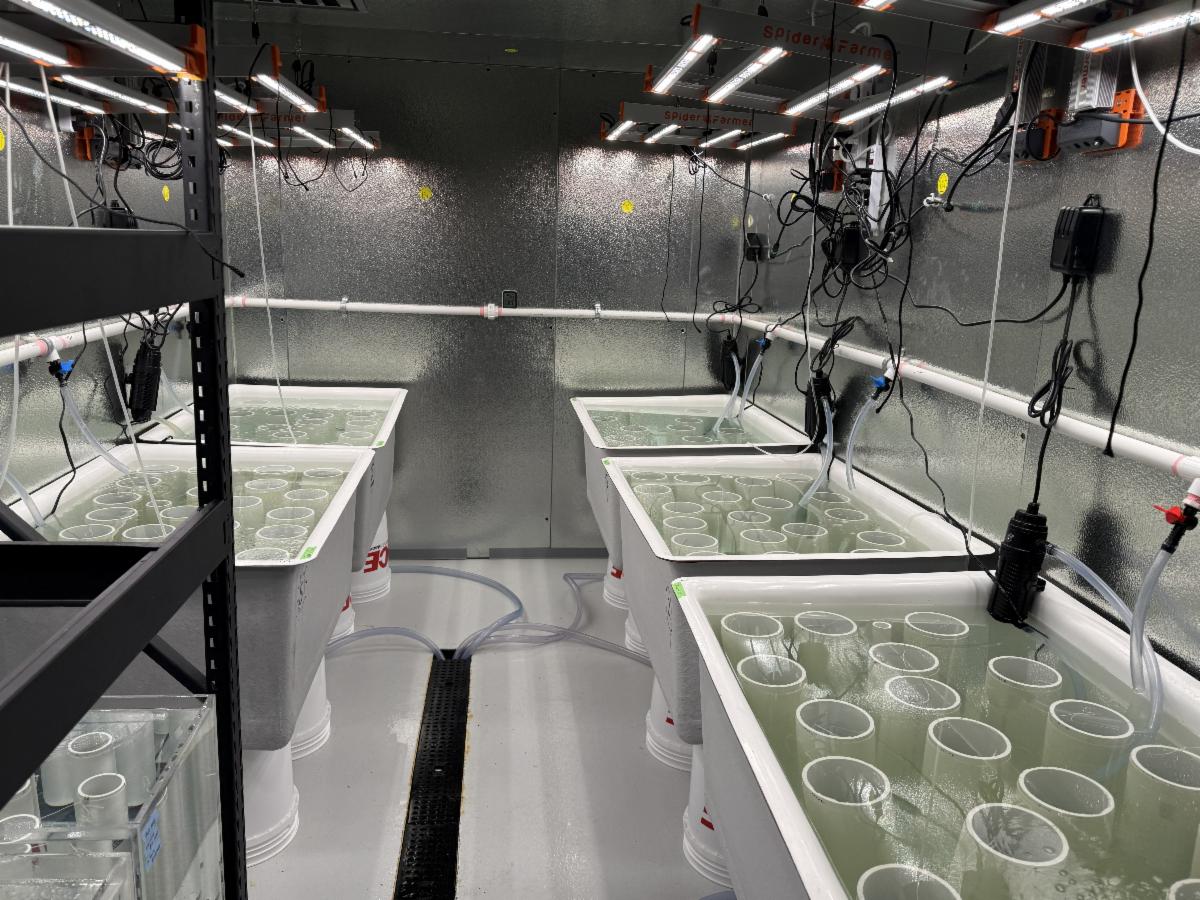
Inside the Science Center’s seawater lab is a large walk-in cooler that serves an unexpected but essential purpose. This massive refrigerator provides the controlled environment necessary to replicate the cold-water conditions found in Alaska's waters, making it the perfect place for PWSSC's kelp hatchery.
To create optimal growing conditions for young kelp, our researchers transformed the cooler into a specialized cultivation facility, complete with temperature controlled seawater tanks and custom-built filtration system.
Last month, our kelp hatchery went from warm, dry, and empty to cold, wet, and full of life as the newest residents – thousands of baby kelp, or sporophytes – moved in. These sporophytes have a long journey ahead of them, but for the next three months, they will get the VIP treatment: cold water, clean conditions, no kelp-eating organisms, and plenty of room to grow.
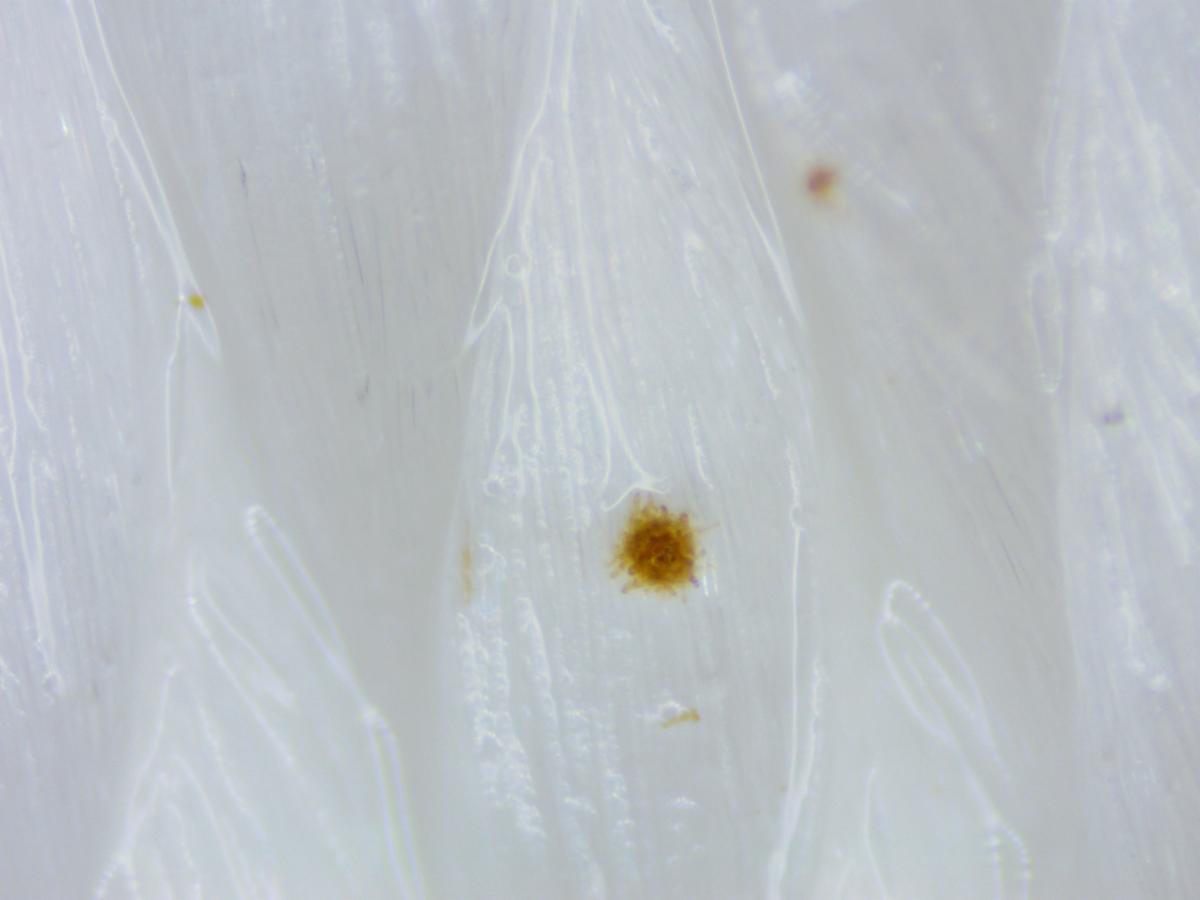
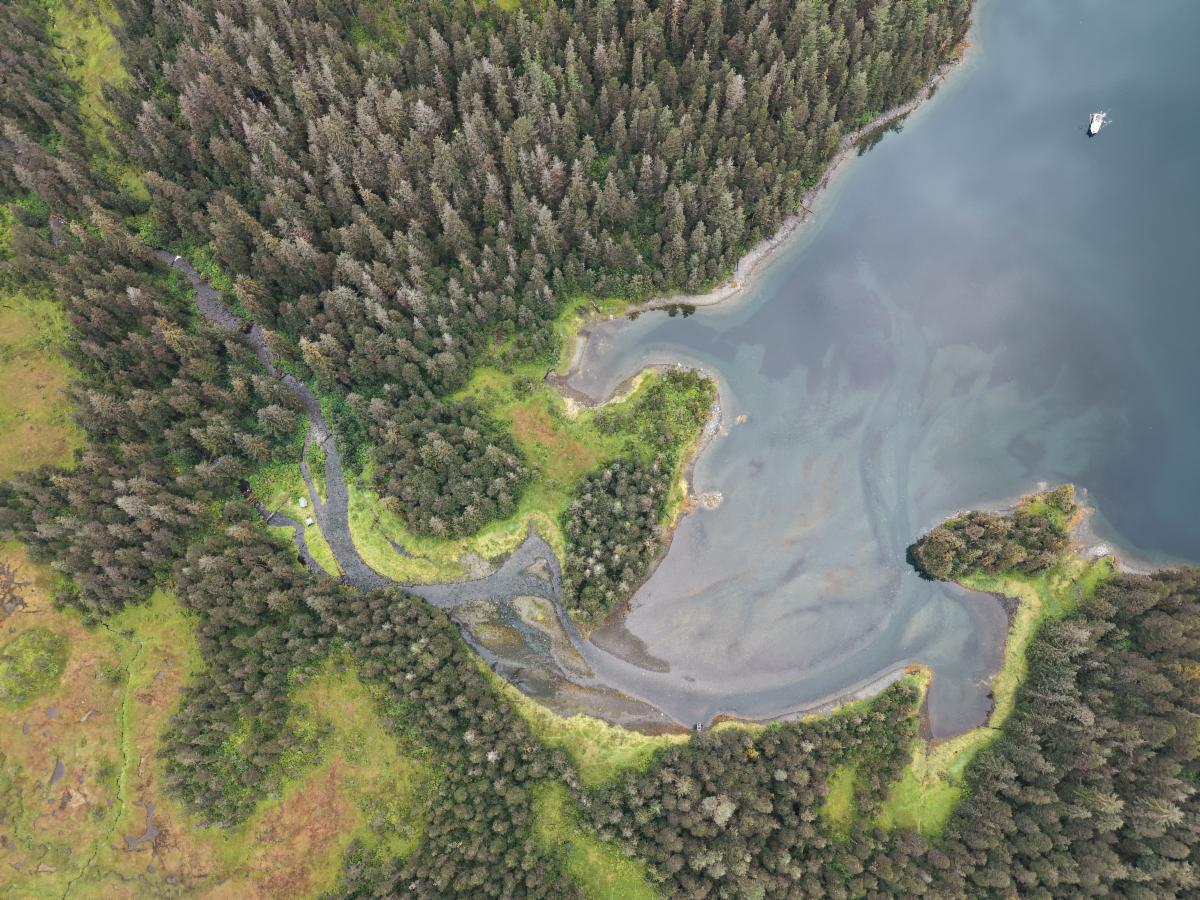
| | A tiny bull kelp sporophyte (baby kelp) growing in the cold, clean water of our hatchery. This kelp is only two weeks old! | | Investigating Crosses Between Wild and Hatchery Pink Salmon | | An aerial view of the research area in western Prince William Sound. | | |
A new research project is underway to investigate differences between the offspring of wild and hatchery pink salmon in a stream in western Prince William Sound. Funded through the Pacific States Marine Fisheries Commission's 2020 Prince William Sound Pink and Coho Salmon Fishery Disaster Research Program, the study supports efforts to better understand factors contributing to recent declines in salmon biomass, including the potential effects of hatchery pink salmon releases on salmon returns.
Our project focuses on the early life history of offspring produced from experimental crosses of salmon spawners of known origin. The study is the first of its kind in Alaska and aims to shed light on differences in survival and fitness between wild salmon and hatchery-origin fish that stray into natural spawning streams in Prince William Sound.
Conducting this field experiment required overcoming two major challenges. The first was identifying whether spawning adults originated in the wild or at a hatchery during the peak of the spawning season. Externally, the fish look nearly identical.
To determine origin, the crew removed otoliths (small stone-like structures inside a fish's ear) from adult salmon and mounted them in plastic on microscope slides. After carefully grinding away layers of material with sandpaper, the crew examined the otolith core under a microscope. Hatchery fish carry thermal marks, a series of light and dark bands created when hatcheries expose developing fish to alternating warm and cold water. Wild fish lack these distinctive patterns.
Working in a streamside tent laboratory, the research team processed approximately one fish every ten minutes. Once origin was confirmed, fish were selected for experimental crosses. Following standard animal breeding terminology, female parents are referred to as dams and male parents as sires. Understanding the fate of offspring produced by dams and sires of different origins is central to this study.
The second challenge involved placing fertilized eggs into the stream so they would experience natural incubation conditions. Researchers used a hydraulic pump to drill holes into the stream gravel, allowing plastic mesh capsules containing fertilized eggs to be carefully installed beneath the streambed.
To protect the capsules, the team inserted perforated metal standpipes into the gravel before lowering the capsules into place. As a practical and cost-effective solution, inexpensive motorcycle mufflers proved to be ideal standpipes for the job.
At other strategically placed standpipes in the stream, we deployed water-quality sensors to continuously monitor environmental conditions experienced by the developing eggs and larvae over the fall and winter incubation period.
The crew will return to the creek in mid-September to produce new families with fish returning later to the stream. Ultimately, we are interested in tracking a variety of biological indicators — survival, growth, pathogens, gene expression — from early life history to the point when young pink salmon fry emerge from the gravel and emigrate from the stream in the spring.
Our hope is to relate these processes to dam and sire origin, spawning habitat type, and run timing. We intend to repeat this experiment in 2027 and expand to additional streams.
For more information about the project, please contact Pete Rand at prand@pwssc.org or Rao Chaganti at rchaganti@pwssc.org.
| | The Prince William Sound Science Center is committed to resilient communities and healthy ecosystems. We need your help now more than ever. If you believe in our mission and care about what we do, please consider donating today. | | | | |