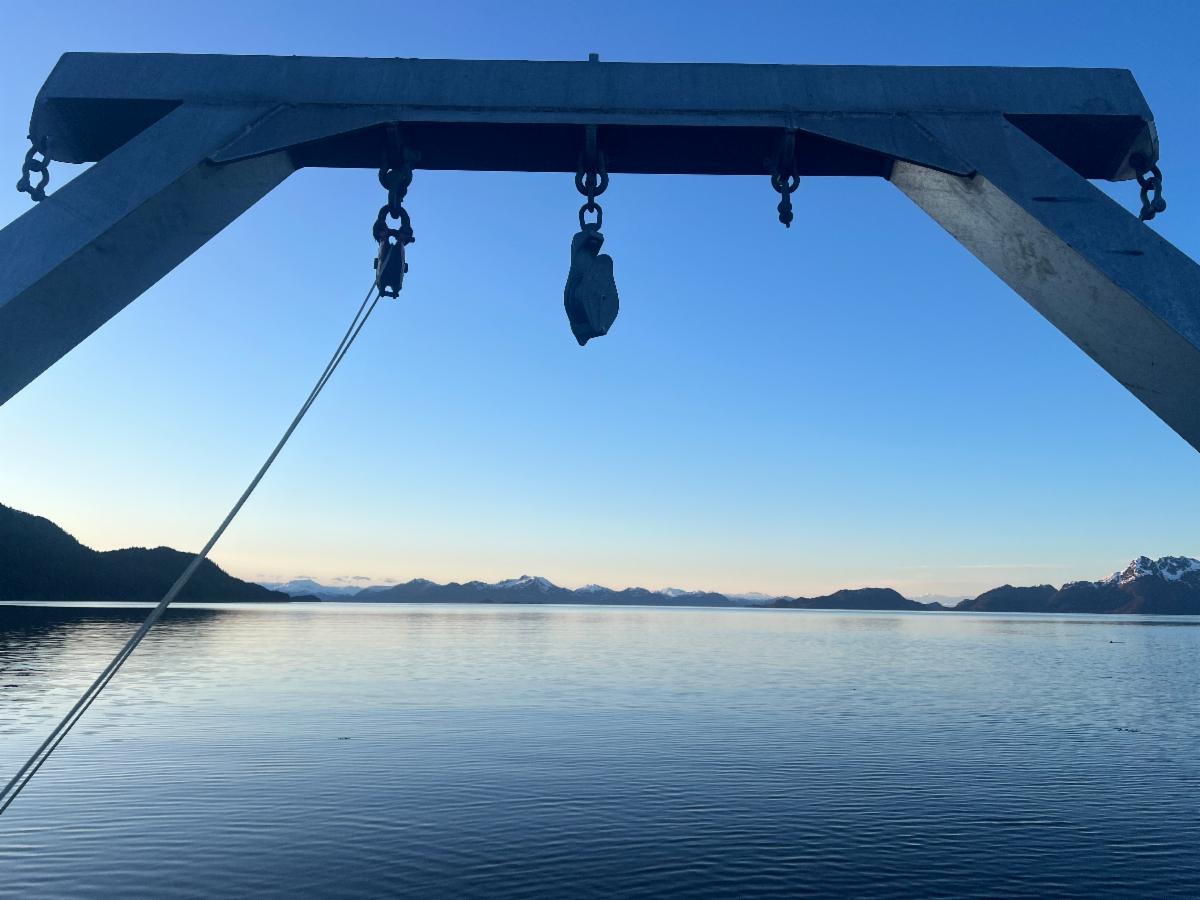
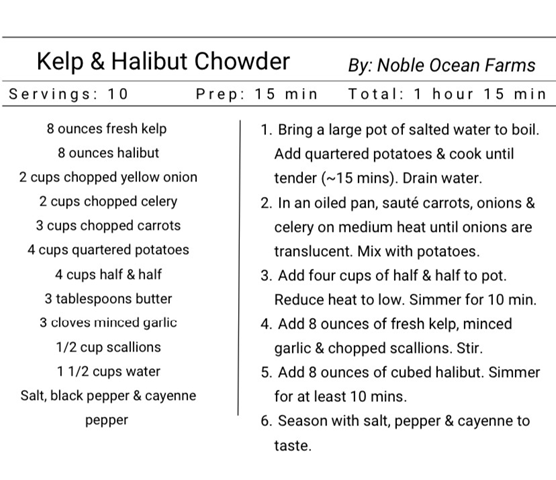
A newsletter from the Prince William Sound Science Center. Events, updates, new research, and a special kelp recipe! | | | Prince William Sound from the stern of the R/V New Wave, taken on a recent cruise of the Sound by Science Center researchers. Photo by Jess Pretty. | | |
Shorebird Scavenger Hunt: May 4-11th
Head to the Heney Ridge trailhead any time between May 1st and May 9th to participate. This interactive, in-person scavenger hunt will let you choose your own adventure while learning all about shorebirds and their unique lifestyle. Grab a scavenger hunt sheet out of the box below the trail sign and head out to do some birding! The clues will lead you to the hiding "shorebirds."
This activity is designed to let families come and go on their own schedule and engage with the information as much or as little as desired. It's all about getting outside and exploring! All the "shorebirds" can be seen while standing on the trail, though the birds may be found within a zone that runs along either side of Heney Ridge trail. The zone stretches from the trailhead to the first steps. We recommend you dress for the weather so you can search in comfort. Please leave the installed "shorebirds" where you find them but enjoy the coloring pages and bonus information that is also available below the trail sign. Happy birding!
Discover Cordova - Shorebird Frenzy: May 8th from 1-4 pm
The Prince William Sound Science Center will be at the Eyak Corporation's upper camping area at Hartney Bay, exploring shorebirds and their adaptations through hands-on learning and play. Bring your beginning birders so they can get their feet wet in the wild world of birding. Open to kids of all ages and their caregivers.
Nature Yoga - For the Birds: May 10th from 7-8 pm
Beat the "Sunday Scaries" with sunset yoga at the Science Center.
Jess will be leading shorebird themed yoga in the atrium of our building on May 4th from 7-8pm. Come discover what birds can teach us about resilience and stamina. Don't have a yoga mat? Don't worry. Let us know and we will try to have a few extra on hand.
Prince William Sound Natural History Symposium Watch Party:
May 11th, 1pm-5pm and May 12th, 9am-5pm
Are you interested in learning more about the natural history of Prince William Sound? The Prince William Sound Natural History Symposium is a day dedicated to the culture and science of the Prince William Sound. Topics discussed include but are not limited to, cultural presentations about the Chugach Peoples, presentations about environmental and biological factors in the Sound, as well as presentations on natural hazards in the area - such as landslide risks and tsunami detection. This conference takes place in Whittier but will be live-streamed at the Science Center. Join us at the Science Center any time from 1 pm - 5 pm on May 11th and from 9 am - 5pm on May 12th. We invite you to stop by for a bit or stay the whole day!
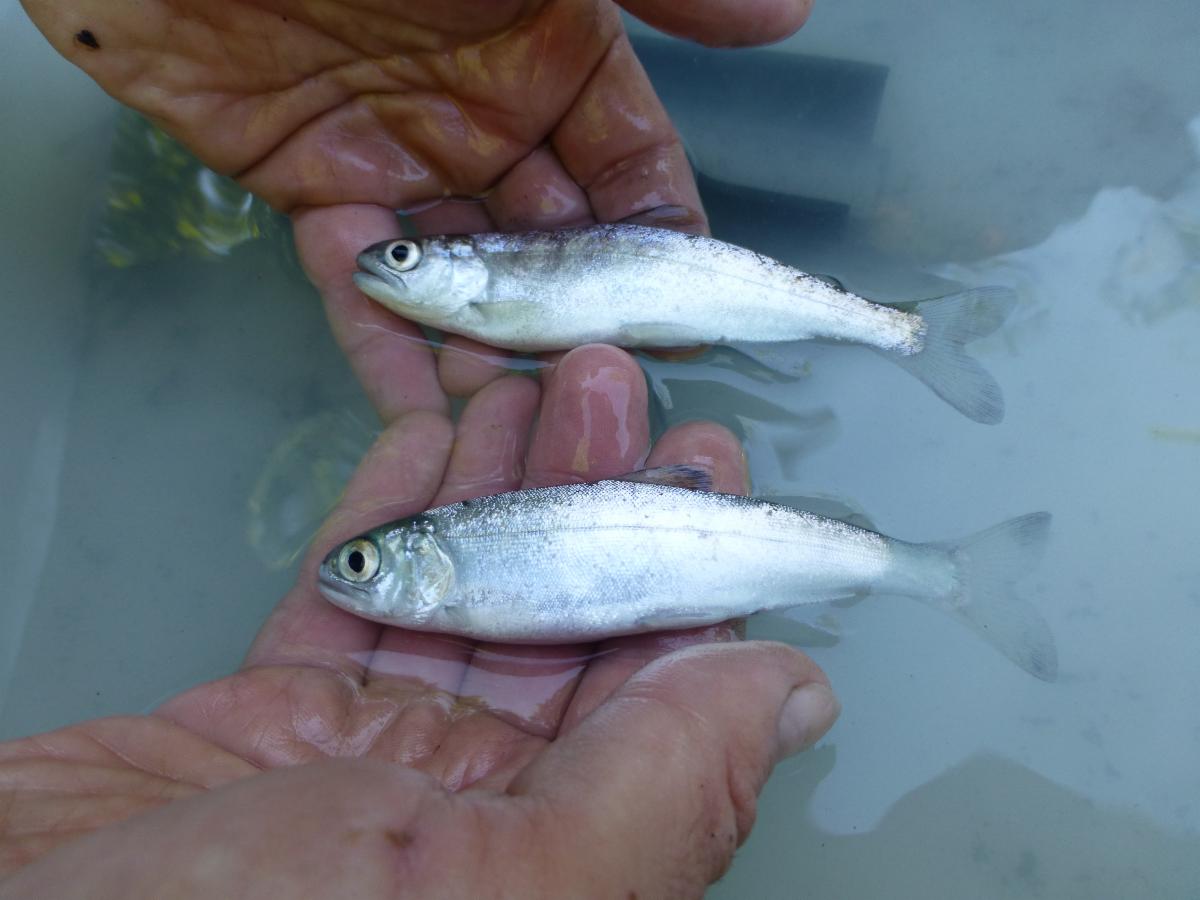
| New Project Focuses on Tracking Juvenile Chinook Salmon in the Copper River | Juvenile Chinook salmon undergoing transition into smolts, the migratory phase of their early life history. Photo by James Savereide, ADF&G. | |
It is important to recognize that Alaska Indigenous peoples and salmon have lived closely connected in lands now called Alaska for at least 12,000 years, and that salmon continue to be central to their way of life. The Ahtna story of Dinac’iighiłtaenen—the Salmon Boy—embodies a form of Traditional Ecological Knowledge (TEK) that has guided sustainable salmon stewardship in the Copper River basin for countless generations. Through the story of Bac’its’aadi, “the one who is highly regarded,” Ahtna people are taught that juvenile salmon (uł’uli) are sentient beings who travel downriver to the ocean and must be treated with care and respect to ensure their return as adults. This deep cultural teaching mirrors modern ecological principles of life-cycle management and highlights the importance of conserving smolt as a critical life stage for long-term population sustainability. The Ahtna’s spiritual and observational knowledge—built over millennia through direct relationships with salmon and their habitats—provides essential context for interpreting ecological patterns and long-term changes in salmon abundance, health, and movement.
Through a unique collaboration between the Prince William Sound Science Center and Ahtna Intertribal Resource Commission (AITRC), we are conducting an integrated, two-year study targeting freshwater life stages of juvenile Chinook salmon in the Copper River watershed: Through an integrated approach involving field surveys, acoustic telemetry, and advanced multi-omics techniques (high-throughput qPCR for pathogen screening and gene expression, DNA metabarcoding for diets, and eDNA/eRNA for predator surveillance), we will examine how the health of juvenile Chinook salmon in the Copper River watershed varies over time and cross locations and learn about what environmental pressures they face.
Our team will be in the field this summer conducting preliminary field surveys in several river systems, and we will begin acoustic tracking of juveniles during Spring 2027. Our study is designed to examine the effect of many factors, both environmental and physiological, that affect juvenile Chinook growth and survival. Understanding how changes in river conditions affect the overall status of this species is our key motivation. This research will be the first of its kind in the Copper River and will provide insight into migration patterns and survival of juvenile Chinook salmon during this critical early life history stage.
Please contact Pete Rand (prand@pwssc.org), Rao Chaganti (rchaganti@pwssc.org), or Dan Gorze (dan@ahtnatribal.org) if you have any questions about this project.
| |
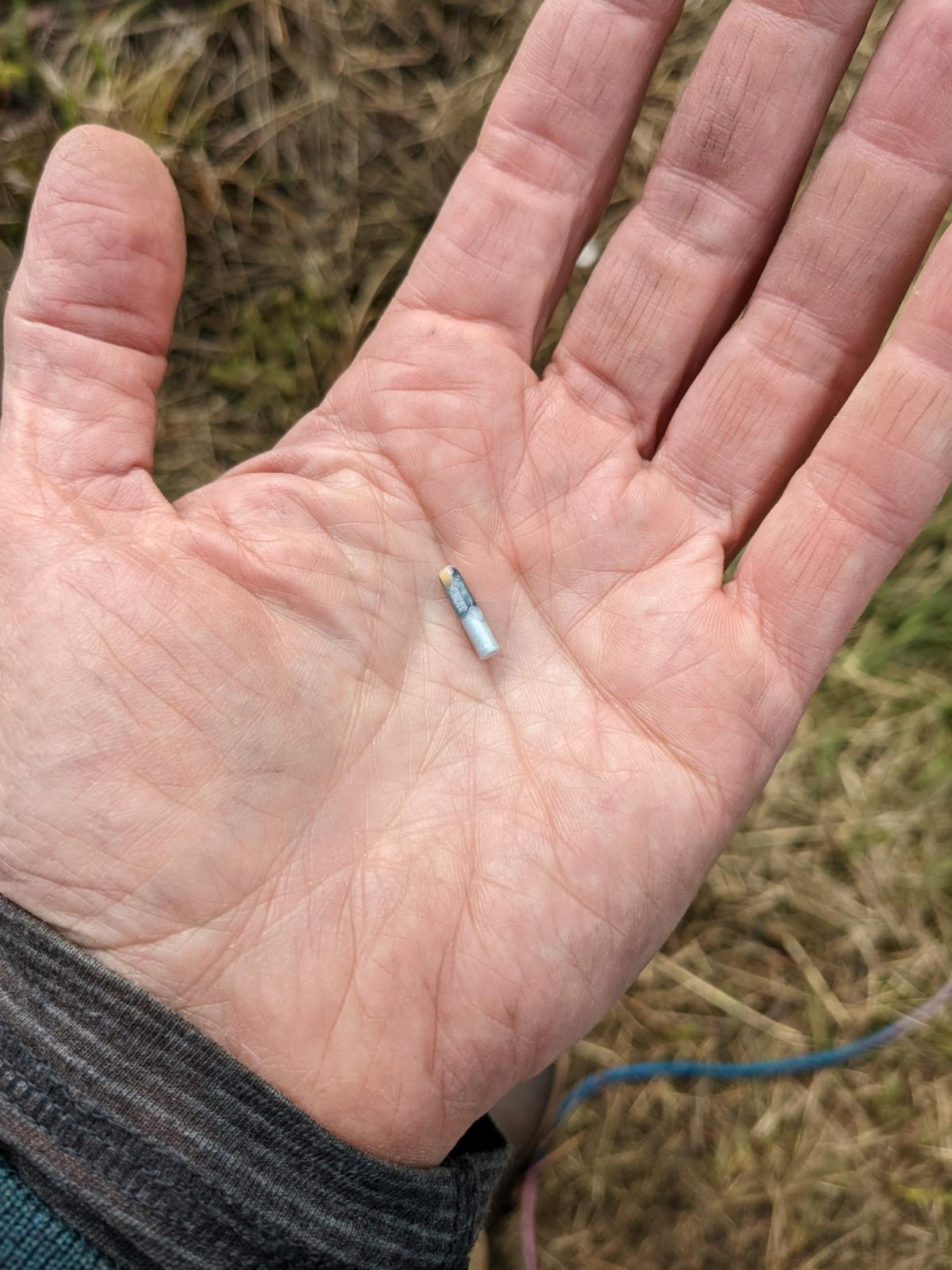
An example of one of the tag designs that will be used in our study. These tags will be surgically implanted into the body cavity of juvenile Chinook salmon. After release, the tag will emit a high-frequency sound signal, which will be detected by hydrophones placed in the river along Chinook salmon migration routes.
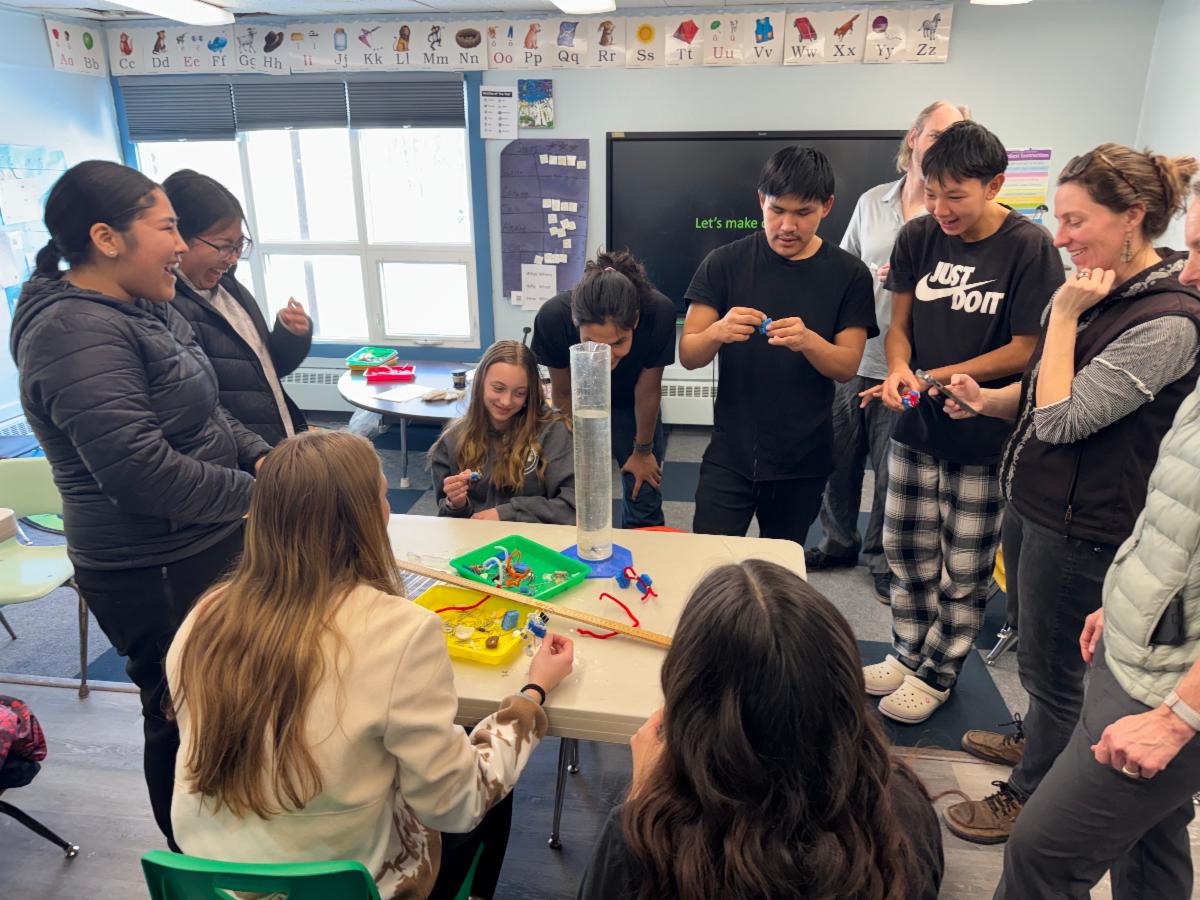
| PWSSC Educators Visit Sleetmute | | Sleetmute students experiment with making their own "plankton". Photo by Kate Trudeau. | | |
In March, our education team traveled to the village of Sleetmute, a small community on the Kuskokwim River in Western Alaska, to participate in the annual Upriver Science Fair.
Each year, the Kuspuk School District holds a science fair for its students in the upriver communities of Crooked Creek, Chuathbaluk, and Sleetmute. In addition to showcasing student science, the Upriver Science Fair is a chance for students to learn new scientific skills and concepts from visiting professionals. This year, the Prince William Sound Science Center was the guest presenter.
PWSSC avian researcher, Anne Schaefer, taught students the field skills she uses to observe and track birds. Students learned how to use binoculars and made their own bird bands.
Later, students had an introduction to plankton, where they created their own plankton from clay and craft materials and competed to keep their plankton floating in the middle of the water column for the longest time. Students also explored the intricacies of marine food webs, dissected owl pellets, built wind turbines, and practiced methods to clean up oil spills. Our educators had a great time sharing "marine science and more" with the students, and also loved learning about their awesome science fair projects!
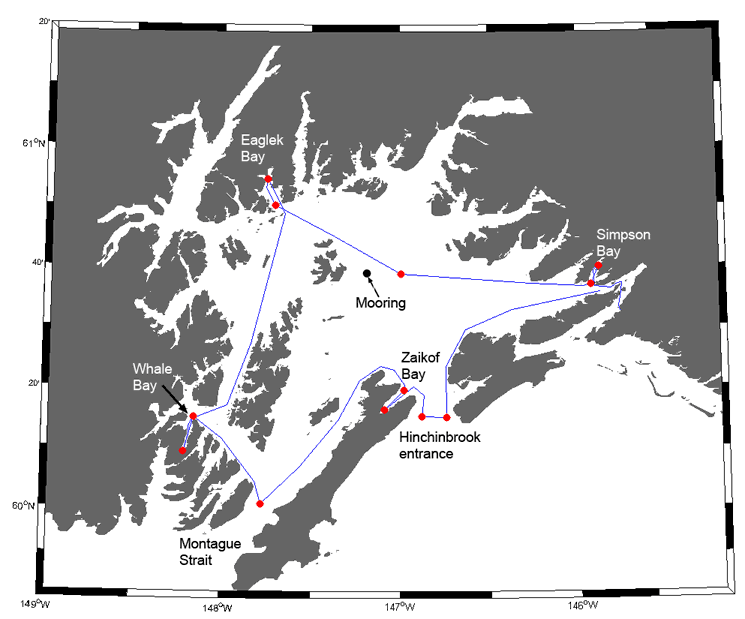
| | Around the Sound: Trends and Conditions | | PWSSC researchers recently collected data at twelve monitoring stations around Prince William Sound. | | |
Last month, PWSSC oceanographers Dr. Rob Campbell and Jessica Pretty completed a cruise of Prince William Sound on the our research vessel, the R/V New Wave. Our oceanographers make this ‘lap of the Sound’ approximately six times a year, aiming to collect data before, during, and after the spring and fall phytoplankton blooms - which are rapid increases in the biomass of marine phytoplankton. Such long-term monitoring allows us to understand how the ecosystem is changing over time. Samples are collected at 12 stations spread around the Sound to describe what is occurring in its different parts.
At each station, the researchers collect a variety of data including CTD (i.e. conductivity [salinity], temperature, and depth), fluorescence (amount of chlorophyll in the water column which is a proxy for the amount of phytoplankton present), dissolved oxygen, and more. Additionally, zooplankton and water samples are taken at each locale. Back at the lab, the collected zooplankton are identified and the nutrients in the water samples are analyzed.
This work is being conducted by the Prince William Sound Science Center, as part of Gulf Watch Alaska, with funding from the Exxon Valdez Oil Spill Trustee Council. To learn more about what we are finding, visit the project website:
https://gulfwatchalaska.org/monitoring/environmental-drivers/oceanographic-conditions-in-prince-william-sound/
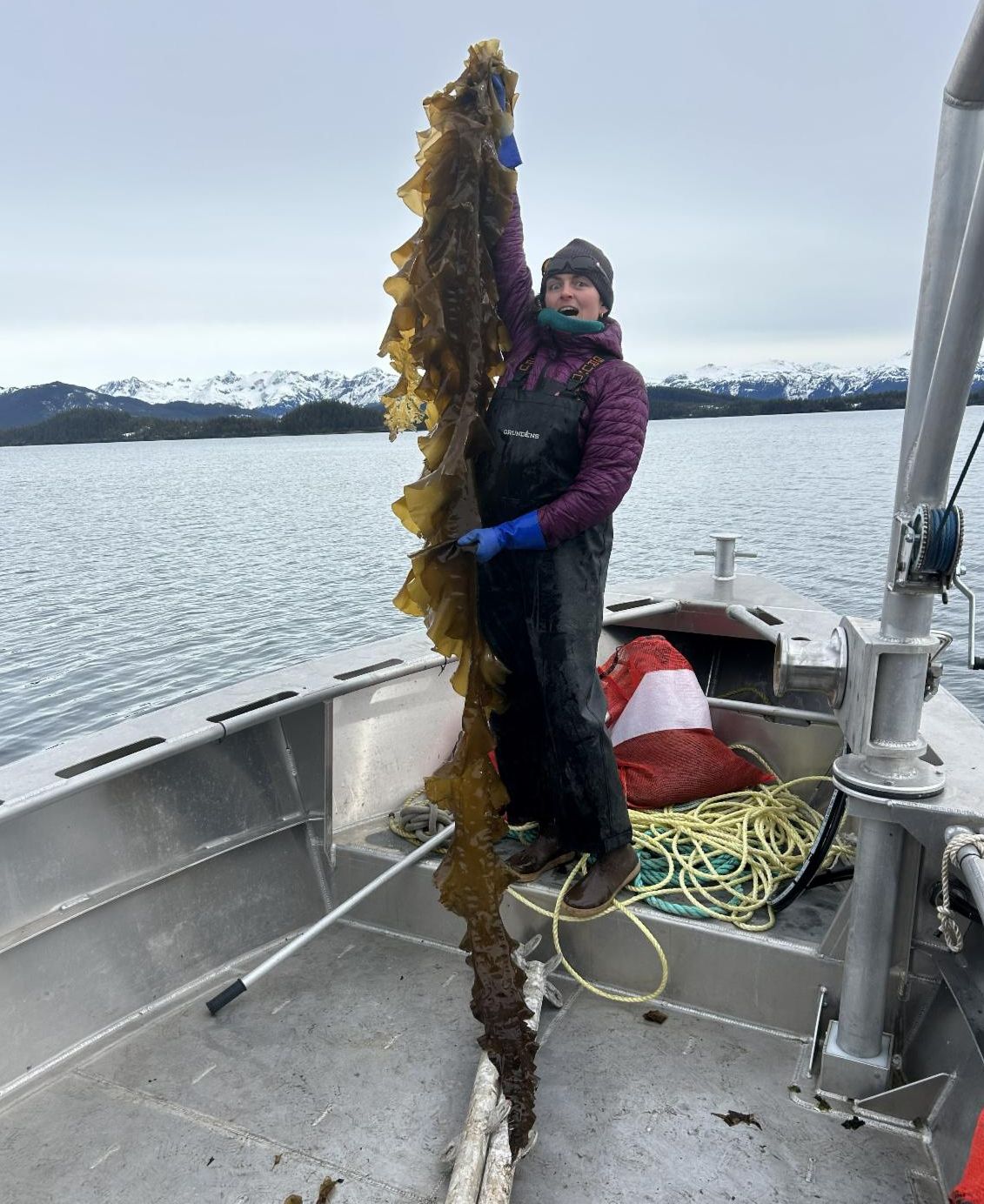
| | Kelp from Our Hatchery: Where Is It Now? | | Sugar kelp from Noble Ocean Farms, cultivated from PWSSC-grown seed. Photo by Noble Ocean Farms. | | |
If you’ve seen our updates, you know that last fall was a very successful season for our kelp hatchery. We followed up with some of our local kelp farmers to hear how their growing season went, and the feedback has been overwhelmingly positive. Local farmers raved about their experiences working with the seed kelp from the PWSSC hatchery. Seed spools were described as “high-quality and healthy,” with “great sporophyte coverage,” and the PWSSC mariculture staff were praised for “making the process fun” while remaining “very professional.”
You may be wondering where all the kelp grown this season will end up, especially since Noble Ocean Farms alone harvested between 60,000 and 100,000 pounds of kelp. This kelp will be used in a variety of ways, including distribution to local families and restaurants, shipment for use in liquid kelp fertilizer, and sale to markets producing food products such as kelp dashi broth. Some will even be used in trials to test if our kelp is suitable for pharmaceuticals and cosmetics.
Read what local, Cordova-based farmers have said about the impact of our kelp nursery:
“When we're ready to outplant our seed, we can keep an eye on the weather and then just go with just 24 hour notice. It really makes planning so much easier. In the past, the logistics of getting our seed were complex and time-consuming…[and] included trucks, planes, and ferries, really quite a hassle and risky.” - Royal Ocean Kelp Co.
“For us as kelp farmers, having a local seed nursery means that we have less logistics and stress to deal with during the busy fall planting season…especially because the kelp sporophytes are somewhat sensitive and need to be transported carefully. Having a local seed nursery also eliminates that shipping cost and offers us a lot more flexibility in terms of planting timing.” - Noble Ocean Farms
“The seed that we received from the Science Center last fall was by far the best ever in five years of farming. It was hands down the best.” - Royal Ocean Kelp Co.
| | The Prince William Sound Science Center is committed to resilient communities and healthy ecosystems. We need your help now more than ever. If you believe in our mission and care about what we do, please consider donating today. | | | | |