| |
Annapolis Update:
Friday, January 23rd | | |
Dear Community Members,
Earlier this week, the Budget (Fiscal Year 2027) was released. At $70.8 billion, the budget represents yet another record high under the Moore Administration. This raises a fundamental question: has Maryland’s economy grown by 5 percent? Budget growth should track economic growth, not significantly outpace it.
During the interim, Maryland also experienced a credit-rating downgrade from Moody’s. The Spending and Affordability Committee reported a projected $1.4 billion shortfall for FY 2026, citing poor forecasting and overspending. We further learned that 46,986 out-of-state unemployment claims, totaling $493.9 million, were fraudulent, while the statute of limitations expired on $760 million in unrecoverable funds. At the same time, reports revealed that nonprofits are not being audited, raising additional concerns about accountability and oversight.
Despite these warning signs, the Executive Branch continues to roll out so-called “historic” spending announcements every few weeks. Too often, these feel-good press releases leave Republicans as the adults in the room, working to rein in spending while the supermajority loosens the purse strings.
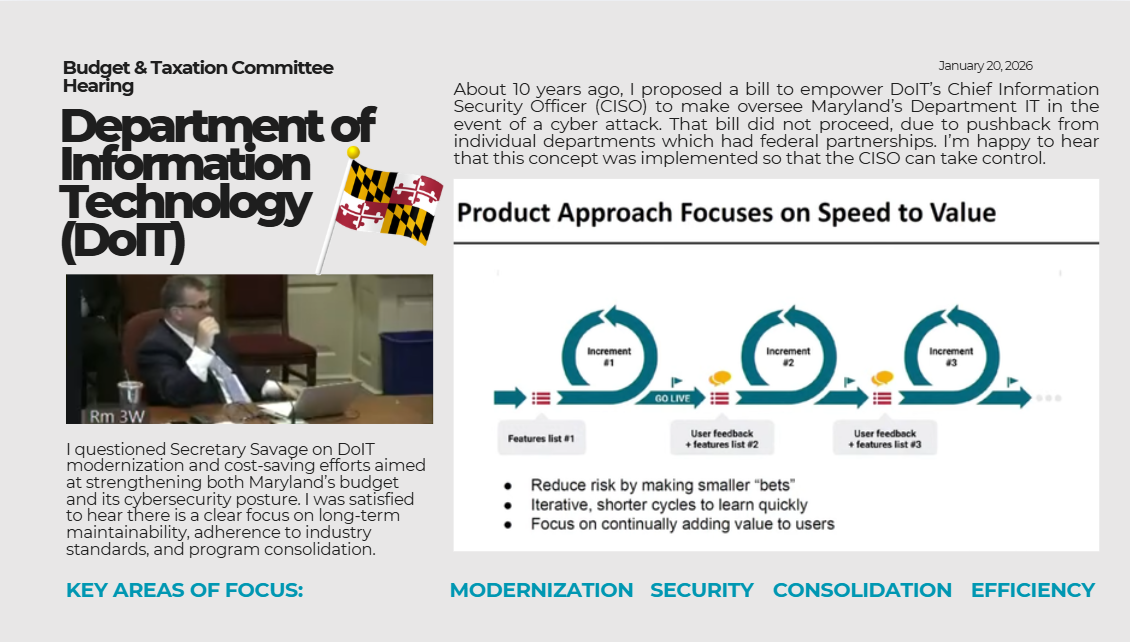
Earlier this week, Comptroller Brooke Lierman appeared before the Budget & Taxation Committee to address issues related to spending, taxation, and compliance. The Department of Information Technology also briefed the committee on its modernization and cybersecurity efforts, and several pieces of legislation were heard.
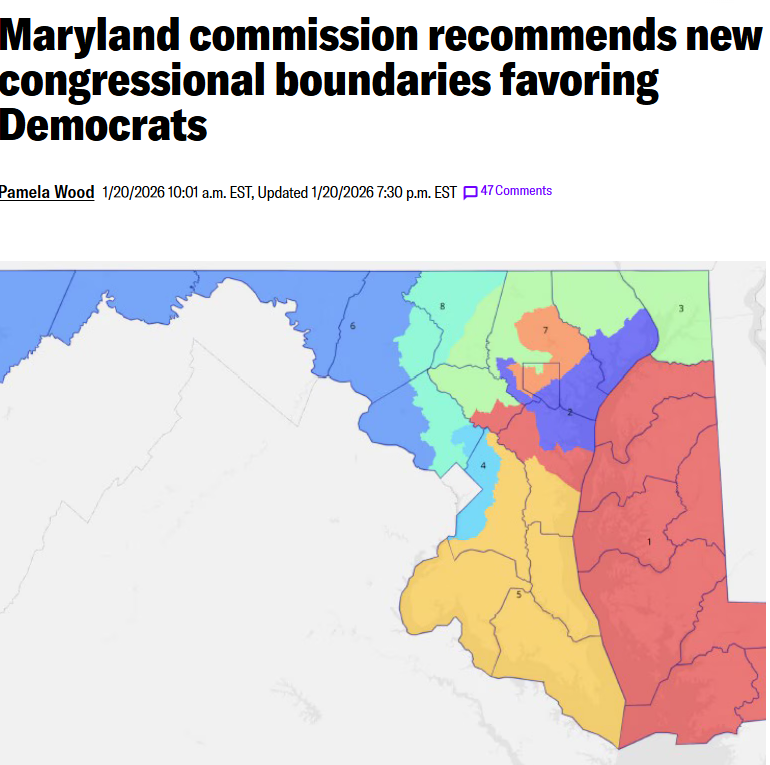
In addition, the Governor’s Redistricting Committee advanced a gerrymandered congressional map opposed by Senate President Bill Ferguson. I fully agree with the Senate President and appreciate his strong stance on both redistricting and the broader budget challenges facing Maryland.
Below, you will find updates on recent meetings and events, including a visit from the Maryland Sheriffs’ Association to discuss the importance of the 287(g) program, as well as information on legislation, and an upcoming community event. This is a longer update with important details, so you may need to scroll down and select “view the entire message.”
As always, my contact information is included at the end of each email.
| |
|
The Budget: $70.8 BILLION
Governor Moore released his proposed Fiscal Year 2027 budget, totaling a record $70.8 billion. By law, the Governor must introduce a budget proposal by the second Wednesday of the legislative session. On January 21, 2026, Governor Moore outlined his FY2027 budget during a press conference.
The Maryland Constitution requires the State to pass a balanced budget. Each year, the Budget Bill alternates its starting chamber; this session, the Budget will begin in the Senate before moving to the House of Delegates. The proposal will first be reviewed by the Senate Budget & Taxation Committee, then considered by the House Appropriations Committee and the House Ways & Means Committee.
On the surface, Governor Moore’s bill avoids explicit tax and fee increases. But it feels more like a game of three-card monte, nothing is where it appears to be, and taxpayers are left trying to figure out where the cost actually landed.
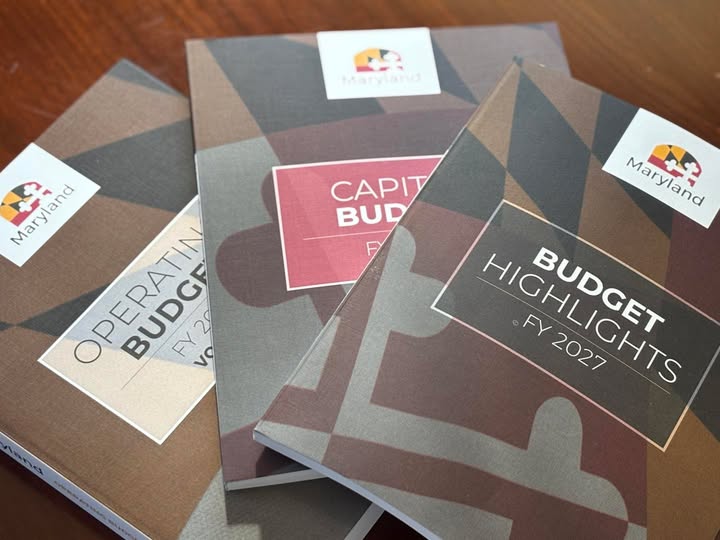
Roughly 80% of the budget is mandated spending. When Governor Moore says that the budget has seen cuts, it hasn't received as many cuts as needed. The formulated mandated spending has been cut to limit increases. I've only had the budget for 48 hours. It is four books, each an inch thick with 650 pages in two of the books and another two that have 185 pages each.
At first glance, the Governor’s budget does not include explicit tax or fee increases. Instead, it relies heavily on fund shifts and cost transfers, most notably shifting certain fiscal responsibilities from the State to counties and municipalities. These shifts are likely to result in higher local taxes for residents. The Governor has cited rapid population growth as justification for increased housing investments; however, Maryland has experienced a net loss of approximately 130,000 residents over the past three years, undermining claims of rapid population growth.
Initial Observations from the Budget:
Fiscal Stability & Budget Reserves
- The Rainy Day Fund remains at 8%, with a minimum cash balance of $100 million, an amount that falls well short of covering the cost of several major projects proposed during the interim.
- $5 million is allocated for employment audits.
- $16 million is included to continue upgrades to the State’s Financial Management System (FEMUS), bringing total spending on the system to $66 million.
Cost of Living & Affordability Pressures
- A $2 million increase for law enforcement largely reflects cost-of-living adjustments.
- Several initiatives promoted as affordability measures may ultimately increase taxpayer burden, including:
- Expanded Child Care Scholarship credits.
- Education spending beyond the Blueprint, which is projected to create multi-billion-dollar deficits in future years.
- The budget includes $100 million in business tax cuts.
Housing & Community Development
- $352 million is allocated to housing supply expansion and community revitalization through the Department of Housing and Community Development, including:
- $65 million for rental housing programs.
- $20 million for homeownership initiatives.
- $5 million for permanent supportive housing.
Education & Workforce Development
- Education funding includes:
- A 3% increase for community colleges.
- Modest increases for public universities.
- Level funding for private colleges.
- “Record” investments in Morgan State University.
- The Blueprint includes $228 million in food benefits for approximately 33,000 students.
- 25% of the State’s capital budget is dedicated to renovating and replacing aging school facilities.
Energy & Environmental Spending
- Energy assistance continues to focus on short-term bill relief rather than addressing long-term energy generation and transmission challenges.
- $292 million from the Strategic Energy Investment Fund is allocated for general relief, with an additional $300 million dedicated to clean energy initiatives. However, these funds do not address generation or transmission—the primary drivers of electric costs.
- $20 million is allocated for electric vehicle charging infrastructure.
Health, Public Safety & Human Services
- Expanded healthcare access and the expiration of certain Affordable Care Act provisions have driven increased Medicaid costs.
- Updates from HR-1 (2025) include:
- A work requirement beginning in 2027.
- Eligibility checks twice annually starting in 2026, instead of once per year.
- $30 million is allocated for correctional facility infrastructure improvements.
- A $500,000 cap on person-centered plans within the Developmental Disabilities Administration is projected to save $150 million and prevent broader cuts. The Governor is to be commended for working directly with the DDA to manage this responsibly.
Government Operations & Oversight
- $2 million is allocated to strengthen State leadership capacity and recruitment.
- $1 million expands the Governor’s Office of Performance Improvement, which has recently been used to expand Temporary Cash Assistance, increase summer SNAP funding to $4.8 million, well above the mandated $200,000, and expand childcare scholarships.
- $10 million is committed to the Sphere entertainment project. While this investment may boost tourism, it must be closely monitored to ensure the State does not assume long-term maintenance costs similar to those associated with Camden Yards.
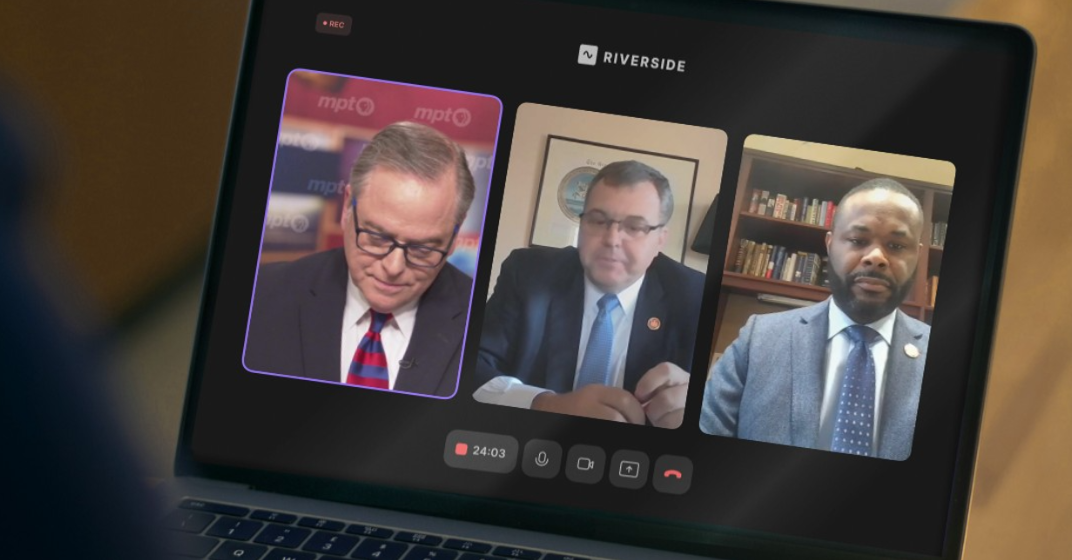
| | | | I was honored meet with Jeff Salkin of Maryland Public Television to discuss the Budget between along with my colleague, Senator McCray. I'll post more details next week. | | Community Engagement in Annapolis | | |
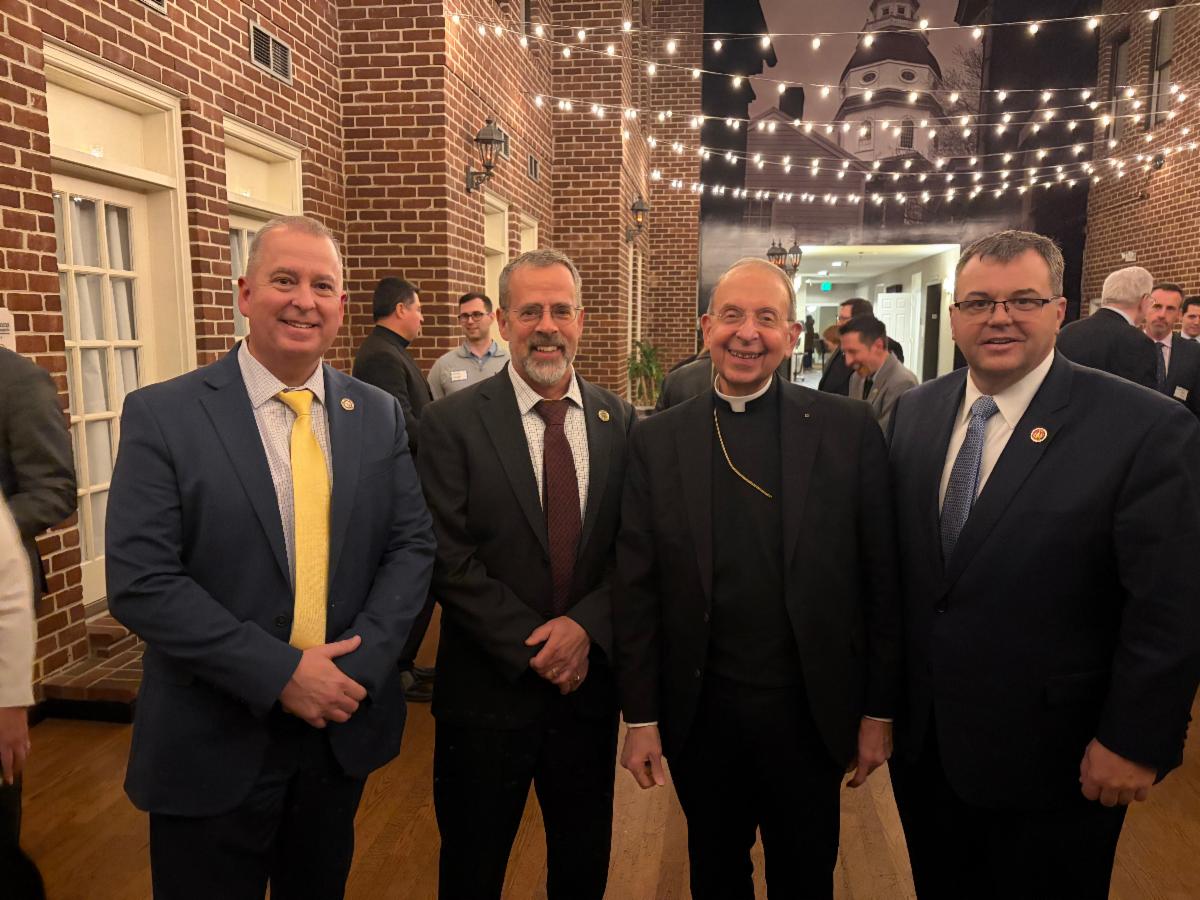
I met with Archbishop William Lori to discuss churches and schools within the Archdiocese and the challenges facing the Catholic community.
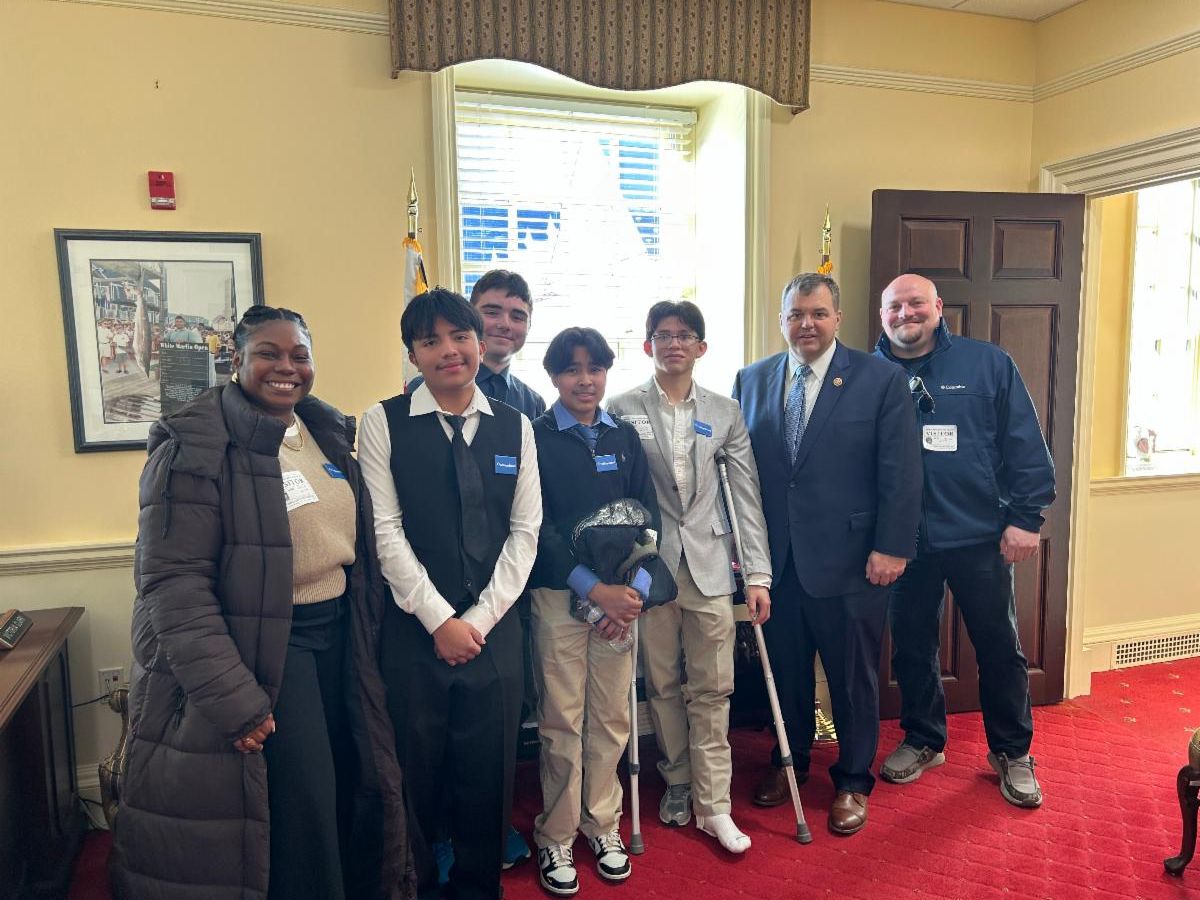
I also met with representatives from the College Board, who shared an overview of their legislative priorities.
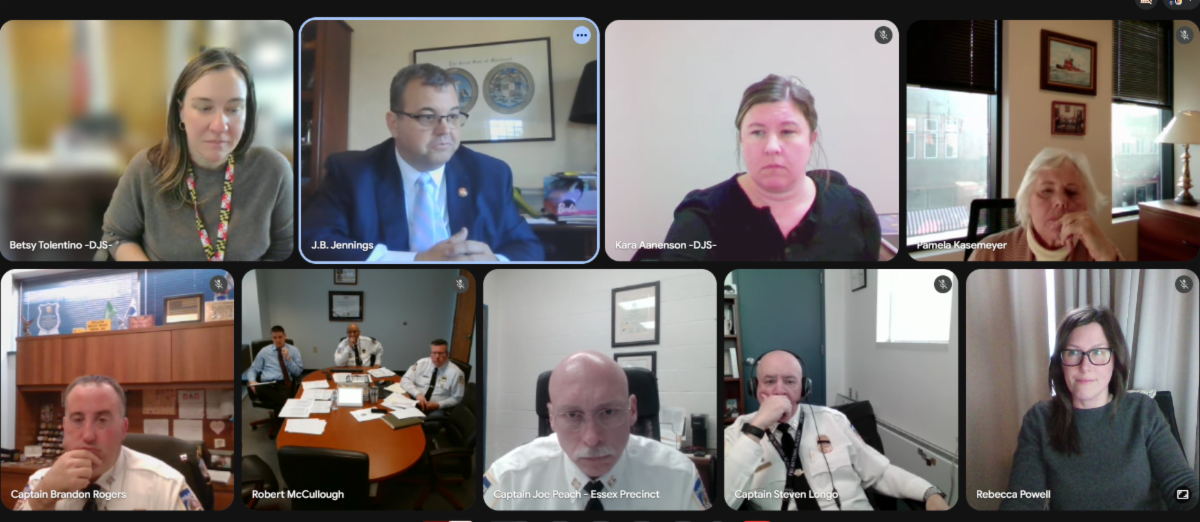
| | Juvenile Crime: Confronting the Issues with Acting Secretary Tolentino of the Department of Juvenile Services (DJS) & Baltimore County Police Department (BCPD) Leadership | | January 21st, meeting attendees:
Acting Secretary Betsy Fox Tolentino, Senator J.B. Jennings,
Chief McCullough, Precinct 11 Captain Peach, Precinct Captain 9 Rogers, and Precinct 8 Captain Longo. | | |
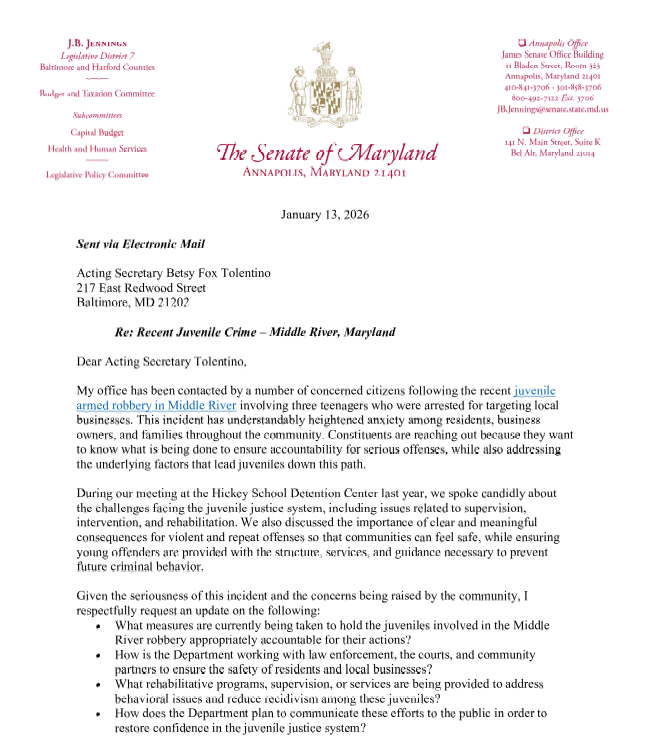
As a Maryland resident, you’ve likely noticed the troubling rise in juvenile crime impacting our neighborhoods. Residents are understandably calling for greater accountability. After learning of the January 11th juvenile armed robbery in Middle River, I reached out to Acting Secretary Tolentino at the Department of Juvenile Services, Baltimore County Police Chief McCullough and Baltimore County Precinct Captains to talk through public safety, enforcement, and next steps. Read more for key takeaways from that conversation.
I was briefed on recent incidents in White Marsh, Middle River, and Towson, and I am encouraged to report that the juveniles involved are under the supervision of the Department of Juvenile Services (DJS) and are being held accountable for their actions. I was also pleased to learn that property was returned to the victims and that each incident was reviewed in detail.
During our discussion of specific cases, Acting Secretary Tolentino
acknowledged challenges within DJS and outlined steps already underway to address them through internal analysis and ongoing legislative discussions with the appropriate committees. This level of transparency and proactive leadership is a welcome change from the lack of clarity and action seen under the previous DJS administration.
Chief McCullough and the Precinct Captains were direct and transparent in addressing community concerns and responding to my questions. The Chief emphasized that collaboration between BCPD and DJS has significantly improved since Acting Secretary Tolentino assumed leadership.
I appreciate the professionalism and openness demonstrated by both BCPD and DJS leadership and value the strong line of communication we have committed to maintain.
Public safety remains a top priority, and I am confident in the steps being taken to strengthen accountability and address these incidents moving forward. I strongly support our law enforcement and stand with my constituents in their desire to feel safe and secure. I also believe that when consequences are not enforced, juveniles are robbed of their future, early accountability and clear expectations can prevent far more serious offenses later in life.
| |
Baltimore County Police Department's Proactive Measures:
- Student Resource Officers (SROs) play a vital role as positive role models, fostering trust and encouraging positive outcomes for students.
- Baltimore County offers a range of youth-focused services, including the BCPD Youth & Community Service Unit, Youth Mentors program, Public Safety Cadet Training, and the Community Partnership Trailer, which is available for events to engage and connect with young people.
| Thanks, Turnball Brockmeyer Law Group for directing my Communications Director, Rebecca, to the People's Law Library of Maryland. This is a great free public resource that will help any individual learn more about the current law on file. | | |
Key Takeaways:
- Juveniles found in possession of firearms may be prosecuted to the fullest extent of the law, which may include adult charging and detention.
- Law enforcement may recommend detention, but the presiding judge makes the final determination regarding placement following arrest, including whether a juvenile is held in a detention facility or released.
- When crimes occur at shopping centers, law enforcement establishes a perimeter and quickly shares video surveillance to aid in the swift apprehension of suspects.
- Many juvenile offenders involved in these incidents are not residents of the communities where the crimes take place.
- Recent cases indicate a disturbing trend of juveniles targeting victims for clothing and valuables, often humiliating them by taking coats, shoes, or watches, reflecting a troubling lack of empathy.
- When patterns of criminal activity emerge, patrols and enforcement efforts are increased.
- “Parental Guidance Required” policies allow private security to remove unsupervised minors from businesses, with police responding promptly when requested.
| |
Juvenile Legislation:
House Bill 12 - Juvenile Sex Offender Registry - Qualifying Offenses and Access
- Expands the list of qualifying offenses that require a juvenile adjudicated delinquent to be placed on the juvenile sex offender registry.
- Authorizes access to the registry by local school superintendents or their designees, in addition to law enforcement.
- Maintains the confidentiality of juvenile court records, while allowing access as permitted under the updated registry provisions.
- Establishes clear guidelines for the duration of registry placement and removal, including when court jurisdiction ends or the individual turns 18.
- Requires registered juveniles to report quarterly to the Department of Juvenile Services to update information and provide a current digital photograph.
Senate Bill 296 - Juveniles - Detention and Confinement - Limitations on Juvenile Contact with Incarcerated Adults
-
Establishes protections for minors to prevent contact with adult inmates during detention, confinement, and transportation while awaiting trial in adult facilities.
-
Requires sight-and-sound separation from incarcerated adults to safeguard minors, while recognizing and addressing potential logistical challenges in implementation.
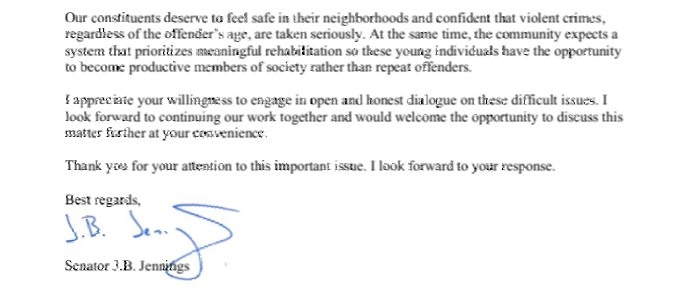
| | Below is the letter I sent to Acting Secretary Betsy Fox Tolentino that led to the meeting discussed above. | | |
Budget & Taxation - Comptroller Briefing:
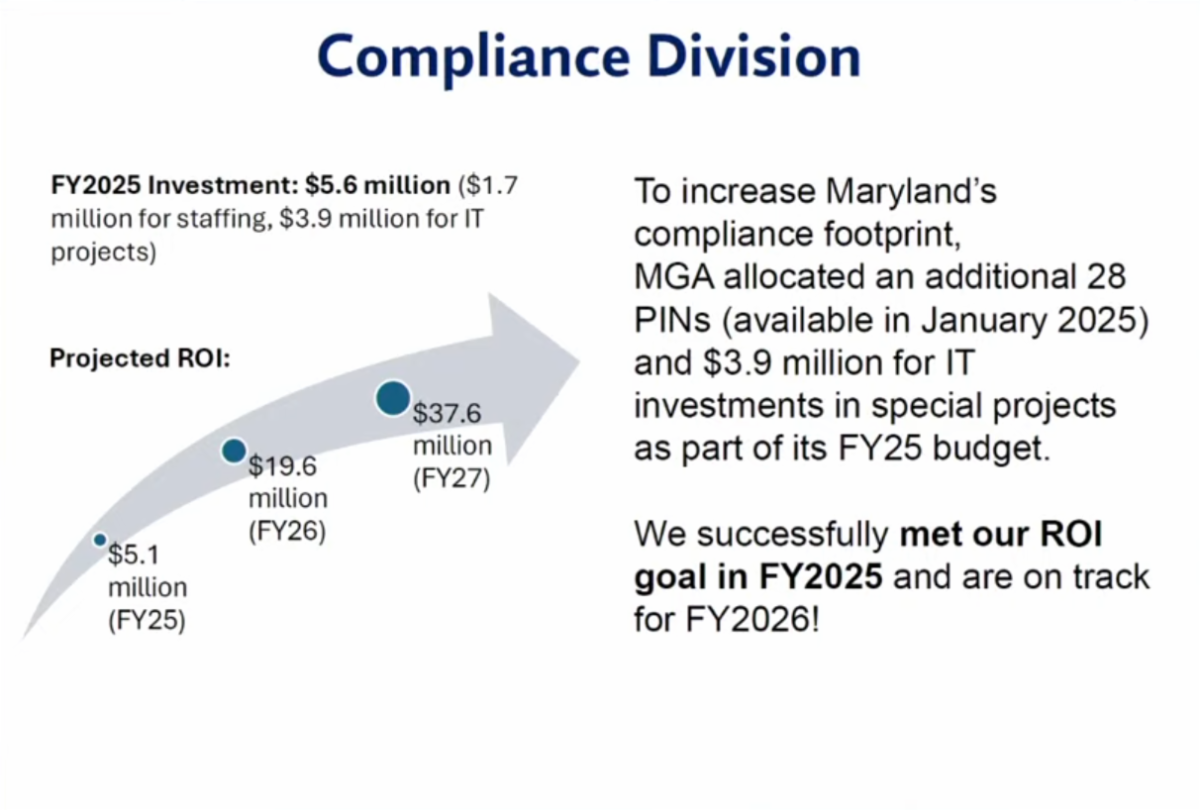
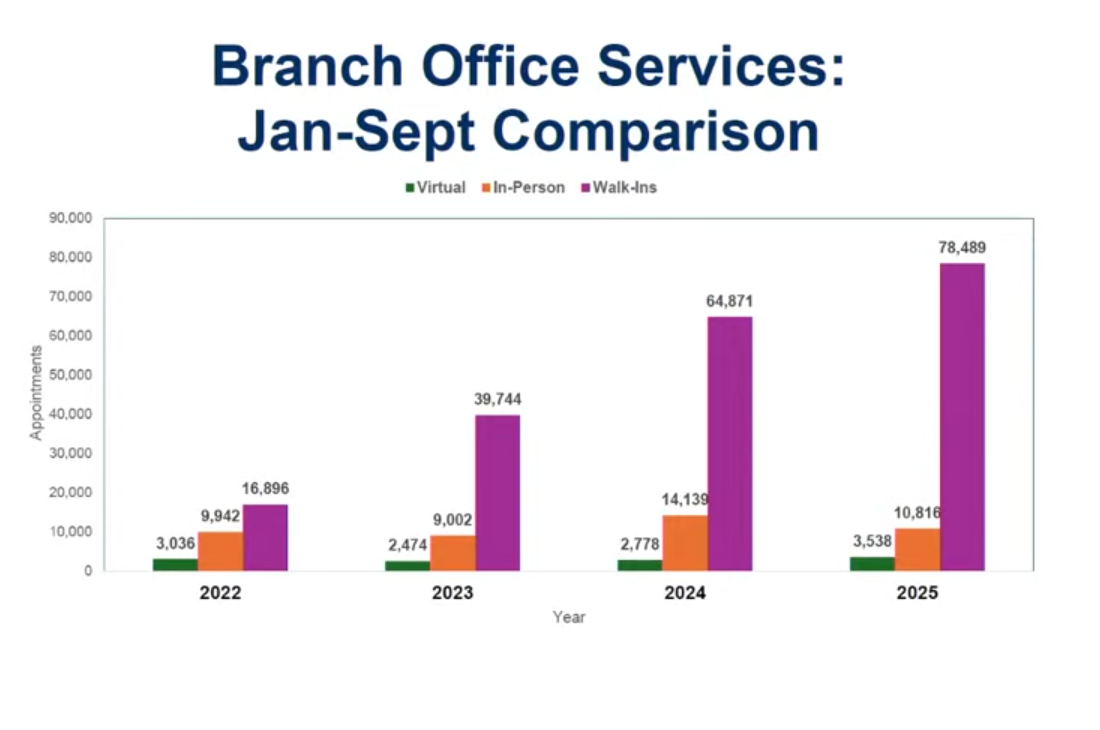
The Comptroller’s Office reports that the Digital Discovery and Remote Sellers Project have boosted revenue collections following an investment approved by the Budget & Taxation Committee. Taxpayers have responded positively to the availability of virtual appointments.
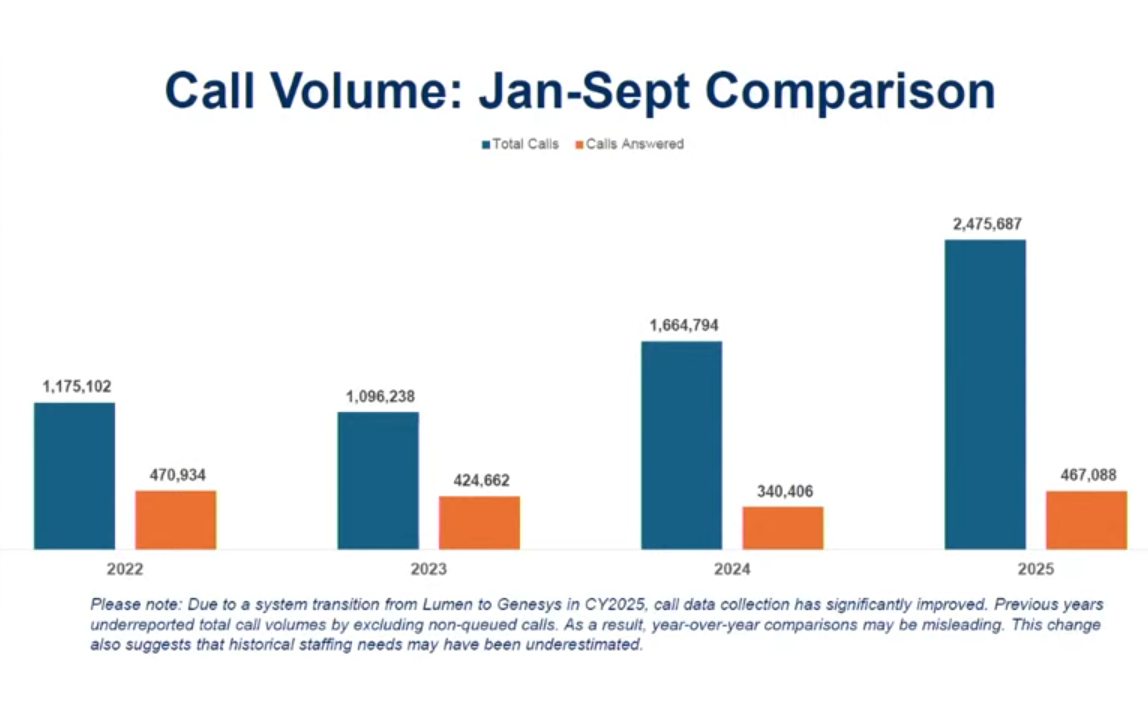
As part of the initiative, 25 new staffing PINs were added, and call volume has since doubled, reflecting increased public engagement as well as higher service demands. Comptroller Brooke Lierman noted that the office has upgraded its networks and databases and introduced new public-facing reports to enhance transparency.
The Comptroller's key objective is to improve “first-call resolution,” reducing the need for repeat contacts to resolve taxpayer issues.
To address these growing operational demands, the Comptroller is requesting additional funding for new staffing PINs, expanded analytics, enhanced cybersecurity, and three additional tax attorneys. The office is also requesting a pause on new personal tax law changes while internal transitions and system upgrades are completed.
| | Budget & Taxation - Department of Information Technology Briefing | | |
Secretary Savage and her team from the Department of Information Technology appeared before the Senate Budget & Taxation Committee to provide an update on the department’s progress, with a focus on modernization, strengthened cybersecurity, system consolidation, and improved operational efficiency.
Key Takeaways:
-
Contract consolidation is delivering results: Thirteen separate Microsoft contracts were consolidated into a single agreement, generating efficiencies and cost savings.
-
Broadband remains a priority: As one of the few states operating its own internet network, Maryland continues to prioritize expanding broadband access statewide.
-
Cybersecurity efforts are proactive: The Vulnerability Disclosure Program (VDP), also known as Hack the State, identified 150 security issues, 30% of them critical, allowing vulnerabilities to be addressed before exploitation.
-
Stronger cybersecurity leadership: Principles from legislation I introduced nearly a decade ago to strengthen the role of the Chief Information Security Officer are now embedded in DoIT policy.
-
Modernization is producing savings: Governor Moore’s push for modernization and contract consolidation has already yielded measurable cost savings.
-
Cloud transition underway: The State is transitioning to Microsoft Azure, with a focus on long-term system maintainability, an important win for taxpayers.
-
Improved resilience: Maryland now offers centralized disaster recovery services to strengthen system reliability.
-
Better digital services for constituents: The Maryland Digital Service is improving transactional experiences, including permits and benefits, and addressing a backlog of outdated websites and programs following the launch of Maryland.gov.
-
AI pilot improving efficiency: An AI pilot program is reducing workload for both staff and constituents when responding to Public Information Act requests.
-
Stronger oversight of major projects: MITDP oversees State projects exceeding $5 million, with updated standards to improve accountability and ensure better use of taxpayer dollars.
-
Modernized agency portals: The Maryland Department of the Environment portal was recently upgraded, addressing the fact that 20% of permit types generated 80% of incoming status-related calls.
-
Clear guiding principle: Reduce costs through consolidation and efficiency, lower risk, and save time by making thoughtful, incremental improvements and modernizations.
| | ICE - 287(g) Press Conference | |
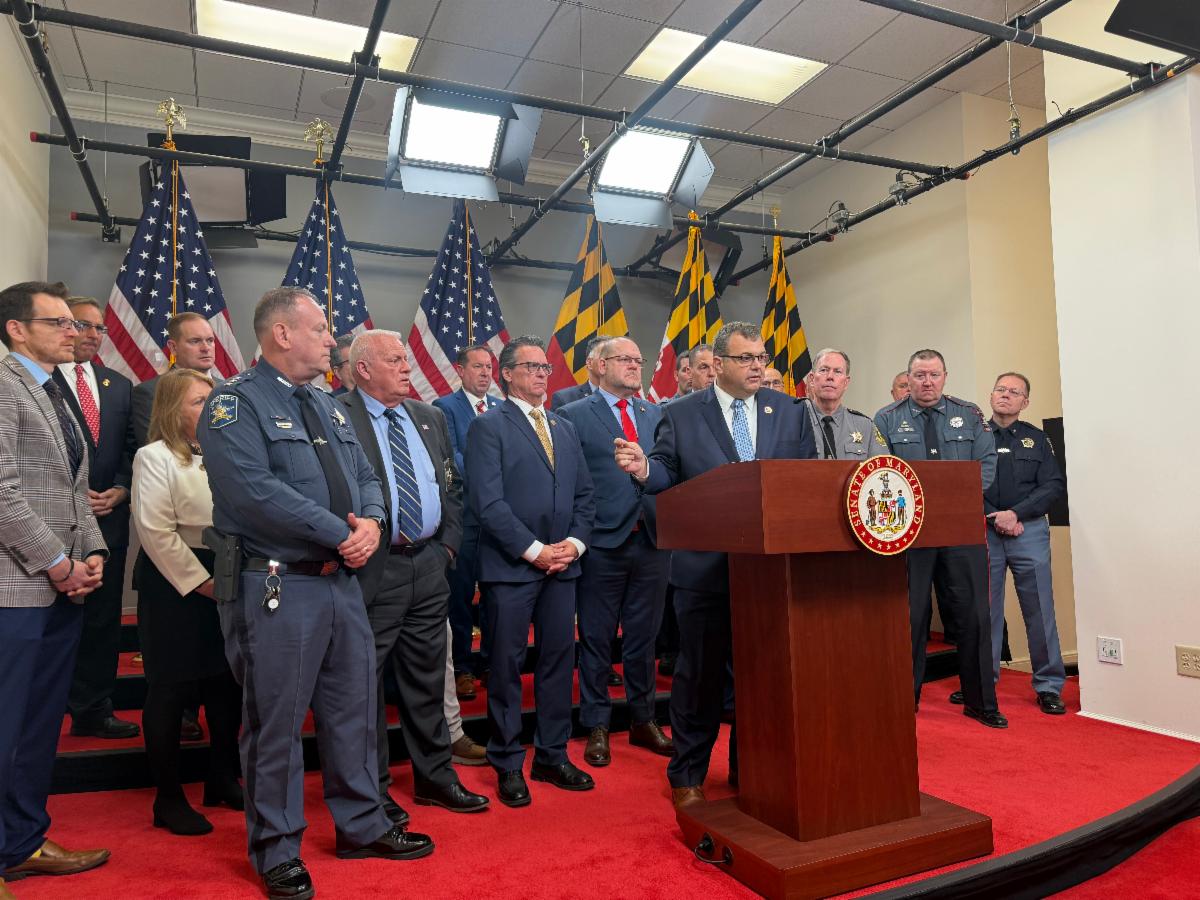
On Tuesday, the Maryland Senate Republican Caucus met with the Maryland Sheriffs’ Association to discuss the 287(g) Agreement currently in place in jurisdictions such as Frederick, Cecil, and Harford Counties. The 287(g) program establishes clear roles and limitations, promotes coordination, and ensures the safe transfer of incarcerated individuals.
Senate Bill 245 - Public Safety - Immigration Enforcement Agreements - Prohibition had a hearing this week in the Senate Judicial Proceedings Committee. This bill terminates local 287(g) agreements and prohibit future 287(g) agreements.
I spoke at the press conference, saying, “Instead of this transfer taking place in prison, in the jails, it’s going to be taken somewhere on the street where ICE is having to come in and look for them.”
| |  | Governor's Gerrymandered Congressional Map | On Tuesday evening, the Governor’s Redistricting Committee approved a new map during a closed-door meeting. While the outcome was not surprising, I agree with the Senate President that the map does not serve Marylanders and ultimately distracts from the more pressing issue before us, the budget. | | | |
Walmart Wellness Event:
This weekend!
Saturday, January 24, 2026, from 10:00 a.m. to 2:00 p.m.
- Free health screenings (blood pressure, cholesterol, glucose) at nearly 4,600 Walmart pharmacies,
- No-cost flu shots (with most insurances) and affordable immunizations,
- Complimentary vision screenings at select Vision Centers,
- Guidance from Walmart pharmacists on nutrition and medication, and
- Exclusive wellness sample boxes with health-focused items.
Walmart recently launched: Better Care Services, offering discounted access on telehealth services.
| | |
Our Company | Contact Us | FAQs | Privacy Policy |
| | | |