Getting America's Businesses Back to Business. | | |
Dear Friends and Partners,
What a privilege it is to serve alongside you in the vital work of restoring America’s companies to their true purpose: serving customers, rewarding shareholders, creating jobs, and strengthening the exceptional nation we love by protecting free speech, free exercise of religion, and free enterprise.
I am deeply encouraged by the growing momentum we see every day. Our Back to Business Tracker continues to expand as more corporations take concrete steps away from ideological distraction and toward excellence. Companies like Microsoft, Nvidia, Mastercard, Salesforce, and others have directed Benevity to drop the Southern Poverty Law Center’s “hate map” filter and distance themselves from the SPLC’s politicized blacklists that has excluded dozens of worthy charitable organizations - mostly Christian and conservative - from corporate philanthropy. These are not small gestures—they are meaningful returns to fairness, neutrality, and the free exercise of charity and speech that every American deserves.
Our work continues on multiple fronts. We are highlighting the legal reckoning facing gender surgeries for minors, as the Justice Department defends the right of insurers and employers to protect children rather than fund experimental interventions. We are urging companies already scrutinizing costly GLP-1 coverage to apply the same disciplined review to transgender healthcare benefits. We have proudly joined the Eagle Freedom Alliance to combat human trafficking and child exploitation in corporate supply chains, recognizing leaders like Apple for responsible practices. And we support the EEOC’s proposed rule to roll back the federal bureaucracy’s role in building DEI’s infrastructure—freeing businesses to treat every employee as an individual of equal dignity.
This is the spirit and mission of 1792 Exchange: free speech, free exercise, and free enterprise. Together, we are helping American businesses get back to business—and in doing so, we are helping America itself thrive.
Onward with hope and resolve,
Doug Napier
Executive Chairman & CEO
| | | | | |
|
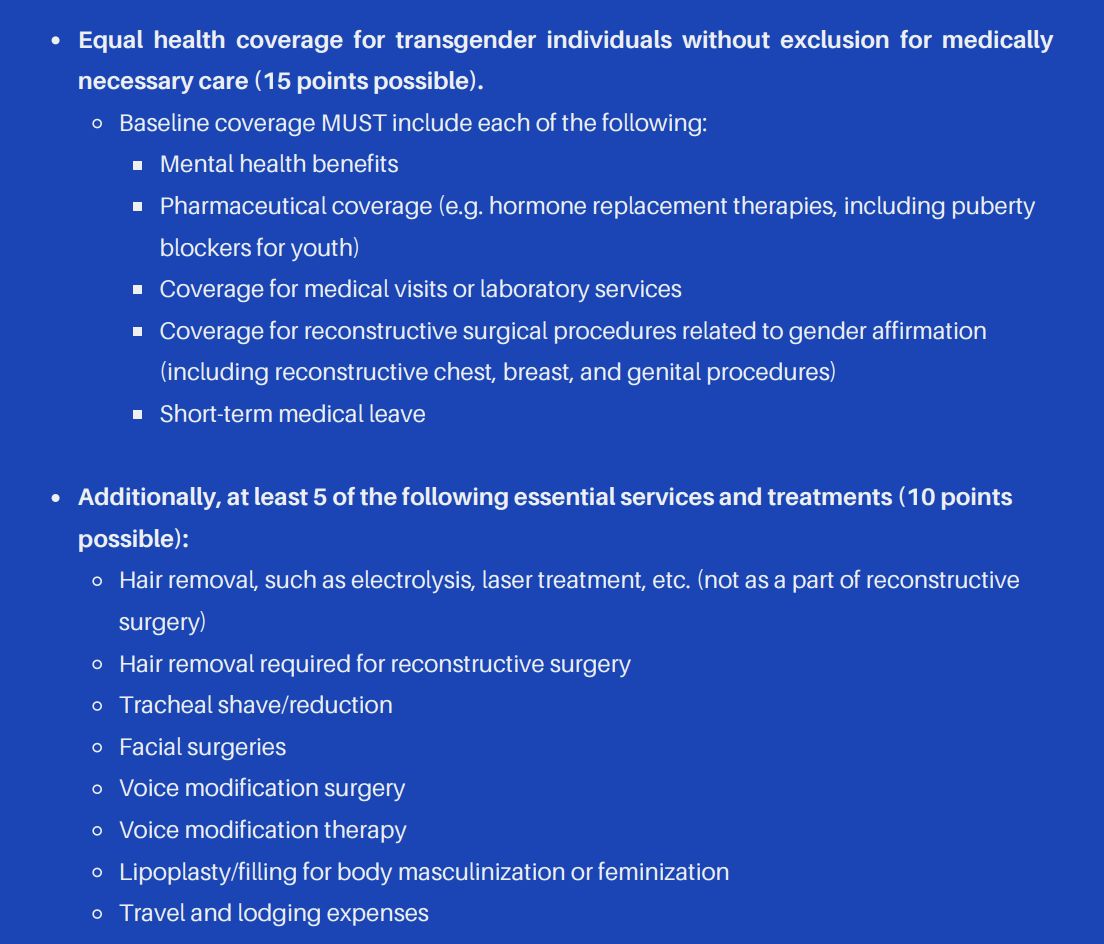
According to reports earlier this month, Starbucks is ending GLP-1 coverage for its employees. Under its new healthcare plan, Starbucks will no longer cover prescription drugs used for weight loss, but it will continue to cover comprehensive transgender healthcare interventions, including reconstructive surgical procedures and puberty blockers, for covered dependents.
| |
Employers are pulling back on GLP-1 coverage largely for the same reason they are reconsidering other benefits: to adjust to rising healthcare costs. RxBenefits reports that GLP-1 drugs cost roughly $1,000–$1,500 per month, while SHRM estimates employers often shoulder 70–100% of prescription drug costs.
With GLP-1s now accounting for around 20% of prescription drug spending and the number of users accelerating, employers face a limited set of choices: tighten eligibility requirements, shift more of the cost to employees or customers, or eliminate coverage altogether.
If companies can reasonably reconsider GLP-1 coverage because of cost, uncertain return on investment, and broader questions over what an employer-sponsored health plan should cover, why should other expensive medical benefits, such as transgender medical interventions, be exempt from similar scrutiny?
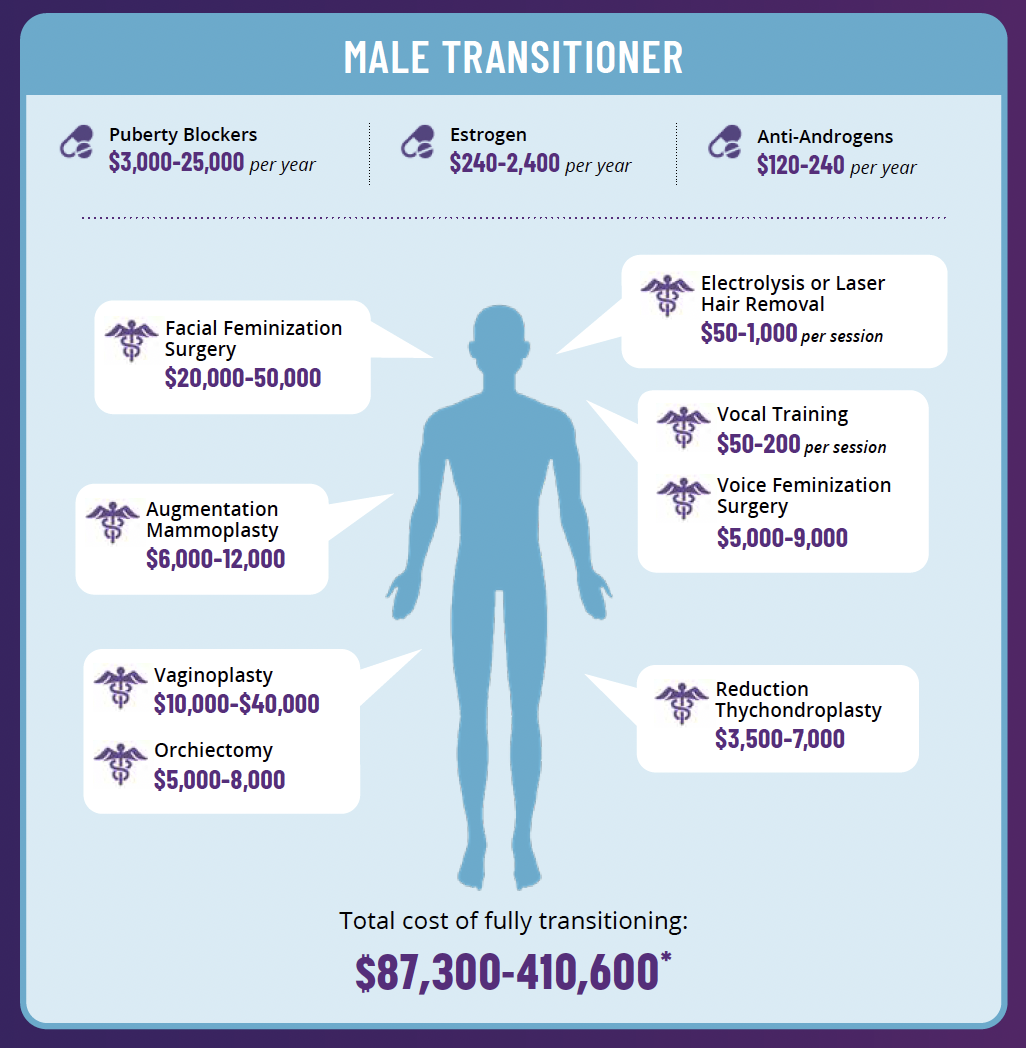
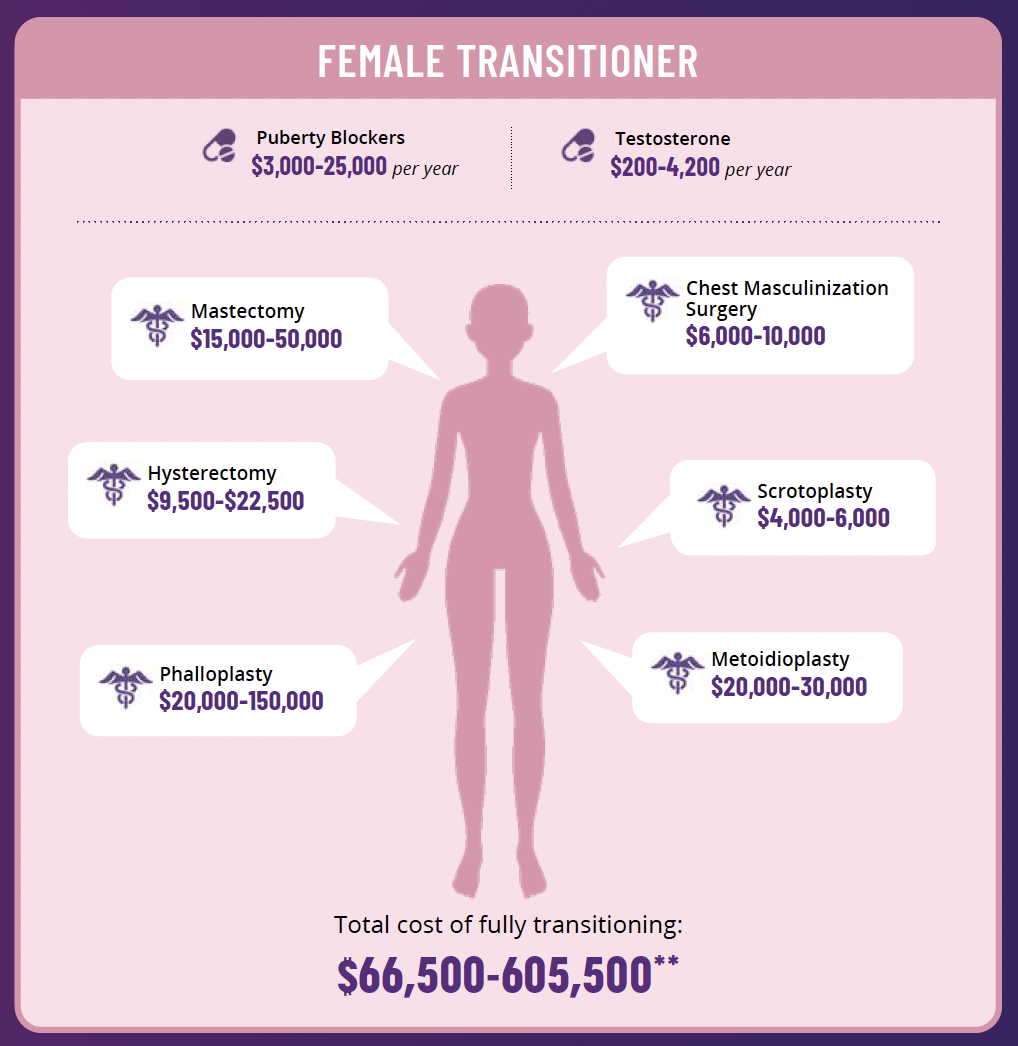
According to February 2026 data from the Human Rights Campaign, more than 550 major companies, including Starbucks, offer comprehensive transgender healthcare benefits to employees and covered dependents. While the HRC Foundation claims the total cost of transgender-specific care for one person is often between $25,000 and $75,000 total, that estimate does not capture the cost of ongoing treatments associated with some interventions, such as puberty blockers.
Common estimates place the annual cost of puberty blockers at as much as $25,000, making transgender healthcare more costly than many common medical interventions. That is before factoring in the cost of surgical procedures such as a phalloplasty, which can range from $20,000 to $150,000; facial feminization surgery, which can cost $20,000 to $50,000; or voice feminization surgery, which can cost $5,000 to $9,000.
| | | |
Medical gender interventions for minors are not only costly, but they are experimental and remain the subject of significant medical, ethical, and political controversy. In fact, over 24 states have enacted laws restricting or prohibiting transgender surgeries for minors. Even major medical organizations have recently revisited aspects of medical gender interventions for minors, and major medical organizations have recently revisited their recommendations on these interventions.
In February 2026, the American Society for Plastic Surgeons said there is “insufficient evidence demonstrating a favorable risk-benefit ratio for the pathway of gender-related endocrine and surgical interventions in children and adolescents.” That same month, the American Medical Association said that “gender-related care should usually be deferred until patients are adults.”
This controversy has extended into the corporate sphere as well. Companies like Walmart and Charles Schwab have adopted explicit carveouts for certain transgender medical procedures involving minors, drawing praise from those who argue that employers should remain neutral on contested social issues.
Companies reviewing GLP-1 coverage should apply the same scrutiny to transgender healthcare benefits, particularly as emerging research raises new questions about both the financial costs and potential harms associated with these interventions. If cost and ROI are legitimate considerations when evaluating one expensive category of healthcare, they should be legitimate considerations when evaluating another.
| | |
Read More 1792 Insights:
As a new school year rolls around, the Human Rights Campaign (HRC) launched a new pledge focused on recruiting educators to commit to “ensure every student feels safe, valued, and affirmed.” This Educators for Equality pledge, among other things, asks signatories to:
- Interrupt bias and misinformation in the classroom
- Organize, mobilize, and advocate for inclusive school policies
-
Support inclusive school board leadership by engaging in local school board elections
This initiative fits squarely within HRC’s existing work in schools via its Welcoming Schools program, an “anti-bullying” curriculum that functions as a subversive way to discuss LGBTQ+ topics in the classroom. If that accusation feels like an assertion, consider the fact that the “key resources” HRC highlighted in the pledge sign-up are “pioneering LGBTQ+ and gender-inclusive professional development training, lesson plans, booklists and school advocacy resources specifically designed for educators and youth-serving professionals.” (continued)
Many Americans are asking why corporations continue to fund LGBTQ Pride events that include programming or vendors that most can agree are seen as inappropriate for children. At certain events, attendees may encounter nightclubs, alcohol brands, cannabis dispensaries, or drag performances that often contain sexually suggestive elements. Many families would not ordinarily choose to expose their children to these types of environments, leading some to question why such programming is viewed differently when presented under the banner of LGBTQ+ Pride or “inclusion.”
Before sponsoring socially contentious events, companies should carefully consider how they want their brands to be perceived by consumers, shareholders, employees, and the broader public. While stakeholders may hold differing opinions on many social issues, protecting the well-being of children remains a widely shared concern. Corporate sponsorships communicate a company’s values and priorities, making it important to evaluate whether those partnerships support its long-term business objectives and appeal to a broad customer base rather than a narrow segment of the market.
NYC Pride is sponsored by Target, which publicly committed in 2025 to stop sponsoring nonbusiness causes. The event includes Youth Pride, a program specifically designed for LGBTQIA+ youth, their families, and allies, with the stated goal of “empower[ing] and educat[ing] queer youth.” According to the event organizers, Youth Pride features “gender- and queer-affirming resources and activities” centered on “LGBTQIA+ history, self-care and self-expression, beauty tutorials, safety and advocacy, and community-building.”
(continued)
| | New: 1792 Exchange Joins the Eagle Freedom Alliance | | |
WASHINGTON, D.C. —1792 Exchange is pleased to announce it has joined the Eagle Freedom Alliance, a coalition working to strengthen corporate accountability for human trafficking, child exploitation, and related harms.
The core thesis of the Eagle Freedom Alliance is that public companies face too little accountability for their role in trafficking and exploitation because data is sparse, and best practices often generate temporary attention without lasting change. Eagle’s model is designed to solve that problem by connecting solution builders and data experts with coordinated, public advocacy and direct corporate engagement. Members of the growing coalition include Eagle Freedom Funds, Guidestone Funds, Vident, The Knoble, Clapham Accelerator, Brightlight, and others.
The importance of this work is seen in the scope of the problem – there are an estimated 27 million labor trafficking victims in supply chains and more than 6 million sex trafficking victims worldwide. Eagle’s approach to solving that problem is simple but effective: work with experts to identify and build effective solutions, publicly recognize companies demonstrating leadership on the issue, and encourage other corporations to adopt stronger practices through constructive corporate engagement. (Continued.)
| | | 1792 Exchange | 4218 Bridgetown Rd | Cincinnati, OH 45211 US | | | | |