|
|
|
Jay Luxenberg MD CALTCM Wave Editor-in-Chief
Chief Medical Officer On Lok Lifeways
|

Giving Tuesday is coming up - (it's 12/3/2019). The WAVE urges you to participate. Donations to CALTCM are tax-deductible and welcome!
In this issue we give an example of a facility giving when it was really needed - responding to the recent Sonoma County fires by helping evacuees. Mark Friedlander, the Executive Director of the San Francisco Campus for Jewish Living, shows how his team came together to serve when they learned of the evacuees.
And now for something completely different, Flora Bessey, PharmD explains how some recent changes in regulations impact use of prn antipsychotics, and why prn antipsychotics still may be a poor choice for our residents. Add news and upcoming conferences and you have another WAVE to enjoy.
|
 |
|
One Facility's Response to Serving Fire Evacuees
by
Mark Friedlander
Executive Director,
San Francisco Campus for Jewish Living
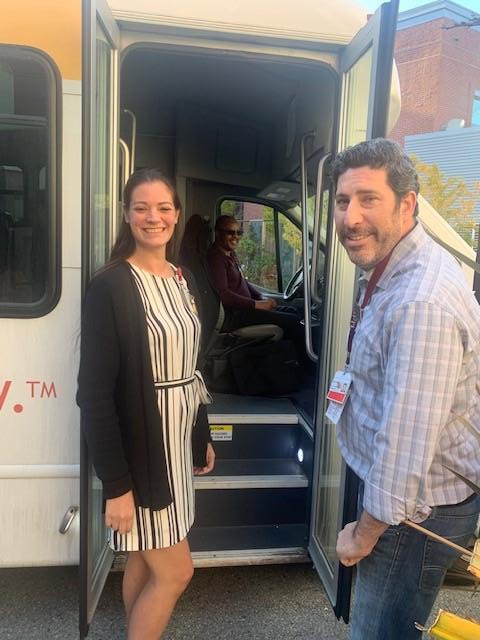
We at the SF Jewish Home and Rehab Center on the Campus for Jewish Living were contacted by SFDPH late Friday afternoon October 25th to inquire about our current census and bed availability due to the Kincaid fire evacuations. However, it wasn't until 9 p.m. on Monday night, October 28 that we were asked to open our doors to 3-5 frail evacuees currently at the Santa Rosa Evacuation Center. Since we did indeed have some private rooms available, we of course said yes, we would welcome them into our community. The first guest arrived at midnight, followed by two others around 3 a.m. Internally we activated our Incident Command that...
|
|
|
Rules Governing Use of Antipsychotics Loosened; What Should We Do About It?
By Flora Bessey, Pharm.D., BCGP
As we approach the November 28, 2019 deadline to fully implement the Phase 3 changes in the "Mega Rule," it is important to note that some of the "changes" that were implemented in Phase 2 are now "changed" in Phase 3. Specifically, under Phase 2 rules, antipsychotics could not be prescribed PRN for more than 14 days unless a resident was examined by a prescriber (every 14 days). This was ostensibly to avoid the issue of off-label overprescribing of antipsychotics in our population, especially those suffering dementia-related psychosis (DRP) or other behavioral issues that could not be attributed to an Axis 1 diagnosis of a mental condition (i.e. bipolar disorder, schizophrenia, major depression, etc.). The rule as written mentioned a tendency to
"place the convenience of the caregivers above the residents' interests."
|
| UPCOMING EVENTS & OPPORTUNITIES |
|
|
|
Click image to donate. |
#GivingTuesday
December 3, 2019
CALTCM appreciates each and every one of our readers. We hope that you consider a donation to CALTCM during your end of year giving. Wishing you a Happy Holiday Season.
CALTCM is currently exempt under section 501(c)(3) of the Internal Revenue Code. Contributions or charitable donations made to our non-profit organization are tax-deductible under section 170 of the Code.
To request a copy of our 501(c)(3) status letter or current Form W-9, please contact the CALTCM Executive Office at (888) 332-3299 or e-mail: info@caltcm.org.
On behalf of CALTCM, thank you for your consideration!
|
HSAG Recruitment
CALTCM, in collaboration with HSAG, invites all nursing homes in California to participate in the HSAG Healthy Communities initiative to achieve the Centers for Medicare & Medicaid Services (CMS) five broad aims to enhance the health of California communities starting January 2020.
The CMS Five Broad Aims:
- Improve nursing home quality.
- Increase quality of care transitions.
- Decrease opioid misuse and improve behavioral health outcomes.
- Increase patient safety.
- Increase chronic disease self-management.
HSAG will provide access to subject matter experts, data reports, toolkits, and educational opportunities at no cost to your organization. To join, simply download, sign, and return the HSAG Healthy Communities participation agreement.
Click here to download the form.
|
|
CALTCM EXCLUSIVE FAMILY PERKS
|
We hope you enjoyed this edition of The CALTCM WAVE. We are constantly looking for newsworthy articles, upcoming events, resources, and tools. If you have something that may be of interest to the PALTC community, please feel to contact us at info@caltcm.org.
CALTCM Members: Are you interested in becoming more involved in CALTCM? Join one of our committees,
click here for details.
California Association of Long Term Care Medicine (CALTCM)
Phone (888) 332-3299
Email: info@caltcm.org
|
|