|
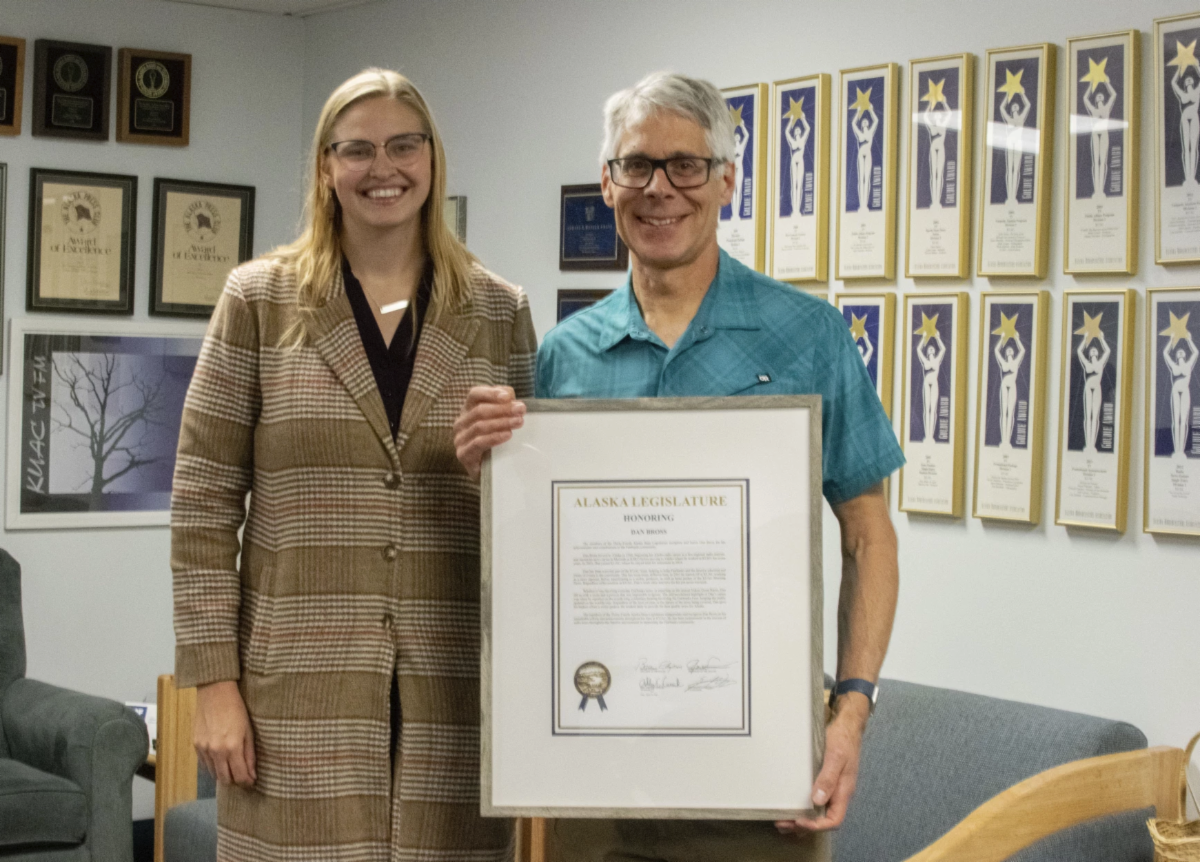
Rep. Carrick presenting a legislative citation to Dan Bross earlier this week to honor his retirement from KUAC last year. You can learn more about this citation presentation in a recent KUAC article
New Mining Efforts on Ester Dome
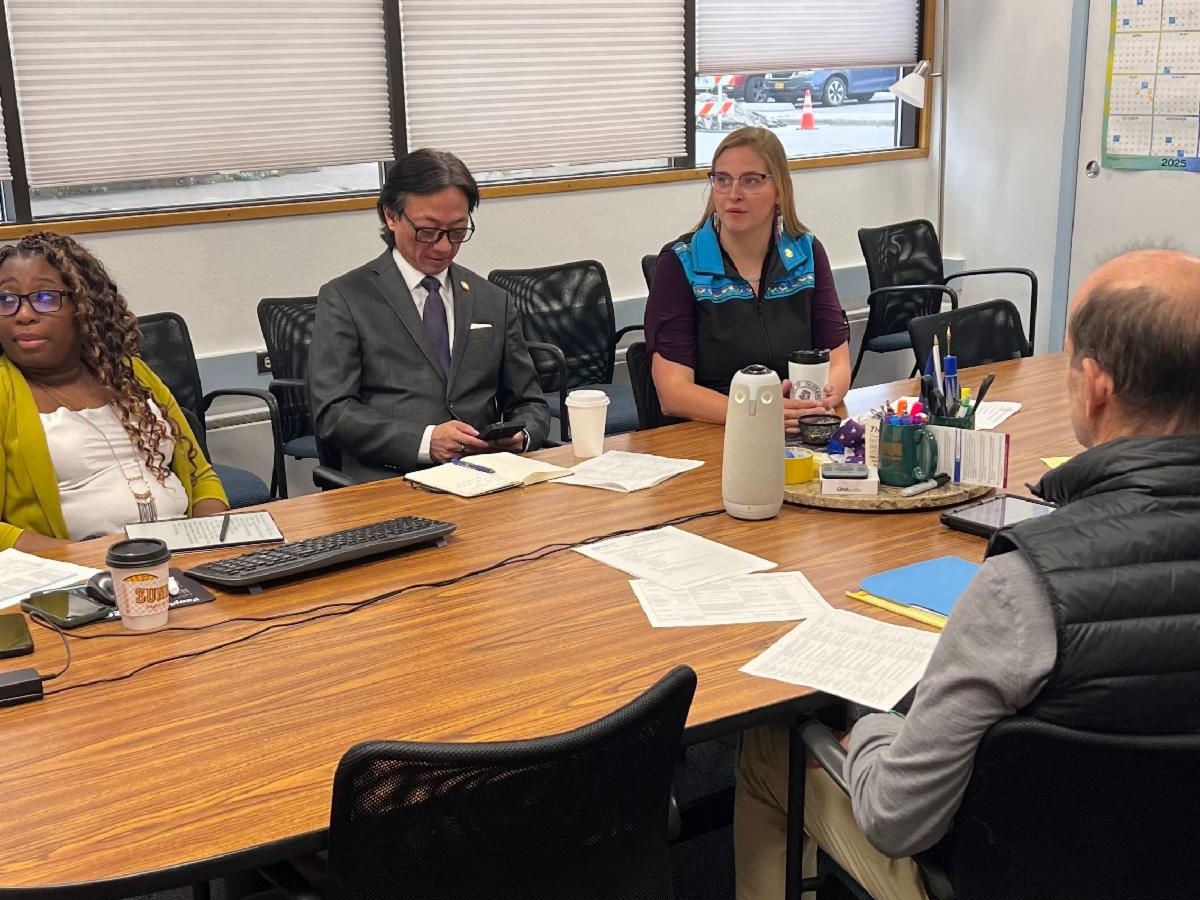
On Monday, I participated in a mine tour for the new United States Antimony Corporation (USAC) mine off St. Patrick’s Road on Ester Dome. After the tour on Monday, my office began receiving calls and emails from many concerned community members about this new mining effort. The new project, being called the “Mohawk” mine, has largely gone under the radar. This is largely due to the purchase by the Houston-based corporation of private land on Ester Dome that is patented, meaning that both the surface and subsurface rights are now owned by USAC. Earlier this summer, I submitted a public comment to the Department of Natural Resources expressing concern with mining efforts in this area of Ester Dome for the portion of the mine effort that required permitting. Until Monday, however, I was not aware of the scale and scope of this project.
During the tour and conversation, USAC CEO Gary Evans and staff emphasized the importance of antimony as a critical mineral for industry and defense, and they described the timeline for antimony reclamation on their newly acquired parcels. Antimony, found wherever gold mines have existed, is present on the surface of Ester Dome due to the history of small-scale gold mining in the area. Therefore, step one is to pick up and load rocks containing antimony right off the ground. This phase of the project is underway now, with work crews arriving as soon as the tour was completed. Following this phase of the project, the U.S. Antimony Corporation intends to launch underground mining efforts.
Mine leaders emphasized that this mining effort will not seriously impact the community living on St. Patrick’s Road and the broader Ester Dome community. However, I see no possible way that this statement could be true. Homes are located within a quarter of a mile of the St. Patrick’s site. Further, Ester Dome is a multi-generational residential area that offers the trail access and scenic value that have led many to come to Fairbanks and to stay here. The scale of mining proposed far surpasses the small-scale sourdough mining operations that built this community. The leaders of this project also celebrated how this mining effort would turn the Texas-based USAC from a multi-million-dollar company to a multi-billion-dollar company. At a minimum, it is well past time to reconsider how the state collects royalties on all mining efforts. It is abundantly clear that the scales are not balanced in favor of our community.
Perhaps my greatest concern currently is the limited public engagement that USAC has undertaken with our community. After the tour on Monday was announced, many members of our community were surprised by this effort and surprised to learn that permits have already been approved by the Alaska Department of Natural Resources. There clearly needs to be more public engagement from USAC and the public relations team they have hired going forward. During the tour they emphasized the importance of public engagement, and I will be doing all I can to encourage them to honor that commitment.
Another concern of mine is the trucking effort related to extracting this ore. This ore will be trucked from the mine off St. Patrick’s Road to USAC’s processing facility in Montana. The USAC team anticipates two ore flatbed trucks per day on St. Patrick’s Road. However, they do not yet know exactly how rich the area is in antimony resources. In my estimation, this number could easily increase, creating extreme safety hazards on the very narrow and winding St. Patrick’s Road area that also sees many recreational users and commuters. Further, while there may be two flatbed trucks per day, there will likely be an increase of larger support vehicle traffic as well. Therefore, it is very likely that this road will need to be repaired or realigned, which will be very disruptive.
Another concern I have relates to the long-term environmental impacts of antimony mining. USAC anticipates destruction of portions of the Ester Dome single-track trails in connection with the project – including those used for the world-famous equinox. During the conversation, USAC staff said that they would fix any of the trails that were impacted, but I question how likely or possible this effort will be. At the meeting, there was also discussion of working to permit a smelter operation onsite at the mine. This would have untold impacts on the land and water resources as well.
Finally, I am concerned about the impact for state revenue. As the USAC CEO stated, this project will turn USAC from a multi-million-dollar to a multi-billion-dollar company. This is another example of Alaskan resources being used to enrich outside, multi-national corporations. While there are real benefits to domestic antimony production, the costs of mining in one of the most highly valued residential areas in our community outweigh the benefits of this project, especially on the scale proposed. In Alaska, we have a constitutional obligation to receive the maximum benefit from our resources. Unfortunately, the mining tax has not been increased since before statehood in the 1950s. Therefore, nearly all that revenue will leave Alaska. With increased demand for raw materials and increased mining activity in Alaska, combined with our difficult fiscal situation, it is long past time to reexamine our mining tax structure.
Now is the time for concerned Fairbanksans to make your voices heard. Please feel free to share your thoughts, questions, support, or concerns about this mining effort with my office and we are happy to distribute that information to USAC and DNR. Also, if you have any questions, please feel free to reach out and I am happy to try and get any information that we can. To help foster transparency, you can find all the information we received during the tour online here and here. This is an evolving situation so please stay tuned for more information.
Finally, I want to note that this issue hits (literally) close to home for me. I live within two miles of the project, and I want this community to know that I stand with you in our collective attempts to understand this project, to be heard, and to communicate concerns with the stakeholders. Please do not hesitate to reach out anytime.
You can learn more about this tour in a recent KUAC Article, and in last nights Alaska News Nightly.
|