|
Hello from THE CHRYSALIS, an irregular email newsletter especially for volunteers for the Second Vermont Butterfly Atlas, where we offer advice and report on the progress of the atlas.
Thanks for joining the atlas!
Kent McFarland, Conservation Biologist
Dana Williams, Community Science Coordinator
Jill DeVito, Butterfly Atlas Technician
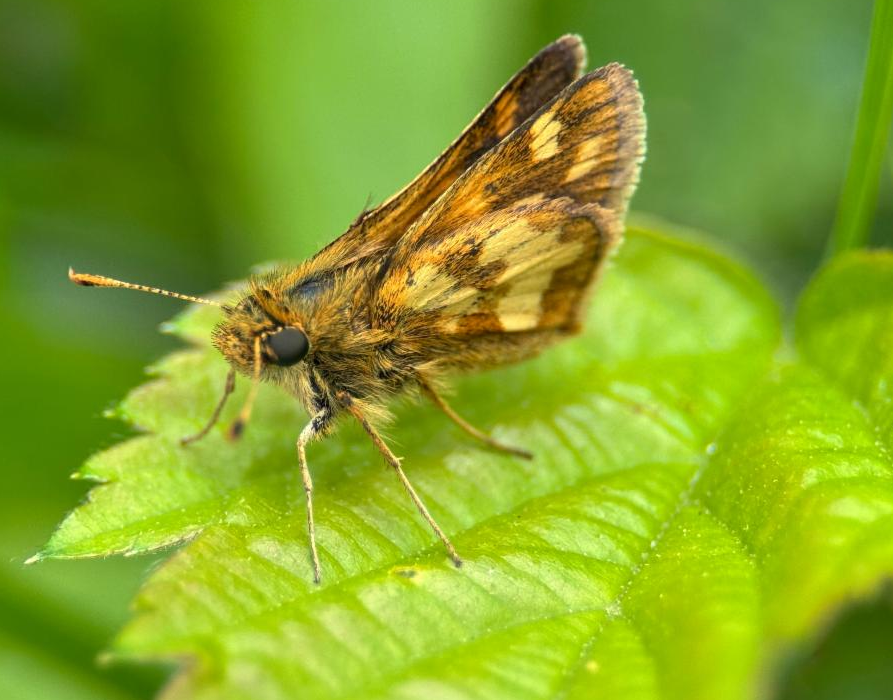
| | Peck's Skipper © Jill DeVito | |
- The Task Ahead: Where We Are So Far
- Butterflying the Hidden Gems of Vermont
- Spotlight: The Spreadwings
- Butterfly Wings Shape Flight
- Quick Tip: New Tools for the Butterfly Atlas
- Ask, Discuss, Learn: Log Your Volunteer Hours
| | The Task Ahead: Where We Are So Far | | |
Peak butterfly season is here, and so is your chance to help us fill out the map. Rare or common, every butterfly observation counts. With the help of over 300 observers, we’ve already found 63 species and counting this year! More importantly for the atlas, we’ve now visited and found butterflies on 170 of the 184 priority blocks and 30% have 30 or more species! The gaps on the map are where you come in.
Join one of our Priority Survey Block Blitzes. We have eight events across Vermont this summer to help jumpstart surveys on priority blocks that need a little help. Join us as we split into groups, survey for a few hours, and regroup to share findings. It's a great way to learn about butterflies and butterfly watching in the field and meet fellow enthusiasts.
-
Cancelled for weather — Morgan Area Blitz (NorthWoods Stewardship Center, Island Pond)
-
June 27 — Northfield Area Blitz
-
July 11 — Summer Bioblitz at The Nature Museum, Grafton (no registration required)
-
July 12 — Jay Area Blitz
-
July 18 — Greensboro Area Blitz
-
July 25 — Rutland County Audubon Training, West Rutland (ID skills + eButterfly intro)
-
Aug 1 — Brunswick Area Blitz
-
Aug 8 — Middlebury Area Blitz
Full details and registration →
Can't Make a Blitz? You Can Still Help! Every observation matters, wherever you are. Survey your own priority block, log observations on eButterfly or iNaturalist, and check the new Priority Block Checklist Tool to see what's still needed on a priority block you want to visit or one you’ve already adopted. Even one visit to a priority block can make a huge difference.
There's a lot to discover this season. Atlasers have already turned up some awesome sightings of Species of Greatest Conservation Need, like Dusted Skipper and Bog Elfin. Visit the interactive Vermont Checklist of Butterflies and sort by SGCN to see the 20 species listed in the latest Vermont Wildlife Action Plan. Or check the state conservation ranks to see which butterflies are rare or common. Your photos and eButterfly checklists help fill in the story of where these species are thriving, declining, or shifting.
The window is short for peak butterfly diversity, so let's make it count. We can’t wait to see what you discover and share!
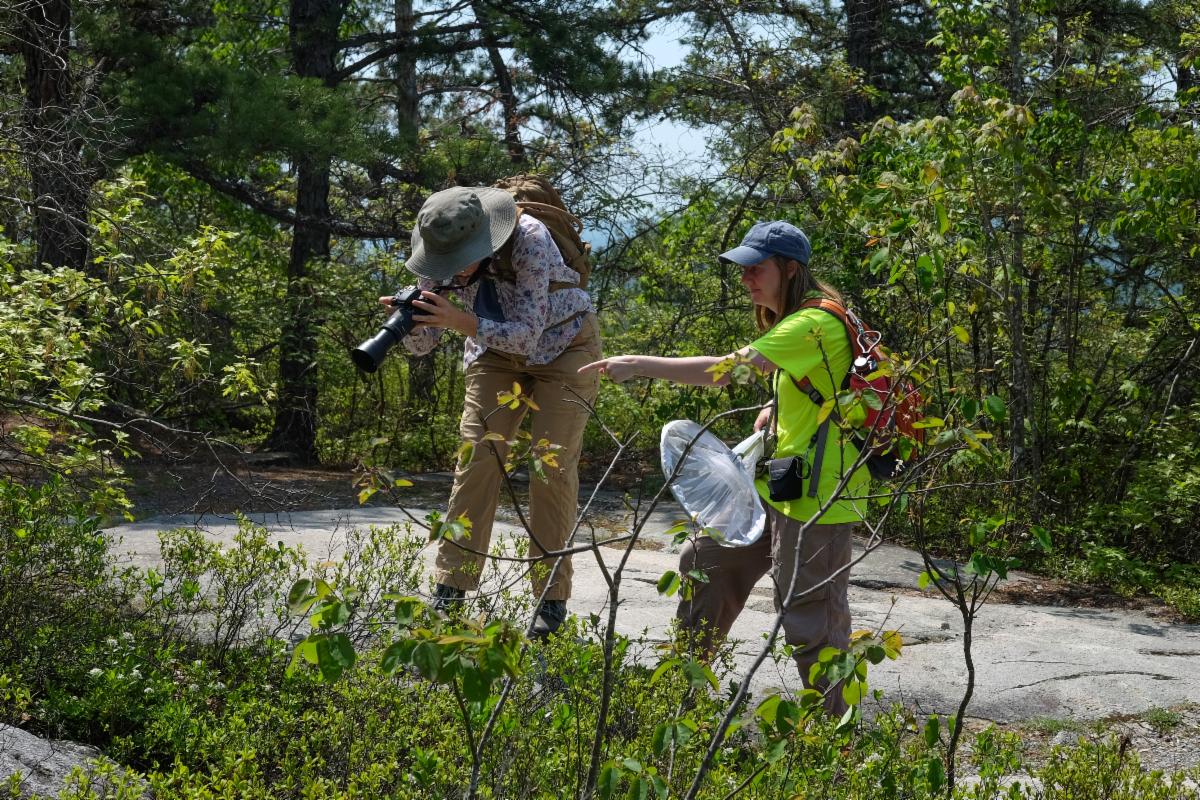
| | Butterflying the Hidden Gems of Vermont | | Butterfly Atlas techs Jill DeVito and Colleen Clausen survey Black Mountain's rare dry ridge habitat. © Alden Wicker | | |
If you’re looking for new corners of Vermont to explore, why not take a trip to an unadopted priority block?
Your discoveries in these areas are vital to guide future conservation! Learn more about priority blocks and plan for your next adventure with our latest blog post: Explore Vermont's Natural Nooks.
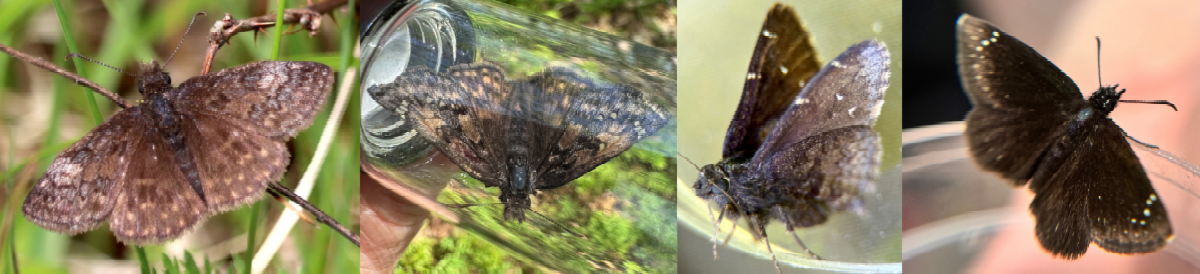
| | Spotlight: The Spreadwings | | Spreadwing skippers L to R: Dreamy Duskywing, Juvenal's Duskywing, Northern Cloudywing, Common Sootywing. © Jill DeVito | | |
Little Brown Butterflies
If you’re a birder – or if you know a birder – you’re likely aware that birders get very excited about "little brown birds" that are difficult to distinguish from each other. Meet the spreadwing skippers! You might call them the "little brown birds" of the butterfly world. According to the helpful Vermont Survey Block Checklist Tool, several of these little brown butterfly species are missing from even the most surveyed priority blocks; where volunteers are making the best progress toward the gold standard goal of 40 species per block.
Compared to more colorful butterflies, spreadwing skippers may be underrepresented in the Butterfly Atlas because they are so easily overlooked. With their camouflage coloration and horizontal posture, they might even be mistaken for moths by many observers. So next time you’re scoping out an open butterfly habitat—a sunny schoolyard or cemetery, an unmowed roadside, or the edges of a wetland—keep an eye out for duskywings, cloudywings, and sootywings. These species are small to medium-small and very dark in color, with subtle markings. They typically sit with their wings flattened.
The spreadwing skippers may be missing from priority block checklists in part because they can be tricky to identify. But fortunately, with a few photos uploaded to iNaturalist or eButterfly, many observations can be identified by other community scientists or atlas managers. If you want to learn how to tell them apart yourself, watch our recent webinar featuring duskywing species identification. You might also start looking for little brown butterflies early in the season, before many of their flashier cousins have taken flight. The Vermont Butterfly Flight Times Tool is helpful for predicting when to search for each species. Happy hunting!
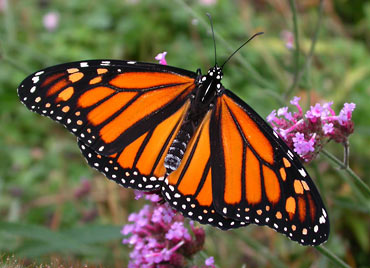
| | Butterfly Wings Shape Flight | | Long, narrow wings power the Monarch's long-distance flights. ©Unknown | | |
When you watch a butterfly in slow motion, you may notice that they have two parts of flight: – a flap and a glide. This pattern, as well as the giant size of the butterfly wings compared to their body, can help you tell them apart from other insects like moths. But different butterfly species will fly in different ways depending on the size and shape of their wings.
-
Take migrating species! Monarchs have long and narrow wings that help them glide for long periods of time. This saves energy during long flights without losing distance. You can even see this difference in the wings between migrating and non-migrating Monarchs.
-
Skippers also have long, narrow wings, but their triangular shape gives them fast, darting movements. Their thick bodies aren’t a hindrance to flight because they’re all muscle, making them built for speed.
-
Swallowtails have a different trick. Their tails act like the tail fin on an airplane and keep them from spinning out while gliding. This lets them save energy because they don’t have to flap their wings to steady themselves.
-
Male and female whites fly differently too. Heavier and larger females tend to fly less, possibly because they are slow, easy targets for predators. Males are lighter and more agile, making them quick flyers. This is important since they spend so much time searching for mates, which puts them at a higher risk from predators.
Engineers and scientists also draw inspiration from butterfly wing patterns for new inventions, a field called biomimicry. Take a look at these eMotion butterfly robots that can help engineers build more efficient drones.
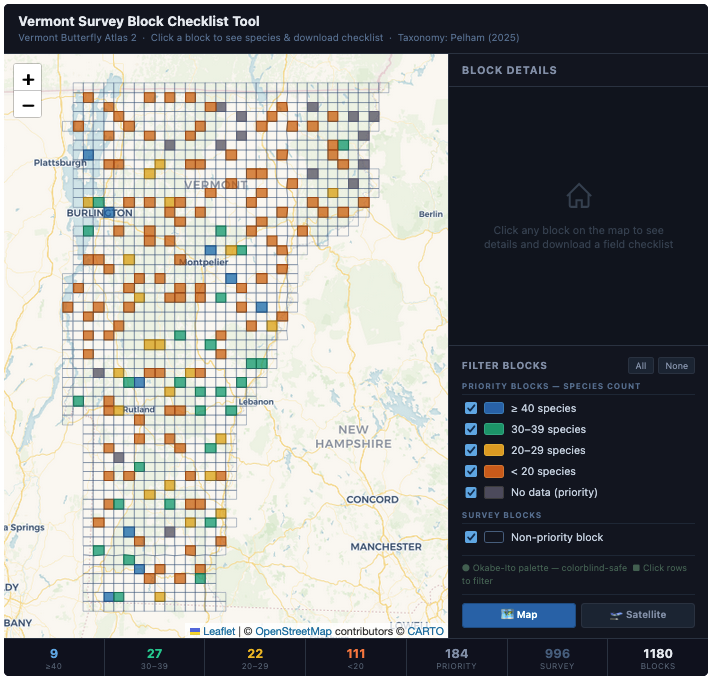
| | Quick Tip: New Tools for the Butterfly Atlas | | The Priority Block Checklist Tool maps Vermont's priority blocks, color-coded by butterfly species recorded for the second atlas. | | |
The Block Mapper Tool helps you sign up for and keep track of your block species lists. But now there’s a new tool on the block: the Priority Block Checklist Tool. This tool allows you to get a quick view of the completion status of the Atlas priority blocks. Want to see blocks that have no species found? Just check off that box and leave the others blank and presto: a map showing just those blocks and the others grayed out.
You can also download a checklist of species found and not found on a block as a PDF and print for your use. This creates a slick one-page checklist of all butterflies in Vermont with those found already checked off and those yet to be discovered, blank and ready for you to find them! (Although you may not find all butterflies in all locations.)
Is your species list missing some of your recent observations? Don’t panic! It might take a bit for them to appear. Observations update from your eButterfly checklists every morning but iNaturalist observations may take up to two weeks to appear. When in doubt, check the "Updated On" dates on your block list.
Can’t remember how to use all the cool Block Mapper Tools? Watch this new walkthrough video by Kent to refresh on how to view and filter your observations.
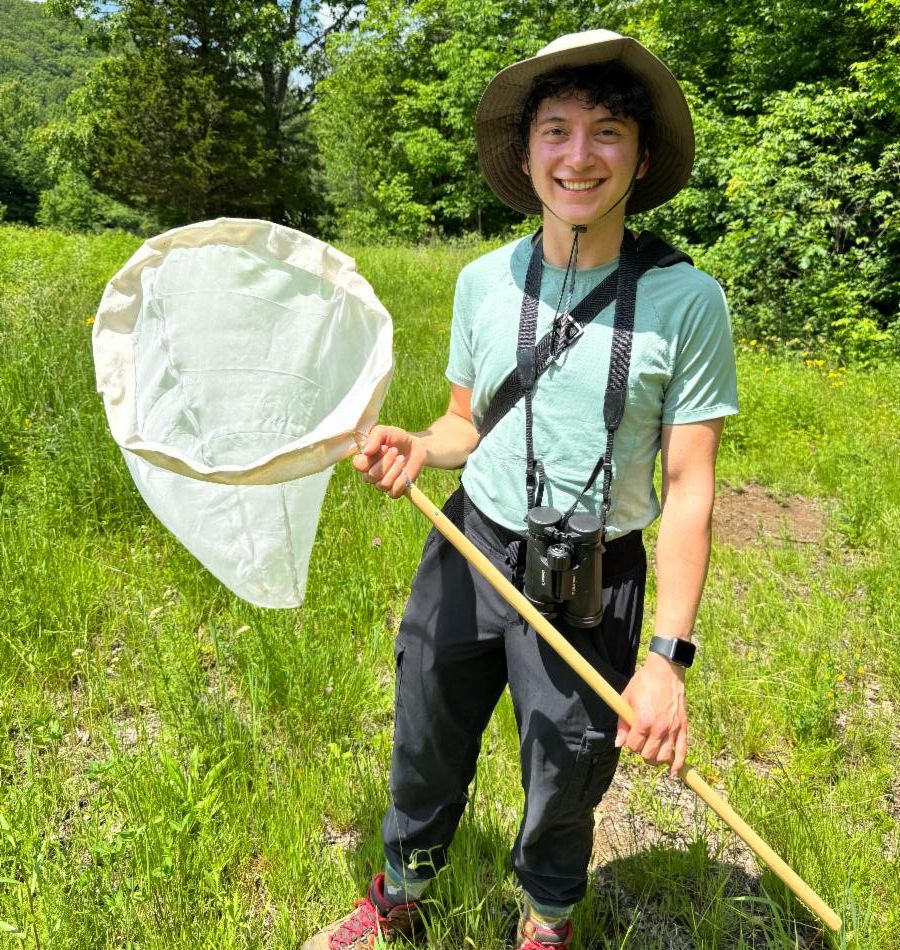
| | Ask, Discuss, Learn: Log Your Volunteer Hours | | Butterfly Atlas volunteer, Kass, joins the butterfly team in the field. © Jill DeVito | |
🦋 You can help fund the Butterfly Atlas with your volunteer hours through an in-kind match! Hours can be reported through the VTFW volunteer portal. You will need your volunteer hours (i.e., time traveling to a site, surveying butterflies, entering data and helping to ID observations) and mileage for each date you went out. An estimate is totally okay. You can find a step-by-step guide to entering your data here.
🦋 Take a break from butterflies for the annual Vermont Moth Blitz. From July 18 to July 26, record as many moth species as you can find on iNaturalist. Join the project here.
🦋 Want to connect with other butterfliers? Don’t forget to join the VTLEPS listserv – click the three lines in the upper right corner and select Subscribe.
| | |
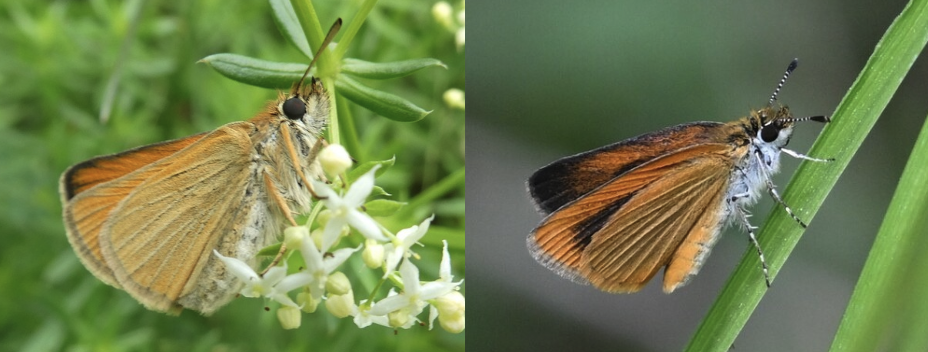
Test your butterfly knowledge:
What photo shows a non-native, the European Skipper?
| | | | |