|
Hello from THE CHRYSALIS, an irregular email newsletter especially for volunteers for the Second Vermont Butterfly Atlas, where we offer advice and report on the progress of the atlas.
Thanks for joining the atlas!
Kent McFarland, Conservation Biologist
Dana Williams, Community Science Coordinator
Amber Jones, Staff Biologist
Jill DeVito, Butterfly Atlas Technician
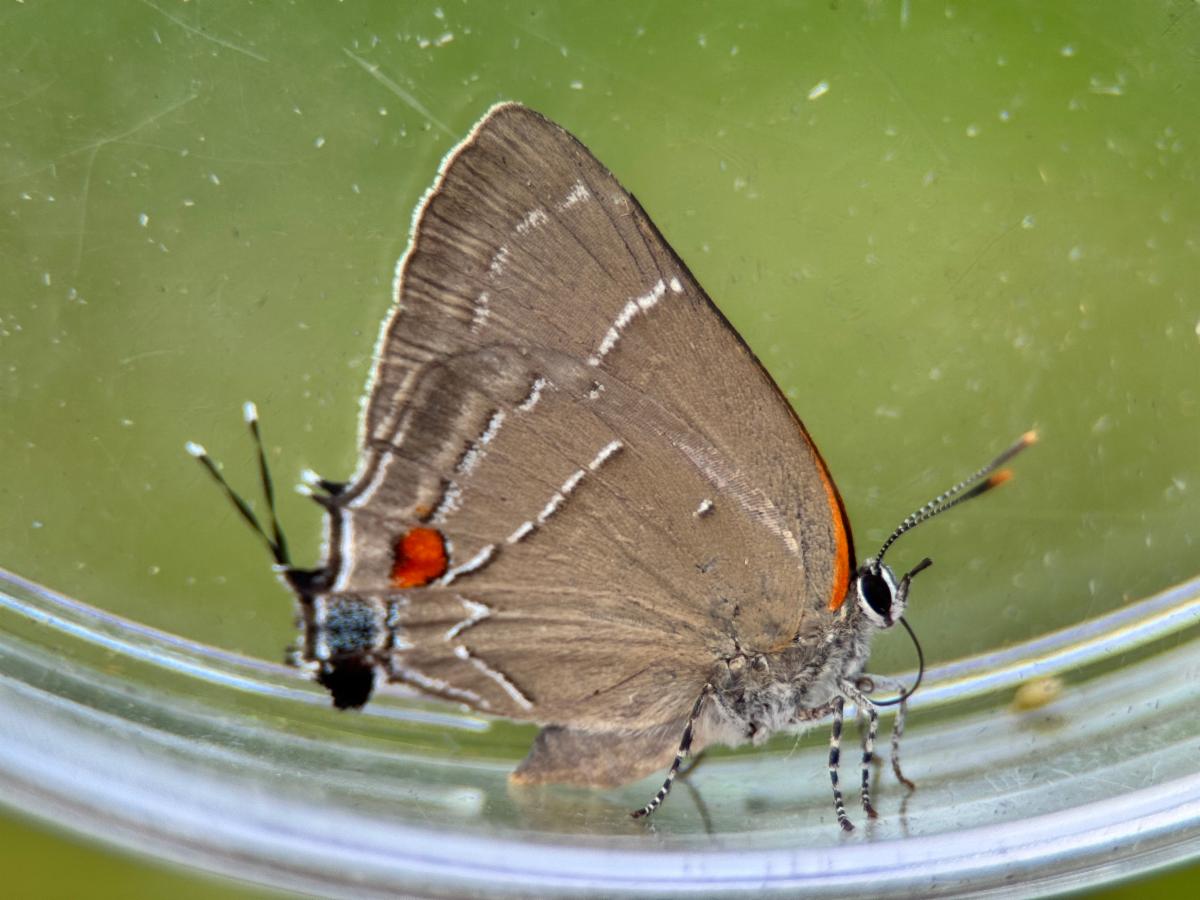
| | White M Hairstreak © Jill DeVito | |
- The Task Ahead: Summer Flies By
- Hunting for Fall Caterpillars
- Spotlight: The Hairstreaks
- Nectar Plants for Fall Butterflies
- Quick Tip: Best Places to Find Butterflies
- Ask, Discuss, Learn: Record Your Hours with VTFW
| | The Task Ahead: Summer Flies By | | |
As we enter the dog days of summer, there are still opportunities to get out and enjoy the sunshine – butterflies will be flying until October! With the help of over 700 observers, we’ve found 95+ species so far this year. Since June, you all have put six more priority blocks on the map. We've now found butterflies at 176 out of 184 priority blocks and 20% (37) of those are close to joining our 30+ species category. Those 37 blocks would bring our completion rate to almost 50%.
Want to find out how the blocks near you are doing? Check out the priority block tool to find out where you can have the biggest impact. We especially need surveys from orange, yellow and gray blocks.
This year, about 50 people joined us at six butterfly blitzes around the state. These team-based events added 78 species to 13 priority blocks. Congratulations to the team at The Nature Museum's Summer Bioblitz for finding 25 species in one day – the most of any group! Stay tuned for the winter edition of the Chrysalis where we will reveal our top individual butterfliers of Season 4.
From March to May, the Second Vermont Butterfly Atlas hosts biweekly, 30-minute Lunch & Learn webinars to dive into a new topic on butterfly ID, conservation, and biology. We’d love your input: Tell us what topics interest you most! (See what we've covered previously on our Butterflies of Vermont youtube channel.)
May your meadows be warm and your cameras ready.
Happy butterflying!
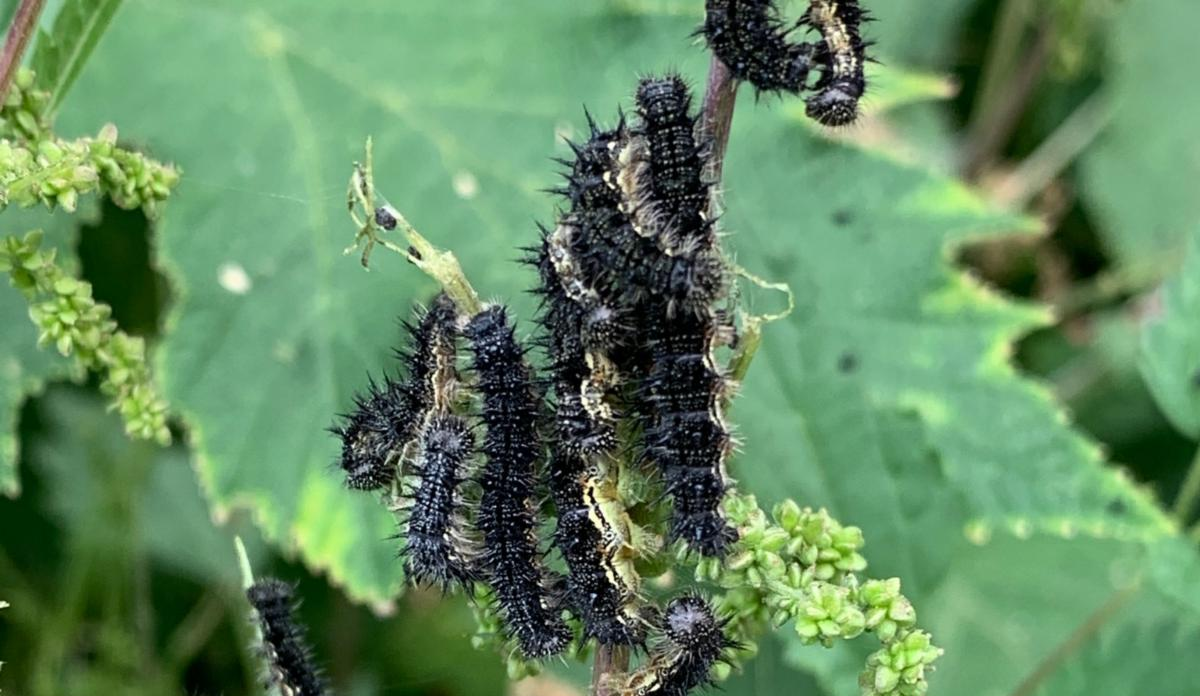
| | Hunting for Fall Caterpillars | | A cluster of Milbert's Tortoiseshell caterpillars on their host plant, Nettles. © Marke Ambard (iNaturalist) | | |
Late summer into fall is a great time to look for late-season butterfly caterpillars. It is easy to forget to look for them when we are out butterflying, but in the eyes of the atlas, caterpillars count! If you haven’t spent much time looking for caterpillars, you can get some tips on how to find them from our Host Plants and Caterpillars Lunch and Learn webinar.
August is a great time to look for Milbert’s Tortoise-shell (Aglais milberti) caterpillars that hang out in tent-caterpillar-like webbed congregations on Stinging Nettles. With a 96% decline in the Northeast in the last 20 years, your Milbert’s observations are valuable in helping us to understand their decline here in Vermont. August also brings Harris’ Checkerspot (Chlosyne harrisii) on Flat-topped Asters, which, like the Milbert’s, also congregate in webs until they get larger. Milkweed may be done blooming, but Monarch (Danaus plexippus) can still be found into October if the weather is mild enough, though those caterpillars are likely too late to make it to adulthood.
Other late season caterpillar species to be on the lookout for include:
-
Viceroy (Limenitis archippus) on willow and poplar
-
American Lady (Vanessa cardui) on Pearly Everlasting
-
Eyed Brown (Satyrodes eurydice) on wetland Sedges (Carex)
-
Eastern Giant Swallowtails (Papilio cresphontes) on Common Rue
-
Black Swallowtails (Papilio polyxenes) on Golden Alexanders
-
Eastern/Canadian/Midsummer Tiger Swallowtail complex (Pterourus glaucus/canadensis/solstitius) caterpillars on cherry, aspen, and birch
Enhance your caterpillar observations:
-
Include host plant pictures or information. Host plant information can be added in the Observation fields section on iNaturalist and in the “Field Notes” section of your species observation on eButterfly.
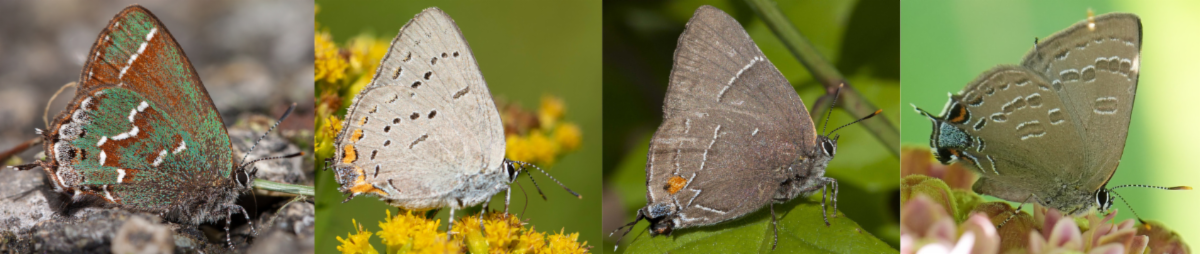
| | Spotlight: The Hairstreaks | | The Hairstreak categories L to R: Non-gray (Juniper Hairstreak), Spotted (Acadian Hairstreak), Single Striped (White M Hairstreak), Double Striped (Hickory Hairstreak). © Kent McFarland, Stephen Lewis | | |
A quarter-sized, gray butterfly alights on an oak leaf in front of you. You've found a Hairstreak. These elusive, rare to see butterflies are the gems of summer butterflying. There are 12 species of Hairstreaks in Vermont and you can use these four at-a-glance categories to start your ID.
The Non-grays: In a sea of gray butterflies, the Juniper Hairstreak and the Early Hairstreak are instantly distinguishable by their brown, green, and orange coloration. You can tell them apart because the Juniper has tails, while the Early does not. Coming out in May (Early) and June (Juniper), they also fly earlier than the other Hairstreaks. Make sure you get out early to see these SGCN species.
The Spotted: Don't mistake these two butterflies for a blue! The Coral Hairstreak and Acadian Hairstreak both have black spots outlined with white on the underside of their wings. This makes them look more like their cousins, the blues, than the typical white striped wings of the other Hairstreaks. You can tell them apart because the Acadian has tails, while the Coral does not. Keep an eye out for these butterflies in July in wet and brushy areas.
The Single Striped: Most hairstreaks show white stripes when their wings are closed. On the Gray Hairstreak, White M Hairstreak, Red-banded Hairstreak and Northern Oak Hairstreak, each row of stripes comes in a single line. All of the single stripe Hairstreaks are relatively rare to see in Vermont with one (Red-banded) to 42 (Gray) recorded observations on iNaturalist.
The Double Striped: The remaining hairstreaks may make you think you've got double vision. For the Striped Hairstreak, Hickory Hairstreak, Edward's Hairstreak, and the Banded Hairstreak (faint), each row on their wing underside has two white stripes, instead of one. All four species will be out in July but the Edward's Hairstreak is relatively rare. Look for this SGCN species around Bear Oaks.
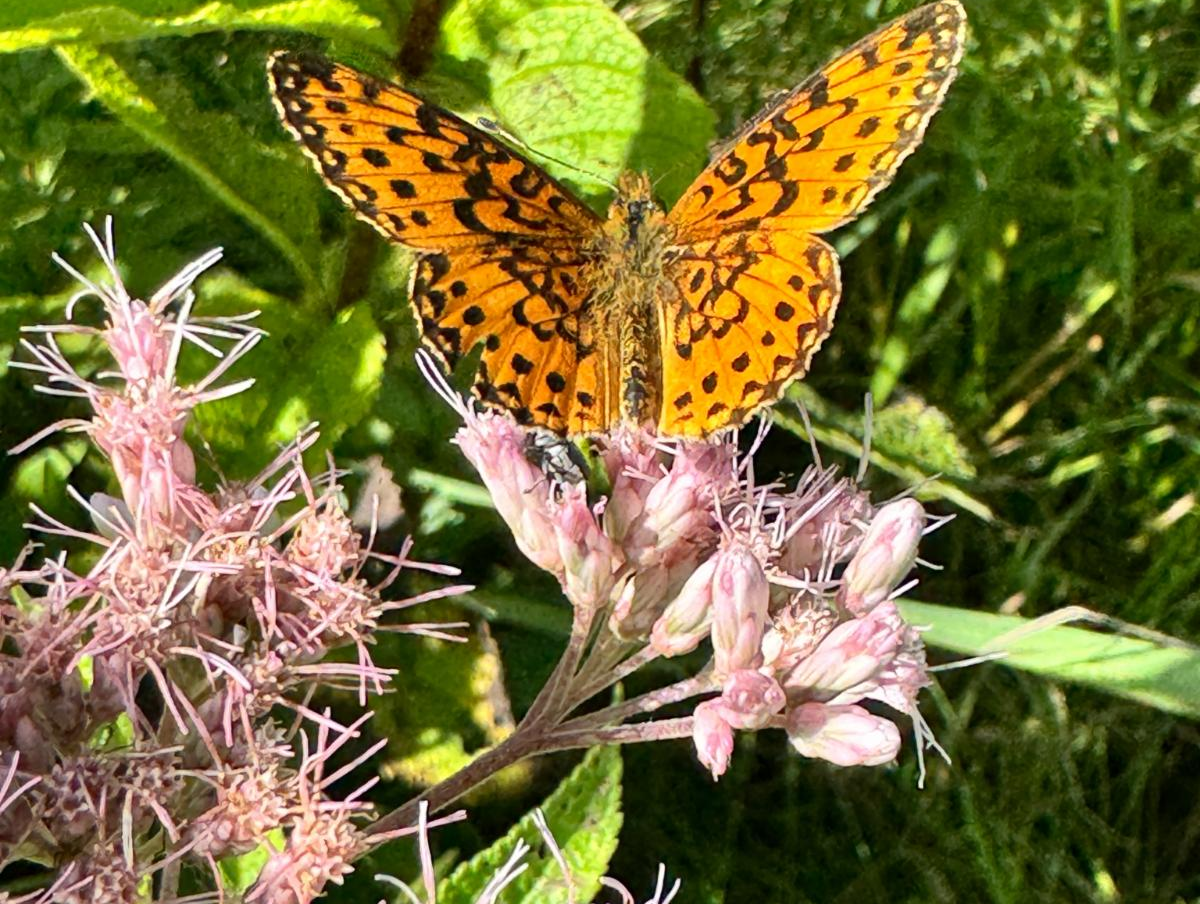
| | Nectar Plants for Fall Butterflies | | A Silver-bordered Fritillary sips nectar from a Joe-pye Weed. © Jill DeVito | | |
As the summer winds down, some of our most important floral resources ramp up. Whether you are looking for new areas to find butterflies or you want to draw more butterflies to your garden, even late into the fall, here is a sampling of native plants to get you started. It is important to offer a variety of flower species for pollinators year-round with different flower shapes and colors to increase your gardens’ biodiversity!
Some mid- to late-summer butterfly favorites include Joe-pye Weed (Eutrochium), Wild Bergamot (Monarda fistulosa), Common Boneset (Eupatorium perfoliatum), and White Meadowsweet (Spiraea alba). Easily found in the wild or at native plant and seed suppliers, these plants can do well in natural or more formal garden settings around your home. You can take a look for Vermont native nurseries with Xerces' Native Nursery Finder.
Perhaps the most important late-season nectar sources are goldenrods (Solidago) and asters (especially Symphyotrichum). Prized for their nectar and pollen by many insects, including butterflies, they are also important host plants for hundreds of moth and butterfly species. The best part about these species is that since they are so prominent in the wild, often all you have to do is stop mowing an area in your yard for them to begin popping up! Found in a variety of habitats, including fields, meadows, and woodlands, these plants host several specialist bees and are also a great late-season nectar source for migrating Monarchs.
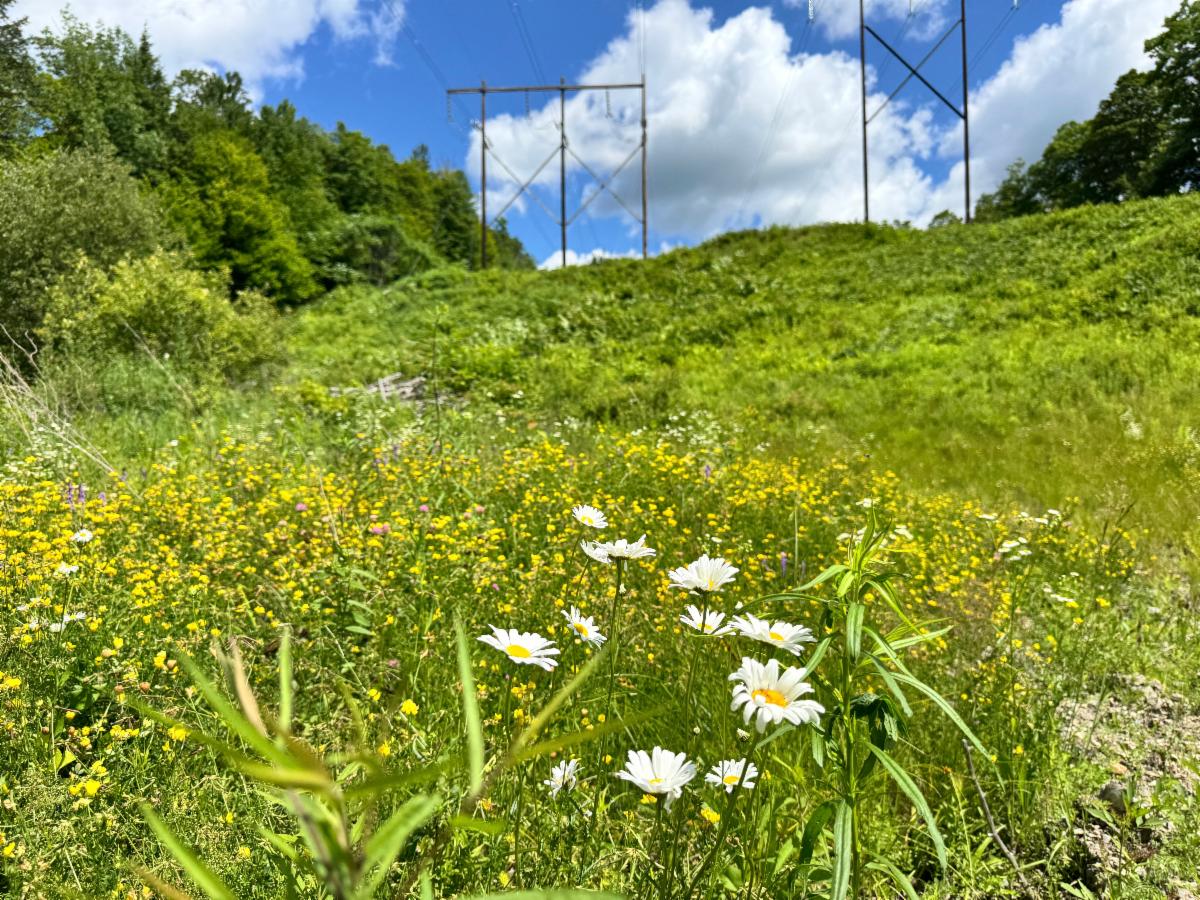
| | Quick Tip: Best Places to Find Butterflies | | Powerline cut with daisies, a perfect place to look for butterflies! © Jill DeVito | | |
Past editions of Chrysalis have helpful hints for encountering hard-to-find butterflies in specific habitats, and you can review those here. But if you’re venturing beyond your favorite haunts to bump up the numbers in a priority block, here are a few helpful hints to maximize your effort.
1. Look for a diverse mix of grasses and wildflowers. As you might expect, adult butterflies are attracted to flowers for their nectar, and butterflies are easier to photograph while they are nectaring. However, all but the strongest fliers tend to be found relatively close to their host plants—the specific native vegetation on which their caterpillars feed. As a result, ornamental gardens have fewer kinds of butterflies than you might expect, and habitats overrun with invasive plant species may end up with decreased diversity as well.
2. Check out open habitats at forest edges. Some butterflies depend on trees instead of grasses and wildflowers (in both their larval and adult forms). You could spend a long time looking for just a few of these woodland butterflies under the tree canopy, but at the forest edge you are likely to encounter butterflies from both open and woodland habitats. Examples of promising spots may include a utility corridor, a rural roadside, or an infrequently mowed hillside between a schoolyard and a forest.
3. Return to the same spot a few weeks later. If you find a lot of different butterflies in a patch of high-quality habitat, you’re likely to meet a whole new set of species when you revisit three or four weeks later. Check out our flight times tool to see which species you might meet throughout the season.
| | Ask, Discuss, Learn: Record Your Hours with VTFW | | Statement at the top of the Vermont Fish & Wildlife volunteer reporting form. | |
🦋 Don't forget to record your volunteer hours in the VTFW volunteer portal! Estimate your total time spent surveying and mileage for each date you went out. You can find a step-by-step guide to entering your data here.
🦋 We would love to share volunteer perspectives on the Second Vermont Butterfly Atlas with our community. Want to share your butterfly stories? Fill out our volunteer survey!
🦋 Want to read more about butterflies? Browse the Chrysalis newsletter archive and sign up for the VTLEPs listserv!
| | |
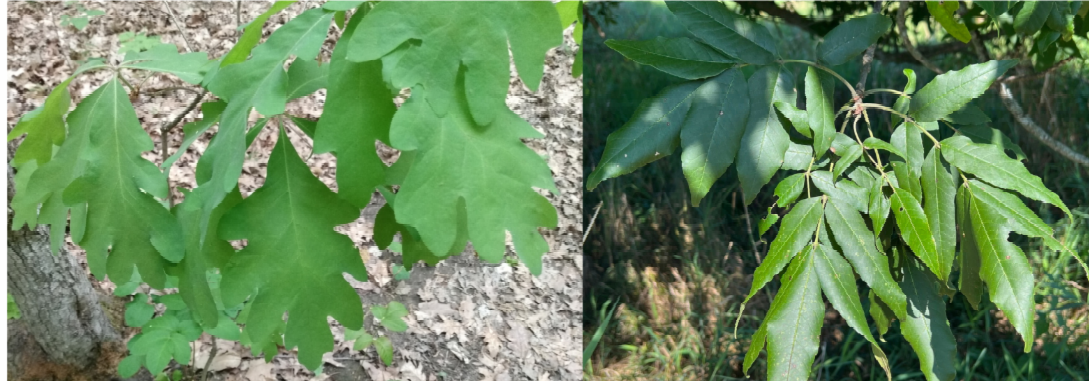
Test your butterfly knowledge:
Which is the host plant for the White-M Hairstreak?
| | | | |