|
Hello from THE CHRYSALIS, an irregular email newsletter especially for volunteers for the Second Vermont Butterfly Atlas, where we offer advice and report on the progress of the atlas.
Thanks for joining the atlas!
Kent McFarland, Conservation Biologist
Dana Williams, Community Science Coordinator
| | | |
- The Task Ahead: Season 4, Badges & Blitzes
- VT's New SGCN List
- Spotlight: Non-nectaring Butterflies
- How do butterflies survive the winter?
- Quick Tip: Azure ID
- Ask, Discuss, Learn: Join VTLEPS listserv
| | The Task Ahead: Season 4, Badges & Blitzes | | |
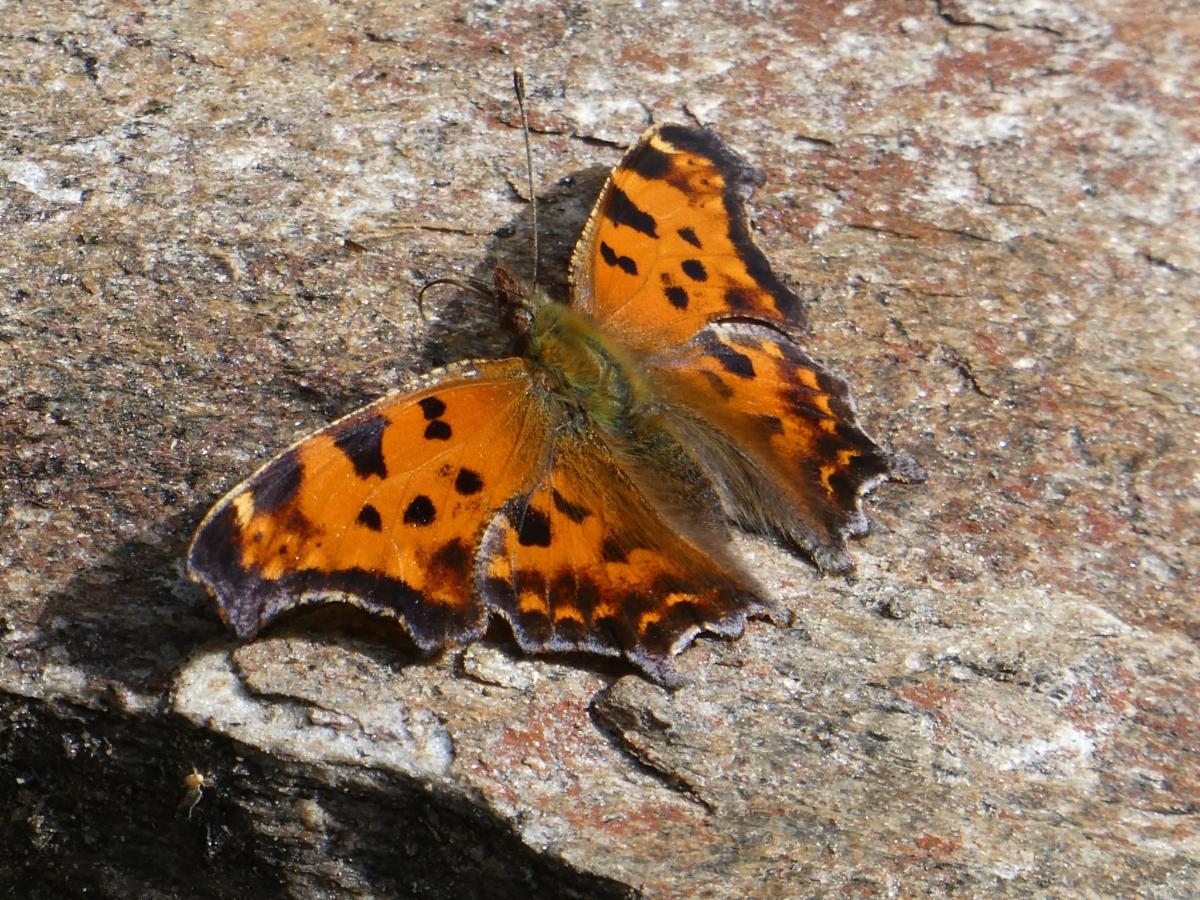
Season 4 of the Vermont Butterfly Atlas starts as soon as the first Mourning Cloak or Eastern Comma ventures out of their winter hiding place. We hope you’re as excited as we are to get out and start seeing butterflies!
Last year we hit the 50% mark for priority block adoptions. With 30% of our priority blocks hitting a 30 species threshold, we are on track with the numbers of the first atlas. We’re reaching a bit higher this time around to see if we can find 40 species on all priority blocks.
We added one new butterfly to Vermont’s records last year. Kevin Hemeon scored Vermont’s 120th butterfly species with a Red-banded Hairstreak in Bennington. If you’re in southern Vermont, keep an eye out for southern species coming north—especially with warm temperatures.
If you have run out of ideas on what species to look for next, check out the block species lists on the VBA block mapper. Click a block to get to the species list and then at the top of the screen, set it to Compare: 1st Atlas and To: 2nd Atlas to find out which species haven’t been seen on your block since the first atlas.
Don’t forget – we still want your checklists even if you see zero butterflies!
This season, we’ve got some extra incentives to get you out there butterflying!
Whether you’re a Block Buster surveying remote priority blocks or an SGCN scout seeking out Vermont’s rare species, we invite you to join our Butterfly Badge challenge. Each butterfly you observe and checklist you submit gets you closer to earning and upgrading fun badge designs. See how you rank up with others in the state or just enjoy your collection. Send us your iNaturalist and eButterfly names here to join in.
Want to sharpen your skills, meet other butterfliers, and explore new places? Join us this summer for our Butterfly Blitz events! We’re partnering with local conservation groups across the state for half-day adventures in butterflying on unadopted priority blocks. You and your team, led by a VCE expert, will spend half a day surveying, learn expert ID tips, and help us fill the final gaps in the Atlas. Keep an eye out for upcoming dates on the Vermont Butterfly Atlas events page.
Upcoming locations:
•Morgan • Middlebury • Grafton • Northfield
• Greenboro • Dead Creek WMA •Mount Holly • Montgomery
Let’s make Season 4 the year of the butterfly. See you in the field!
| | |
Lunch & Learn Butterfly Webinars
Time: Every other Wednesday 12 – 12:45 pm
March 25 – Butterfly Trends & Duskywing ID Tips
April 8 – Finding Host Plants & Caterpillars
April 22 – Nectaring Butterflies
May 6 – Butterflying by Habitat
May 20 – Beyond Butterfly Basics: Tiger ID
Talk details and registration here.
| | The 2025 Vermont Wildlife Conservation Action Plan | | Two-spotted Skipper. © David Hoag | | |
We've put the data you helped collect to good use!
State Wildlife Action Plans are blueprints for wildlife and habitat conservation and can be a guide for anyone interested in the future of wildlife. State Fish & Wildlife Agencies must revise their Wildlife Action Plans every ten years to receive State Wildlife Grants from the U.S. Fish & Wildlife Service—a small but vital federal program dedicated to keeping wildlife from becoming endangered and recovering those already listed. The first and second Vermont Butterfly Atlases are partly funded by these matching grants and provide key data for the plan.
Over the last two years, we helped complete the draft 2025 Vermont State Wildlife Action Plan. VCE biologists have been part of many working groups, including the invertebrates working group.
Our main task was to select Species of Greatest Conservation Need (SGCN) and determine threats and conservation actions for them. We had to consider conservation status, population declines, rarity, habitat vulnerability, life history traits, demographic limitations, historic occurrences, population connectivity, invasive species, and more. None of this would be possible without the occurrence data you and fellow volunteers have collected across the state for the Vermont Butterfly Atlas and all the projects at the Vermont Atlas of Life.
In this third edition of the Vermont State Wildlife Action Plan, we have 18 species of butterflies considered to be Species of Greatest Conservation Need. Since the first edition in 2005, we have removed two species from the list that we consider to be extirpated and have no chance of occurring in Vermont again —Persius Duskywing and Regal Fritillary—and we've added several more. As we collect more information during the butterfly atlas and begin to analyze the data, we will be able to adjust the SGCN list if necessary.
Explore the latest SGCN list below and see if you can find and survey some populations of these butterflies on your atlas surveys. You can learn more about each in the draft plan appendix too.
Grasslands
Dusted Skipper (Atrytonopsis hianna)
Cobweb Skipper (Hesperia metea)
Common Branded Skipper (Hesperia colorado)
Monarch (Danaus plexippus)
Forests
West Virginia White (Pieris virginiensis)
Edwards’ Hairstreak (Satyrium edwardsii)
Early Hairstreak (Erora laeta)
Juniper Hairstreak (Callophrys gryneus)
Silvery Checkerspot (Chlosyne nycteis)
Hackberry Emperor (Asterocampa celtis)
Tawny Emperor (Asterocampa clyton)
Wetlands
Bog Elfin (Callophrys lanoraieensis)
Bog Copper (Tharsalea epixanthe)
Jutta Arctic (Oeneis jutta)
Dion Skipper (Euphyes dion)
Black Dash (Euphyes conspicua)
Two-spotted Skipper (Euphyes bimacula)
Mulberry Wing (Poanes massasoit)
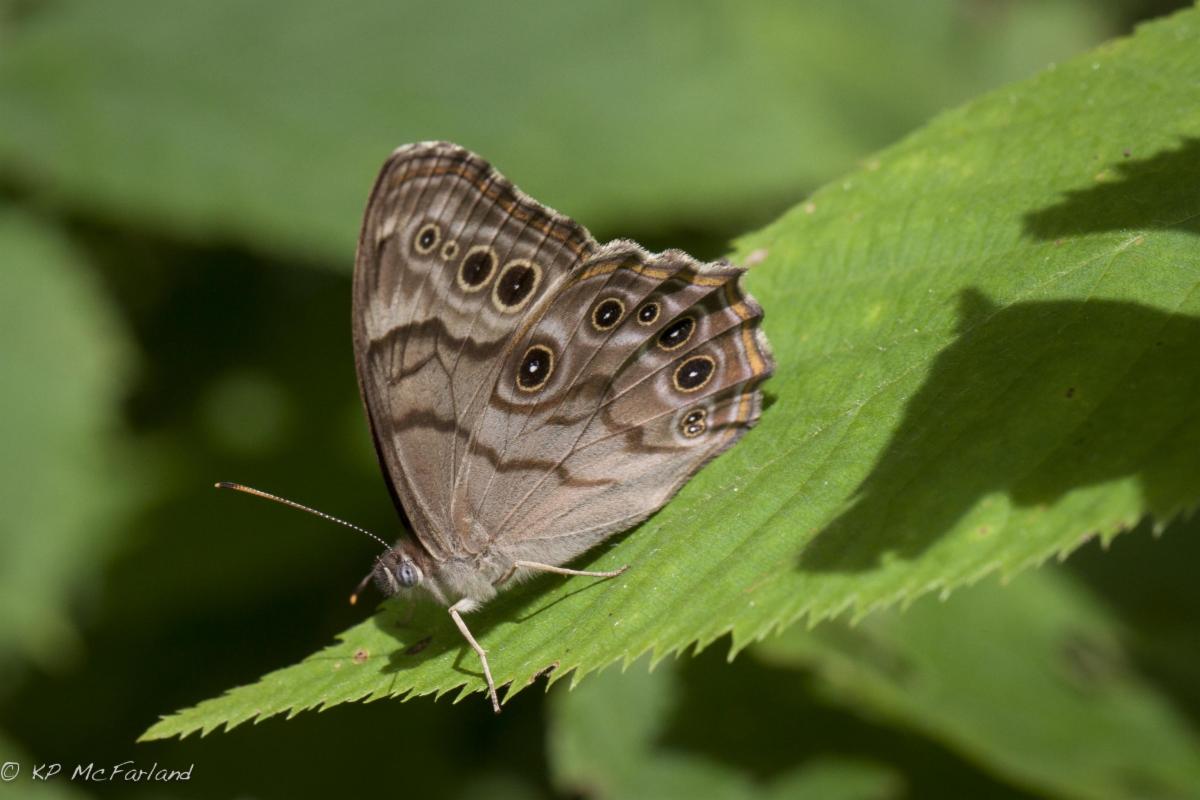
| | Spotlight: Non-nectaring Butterflies | | A Northern Pearly-eye, a coprophage butterfly © Kent McFarland | | |
It's early spring and you're ready to go looking for butterflies, but the ground is still brown and flower-less. Where do you look?
Tree sap feeding - feeding on sugar and amino acid rich saps
Tree sap is a common food source for our early-season butterflies like the tortoiseshells and commas but also for the flexible Viceroy, who will switch to eating nectar later in the season as it becomes available. While there are far more eye-catching traits to help you ID a butterfly, the proboscis of non-flower visiting species actually look different. Sap feeders have a shorter, lighter color proboscis with a dense flat “brush” of sensory organs called sensilla styloconica. This dense brush helps them sop up liquids.
Coprophage - consumption of fecal matter by organisms
Woodland butterflies who don’t feed on flowers have limited choices to get necessary nutrients. One way to get nutrients is to take them from someone who has already had them. This is a strategy used by the browns: Eyed Brown, Appalachian Brown and Northern Pearly Eye, among others. What do they get? Sodium, nitrogen-rich amino acids, and left over proteins, which help males form spermatophores or sperm packets that they transfer to females. The Eyed Brown especially loves bird droppings. Their caterpillar also cleans up after itself by eating its own exoskeleton cuticle. You can read all about that discovery by David Hoag here.
Honeydew - a sugary substance produced by some organisms
Later in the season, if you’re lucky, you might run across North America’s only carnivorous (insectivorous) caterpillar, the Harvester. But the adults have traded their mandibles for a proboscis and subsequently the adult Harvester requires a different food source. Instead, they turn from hunters to scavengers. The adult Harvester still flies around and seeks out aphids but instead of eating them, they will sip the honeydew the aphids produce.
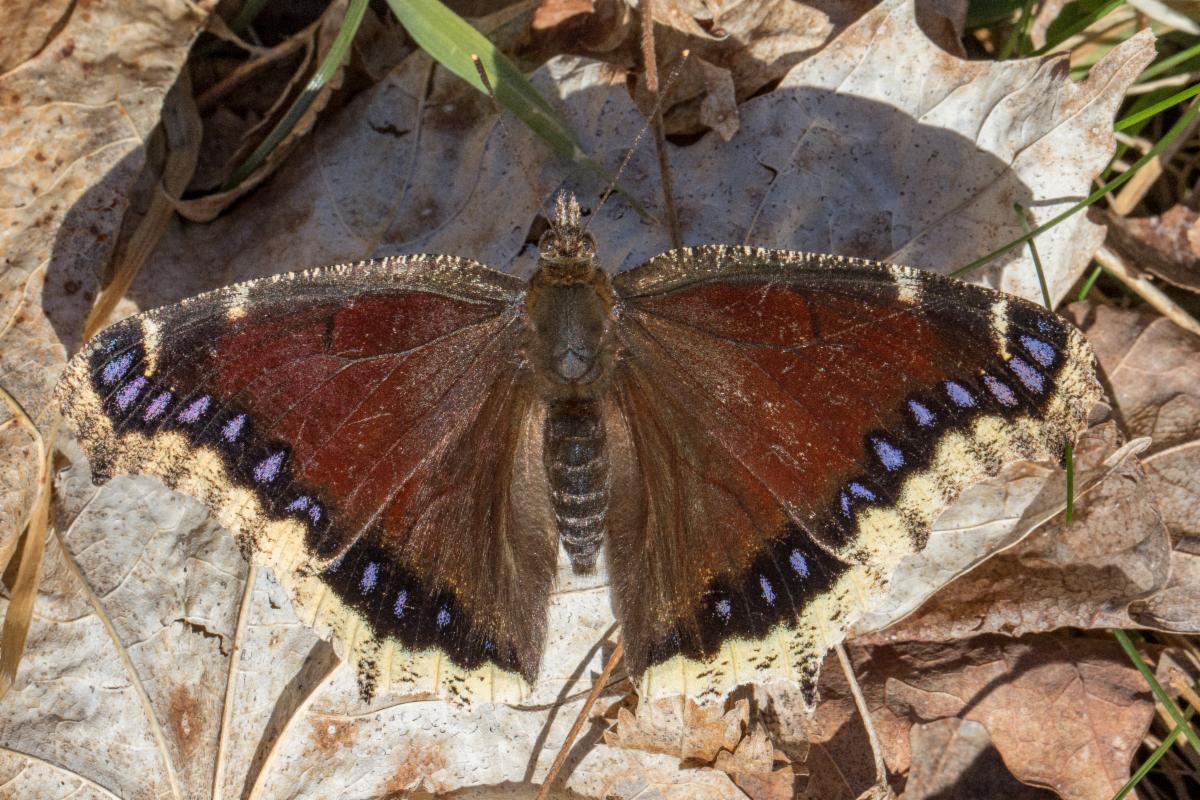
| | How do butterflies survive the winter? | | A winter worn Mourning Cloak sunning on a spring day. © KP McFarland | | |
Despite the cold of winter, butterflies are among us, having evolved a remarkable suite of strategies for surviving the harshest months. Depending on the species, individuals overwinter in one of four life stages: eggs, caterpillars, chrysalises (pupae), or adults. Swallowtails, for instance, pass the winter tucked away in a chrysalis, while skippers overwinter as caterpillars. Adults like the Mourning Cloak and Milbert's Tortoiseshell fatten up in the fall, then tuck themselves into hollow logs, rock crevices, or old buildings to wait out the cold. A few species, like the Monarch, bypass the challenge altogether by migrating south.
The survival challenge isn't cold temperatures per se, but the lethal formation of ice crystals in body tissue. To counter this, butterflies enter a state called winter diapause, a period of dramatically slowed metabolism, and reduce water content in their bodies by up to 30 percent, replacing it with antifreeze compounds like glycerol and sorbitol. This allows Mourning Cloaks, for example, to survive temperatures as low as -80°F when properly prepared, though the same individual would die quickly if frozen without warning in summer. As days shorten in late summer, butterflies use that change as a cue to begin preparing for diapause. But northern populations, facing an earlier winter, respond sooner than more southern populations, a latitude-specific calibration of the same underlying trigger. Before emerging in spring, individuals require a sustained cold period followed by lengthening days, preventing a premature awakening during a mid-winter thaw that could prove fatal.
What’s going to be your first butterfly of the year?
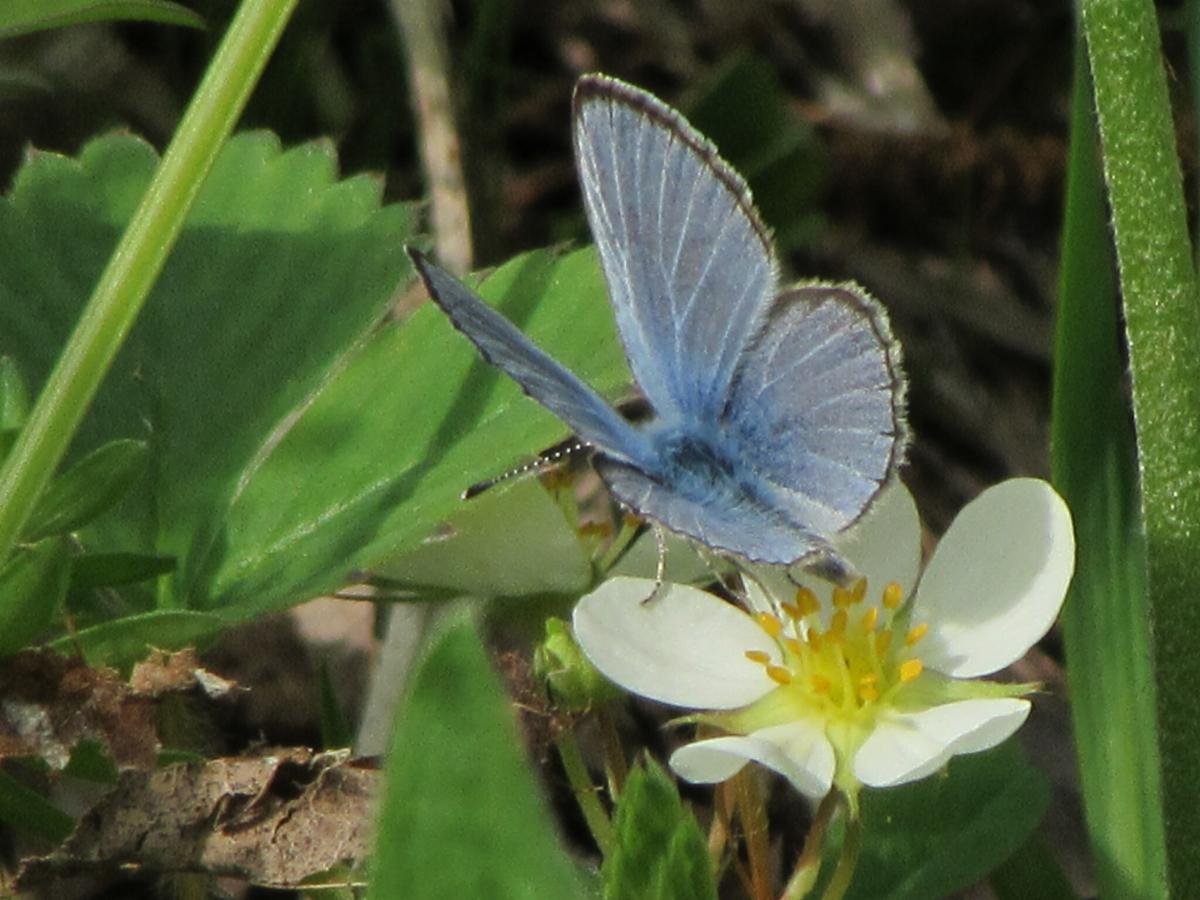
| | Getting the Blues: Untangling Our Azures | | Northern Azure nectaring on Wild Strawberry. © Nancy Brown | | |
The azure butterflies of the genus Celastrina are among the most taxonomically contentious insects in the Northeast. Multiple visually distinct forms share flight periods and habitats across Vermont and New England, leaving open a fundamental question: do these represent separate species shaped by evolutionary divergence, or a single lineage with a lot of plasticity when responding to variation in host plant diet and seasonal cues? A recent comprehensive study from Ontario — combining museum specimens, controlled larval rearing, and DNA barcoding — is reshaping the regional species list and pointing toward a simpler, though still unresolved, picture. We tentatively recognize three species in Vermont.
Northern (aka Lucia) Azure (Celastrina lucia) — The earliest azure on the wing in Vermont, appearing as soon as April. Typically shows a darkish central patch and dark terminal band on the hindwing underside. Recent Canadian research suggests it is bivoltine in southern parts of its range, producing a second flight later in the season — which may account for some individuals previously assigned to other species.
Summer Azure (Celastrina neglecta) — The latest-flying azure, generally not appearing until July in Vermont. The most distinctive and field-recognizable of the group: clean white below with only small, sharp dark flecks.
Cherry Gall Azure (Celastrina serotina) — Some recognize it as a distinct species in New England, mostly flying between the other two. Larvae were reported to feed on eriophyid mite galls on Black and Choke Cherry. Schmidt and Layberry's Ontario research found no evidence supporting it as a separate species there, suggesting it may instead be a second-flight of Northern Azure.
Spring Azure (Celastrina ladon) — The name long misapplied to the whole complex. A legitimate species, best distinguished by a characteristic overlapping scale pattern on the male forewing visible only under magnification. Appears to have a limited distribution, with no records for Vermont.
Read the full story by Bryan Pfieffer.
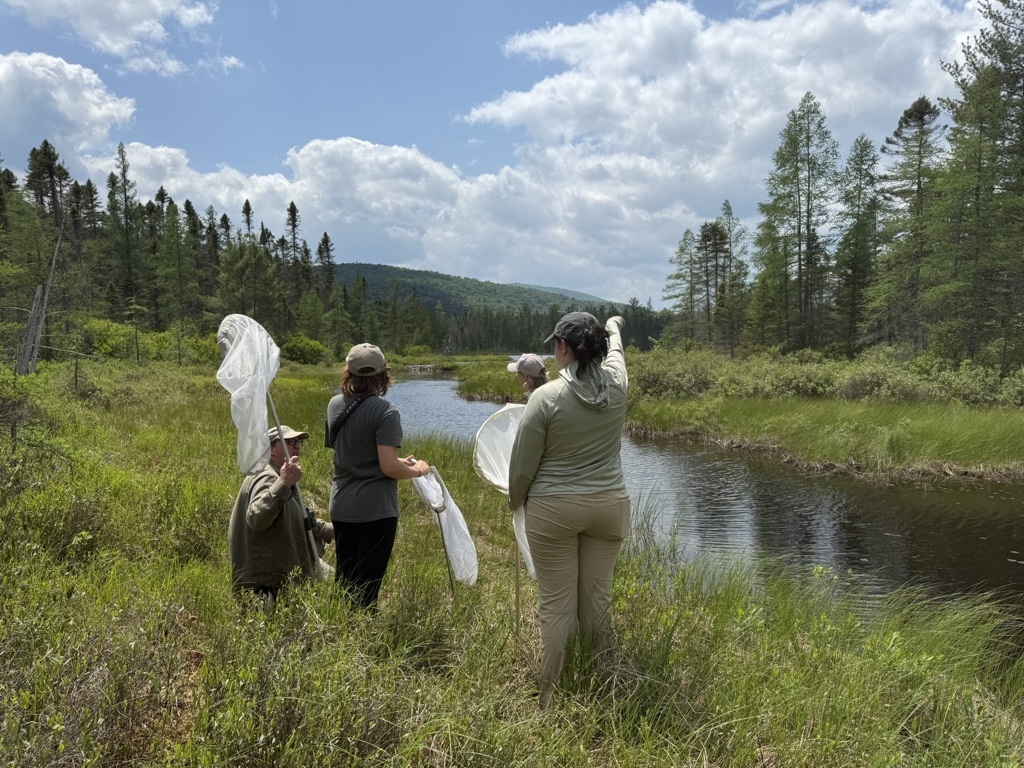
| | Ask, Discuss, Learn: Join VTLEPS | | Kent McFarland (left) looks for butterflies with VCE staff biologist, Juno Stahl and volunteers Anne Shook and Hannah Obenhaus (right) at Moose Bog © Amber Jones | | Want to connect with other butterfliers? Come join us over on the VTLEPS listserv! Send in pictures of your cool butterfly finds, share field stories, ask questions, get help with butterfly ID and take the weekly quiz. To join, look in the upper right for the button with three stacked lines. Click this, select 'Subscribe' from the list and follow the instructions to sign up. | | |
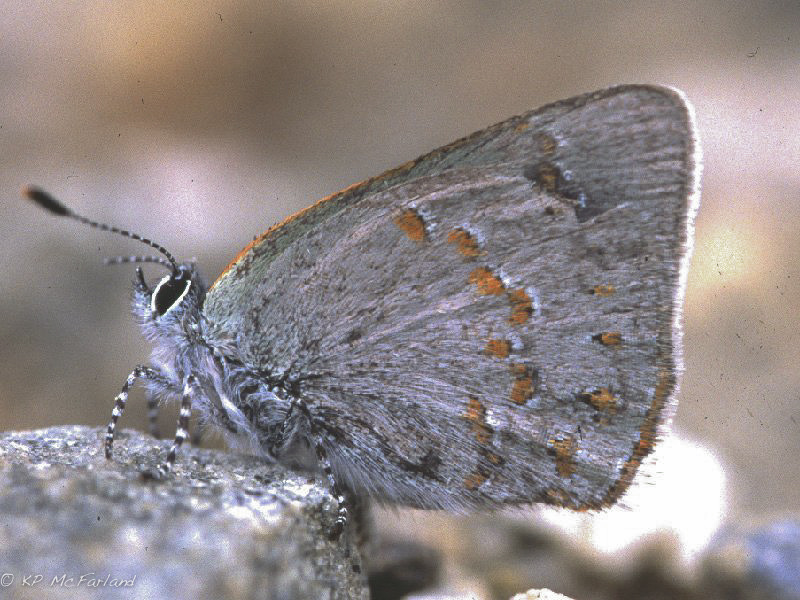
Test your butterfly knowledge:
What life stage is this species in
over winter?
| | | | |